Questions
- What are Ribosomes?
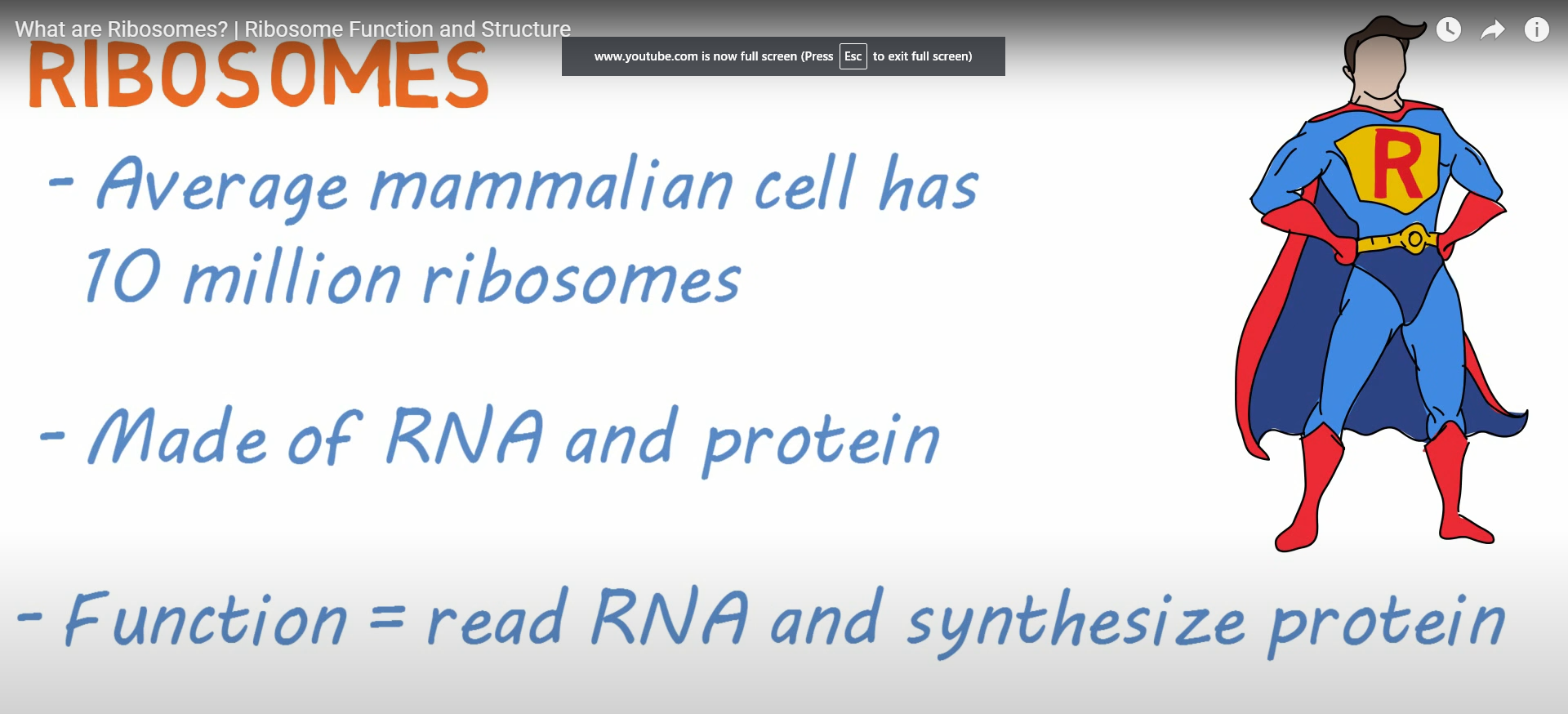
- ==Ribosomes are complex molecular machines that are responsible for the synthesis of proteins in all living cells==.
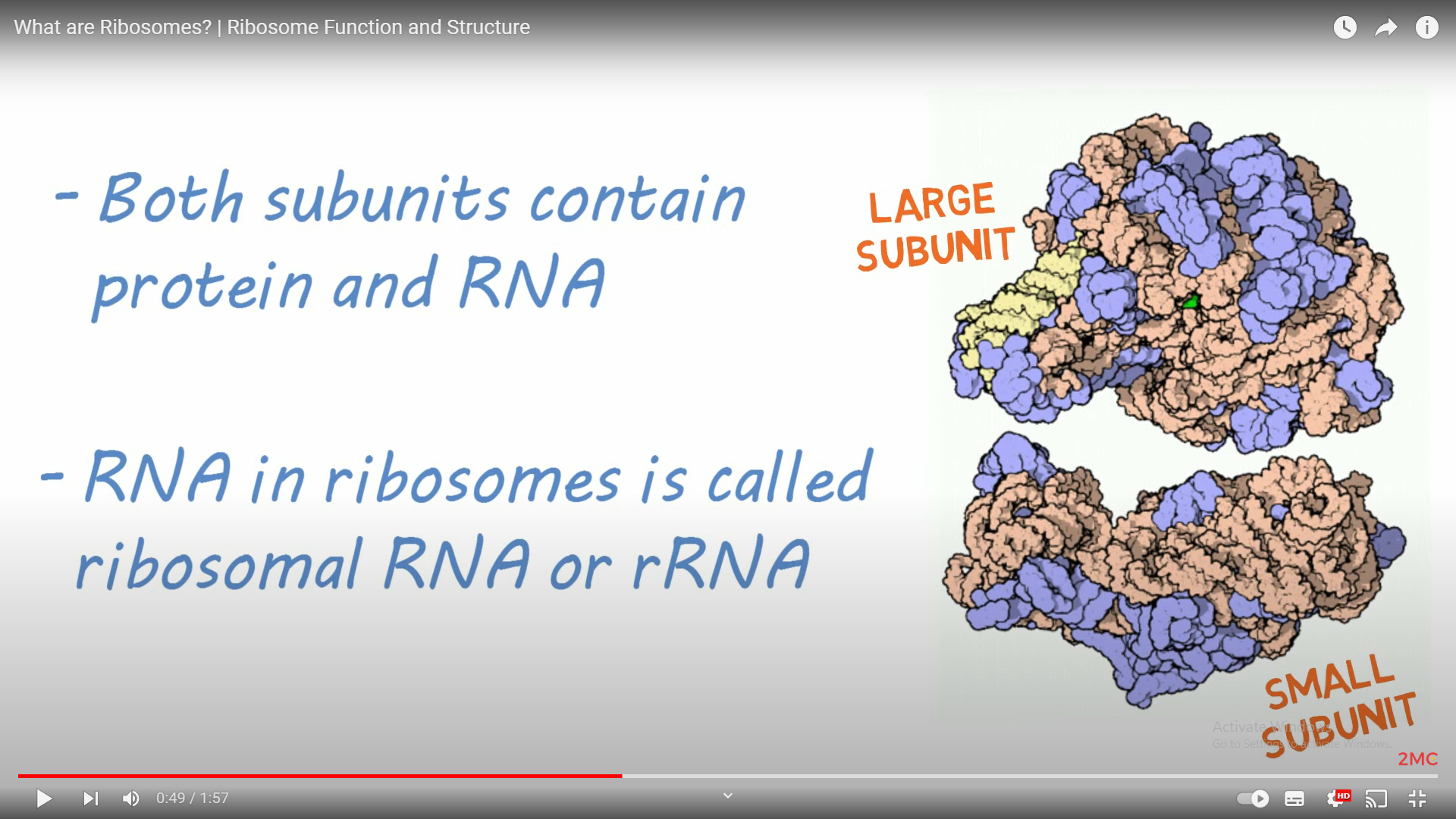
They are composed of a mixture of RNA and protein molecules, and exist in both prokaryotic and eukaryotic cells.
Ribosomes function by translating the genetic information stored in messenger RNA (mRNA) into the amino acid sequence of a protein. - The structure of a ribosome is divided into two subunits: a small subunit and a large subunit.
The small subunit binds to the mRNA molecule, while the large subunit contains the enzymatic activity responsible for linking amino acids together to form a protein chain. - Ribosomes consist of three major RNA molecules, which are called ribosomal RNA (rRNA) molecules, and a large number of proteins.
The rRNA molecules are the primary structural components of the ribosome, while the proteins play a more regulatory role.
In eukaryotic cells, the ribosomes are located in the cytoplasm, while in prokaryotic cells, they are found in the cytoplasm and also associated with the cell membrane. - ==The process of protein synthesis begins with the binding of the small ribosomal subunit to the mRNA molecule.
This allows the ribosome to scan the mRNA molecule for the start codon, which is typically AUG==.
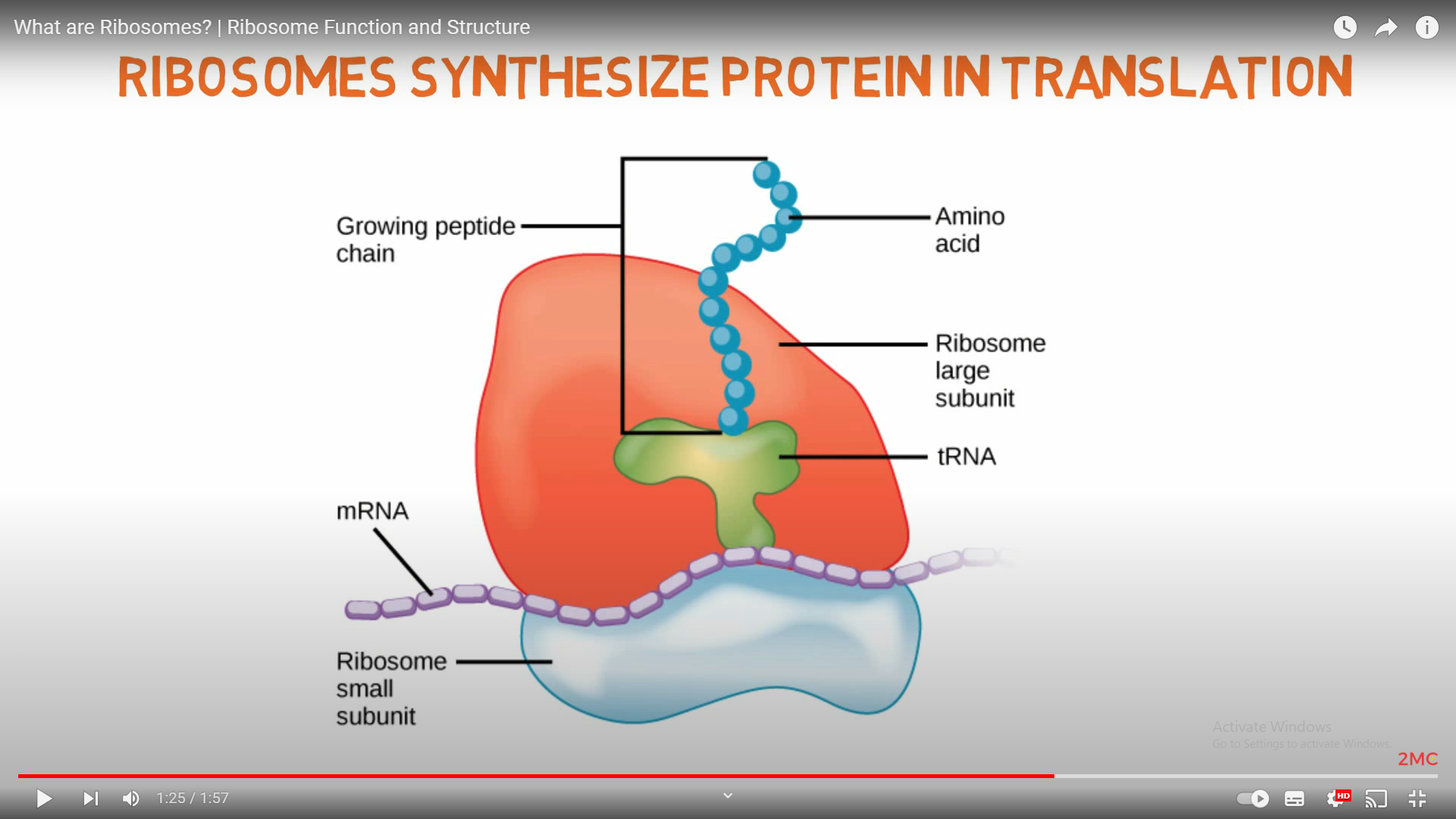
Once the start codon is identified, the large ribosomal subunit binds to the small subunit, and protein synthesis begins. - During protein synthesis, transfer RNA (tRNA) molecules carrying amino acids bind to the ribosome, and the ribosome catalyzes the formation of peptide bonds between the amino acids.
The ribosome moves along the mRNA molecule, adding new amino acids to the growing protein chain until a stop codon is reached, which signals the end of protein synthesis. - Overall, ribosomes are essential molecular machines that play a central role in the process of protein synthesis, and are essential for the proper functioning of all living cells.
- ==Ribosomes are complex molecular machines that are responsible for the synthesis of proteins in all living cells==.
—————————————————————
IMPORTANTE
IMPORTANTE Ribosomes in both prokaryotes and ukaryotes are what translates mRNA (or RNA) into a protein.
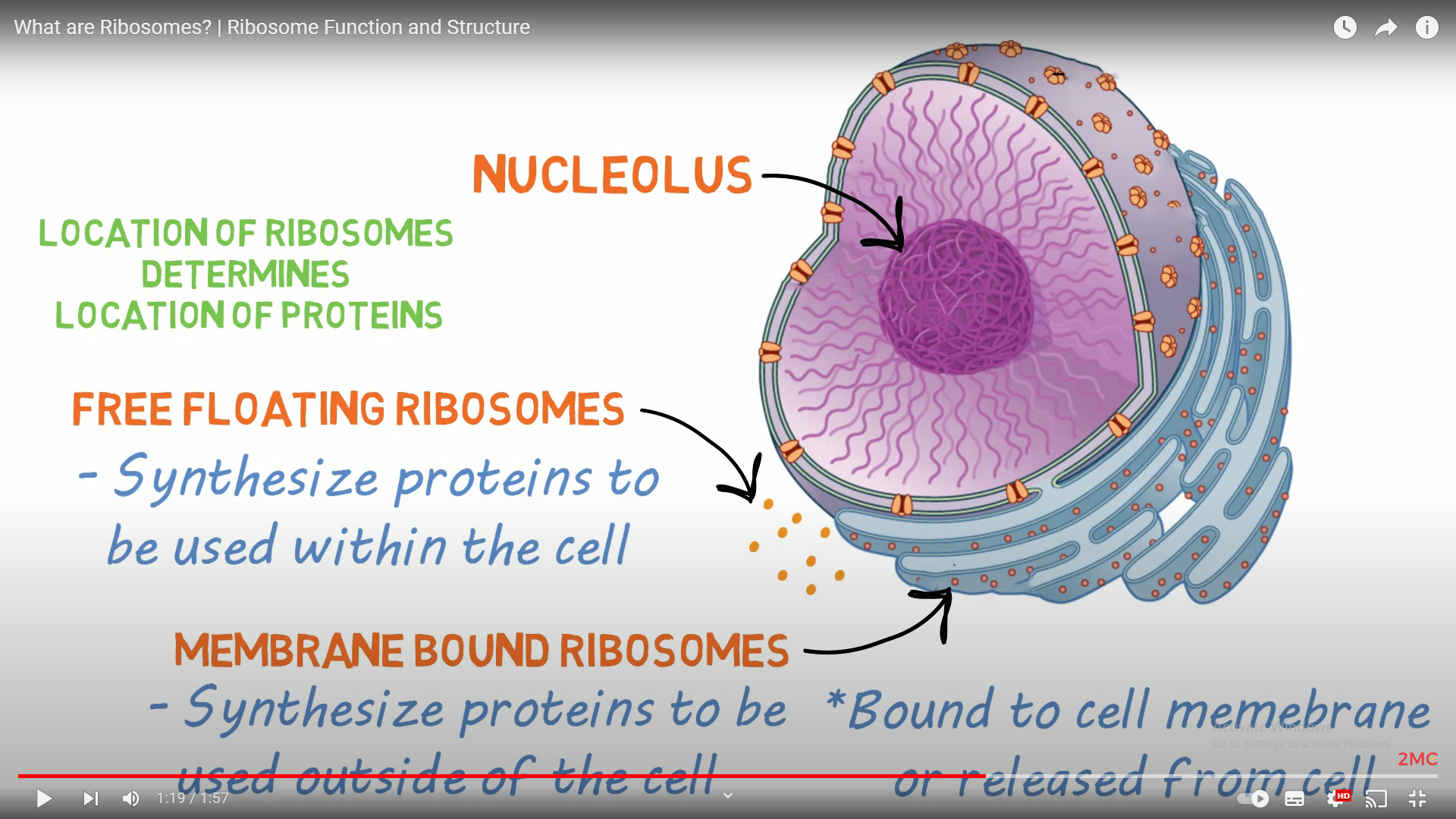
IMPORTANTE In Eukaryotes the location of ribosomes determines the location of the protein translated.
- If the ribosome is a “free floating ribosome”, then the protein translated will be used inside the cell
- If the ribosome is a “membrane bound ribosome”, then the protein translated will be used outside the cell
—————————————————————
Online Resorce: Youtube