Questions
- What is Cloning?
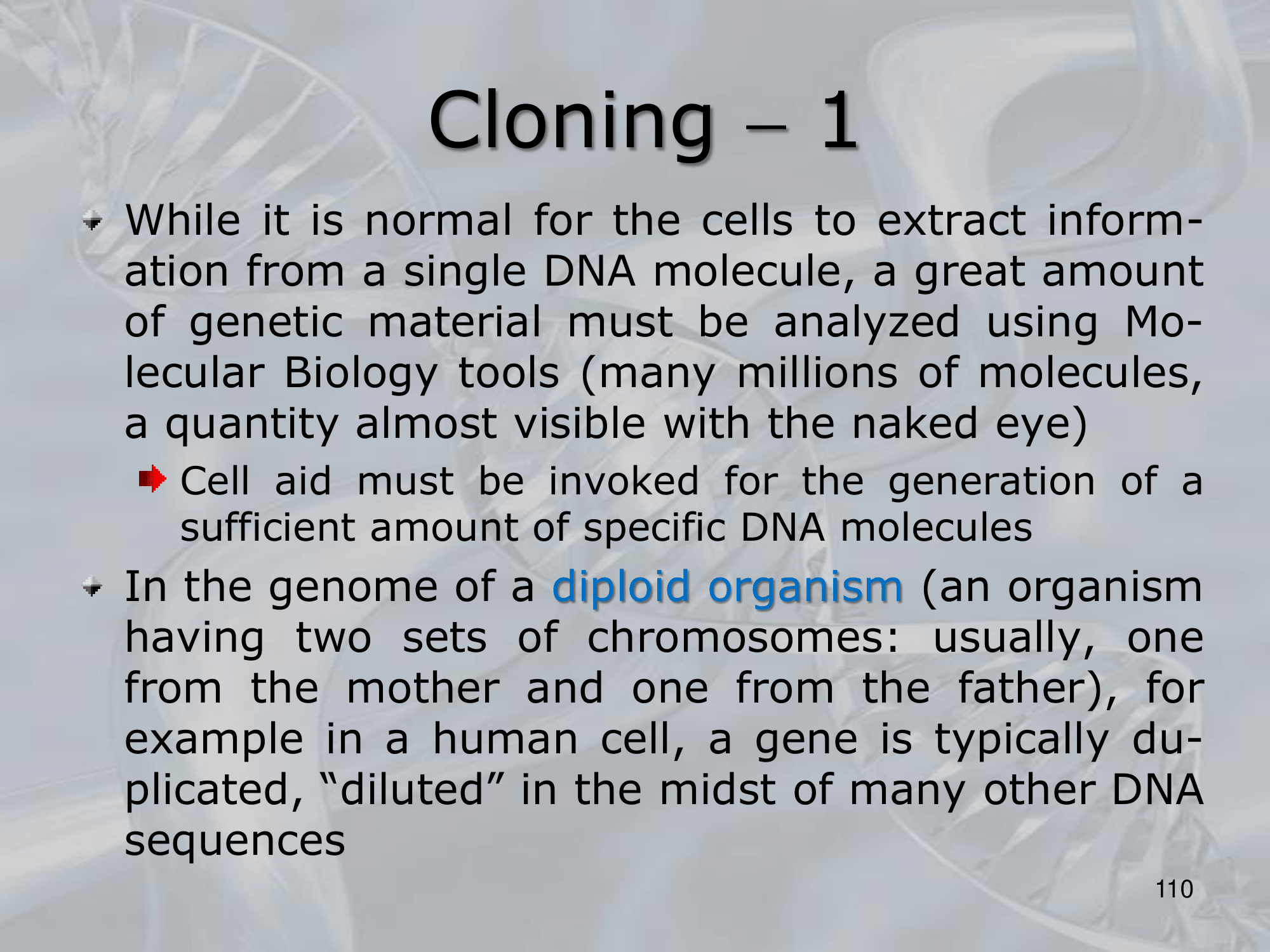
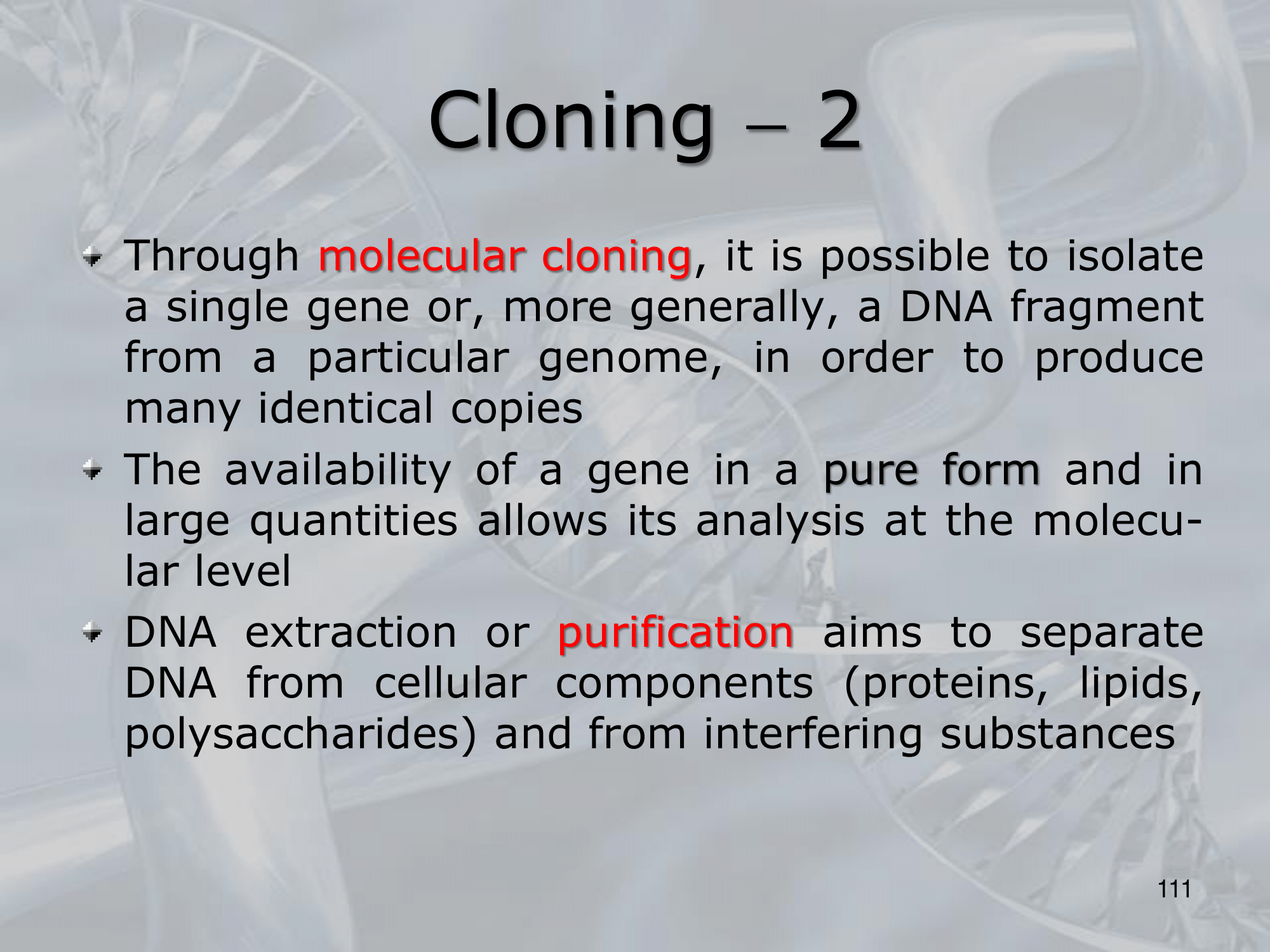
- Cloning is the process of producing genetically identical copies of a DNA sequence or an organism.
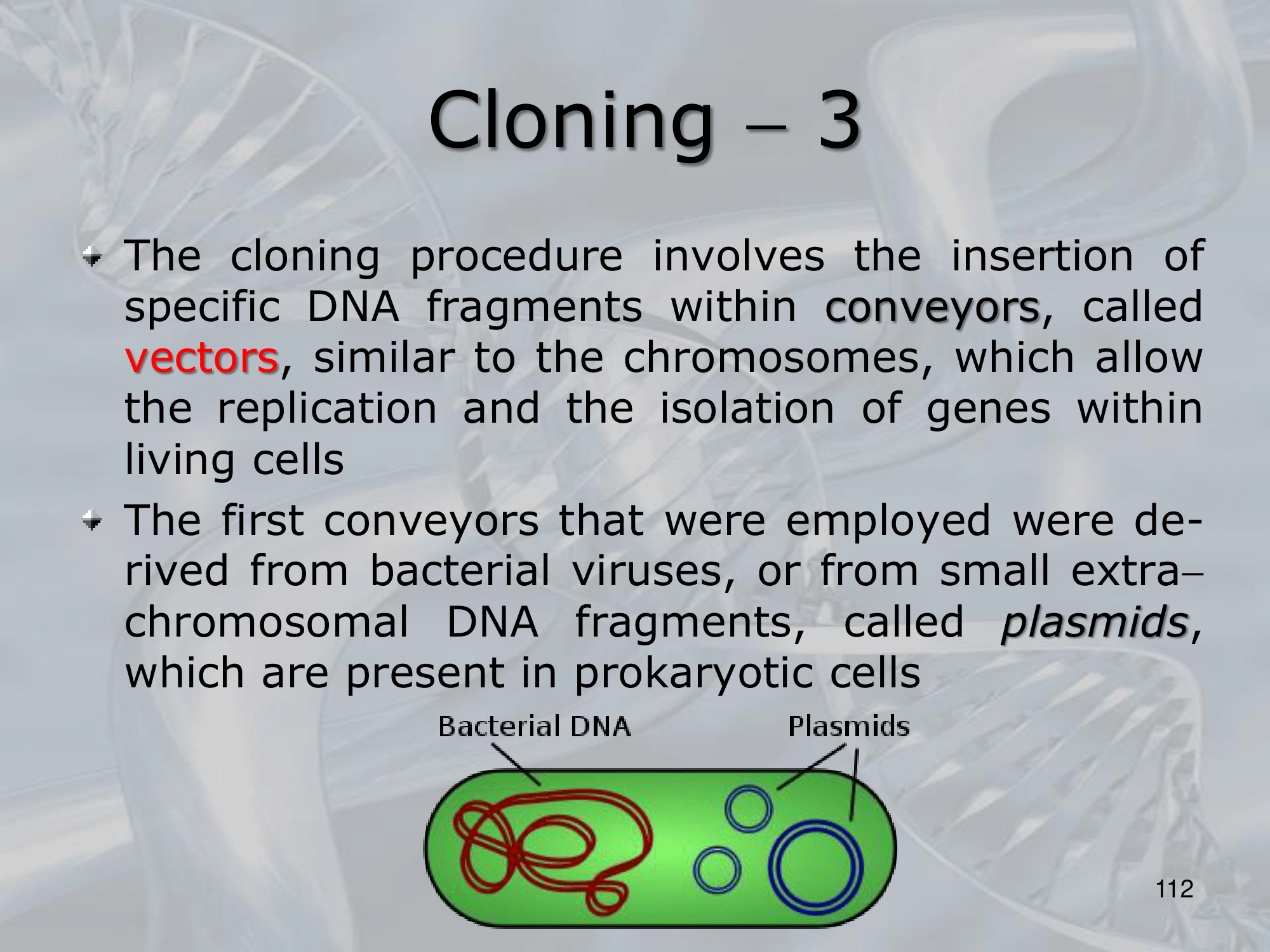
In molecular biology, cloning typically involves the amplification and isolation of a specific DNA fragment or gene of interest, which is then inserted into a vector or carrier molecule, such as a plasmid or a virus, to create a recombinant DNA molecule.
This recombinant DNA molecule is then introduced into a host cell, such as a bacterial or yeast cell, where it can be propagated and expressed to produce multiple copies of the gene or protein of interest. - In organismal cloning, the entire genetic material of an organism is replicated to produce one or more genetically identical individuals.
This can be achieved through various techniques, such as somatic cell nuclear transfer (SCNT), in which the nucleus of a somatic cell is transferred into an egg cell whose nucleus has been removed, resulting in an embryo that is genetically identical to the donor organism. - Cloning has numerous applications in biotechnology, medicine, and agriculture, such as the production of recombinant proteins for therapeutic purposes, the generation of genetically modified crops and livestock, and the preservation of endangered species. However, cloning is a complex and controversial technique that raises ethical, social, and legal issues, particularly in the context of human cloning and reproductive cloning.
- Cloning is the process of producing genetically identical copies of a DNA sequence or an organism.
- What is a genomic equivalent in bioinformatics?
- In bioinformatics, the term “genomic equivalent” is used to estimate the amount of DNA sequencing needed to obtain a certain level of coverage of a genome or metagenome, relative to the size of the genome or metagenome being sequenced.
- ==For example, if a genome is estimated to be 100 million base pairs (Mb) in size and the desired sequencing depth is 10x, then 1 billion base pairs of sequence data would be needed to achieve the desired coverage.
This corresponds to approximately 10 genomic equivalents, since the amount of sequence data needed is 10 times the size of the genome being sequenced==. - Genomic equivalents are useful in bioinformatics because they help researchers estimate the amount of sequencing needed for a particular project, and they also allow for comparison of sequencing efforts across different organisms or samples.
It’s important to note that the size of the genome being sequenced is an important factor in determining the number of genomic equivalents needed, since larger genomes require more sequencing to achieve the same level of coverage.
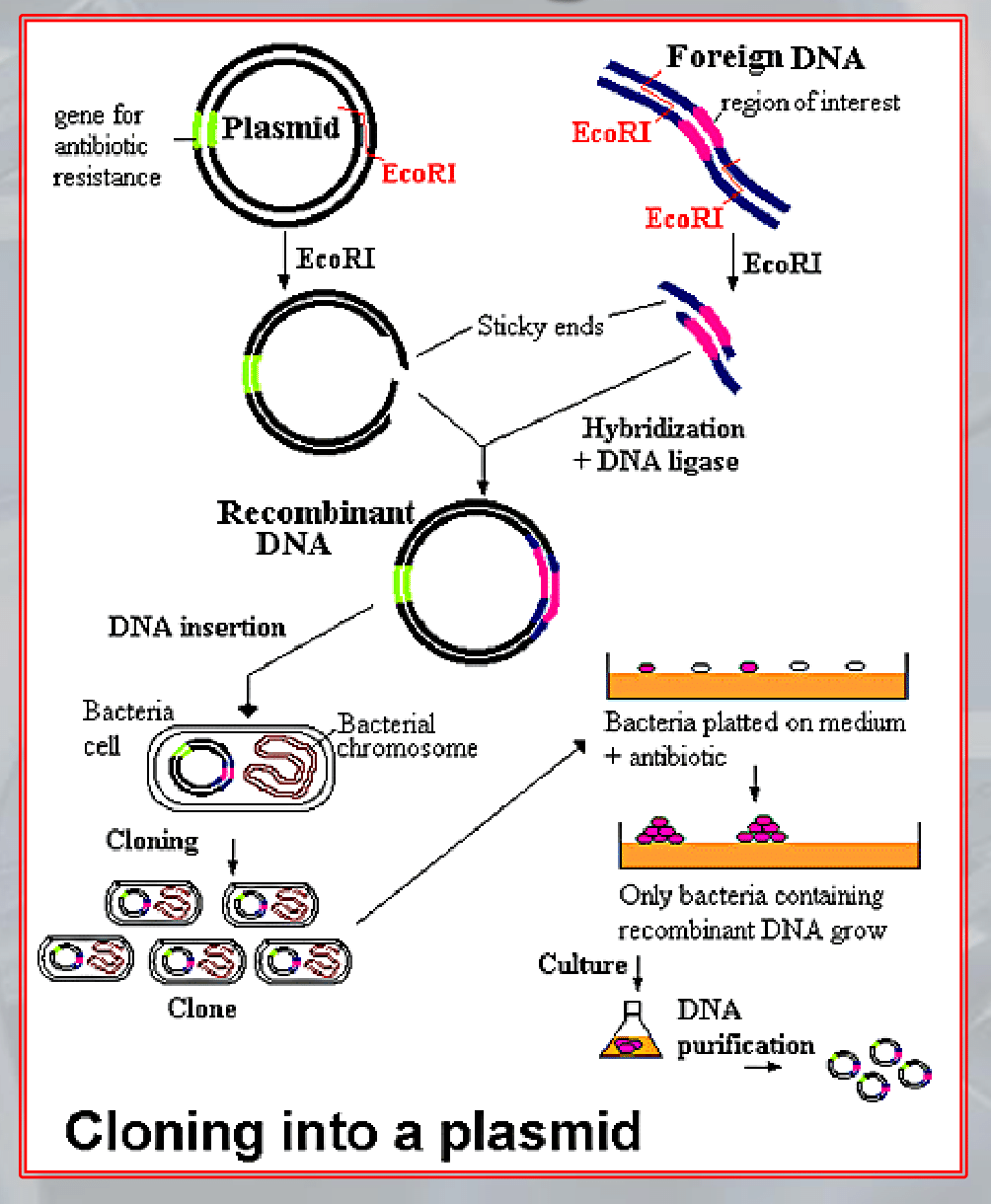
- How can we Clone a specific DNA Fragment using Vectors?
- Cloning a specific DNA fragment using vectors typically involves the following steps:
- Isolation of the DNA fragment: ==The DNA fragment of interest is isolated from the source organism using techniques such as PCR amplification, restriction enzyme digestion==, or genomic library screening.
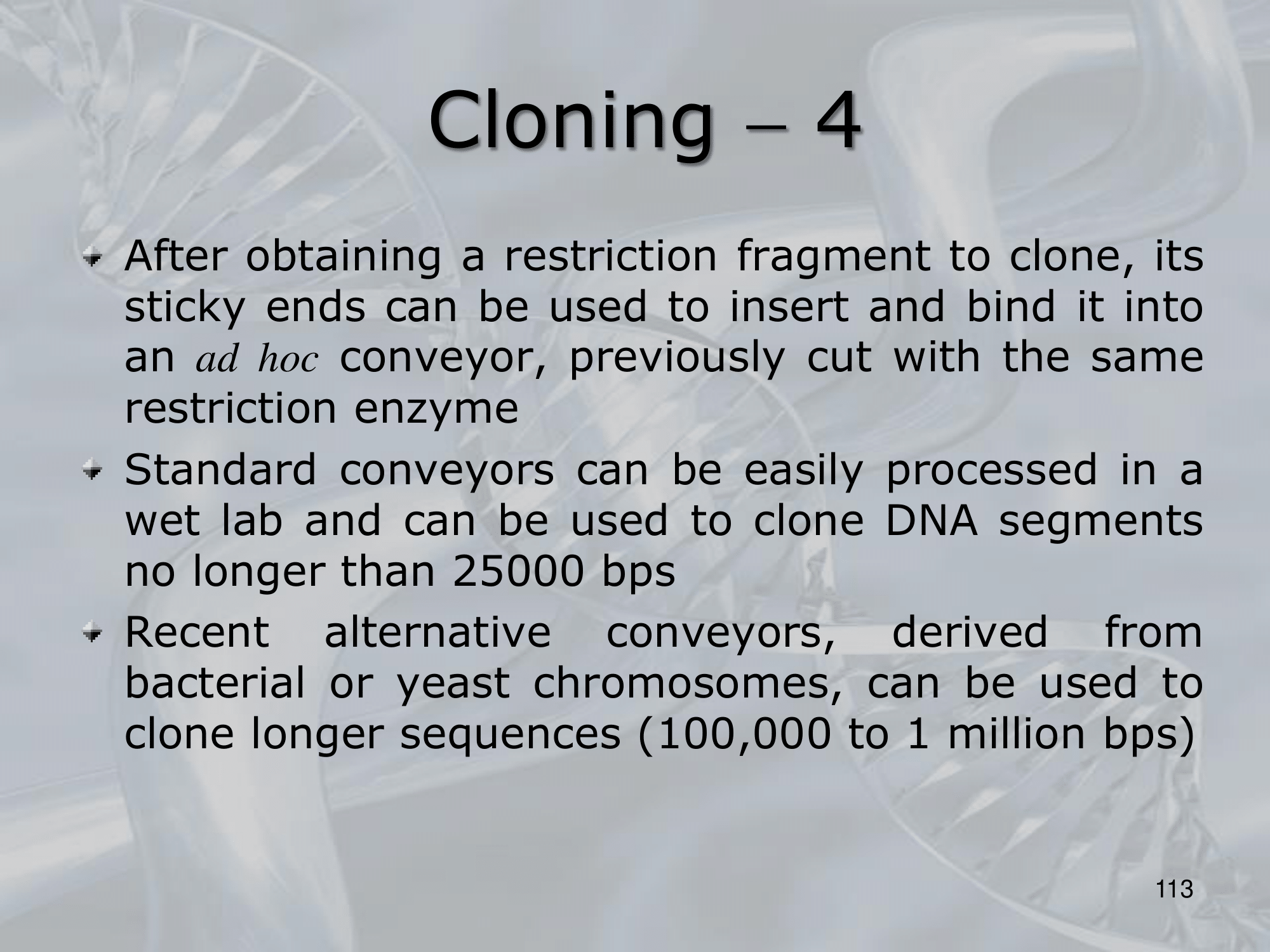
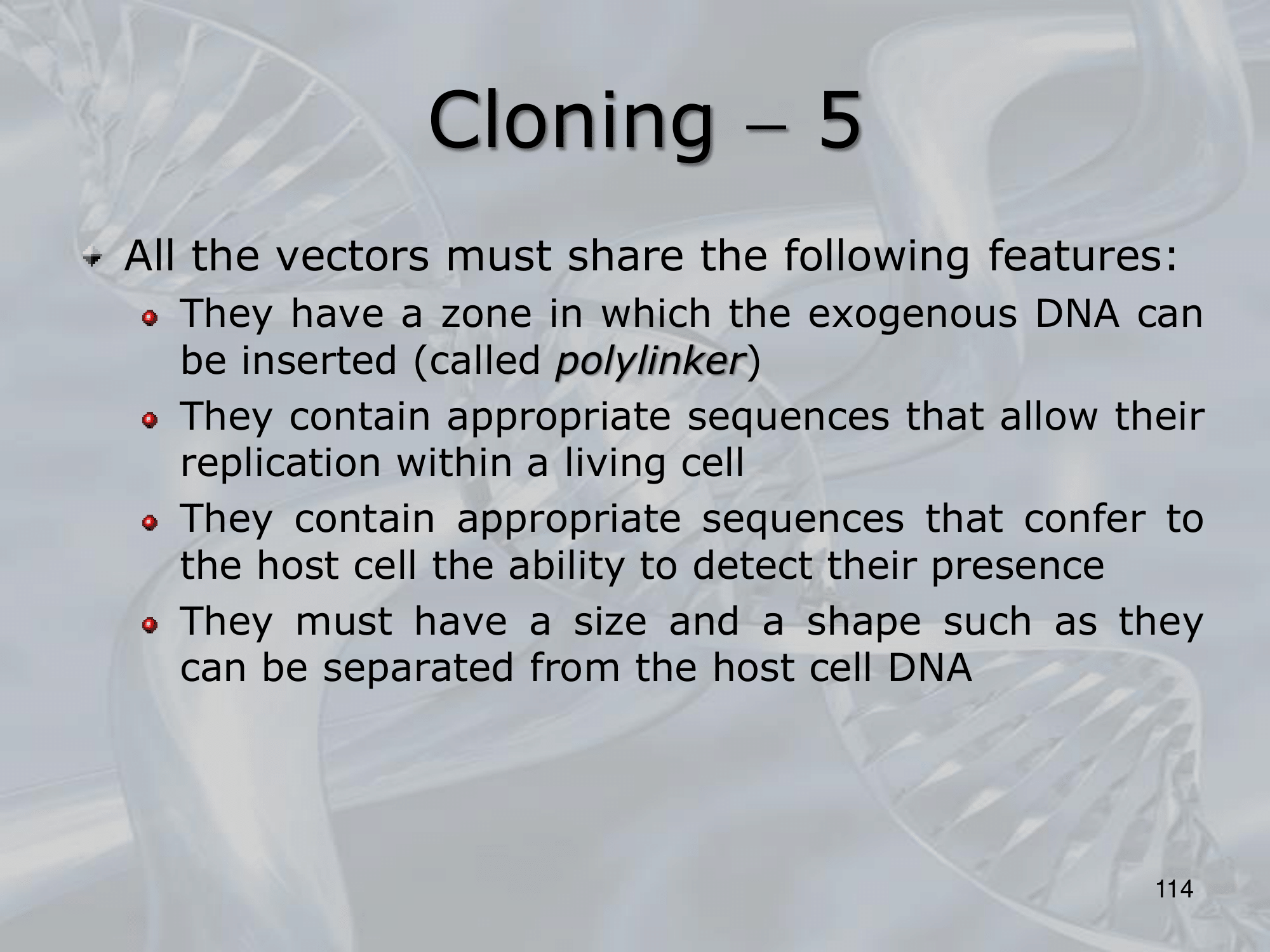
- Insertion into a vector: The isolated DNA fragment is then inserted into a ==vector, which is a small, circular piece of DNA that can replicate independently in a host cell==.
This is typically done using restriction enzymes and ligase to create a recombinant DNA molecule. - Transformation of host cells: ==The recombinant DNA molecule is then introduced into a host cell, which can be a bacterial, yeast, or mammalian cell==.
This is typically done using techniques such as electroporation, heat shock, or transfection. - Selection of transformed cells: In order to identify the host cells that have taken up the recombinant DNA molecule, a selectable marker gene (such as an antibiotic resistance gene) is often included in the vector.
Cells that have taken up the vector and integrated the DNA fragment of interest will be resistant to the selective agent and can be grown on selective media. - Screening for positive clones: Once transformed cells have been selected, a variety of techniques can be used to screen for positive clones that contain the DNA fragment of interest.
These can include PCR, restriction enzyme digestion, or sequencing.
- Overall, the process of cloning a specific DNA fragment using vectors involves creating a recombinant DNA molecule by inserting the DNA fragment into a vector, introducing the recombinant DNA into host cells, selecting for transformed cells that have taken up the recombinant DNA, and screening for positive clones that contain the DNA fragment of interest.
- Cloning a specific DNA fragment using vectors typically involves the following steps:
IMPORTANTE
IMPORTANTE Cloning
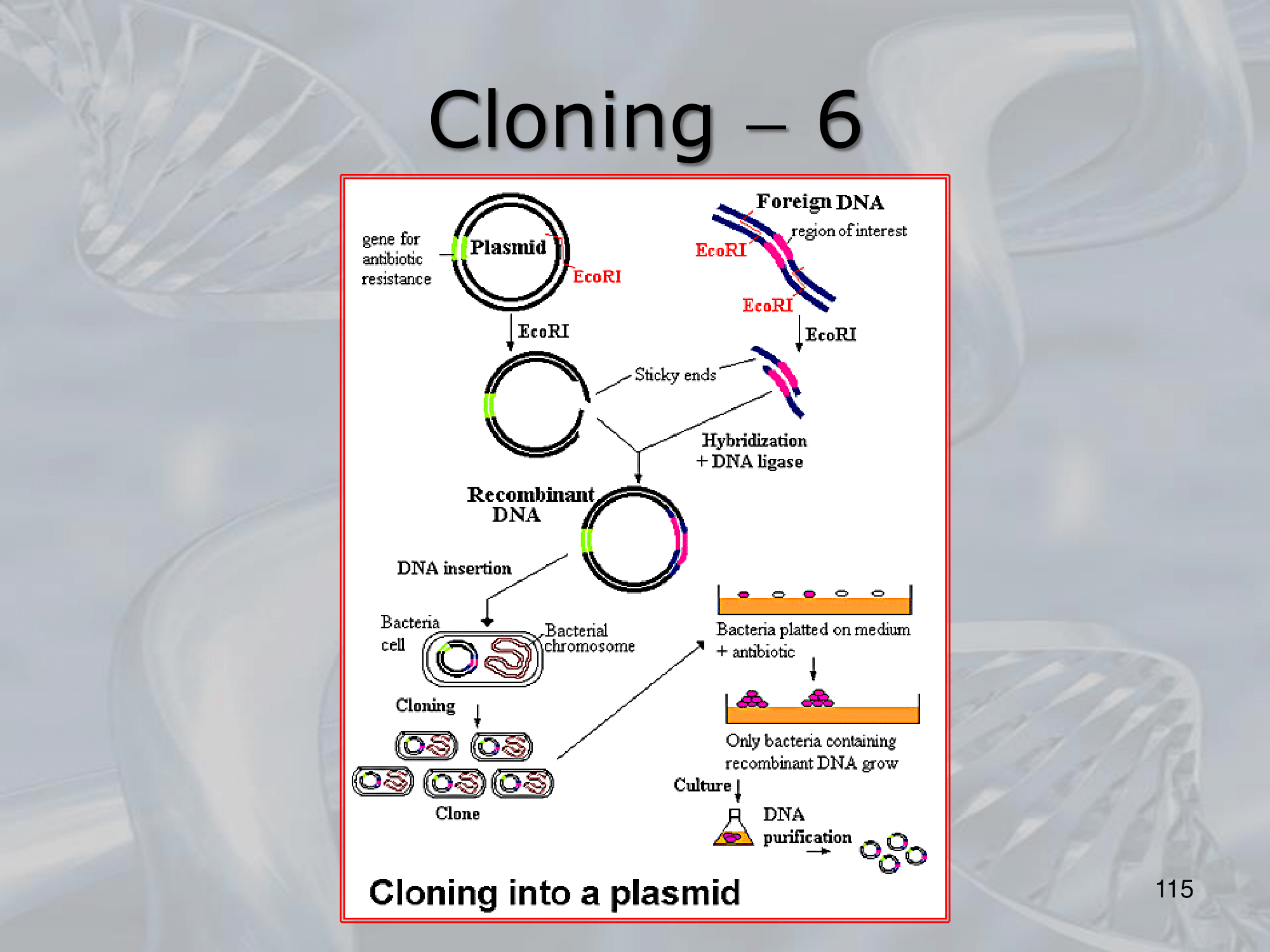
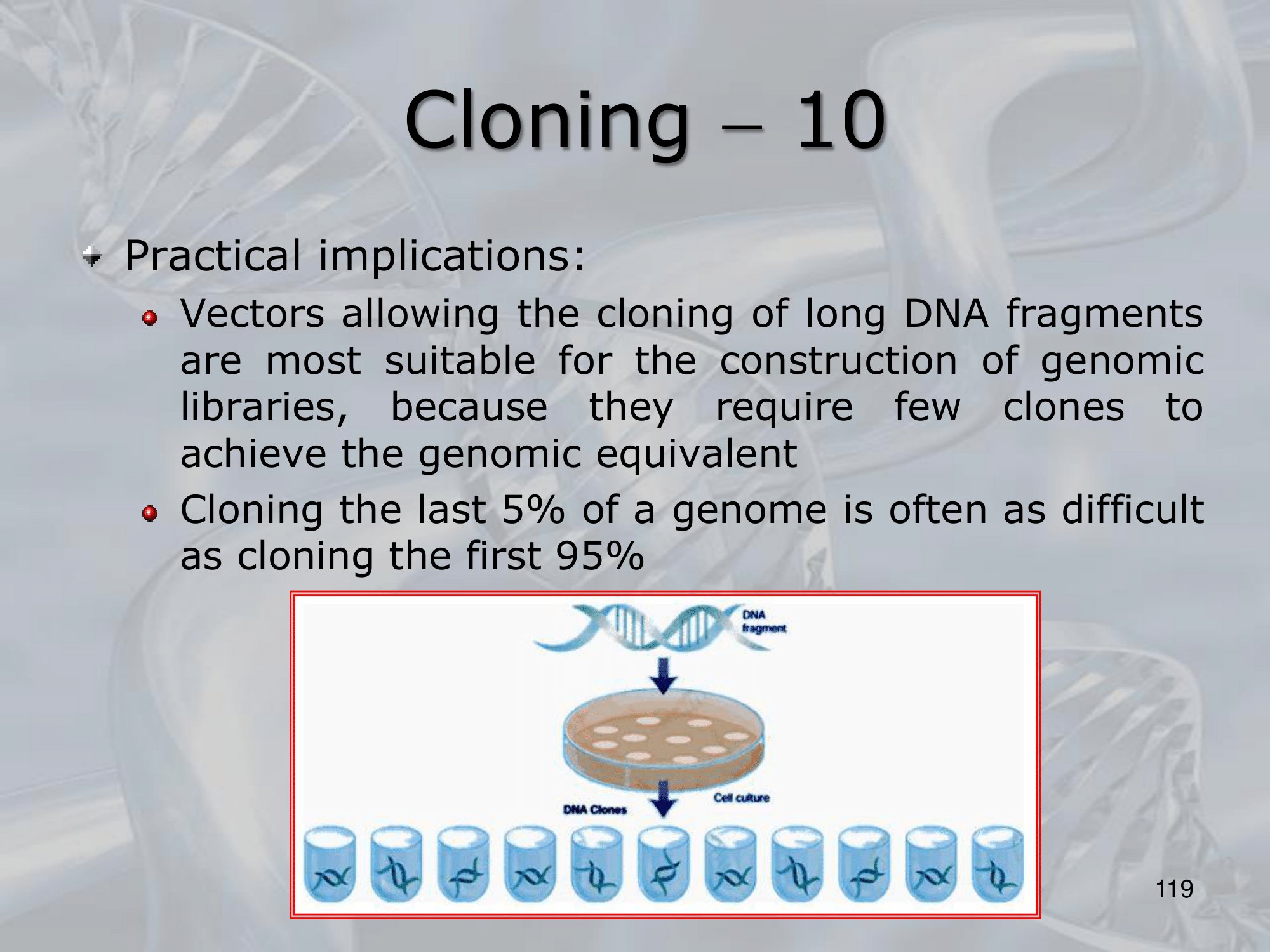
- Finding a vector: a prokaryotic cell where we can change its plasmid DNA, inserting a gene for antibiotic resistances and the DNA fragment we want to clone.
- We clone this vector, (prokaryotic cell can clone themselves with the appropiate conditions)
- We insert all the vectors in a dish with antibiotics, eliminating all those vectors with no antibiotic resistance, allowing only the vectors with foreing DNA (we insterted) to grow.
- We Purify the vectors remaining with only the cloned DNA fragments.
IMPORTANTE Genomic Equivalent When creating a genomic library it should contain at least 1 copy for each DNA segment of the DNA of an organism (1 genomic equivalent). ~Ex.: if an organism has a DNA composed of base pairs, our restriction enzyme creates a DNA fragments with an avarage length of bp, we need to clone each DNA fragment more than times (), with this we have genomic equivalent.
IMPORTANTE cDNA Library A particular DNA Library that contains the complementary DNA of the mRNA found in an organism, useful because the mRNA found in an organism, if for sure taken from a coding region of said organism.
IMPORTANTE How to convert mRNA to cDNA Using an enzyme called reverse transcriptase.
Slides with Notes
IMPORTANTE Cloning
- Finding a vector: a prokaryotic cell where we can change its plasmid DNA, inserting a gene for antibiotic resistances and the DNA fragment we want to clone.
- We clone this vector, (prokaryotic cell can clone themselves with the appropiate conditions)
- We insert all the vectors in a dish with antibiotics, eliminating all those vectors with no antibiotic resistance, allowing only the vectors with foreing DNA (we insterted) to grow.
- We Purify the vectors remaining with only the cloned DNA fragments.
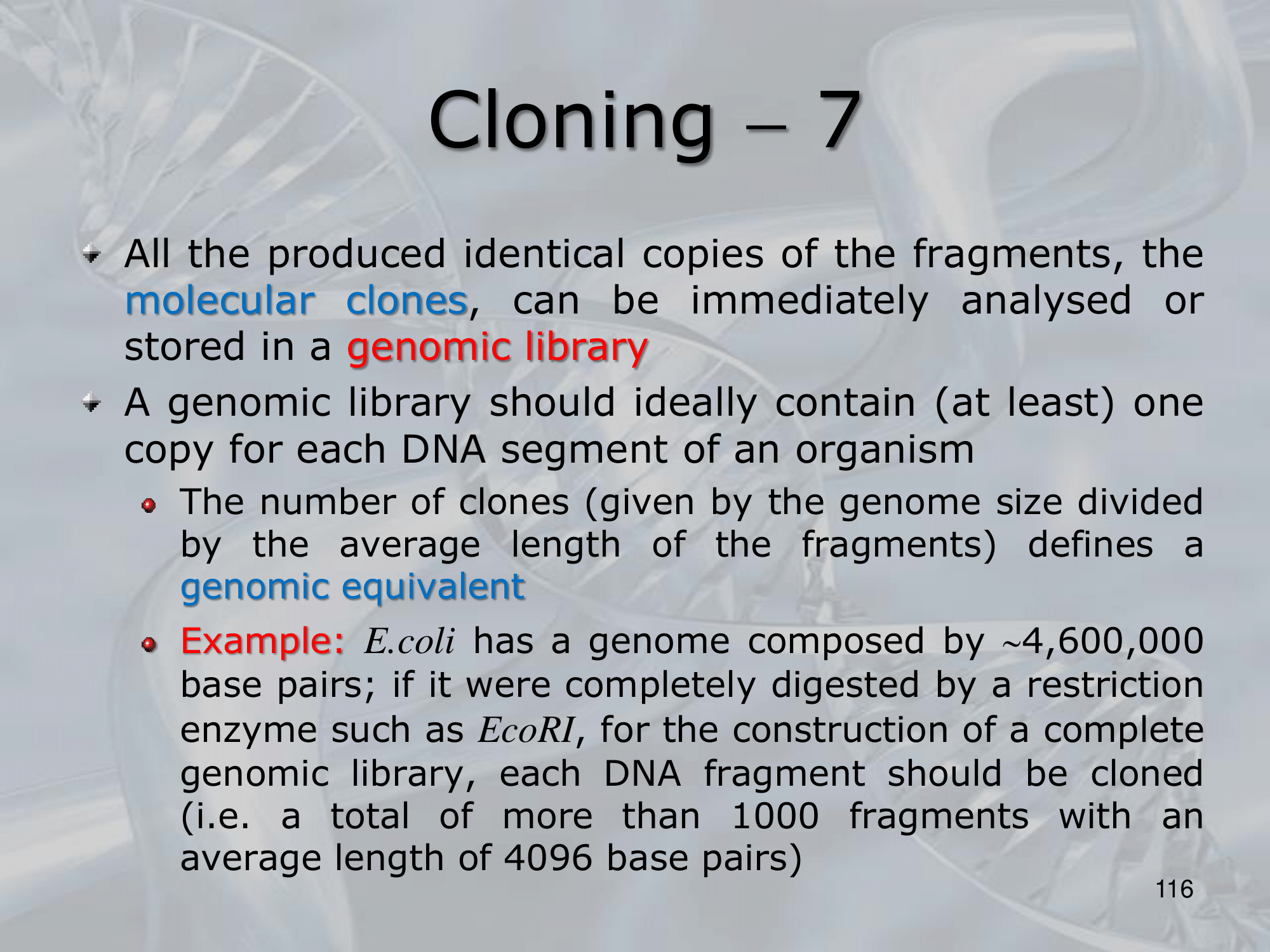
IMPORTANTE Genomic Equivalent When creating a genomic library it should contain at least 1 copy for each DNA segment of the DNA of an organism (1 genomic equivalent). ~Ex.: if an organism has a DNA composed of base pairs, our restriction enzyme creates a DNA fragments with an avarage length of bp, we need to clone each DNA fragment more than times (), with this we have genomic equivalent.
IMPORTANTE cDNA Library A particular DNA Library that contains the complementary DNA of the mRNA found in an organism, useful because the mRNA found in an organism, if for sure taken from a coding region of said organism.
IMPORTANTE How to convert mRNA to cDNA Using an enzyme called reverse transcriptase.