Questions
- What is PCR?
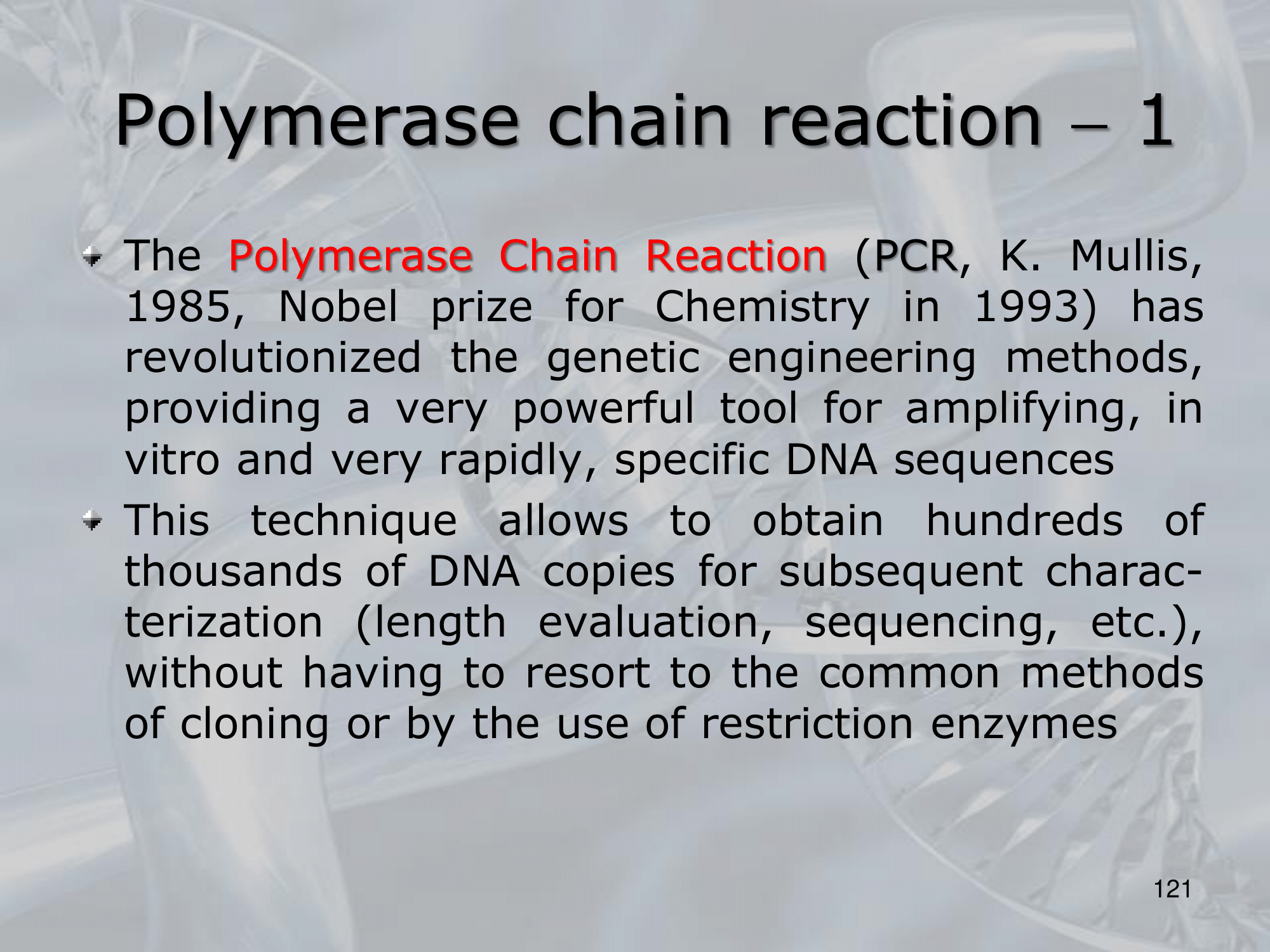
- PCR (polymerase chain reaction) is a widely used technique in molecular biology that allows for the amplification of specific DNA sequences from a complex mixture of DNA.
It was first described in 1985 and has since become a cornerstone of molecular biology research. - The PCR process involves several cycles of repeated heating and cooling of a reaction mixture containing DNA template, primers, and a heat-stable DNA polymerase enzyme.
- During the heating step, the double-stranded DNA template is denatured into single strands, allowing the primers to anneal to the complementary regions on each strand.
- The polymerase enzyme then extends the primers along the template strands, synthesizing new strands of DNA.
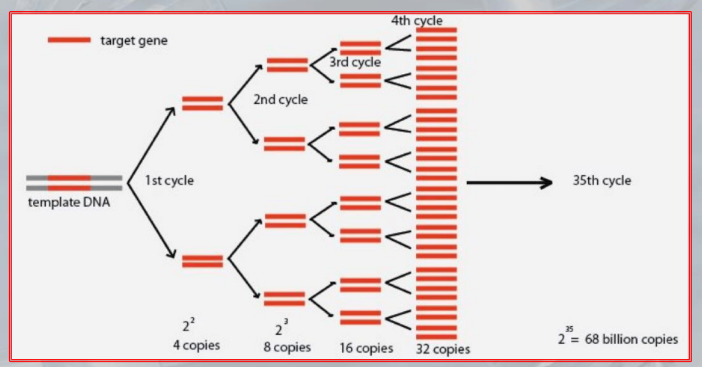
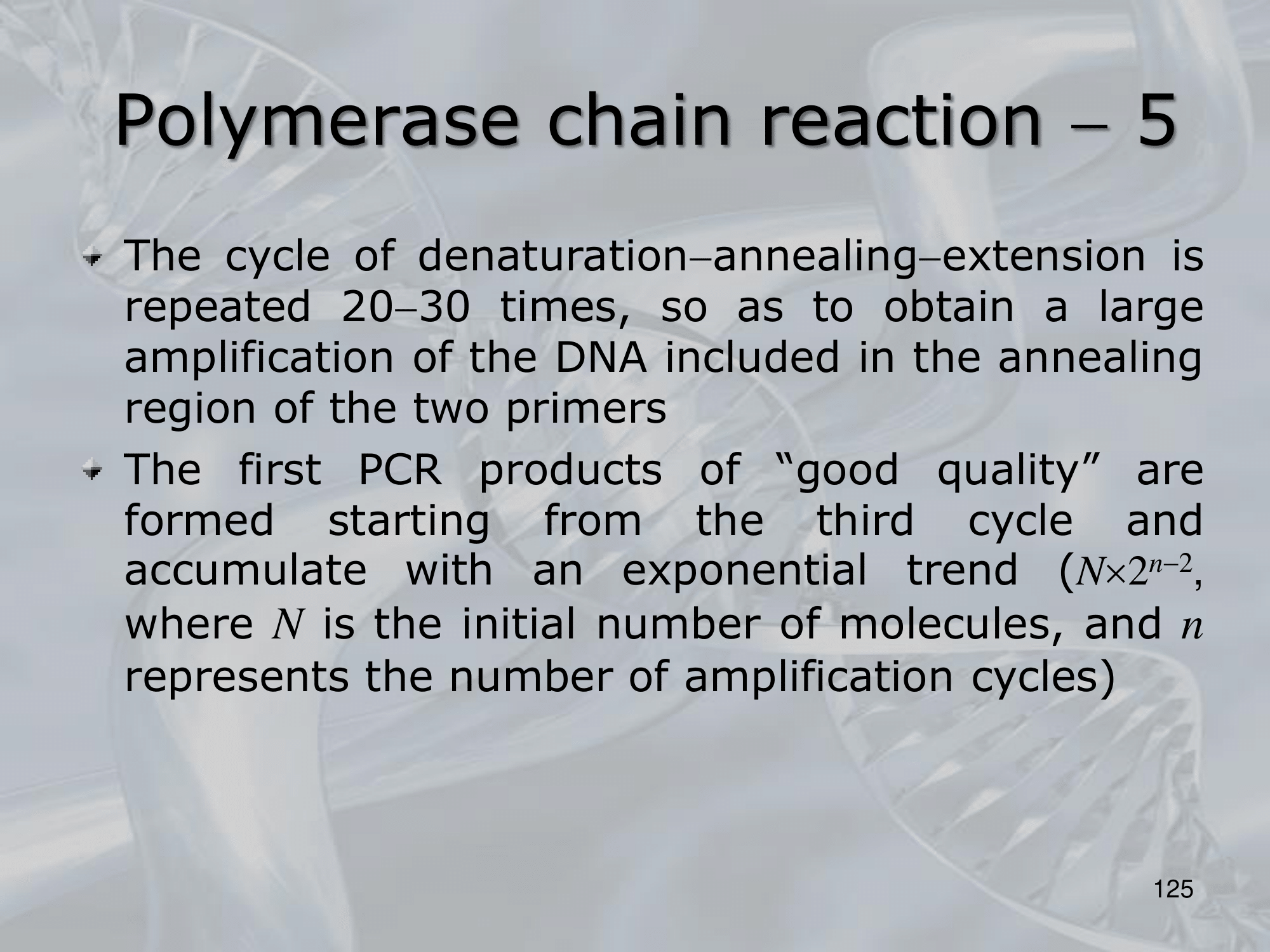
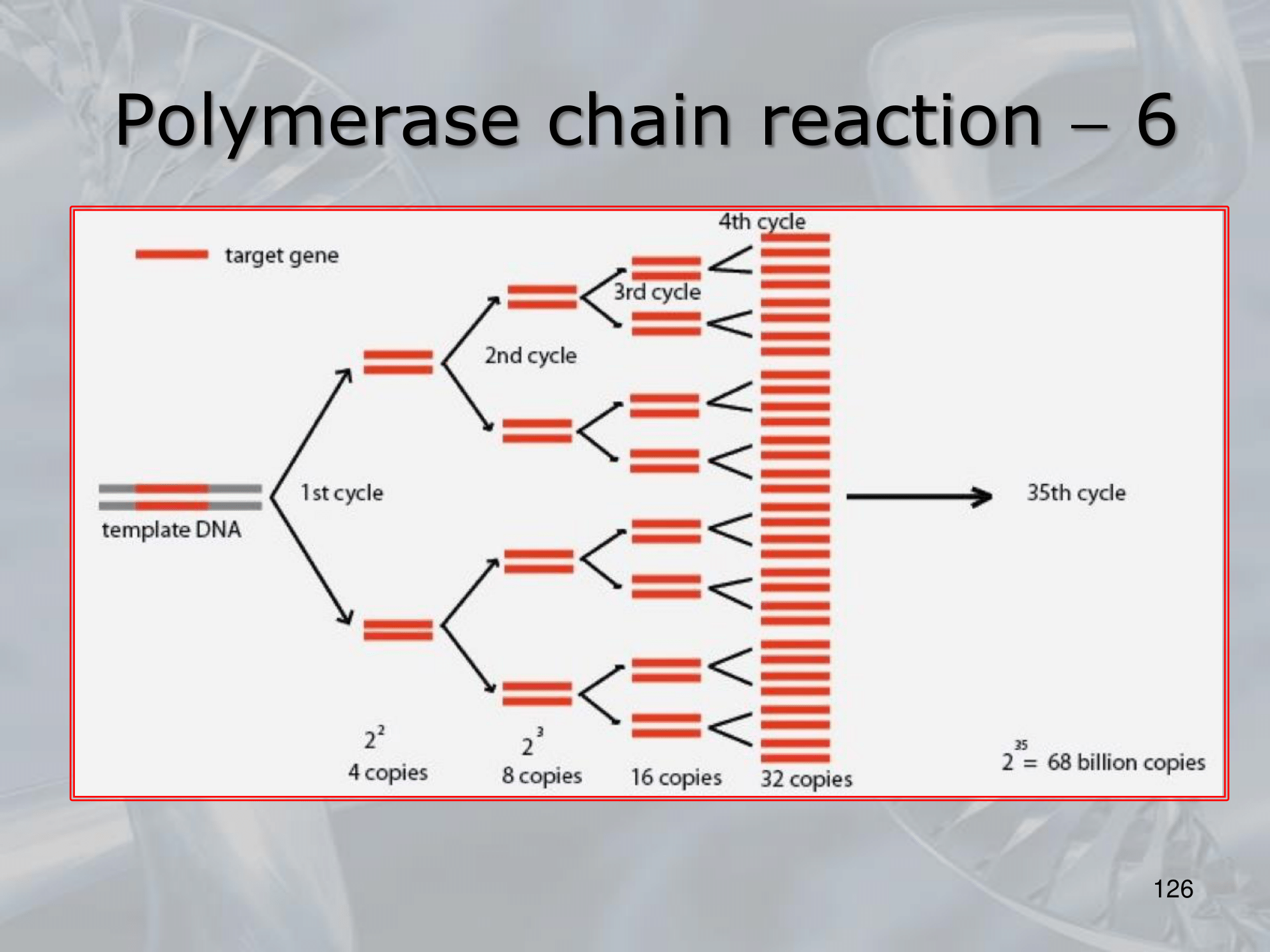
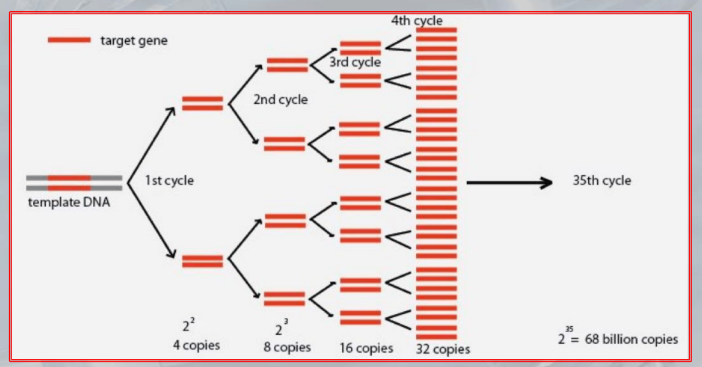
- The cycle is then repeated, doubling the amount of DNA with each round of amplification
- PCR has numerous applications in molecular biology, genetics, and biotechnology, such as DNA sequencing, gene expression analysis, forensic analysis, and genetic disease diagnosis.
It is a powerful and sensitive technique that can detect very low levels of DNA and has revolutionized the way scientists study DNA and genetics.
- PCR (polymerase chain reaction) is a widely used technique in molecular biology that allows for the amplification of specific DNA sequences from a complex mixture of DNA.
- Can you Explain the Steps in PCR?
- Sure, here are the basic steps involved in a typical PCR (polymerase chain reaction):
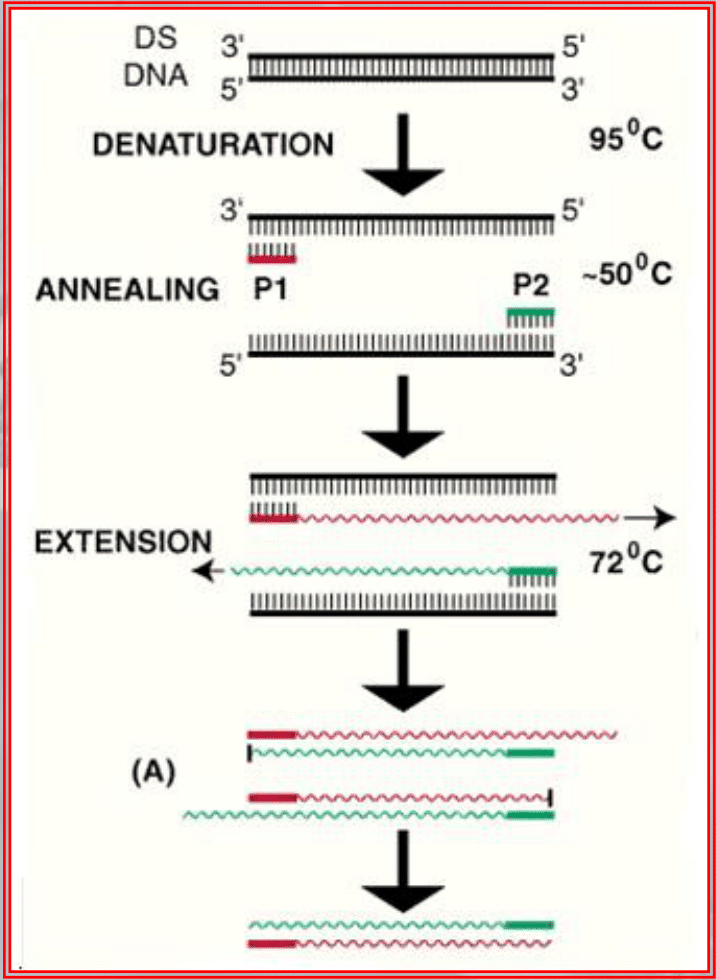
- ==Denaturation: The double-stranded DNA template is heated to a high temperature (usually around 95°C) to separate the two strands==.
- ==Annealing: The reaction temperature is lowered to allow specific primers to bind to complementary sequences on the single-stranded DNA template at the ends of the target region==.
- ==Extension: A heat-stable DNA polymerase enzyme adds nucleotides to the 3’ end of each primer, extending the DNA strand complementary to the template. This typically occurs at a temperature around 72°C==.
- Repeating cycles: Steps 1-3 are repeated for multiple cycles (usually 20-40 cycles), each cycle doubling the amount of DNA present.
- At the end of the PCR, there will be many copies of the target DNA sequence. These copies can then be used for a variety of downstream applications, such as cloning, sequencing, or analysis of gene expression.
- It’s worth noting that there are many variations and modifications to the basic PCR protocol, depending on the specific application and the characteristics of the DNA template. For example, the annealing temperature and duration, the choice of polymerase enzyme, and the use of specialized primers or probes can all be adjusted to optimize the PCR for a particular purpose.
- Sure, here are the basic steps involved in a typical PCR (polymerase chain reaction):
- What are the Primers in PCR?
- In PCR (polymerase chain reaction), primers are short single-stranded DNA sequences that serve as the starting point for DNA synthesis.
They are designed to be complementary to specific regions of the target DNA template, flanking the segment that is to be amplified by PCR. - During the annealing step of PCR, the temperature is lowered to allow the primers to bind to the single-stranded DNA template at the sites of complementarity.
The primers then serve as the starting point for DNA polymerase to extend the complementary strand, using nucleotides supplied in the reaction mixture. - The choice of primers is critical for the success of PCR, since they determine the specificity and efficiency of the reaction.
Primers should be designed to have a melting temperature (Tm) that matches the annealing temperature used in the PCR, and should avoid regions of the template that are highly repetitive or have secondary structures that could interfere with the reaction.
They should also be long enough to ensure specific binding, but not so long as to cause nonspecific binding or interfere with other steps of the reaction. - In addition to standard PCR primers, there are specialized types of primers that can be used for specific applications.
For example, nested PCR uses a second set of primers that bind within the amplified region of the first PCR product, allowing for greater specificity and sensitivity.
Multiplex PCR uses multiple primers in a single reaction to amplify multiple target regions simultaneously. And quantitative PCR (qPCR) uses fluorescently labeled primers to measure the amount of amplified DNA in real time.
- In PCR (polymerase chain reaction), primers are short single-stranded DNA sequences that serve as the starting point for DNA synthesis.
IMPORTANTE
IMPORTANTE Primer A primer is a short DNA sequence (18-20 nucleotides) designed so as to be exactly complementary to the corresponding sequces flanking the DNA segments to be amplified The DNA polymerase activity results in the synthesis of a new strand from each primer. Primers are needed because DNA polymerase cannot initate the replication de novo.
IMPORTANTE Polymerase Chain Reaction (PCR)
- Denaturation (at 95° C): to separate the two strands of the template molecule
- Annealing (at 50°-60° C): during which the primer anneal to the denatured strands, determining the point of initiation of the DNA synthesis.
- Polymerization/Extension (at 72° C): to produce two new double-strand DNA molecules, thanks to DNA polymerase.
Slides with Notes
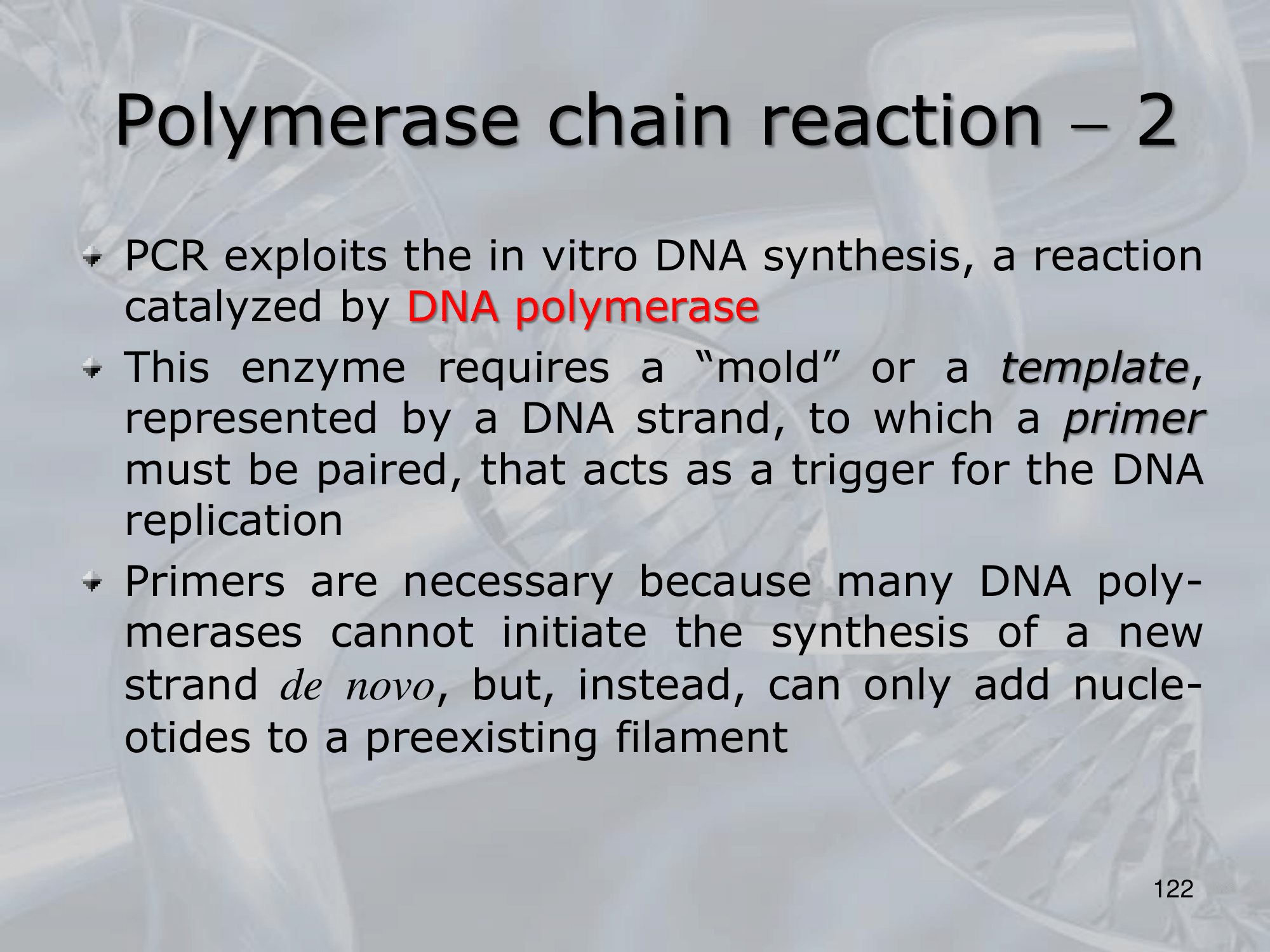
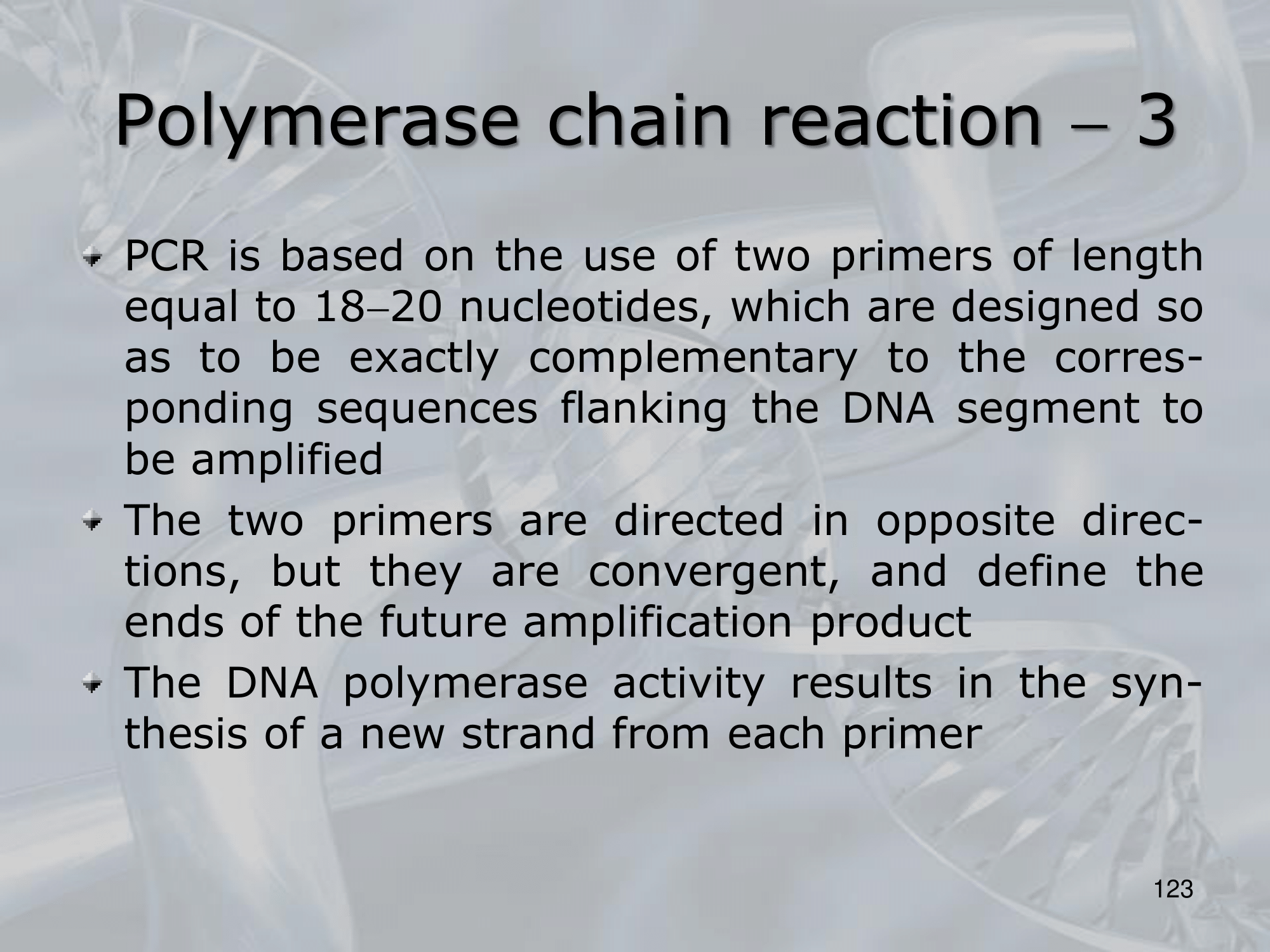
IMPORTANTE Primer A primer is a short DNA sequence (18-20 nucleotides) designed so as to be exactly complementary to the corresponding sequces flanking the DNA segments to be amplified The DNA polymerase activity results in the synthesis of a new strand from each primer. Primers are needed because DNA polymerase cannot initate the replication de novo.
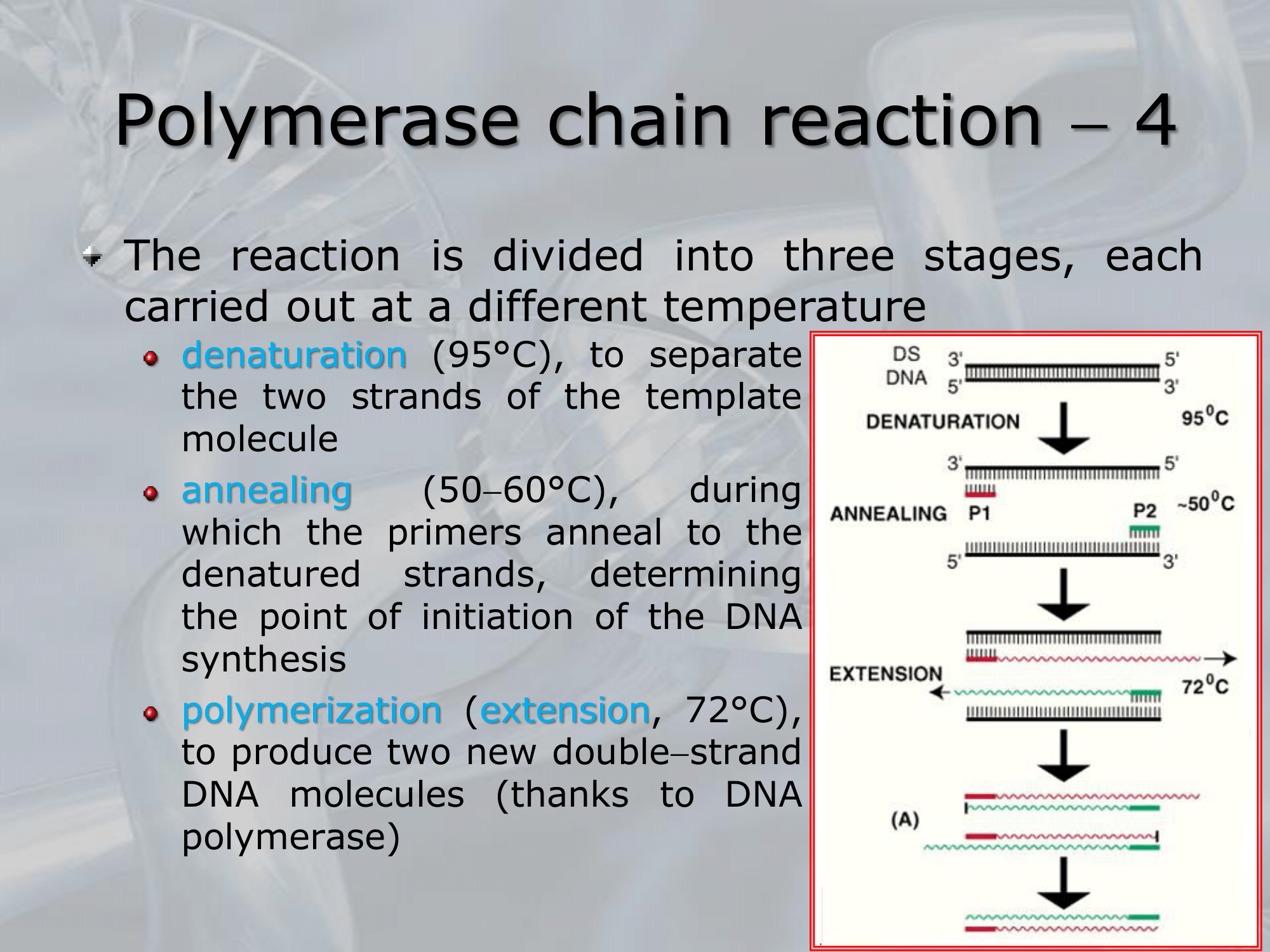
IMPORTANTE Polymerase Chain Reaction (PCR)
- Denaturation (at 95° C): to separate the two strands of the template molecule
- Annealing (at 50°-60° C): during which the primer anneal to the denatured strands, determining the point of initiation of the DNA synthesis.
- Polymerization/Extension (at 72° C): to produce two new double-strand DNA molecules, thanks to DNA polymerase.