Questions
- What is Gel Electrophoresis?
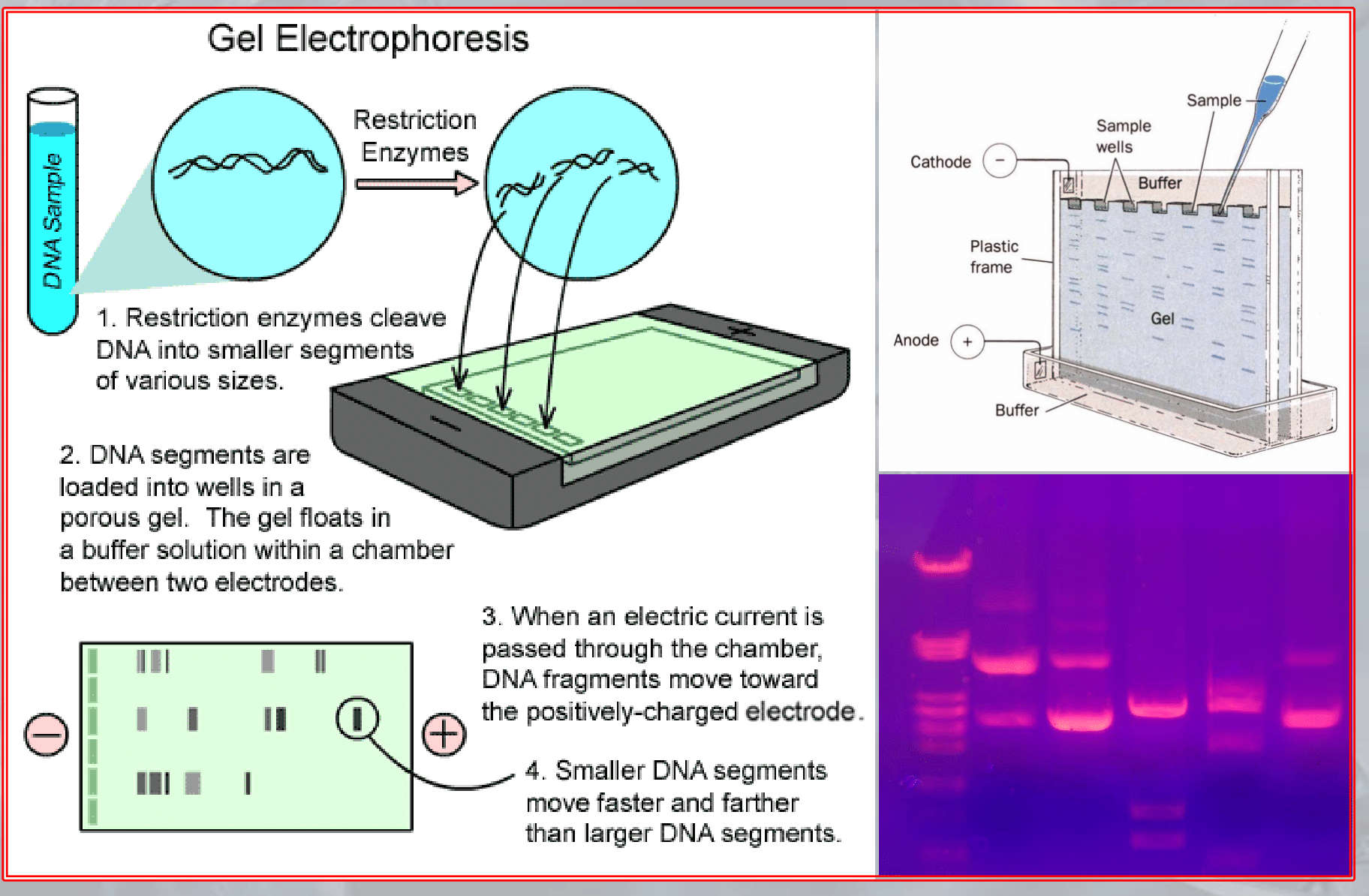
- Gel electrophoresis is a technique used to separate and analyze DNA, RNA, or proteins based on their size and charge.
It involves applying a sample to a gel matrix, applying an electric field across the gel, and then separating the molecules based on their migration through the gel matrix. - The gel matrix is typically made of a porous material, such as agarose or polyacrylamide, which forms a network of microscopic pores that molecules can migrate through.
==The gel is placed in a buffer solution and a small electrical current is applied across the gel, creating a charge gradient that causes the molecules in the sample to migrate through the gel matrix towards the opposite electrode==. - ==During migration, the molecules are slowed down by the gel matrix, with larger molecules migrating more slowly than smaller ones.
As a result, the molecules become separated by size, with smaller molecules migrating further down the gel than larger ones==. - ==After electrophoresis is complete, the gel can be stained with a dye that binds to the molecules of interest, making them visible under UV light.
The separated molecules can then be visualized and analyzed, for example by measuring the distance migrated by each band or by cutting out specific bands for further analysis==. - Gel electrophoresis is a widely used technique in molecular biology and biochemistry for a variety of applications, such as DNA sequencing, DNA fingerprinting, and protein analysis.
It allows for the separation and characterization of complex mixtures of molecules, providing valuable information about their size, charge, and quantity.
- Gel electrophoresis is a technique used to separate and analyze DNA, RNA, or proteins based on their size and charge.
IMPORTANTE
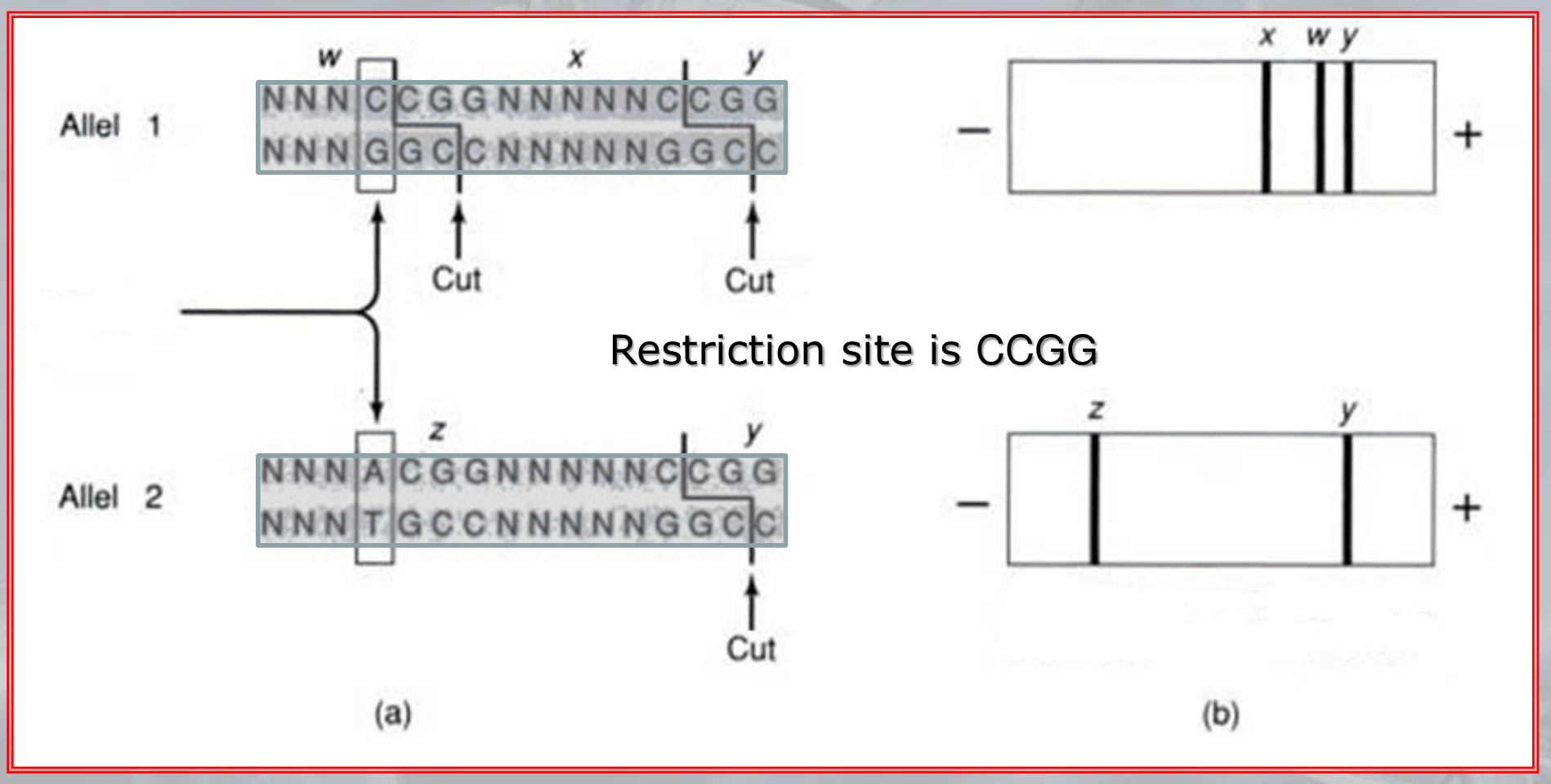
IMPORTANTE Gel Electrophoresis Separates the molecules according to their size, smaller molecules will traverse more distance, while bigger molecules, will traverse less. This movement is due to the two electrods (one negative and one positive), which creates a chrge gradient, and since the DNA is negatively charged, its pieces will be drawn to the positive electrode.
Slides with Notes
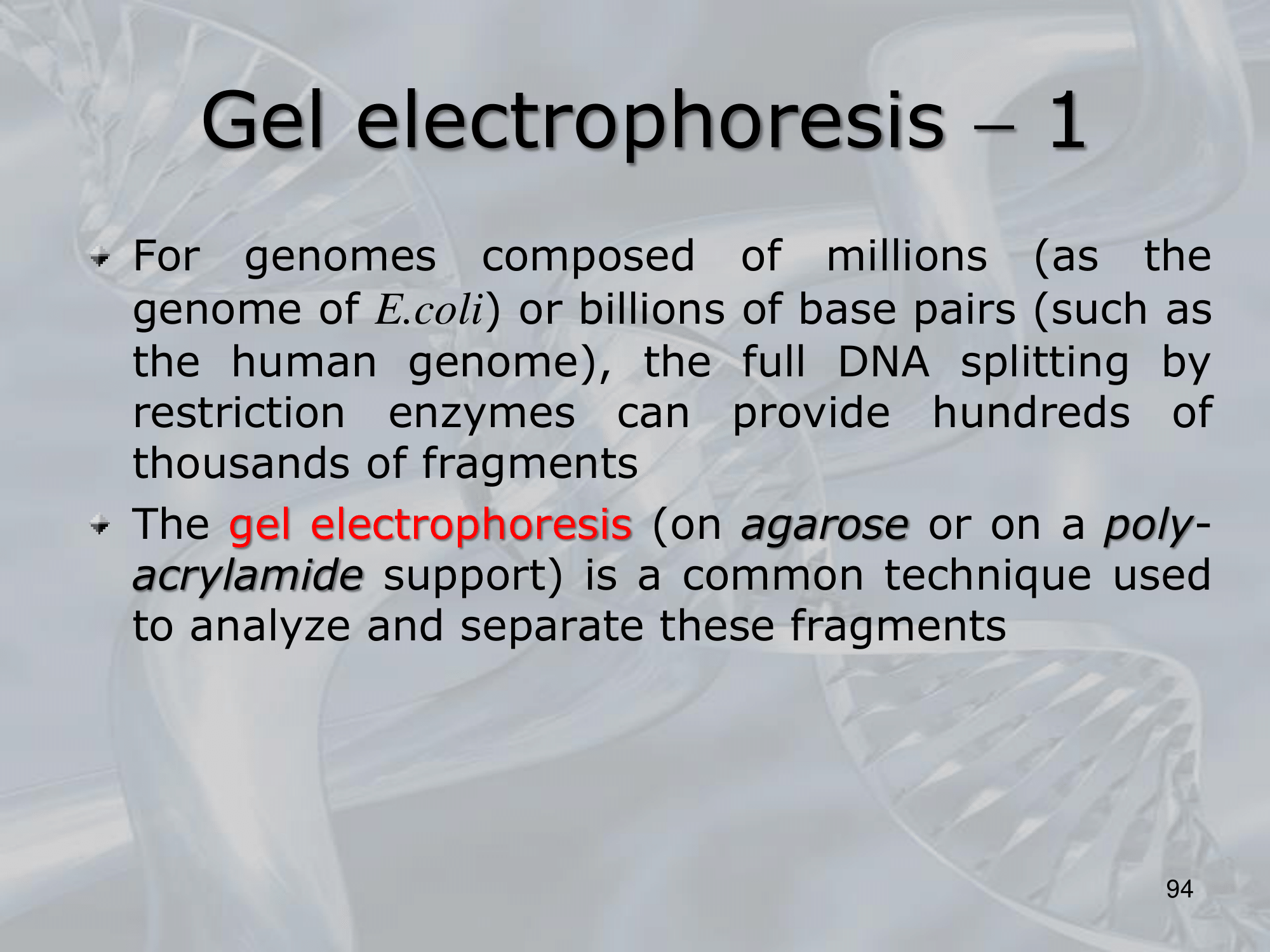
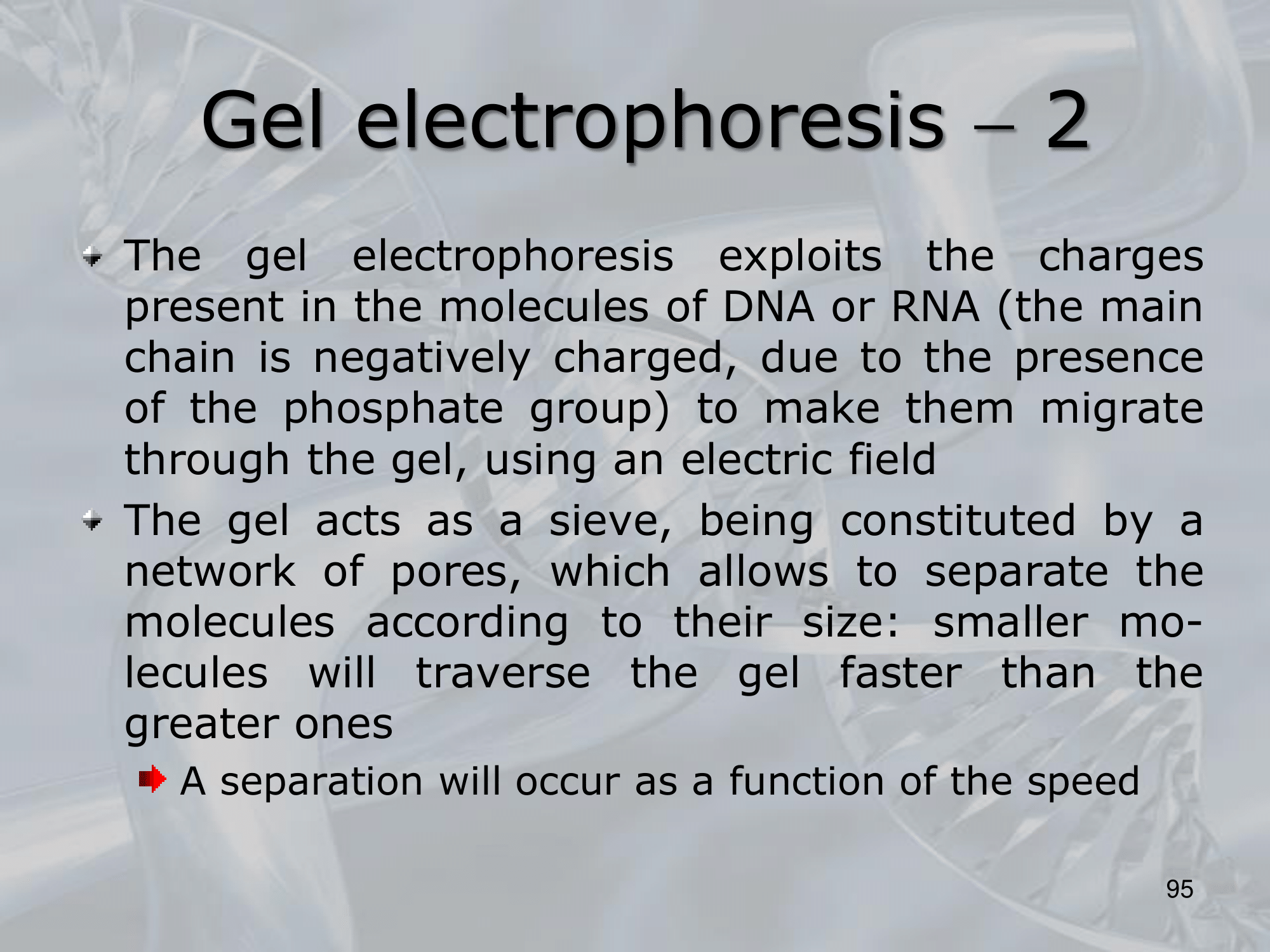
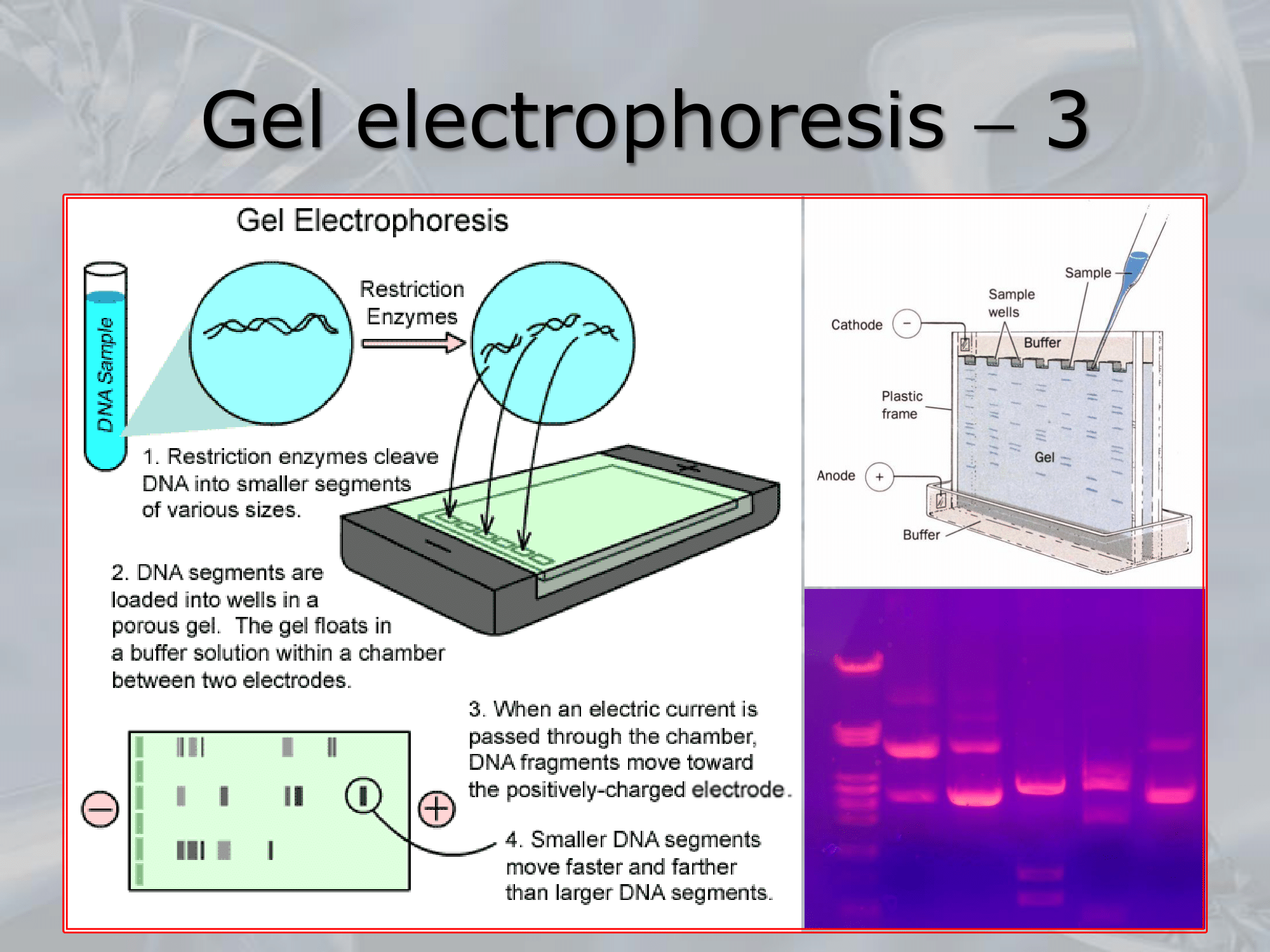
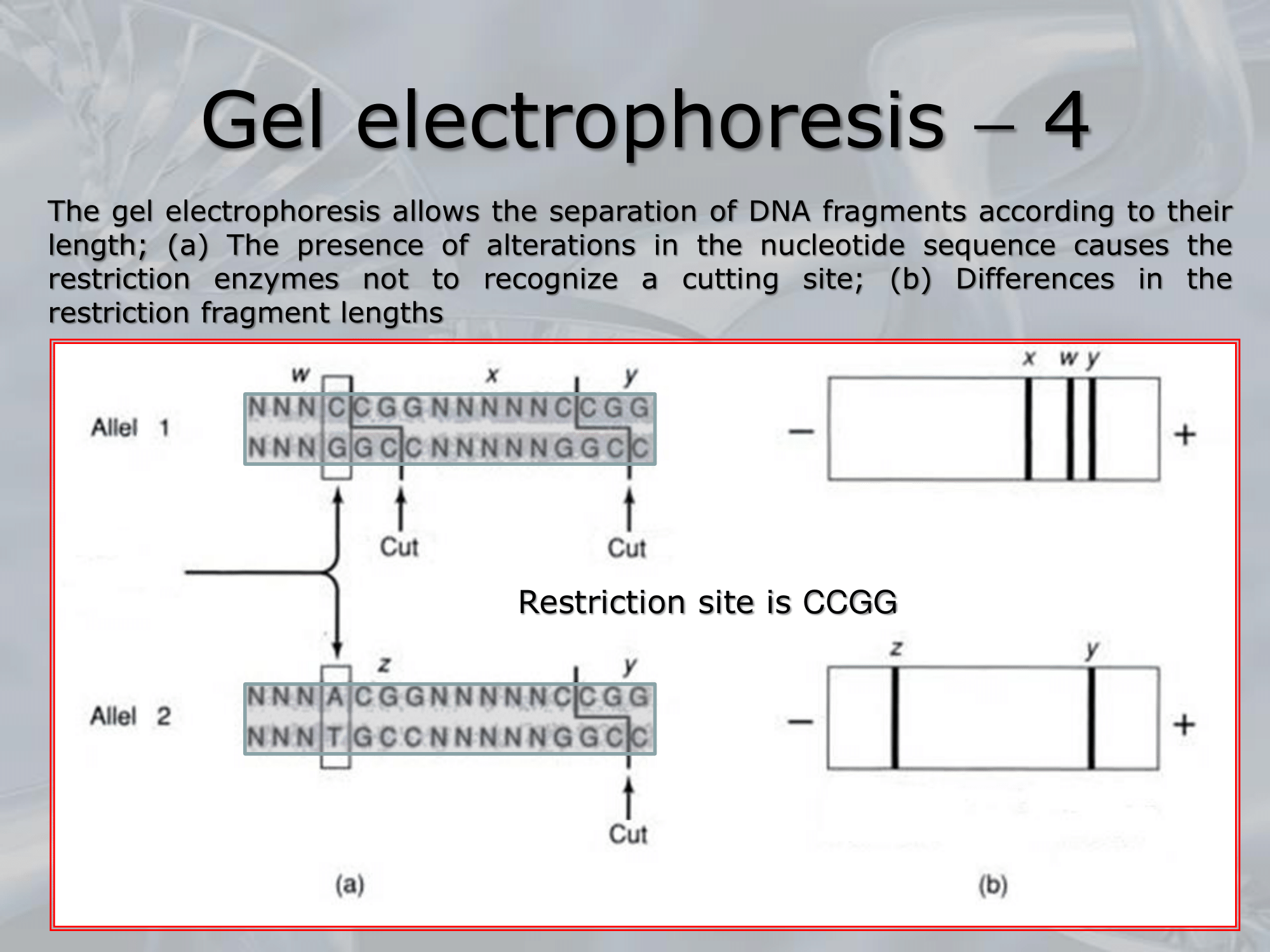
IMPORTANTE Gel Electrophoresis Separates the molecules according to their size, smaller molecules will traverse more distance, while bigger molecules, will traverse less. This movement is due to the two electrods (one negative and one positive), since the DNA is negatively charged, its pieces will be drawn to the positive electrode.