Recursive models for cycling graphs are a type of recursive neural network that can be used to process structured data that has a cyclic or recursive structure, such as trees, parse trees, or program syntax trees.
Unlike traditional recurrent neural networks, which process inputs sequentially and rely on the temporal ordering of the data, recursive models for cycling graphs are designed to process the data recursively, by recursively applying a set of local transition functions to each node in the graph.
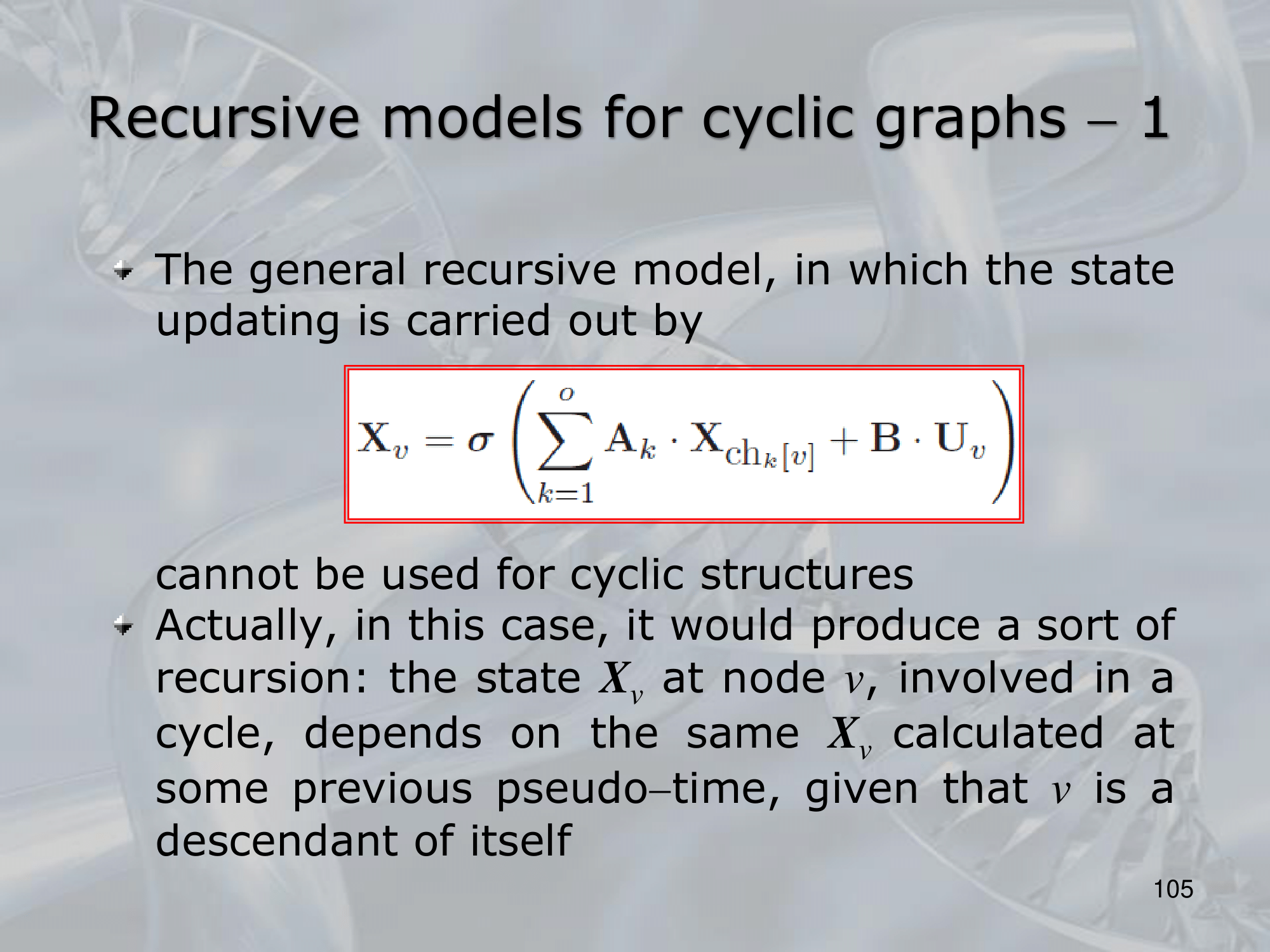
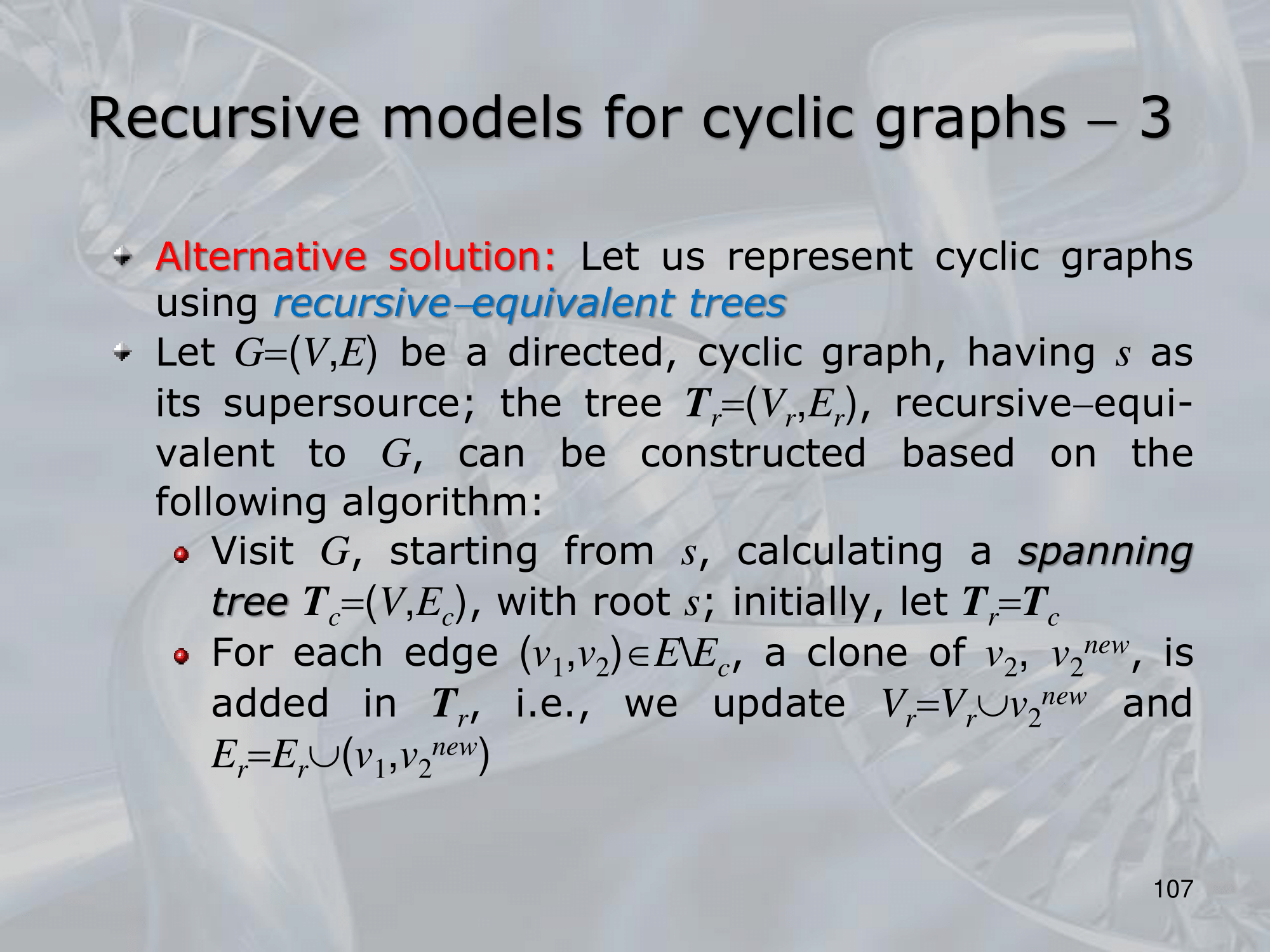
The key idea behind these models is to define a set of local functions that can be applied to each node in the graph, using information from the node’s children or parents to update its representation. This process is repeated recursively, allowing the model to build up a global representation of the entire graph structure.
There are several variations of recursive models for cycling graphs, including Recursive Neural Networks (RNNs), Recursive Neural Tensor Networks (RNTNs), and Tree-LSTM, each with their own specific architectural features and use cases.
These models have been used successfully in a variety of natural language processing tasks, including sentiment analysis, semantic parsing, and machine translation. They are particularly useful for tasks that involve processing structured data with complex dependencies and interactions, where traditional neural networks may struggle to capture the underlying patterns and relationships in the data.
What are the Differences between Non-Positional Graphs and Cycling Graphs?
Non-positional graphs and cycling graphs are two different types of graphs in graph theory.
Non-positional graphs, also known as unordered graphs or unlabelled graphs, are graphs where the nodes or vertices are indistinguishable from each other. In other words, the graph does not have a fixed ordering or numbering of the vertices. For example, the graph with two nodes and ==one edge can be represented as either {1,2} or {2,1}, and these representations are equivalent==. Non-positional graphs are often used to model relationships between entities where the order of the entities is not important.
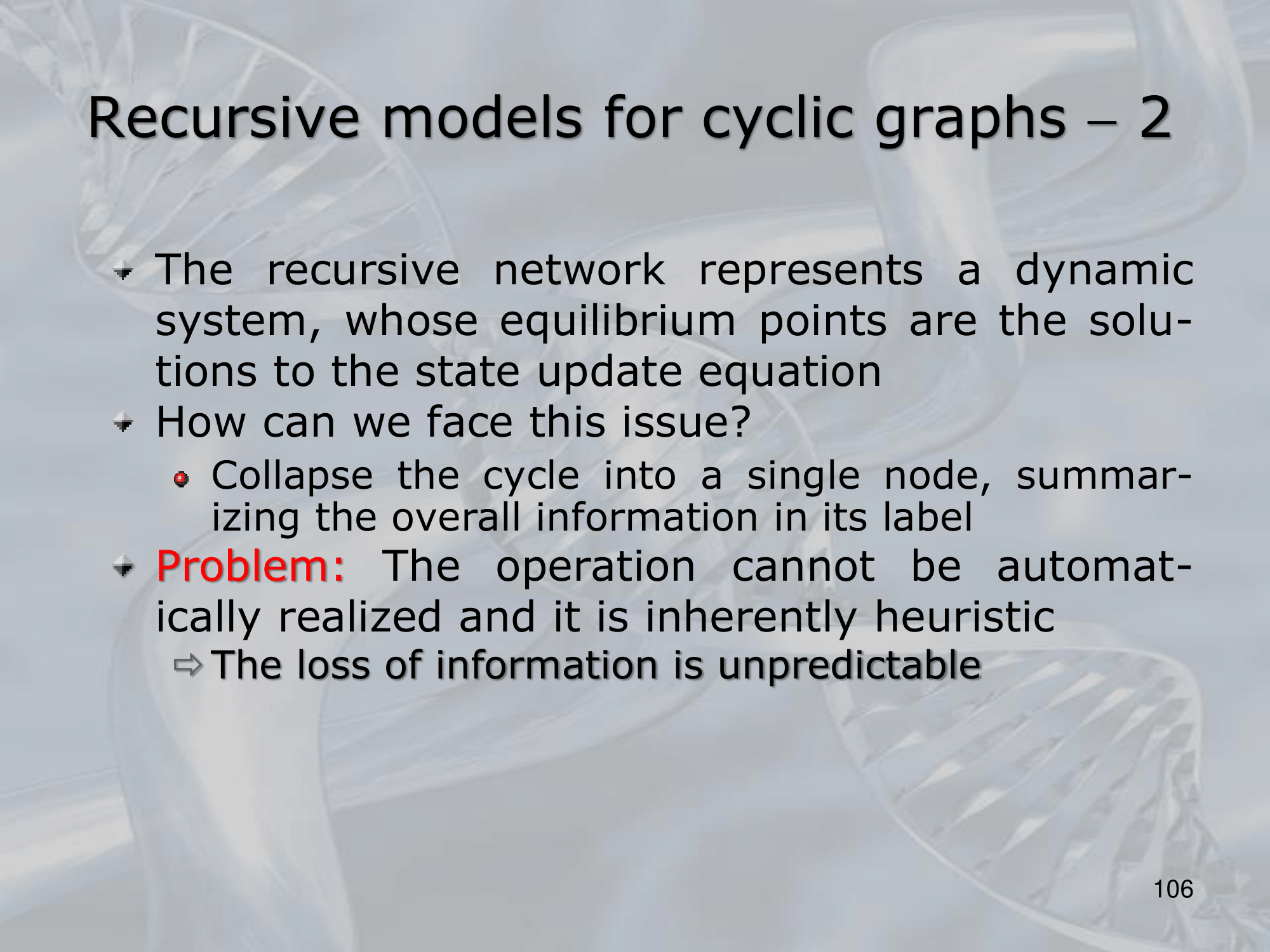
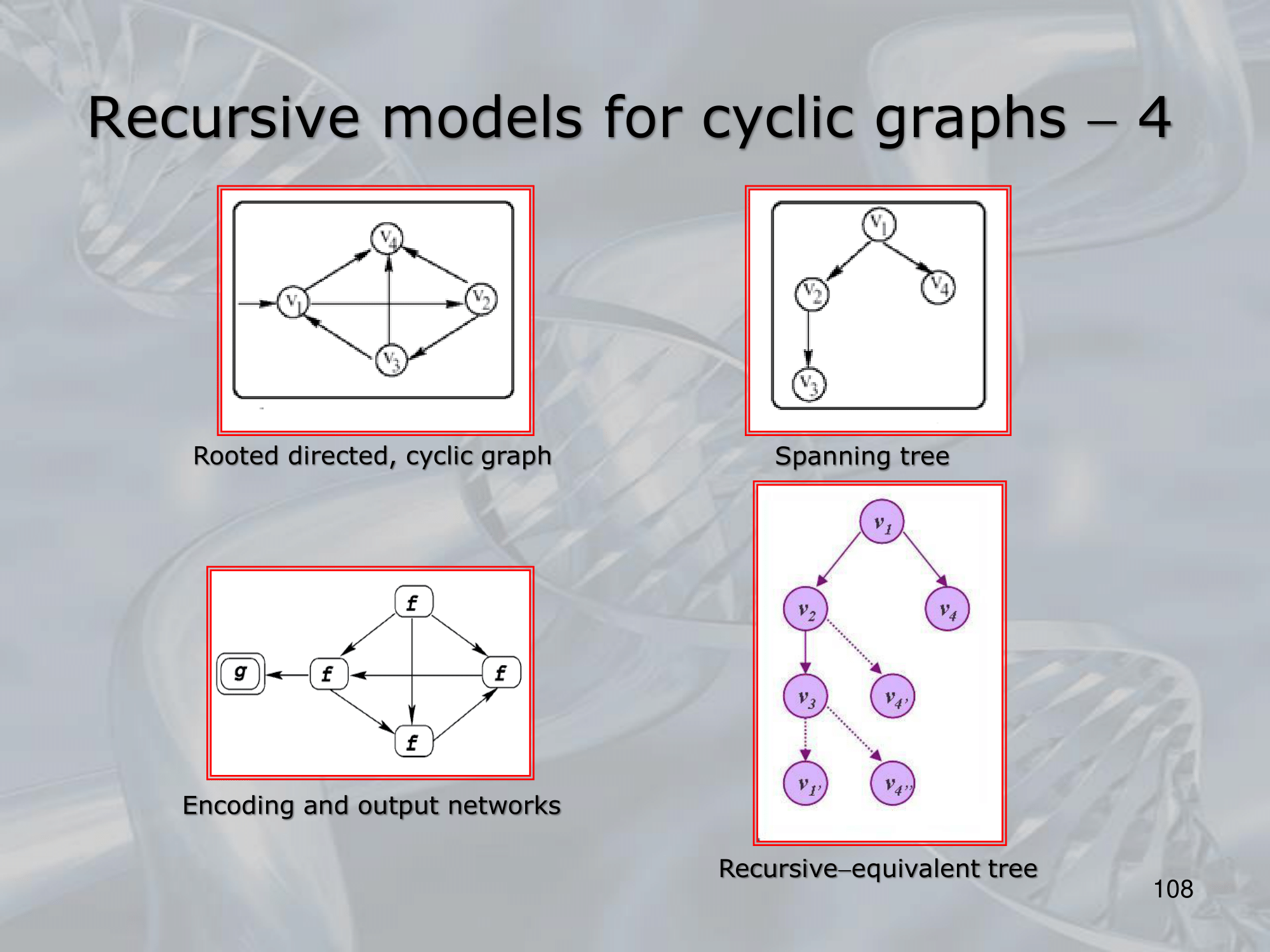
Cycling graphs, also known as directed cycles, are graphs where there is a cycle of directed edges that allows traversal from a node back to itself. In other words, ==cycling graphs contain a closed loop that starts and ends at the same node==. For example, a cycling graph with three nodes might look like A → B → C → A, where the arrow indicates a directed edge. Cycling graphs are often used to model systems that have feedback loops, such as control systems or electronic circuits.
The main difference between non-positional graphs and cycling graphs is that non-positional graphs do not have a fixed ordering or numbering of the nodes, while cycling graphs contain a cycle of directed edges that allow traversal from a node back to itself. Non-positional graphs can be either cycling or acyclic (i.e., they do not contain any cycles), while cycling graphs are, by definition, cyclic.