Questions
- What are the Differences between Static and Dinamic Neural Networks?
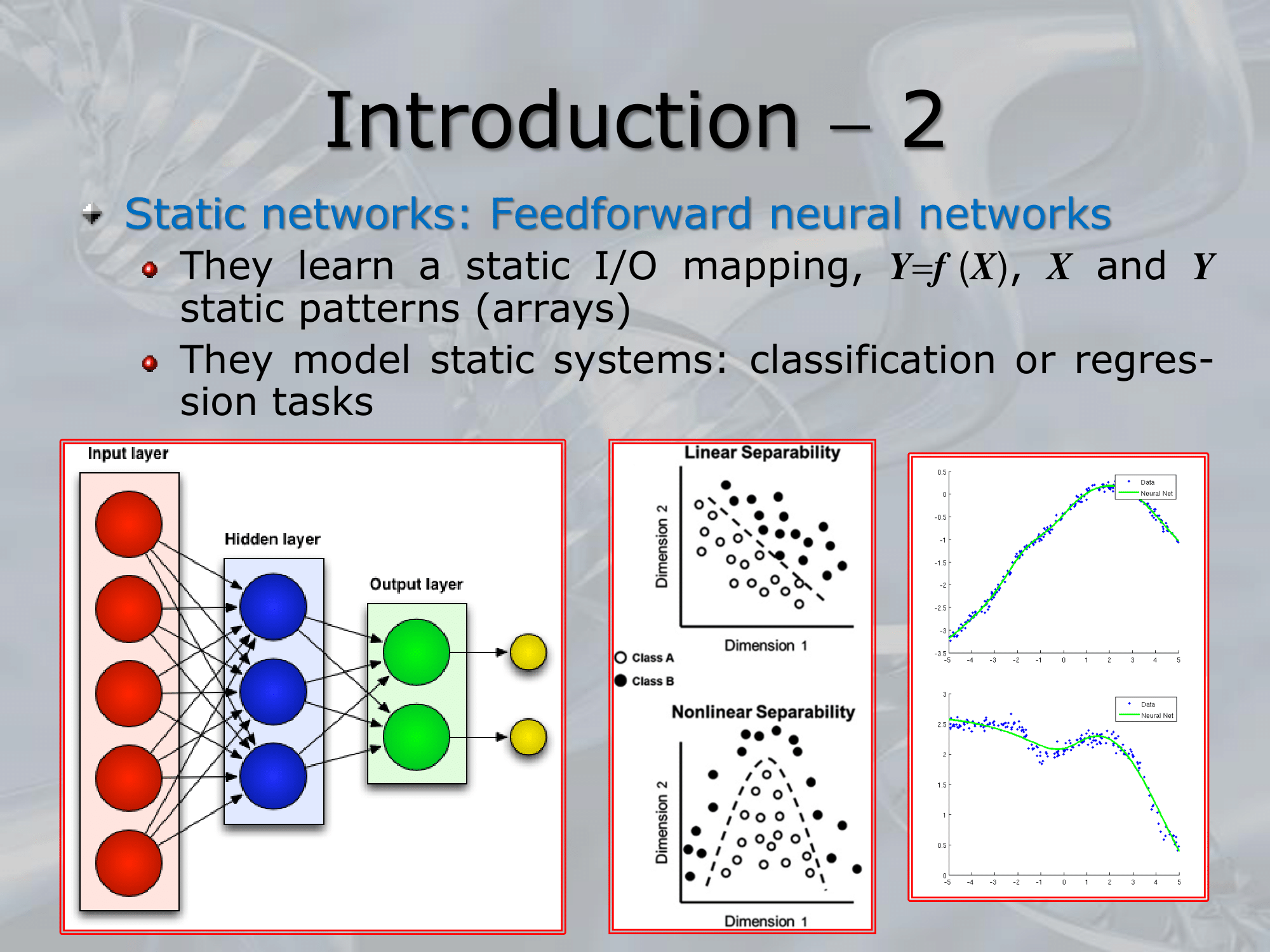
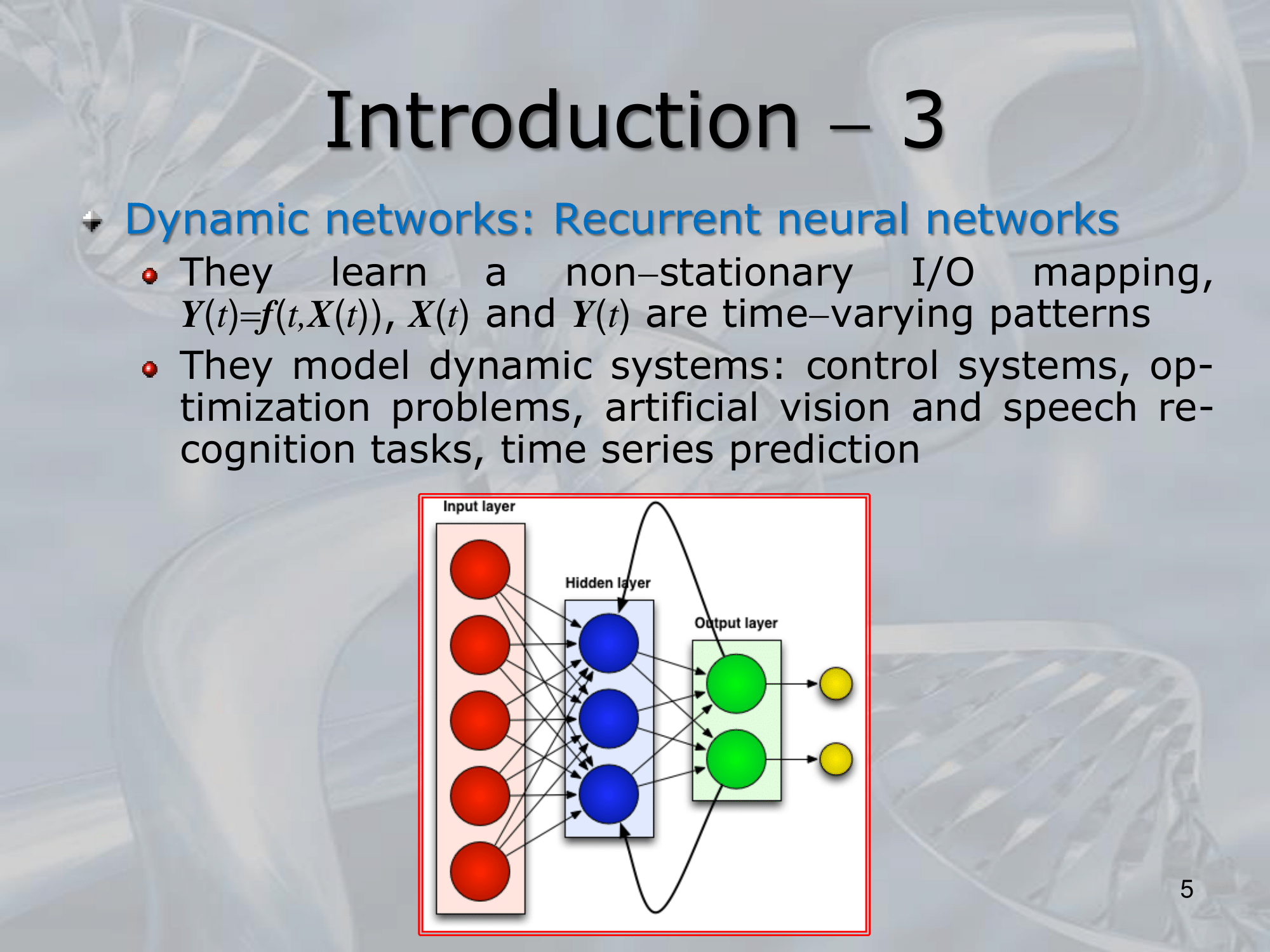
- Static and dynamic neural networks are two types of artificial neural networks that differ in terms of their architecture and behavior.
- ==Static neural networks have a fixed architecture== that does not change during the training or inference process.
This means that the number of neurons, layers, and connections between them is predetermined and does not change based on the input data.
Examples of static neural networks include feedforward neural networks, convolutional neural networks, and recurrent neural networks with a fixed topology. - ==On the other hand, dynamic neural networks have a flexible architecture that can change during the training or inference process based on the input data.
This means that the number of neurons, layers, and connections can be added or removed dynamically, depending on the input data==.
Examples of dynamic neural networks include recursive neural networks, neural Turing machines, and neural architecture search models.
- ==Static neural networks have a fixed architecture== that does not change during the training or inference process.
- ==The main advantage of dynamic neural networks is their ability to adapt to different input sizes and types of data.
They can learn and generalize better than static neural networks, especially when dealing with sequential or time-series data.
However, dynamic neural networks are usually more complex and computationally expensive than static neural networks, which can make them more difficult to train and deploy==.
- Static and dynamic neural networks are two types of artificial neural networks that differ in terms of their architecture and behavior.
—————————————————————
Slides with Notes