Questions
- What are Transposons?
- ==Transposons, also known as jumping genes, are genetic elements that can move or transpose from one location to another within a genome.
They are found in many organisms, including bacteria, plants, and animals, and can make up a significant portion of a genome’s DNA==. - Transposons were first discovered in the 1940s by geneticist Barbara McClintock, who observed their ability to change their position within a chromosome and alter gene expression patterns.
Since then, transposons have been studied extensively and have been found to play important roles in genome evolution and gene regulation. - There are two main types of transposons: DNA transposons and retrotransposons.
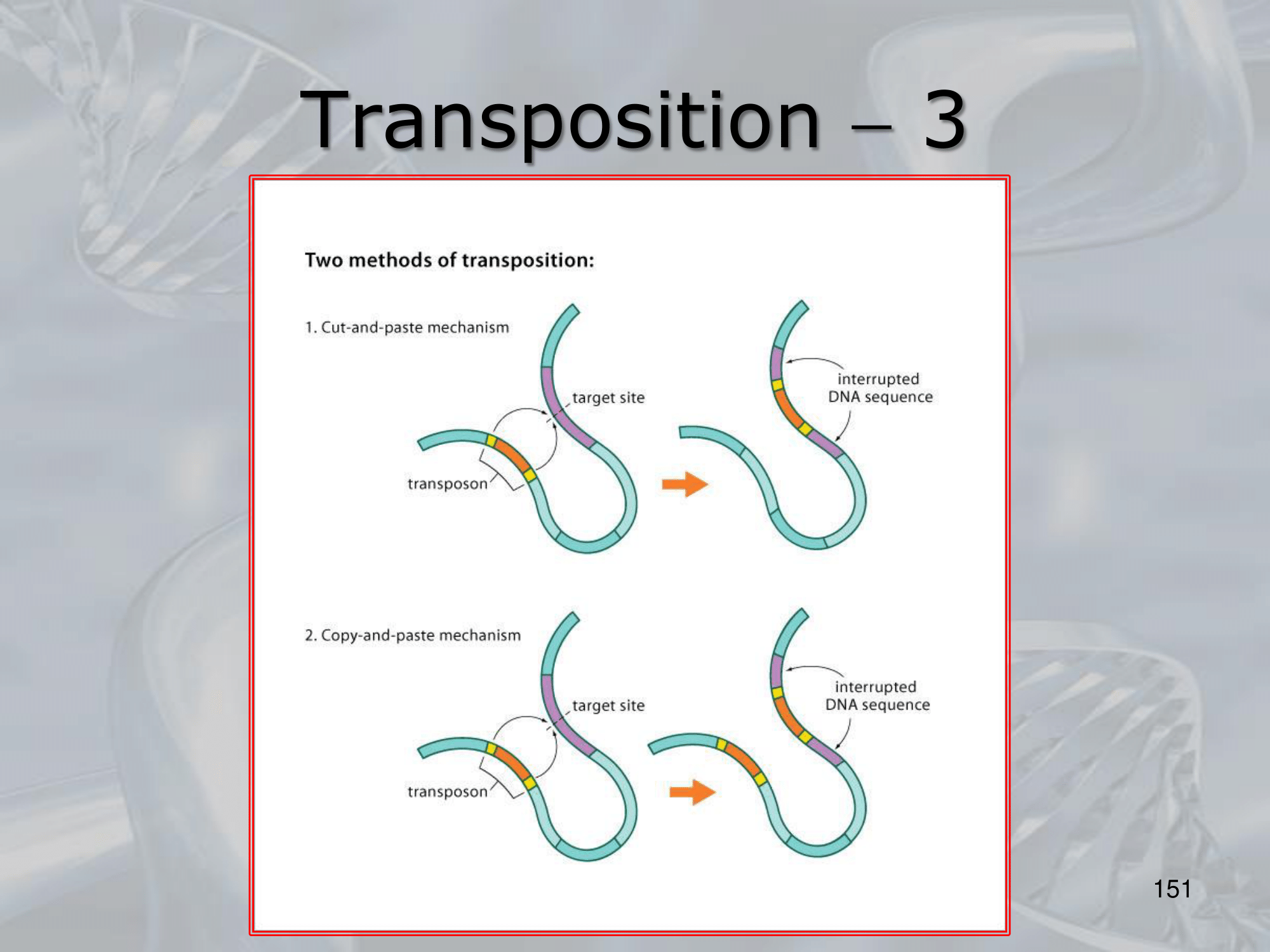
- DNA transposons move by a “cut-and-paste” mechanism, in which the transposon is excised from one location and reinserted into another.
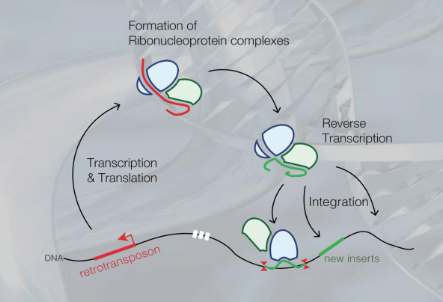
- Retrotransposons, on the other hand, move by a “copy-and-paste” mechanism, in which the transposon is transcribed into RNA and then reverse transcribed into DNA before being inserted into a new location.
- Transposons can have both positive and negative effects on the host genome.
- On the one hand, they can contribute to genetic diversity and adaptation by creating new gene combinations and providing a source of raw material for the evolution of new genes.
- On the other hand, they can disrupt gene function, cause mutations, and contribute to the development of genetic diseases.
- Overall, transposons are fascinating genetic elements that have had a significant impact on genome evolution and gene regulation.
They continue to be an active area of research in genetics and genomics, and their study has the potential to shed light on the mechanisms of genome evolution and the development of genetic diseases.
- ==Transposons, also known as jumping genes, are genetic elements that can move or transpose from one location to another within a genome.
- What are Retrotransposons?
- Retrotransposons are a type of transposable element, or jumping gene, that can move within a genome by a “copy-and-paste” mechanism.
They are found in many organisms, including humans, and make up a significant portion of the genome. - Retrotransposons are distinct from DNA transposons, which move by a “cut-and-paste” mechanism.
Retrotransposons move via an RNA intermediate, in which the retrotransposon is first transcribed into RNA by a host cell RNA polymerase.
This RNA is then reverse transcribed into DNA by the retrotransposon-encoded reverse transcriptase enzyme, which inserts the new DNA copy into a new location in the genome. - There are two main classes of retrotransposons: Long Terminal Repeat (LTR) retrotransposons and non-LTR retrotransposons.
- LTR retrotransposons contain long terminal repeats, or sequences of DNA that are repeated at the ends of the element, and are similar in structure to retroviruses.
- Non-LTR retrotransposons do not contain long terminal repeats and are subdivided into long interspersed nuclear elements (LINEs) and short interspersed nuclear elements (SINEs).
- Retrotransposons have played an important role in shaping the evolution of genomes.
They can cause mutations, alter gene expression patterns, and create new genes by inserting themselves into or near existing genes.
Retrotransposons have also been implicated in a variety of genetic diseases, including cancer and genetic disorders such as hemophilia. - Overall, retrotransposons are a fascinating and complex class of genetic elements that have had a significant impact on genome evolution and disease development.
They continue to be an active area of research in genetics and genomics.
- Retrotransposons are a type of transposable element, or jumping gene, that can move within a genome by a “copy-and-paste” mechanism.
- What are LINEs and SINEs?
- LINEs and SINEs are types of repetitive DNA sequences that are present in eukaryotic genomes.
- LINEs (Long INterspersed Elements) are a type of retrotransposon, which means they can move around in the genome through a copy-and-paste mechanism.
They are typically several kilobases long and can encode the reverse transcriptase enzyme required for retrotransposition.
Humans have several families of LINEs, the most common of which is L1, which makes up about 17% of the human genome.
L1 elements can insert themselves into new locations within the genome, and they are often found in intergenic regions or within introns of genes. - SINEs (Short INterspersed Elements) are also retrotransposons, but they are much shorter than LINEs, typically only a few hundred base pairs long.
SINEs do not encode their own reverse transcriptase and instead rely on the reverse transcriptase encoded by LINEs for retrotransposition.
The most common SINE in humans is Alu, which makes up about 10% of the human genome.
Alu elements are often found in introns and can also play a role in regulating gene expression.
- LINEs (Long INterspersed Elements) are a type of retrotransposon, which means they can move around in the genome through a copy-and-paste mechanism.
- Both LINEs and SINEs are considered to be “selfish DNA” because they do not contribute directly to the function of the genome, but rather replicate and move around in the genome without regard for the host organism’s fitness.
However, they have had significant impacts on genome evolution and function over time, including shaping gene structure, creating genetic variation, and contributing to disease.
- LINEs and SINEs are types of repetitive DNA sequences that are present in eukaryotic genomes.
—————————————————————
IMPORTANTE
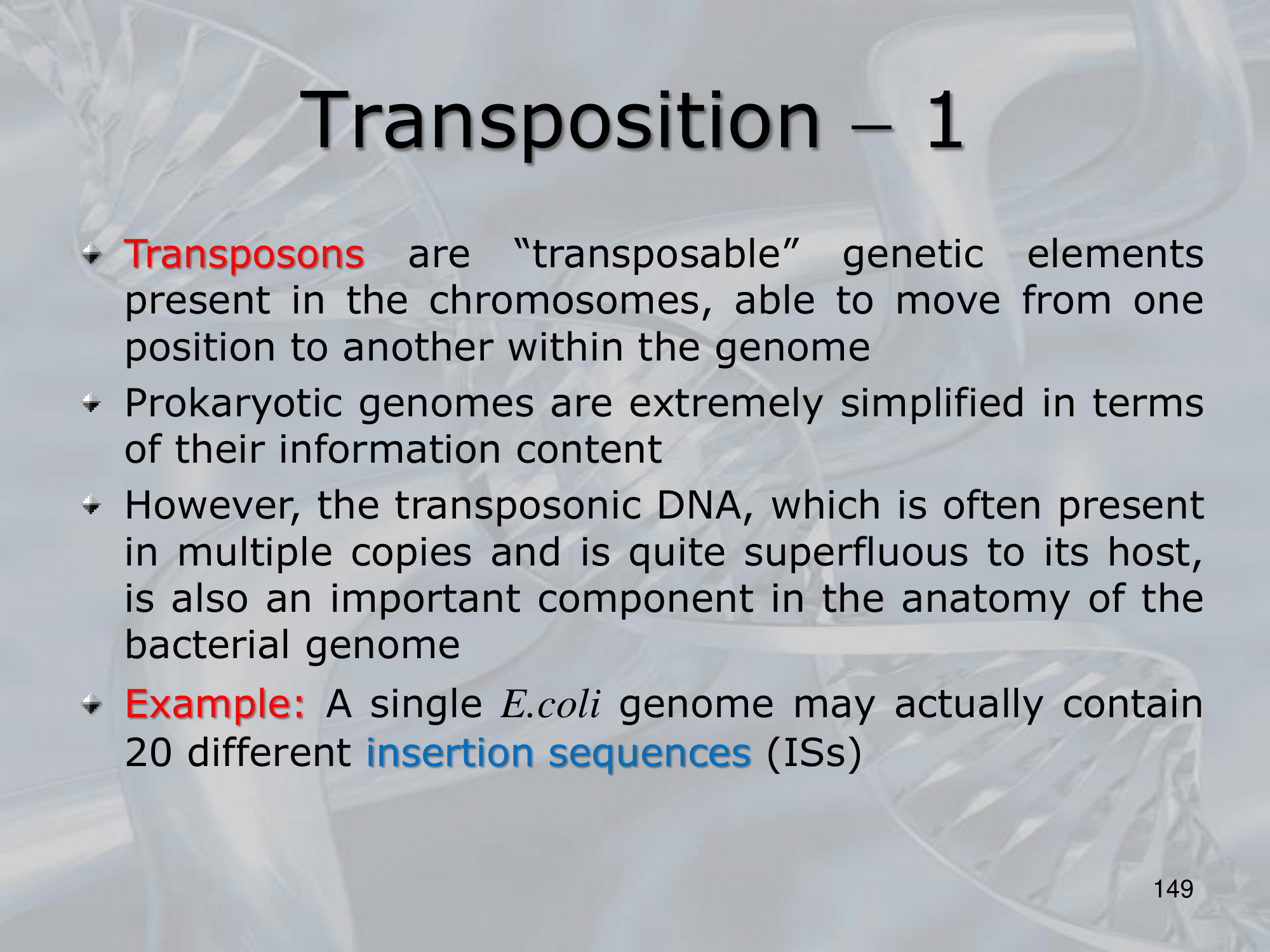
IMPORTANTE Transposons “Transposable” genetic elements, present in the chromosomes, able to move from one position to another within the genome.
An IS (Insertion Sequence or Transposon) can be of two types:
- Conservative: CUT and PASTE
- Replicative: COPY and PASTE
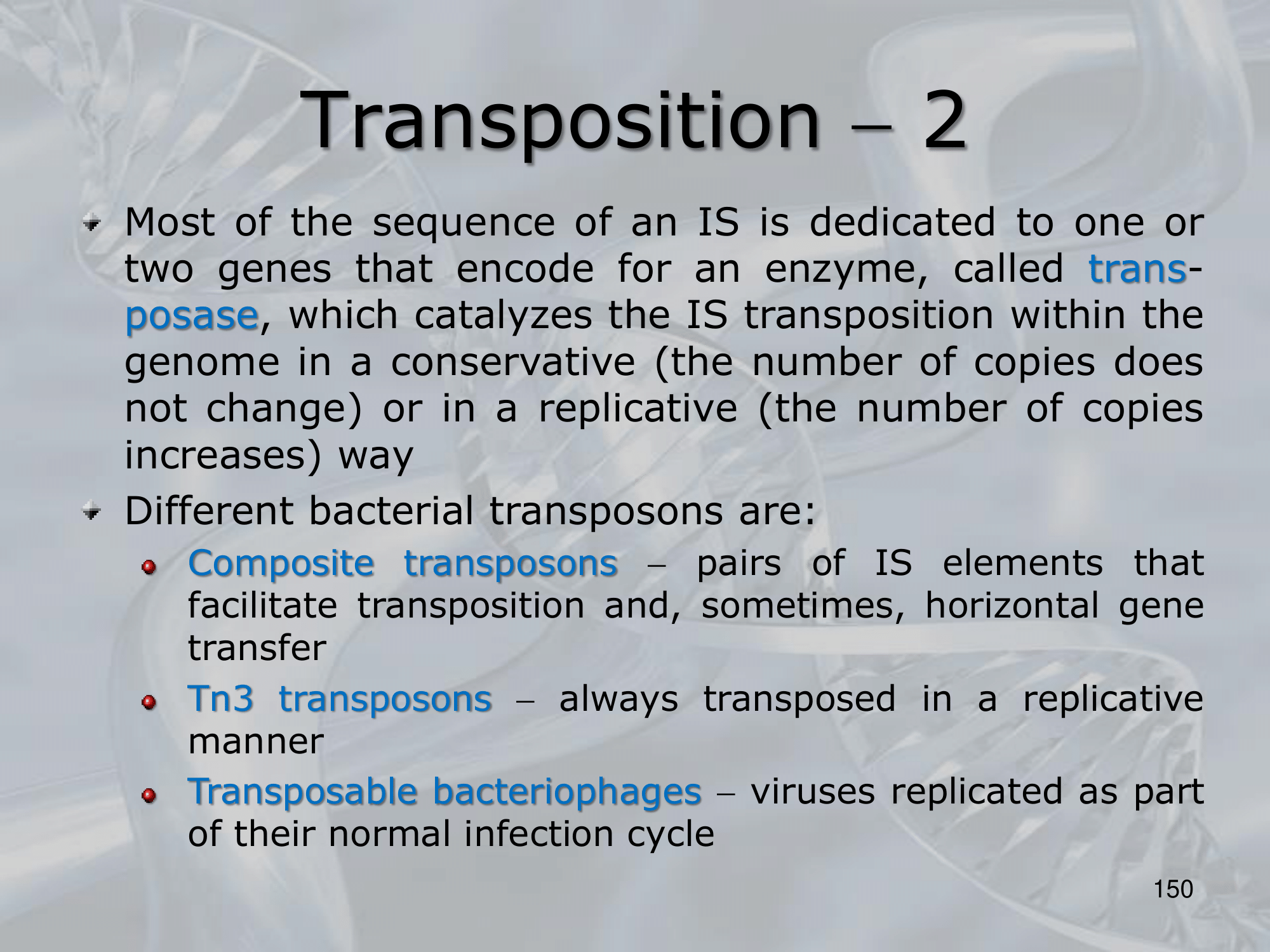
Most of the genetic code in an IS is used to encode the transposase enzyme, which catalyzes the IS transposition.
Different bacterial transposons:
- Composite Transposons: pairs of IS elements that facilitate transposition and sometimes horizontal gene transfer.
- Tn3 Transposons: always transposed in a replicative manner.
- Transposable Bacteriophages: viruses replicated as part of their normal infection cycle.
IMPORTANTE Retrotrasposons: Transposons that propagate through intermediate RNAs. They are the most common transposons in eukaryotes.
—————————————————————
Slides with Notes
IMPORTANTE Transposons “Transposable” genetic elements, present in the chromosomes, able to move from one position to another within the genome.
An IS (Insertion Sequence or Transposon) can be of two types:
- Conservative: CUT and PASTE
- Replicative: COPY and PASTE
Most of the genetic code in an IS is used to encode the transposase enzyme, which catalyzes the IS transposition.
Different bacterial transposons:
- Composite Transposons: pairs of IS elements that facilitate transposition and sometimes horizontal gene transfer.
- Tn3 Transposons: always transposed in a replicative manner.
- Transposable Bacteriophages: viruses replicated as part of their normal infection cycle.
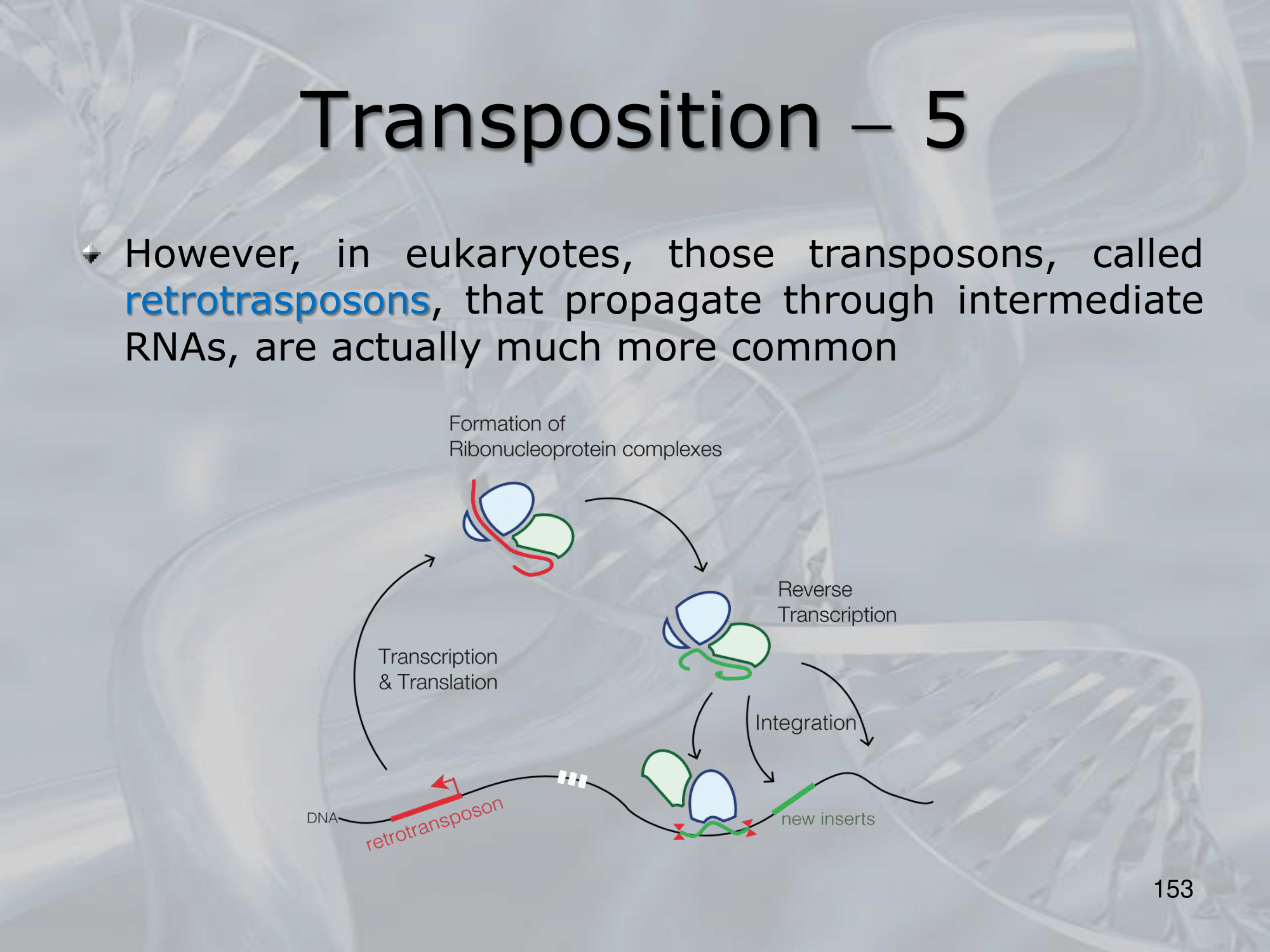
IMPORTANTE Retrotrasposons: Transposons that propagate through intermediate RNAs. They are the most common transposons in eukaryotes.