Questions
- What is the Tree of Life in Bioinformatics?
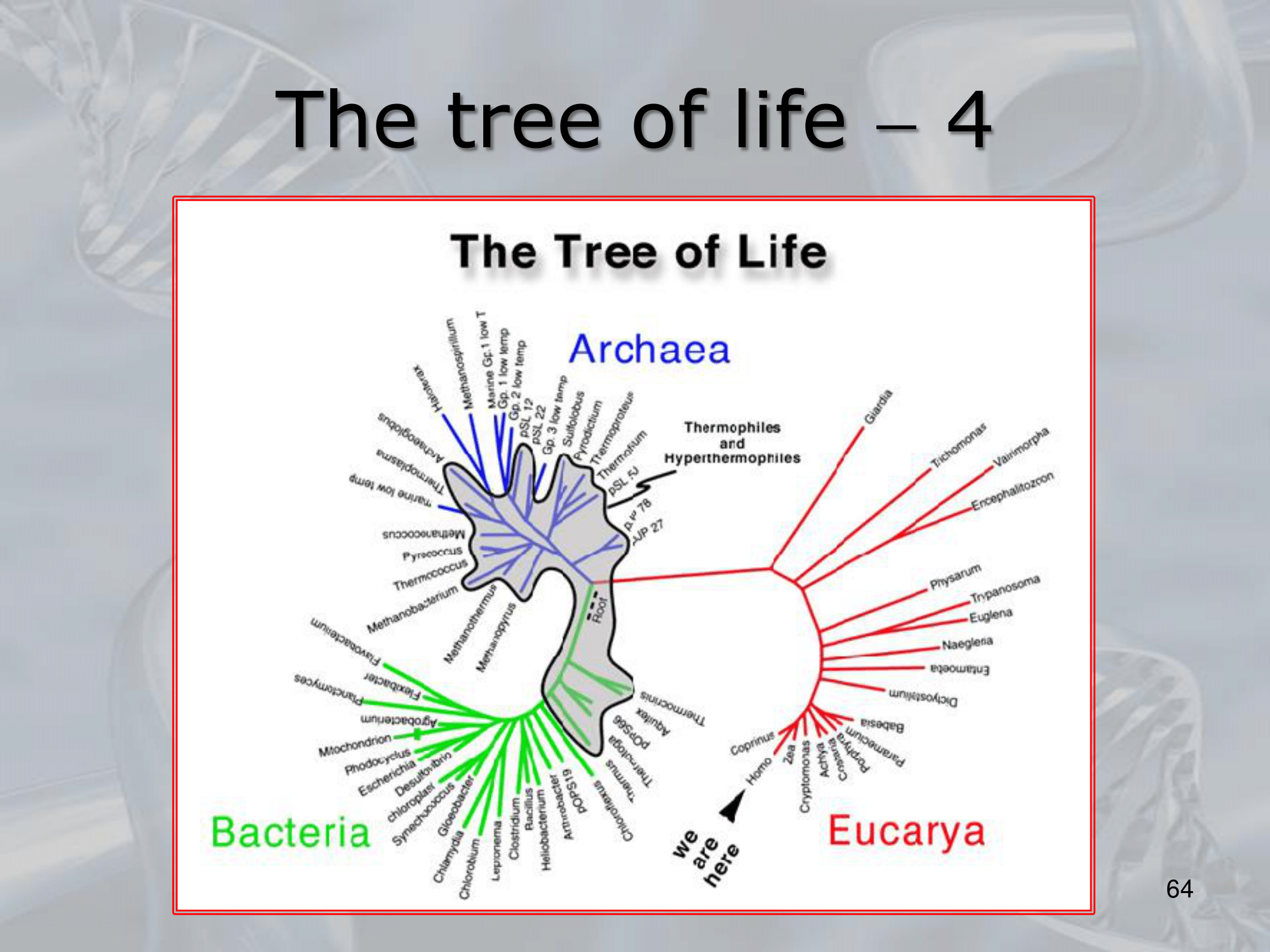
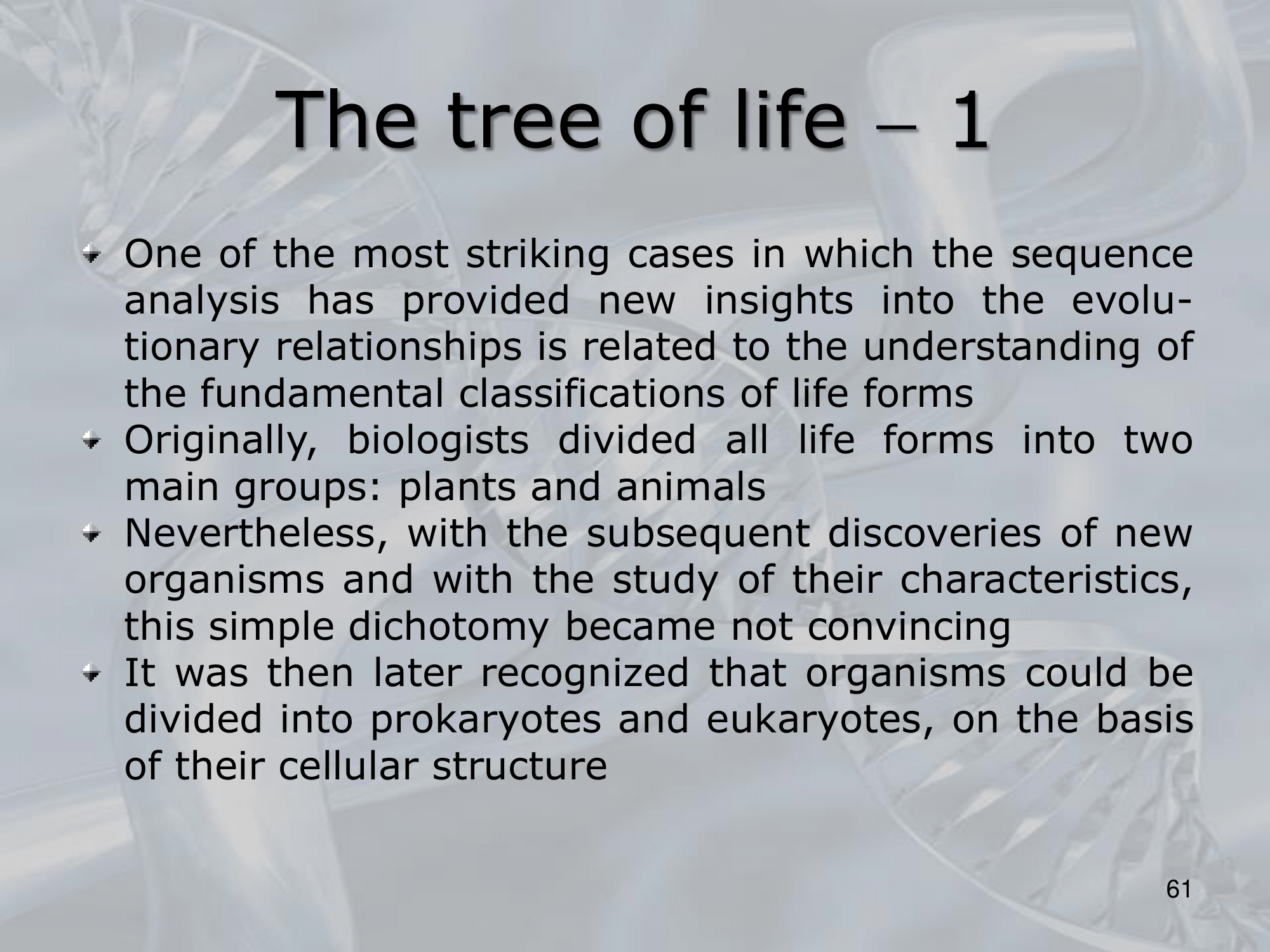
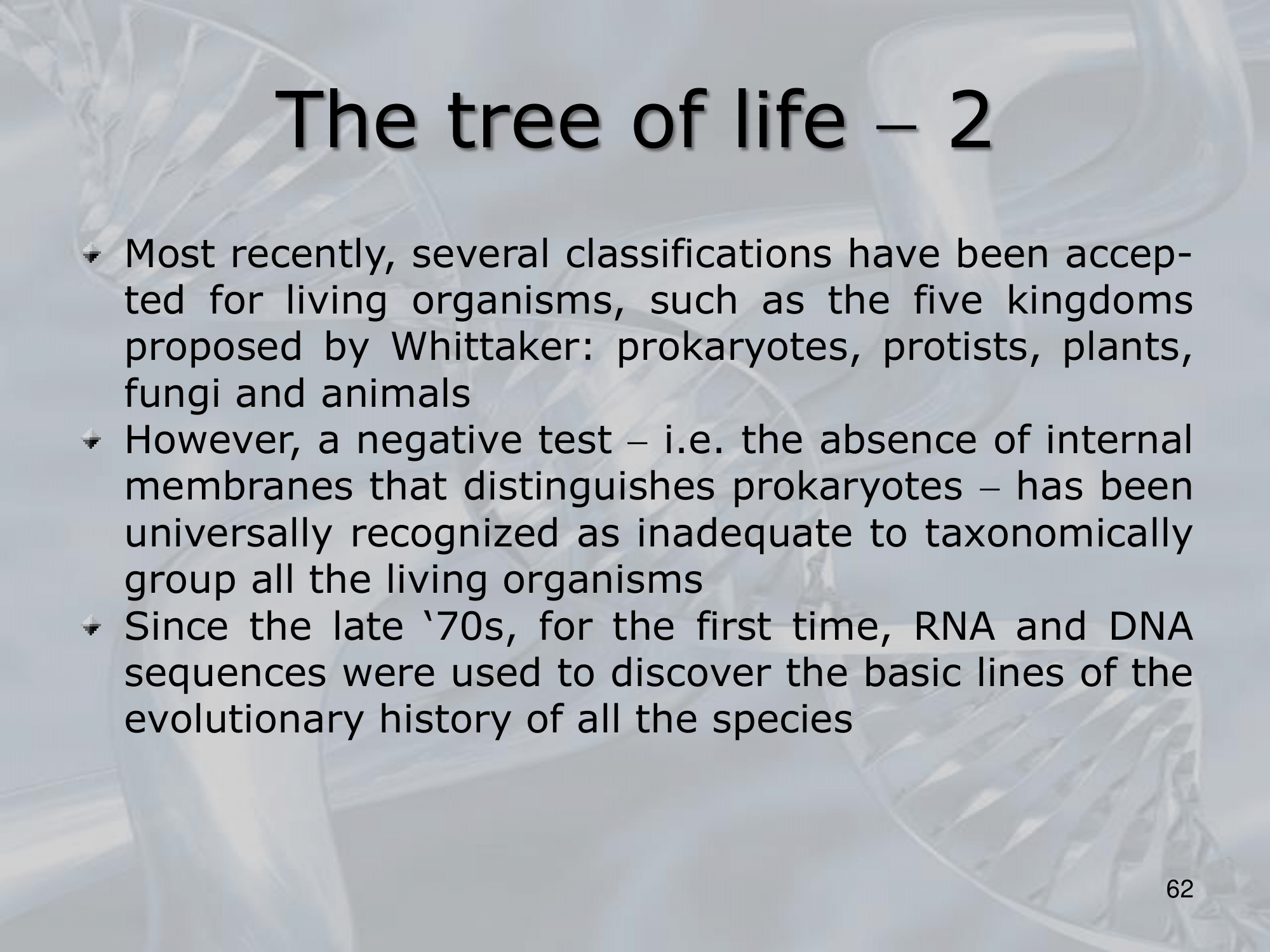
- ==The Tree of Life is a concept in bioinformatics that represents the evolutionary relationships among all living organisms on Earth==.
It is a phylogenetic tree that shows the common ancestry and branching patterns of all known species, from the earliest forms of life to the present day. - The Tree of Life is based on the principle of evolutionary descent, which states that all living organisms are related through a common ancestry, and that this relationship can be inferred from the similarities and differences in their genetic material, morphology, physiology, and behavior.
- The Tree of Life is constantly evolving as new species are discovered, and as new molecular and computational techniques are developed to improve our understanding of evolutionary relationships.
The Tree of Life is an important tool for studying the diversity and evolution of life on Earth, and for informing conservation and management strategies for endangered and threatened species.
- ==The Tree of Life is a concept in bioinformatics that represents the evolutionary relationships among all living organisms on Earth==.
- What are Bacteria?
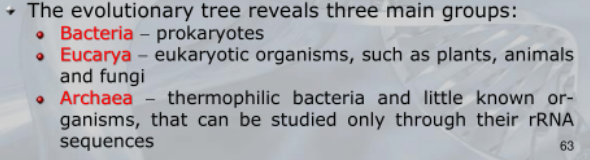
- Bacteria are a diverse group of single-celled microorganisms that belong to the domain Bacteria.
They are found in a wide range of environments, including soil, water, air, and living organisms.
Bacteria come in various shapes and sizes, and they can have different metabolic and reproductive strategies. - ==Bacteria are prokaryotic cells, meaning that they do not have a nucleus or other membrane-bound organelles==.
Instead, their genetic material is contained in a single circular chromosome that is located in the cytoplasm.
Bacteria also have a cell wall that provides structural support and protection, and many bacteria have flagella or pili that allow them to move and attach to surfaces. - Bacteria are incredibly important to life on Earth, as they play critical roles in nutrient cycling, decomposition, and biogeochemical cycles.
Some bacteria are also responsible for causing disease in humans and other organisms, while others are used in biotechnology, such as in the production of antibiotics, vaccines, and fermented foods.
- Bacteria are a diverse group of single-celled microorganisms that belong to the domain Bacteria.
- What are Eukarya?
- Eukarya, or Eukaryotes, are a diverse group of organisms that belong to the domain Eukarya.
They are characterized by having eukaryotic cells, which are more complex than prokaryotic cells, as they contain a nucleus and other membrane-bound organelles, such as mitochondria, chloroplasts, and the endoplasmic reticulum. - Eukarya include a vast array of organisms, including animals, plants, fungi, and protists.
They are found in a wide range of habitats, from marine and freshwater environments to terrestrial ecosystems.
Eukaryotes come in various shapes and sizes, and they can have different metabolic and reproductive strategies. - Eukarya are important for the ecology and function of ecosystems, as they play key roles in energy and nutrient cycling, and are involved in complex interactions with other organisms.
Many eukaryotes are also economically and socially important, as they provide food, medicine, and other resources for humans.
- Eukarya, or Eukaryotes, are a diverse group of organisms that belong to the domain Eukarya.
- What are Archeae?
- Archaea, or Archaebacteria, are a group of microorganisms that belong to the domain Archaea.
They are distinct from both bacteria and eukaryotes in terms of their genetics, biochemistry, and ecology.
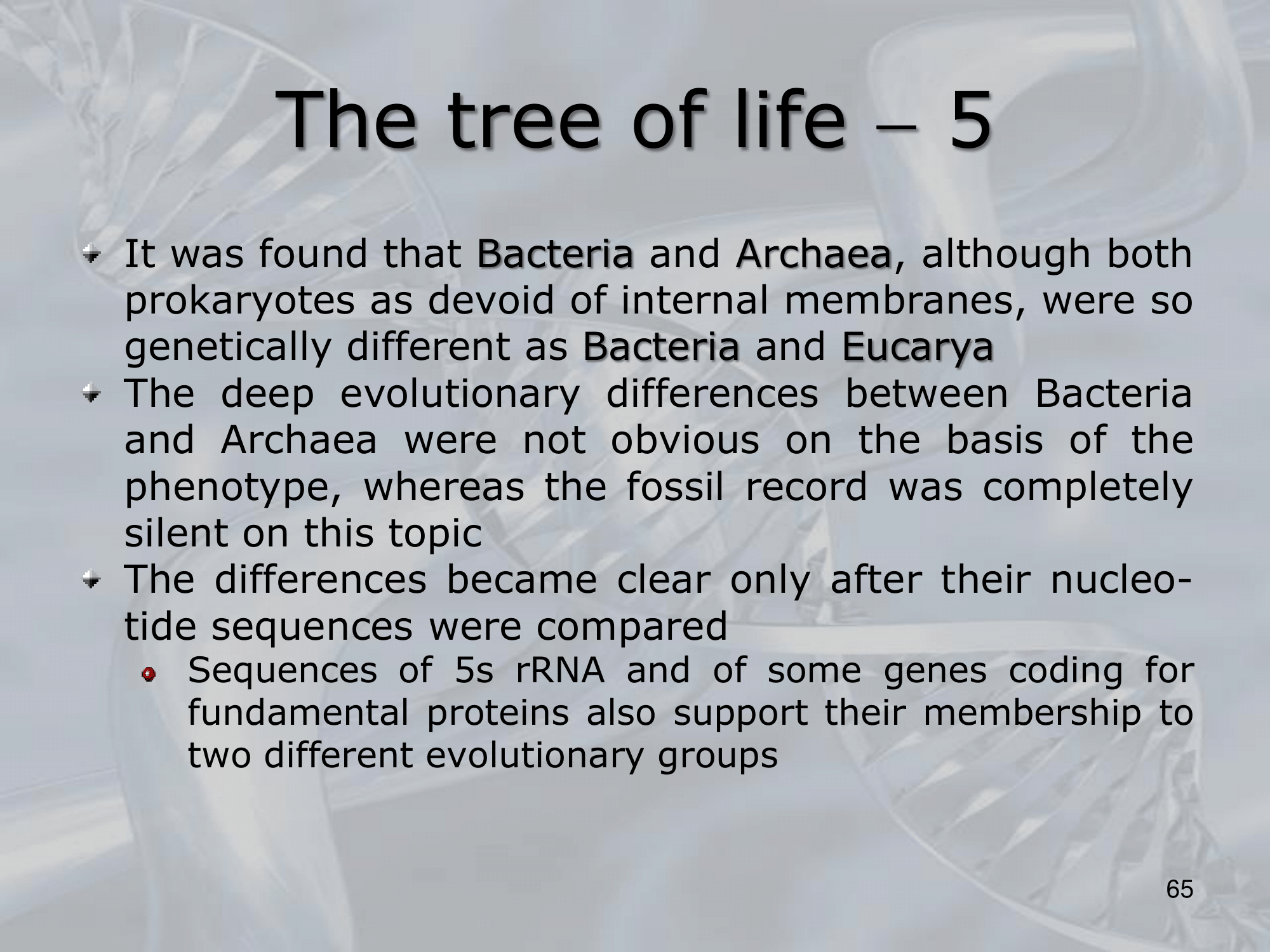
Archaea are found in a wide range of environments, including extreme environments such as hot springs, deep-sea hydrothermal vents, and salt lakes, but they are also present in more moderate environments such as soil, water, and the gut of animals. - ==Archaea have prokaryotic cells, meaning that they do not have a nucleus or other membrane-bound organelles.
However, their genetic and biochemical features are more similar to those of eukaryotes than to bacteria==.
For example, archaea have a unique form of cell membrane that is composed of ether-linked lipids, rather than ester-linked lipids found in bacterial and eukaryotic cell membranes. - Archaea are important for the ecology and function of ecosystems, as they play critical roles in carbon and nitrogen cycling, and are involved in complex interactions with other organisms.
Some archaea are also known for their ability to survive in extreme environments, and are being studied for their potential applications in biotechnology, such as in the production of biofuels or in the development of new antibiotics.
- Archaea, or Archaebacteria, are a group of microorganisms that belong to the domain Archaea.
- What are the Differences between Bacteria, Eukarya and Archeae?
- Bacteria, Eukarya, and Archaea are the three domains of life, and they differ in several ways:
- Cell structure: Bacteria and Archaea are both prokaryotic cells, meaning they lack a nucleus and other membrane-bound organelles, while Eukarya have eukaryotic cells with a nucleus and membrane-bound organelles.
- Cell membrane composition: Bacteria and Eukarya have a cell membrane composed of fatty acids linked by ester bonds, while Archaea have a cell membrane composed of isoprenoid chains linked by ether bonds.
- Gene expression: Archaea use a unique form of RNA polymerase to transcribe their genes, while Bacteria and Eukarya use a different RNA polymerase.
- Metabolism: Bacteria and Archaea can have a wide range of metabolic strategies, including photosynthesis, chemosynthesis, and fermentation, while Eukarya generally rely on aerobic respiration for energy production.
- Habitat: Archaea are often found in extreme environments such as hot springs, deep-sea hydrothermal vents, and salt lakes, while Bacteria and Eukarya are found in a wide range of environments, including soil, water, and the bodies of animals and plants.
- Evolutionary history: Archaea are considered to be more closely related to Eukarya than to Bacteria, based on genetic and biochemical evidence.
- Overall, these differences reflect the diverse evolutionary trajectories and adaptations of these three domains of life.
- Bacteria, Eukarya, and Archaea are the three domains of life, and they differ in several ways:
—————————————————————
IMPORTANTE
—————————————————————
Slides with Notes
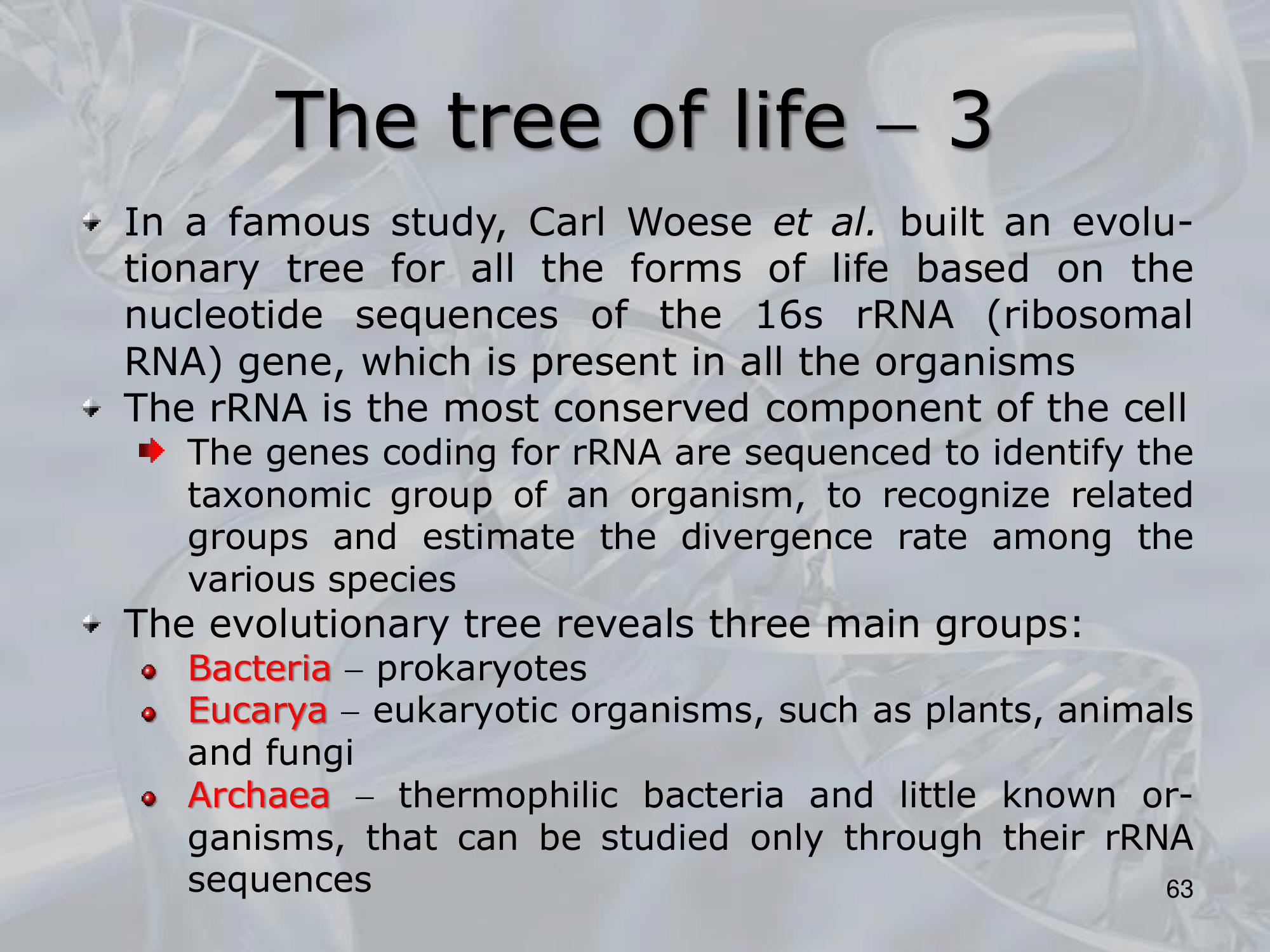
NOTE: Eucarya: Do have internal membranes Bacteria and Archaea: Do NOT have internal membranes (the difference between the wo is seen studying their rRNA)