Questions
- What does DNA mean?
- ==DNA stands for “deoxyribonucleic acid.”==
It is a molecule that contains the genetic instructions used in the development and functioning of all living organisms.
DNA is composed of a long chain of nucleotides, which are the building blocks of the molecule.
The order of these nucleotides along the chain determines the genetic code, which specifies the sequence of amino acids in proteins and ultimately determines an organism’s traits and characteristics.
DNA is found in the nucleus of cells and is responsible for transmitting genetic information from one generation to the next.
- ==DNA stands for “deoxyribonucleic acid.”==
- What is DNA Composed of?
- ==DNA, short for Deoxyribonucleic acid, is composed of long chains of nucleotides.
Each nucleotide is made up of three components: a sugar molecule called deoxyribose (), a phosphate group (), and a nitrogenous base (Adenine, Guanine, Cythosine, Thymine, Uracil)==. - There are four types of nitrogenous bases found in DNA: adenine (A), guanine (G), cytosine (C), and thymine (T).
The nitrogenous bases pair up according to the base-pairing rules, where A always pairs with T and C always pairs with G, forming a double-stranded helix structure. - The deoxyribose and phosphate molecules form the backbone of the DNA strand, while the nitrogenous bases are arranged in the center of the helix and form the base pairs between the two strands.
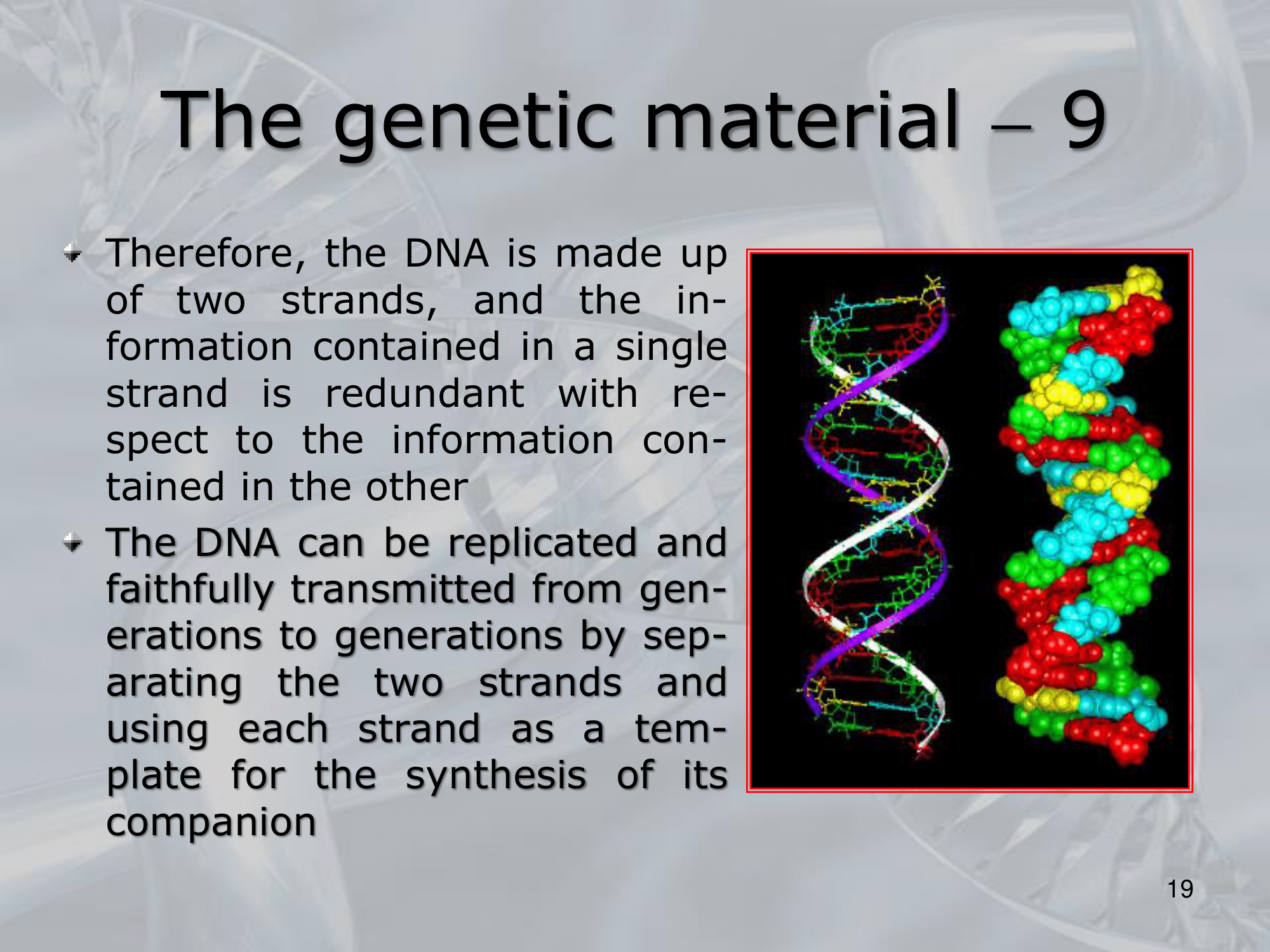
The sequence of the nitrogenous bases along the DNA molecule carries genetic information that encodes the instructions for the development, function, and reproduction of all living organisms. - In addition to its role in encoding genetic information, DNA also plays a critical role in the transmission of genetic information from one generation to the next through the process of DNA replication, where the two strands of the DNA helix separate and each strand serves as a template for the synthesis of a new complementary strand.
DNA replication is a fundamental process in cell division and is essential for the growth and development of all living organisms.
- ==DNA, short for Deoxyribonucleic acid, is composed of long chains of nucleotides.
- What is a Nucleobasis?
- ==A nucleobase, also known as a nitrogenous base, is an organic molecule that is one of the building blocks of nucleic acids such as DNA and RNA==.
There are five types of nucleobases: adenine (A), guanine (G), cytosine (C), thymine (T), and uracil (U). - In DNA, the nucleobases adenine (A), guanine (G), cytosine (C), and thymine (T) are found.
Adenine and guanine are purines, which are larger double-ringed molecules, while cytosine and thymine are pyrimidines, which are smaller single-ringed molecules.
These nucleobases pair up through hydrogen bonds, with adenine always pairing with thymine (A-T) and guanine always pairing with cytosine (G-C). The order or sequence of nucleobases along the DNA molecule determines the genetic information encoded in the DNA. - In RNA, uracil (U) replaces thymine (T) as one of the nucleobases.
RNA contains the same nucleobases as DNA, except that uracil (U) is substituted for thymine (T).
The nucleobases in RNA also pair up through hydrogen bonds, with adenine always pairing with uracil (A-U) and guanine always pairing with cytosine (G-C).
The sequence of nucleobases along an RNA molecule is used to determine the sequence of amino acids in a protein during the process of translation.
- ==A nucleobase, also known as a nitrogenous base, is an organic molecule that is one of the building blocks of nucleic acids such as DNA and RNA==.
- How are Nucleobasis Groupped?
- Nucleobases, also known as nitrogenous bases, are grouped into two categories based on their chemical structure: ==purines and pyrimidines==.
- Purines are larger, double-ring nitrogenous bases that include adenine (A) and guanine (G).
- Pyrimidines are smaller, single-ring nitrogenous bases that include cytosine (C), thymine (T), and uracil (U).
- In DNA, adenine always pairs with thymine (A-T) and guanine always pairs with cytosine (G-C).
This base pairing is based on the size and shape complementarity of the nucleobases.
The hydrogen bonding between the complementary nucleobases stabilizes the double-stranded DNA structure. - In RNA, uracil (U) replaces thymine (T) as one of the nucleobases.
RNA contains the same nucleobases as DNA, except that uracil (U) is substituted for thymine (T). The base pairing in RNA follows the same rules as in DNA, with adenine always pairing with uracil (A-U) and guanine always pairing with cytosine (G-C).
The sequence of nucleobases along an RNA molecule is used to determine the sequence of amino acids in a protein during the process of translation.
- Nucleobases, also known as nitrogenous bases, are grouped into two categories based on their chemical structure: ==purines and pyrimidines==.
- What are Polynucleotide Chains?
- A polynucleotide chain is a long chain of nucleotides that make up nucleic acids such as DNA and RNA.
Nucleotides are the building blocks of nucleic acids and consist of a sugar molecule, a phosphate group, and a nitrogenous base. - In DNA, the polynucleotide chain is made up of deoxyribonucleotides, which contain the sugar deoxyribose. The nitrogenous bases in DNA are adenine (A), guanine (G), cytosine (C), and thymine (T).
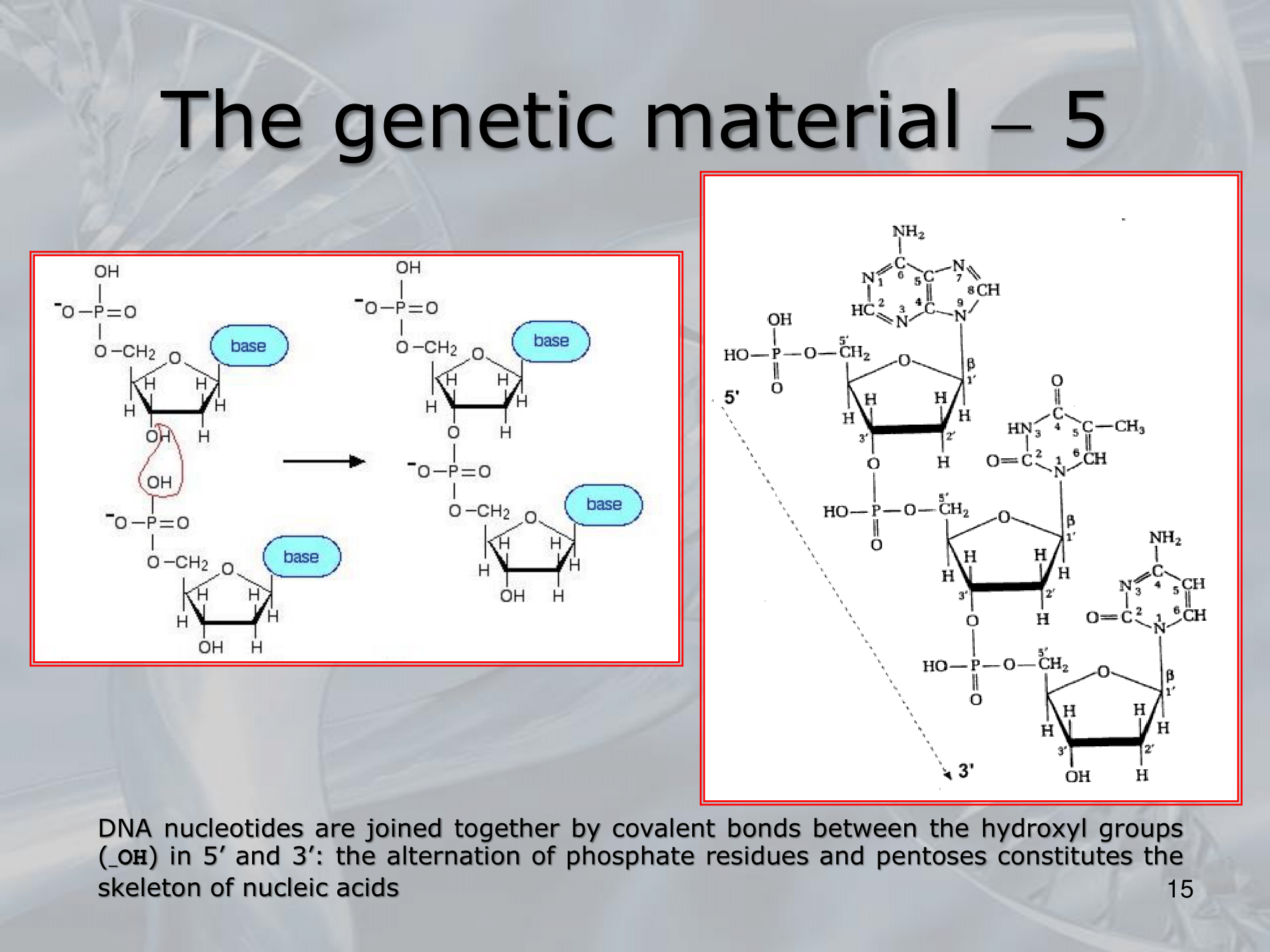
The nucleotides in DNA are linked together by covalent phosphodiester bonds between the 5' carbon of one nucleotide and the 3' carbon of the next nucleotide. - The sequence of the nucleotides along the DNA strand encodes the genetic information that determines the traits and characteristics of an organism.
The two strands of DNA are complementary, and the sequence of one strand can be used to infer the sequence of the other strand through base pairing rules. - In RNA, the polynucleotide chain is made up of ribonucleotides, which contain the sugar ribose. The nitrogenous bases in RNA are adenine (A), guanine (G), cytosine (C), and uracil (U).
RNA molecules can be single-stranded or can form complex secondary and tertiary structures through base pairing between complementary nucleotides.
RNA plays important roles in protein synthesis, gene regulation, and other cellular processes.
- A polynucleotide chain is a long chain of nucleotides that make up nucleic acids such as DNA and RNA.
- What is a Phosphodiester Bond?
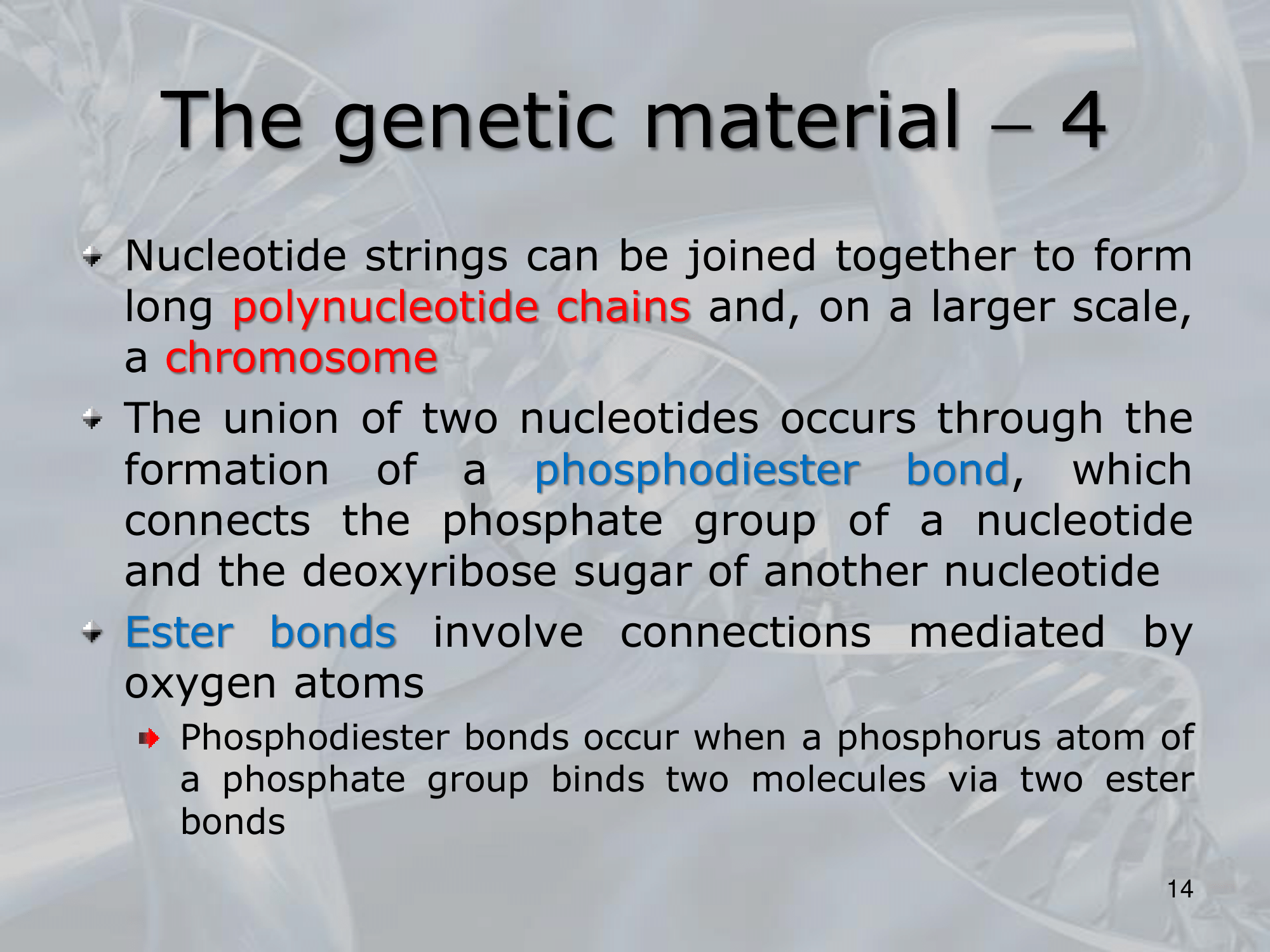
- A phosphodiester bond is a covalent bond that connects two nucleotides in a polynucleotide chain, such as in DNA and RNA.
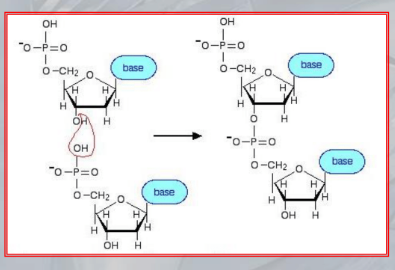
The bond is formed between the 5’ phosphate group of one nucleotide and the 3’ hydroxyl group of the adjacent nucleotide. - ==This bond is formed through a dehydration reaction in which a molecule of water is eliminated from the hydroxyl group of one nucleotide and the phosphate group of another nucleotide, resulting in the formation of a phosphodiester bond between the two nucleotides==.
- The phosphodiester backbone of DNA and RNA is formed by a series of phosphodiester bonds between adjacent nucleotides, resulting in a linear polymer with a sugar-phosphate backbone and nitrogenous bases protruding from it.
The stability of the polynucleotide chain is maintained by the covalent phosphodiester bonds and the complementary base pairing interactions between the nitrogenous bases.
- A phosphodiester bond is a covalent bond that connects two nucleotides in a polynucleotide chain, such as in DNA and RNA.
- How is the DNA Duplicated?
- The process of DNA duplication is called DNA replication and it involves several steps.
- Initiation: DNA replication is initiated at specific sites called origins of replication. In eukaryotic cells, there are multiple origins of replication on each chromosome.
- Unwinding: The double-stranded DNA is unwound by an enzyme called helicase, which breaks the hydrogen bonds between the two strands, creating a replication fork.
- Priming: Short RNA primers are synthesized by an enzyme called primase, which provides a starting point for DNA polymerase to begin adding nucleotides.
- Elongation: DNA polymerase adds nucleotides to the growing chain in the 5’ to 3’ direction, using the existing single-stranded template as a guide. The leading strand is synthesized continuously in the 5’ to 3’ direction, while the lagging strand is synthesized in short, discontinuous fragments called Okazaki fragments.
- Proofreading and Repair: DNA polymerase has a proofreading function that checks each nucleotide added to ensure that it is complementary to the template strand. If an incorrect nucleotide is added, it is removed and replaced with the correct nucleotide.
- Termination: The replication process continues until the replication fork meets another replication fork or reaches the end of the chromosome. The RNA primers are removed and replaced with DNA nucleotides, and the fragments are joined together by an enzyme called DNA ligase.
- The result of DNA replication is two identical daughter strands of DNA, each with one original strand and one newly synthesized strand. This process is crucial for the accurate transmission of genetic information from parent to offspring during cell division.
- The process of DNA duplication is called DNA replication and it involves several steps.
- What does it mean that DNA Strands are Reverse-Complementary?
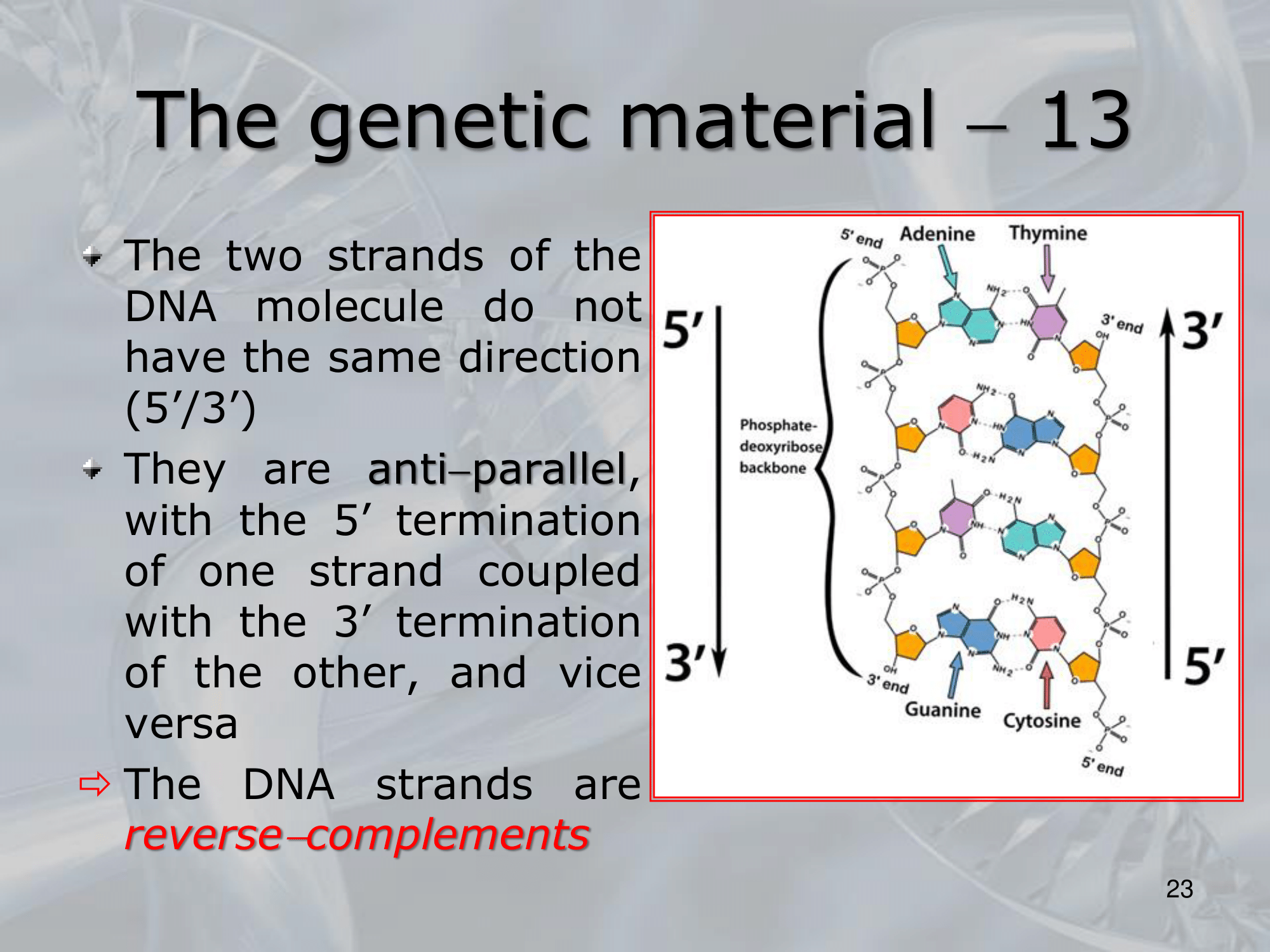
- The term “reverse-complementary” refers to the relationship between the two strands of DNA in a double-stranded molecule.
The two strands are said to be complementary because the sequence of bases in one strand can be precisely predicted based on the sequence of bases in the other strand.
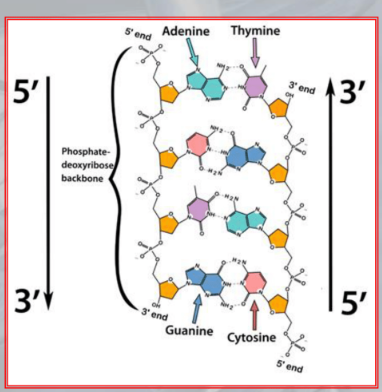
Specifically, the nucleotides in each strand pair up in a way that is determined by the base pairing rules: adenine (A) pairs with thymine (T) and guanine (G) pairs with cytosine (C). - ==The term “reverse” is used to describe the fact that the two strands run in opposite directions with respect to their and ends.==
In other words, one strand runs from 5’ to 3’, while the other strand runs from 3’ to 5’.
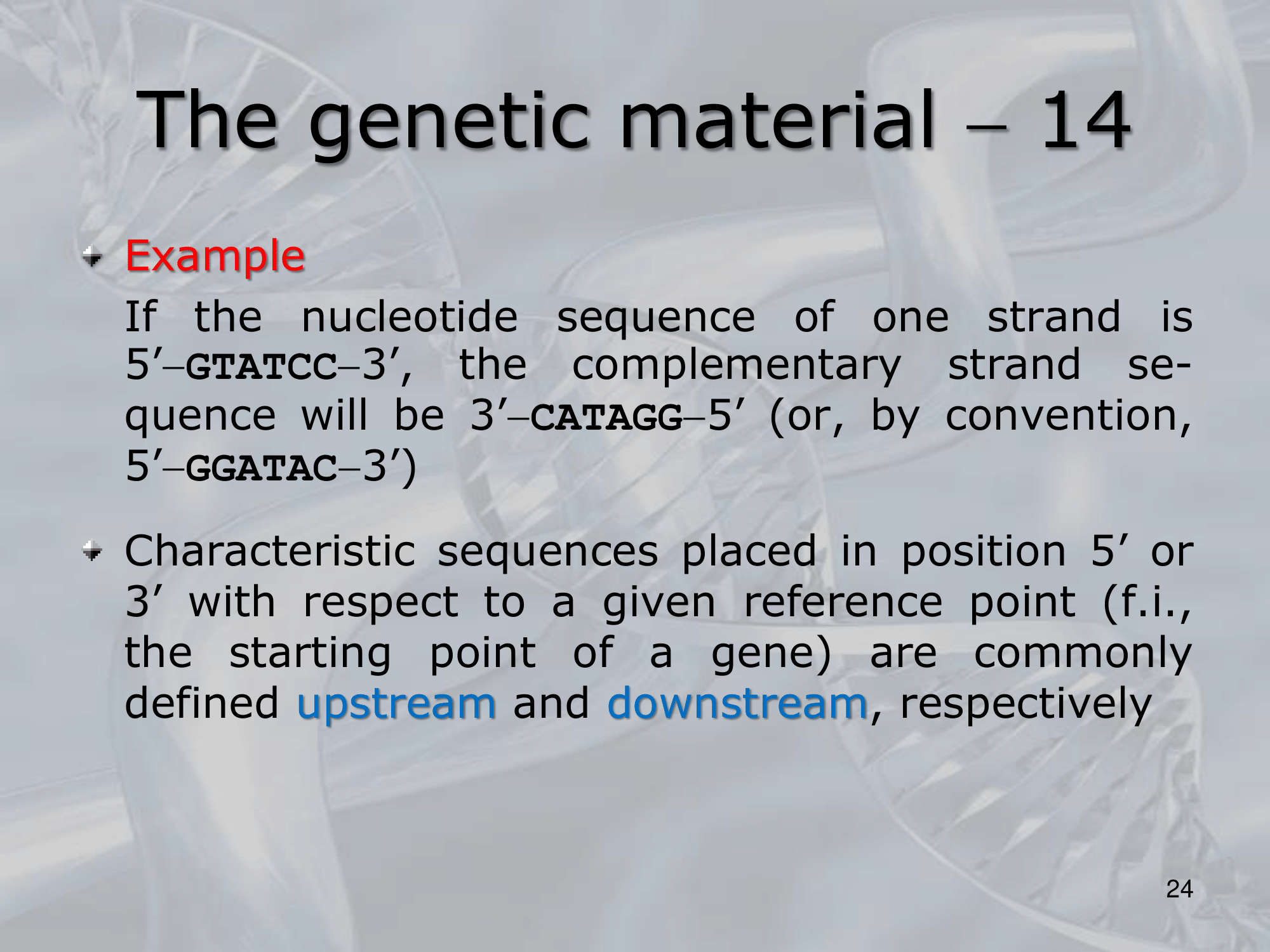
This orientation is important because it means that the base pairing between the two strands occurs in an antiparallel fashion, with the 5’ end of one strand paired with the 3’ end of the other strand. - The reverse-complementary relationship between the two strands of DNA means that if you know the sequence of one strand, you can infer the sequence of the other strand by applying the base pairing rules and reversing the order of the nucleotides.
For example, if one strand has the sequence 5’-ATCG-3’, the reverse-complementary strand will have the sequence 3’-TAGC-5’.
This relationship is important in many applications of molecular biology, such as designing PCR primers or identifying restriction enzyme recognition sites.
- The term “reverse-complementary” refers to the relationship between the two strands of DNA in a double-stranded molecule.
—————————————————————
IMPORTANTE
IMPORTANTE DNA: Deoxyribonucleic acid. #IMPORTANTE Il DNA è composto di: C, H, N, O, F (Carbonio, Idrogeno, Azoto/Nitrogeno, Ossigeno, e Fosforo)
IMPORTANTE Le basi o nucleobasi che compongono il DNA sono: G, A, T, C (Guanina, Adenina, Timina, Citosina) Sono divise in due gruppi: Purine (G, A) e Pirimidine (T, C). Le coppie di basi sono GC e AT; il DNA è composto da una doppia elica, dove l’informazione è ridondante nelle due, se in un’elica troviamo la base A, nell’altra troveremo una T e viceversa, se inveve in una troviamo una G, nell’altra troveremo una C, e viceversa.
IMPORTANTE La differenza tra base e nucleotida: Le basi sono i blocchi principali del DNA (G, A, T, C):
Un nucleotida è l’unione di una base ad un gruppo fosfato (), e ad uno zucchero desossiribosio ()
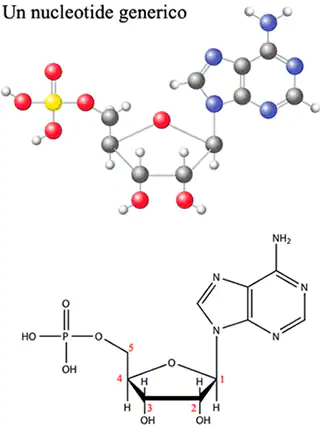
TODO Cosa sono i benzeni e come riconoscerli (questi non dovrebbero essere benzeni, ma non so le differenze) cosa si intende con un pentagono nella formula chimica, …
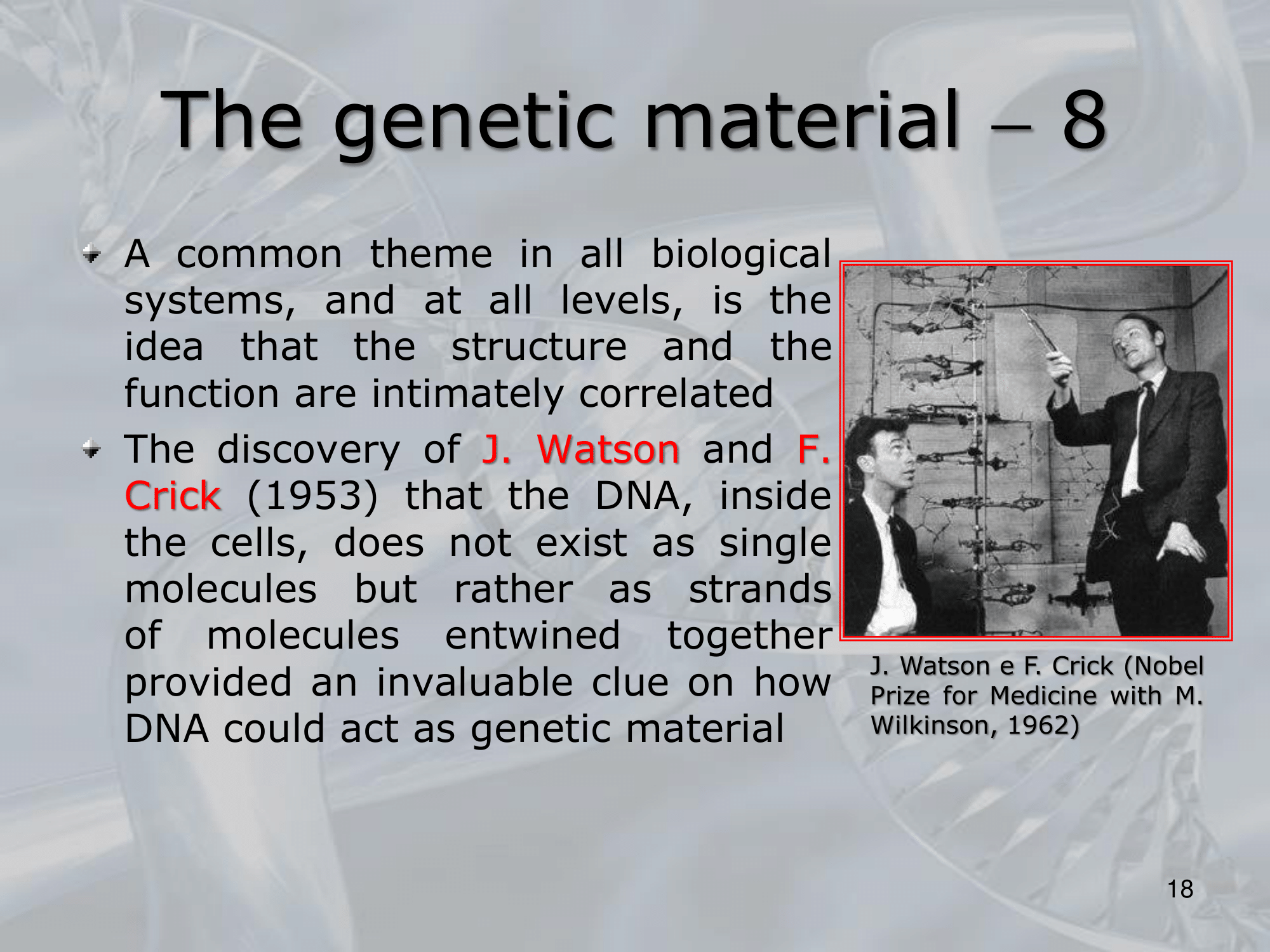
IMPORTANTE Differenza tra DNA e genoma Il DNA è l’intero codice, una stringa lunga circa MILIARDI di basi. Mentre il genoma è l’insieme del patrimonio genetico che caratterizza ogni organismo vivente, dove un gene è una sequenza di basi all’interno del DNA.
IMPORTANTE Per formare il DNA i nucleotidi si uniscono tra loro formando un legame covalente detto il legame fosfodiestere (o legame estere) tra il gruppo fosfato (), ed lo zucchero desossiribosio (), ad ogni unione di due nucleotidi una molecola d’acqua () è “persa”
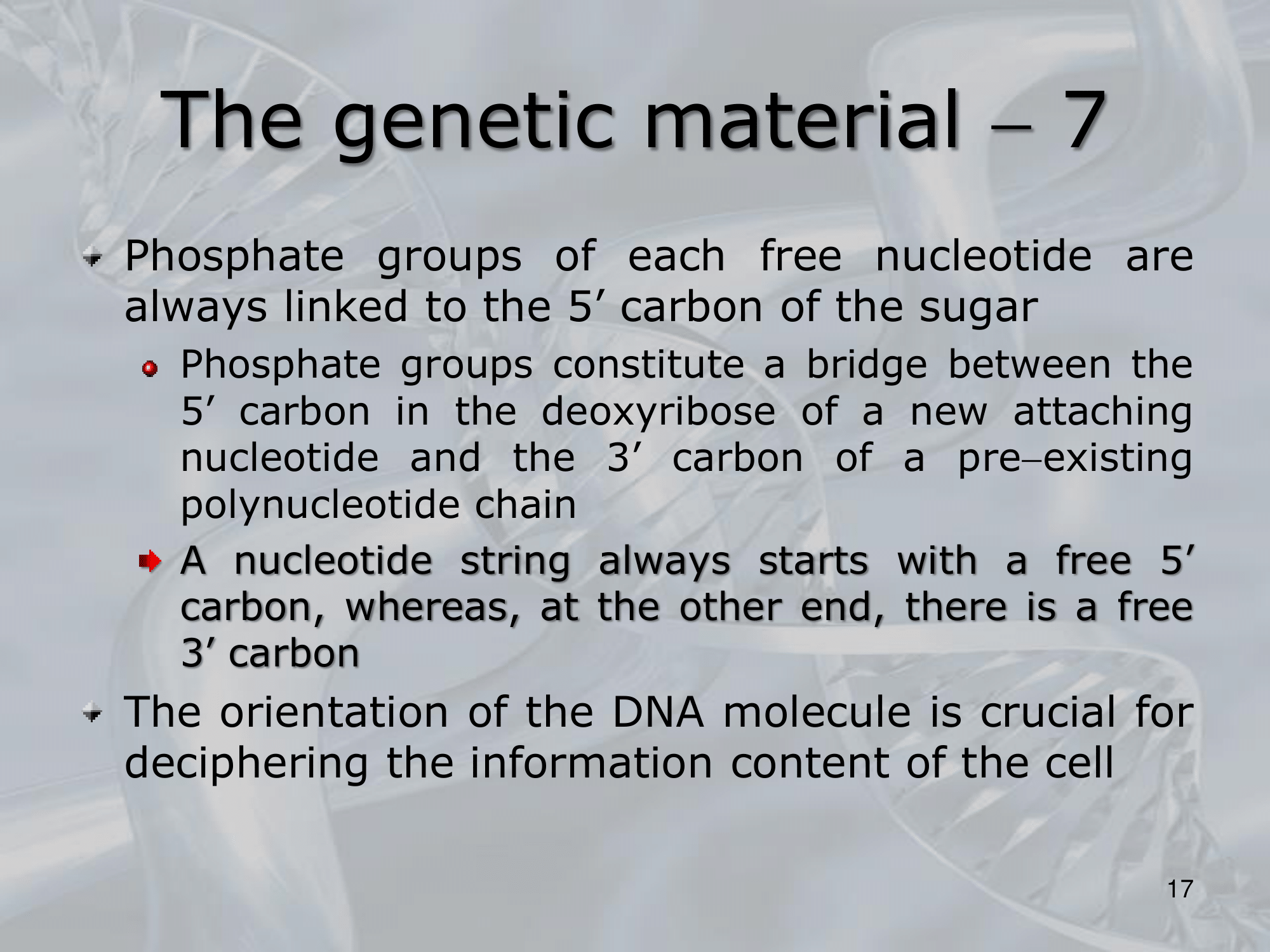
IMPORTANTE Il DNA ha un verso di lettura, da a .
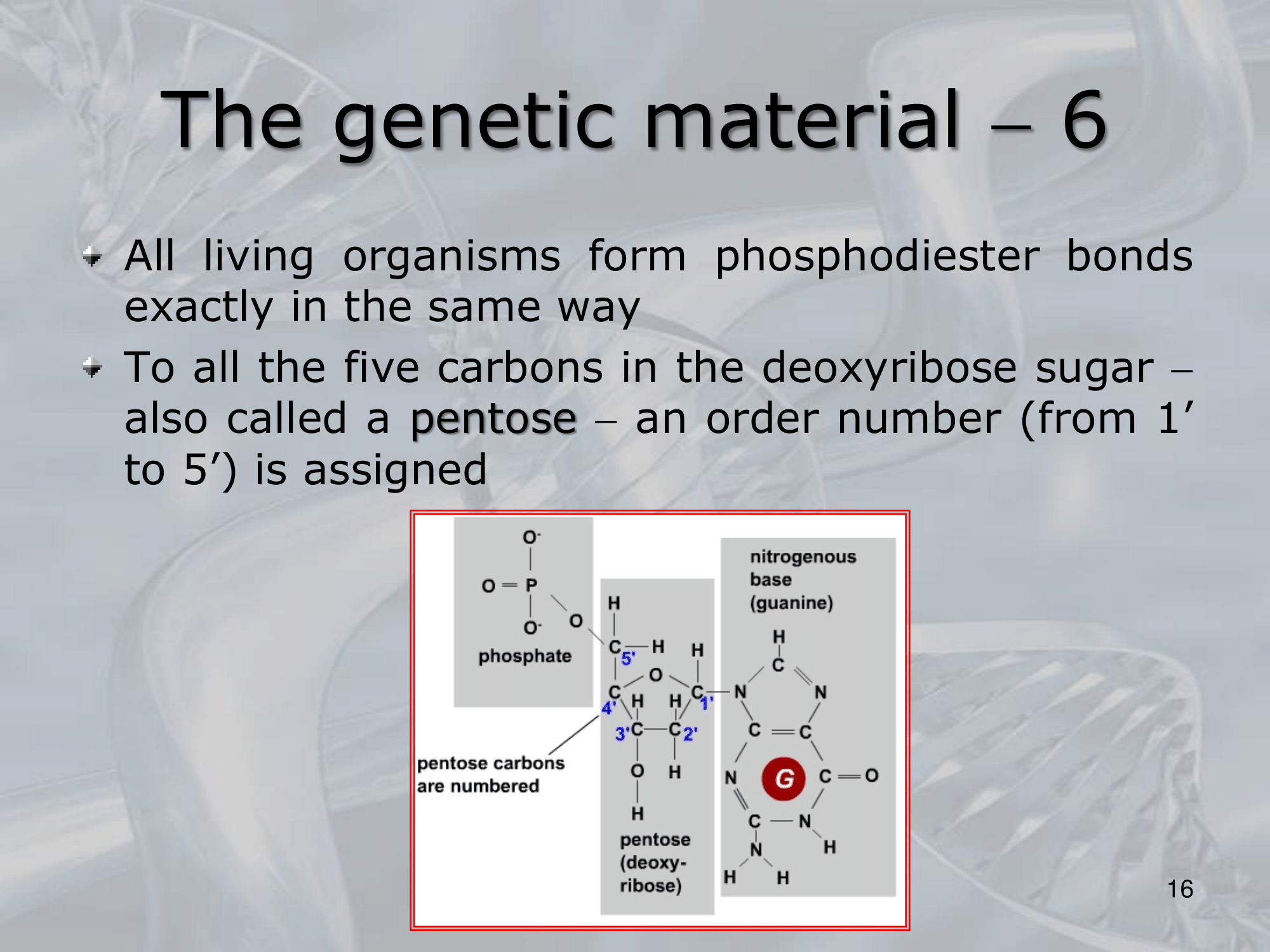
Il corrisponde ad un Carbonio “libero” dello zucchero desossiribosio (). Mentre il corrisponde ad Carbonio libero del nucleotida. Sono chiamati e perché quelle sono le posizione dei carboni nello zucchero, detto pentoso.
Le due stringhe di DNA si dicono inversamente complementari, infatti la prima parte con un carbonio in posizione e l’altra con un carbonio in posizione , quindi si può dire che ‘le due stringe vengono lette in due sensi anti-paralleli’.
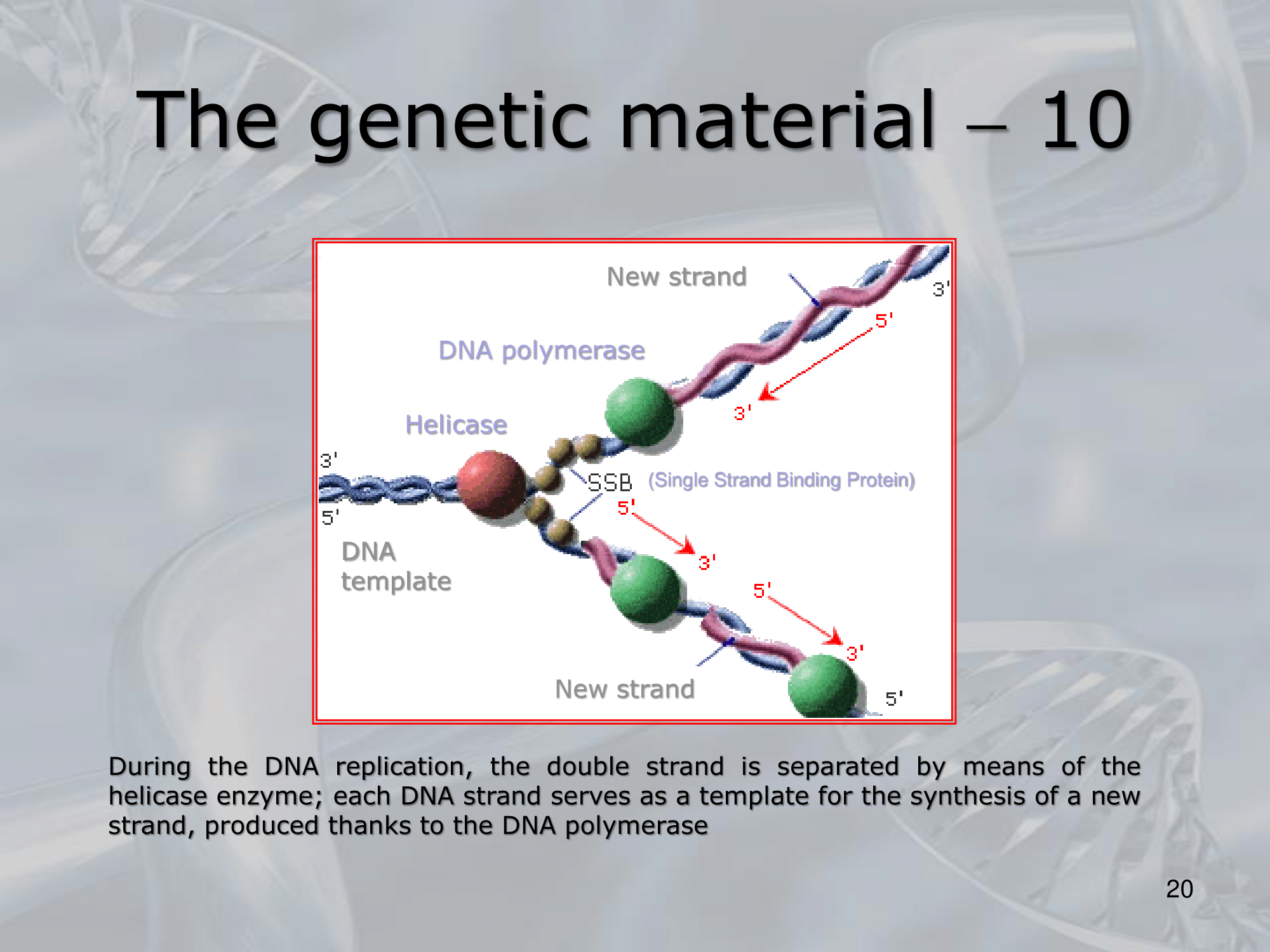
IMPORTANTE Le proteine che vengono usate nella duplicazione del DNA sono:
- Elicasi (Enzima) : Separa le due eliche del DNA
- SSB (Single-Strand Binding protein) : Tiene divise le due stringhe di DNA
- DNA Polimerasi : Duplica il DNA, nel verso
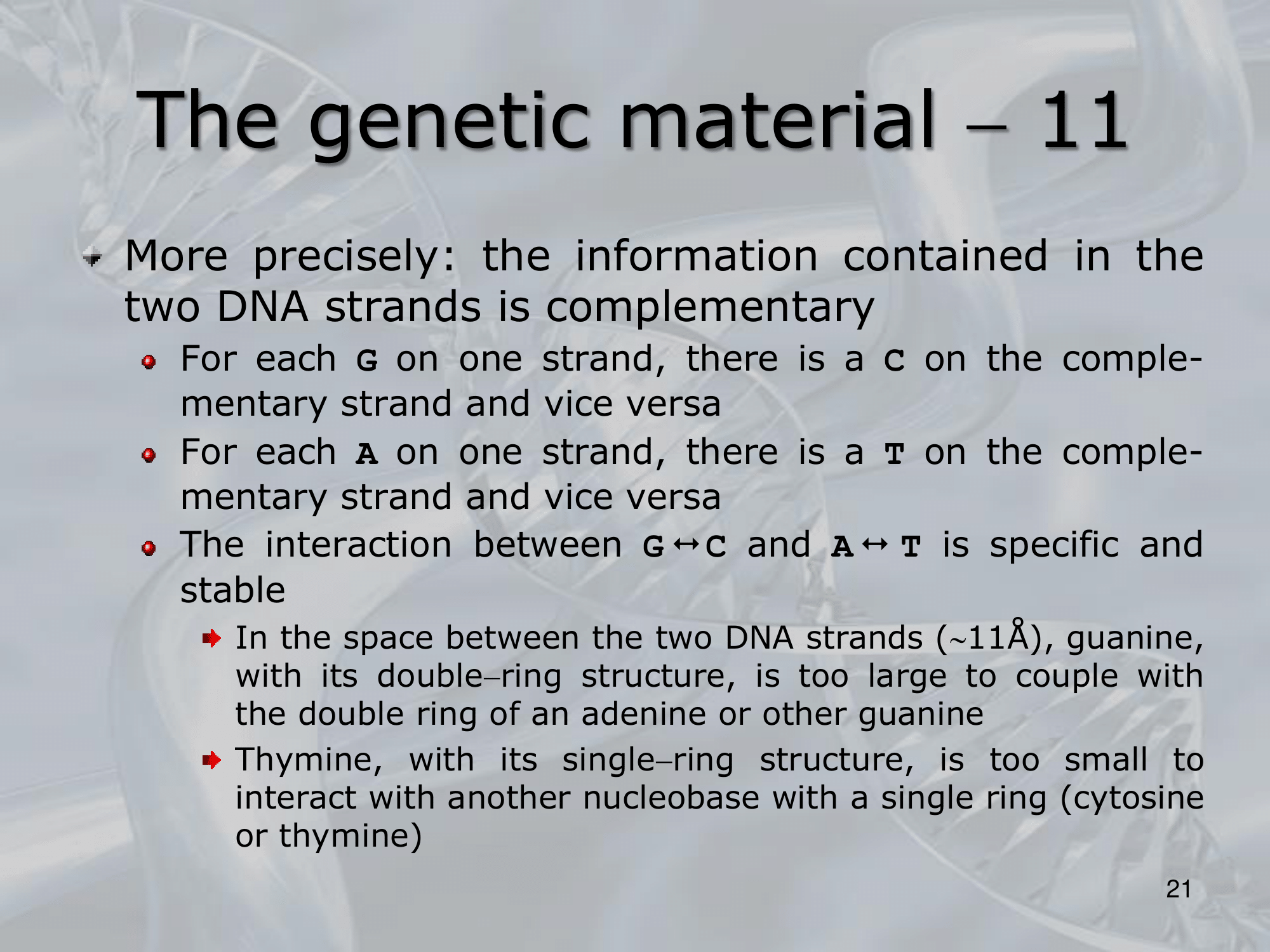
IMPORTANTE La coppie AT (Adenina, Timina) forma legami ad idrogeno, e la coppia GC (Guanina, Citosina) forma legami ad idrogeno.
—————————————————————
Slides with Notes
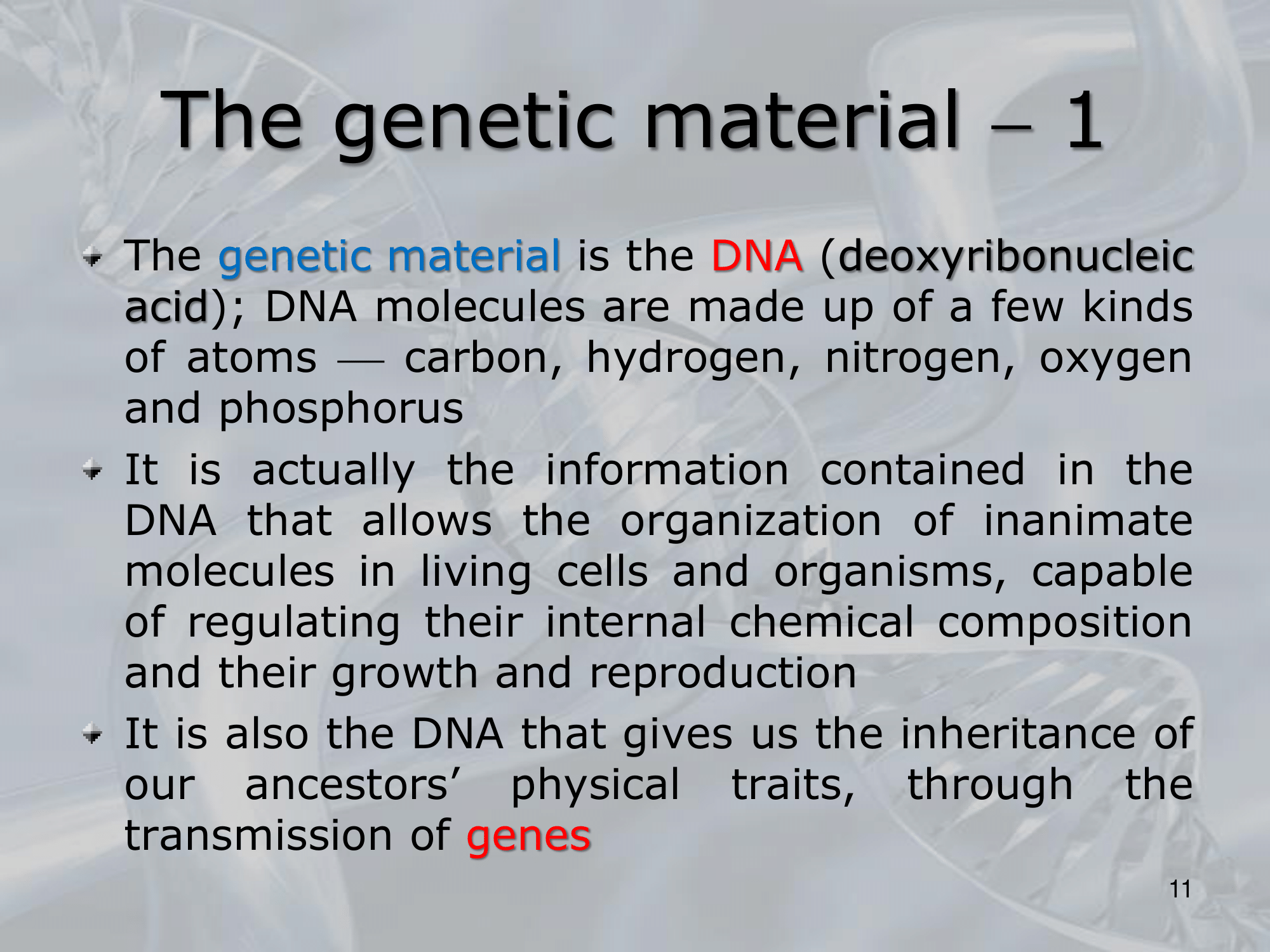
IMPORTANTE DNA: Deoxyribonucleic acid. #IMPORTANTE Il DNA è composto di: C, H, N, O, F (Carbonio, Idrogeno, Azoto/Nitrogeno, Ossigeno, e Fosforo)
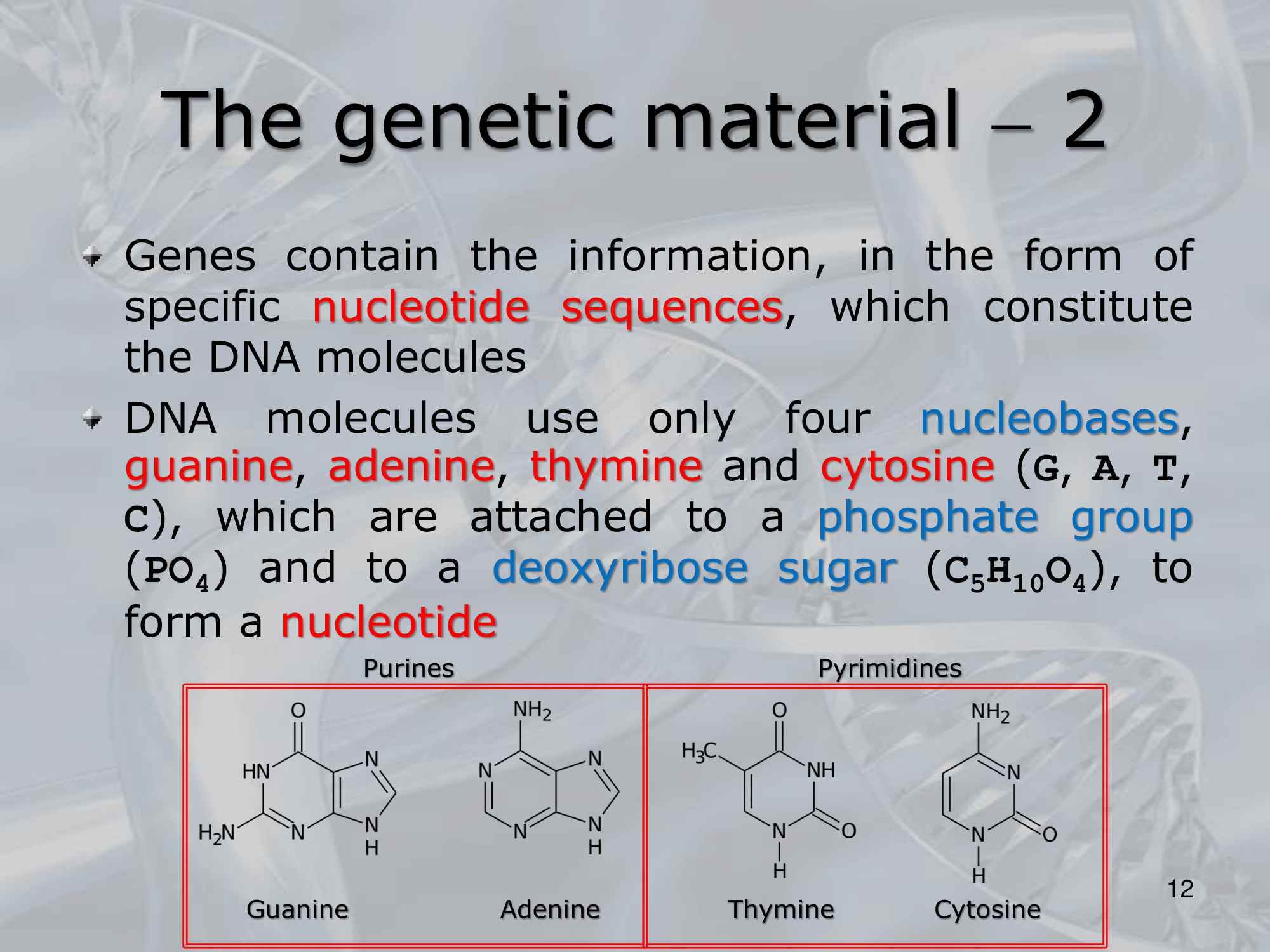
IMPORTANTE Le basi o nucleobasi che compongono il DNA sono: G, A, T, C (Guanina, Adenina, Timina, Citosina) Sono divise in due gruppi: Purine (G, A) e Pirimidine (T, C). Le coppie di basi sono GC e AT; il DNA è composto da una doppia elica, dove l’informazione è ridondante nelle due, se in un’elica troviamo la base A, nell’altra troveremo una T e viceversa, se inveve in una troviamo una G, nell’altra troveremo una C, e viceversa.
IMPORTANTE La differenza tra base e nucleotida: Le basi sono i blocchi principali del DNA (G, A, T, C):
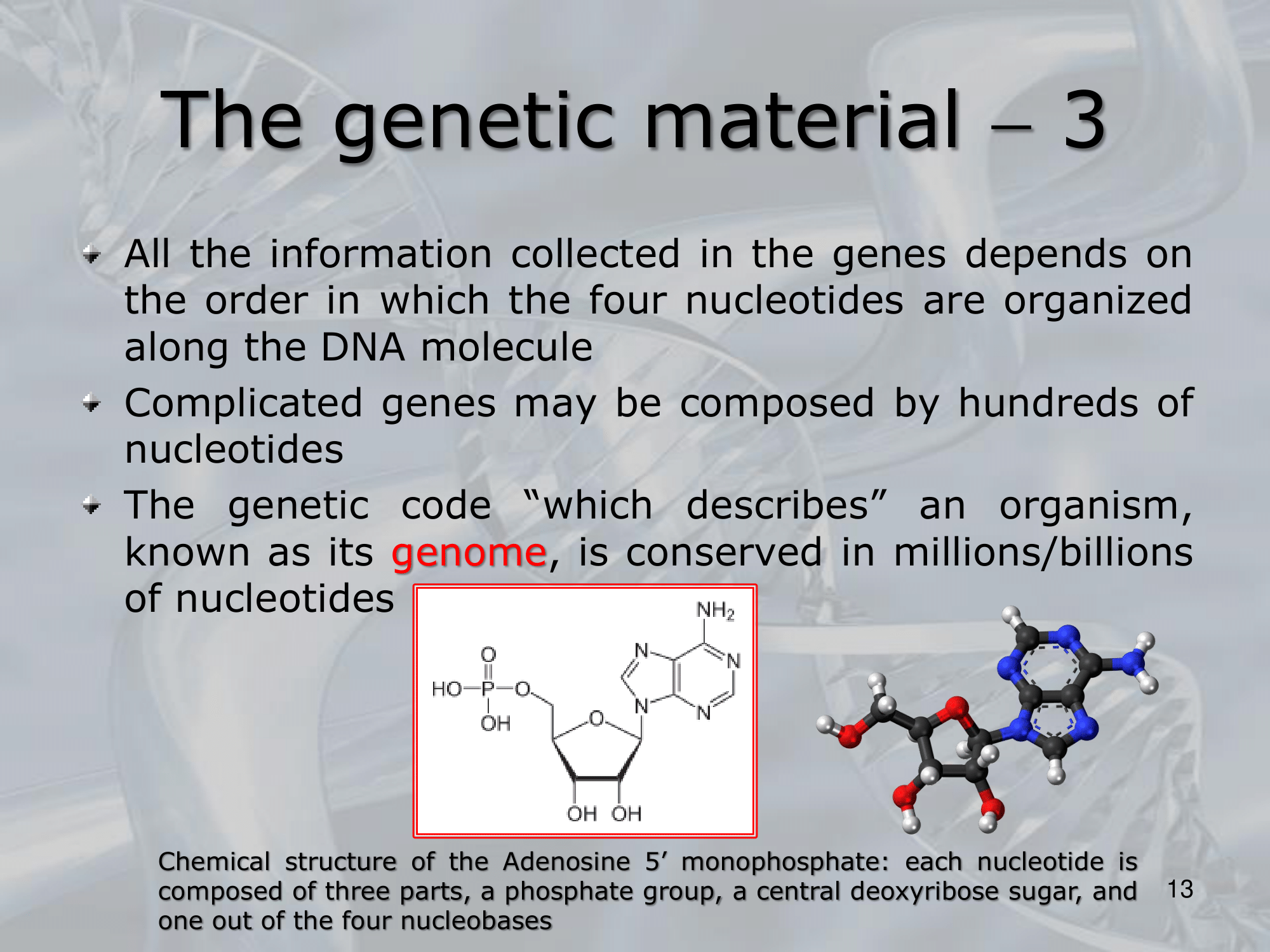
IMPORTANTE Differenza tra DNA e genoma Il DNA è l’intero codice, una stringa lunga circa MILIARDI di basi. Mentre il genoma è l’insieme del patrimonio genetico che caratterizza ogni organismo vivente, dove un gene è una sequenza di basi all’interno del DNA.
IMPORTANTE Per formare il DNA i nucleotidi si uniscono tra loro formando un legame covalente detto il legame fosfodiestere (o legame estere) tra il gruppo fosfato (), ed lo zucchero desossiribosio (), ad ogni unione di due nucleotidi una molecola d’acqua () è “persa”
IMPORTANTE Il DNA ha un verso di lettura, da a .
IMPORTANTE Le proteine che vengono usate nella duplicazione del DNA sono:
- Elicasi (Enzima) : Separa le due eliche del DNA
- SSB (Single-Strand Binding protein) : Tiene divise le due stringhe di DNA
- DNA Polimerasi : Duplica il DNA, nel verso
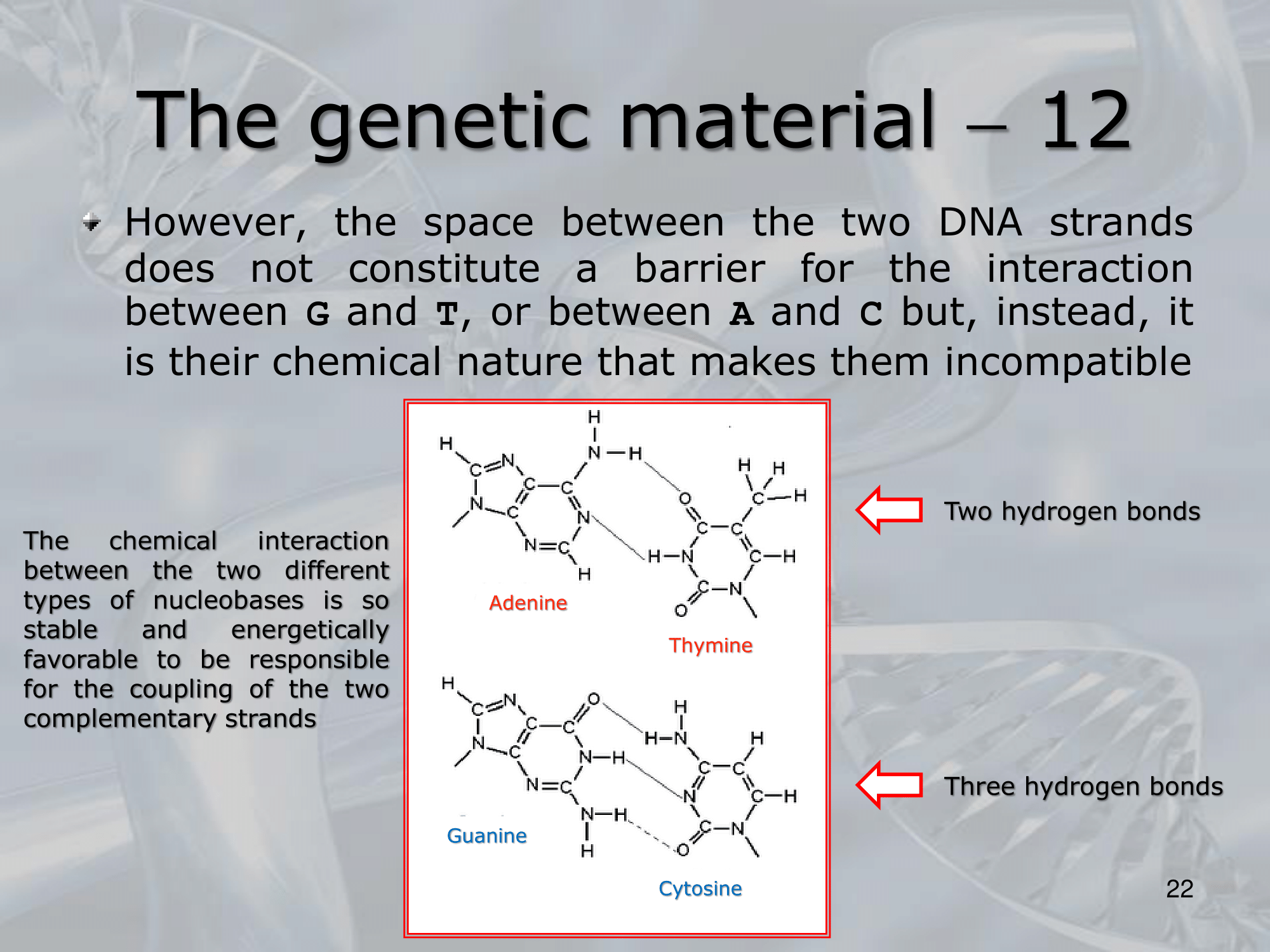
IMPORTANTE La coppie AT (Adenina, Timina) forma legami ad idrogeno, e la coppia GC (Guanina, Citosina) forma legami ad idrogeno.