Questions
- What are the Differences between the Genome of Prokaryotes and Eukaryotes?
- Prokaryotes and eukaryotes are two types of organisms that differ in their cell structure, organization, and complexity, and this is reflected in the characteristics of their genomes. Here are some of the key differences between prokaryotic and eukaryotic genomes:
- Size: Eukaryotic genomes are typically much larger than prokaryotic genomes.
For example, the human genome is about 3 billion base pairs in length, while the genome of the bacterium Escherichia coli is only about 4.6 million base pairs in length. - Organization: Eukaryotic genomes are typically organized into multiple linear chromosomes, while prokaryotic genomes are typically circular and contain a single chromosome.
- Complexity: ==Eukaryotic genomes are generally more complex than prokaryotic genomes, with a higher proportion of non-coding DNA, such as introns and regulatory regions==.
- Replication: Prokaryotic genomes are replicated using a single origin of replication, while eukaryotic genomes have multiple origins of replication.
- Gene density: ==Prokaryotic genomes have a higher gene density than eukaryotic genomes, with fewer non-coding regions and less introns in genes==.
- Gene structure: ==Prokaryotic genes are typically organized into operons, which are clusters of genes that are transcribed together, while eukaryotic genes are generally transcribed individually==.
- Size: Eukaryotic genomes are typically much larger than prokaryotic genomes.
- Overall, the differences between prokaryotic and eukaryotic genomes reflect the different cellular structures and lifestyles of these organisms.
Prokaryotes, with their simpler structure and smaller genomes, are able to replicate and adapt more quickly to changing environments, while eukaryotes, with their larger and more complex genomes, are able to perform more specialized functions and have a greater capacity for genetic diversity.
- Prokaryotes and eukaryotes are two types of organisms that differ in their cell structure, organization, and complexity, and this is reflected in the characteristics of their genomes. Here are some of the key differences between prokaryotic and eukaryotic genomes:
—————————————————————
IMPORTANTE
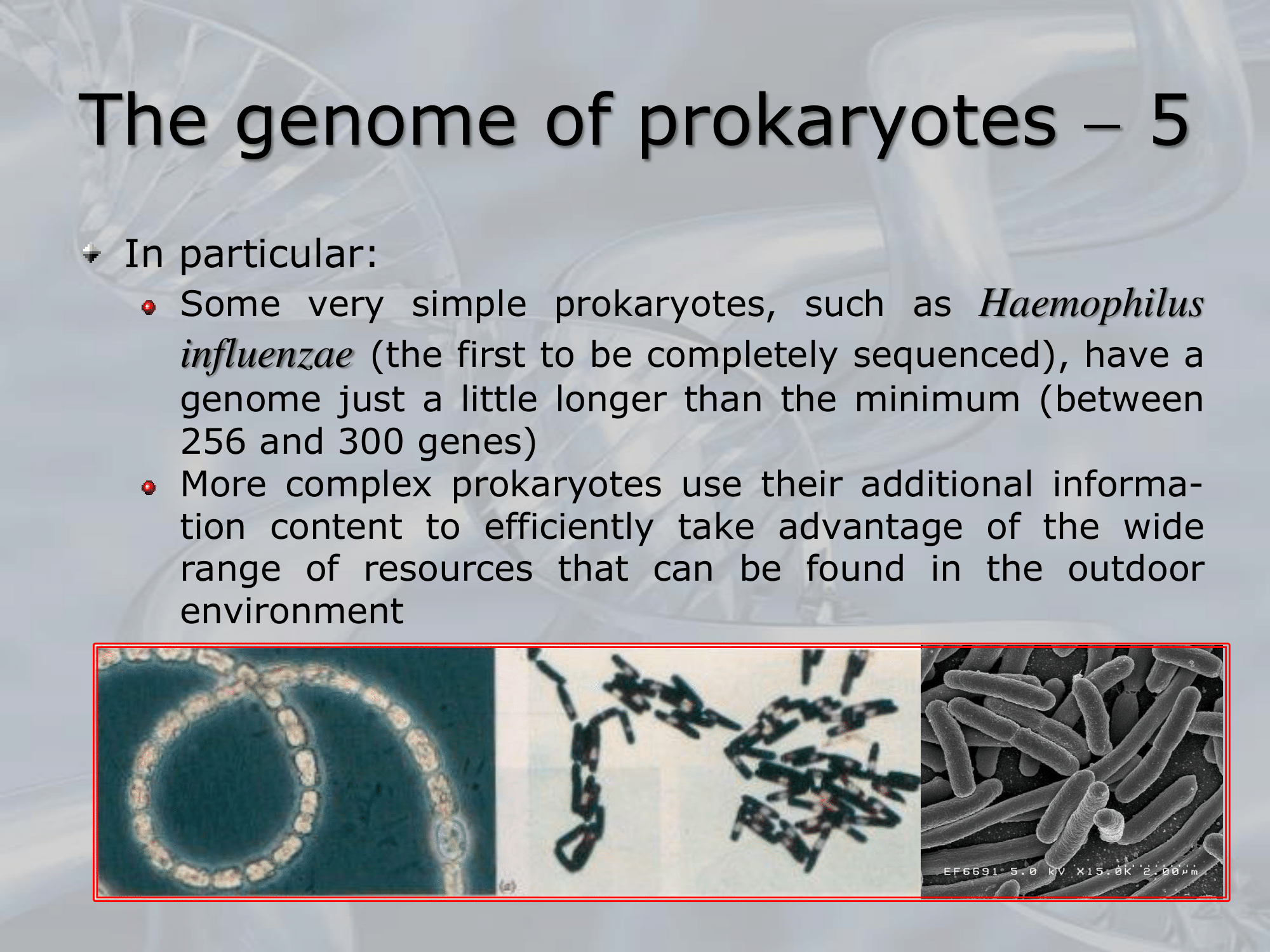
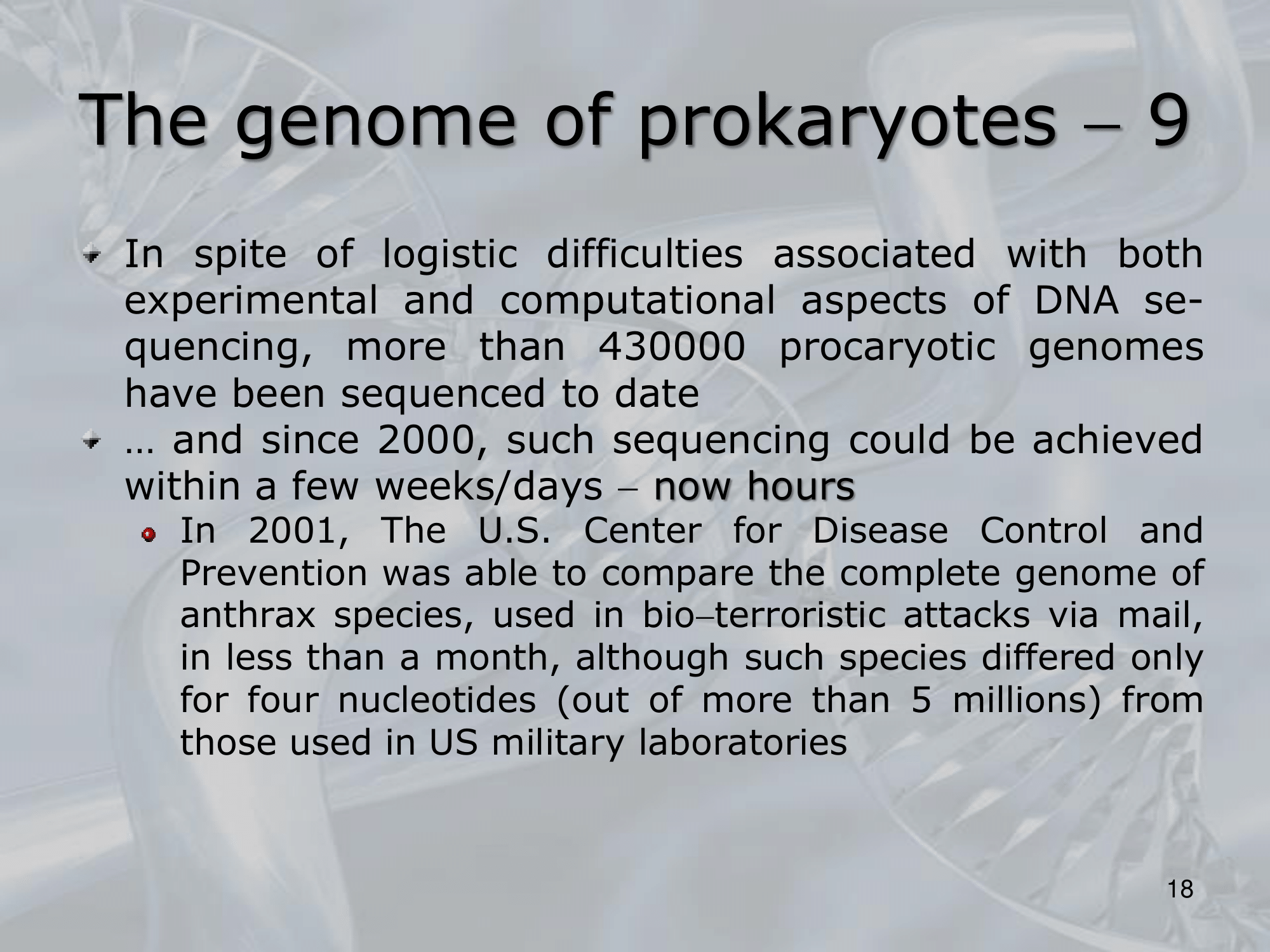
IMPORTANTE Prokaryotes: SINGLE-CELL or COLONIAL organisms (Bacteria & Archea) Eukaryotes: COMPLEX organisms (humans, plants, animals, …)
IMPORTANTE In the Prokaryotes DNA the principal components are: Building and DNA Replication (at most 32 genes) Synthesizing Proteins (100 ~ 150 genes) Obtaining and Storing Energy (more than 30 genes)
—————————————————————
Slides with Notes
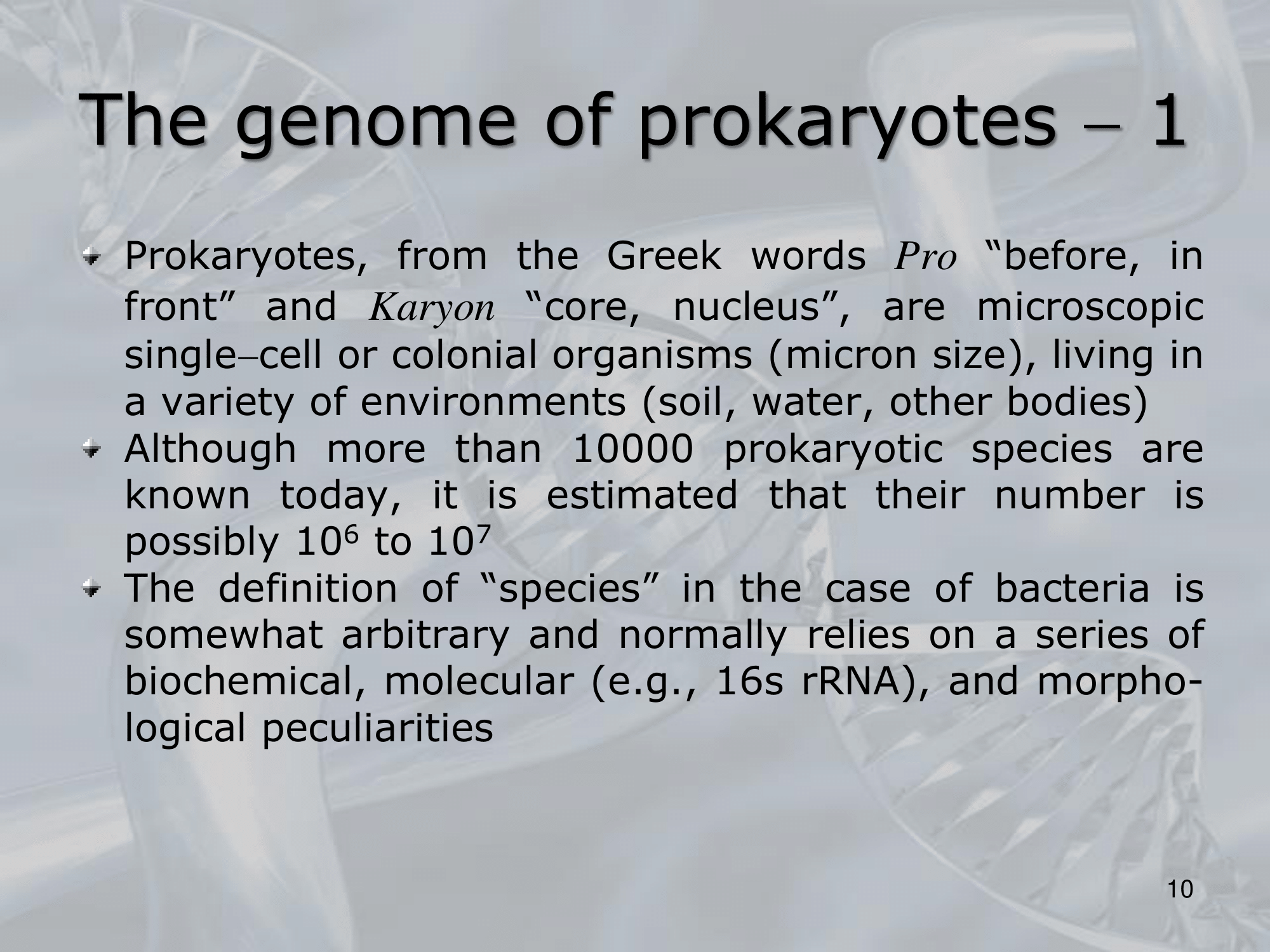
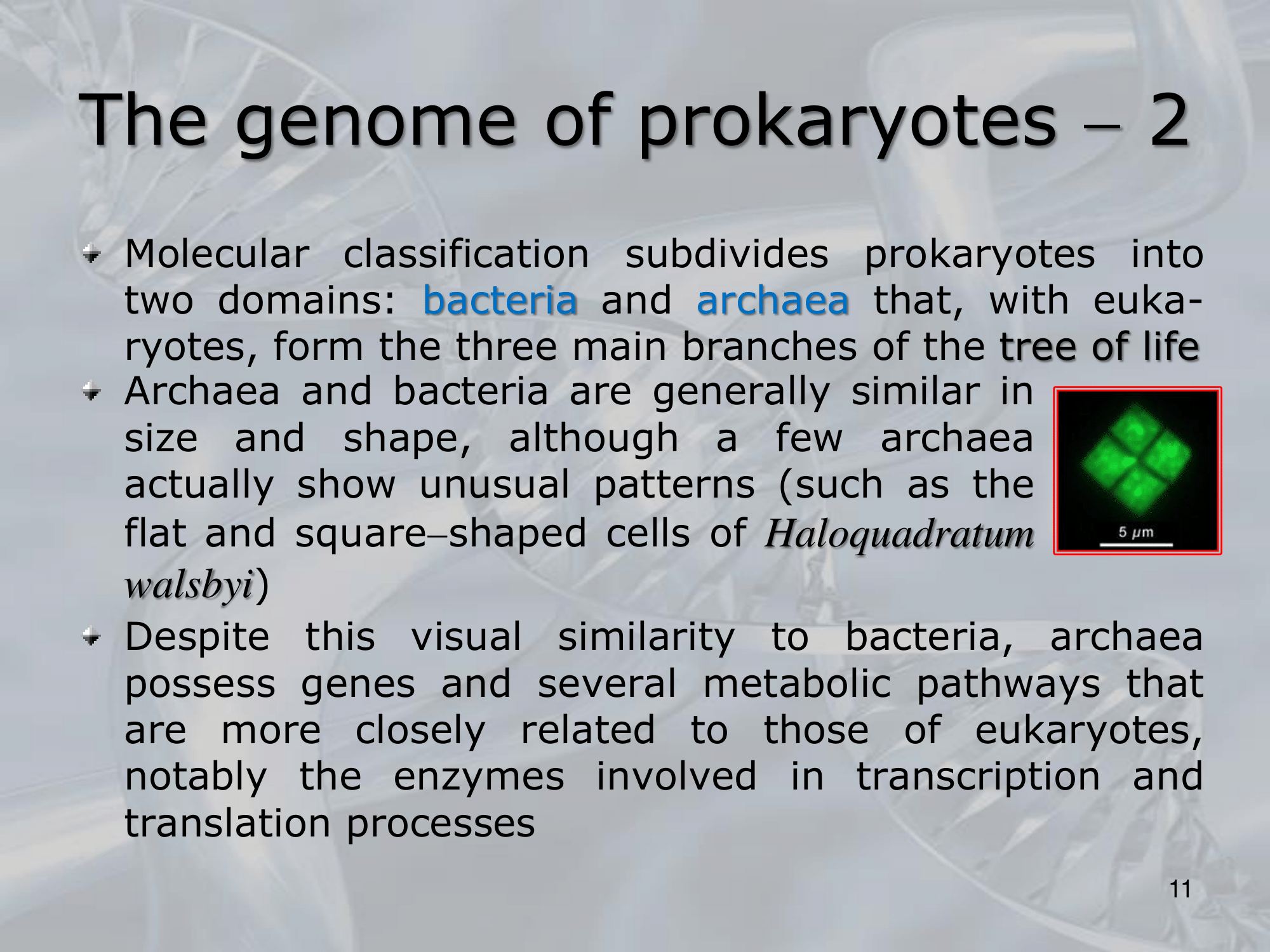
IMPORTANTE Prokaryotes: SINGLE-CELL or COLONIAL organisms (Bacteria & Archea) Eukaryotes: COMPLEX organisms (humans, plants, animals, …)
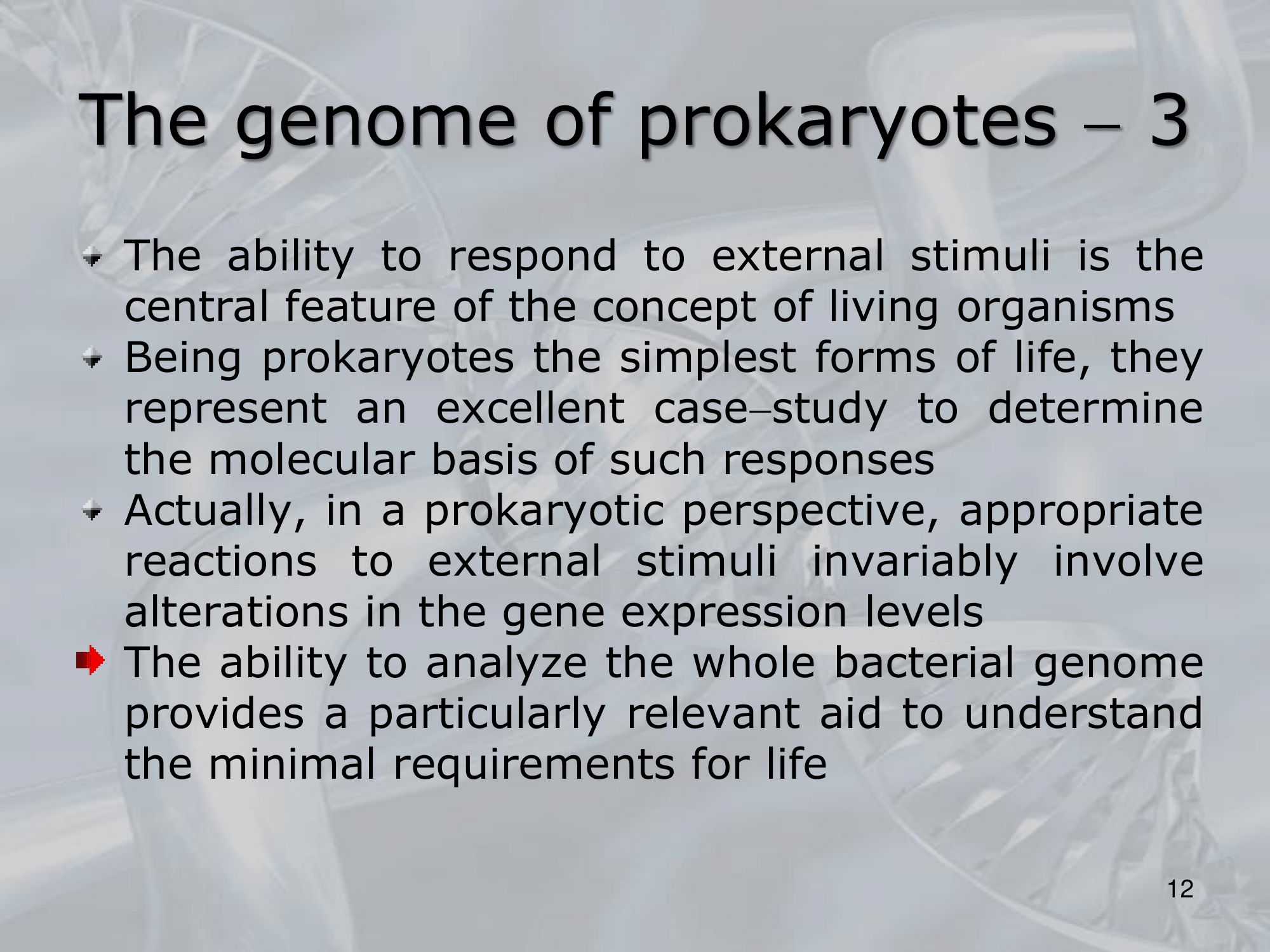
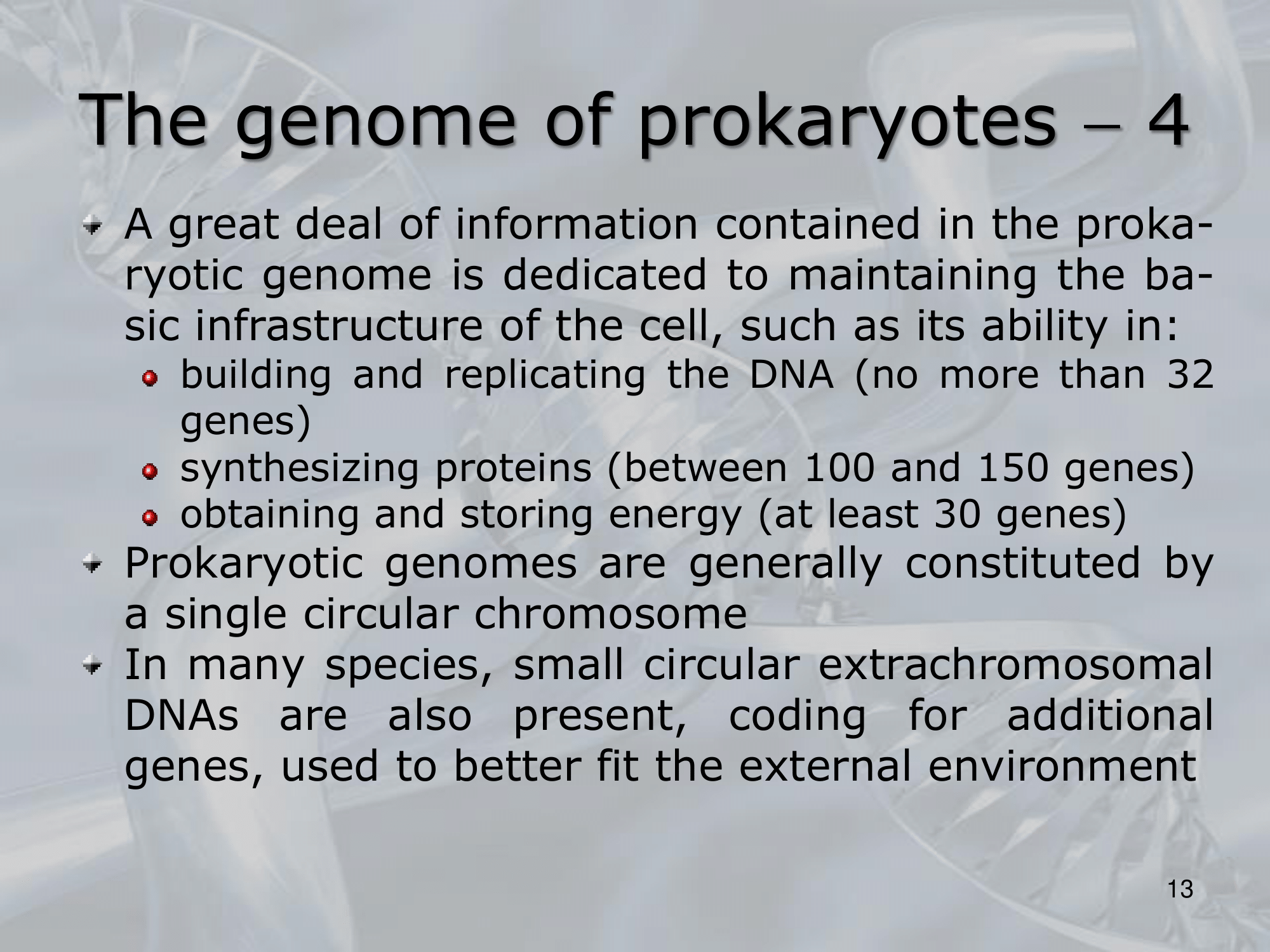
IMPORTANTE In the Prokaryotes DNA the principal components are: Building and DNA Replication (at most 32 genes) Synthesizing Proteins (100 ~ 150 genes) Obtaining and Storing Energy (more than 30 genes)