Questions
- What is Database Search and Pairwise Alignments?
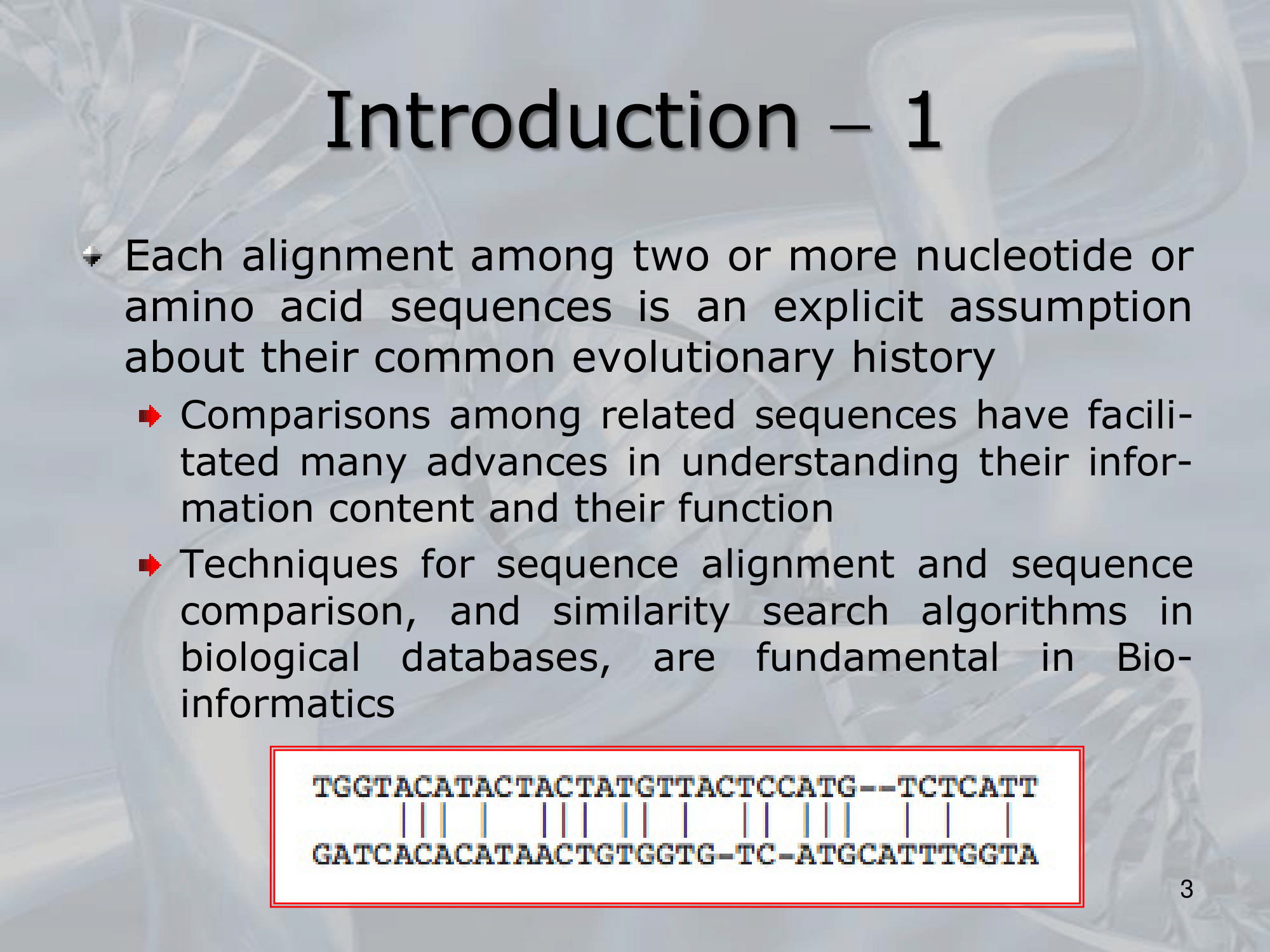
- Database search and pairwise alignments are two common methods used in bioinformatics to compare and analyze biological sequences, such as DNA, RNA, and protein sequences.
- Database search involves comparing a query sequence to a large database of known sequences to find similar matches.
This is often used in sequence annotation, where a newly discovered sequence is compared to existing sequences to identify its function or potential homologs.
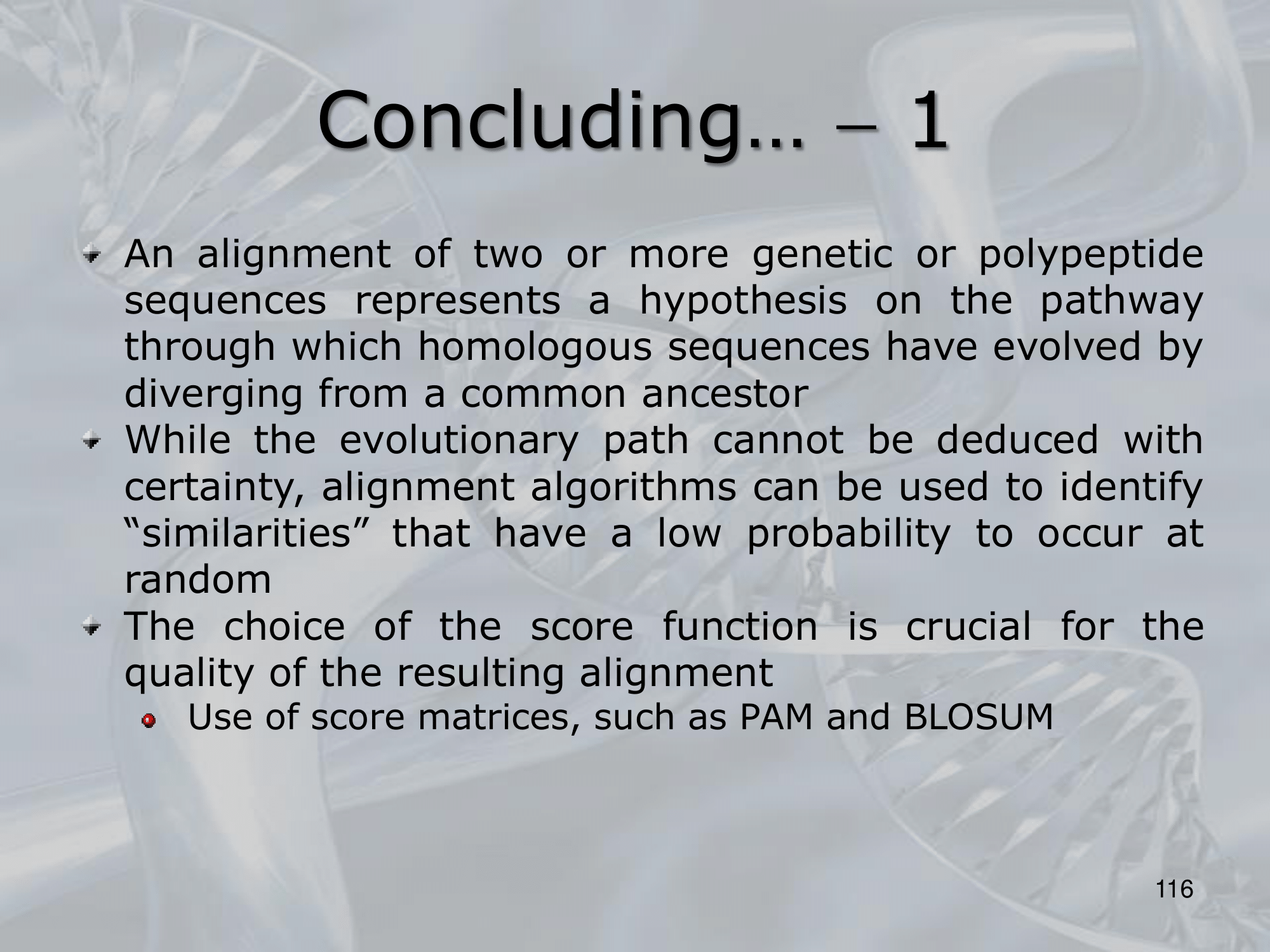
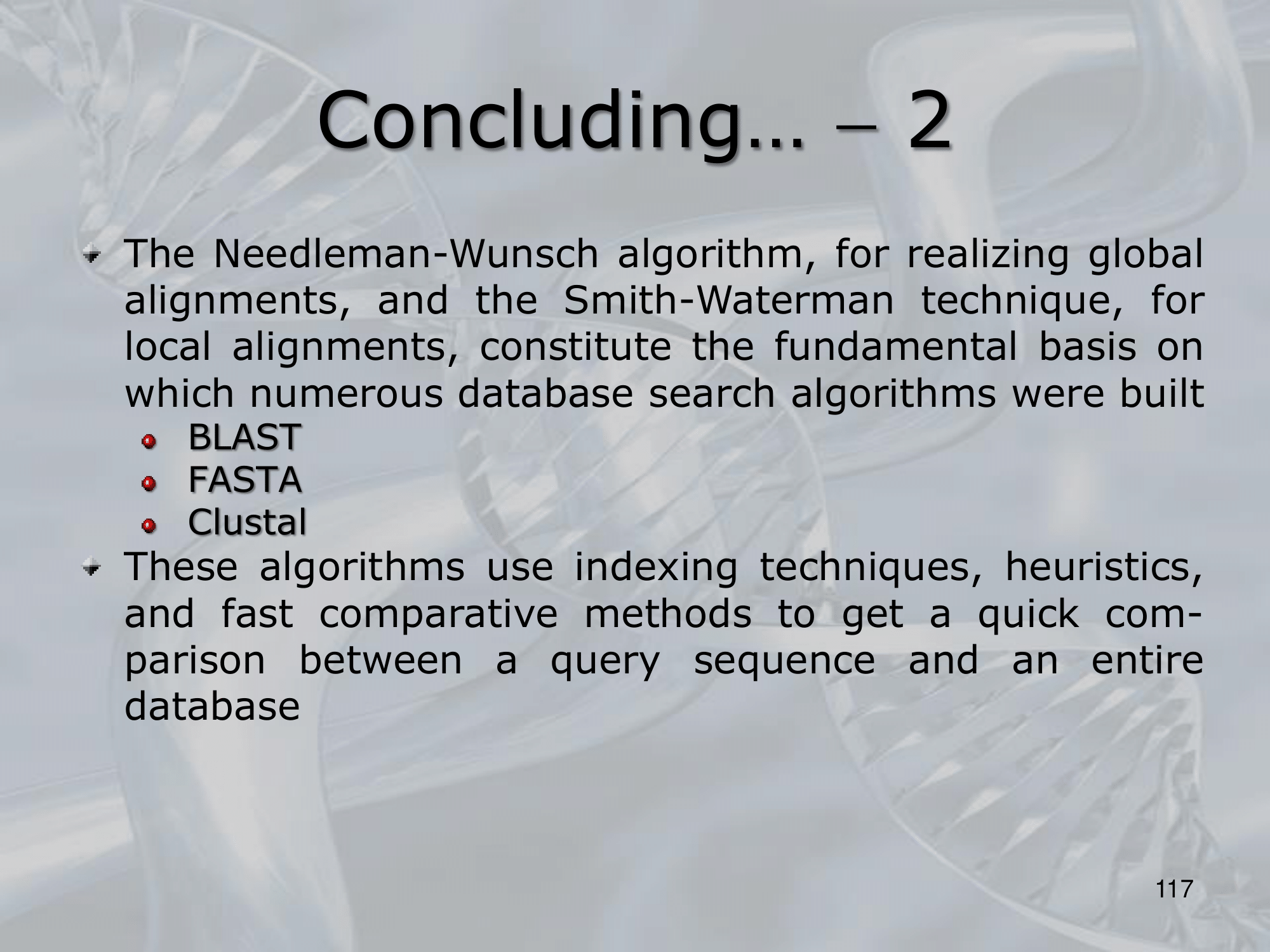
==Popular tools for database searching include BLAST (Basic Local Alignment Search Tool) and FASTA==. - Pairwise alignment involves comparing two sequences to identify regions of similarity and difference.
This is useful for studying evolutionary relationships between sequences, identifying conserved regions, or detecting mutations.
In pairwise alignment, two sequences are aligned based on their similarity, with gaps introduced in one or both sequences to optimize the alignment.
Popular tools for pairwise alignment include ClustalW and MUSCLE. - Both database search and pairwise alignments are essential tools in bioinformatics and can provide valuable insights into the structure, function, and evolutionary history of biological sequences.
- Can you make an Example of Pairwise Alignments?
- Let’s say we have two DNA sequences:
- Sequence 1: ATCGCTAGGGCACGACT
- Sequence 2: ATCGCTACGGCACGACT
- To align these two sequences, we would look for regions of similarity and difference.
We can align them as follows:- Sequence 1: ATCGCTAGGGCACGACT
- Sequence 2: ATCGCTA-CGGCACGACT
- In this alignment, we’ve introduced a gap in sequence 2 to align it with sequence 1.
We can calculate the percent identity of this alignment by counting the number of identical nucleotides divided by the total number of aligned nucleotides.
In this case, the percent identity is (16/17). - Pairwise alignments can be useful for identifying mutations or variations in DNA sequences, as well as for studying evolutionary relationships between sequences.
They can also be used to identify conserved regions that are important for the function of a protein or RNA molecule.
- Let’s say we have two DNA sequences:
—————————————————————
IMPORTANTE
IMPORTANTE L’allineamento di sequenze genetiche o del DNA, è usato per:
- Determinare la funzione di nuove sequenze genetiche, appena scoperte, sulla base di simili sequenze già conosciute.
- Determinare la relazione evoluzionistica di due geni, proteine o intere specie.
- Predirre la struttura e la funzione di nuove proteine basandosi su simili proteine, già conosciute.
—————————————————————
Slides with Notes
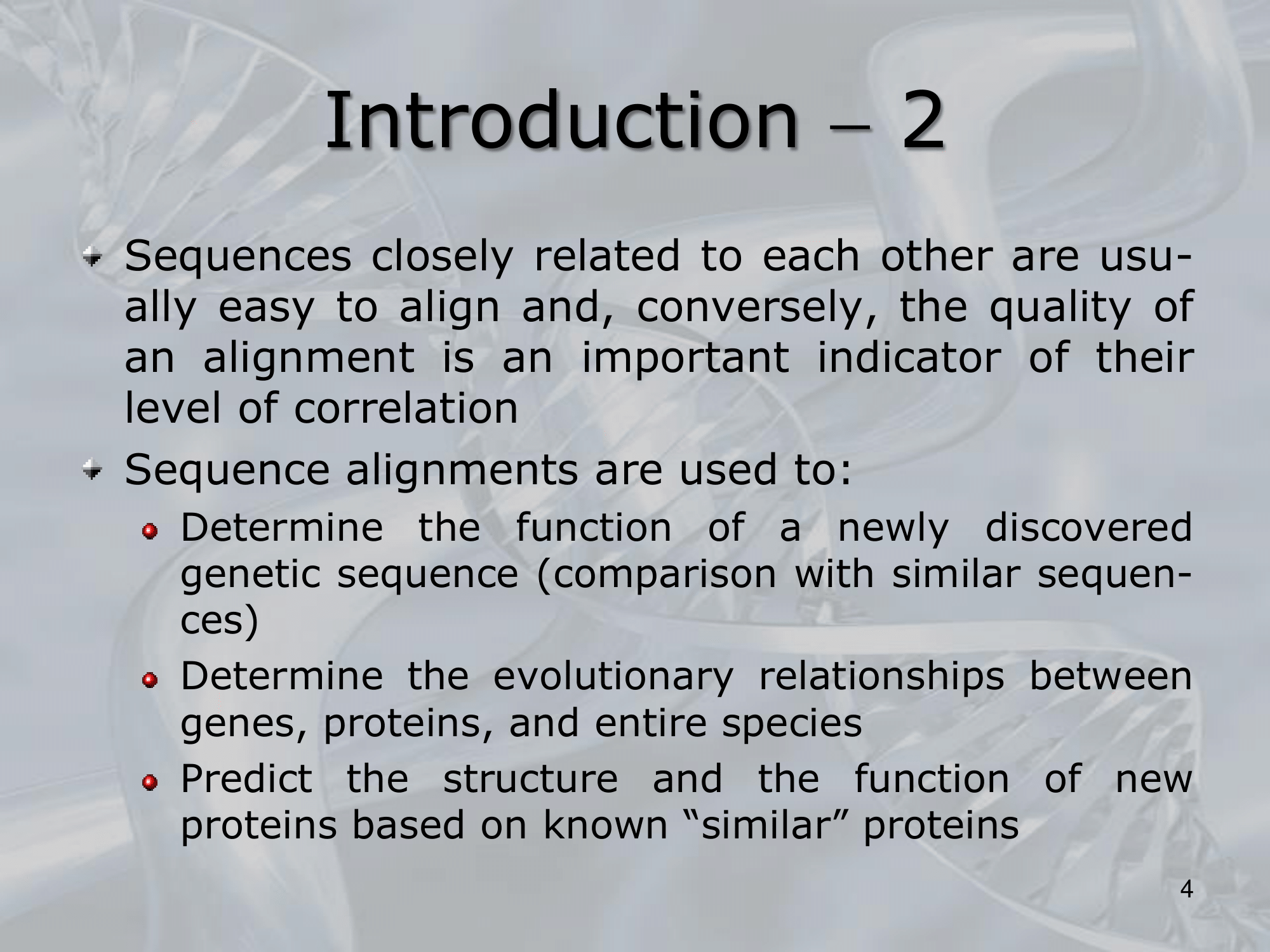
IMPORTANTE L’allineamento di sequenze genetiche o del DNA, è usato per:
- Determinare la funzione di nuove sequenze genetiche, appena scoperte, sulla base di simili sequenze già conosciute.
- Determinare la relazione evoluzionistica di due geni, proteine o intere specie.
- Predirre la struttura e la funzione di nuove proteine basandosi su simili proteine, già conosciute.