Questions
- What is the Correlation between the mRNA and the Level of Expression of Related Proteins?
- The correlation between mRNA levels and protein expression levels is complex and can vary depending on many factors, including the specific gene and protein being studied, the biological context, and the methods used to measure mRNA and protein levels.
- In general, the correlation between mRNA and protein expression levels is not always strong.
Several studies have found that mRNA levels can only explain a portion of the variance in protein expression levels, with the majority of the variance being attributed to post-transcriptional and post-translational regulation. - Post-transcriptional regulation can affect protein expression levels by influencing the stability, localization, or translation efficiency of mRNA transcripts.
For example, mRNA transcripts may be targeted for degradation by microRNAs, or they may be sequestered in cytoplasmic RNA granules that prevent their translation into protein. - Post-translational regulation can also have a significant impact on protein expression levels, as it can influence protein stability, localization, and activity.
Post-translational modifications such as phosphorylation, acetylation, and ubiquitination can regulate protein function and turnover. - Despite the challenges in correlating mRNA and protein expression levels, transcriptomic and proteomic studies are still useful for understanding gene expression patterns and identifying differentially expressed genes or proteins in different conditions or disease states.
By integrating transcriptomic and proteomic data, researchers can gain a more comprehensive understanding of the molecular mechanisms underlying biological processes and disease.
- Why are Proteins Diffcult to Study?
- Proteins are difficult to study for several reasons, including their complex structures, dynamic behavior, and diverse functions.
Here are some of the main reasons why studying proteins can be challenging:- Complexity: Proteins are complex biomolecules that can range in size from small peptides to large multi-subunit complexes. They have complex three-dimensional structures that can be difficult to predict or model, and they often undergo conformational changes in response to different stimuli or interactions with other molecules.
- Dynamic behavior: Proteins are dynamic molecules that can interact with other proteins, nucleic acids, and small molecules, and their behavior can be influenced by a wide range of factors, including temperature, pH, and salt concentration.
- Heterogeneity: Proteins can exist in multiple isoforms that can differ in their sequence, structure, and function, making it challenging to study the expression and regulation of individual protein isoforms.
- Limited availability: Many proteins are present in cells at low concentrations, making them difficult to isolate and study.
- Technical limitations: Studying proteins requires the use of specialized techniques and equipment, such as mass spectrometry, X-ray crystallography, and nuclear magnetic resonance (NMR) spectroscopy, which can be time-consuming, expensive, and technically challenging.
- Despite these challenges, the study of proteins is essential for understanding many biological processes, including signal transduction, metabolism, and gene regulation.
Advancements in proteomics technologies, such as mass spectrometry-based proteomics and single-molecule imaging techniques, have led to significant progress in the field, enabling researchers to study proteins in greater detail and with greater accuracy than ever before.
- Proteins are difficult to study for several reasons, including their complex structures, dynamic behavior, and diverse functions.
—————————————————————
IMPORTANTE
IMPORTANTE There is almost no correlation between the intermediate product (mRNA) and the actual level of expression of the related protein (). #IMPORTANTE The majority of proteins after translation undergo very important chemical changes.
IMPORTANTE Many proteins are not functionally relevant until they are assembled into larger complexes, or if they are not transported into specific location (~ex.: inside or outside the cell). #IMPORTANTE From a single piece of a gene we can create many copies of it (using PCR), having a large set of data that we can use, this is impossible for proteins, we cannot replicate protein material, we need to extract them from living cells.
IMPORTANTE Protein are difficult to study also because, their tetriary structure can easly be altered when they come into contact with an inappropiate surface or environment. While the DNA is much simpler to study. Tho if we can understand the proteome of an organism we can also understand the base and cause of a possible disease, and we can design target drugs for that specific organism (targeted medicine), also we can increase the efficency of genetically engineered organisms.
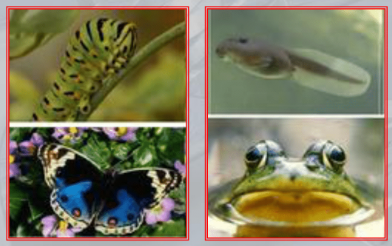
IMPORTANTE ~Ex.: The caterpillar and the butterfly are genetically identical, but posses very different proteome and phenotype, also the tadpole and the frog.
—————————————————————
Slides with Notes
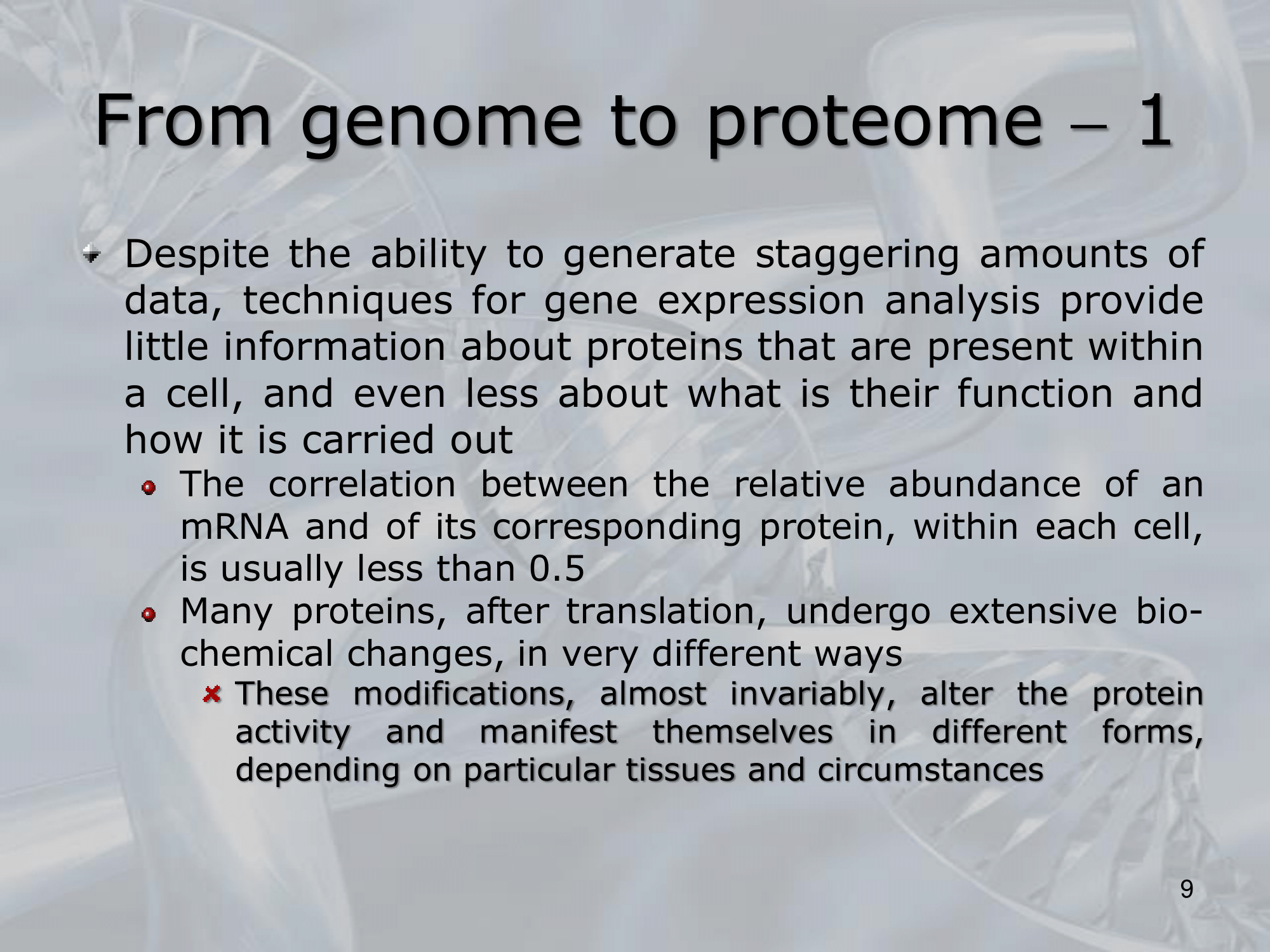
IMPORTANTE There is almost no correlation between the intermediate product (mRNA) and the actual level of expression of the related protein (). #IMPORTANTE The majority of proteins after translation undergo very important chemical changes.
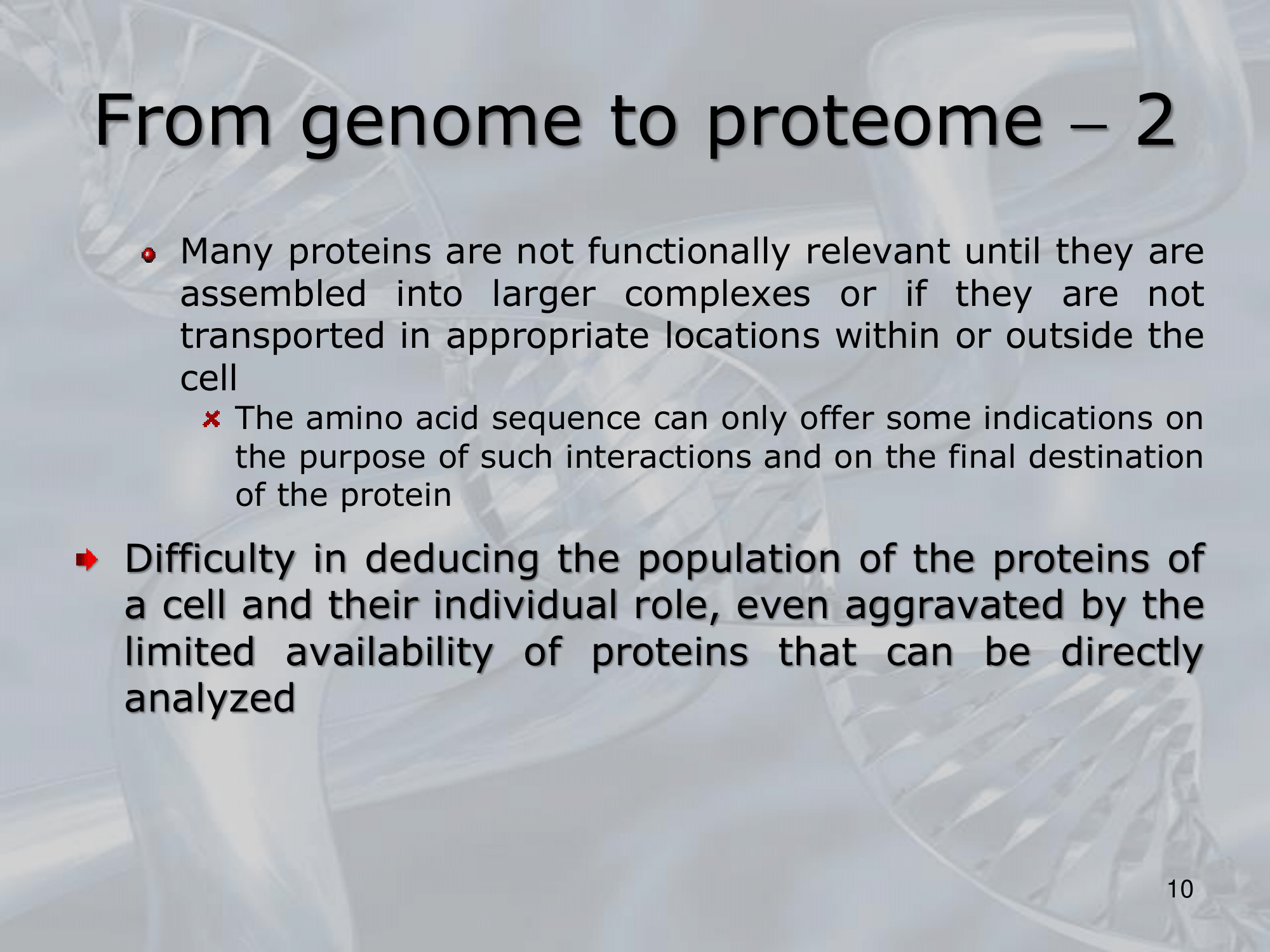
IMPORTANTE Many proteins are not functionally relevant until they are assembled into larger complexes, or if they are not transported into specific location (~ex.: inside or outside the cell). #IMPORTANTE From a single piece of a gene we can create many copies of it (using PCR), having a large set of data that we can use, this is impossible for proteins, we cannot replicate protein material, we need to extract them from living cells.
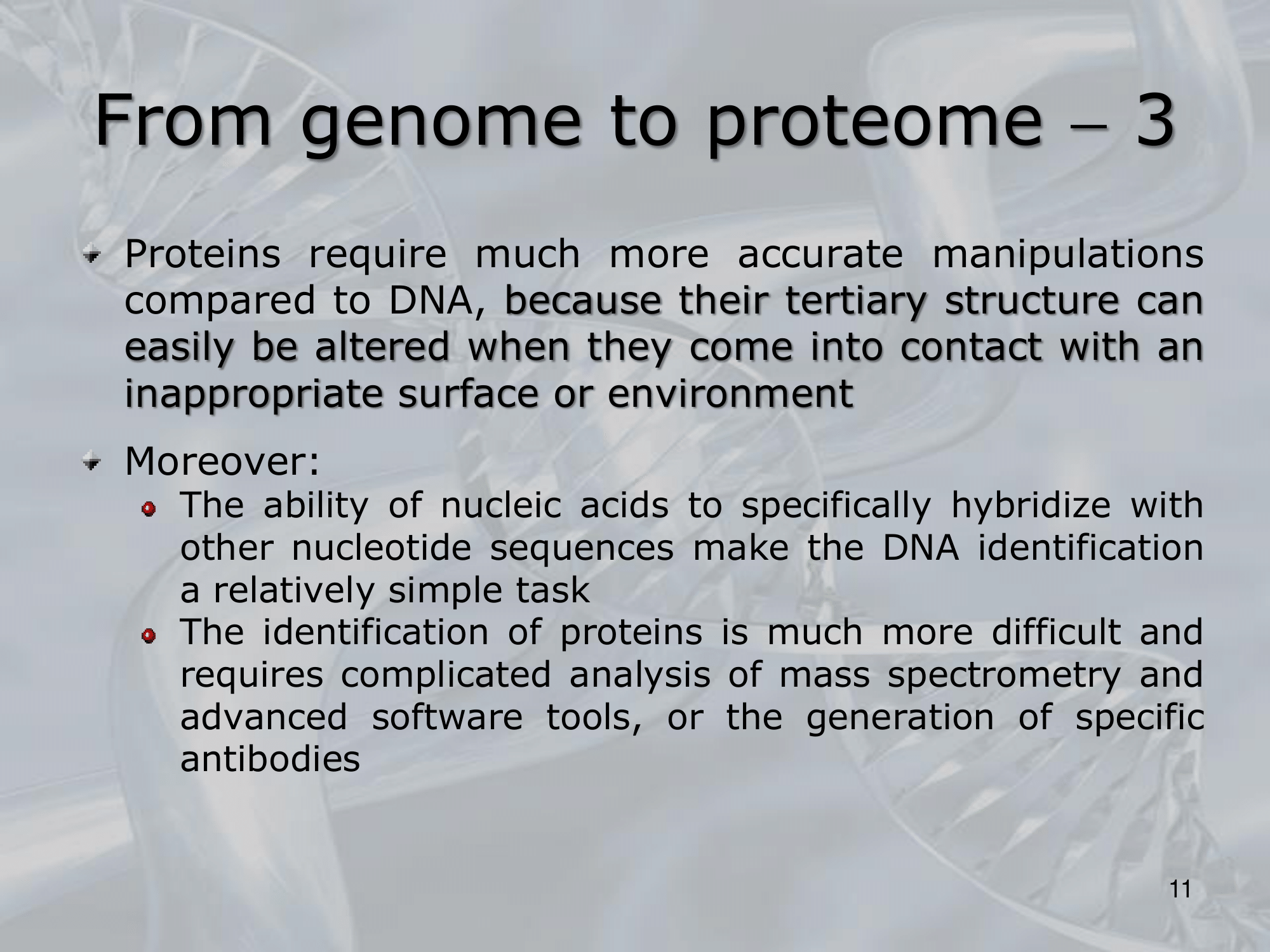
IMPORTANTE Protein are difficult to study also because, their tetriary structure can easly be altered when they come into contact with an inappropiate surface or environment. While the DNA is much simpler to study. Tho if we can understand the proteome of an organism we can also understand the base and cause of a possible disease, and we can design target drugs for that specific organism (targeted medicine), also we can increase the efficency of genetically engineered organisms.
IMPORTANTE ~Ex.: The caterpillar and the butterfly are genetically identical, but posses very different proteome and phenotype, also the tadpole and the frog.