Questions
- What is Protein-Protein Interaction?
- ==Protein-protein interactions (PPIs) are the physical contacts between two or more proteins that occur within a cell or organism==.
PPIs play a critical role in many biological processes, including signal transduction, gene expression, and metabolism. - PPIs can occur through a variety of mechanisms, including the formation of stable complexes, transient interactions, and post-translational modifications. PPIs can also be modulated by a variety of factors, including cellular environment, post-translational modifications, and the presence of other interacting molecules.
- PPIs can be studied using a variety of experimental techniques, including co-immunoprecipitation, yeast two-hybrid assays, and protein microarrays.
In recent years, computational methods, such as molecular docking and machine learning algorithms, have also been developed to predict and analyze PPIs. - Understanding PPIs is essential for understanding many biological processes and for developing new drugs and therapies.
PPIs are also the focus of intense research in fields such as network biology and systems biology, which seek to understand the complex interactions between biomolecules within a cell or organism.
- ==Protein-protein interactions (PPIs) are the physical contacts between two or more proteins that occur within a cell or organism==.
- How can we Predict Post-Translation Modifications?
- ==Post-translational modifications (PTMs) are covalent modifications of proteins that occur after translation, and they play important roles in protein function and regulation==.
PTMs can include phosphorylation, acetylation, methylation, ubiquitination, and many others.
Predicting PTMs can be challenging, as they can be site-specific and can occur at multiple residues within a protein. - There are several computational methods and tools that can be used to predict PTMs:
- Sequence-based prediction: This method involves analyzing the amino acid sequence of a protein to predict PTM sites.
Several tools, such as NetPhos, NetAcet, and GPS-SUMO, use machine learning algorithms to predict PTM sites based on sequence features such as amino acid composition, sequence motifs, and structural properties. - Structure-based prediction: This method involves analyzing the 3D structure of a protein to predict PTM sites.
Structural features such as solvent accessibility, surface electrostatics, and hydrogen bonding patterns can be used to predict PTM sites. Several tools, such as iGPS and EzyPred, use structure-based prediction methods. - Combination of sequence and structure-based prediction: This method combines both sequence and structural features to predict PTM sites.
For example, the tool KinasePhos combines sequence motifs and structural features to predict phosphorylation sites.
- Sequence-based prediction: This method involves analyzing the amino acid sequence of a protein to predict PTM sites.
- It is important to note that PTM prediction tools have limitations, and experimental validation is necessary to confirm predicted PTM sites.
Additionally, PTMs can be context-dependent and can be affected by cellular environment and signaling pathways, which can make prediction challenging. Therefore, a combination of experimental and computational approaches is often used to study PTMs.
- ==Post-translational modifications (PTMs) are covalent modifications of proteins that occur after translation, and they play important roles in protein function and regulation==.
—————————————————————
IMPORTANTE
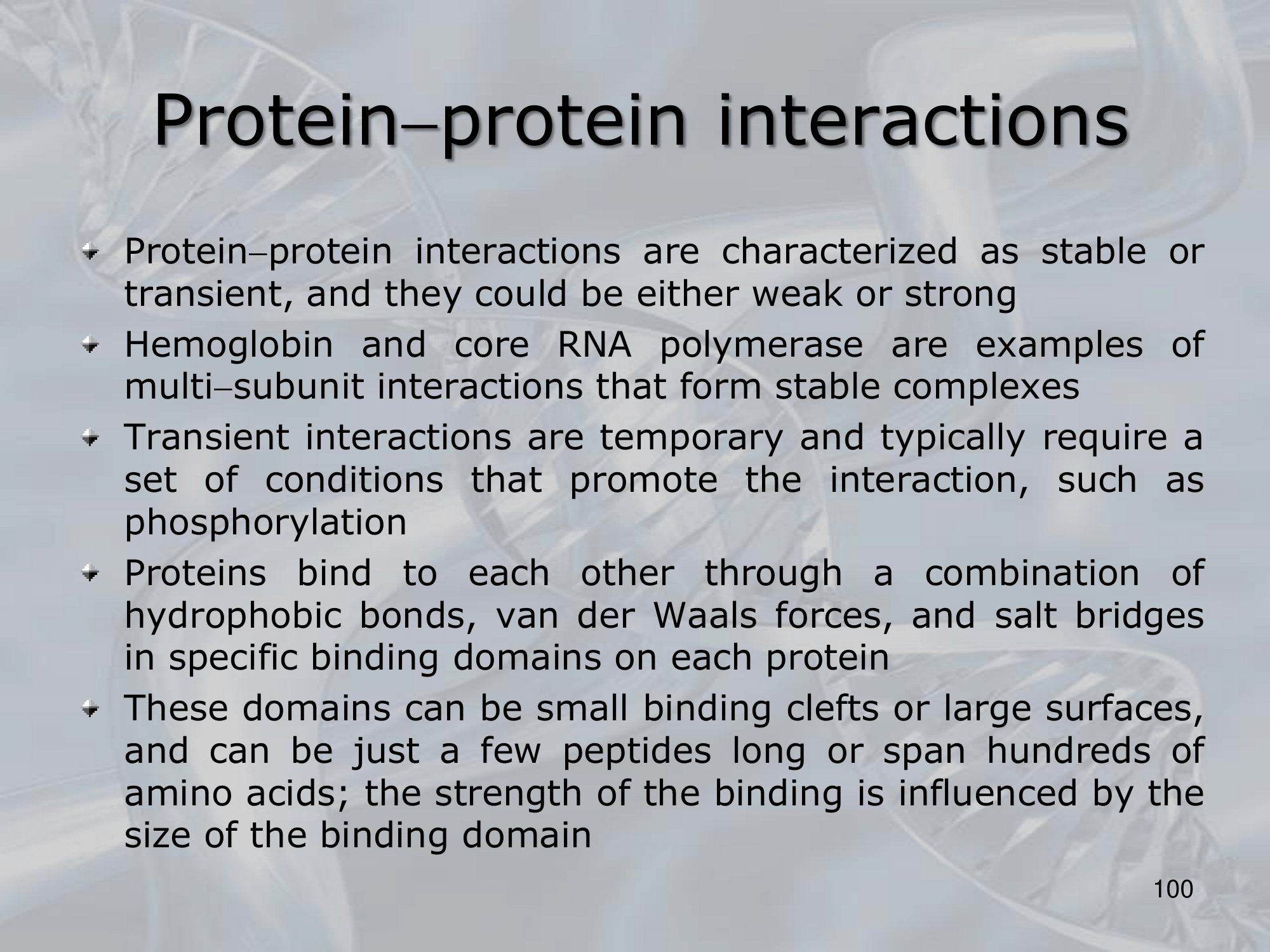
IMPORTANTE Protein-Protein Interaction: P-P interactions are characterized as stable or transient, also a P-P interaction can be either weak or strong:
- Stable P-P Interactions: Permanent interaction, (like a fusion of two proteins) Some examples are: Hemoglobin, RNA Polymerase.
- Transient P-P Interactions: Temporary interaction, typically this interaction requires a set of condition that promote the interaction (~ex.: phosphorylation).
- Weak, Strong P-P Interactions: the strength of the interaction is determined by the size of the binding domain (by how many peptides), also note that P-P iteractions are kept togheter by hydrophobic bonds, van der Waals forces or salt bridges.
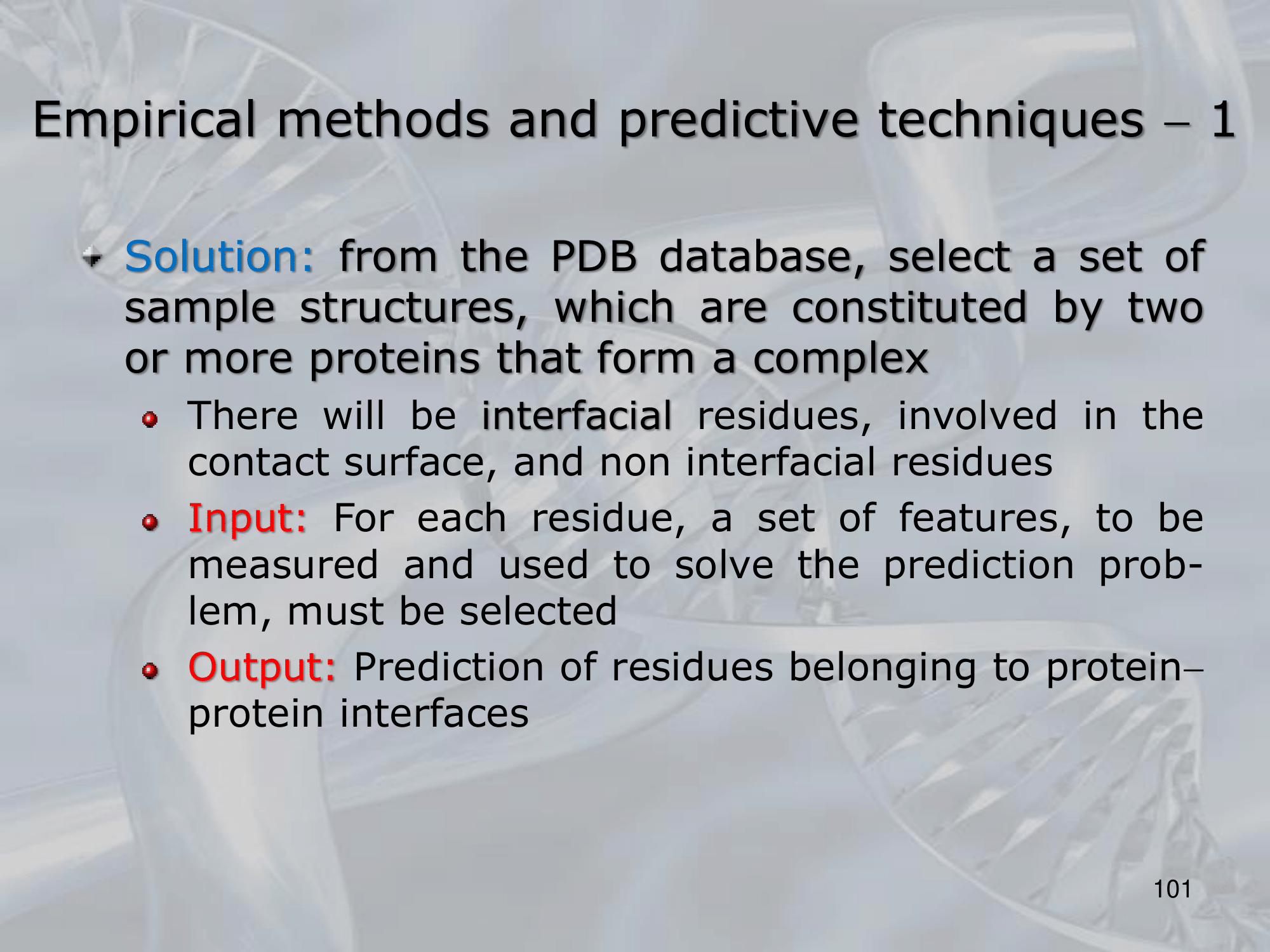
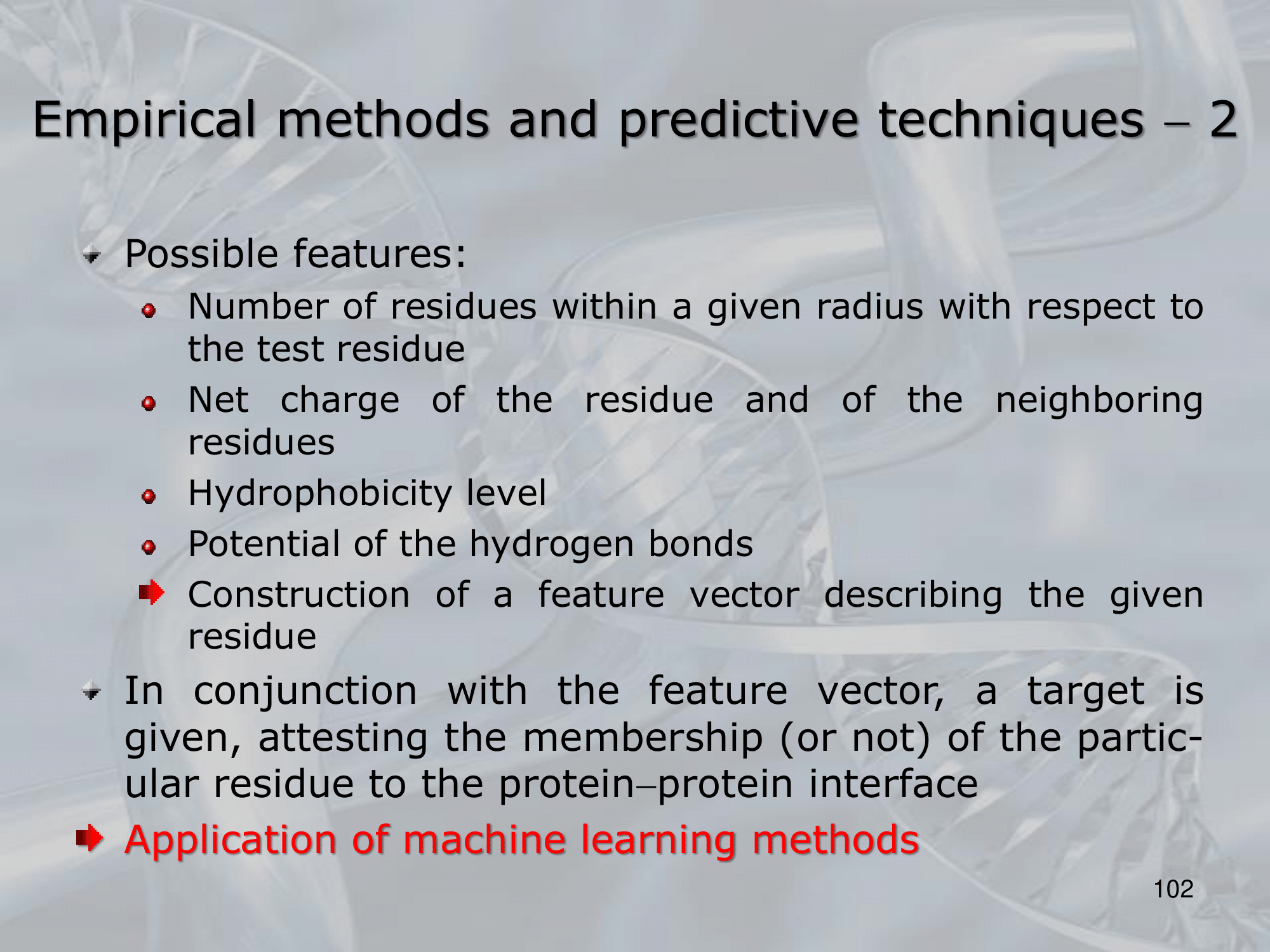
The tetrary structure of a protein can be useful: given the 3D structure of a protein we can use ML to predict which residues are most likely involved in protein-protein interactios. For each residue in the surface (or close to it) we can extract a number of useful featues, to be used in a ML framework:
- Number of residues within a given radius.
- Net charge of the residue and of the neighboring residues.
- Hydrophobicity level.
- Potential of the hydrogen bonds.
We can then pass two features vectors, each corresponding to a residue of two different proteins, and the NN will give use a score for which the two residues will form a P-P interaction.
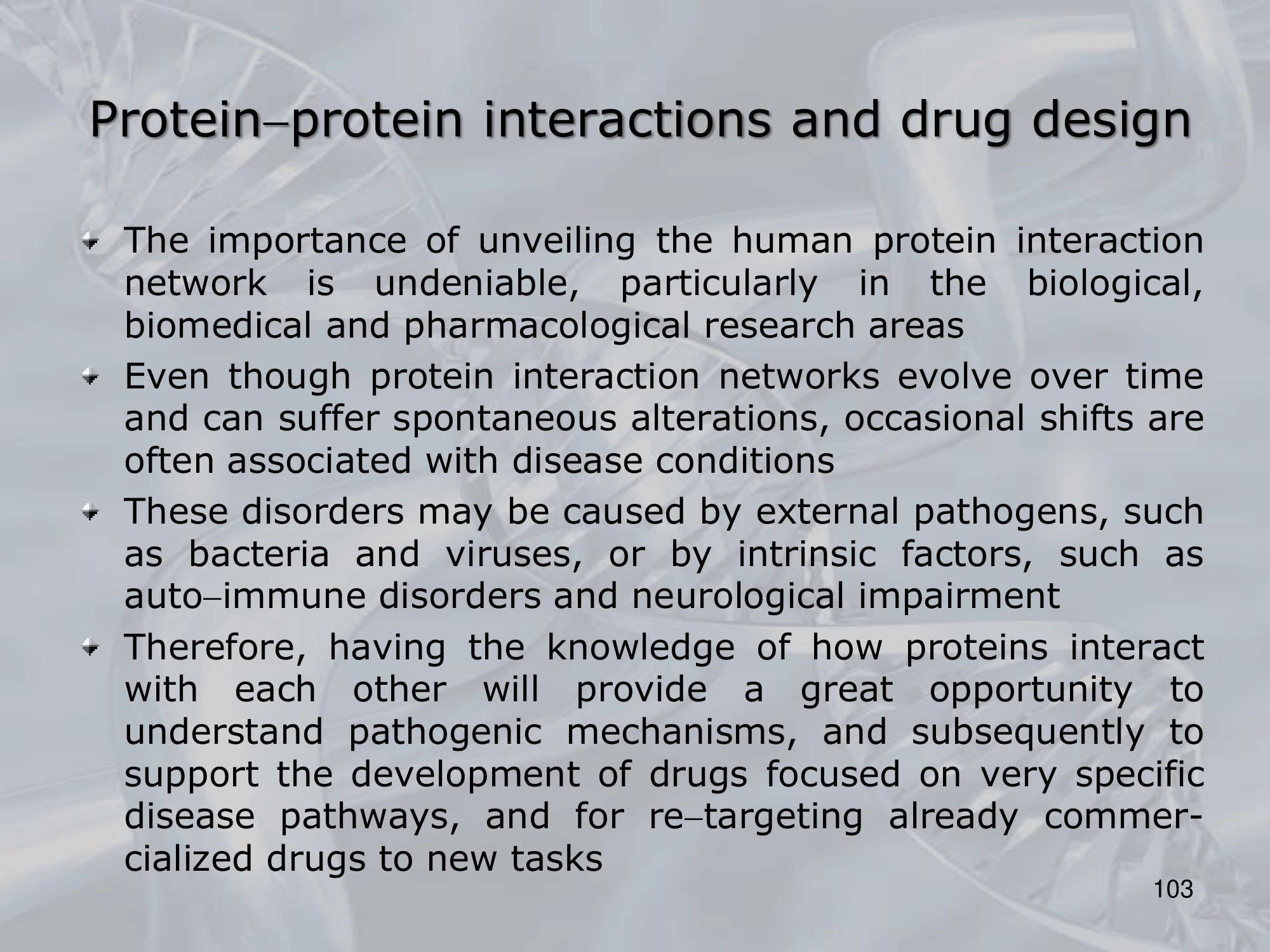
Protein interaction networks evolve over time and can suffer spontaneus alterations, occasioanl shifts are often associated with diseases conditions, noticing these changes can be hugly beneficial. The goal is to create extreamly specific medicine to combact these changes, or more generally, to have a better understand how target compounds can interact with a protein we insert in the body, via drugs.
IMPORTANTE Post-Translation Modification Prediction ==Proteins are subjected to many modification also after being translated== So we need another field of study that can help use better understand the life cycle of proteins and how we can use them to our advantage. Some of the post-traslation modification are:
- Removal of protein segments
- Formation of covalent bonds, between residues and sugars, or phophate and sulphate groups.
- Formation of cross-links, involving (possibly far) residues within a protiens (disulfide bonds)
Many of these modification are carried out by other proteins.
—————————————————————
Slides with Notes