Questions
- What do we mean for Protein Secondary Structure?
- Protein secondary structure refers to the regular, recurring patterns of folding that occur within a protein molecule.
These patterns are stabilized by hydrogen bonds between different parts of the polypeptide chain, and they help to give the protein its overall three-dimensional shape. - The two most common types of protein secondary structure are alpha helices and beta sheets.
- Alpha helices are formed when the polypeptide chain coils around itself to form a tightly packed helical structure.
The helix is stabilized by hydrogen bonds between the amino acid residues in the chain. - Beta sheets, on the other hand, are formed when the polypeptide chain folds back and forth to form a sheet-like structure.
The beta strands in the sheet are held together by hydrogen bonds between adjacent strands.
- Alpha helices are formed when the polypeptide chain coils around itself to form a tightly packed helical structure.
- Other types of secondary structure include turns and loops, which occur when the polypeptide chain changes direction abruptly, and disordered regions, which lack a defined structure.
- The secondary structure of a protein is important because it helps to determine its overall shape and function.
For example, alpha helices are often found in transmembrane proteins, where they help to anchor the protein within the cell membrane, while beta sheets are often found in enzymes and other proteins that require a large surface area for catalysis.
- Protein secondary structure refers to the regular, recurring patterns of folding that occur within a protein molecule.
—————————————————————
IMPORTANTE
IMPORTANTE Protein secondary structure:
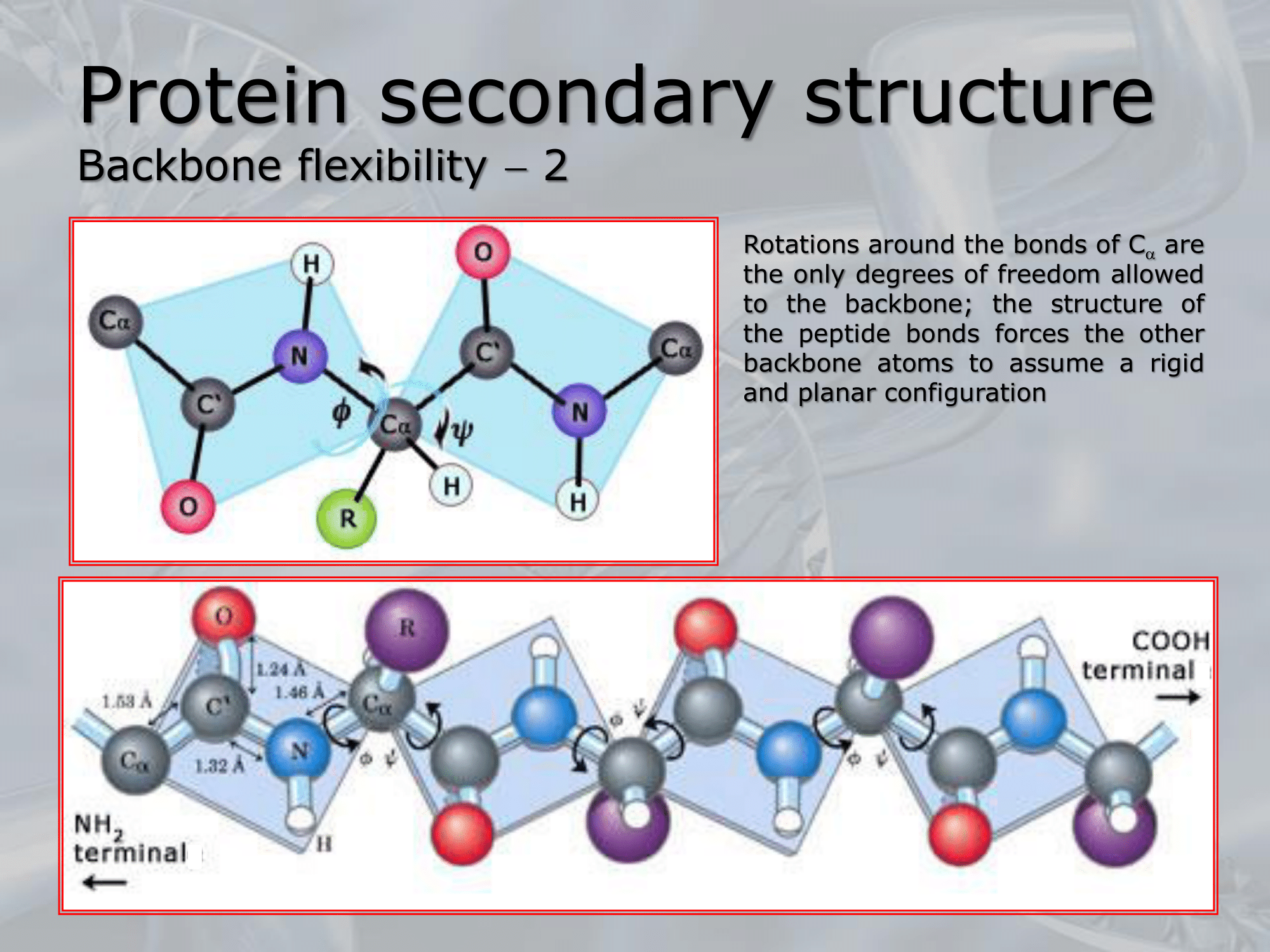
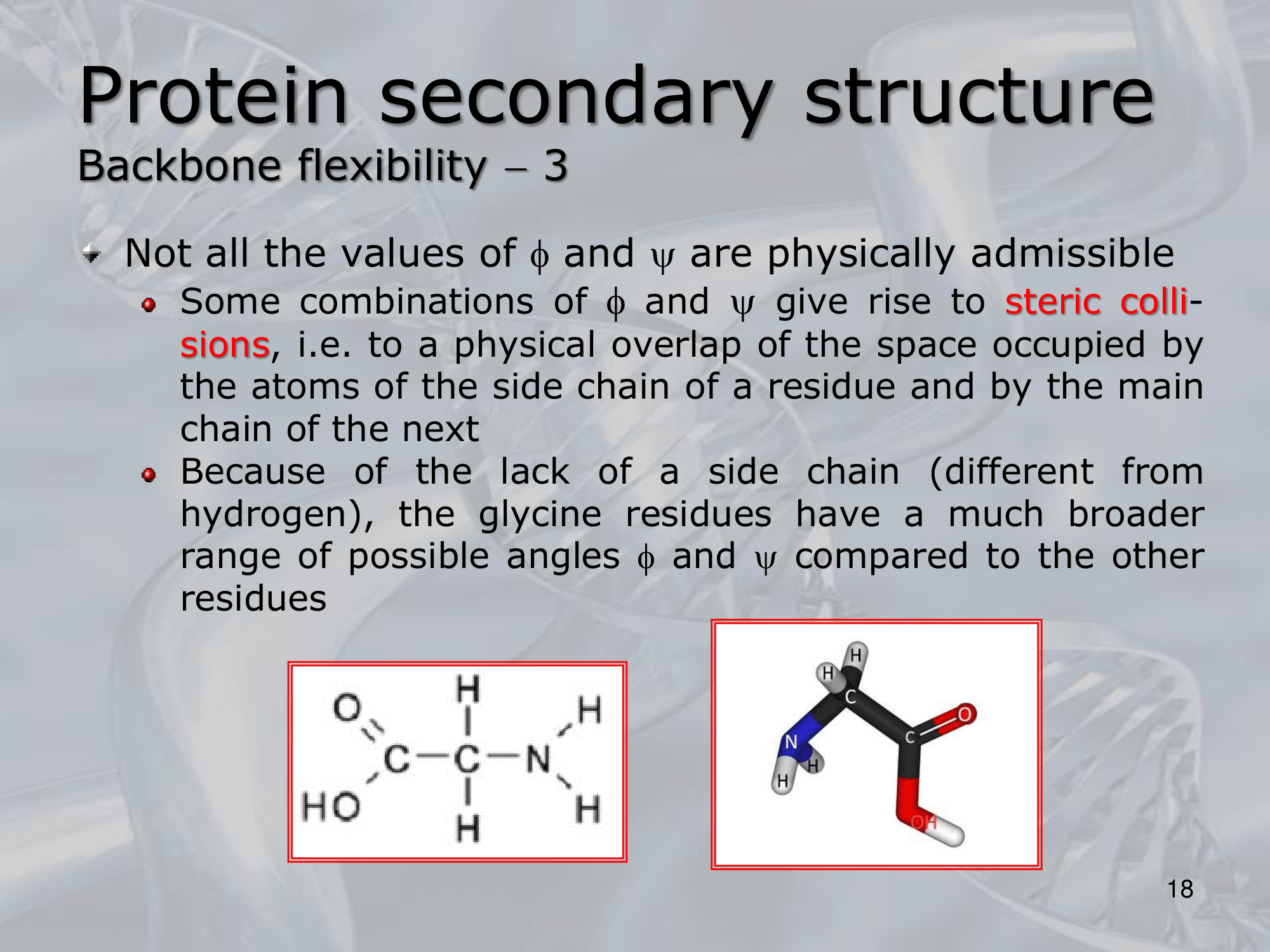
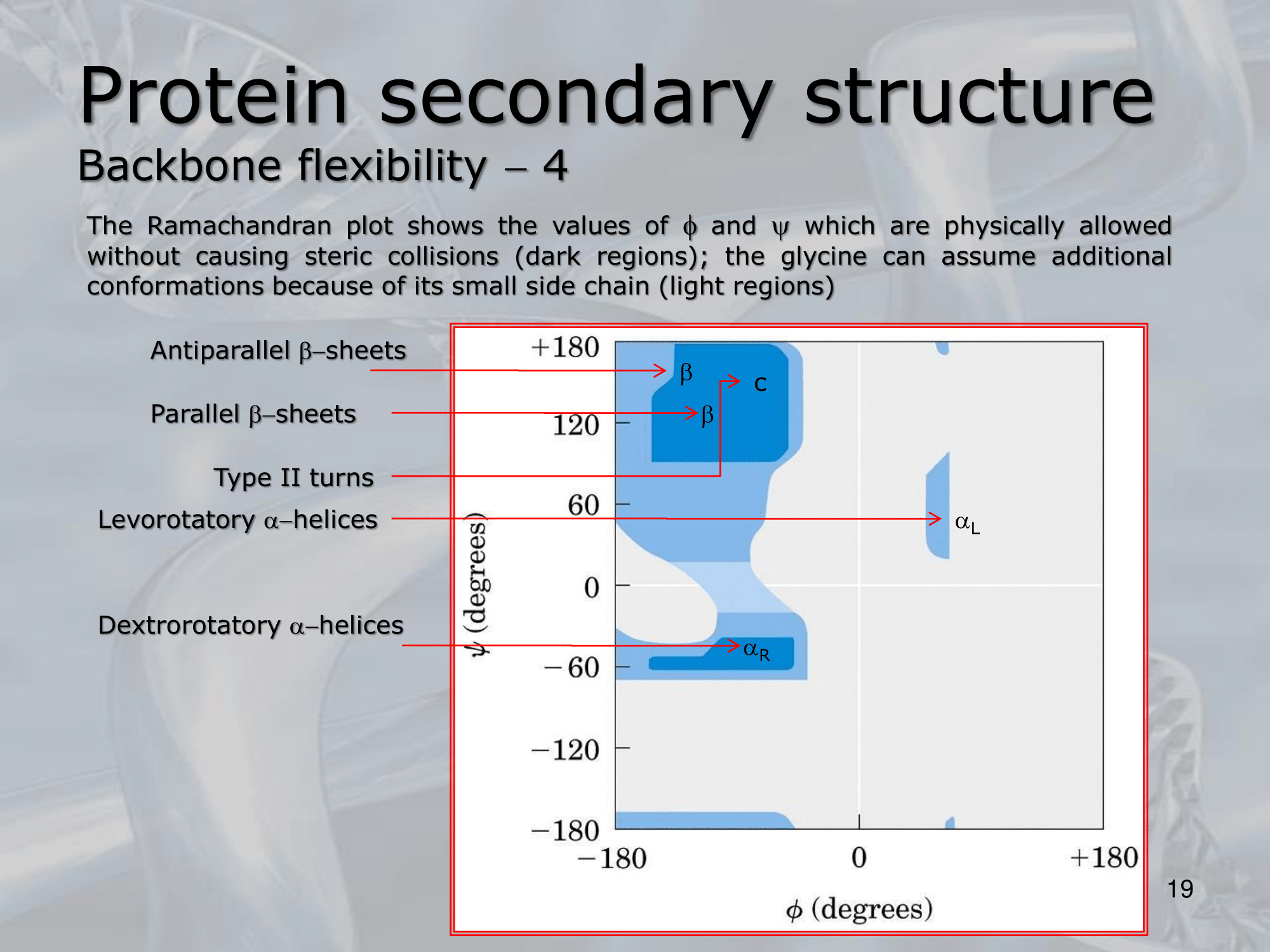
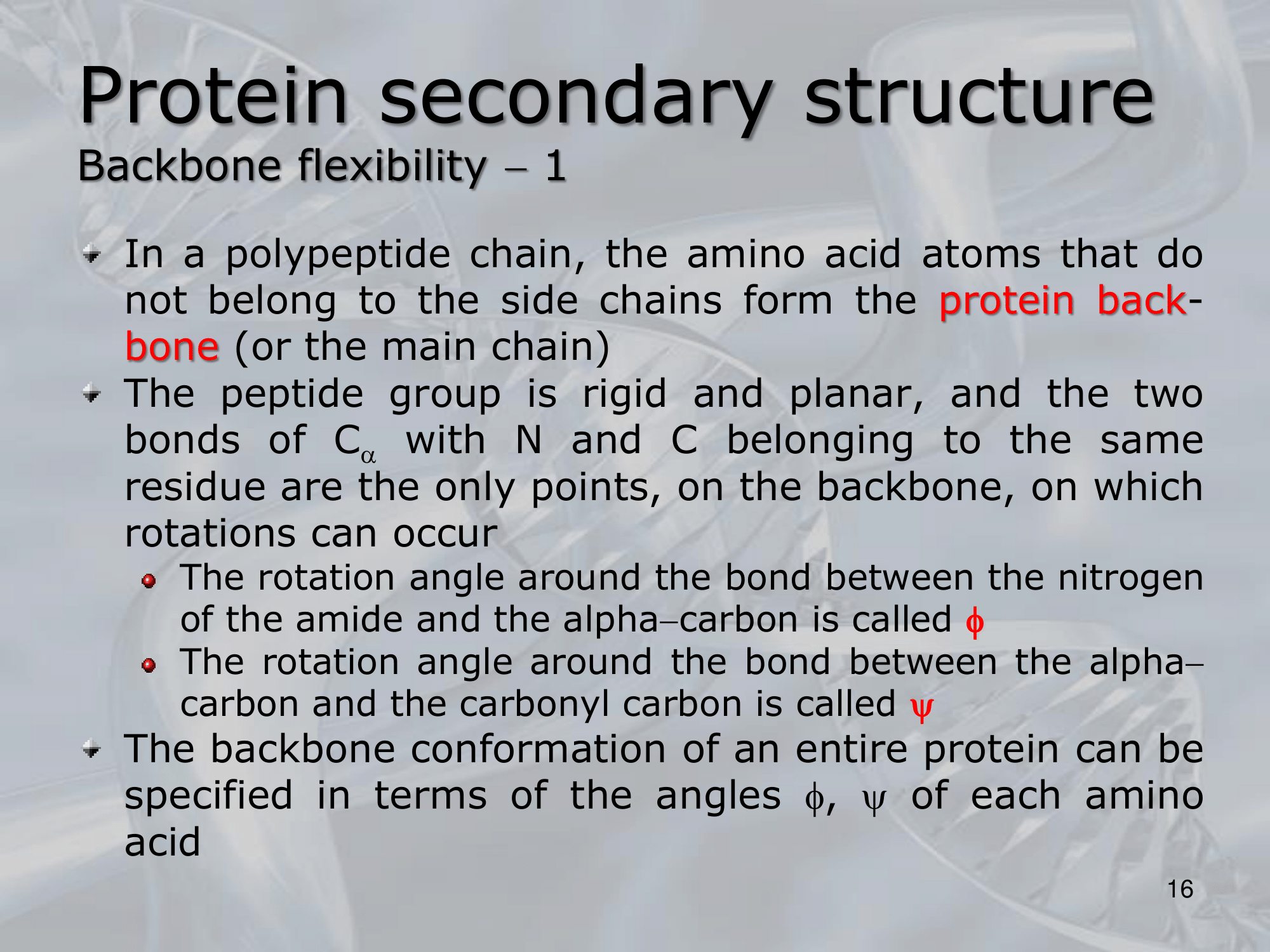
L’unica parte mobile in un polipeptida sono gli angoli e di ogni residuo. #IMPORTANTE Ovviamente i valori di e di tutti i residui devono essere tali da non formare collisioni steriche ovvero due reisdui non devono mai occupare lo stesso spazio. #IMPORTANTE The Ramachandran Plot:
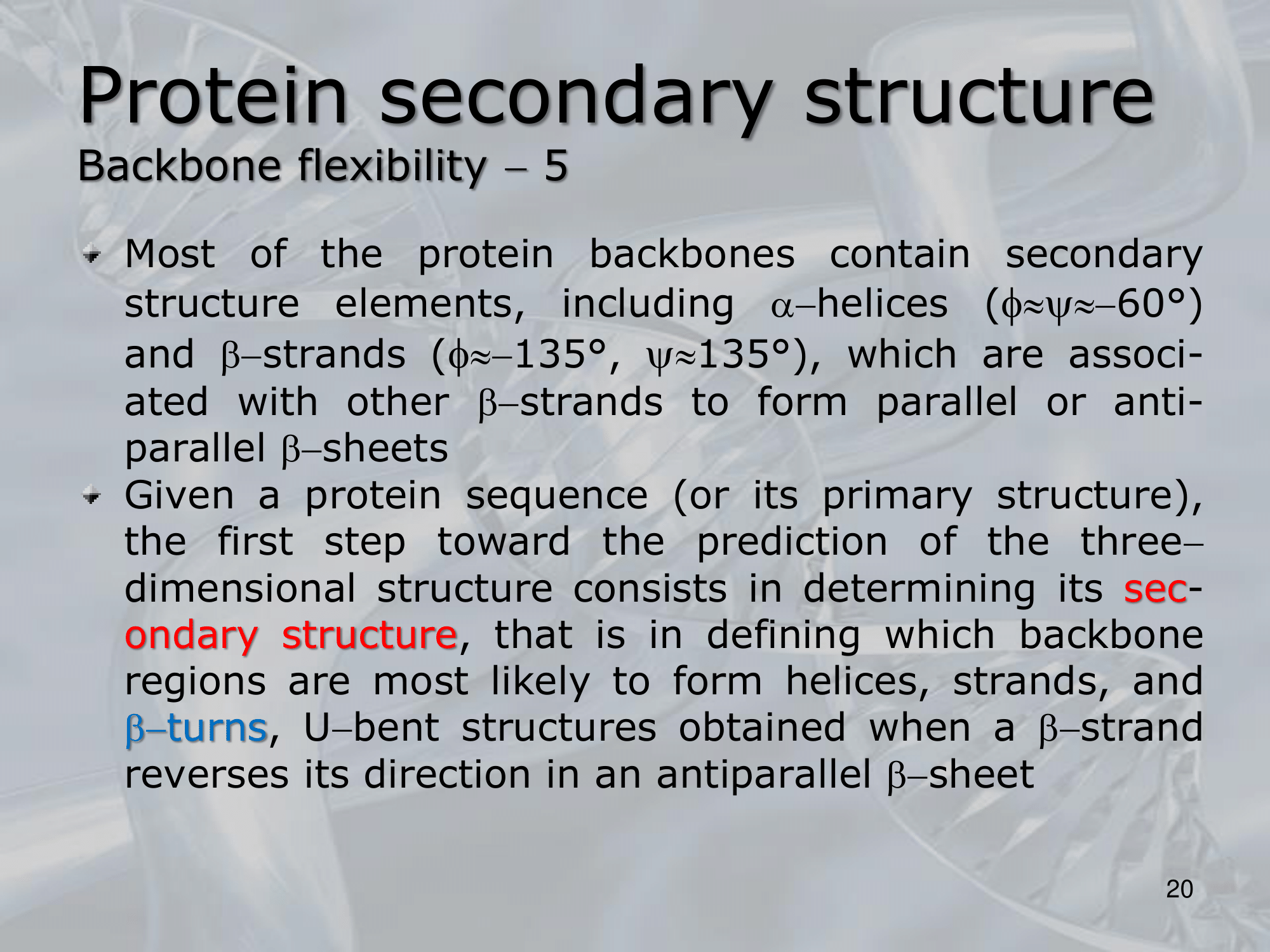
#IMPORTANTE Lo studio della struttura secondaria delle proteine serve a capire quali residui sono più probabili nel formare: HELICS (like -helics) SHEETS (like -sheets) STRANDS -TURNS U-BENT STRUCURES (obtained when a -strand reversed its direction in an antiparallel -sheets)
—————————————————————
Slides with Notes
IMPORTANTE Protein secondary structure: