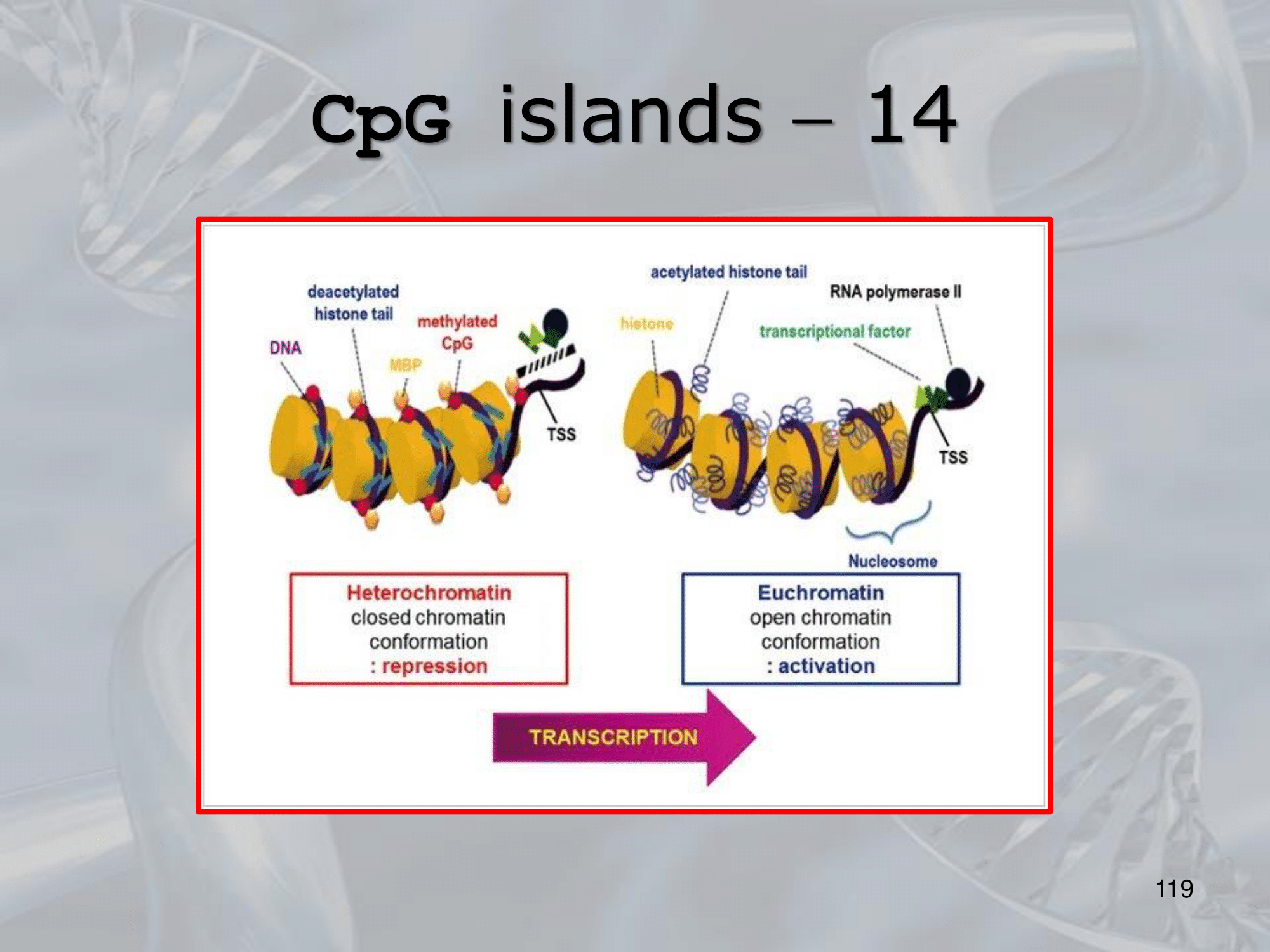
Questions
- What are CpG Islands?
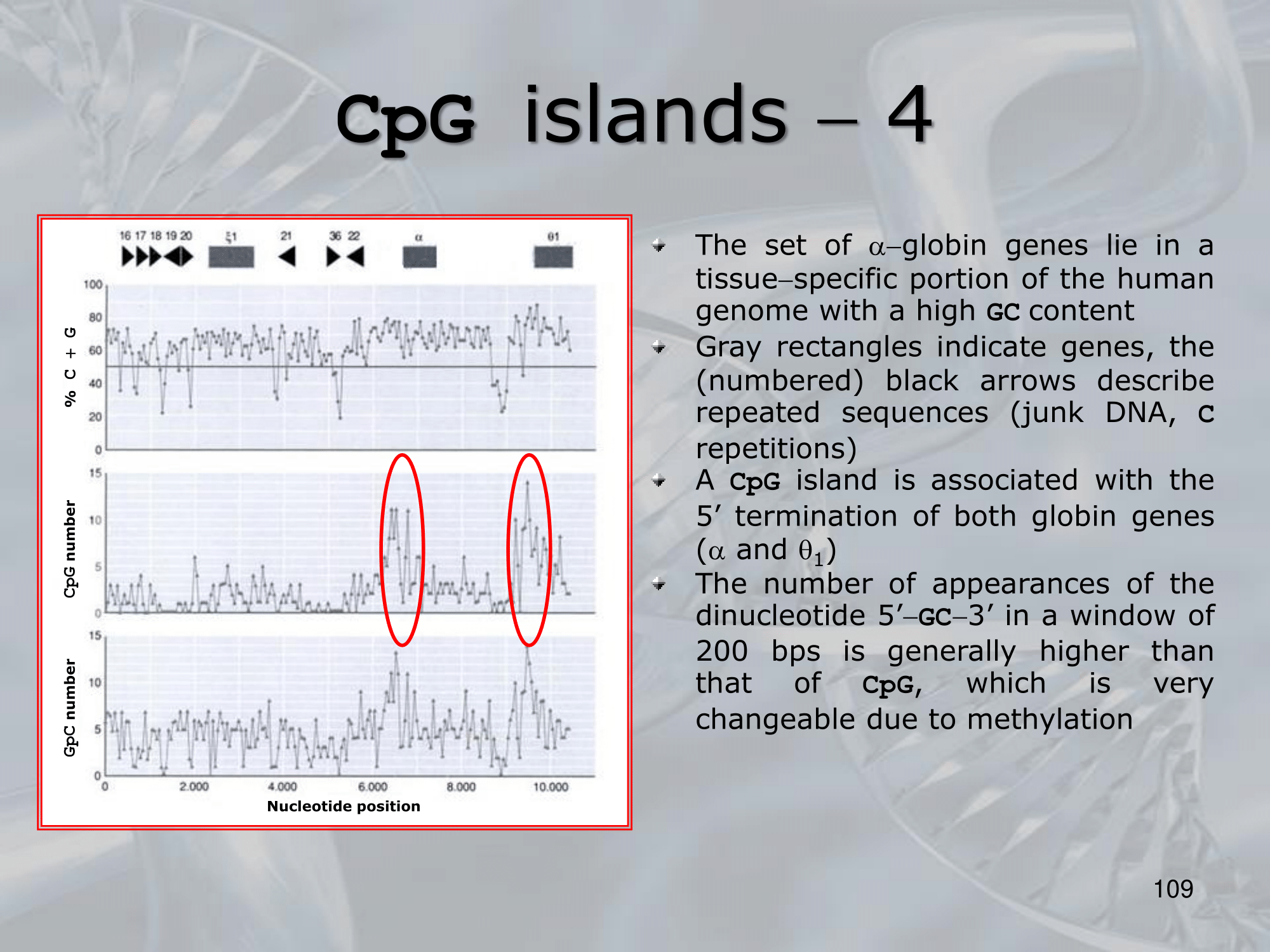
- CpG islands are regions of DNA that contain high numbers of CpG dinucleotides, where a cytosine (C) is followed by a guanine (G).
They are typically found in the promoter regions of approximately 60-70% of human genes, although they are also present in other regions of the genome. - CpG islands are important for gene regulation because they are often unmethylated, meaning that the cytosine in the CpG dinucleotide is not modified by the addition of a methyl group.
Methylation of CpG dinucleotides is a common epigenetic modification that can repress gene expression.
By contrast, unmethylated CpG islands are associated with active gene expression and can act as regulatory elements for transcription factors and other gene regulatory proteins. - CpG islands are defined as DNA sequences that are at least 200 base pairs long, have a GC content greater than 50%, and a ratio of observed to expected CpG dinucleotides greater than 0.6.
However, not all CpG-rich regions are CpG islands, as many are methylated and do not function as gene regulatory elements. - Aberrant methylation of CpG islands has been implicated in the development of many diseases, including cancer and neurological disorders.
Hypermethylation of CpG islands can lead to the silencing of tumor suppressor genes, while hypomethylation can lead to the activation of oncogenes. - Overall, CpG islands are an important feature of the genome and play a critical role in regulating gene expression and maintaining genomic stability.
- CpG islands are regions of DNA that contain high numbers of CpG dinucleotides, where a cytosine (C) is followed by a guanine (G).
—————————————————————
IMPORTANTE
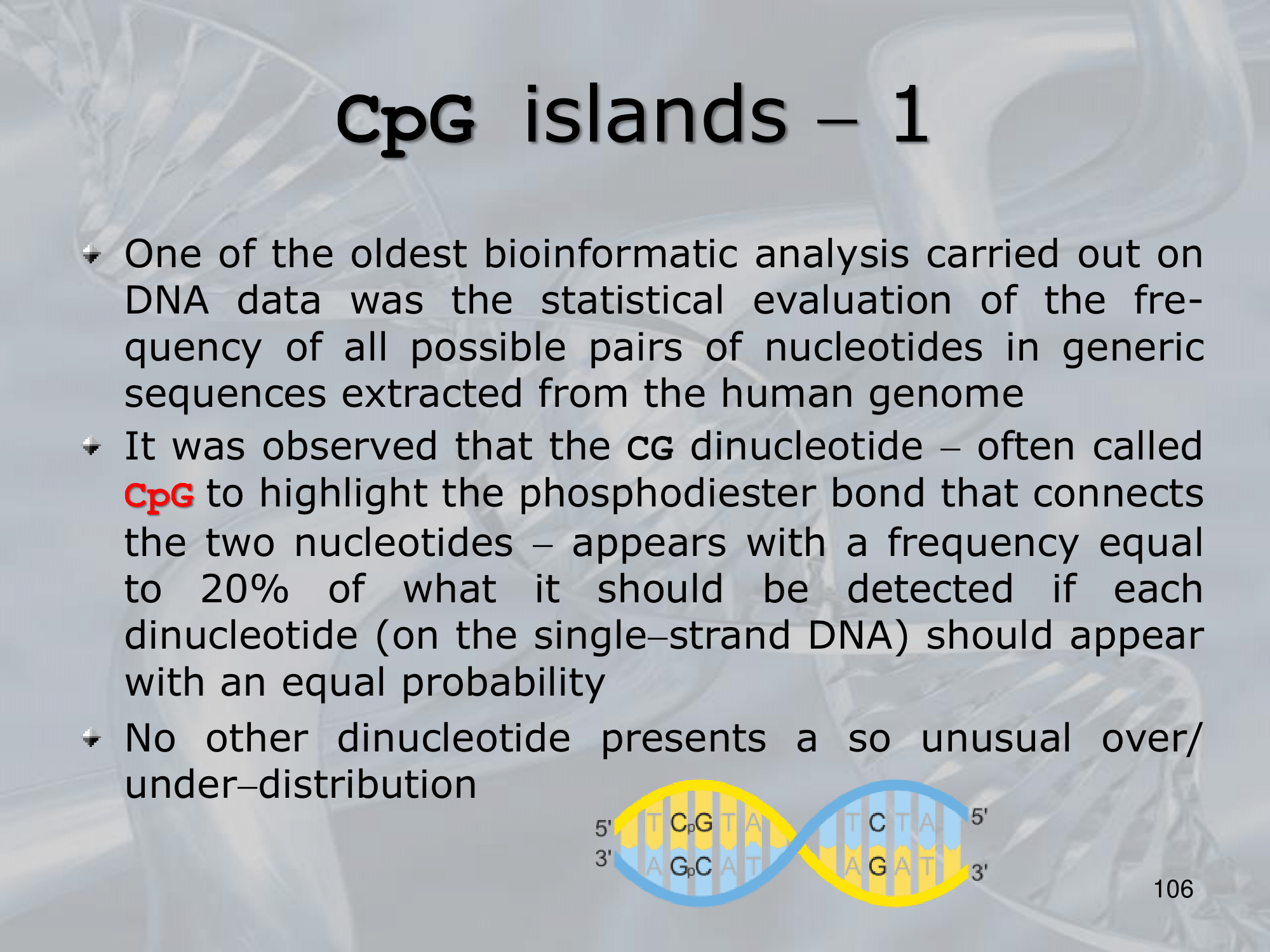
IMPORTANTE Difference of saying CpG and CG: CpG is a dinucleotide, which is two nucleoutides bonded by phosodiester bond, we evidensiate the “p” that stands for phospate. ==CpG are two nucleotides on the same strand on DNA== CG or GC are bounded by hydrogen bond. ==CG are two nucleotides on the different strand on DNA==
When we talk about CpG we mean:
Online Resource: Youtube
IMPORTANTE Definition of CpG Island: Taken a strand of DNA of length, the percentage of CpG is grater that
Which is a lot beacause on average the DNA of eukaryots has only of “what it should have” of CpG content, expected percentage, 1 out of 16 possible nucleotides: , actual percentage only , in humans
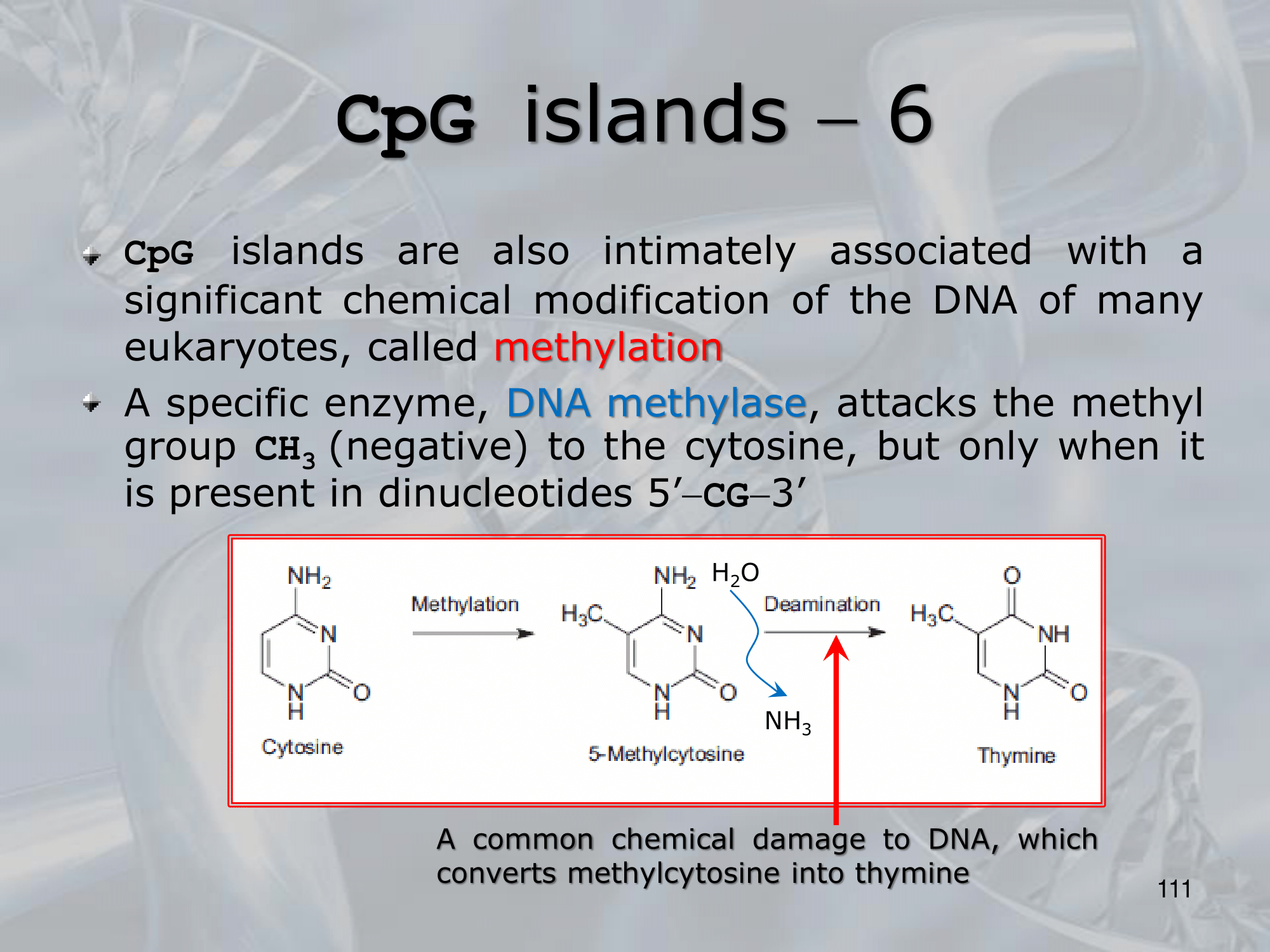
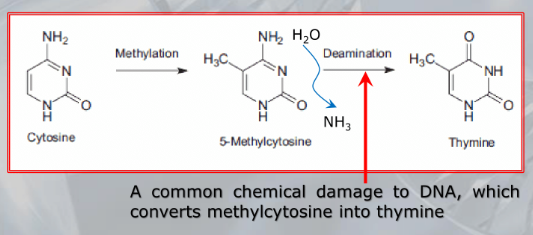
IMPORTANTE Deamination: A common chemical damage that can happen on the DNA: Due to deamination a cythosine becomes an uracil
Tho the Uracil is not one of the four basis (A, C, T, G), and it is then removed by DNA repair mechanisms.
IMPORTANTE Methylation: A specif enzyme, DNA methylase, can change a cythosine into an 5-methylcythosine:
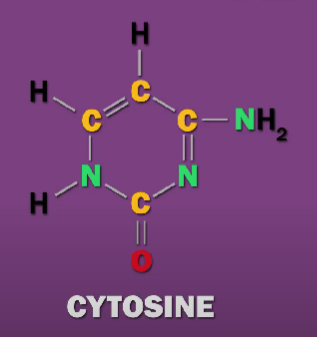
This is a problem because when deamination happens, it does not transform it in an uracil but in a thymin, which IS one of the four bases:
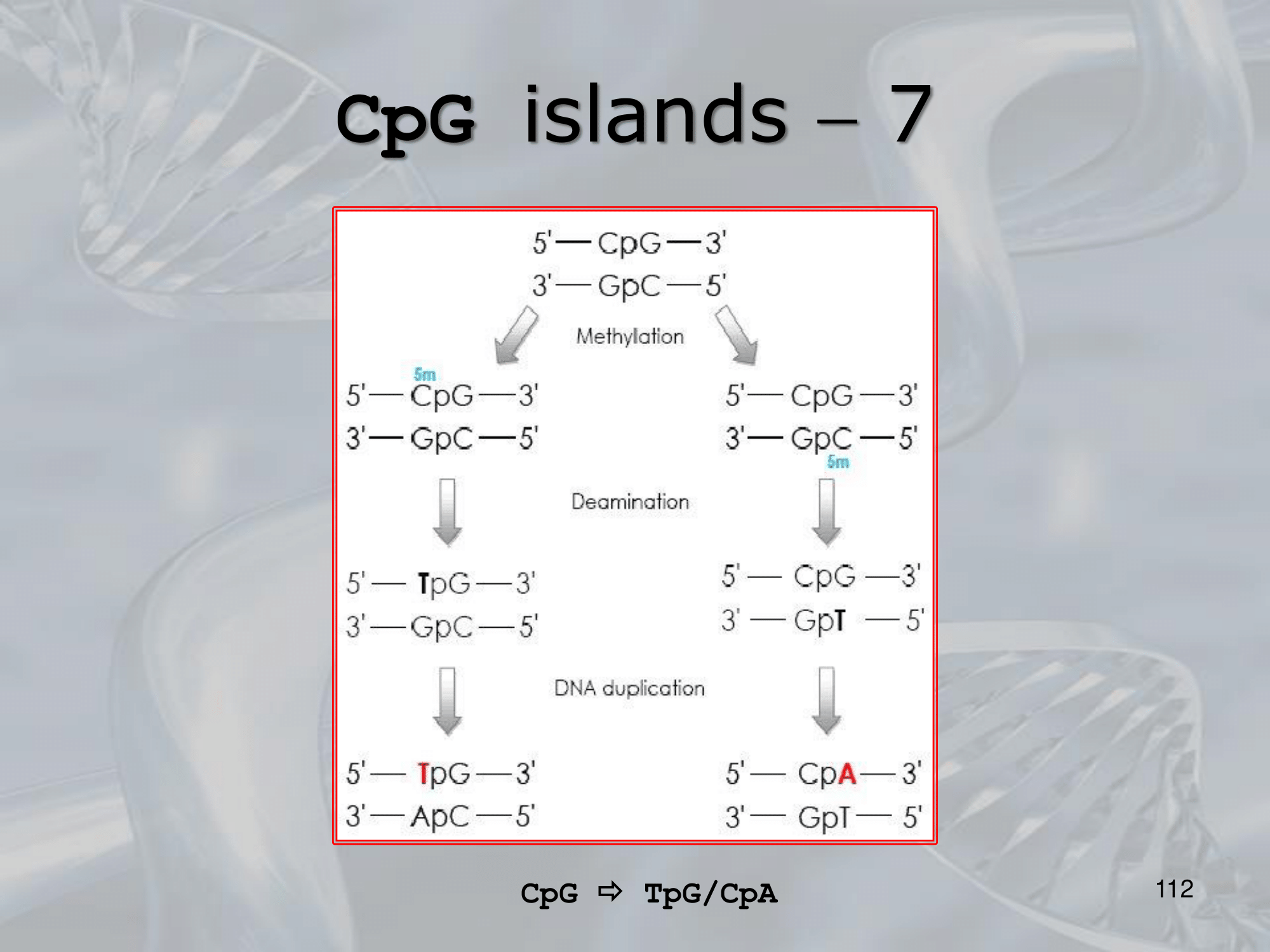
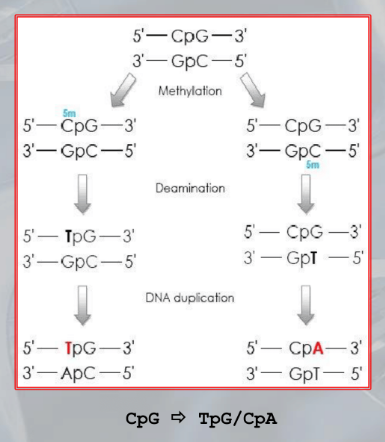
This tymine is not easily removed and more changes like this stack up during evolution. This process, called CpG suppression, is the cause of the low percentage of CpG in vertebrates. While invertebrates don’t have this problem because they have no or low methylation.
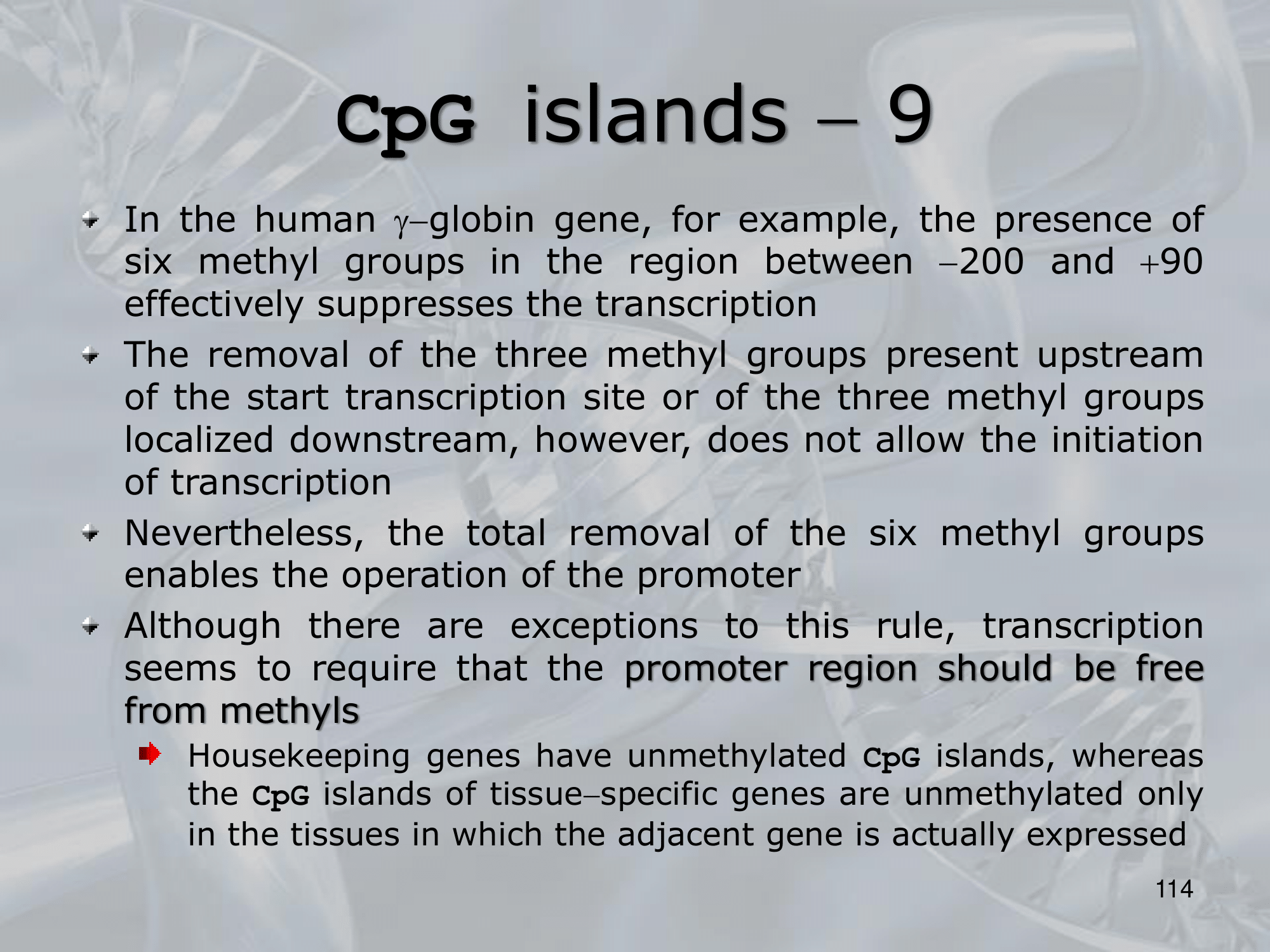
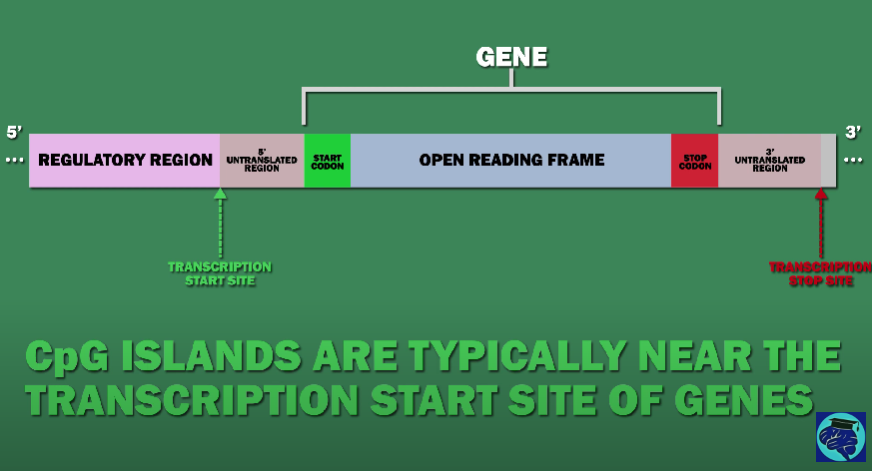
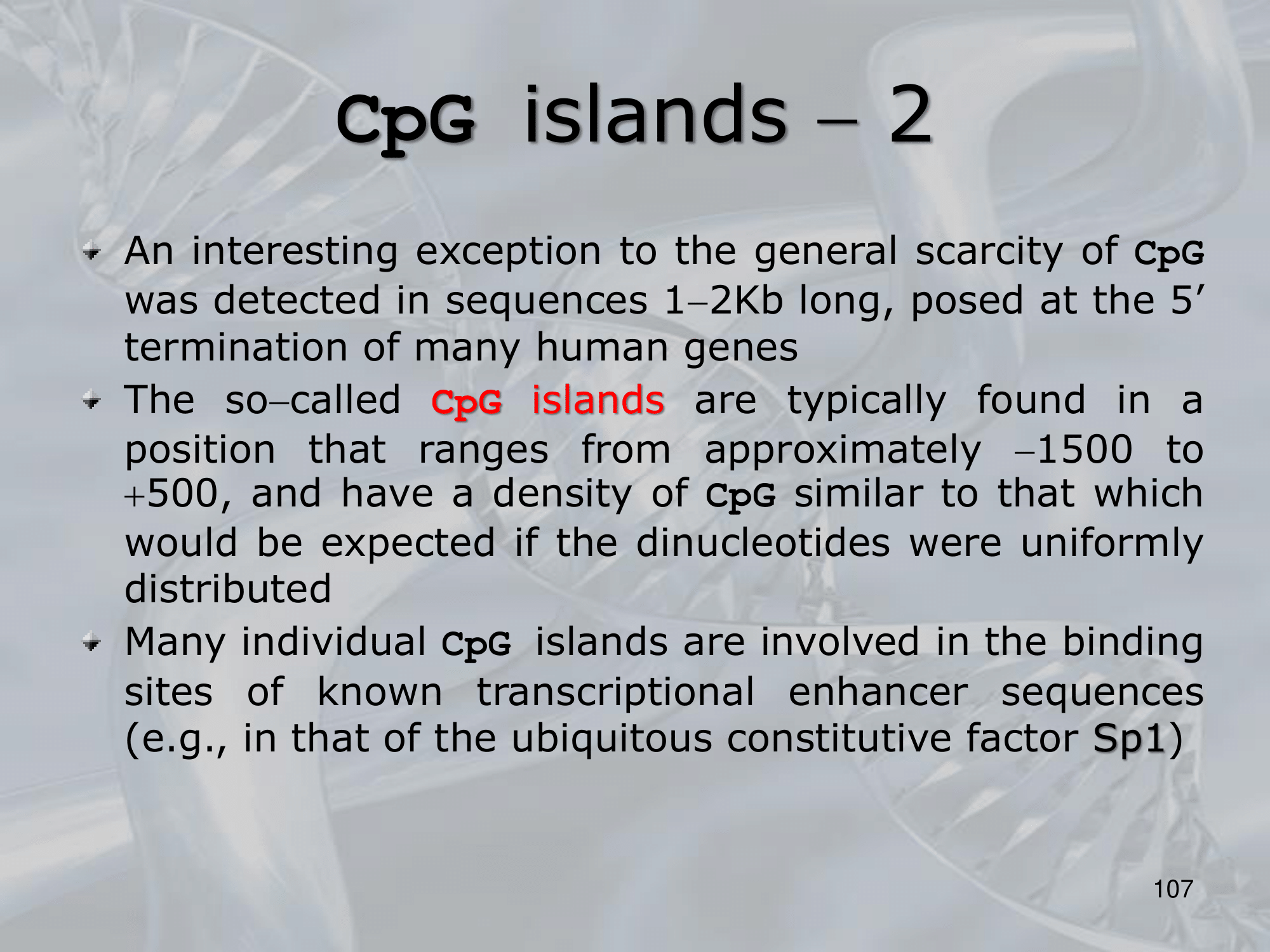
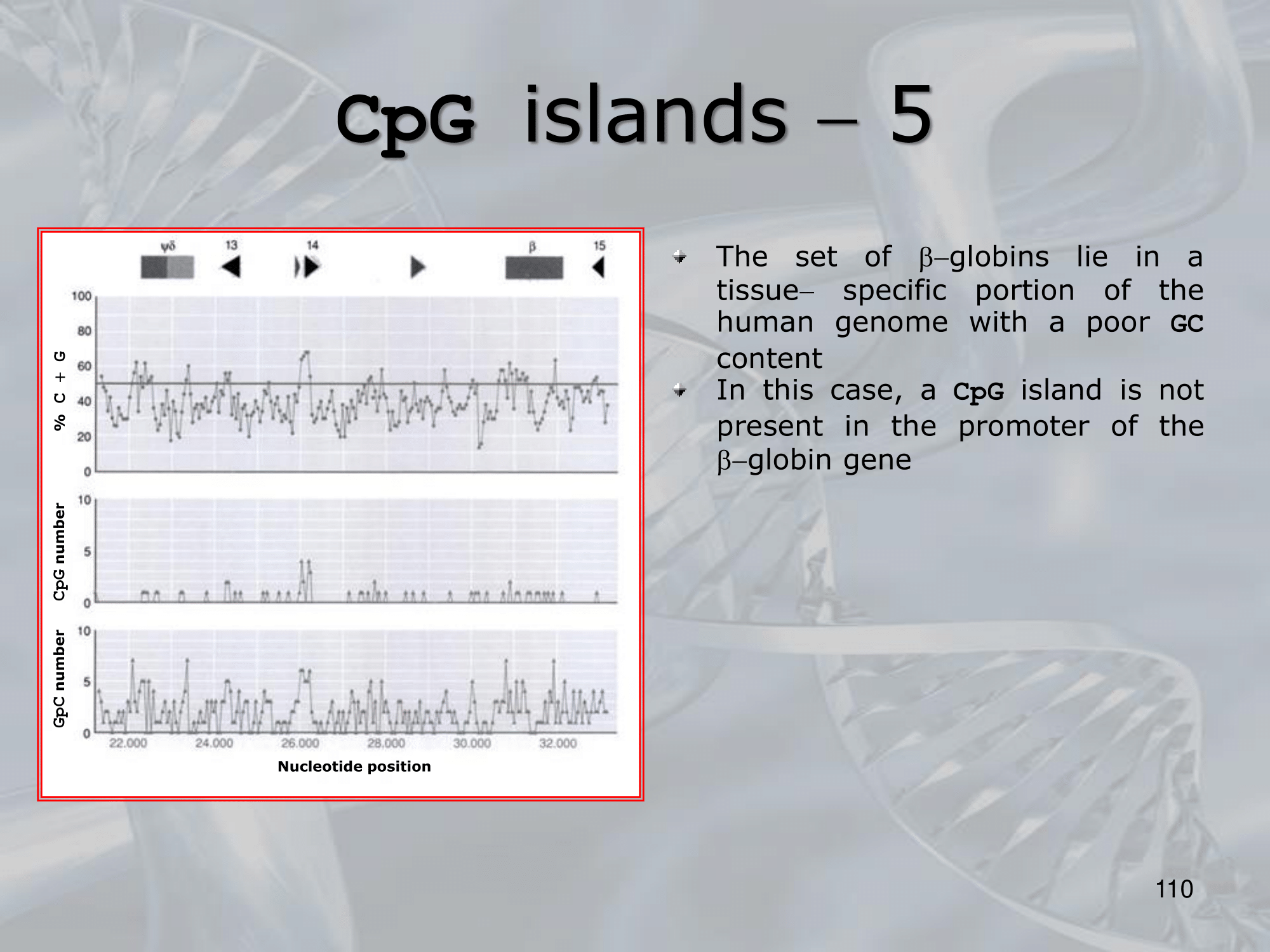
IMPORTANTE Mammal Unmethylated Promotes About of mammalian promoters have CpG islands, also most of them are unmethylated.
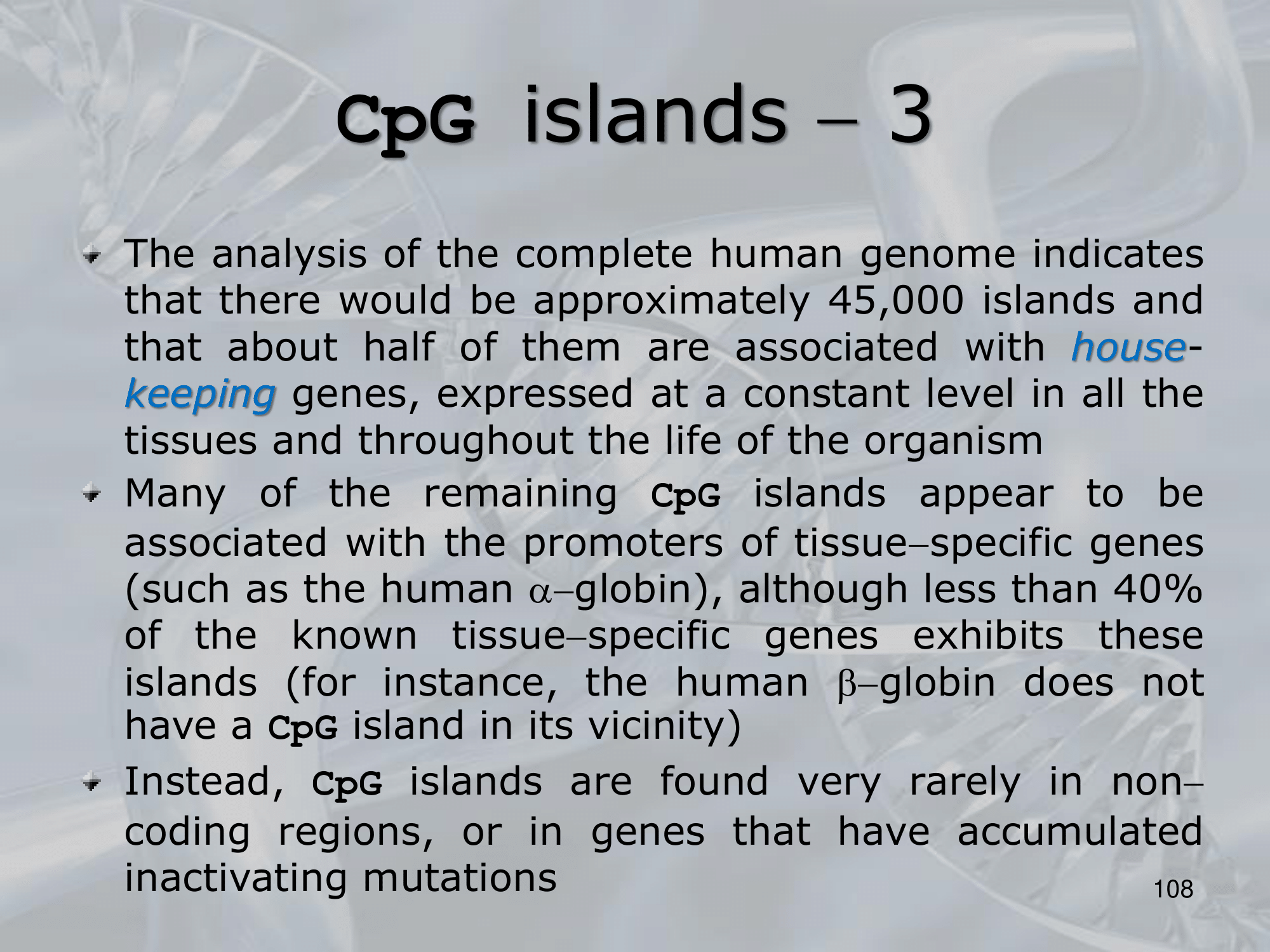
In particular CpG islands are especially common near the transcription site of housekeeping genes, which are genes necessary for basic survival functions of the cell, and are found in all cells.
The CpG island in promoter regions remain unmethylated in active genes The CpG island in promoter regions of inactive genes get methylated ⇒ Methylation of CpG islands promoters prevents binding of transcription factors, resulting in “genes silencing”.
IMPORTANTE Chromatin:
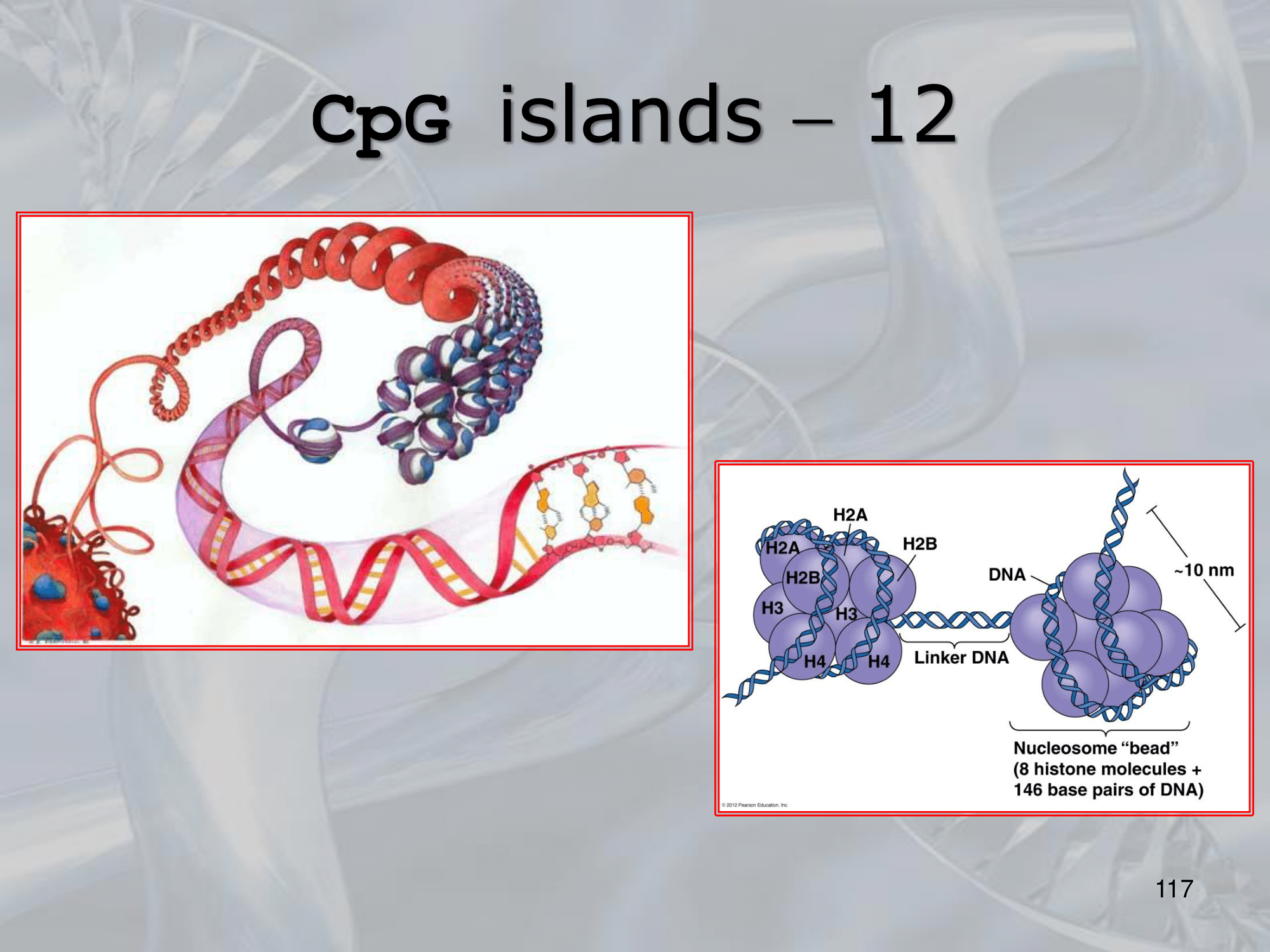
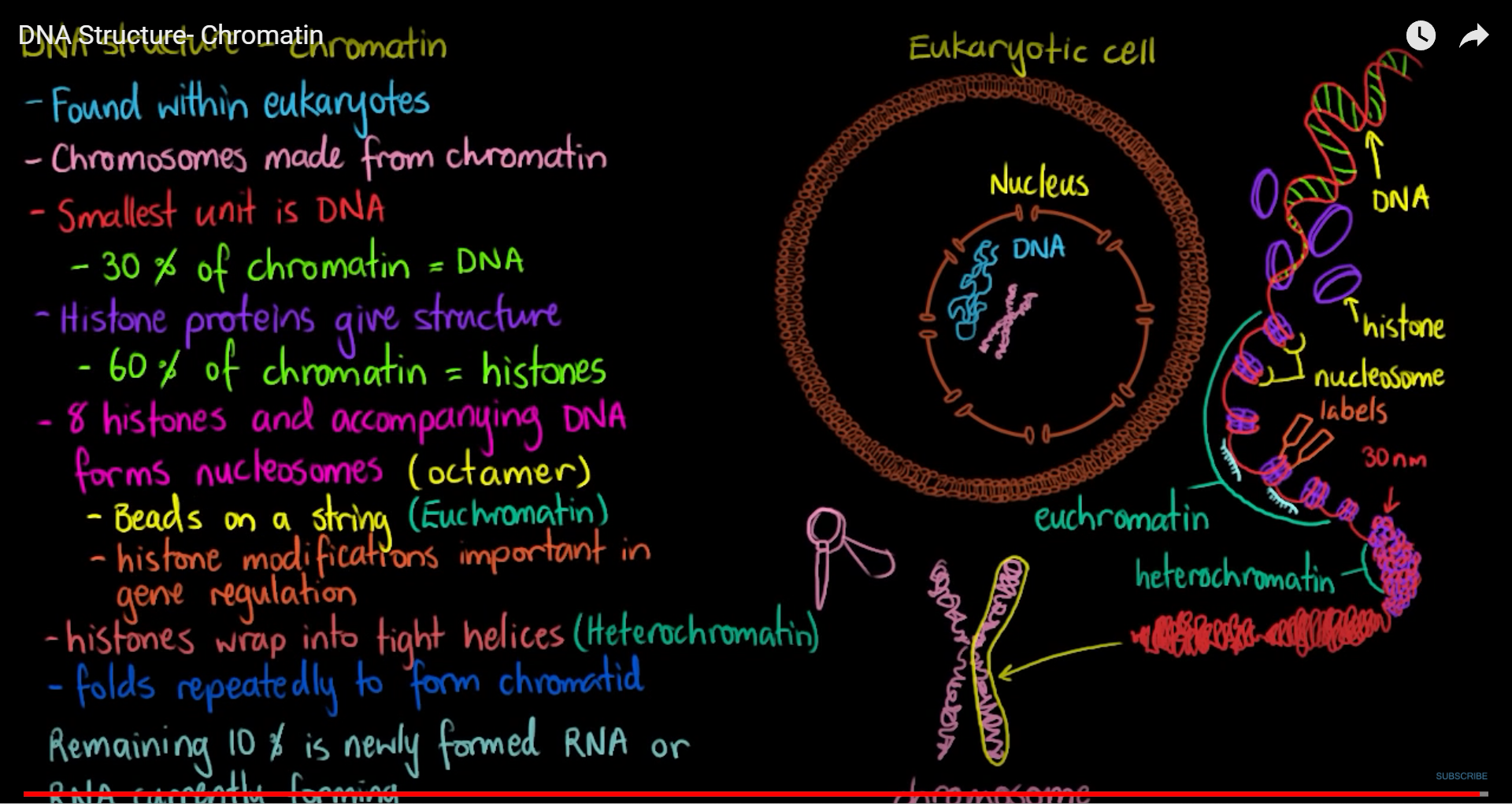
A Chromatin is a package composed of 30% DNA, 60% Histones and 10% RNA (newly formed or in the process of forming). Chromosomes are made from chromatin. Chromatin can be found in two forms:
- Euchromatin: forming a shape like “beads on a string” where the DNA is “loosly tide to the histones” and are the sites where genes are more active
- Heterochromatine: histones wrapped into tight helices, in these sites the gens are much less actives, due to the lack of space for the RNA Polymerase to start trascribing.
The DNA is a double chain of nucleotides The DNA is wrapped around 8 histones (called an octamer), which form chromatin Chromatin is then folded repetedly to form chromatid, which “one half” of what we immagine when thinking of a chromosome A Chromosome form an X shape only in the process of micosys (Cell Duplication), where two identical chromatid are formed.
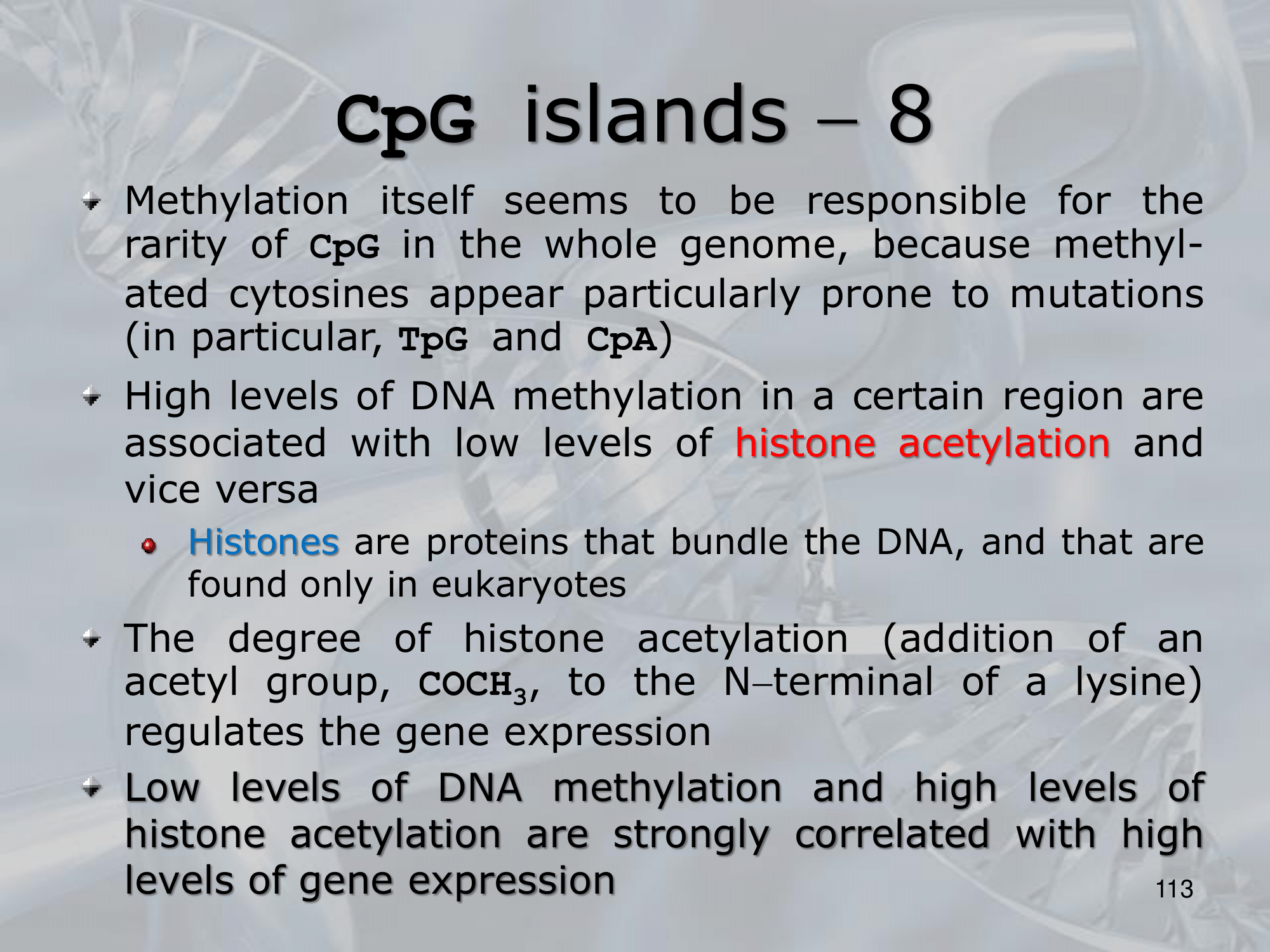
The forms in which the chromatin is found, euchromatin (loosly packed) and heterochromatin (heavily packed) is influenced by the CpG islands: Chromatine with a high density of CpG islands (so low methylation) shows an high level of acetylation on the H3 and H4 histons (think of them as more positively charged) while the H1 histon is NOT acetylated.
So the high positive charge of the H1 histone is reduced, causing the cromatine to be less tightly packed and therefor making DNA strands more accessible for the RNA polymerase, making this a region much more active in terms of gene expression. #IMPORTANTE Why are CpG Islands fint to act as Promoters? Perhaps it’s simply because the high frequency of guanines and cythosines increases the probability that transcription factors will bind. Online Resource: Youtube
IMPORTANTE CpG Suppression CpG dinucleotides are rarely found outside of promoter regions, due to CpG suppression. CpG dinucelotides are prone to methalyation: That is the process of cythosine A specif enzyme, DNA methylase, attacs the methyl group to the cythosine, but only when it is present in dinucleotides . ==Due to methalyation and then deamination, the Cythosine of CpG dinucleotides, can turn into Tymine==.
—————————————————————
Slides with Notes
A specif enzyme, DNA methylase, attacs the methyl group to the cythosine, but only when it is present in dinucleotides . ==Due to methalyation and then deamination, the Cythosine of CpG dinucleotides, can turn into Tymine==.