Questions
- What is the Central Dogma of Bioinformatics?
- The “Central Dogma” of bioinformatics refers to the fundamental process by which genetic information is stored, transmitted, and expressed in living organisms.
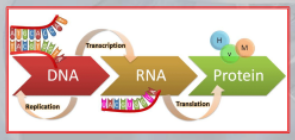
The Central Dogma states that DNA is transcribed into RNA, and RNA is translated into protein. - In more detail, the Central Dogma can be broken down into three basic steps:
- ==DNA replication: The double-stranded DNA molecule is copied into two identical daughter molecules==.
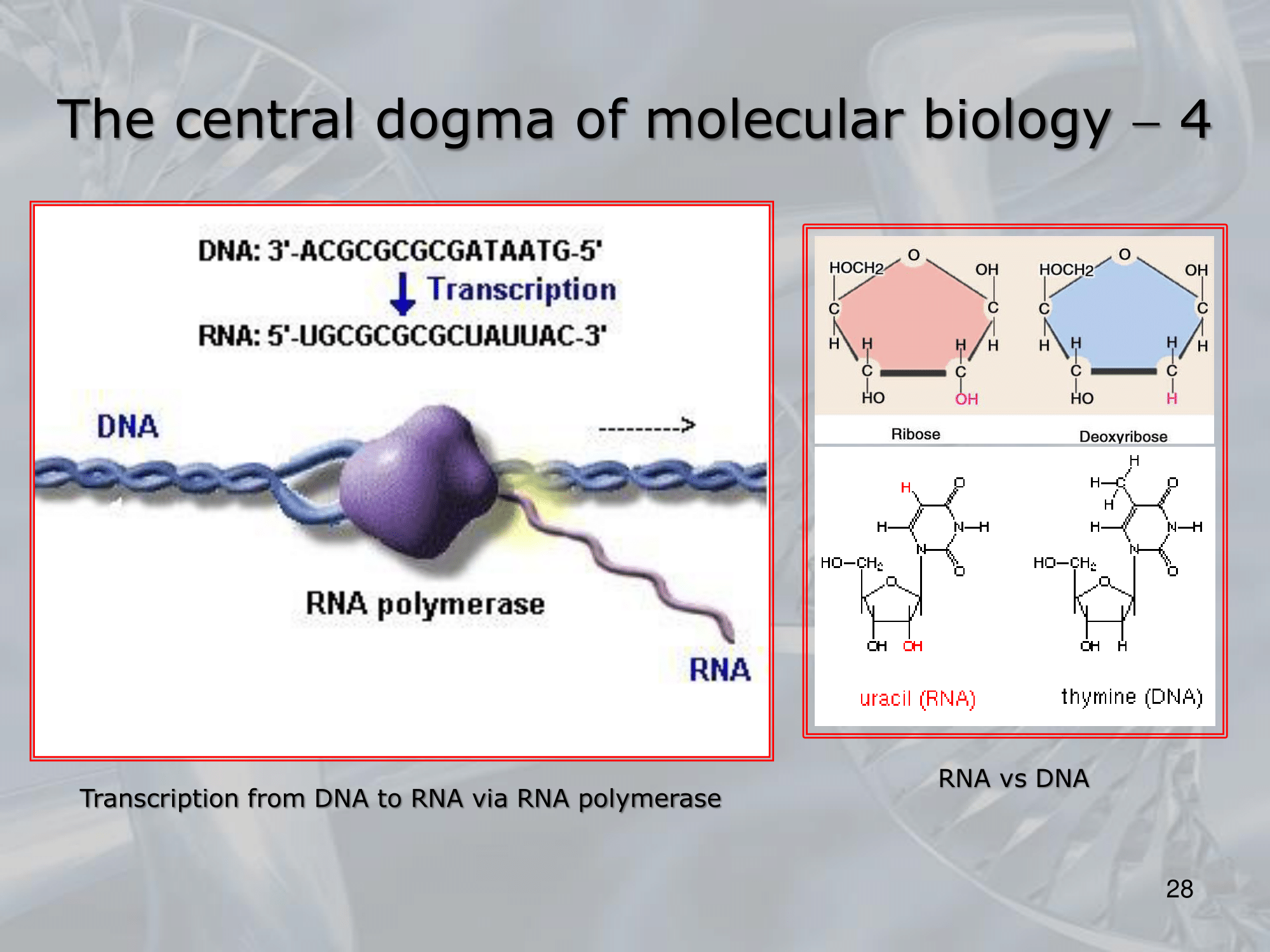
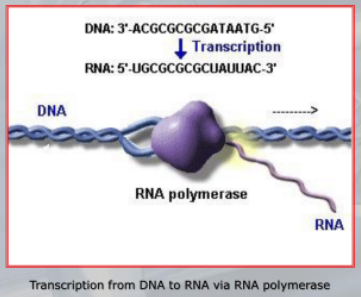
- ==Transcription: The DNA is used as a template to make a complementary RNA molecule through a process called transcription==. The RNA molecule is a single-stranded copy of the DNA sequence, and it carries the genetic information from the DNA to the ribosome.
- ==Translation: The RNA molecule is then translated into a protein by the ribosome==.
The sequence of nucleotides in the RNA molecule determines the sequence of amino acids in the protein, and thus the structure and function of the protein.
- The Central Dogma is a fundamental concept in bioinformatics because it explains how genetic information is transferred from DNA to proteins, which are the primary functional molecules in cells.
Understanding the Central Dogma is essential for many areas of research in molecular biology, genetics, and biotechnology.
- The “Central Dogma” of bioinformatics refers to the fundamental process by which genetic information is stored, transmitted, and expressed in living organisms.
IMPORTANTE
IMPORTANTE Enzymes act as catalysts that speed up specifi chemical reaction, they are not consumed in this process, and can be used repeatedly for the same reaction Althoug they can become denatured (due to changin in their environment), if they do, enzymes become distorted and cannot be used again.
IMPORTANTE The instruction in the DNA that need to be transcribed are stored in genes (particular region of the DNA) #IMPORTANTE The process of extracting information from genes, is shared by all leaving organisms. #IMPORTANTE ==The DNA is transcribed into a single-strand polynucleotide chain, the RNA (ribonucleic acid) by the RNA-Polymerase enzyme== #IMPORTANTE The nucleobase of the DNA are trascribed one by one into the RNA, exept for the Tymine (T) that is transcribed into Uracil (U)
IMPORTANTE The RNA is then translated into a protein by the ribosomes (an ensamble of proteins)
Slides with Notes
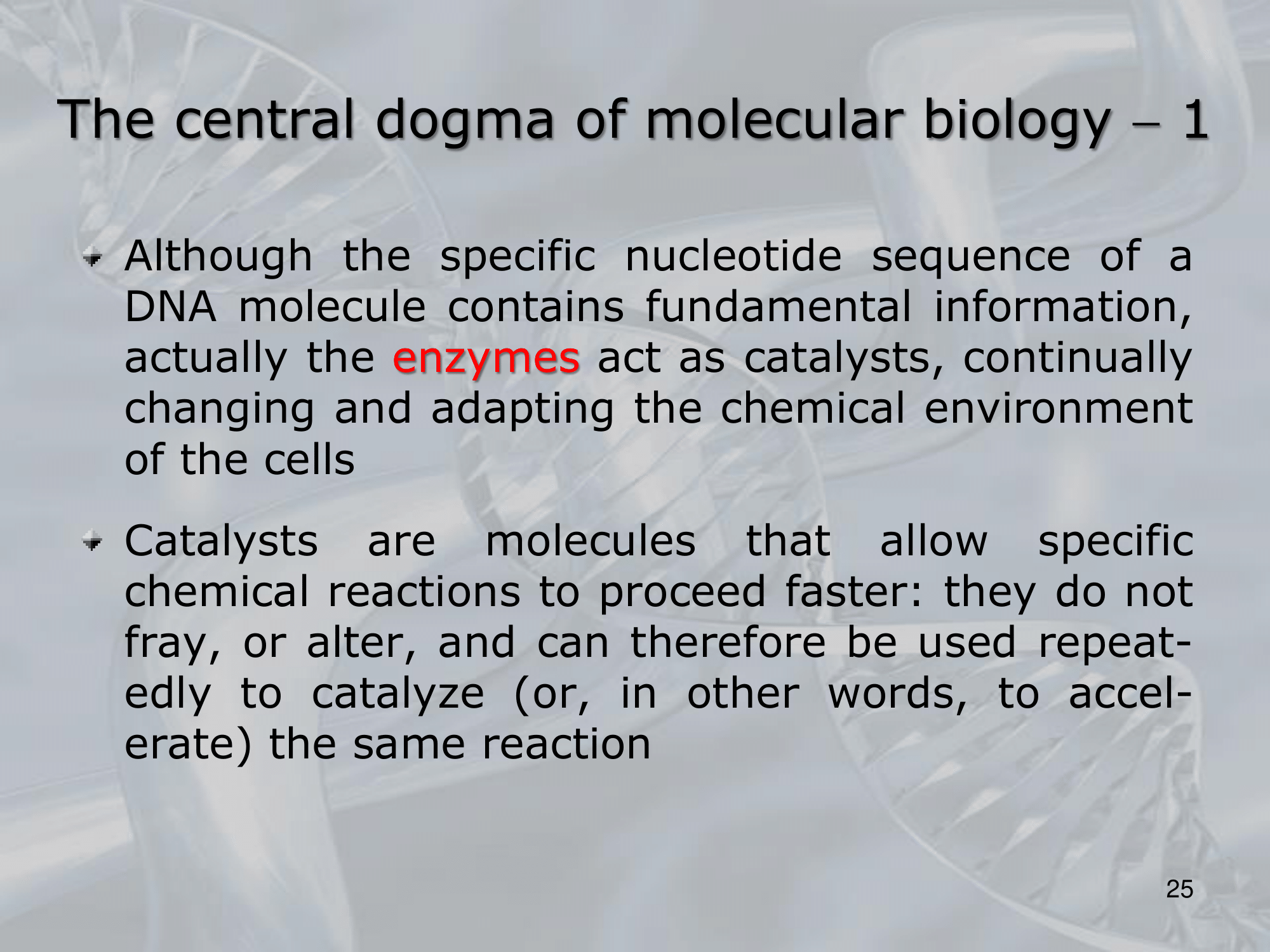
IMPORTANTE Enzymes act as catalysts that speed up specifi chemical reaction, they are not consumed in this process, and can be used repeatedly for the same reaction Althoug they can become denatured (due to changin in their environment), if they do, enzymes become distorted and cannot be used again.
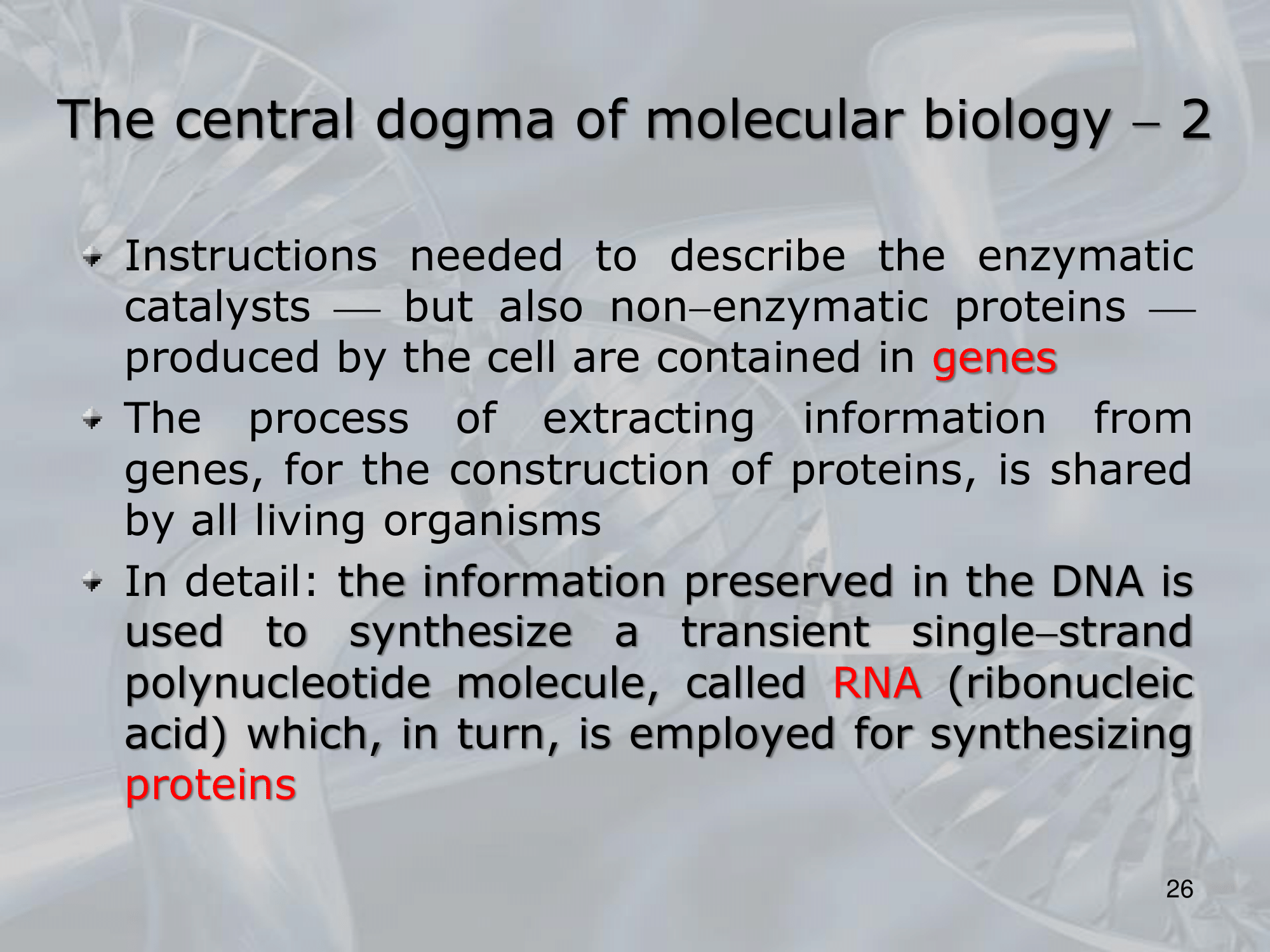
IMPORTANTE The instruction in the DNA that need to be transcribed are stored in genes (particular region of the DNA) #IMPORTANTE The process of extracting information from genes, is shared by all leaving organisms. #IMPORTANTE ==The DNA is transcribed into a single-strand polynucleotide chain, the RNA (ribonucleic acid) by the RNA-Polymerase enzyme== #IMPORTANTE The nucleobase of the DNA are trascribed one by one into the RNA, exept for the Tymine (T) that is transcribed into Uracil (U)
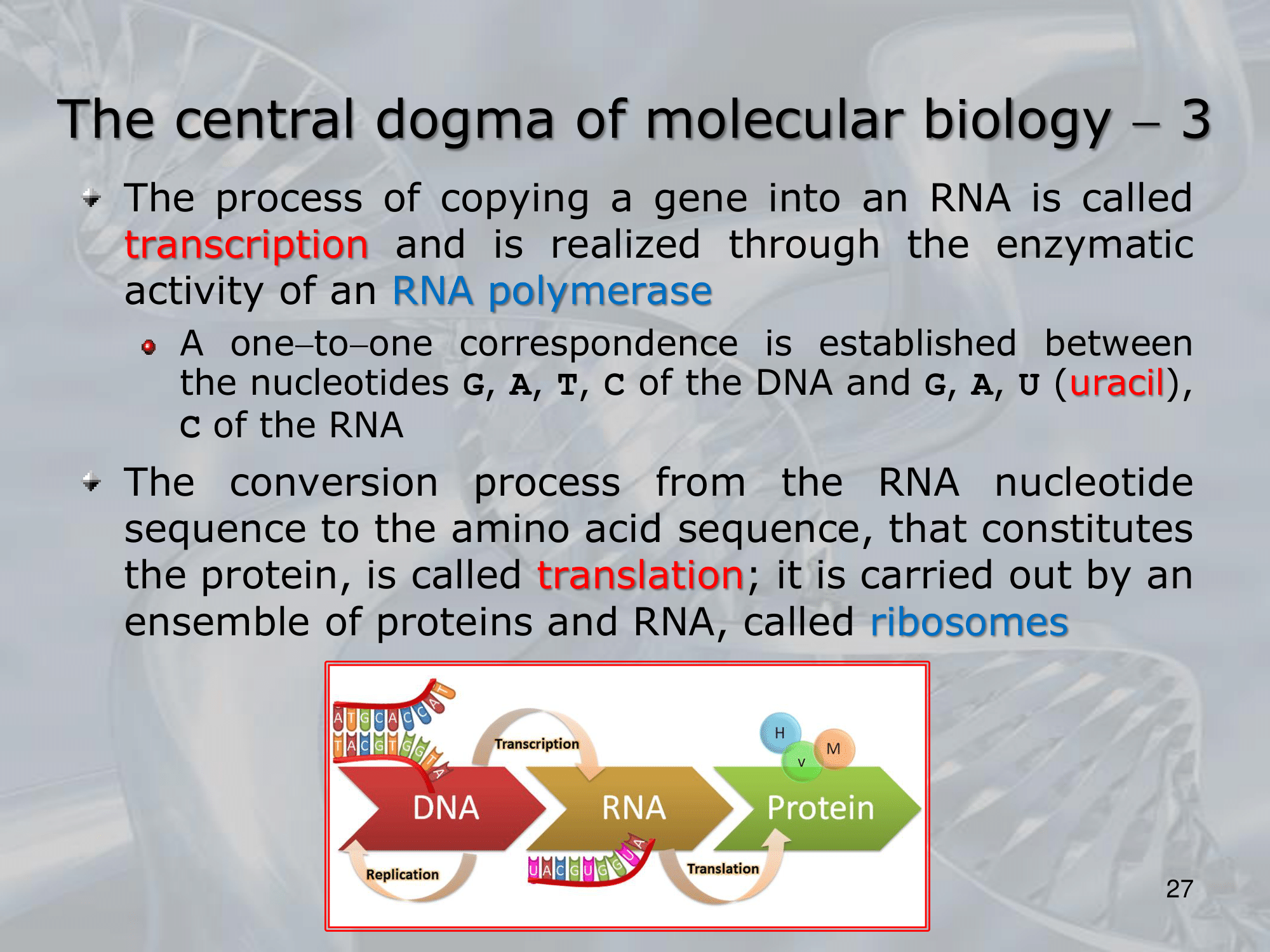
IMPORTANTE The RNA is then translated into a protein by the ribosomes (an ensamble of proteins)