Macromolecules
Macromolecules help keep the cell alive and function properly.
There are a total of four macromolecules:
- Carbohydrates
- Lipids
- Proteins
- Nucleic Acids
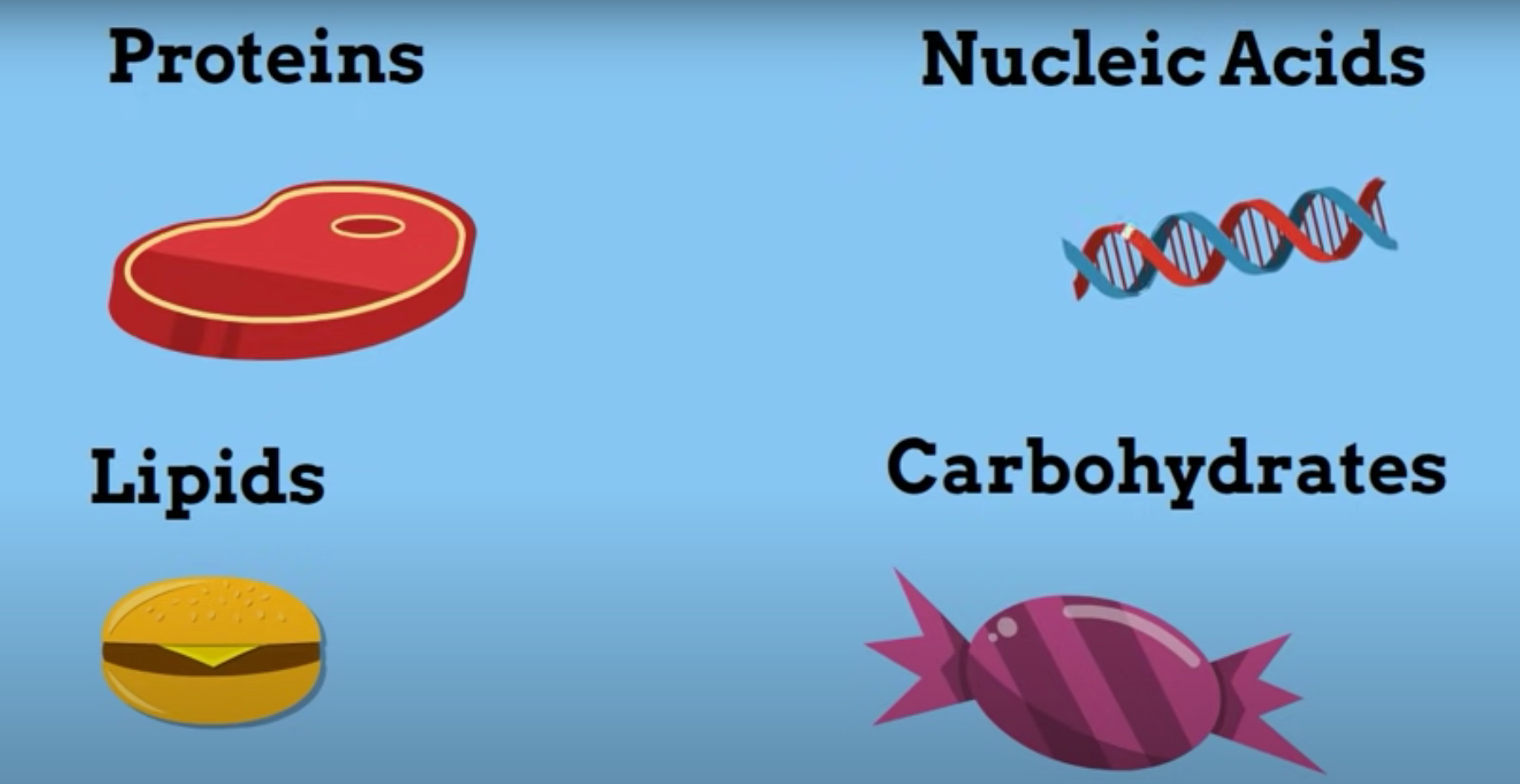
A macromolecule is a large molecule formed when elements and molecules combine together.
Elements like carbon, hydrogen and oxygen join together to make u macromolecules.
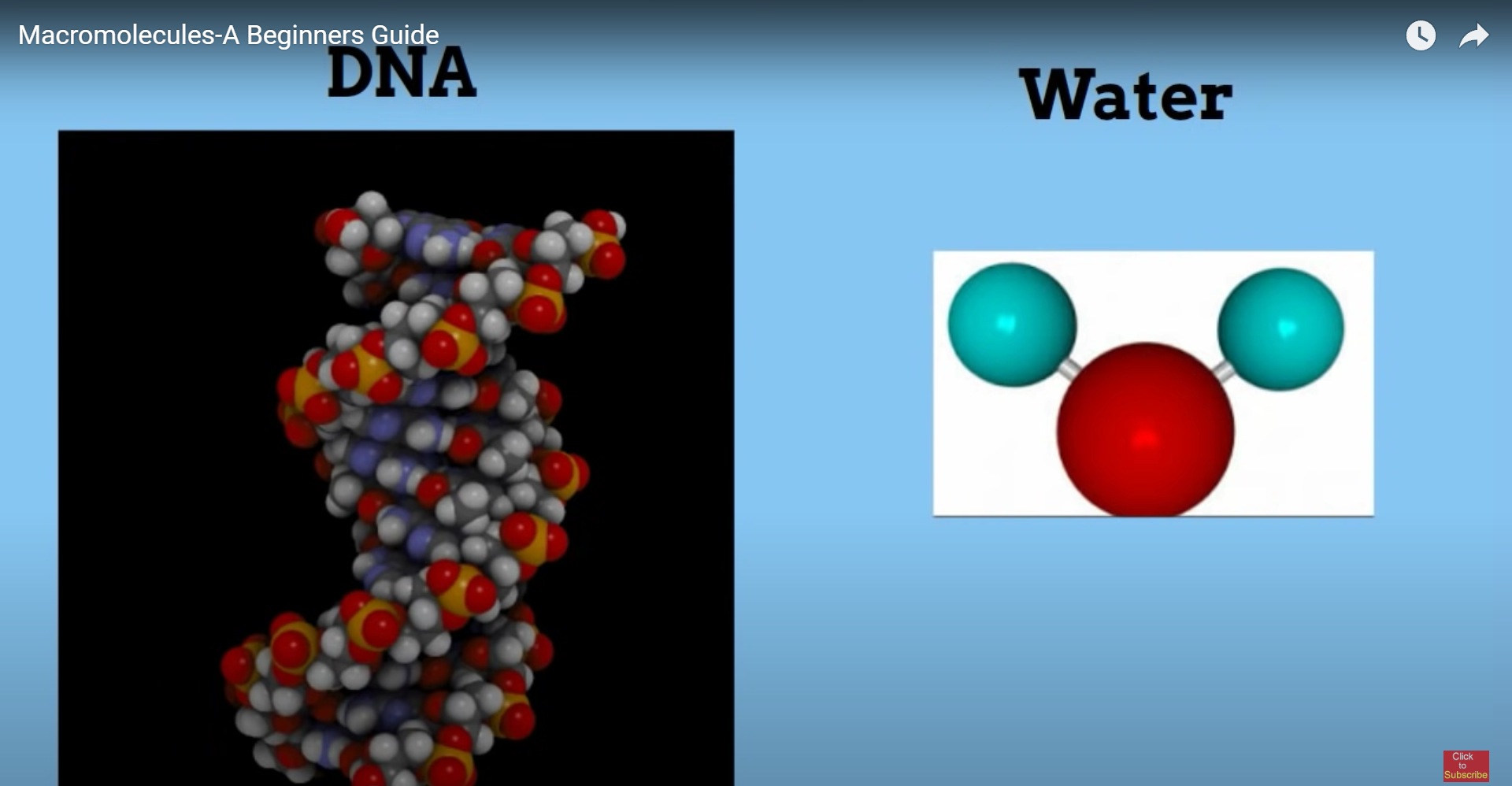
For example let’s look at the difference in size between the macromolecule DNA and a water molecule:
Carbohydrates
Carbohydrates are composed of three elements:
- Carbon
- Hydrogen
- Oxygen
They store energy and provide structural support
Examples of Carbohydrates are: sugar, starches, cellulose (the cell wall of plants)
Lipids
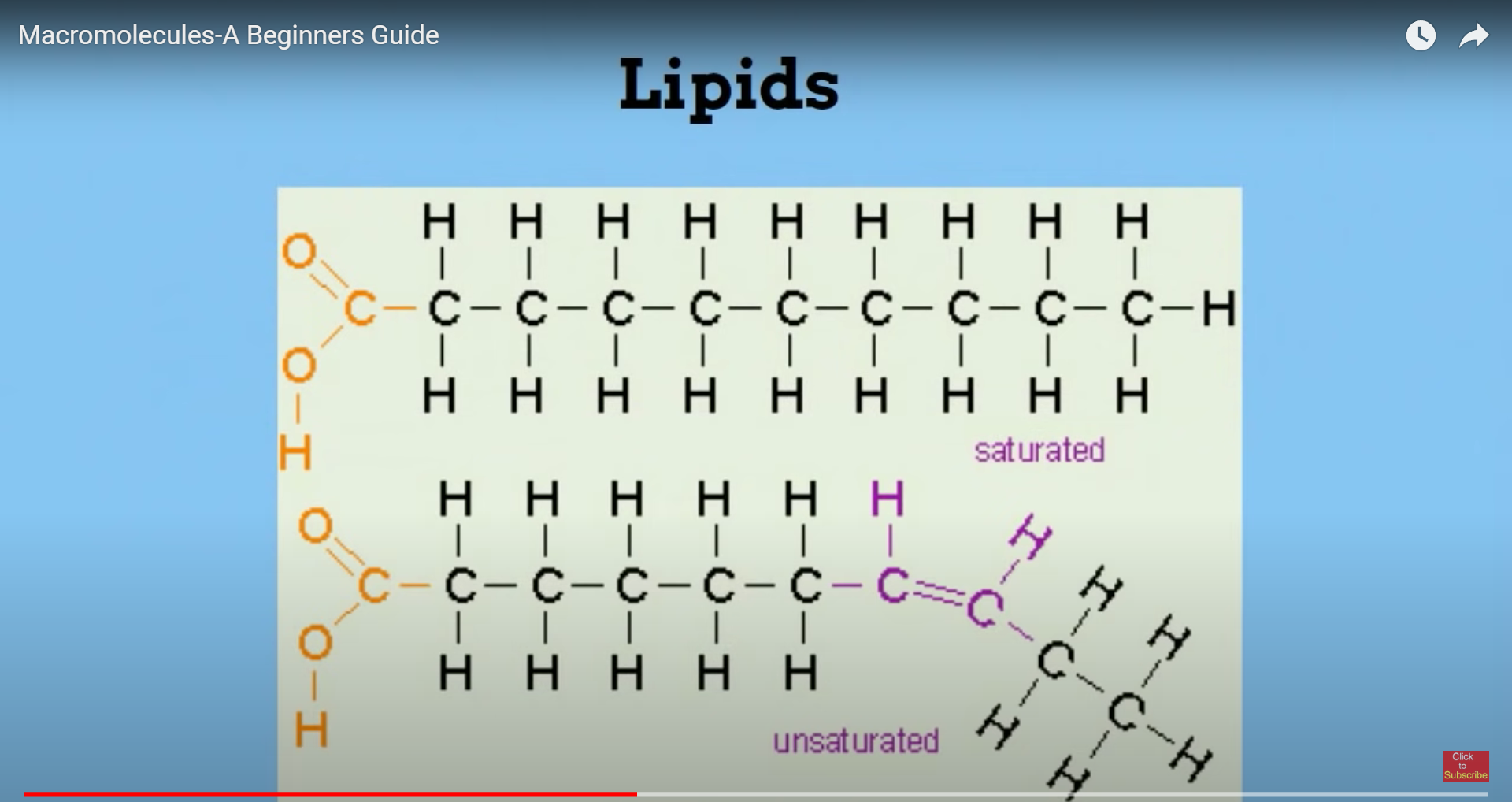
Lipids like carbohydrates are composed of:
- Carbon
- Hydrogen
- **Oxygen
- But they might contains also Nitrogen and Phosphorus
They help make cell membrane and store energy.
Examples of Carbohydrates are: fats, steroids, waxes and phospholipids
Proteins
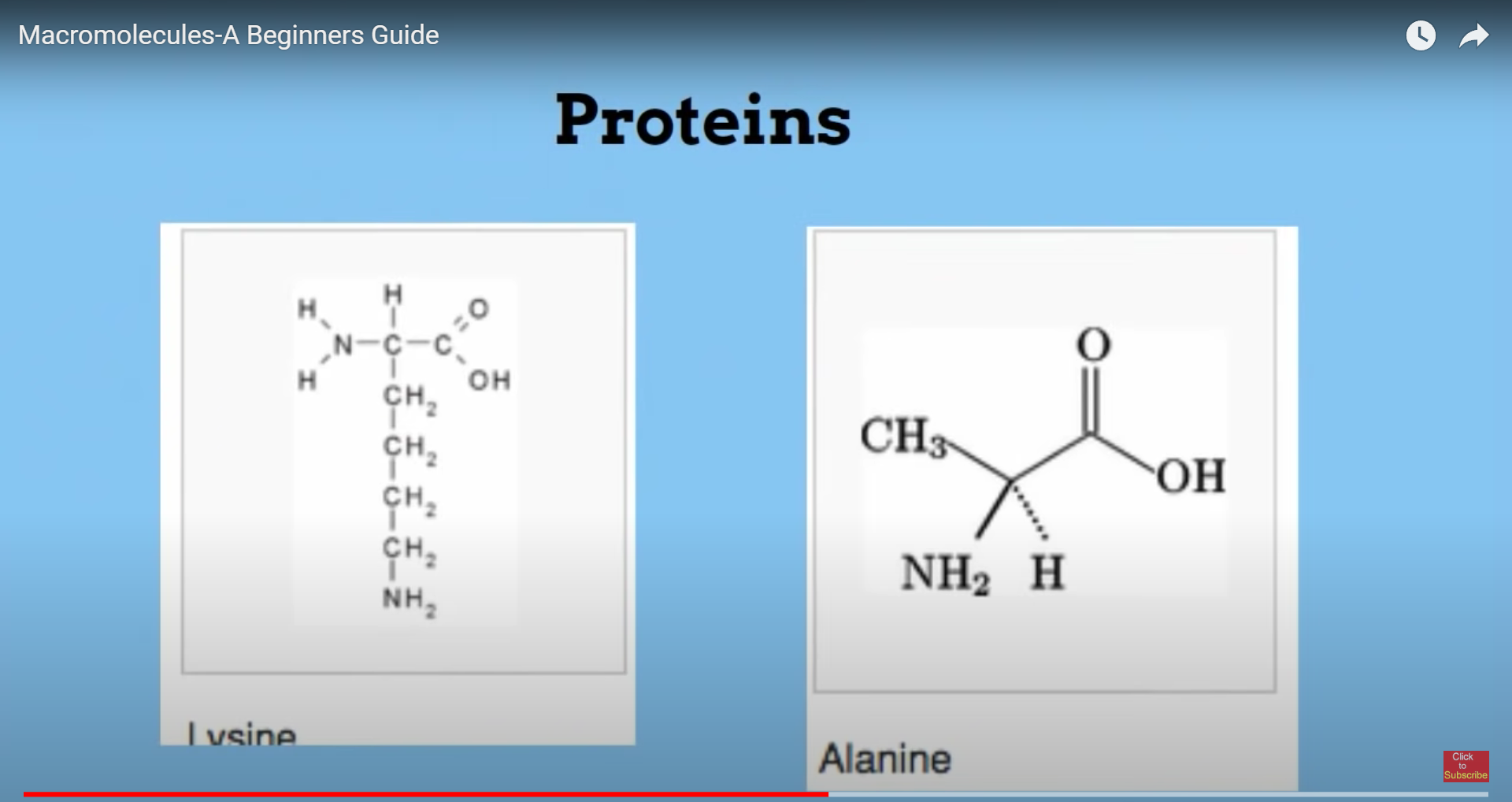
Proteins are large chains of amino acids, in total there are 20 amino acids, used by our bodies.
Our RNA carries instruction to the ribosomes on the order of the amino acid for each proteins it makes
Proteins carry out many jobs in the cell, our bodies has hundreds of proteins, some help with communication, other help with transportation,. The protein amylase found in our salive helps brake down food. Collagen is a protein that helps bind skin cells together.
Nucleic Acids
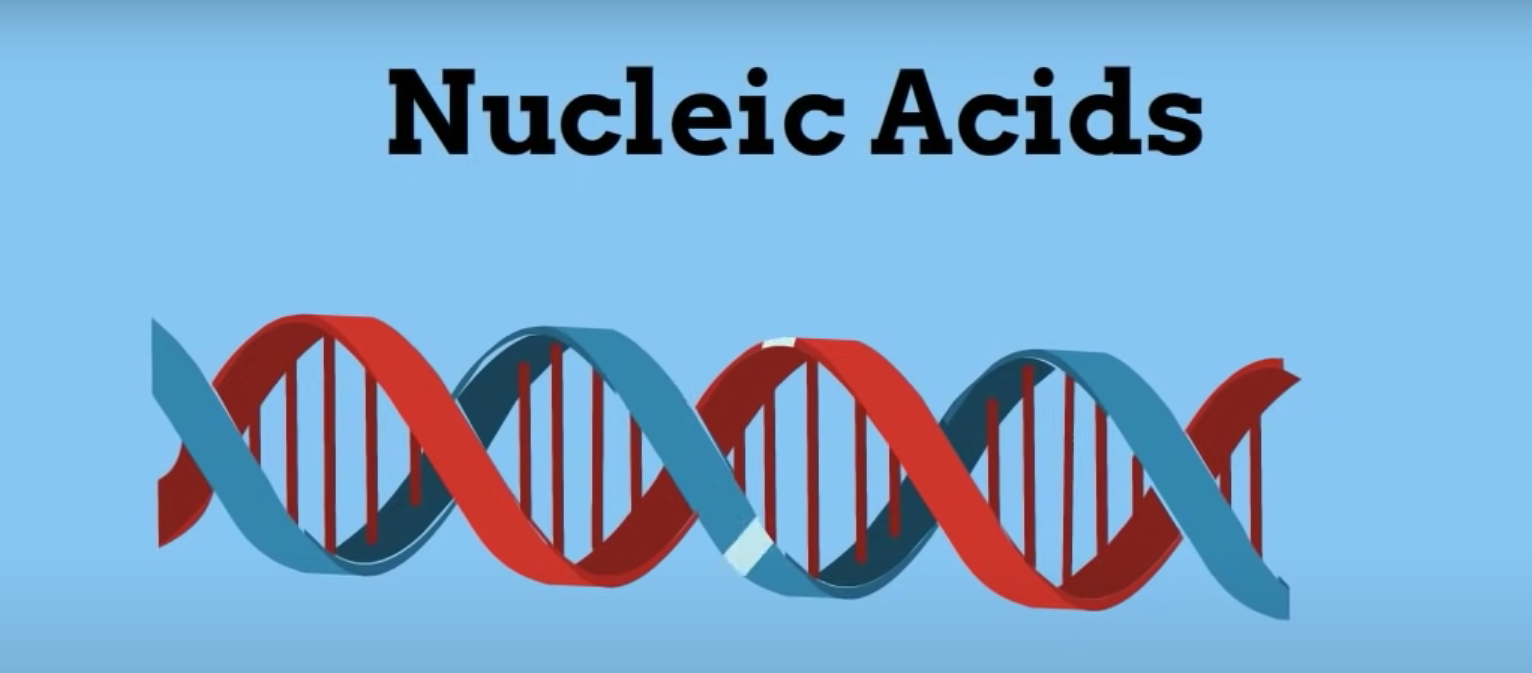
Nucleic Acids are a long chain of nucleotides. DNA is made of 4 nucleotides:
- (A) Adenine (in Italian: “Adenina”)
- (T) Thymine (in Italian: “Timina”)
- (C) Cytosine (in Italian: “Citosina”)
- (G) Guanine (in Italian: “Guanina”)
Nucleic Acids are important because they contain genetic information that has instructions for cell growth, cell reproduction and cell processes.