Questions
- What is Moleular Phylogenetics?
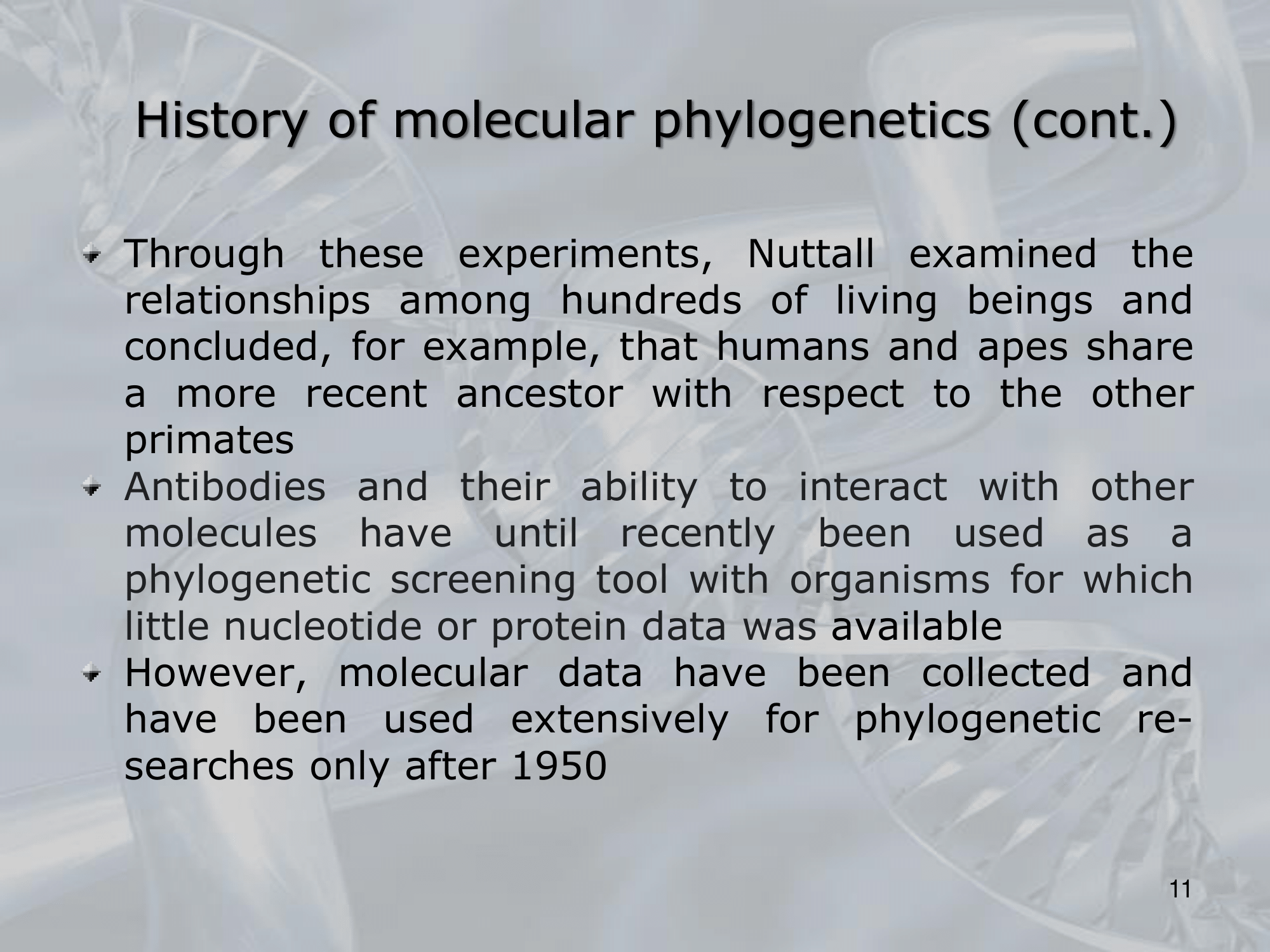
- Molecular phylogenetics is a field of evolutionary biology that uses molecular data, such as DNA and protein sequences, to infer the evolutionary relationships among organisms.
It provides a powerful tool for reconstructing the evolutionary history of life on Earth, as it allows us to trace the pattern of divergence and diversification of species over time. - Molecular phylogenetics involves the use of various methods, such as maximum likelihood and Bayesian inference, to analyze the molecular data and construct evolutionary trees or phylogenies.
==These phylogenetic trees depict the evolutionary relationships among organisms, with the branches representing the divergence of lineages over time, and the nodes representing the common ancestors of those lineages==. - The molecular data used in phylogenetic analyses can come from various sources, such as mitochondrial or chloroplast DNA, nuclear DNA, or amino acid sequences of proteins.
By comparing the similarities and differences in these molecular data between different organisms, molecular phylogenetics allows us to infer the evolutionary relationships among them and gain insights into the patterns and processes of evolution.
- Molecular phylogenetics is a field of evolutionary biology that uses molecular data, such as DNA and protein sequences, to infer the evolutionary relationships among organisms.
- What is Taxonomy?
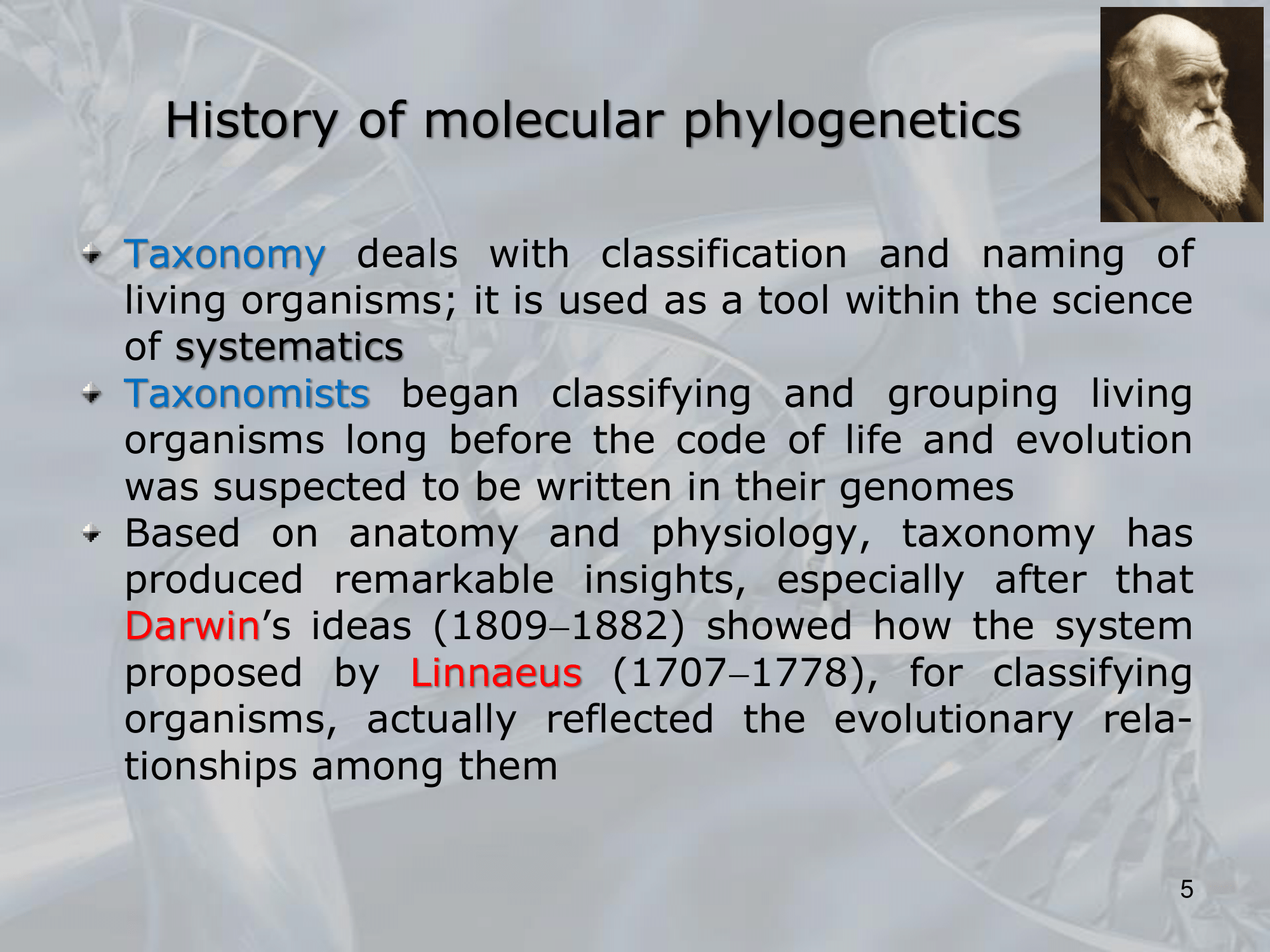
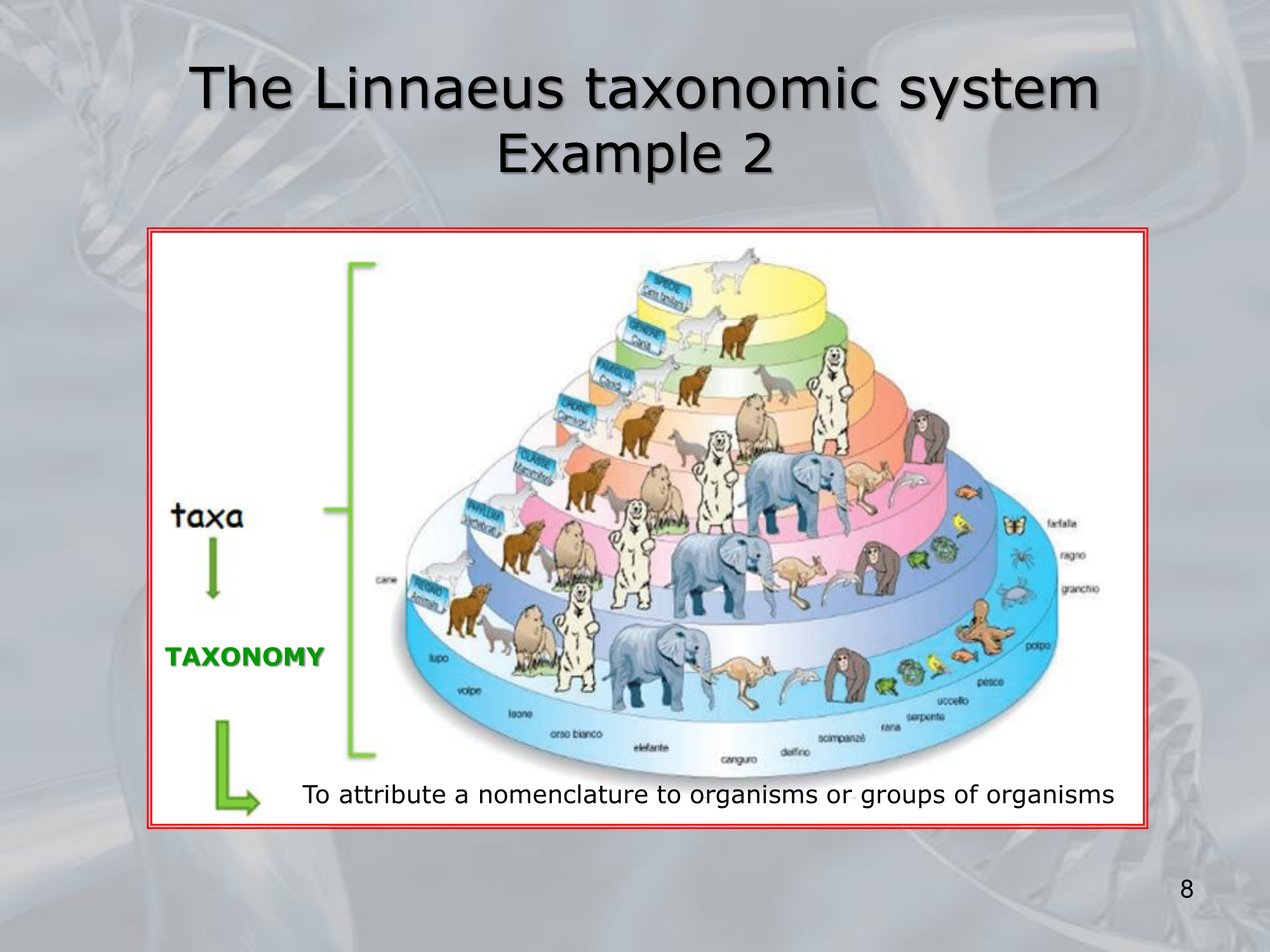
- Taxonomy is the branch of biology that deals with the identification, classification, and naming of organisms.
It is a hierarchical system in which organisms are categorized into increasingly specific groups based on shared characteristics.
The basic taxonomic ranks are domain, kingdom, phylum, class, order, family, genus, and species.
Taxonomy allows scientists to organize and understand the diversity of life on Earth and to study the relationships between different organisms.
- Taxonomy is the branch of biology that deals with the identification, classification, and naming of organisms.
- What is the Linnaeus Taxonomic System?
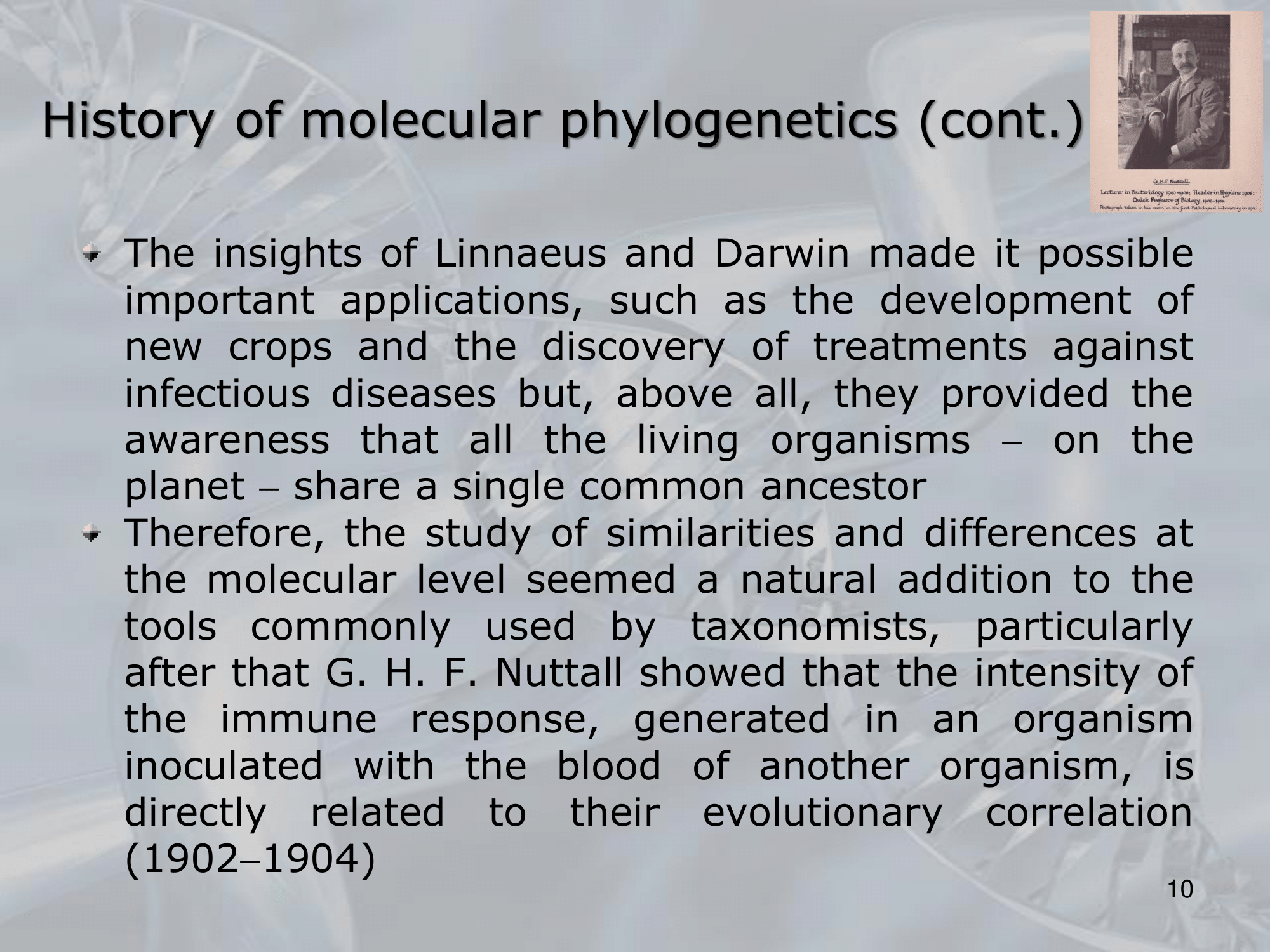
- The Linnaeus Taxonomic System, also known as the binomial nomenclature system, is a hierarchical system of naming and classifying organisms based on their physical characteristics and evolutionary relationships.
It was developed by the Swedish naturalist Carolus Linnaeus in the 18th century and is still used today. - Under this system, each organism is given a unique two-part scientific name consisting of its genus and species.
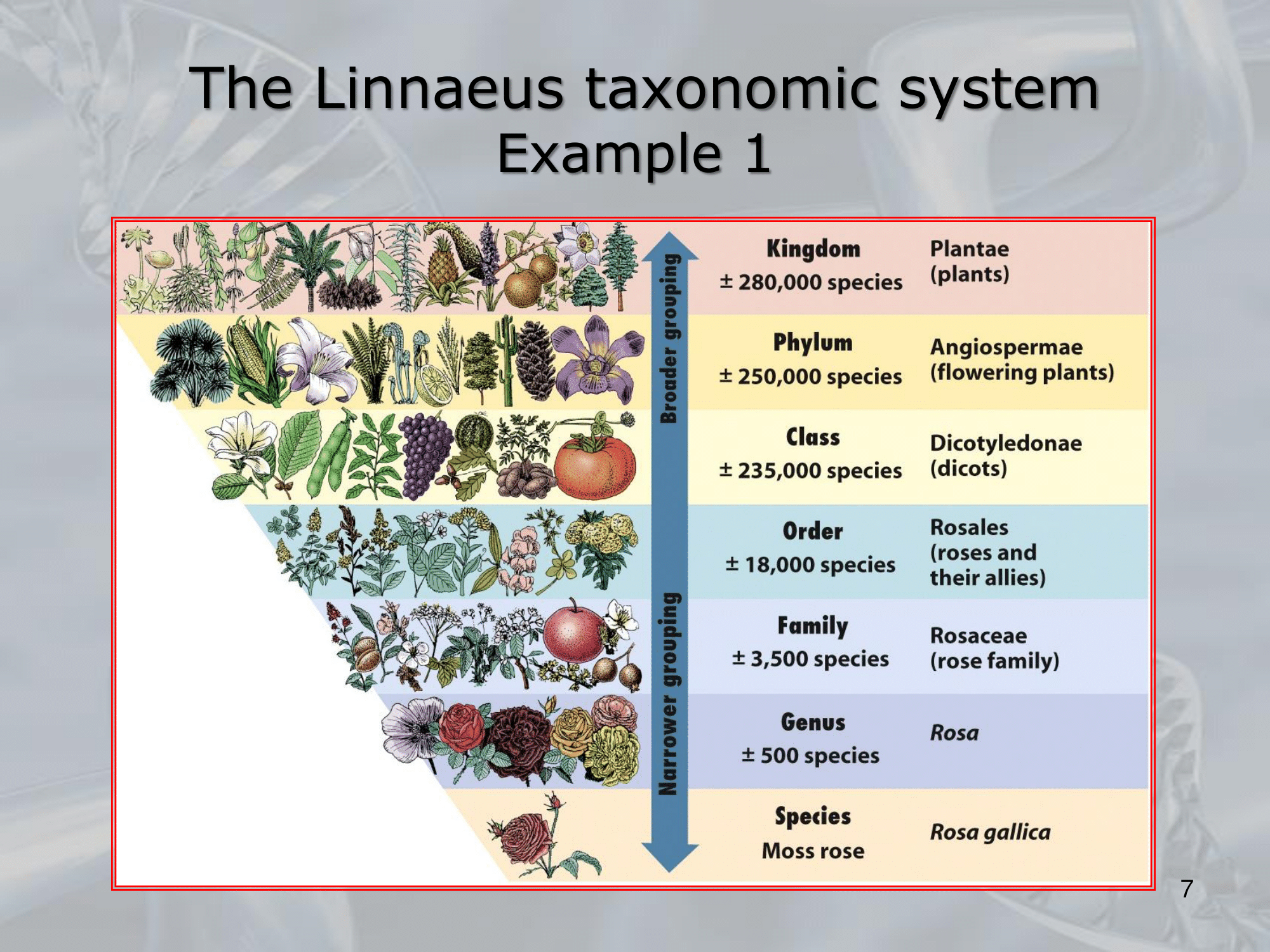
The genus refers to a group of closely related species, while the species refers to a specific organism within that genus.
For example, humans are classified as Homo sapiens, with Homo being the genus and sapiens being the species. - The Linnaeus Taxonomic System also includes a hierarchical classification of organisms, ranging from broad categories to increasingly specific ones.
==The categories, from most general to most specific, are kingdom, phylum, class, order, family, genus, and species==.- For example, humans are classified as follows:
==Kingdom: Animalia (animals)
Phylum: Chordata (vertebrates and their relatives)
Class: Mammalia (mammals)
Order: Primates (primates)
Family: Hominidae (great apes)
Genus: Homo (human and its closest extinct relatives)
Species: Homo sapiens (modern humans)==
- For example, humans are classified as follows:
- The Linnaeus Taxonomic System, also known as the binomial nomenclature system, is a hierarchical system of naming and classifying organisms based on their physical characteristics and evolutionary relationships.
- What are Restriction Maps?
- Restriction maps are diagrams or charts that show the locations of restriction sites on a DNA molecule.
==Restriction sites are specific sequences of DNA where restriction enzymes cut the molecule into fragments==.
Restriction maps are used to identify and analyze DNA sequences, such as those obtained from a particular organism or gene.
By comparing the restriction maps of different DNA samples, researchers can determine the similarities and differences between them, which can help to identify relationships between organisms or to locate genes within a genome.
Restriction maps can also be used to create genetic maps, which show the locations of specific genes on a chromosome.
- Restriction maps are diagrams or charts that show the locations of restriction sites on a DNA molecule.
- What are PCR and NGS?
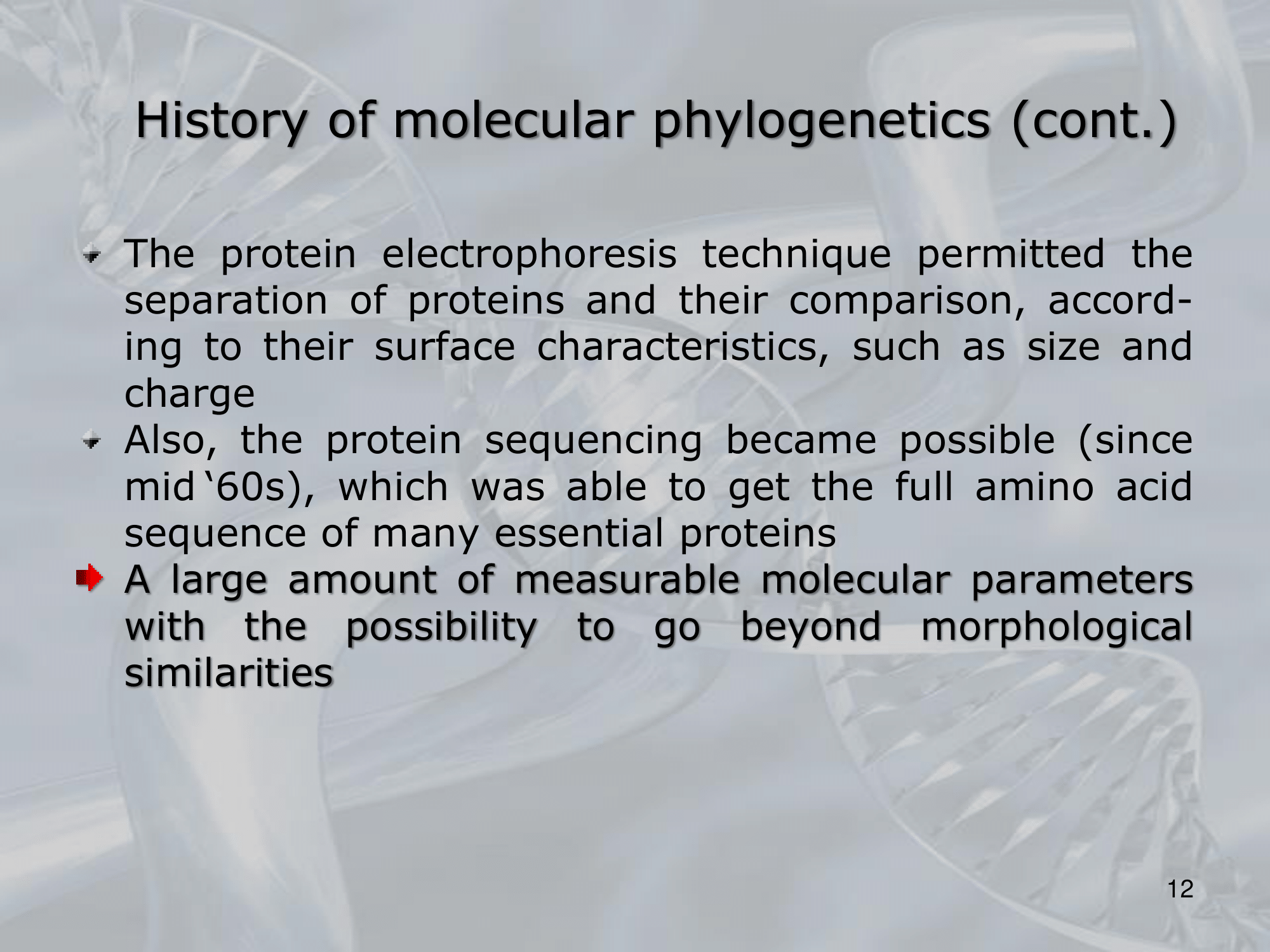
- PCR and NGS are two techniques used in molecular biology for amplifying and sequencing DNA, respectively.
- ==PCR (polymerase chain reaction) is a method for amplifying a specific DNA fragment from a larger genomic DNA sample==.
It is a widely used technique in molecular biology and genetics for a variety of applications, including DNA sequencing, gene expression analysis, and genetic testing.
PCR uses a heat-stable DNA polymerase enzyme to synthesize complementary strands of DNA using primers that are specific to the target DNA region.
The amplified DNA can then be used for downstream analysis. - ==NGS (next-generation sequencing) refers to a set of high-throughput DNA sequencing technologies that can sequence millions to billions of DNA fragments in parallel==.
NGS has revolutionized genomics research by allowing rapid and cost-effective sequencing of entire genomes, exomes, transcriptomes, and other DNA regions.
The technology involves breaking DNA into small fragments, attaching adapters to the ends of the fragments, and then sequencing the fragments using a variety of methods, including Illumina, Ion Torrent, and PacBio sequencing.
The resulting sequences can then be analyzed and compared to reference sequences to identify genetic variants, gene expression levels, and other genomic features.
- ==PCR (polymerase chain reaction) is a method for amplifying a specific DNA fragment from a larger genomic DNA sample==.
- PCR and NGS are two techniques used in molecular biology for amplifying and sequencing DNA, respectively.
—————————————————————
IMPORTANTE
IMPORTANTE Taxonomy: si occupa di nomenclare le diverse specie. #IMPORTANTE Linnaeus taxonomic systes: KINDOM ⇒ PHYLUM ⇒ CLASS ⇒ ORDER ⇒ FAMILY ⇒ GENUS ⇒ SPECIES L’uomo si raggruppa in: Animal and vegetable kindom Chordata Mammalia Carnivora Felidae Human
IMPORTANTE Con il sequenziamento del DNA e strumenti matematici è stato possibile assegnare una confidenza statistica al raggruppamento filogenetico, inoltre è stato possibile formulare ipotesi testabili sui processi evolutivi.
—————————————————————
Slides with Notes
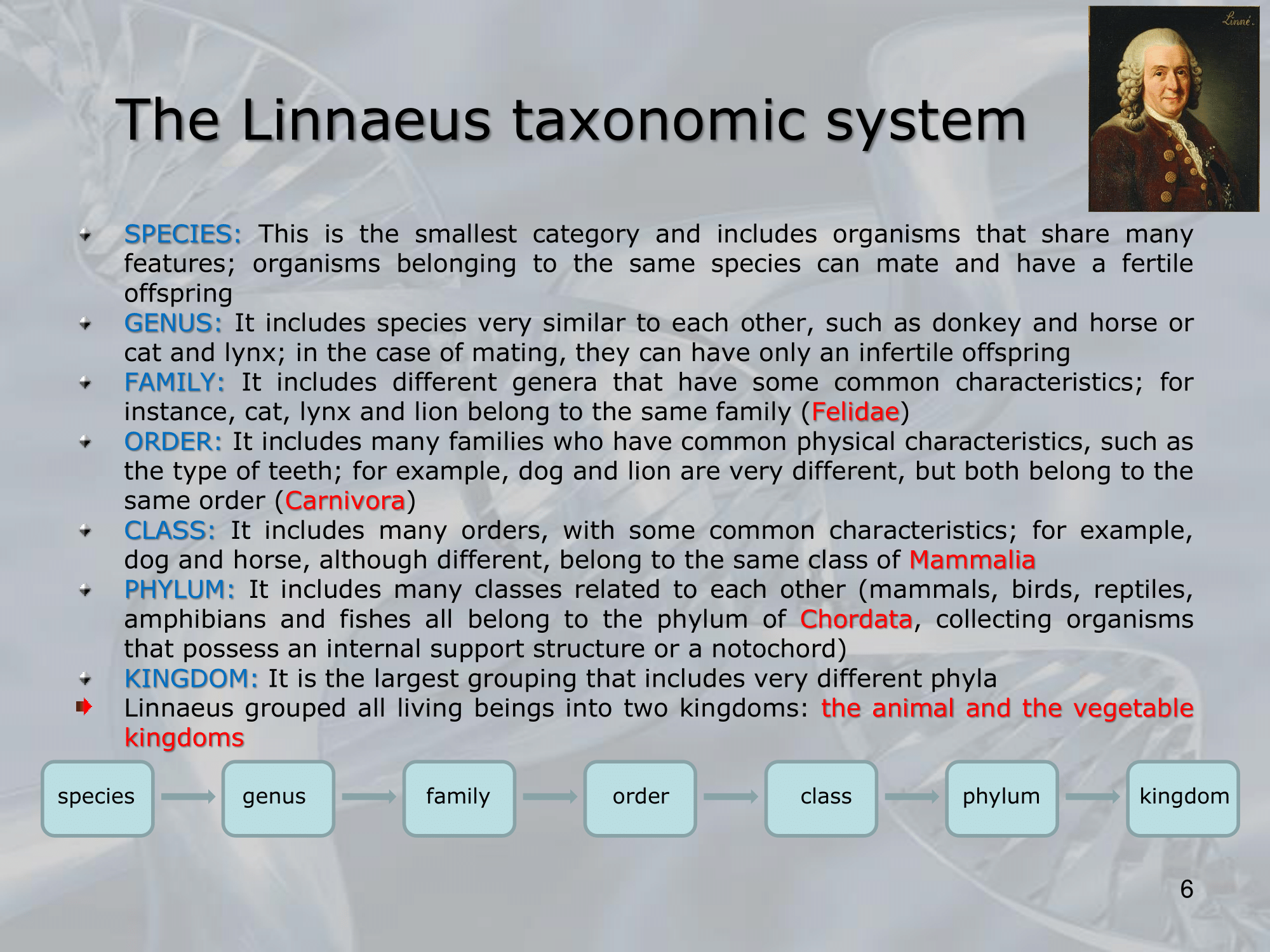
IMPORTANTE Taxonomy: si occupa di nomenclare le diverse specie. #IMPORTANTE Linnaeus taxonomic systes: KINDOM ⇒ PHYLUM ⇒ CLASS ⇒ ORDER ⇒ FAMILY ⇒ GENUS ⇒ SPECIES L’uomo si raggruppa in: Animal and vegetable kindom Chordata Mammalia Carnivora Felidae Human
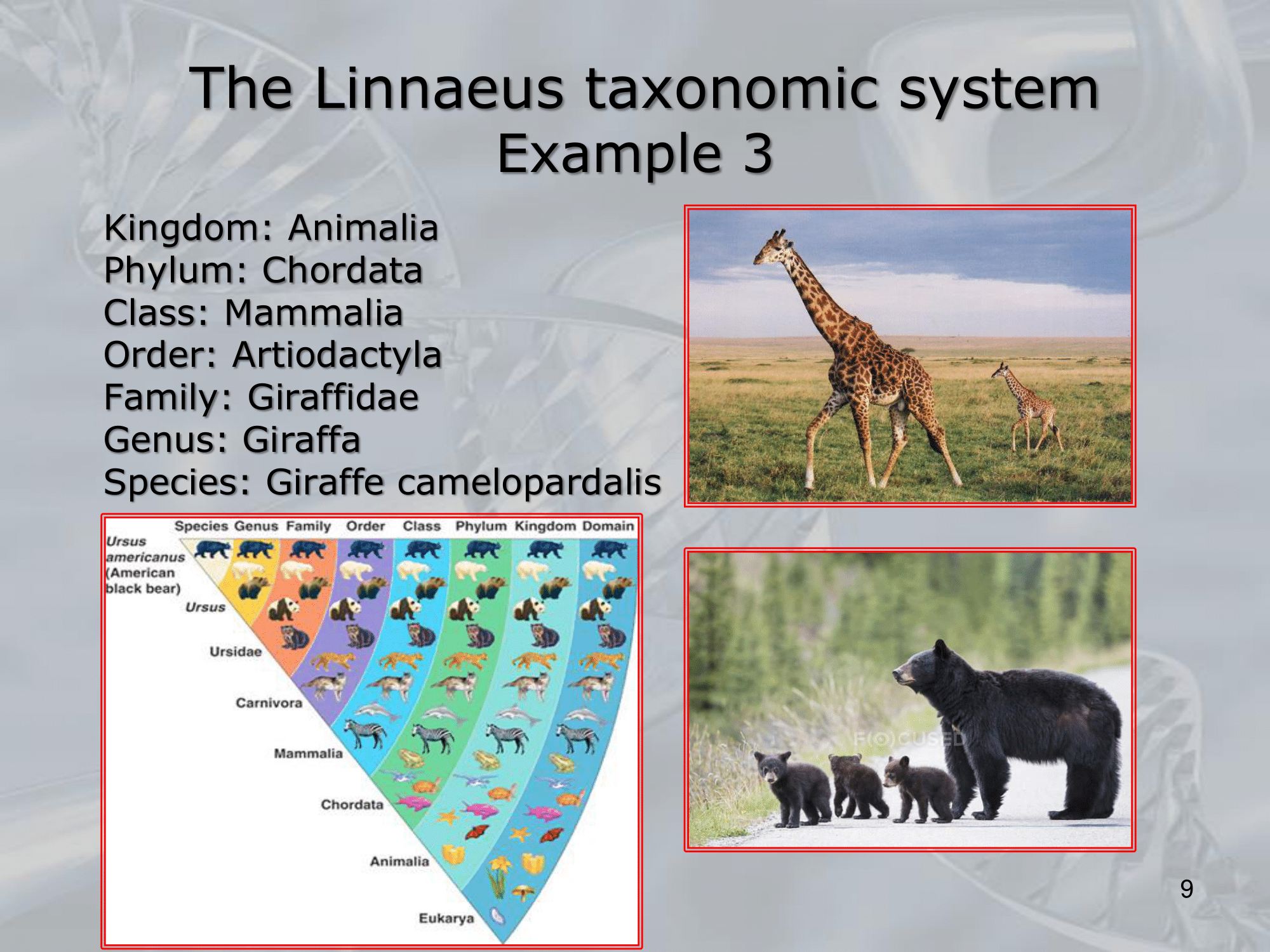
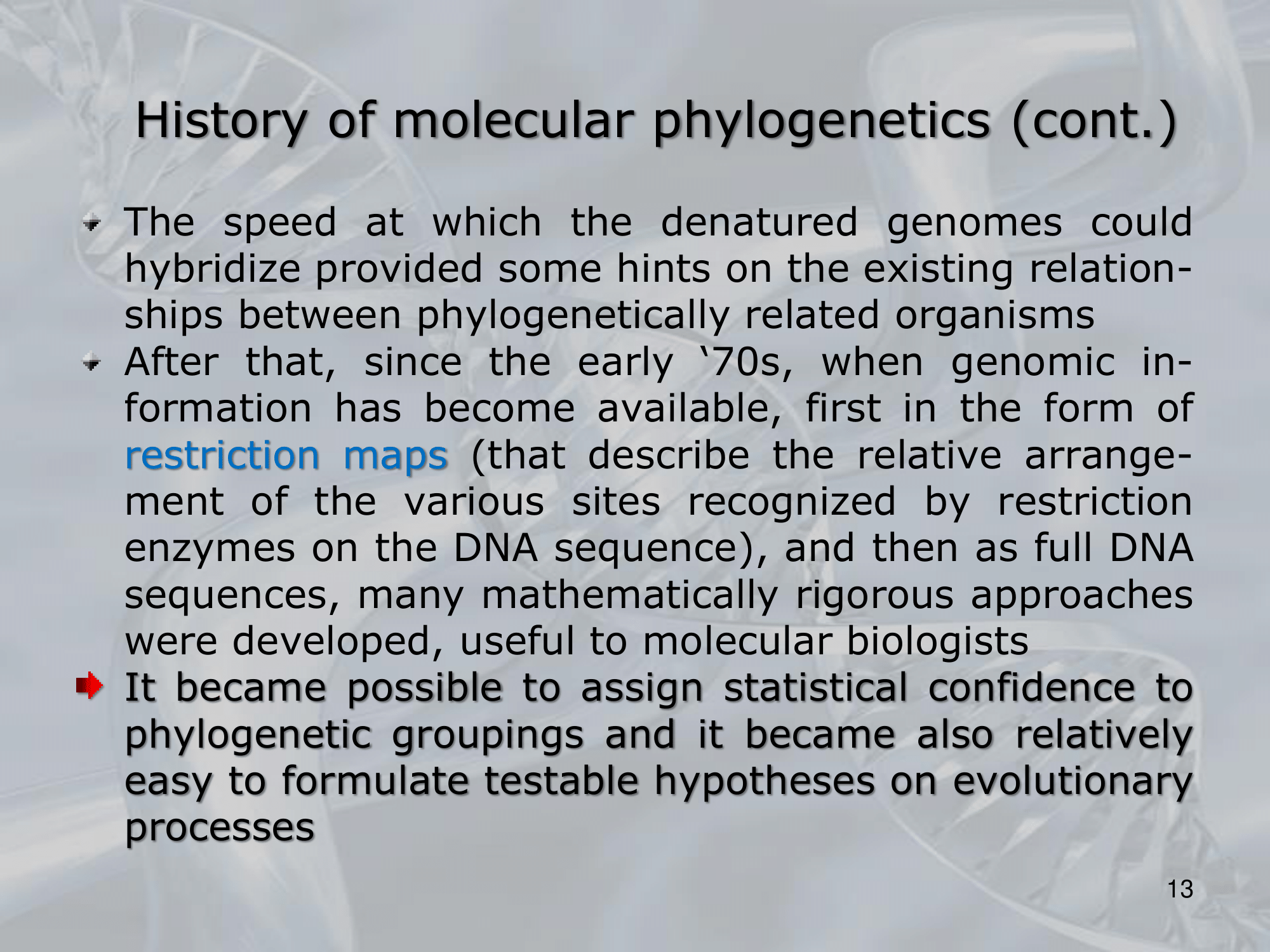
IMPORTANTE Con il sequenziamento del DNA e strumenti matematici è stato possibile assegnare una confidenza statistica al raggruppamento filogenetico, inoltre è stato possibile formulare ipotesi testabili sui processi evolutivi.