Questions
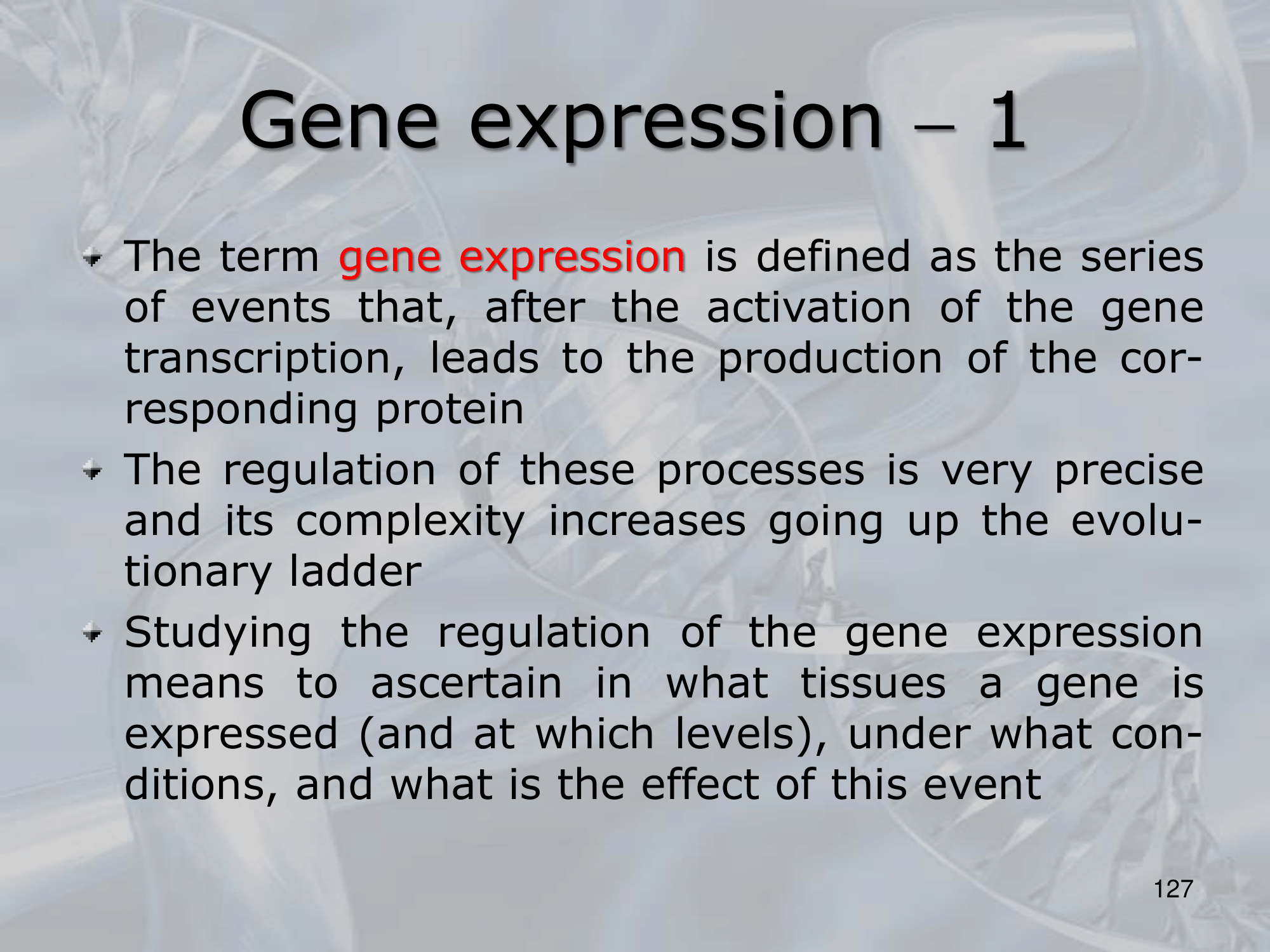
- How is Gene Expression Regulated?
- Gene expression is regulated through a complex network of molecular mechanisms that control when, where, and how genes are turned on or off.
There are several levels at which gene expression can be regulated, including transcriptional, post-transcriptional, translational, and post-translational regulation. Some of the key mechanisms involved in gene expression regulation are:- Transcriptional regulation: This is the most common level of gene expression regulation, and it involves controlling the rate of transcription of a gene.
This can be achieved through a variety of mechanisms, including the binding of transcription factors to specific DNA sequences in the promoter region of a gene, the modification of chromatin structure, and the regulation of RNA polymerase activity. - Post-transcriptional regulation: This level of gene expression regulation occurs after transcription, and involves ==controlling the processing, stability, and translation of mRNA molecules==.
This can be achieved through a variety of mechanisms, including alternative splicing, RNA editing, mRNA degradation, and microRNA-mediated repression. - Translational regulation: This level of gene expression regulation occurs during the process of translation, and involves ==controlling the rate and efficiency of protein synthesis==.
This can be achieved through a variety of mechanisms, including the regulation of ribosome activity, the presence of regulatory elements in the 5’ or 3’ untranslated regions of an mRNA molecule, and the control of mRNA localization. - Post-translational regulation: This level of gene expression regulation occurs after protein synthesis, and involves ==controlling the activity, localization, and stability of proteins==.
This can be achieved through a variety of mechanisms, including protein folding, protein modification (e.g. phosphorylation, acetylation, ubiquitination), protein-protein interactions, and protein degradation.
- Transcriptional regulation: This is the most common level of gene expression regulation, and it involves controlling the rate of transcription of a gene.
- Gene expression is regulated through a complex network of molecular mechanisms that control when, where, and how genes are turned on or off.
—————————————————————
IMPORTANTE
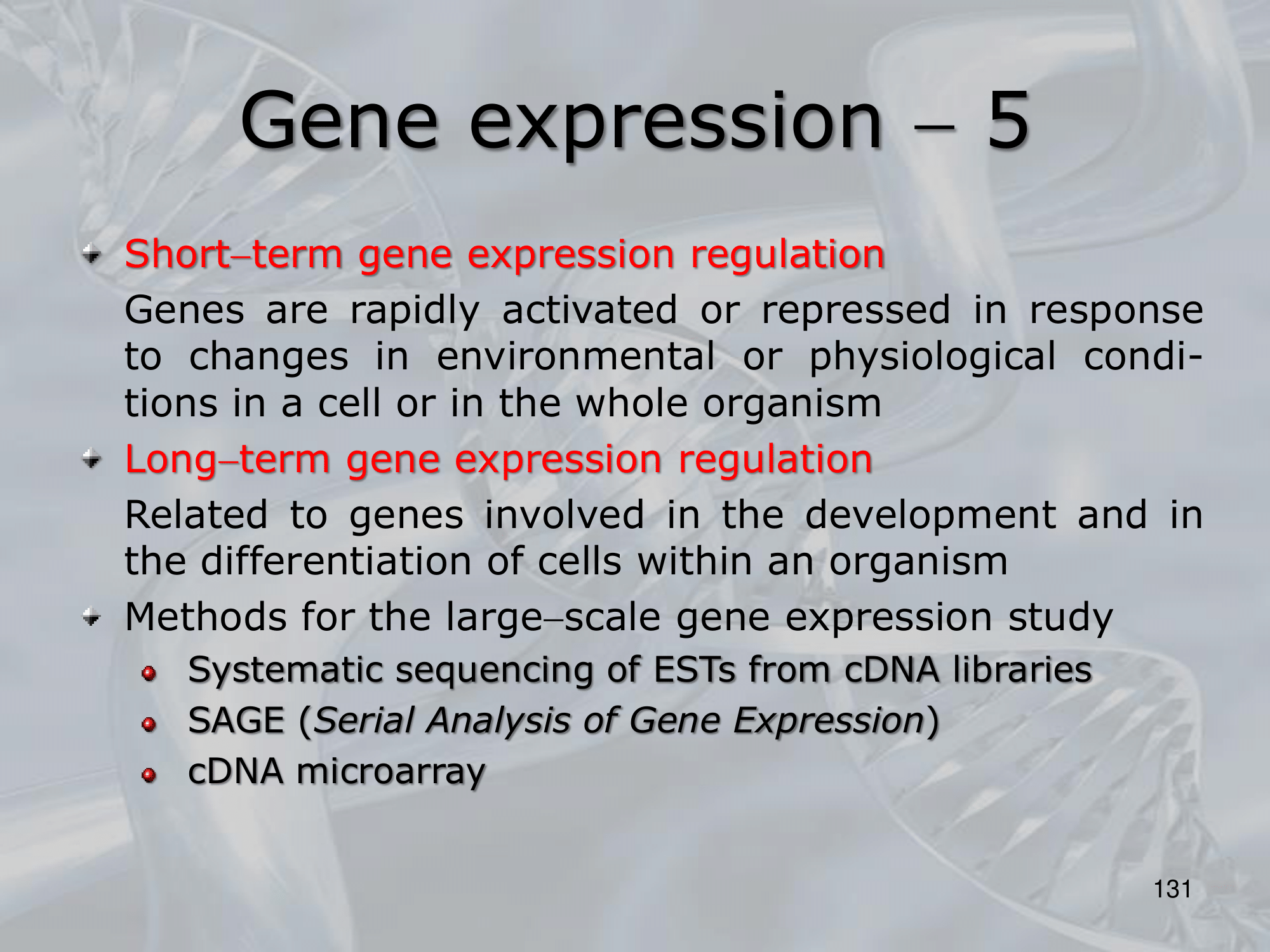
IMPORTANTE Gene Expression Regulation: All the cells in a given organism share the same genomic kit, the ability of such organism to alter its gene expression pattern, for example in response to enviromental changes, is a central feature of the concept of living beings
It can happen on each of the phases that characterize the passage of genetic information from DNA to proteins (~ex.: during transcption and/or translation) In complex eukaryotes, the gene expression regulation primarly takes place via transcription control.
IMPORTANTE Main Types of Gene Regulation: Epigenetic Control: methylation, acetylation. Transcriptional Control: chromatin structure. Post-transcriptional control: maturation, transport, translation.
IMPORTANTE Short-term Gene Expression Regulation: Genes are rapidly activated or repressed in response to changes in enviromental or physiological conditions in a cell or in the whole organism.
IMPORTANTE Long-term Gene Expression Regulation: Related to genes involved in the development and in the differentiation of cells within an organims.
Methods for large-scale gene expression study:
- Systematic sequencing of ESTs from cDNA libraries.
- SAGE (Serial Analysis of Gene Expression).
- cDNA microarray.
—————————————————————
Slides with Notes
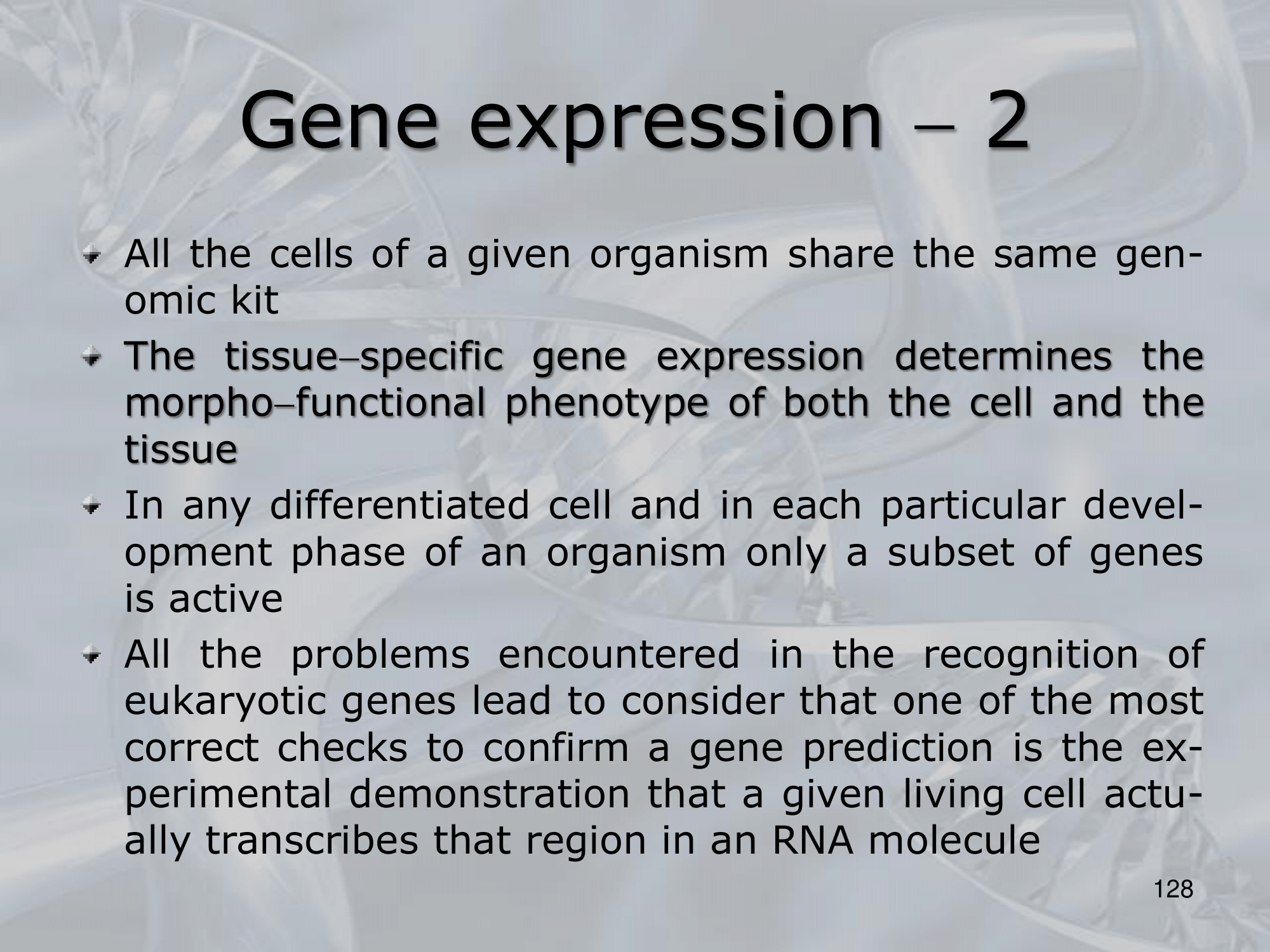
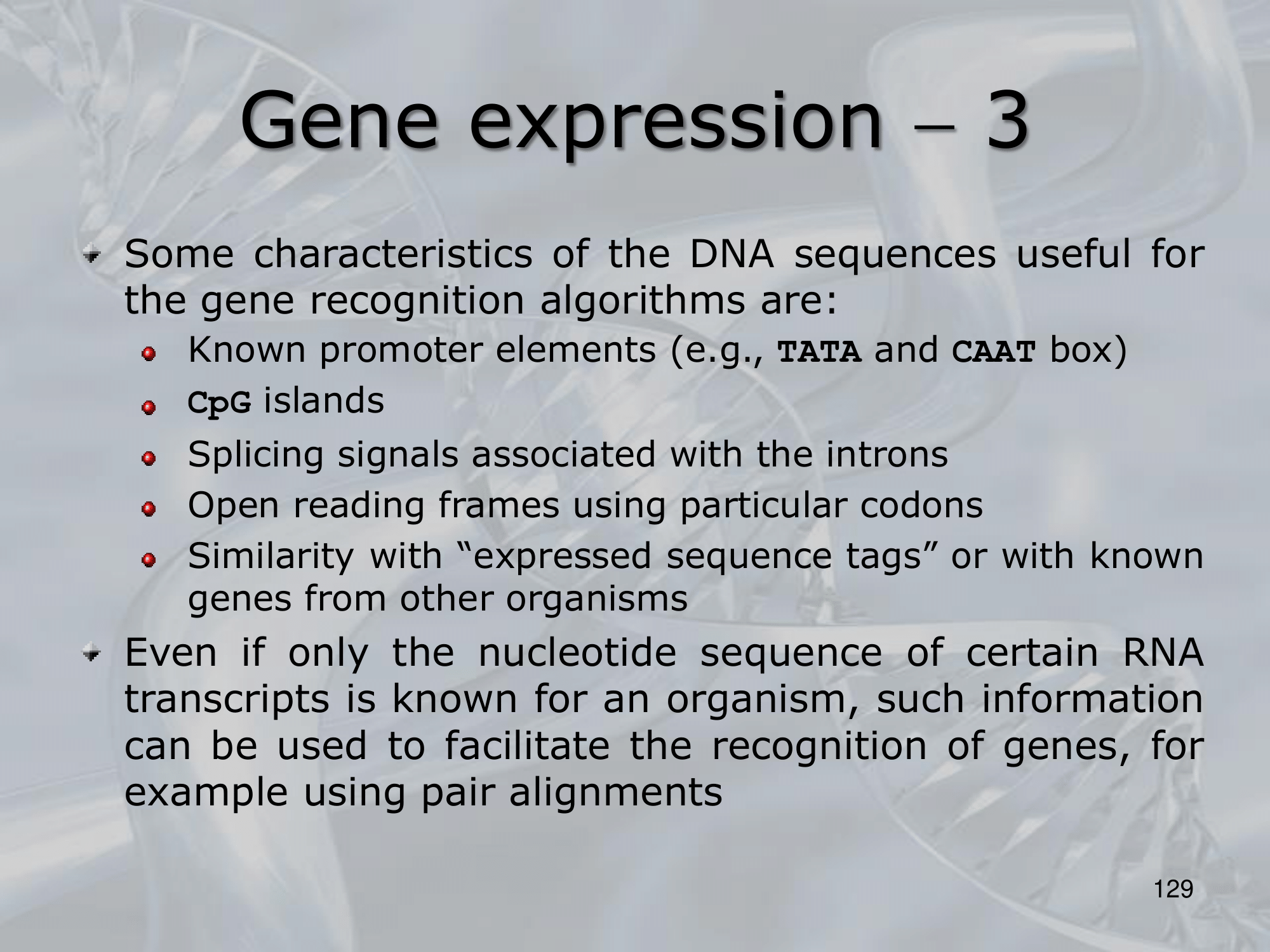
IMPORTANTE Gene Expression Regulation: All the cells in a given organism share the same genomic kit, the ability of such organism to alter its gene expression pattern, for example in response to enviromental changes, is a central feature of the concept of living beings
It can happen on each of the phases that characterize the passage of genetic information from DNA to proteins (~ex.: during transcption and/or translation) In complex eukaryotes, the gene expression regulation primarly takes place via transcription control.
IMPORTANTE Main Types of Gene Regulation: Epigenetic Control: methylation, acetylation. Transcriptional Control: chromatin structure. Post-transcriptional control: maturation, transport, translation.
IMPORTANTE Short-term Gene Expression Regulation: Genes are rapidly activated or repressed in response to changes in enviromental or physiological conditions in a cell or in the whole organism.
IMPORTANTE Long-term Gene Expression Regulation: Related to genes involved in the development and in the differentiation of cells within an organims.
Methods for large-scale gene expression study:
- Systematic sequencing of ESTs from cDNA libraries.
- SAGE (Serial Analysis of Gene Expression).
- cDNA microarray.