Questions
- What is DNA Sequencing?
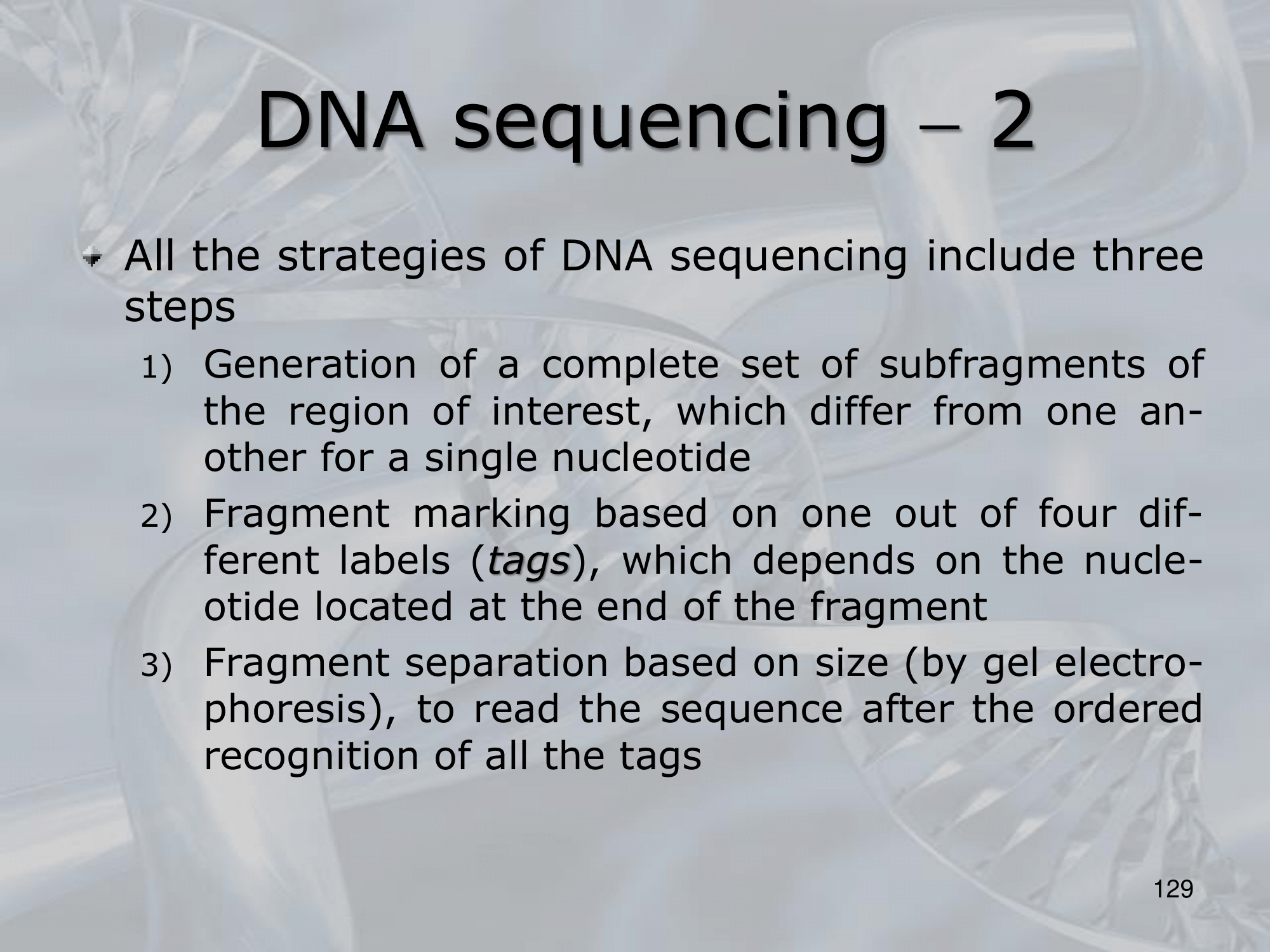
- DNA sequencing is the process of determining the precise order of nucleotides (A, C, G, T) in a DNA molecule.
This information is important for understanding the genetic information encoded within the DNA, which can have a wide range of applications in genetics, biotechnology, medicine, and other fields. - The first DNA sequencing method was developed in the 1970s, and since then, numerous different techniques have been developed, including Sanger sequencing, next-generation sequencing (NGS), and single-molecule sequencing.
These methods differ in their underlying principles, cost, throughput, and accuracy. - Sanger sequencing, also known as chain-termination sequencing, was the first method developed for DNA sequencing and is still widely used today.
It involves the use of dideoxynucleotides (ddNTPs), which terminate DNA synthesis when they are incorporated into the growing DNA chain.
By combining different ratios of standard nucleotides (dNTPs) and ddNTPs, a series of DNA fragments of varying lengths are generated that can be separated by size using gel electrophoresis.
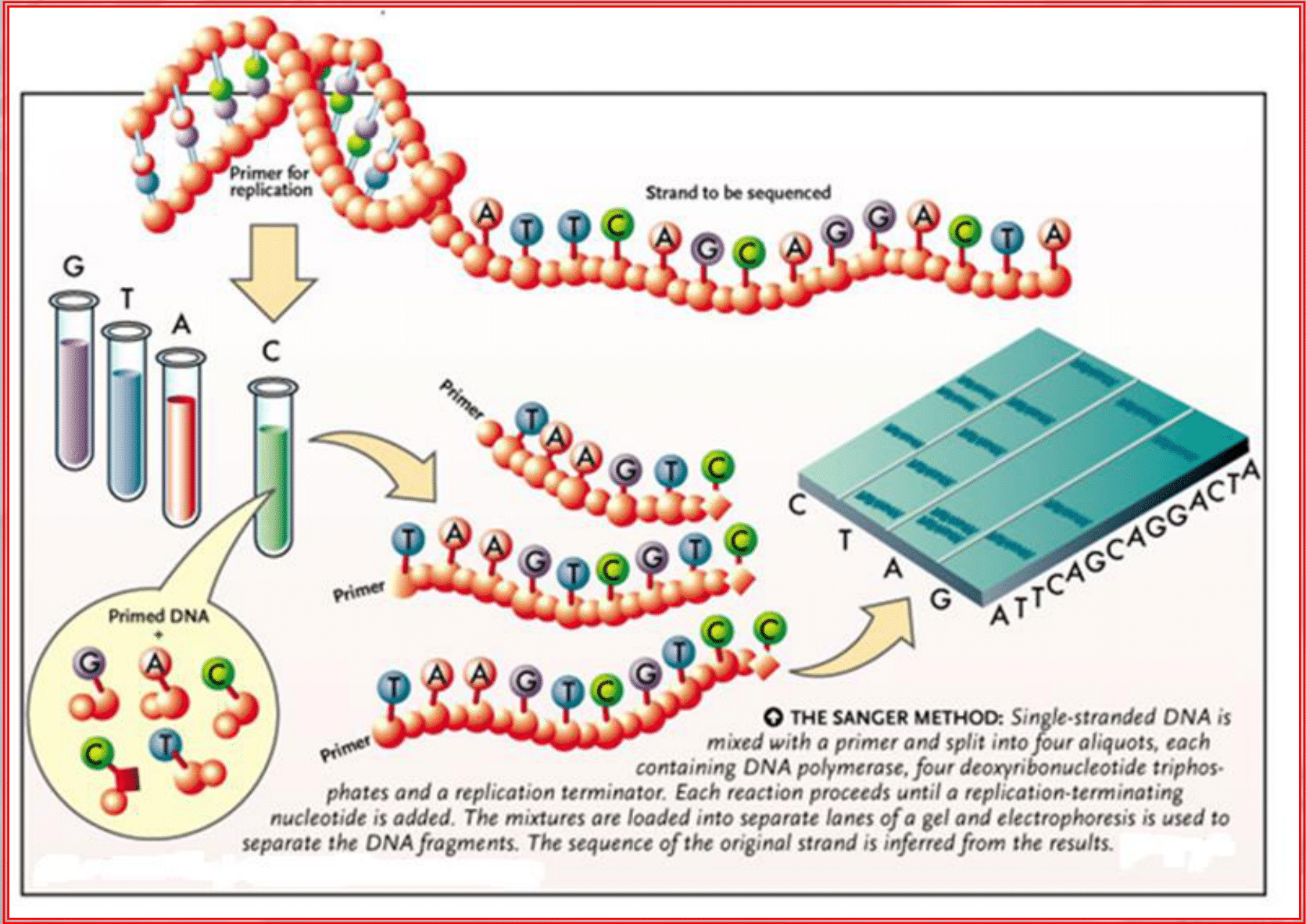
The seq0uence of the DNA template is then inferred by reading the bands on the gel. - Next-generation sequencing (NGS) technologies, on the other hand, use high-throughput methods to simultaneously sequence millions of DNA fragments in parallel.
These methods typically involve the fragmentation of DNA, the addition of adapters and primers, and the sequencing of the fragments using different platforms, such as Illumina or PacBio.
The resulting sequences are then aligned to a reference genome or assembled de novo to generate a complete genome sequence. - DNA sequencing has revolutionized many areas of science and medicine, including the identification of disease-causing mutations, the development of new drugs and treatments, and the analysis of evolutionary relationships between different species.
- DNA sequencing is the process of determining the precise order of nucleotides (A, C, G, T) in a DNA molecule.
- Can you explain the Maxam and Gilbert method of DNA Sequencing?
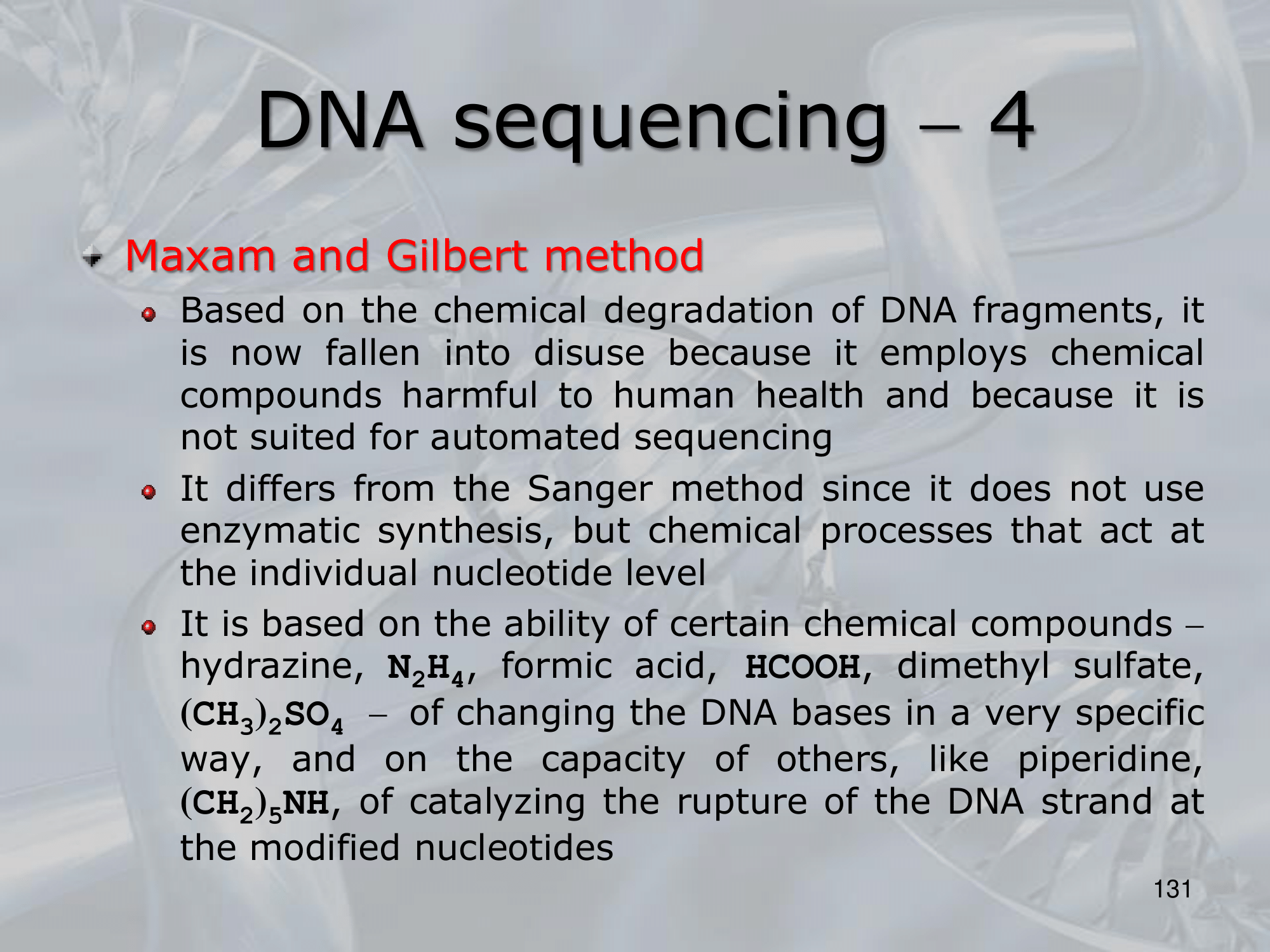
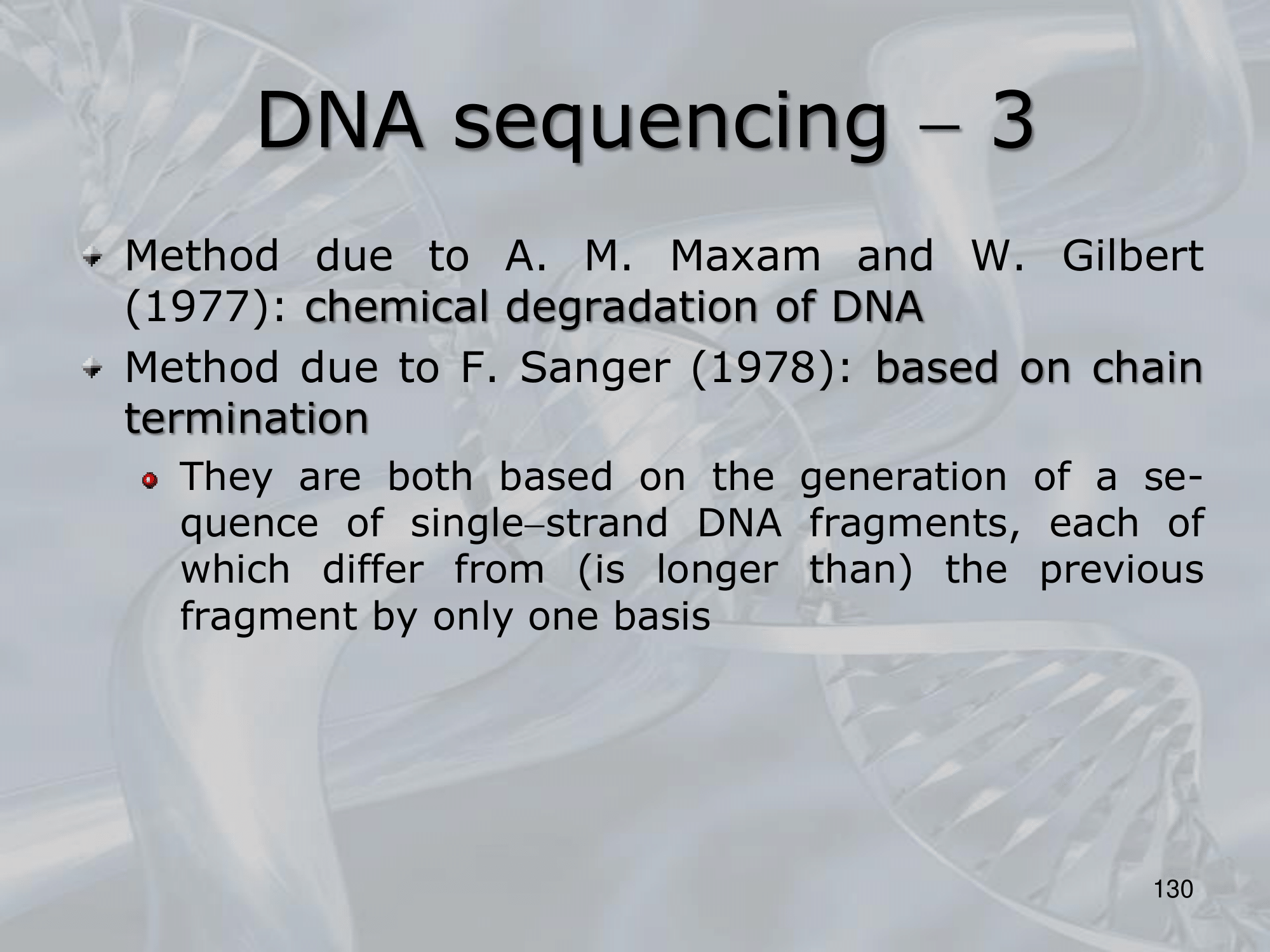
- The Maxam-Gilbert method of DNA sequencing, also known as chemical sequencing, is an older DNA sequencing method that was widely used prior to the development of the more popular Sanger sequencing method.
Here are the basic steps of the Maxam-Gilbert sequencing method:- Label the DNA: The DNA sample to be sequenced is labeled on one end with a radioactive or fluorescent tag.
- Cleavage: ==The labeled DNA is cleaved at specific positions using chemicals that break the phosphodiester bonds in the DNA backbone.
Four different chemical reactions are used, each one targeting a specific type of nucleotide (A, C, G, or T)==. - Gel electrophoresis: ==The cleaved DNA fragments are separated by size using gel electrophoresis.
The gel is then exposed to X-ray film or a fluorescent scanner to detect the labeled fragments==. - Read the ladder: The resulting pattern of labeled DNA fragments on the gel produces a "ladder" of bands, with each band representing a specific nucleotide position in the DNA sequence.
The sequence can be read by comparing the ladder to a known reference ladder or by determining the nucleotide at each position based on the size and position of the bands.
- The Maxam-Gilbert method has several limitations, including the use of hazardous chemicals, the need for radioactive labeling, and the limited read length of only a few hundred bases.
These limitations have largely been overcome by the development of the Sanger sequencing method, which uses fluorescently labeled nucleotides and automated sequencing machines to generate much longer reads with higher accuracy and throughput.
- The Maxam-Gilbert method of DNA sequencing, also known as chemical sequencing, is an older DNA sequencing method that was widely used prior to the development of the more popular Sanger sequencing method.
- Can you explain the Sanger method of DNA Sequencing?
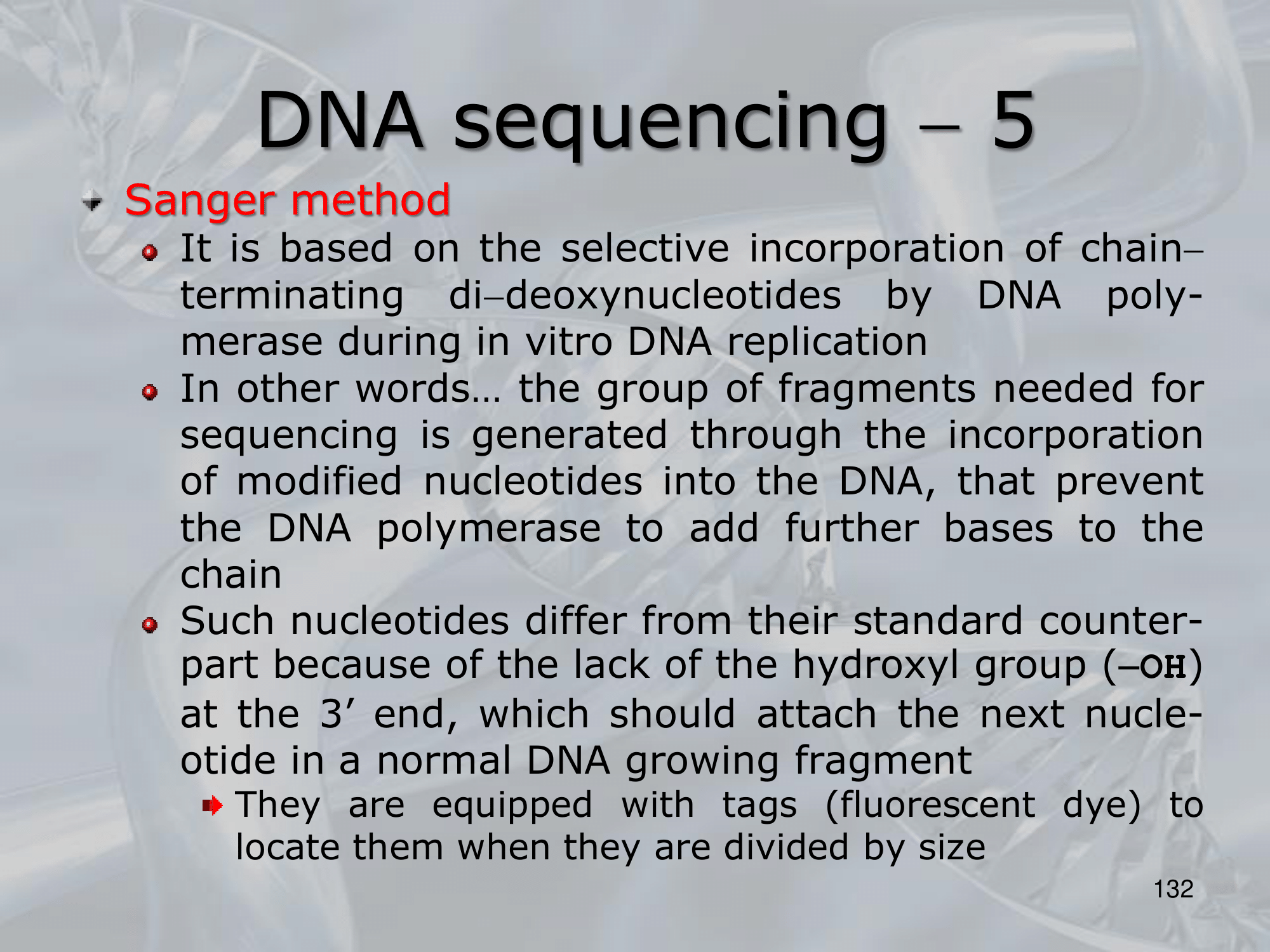
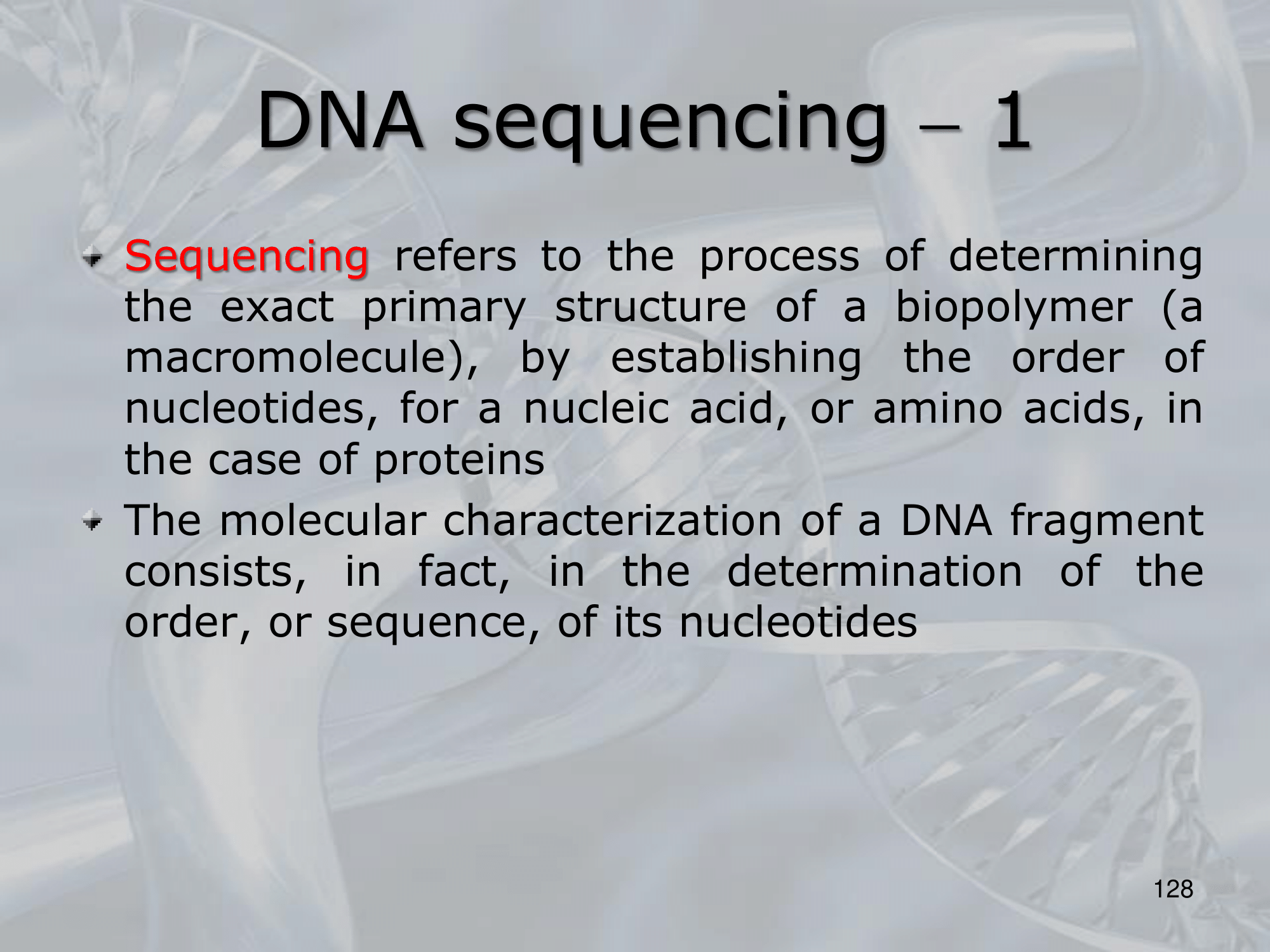
- The Sanger method, also known as chain-termination sequencing, is a widely used method for DNA sequencing.
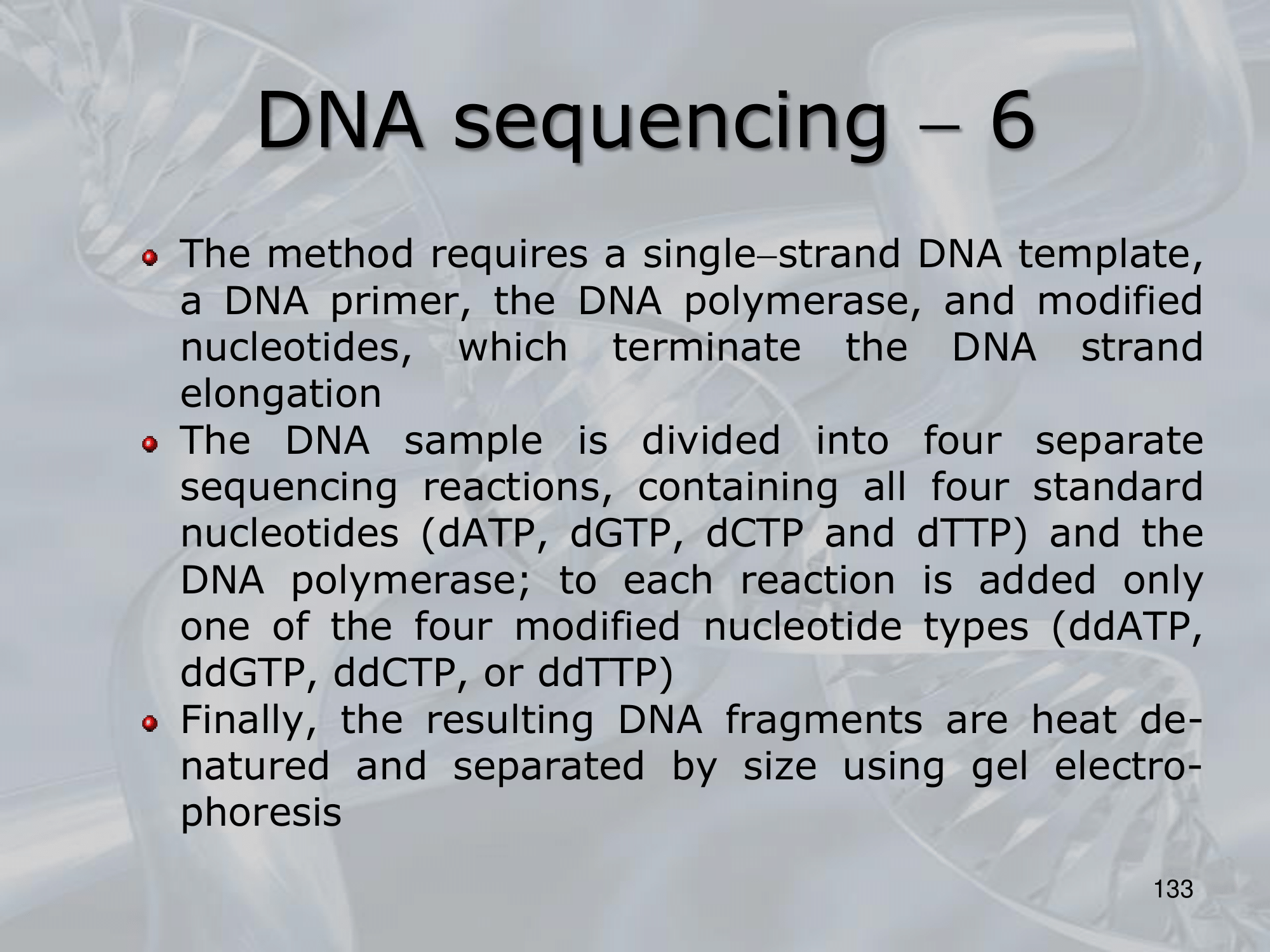
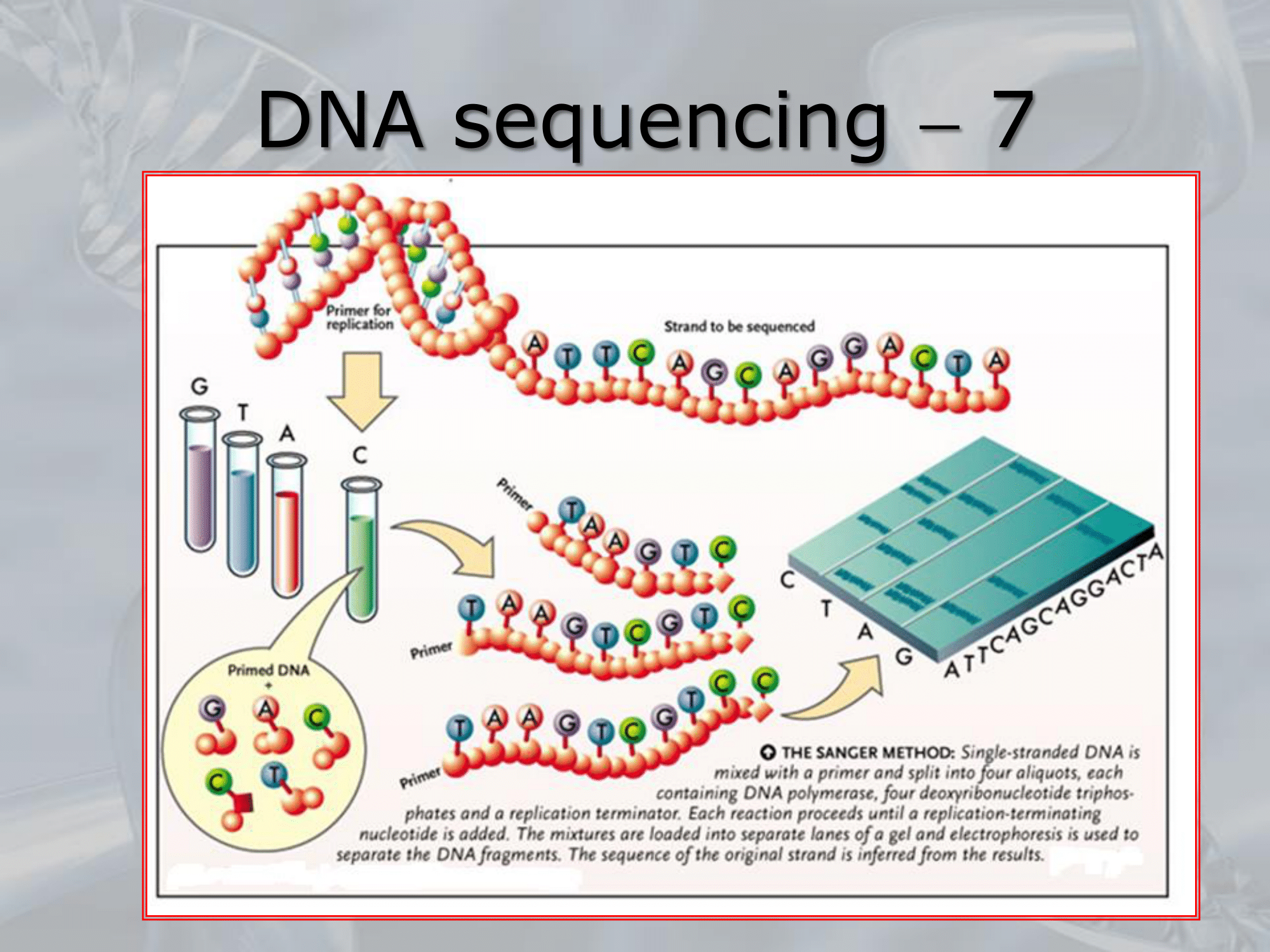
Here are the basic steps of the Sanger sequencing method:- DNA synthesis: The DNA to be sequenced is used as a template for DNA synthesis.
A primer is added to initiate synthesis, and four separate reactions are set up, each containing a different dideoxynucleotide (ddNTP) along with the standard deoxynucleotides (dNTPs). - Chain termination: The ddNTPs lack a 3’-OH group, which is needed for the next nucleotide to be added to the chain during synthesis.
When a ddNTP is incorporated into the growing DNA chain, synthesis stops because no further nucleotides can be added.
This results in a set of DNA fragments of varying lengths, each terminating with one of the four ddNTPs. - Gel electrophoresis: The DNA fragments are separated by size using gel electrophoresis.
The gel is then exposed to X-ray film or a fluorescent scanner to detect the labeled fragments. - Read the ladder: The resulting pattern of labeled DNA fragments on the gel produces a “ladder” of bands, with each band representing a specific nucleotide position in the DNA sequence.
The sequence can be read by determining the nucleotide at each position based on the size and position of the bands.
- DNA synthesis: The DNA to be sequenced is used as a template for DNA synthesis.
- The Sanger method has several advantages over the Maxam-Gilbert method, including the use of fluorescently labeled nucleotides, which allows for higher throughput and eliminates the need for radioactive labeling, and the ability to generate longer reads (up to several hundred base pairs).
The Sanger method remains an important tool for DNA sequencing in many applications, but has largely been replaced by newer high-throughput sequencing technologies, such as Illumina sequencing and nanopore sequencing.
- The Sanger method, also known as chain-termination sequencing, is a widely used method for DNA sequencing.
IMPORTANTE
IMPORTANTE Sanger Method: Youtube (Watch this video, it is only 2:50 minutes, very good)
Slides with Notes
IMPORTANTE Sanger Method: Youtube (Watch this video, it is only 2:50 minutes, very good)