Questions
- What is Conceptual Translation?
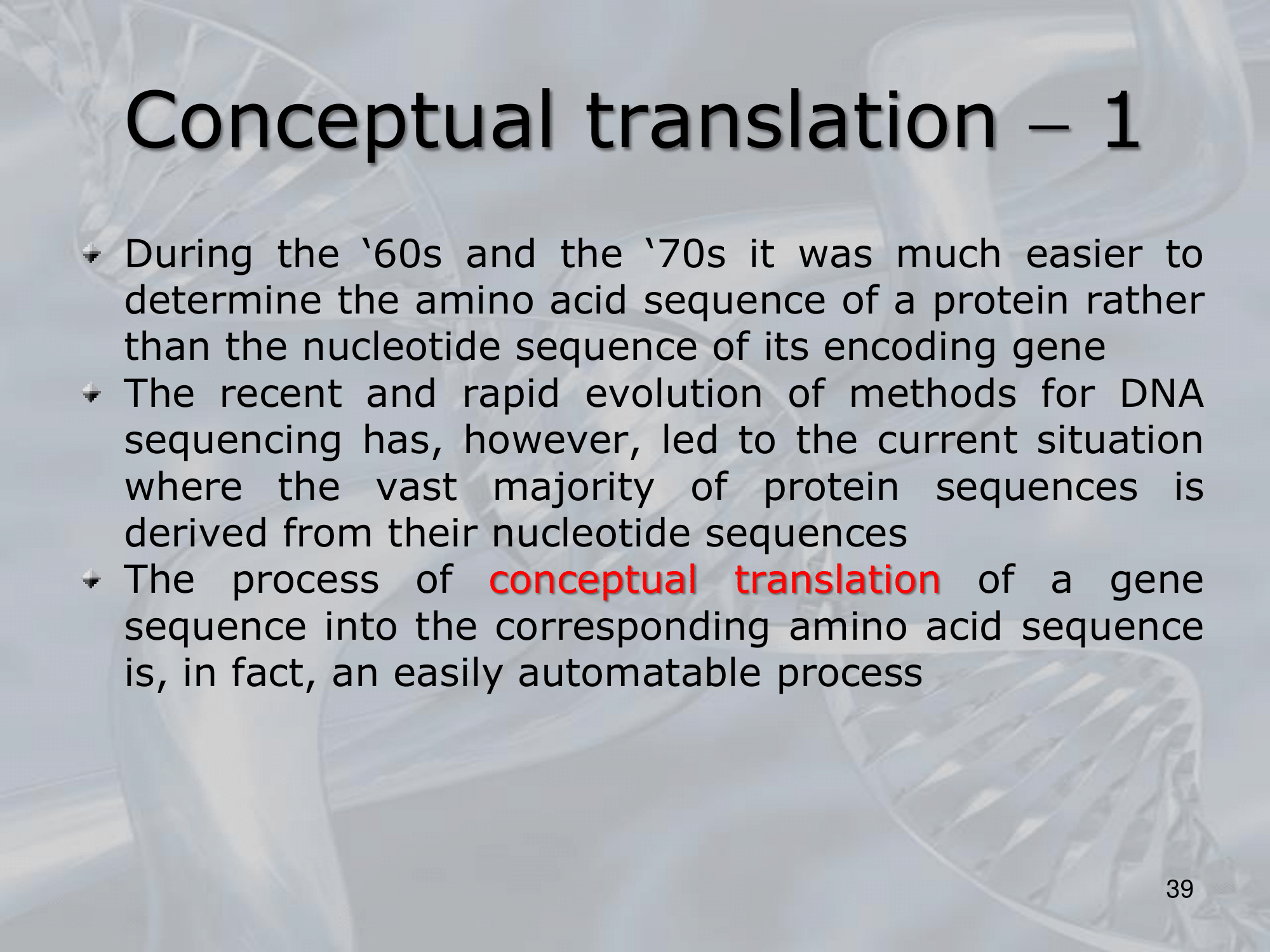
- Conceptual translation refers to the process of translating a DNA or RNA sequence into a predicted protein sequence without actually performing a physical translation of the nucleotide sequence.
Instead, it uses the genetic code to convert each codon into the corresponding amino acid, generating a hypothetical protein sequence. - In conceptual translation, the nucleotide sequence is scanned for open reading frames (ORFs), which are nucleotide sequences with the potential to encode a protein.
Once an ORF is identified, it is translated into a protein sequence using the genetic code.
The resulting protein sequence can then be analyzed using various bioinformatics tools to predict its function and potential role in cellular processes. - Conceptual translation is an important tool in bioinformatics, as it allows researchers to analyze large-scale genomic data and predict the function of potential protein-coding genes without the need for experimental validation.
However, it is important to note that the accuracy of the predicted protein sequence depends on the quality of the genome annotation, and may require further experimental validation to confirm its function and expression.
- Conceptual translation refers to the process of translating a DNA or RNA sequence into a predicted protein sequence without actually performing a physical translation of the nucleotide sequence.
—————————————————————
IMPORTANTE
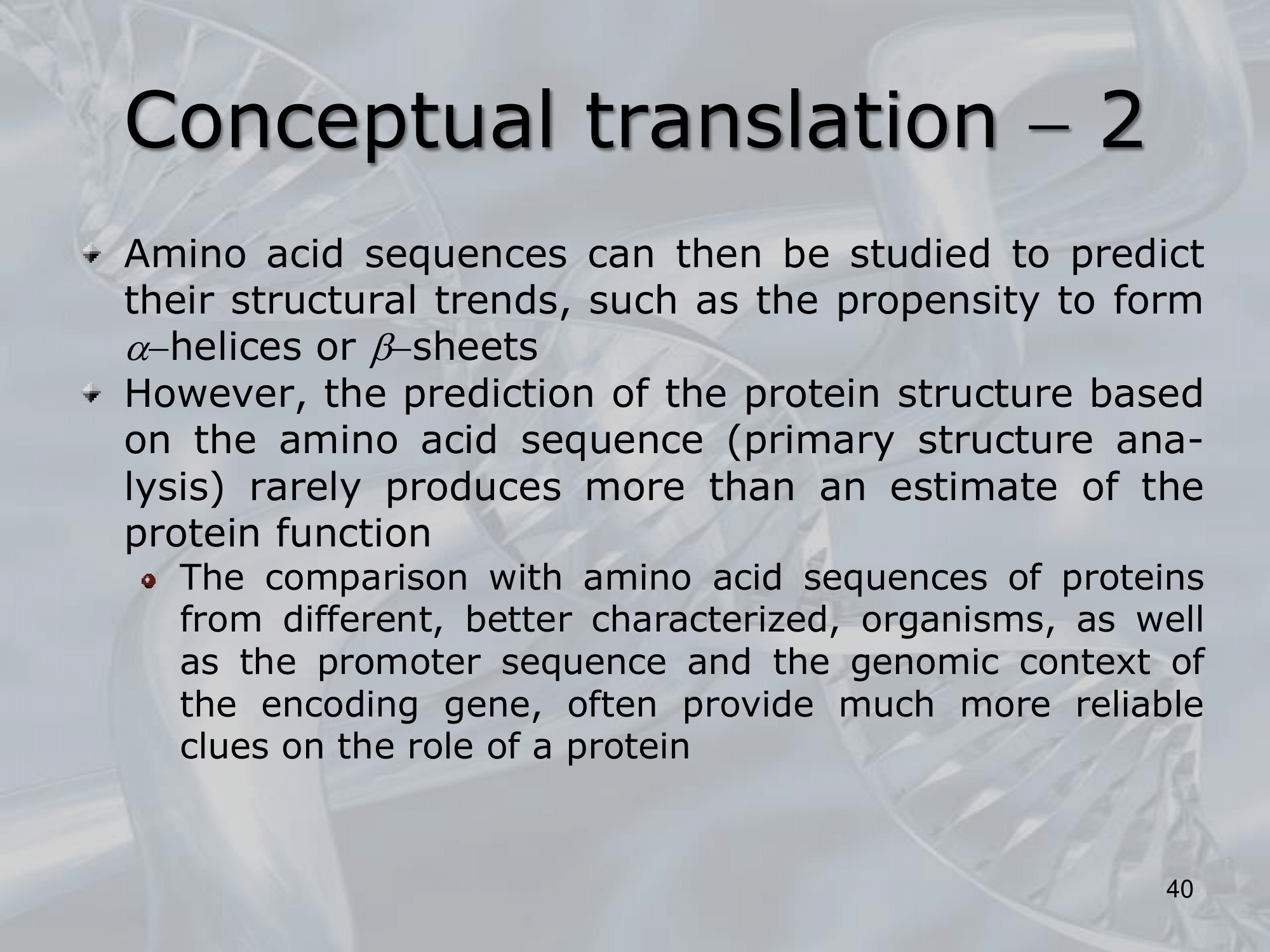
IMPORTANTE Conceputal Translation: The process of translating a gene sequence (DNA) to its corresponding amino acid sequence. Easily automatable process
Amino acid sequences can then be studied, for example to predict their structural trend, like the propensity to form -helices or -sheets.
—————————————————————
Slides with Notes