Questions
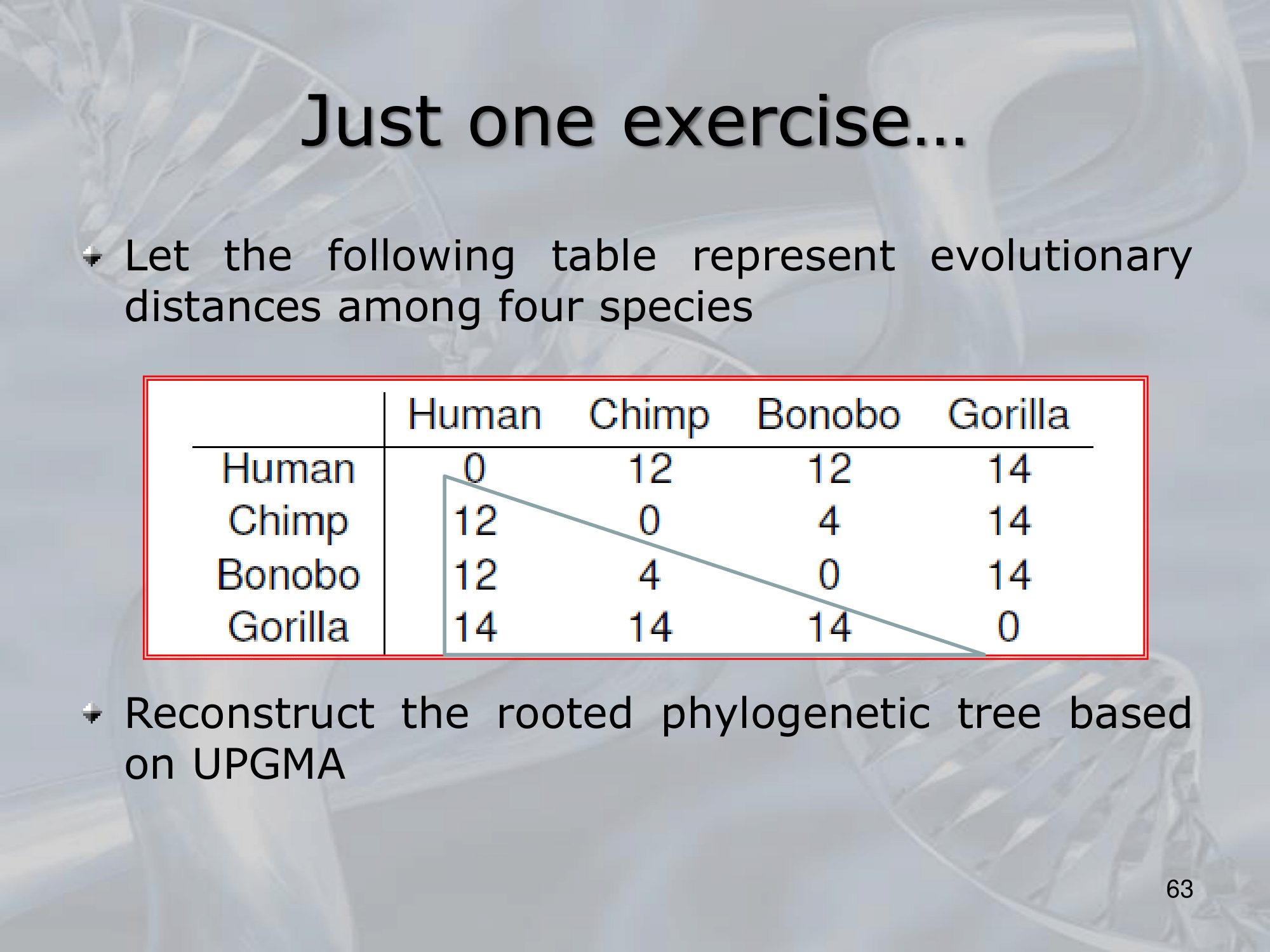
- What is the UPGMA?
- UPGMA stands for Unweighted Pair Group Method with Arithmetic Mean.
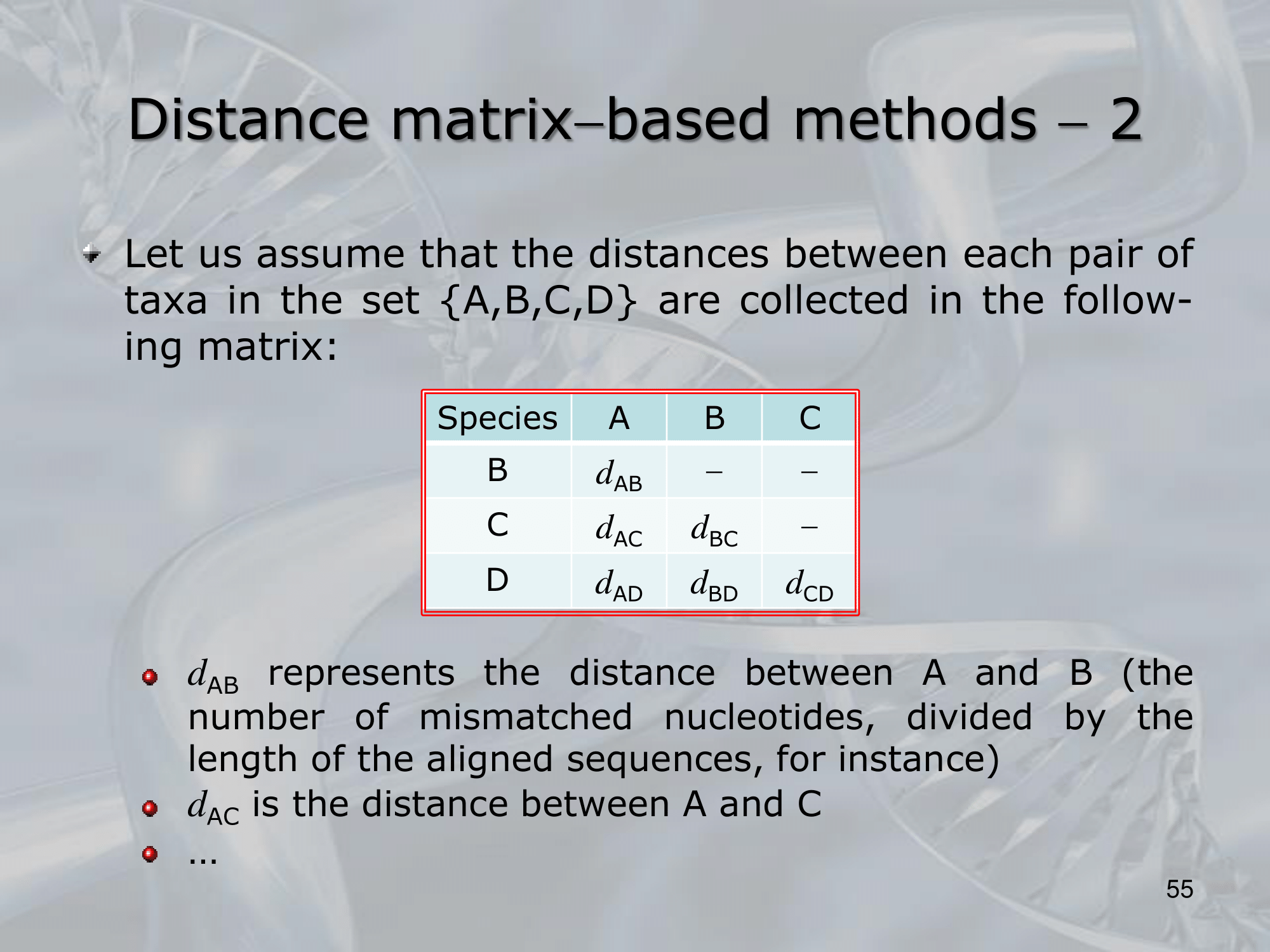
It is a distance-based method used in phylogenetic analysis to construct a tree from a distance matrix.
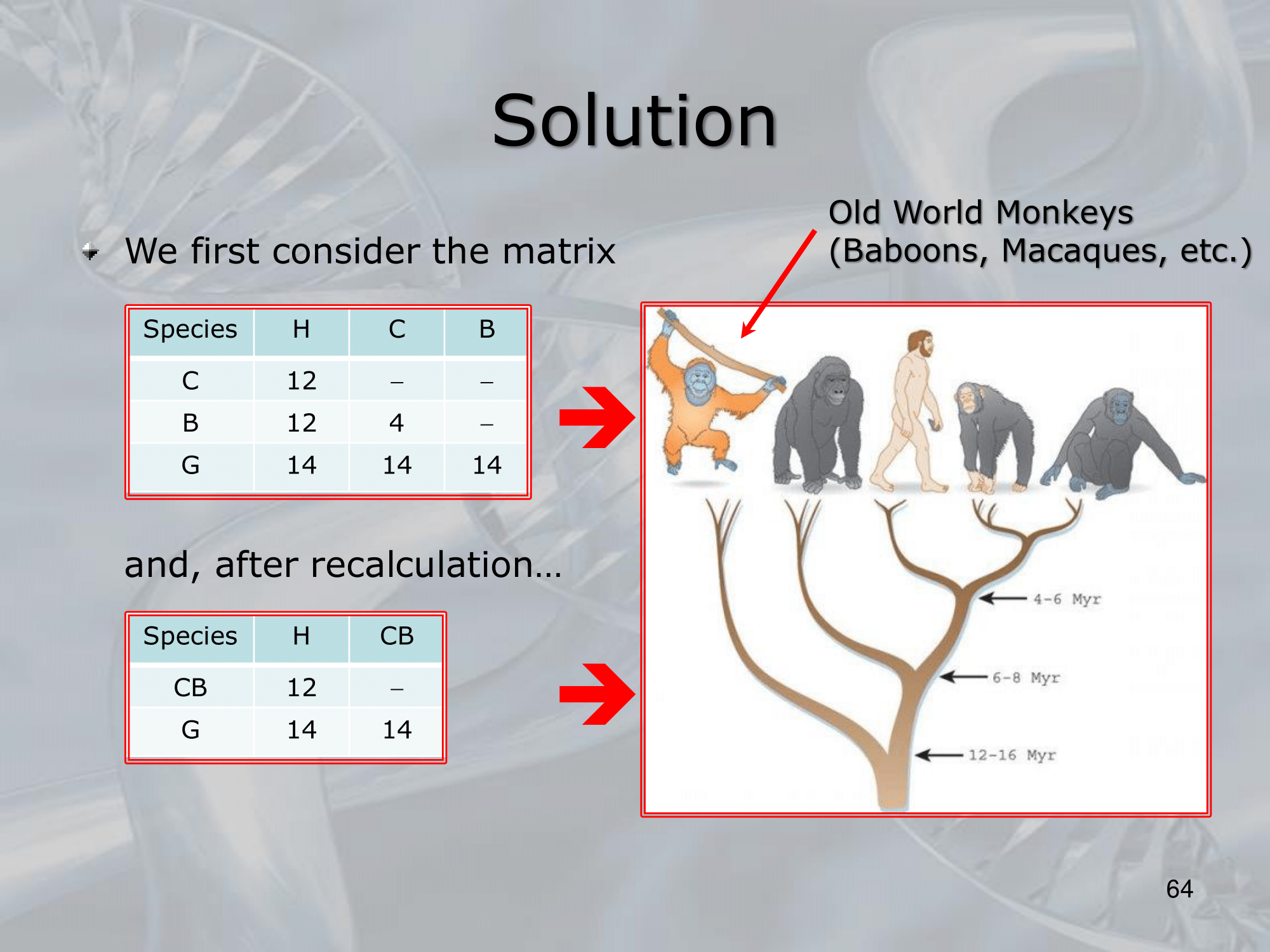
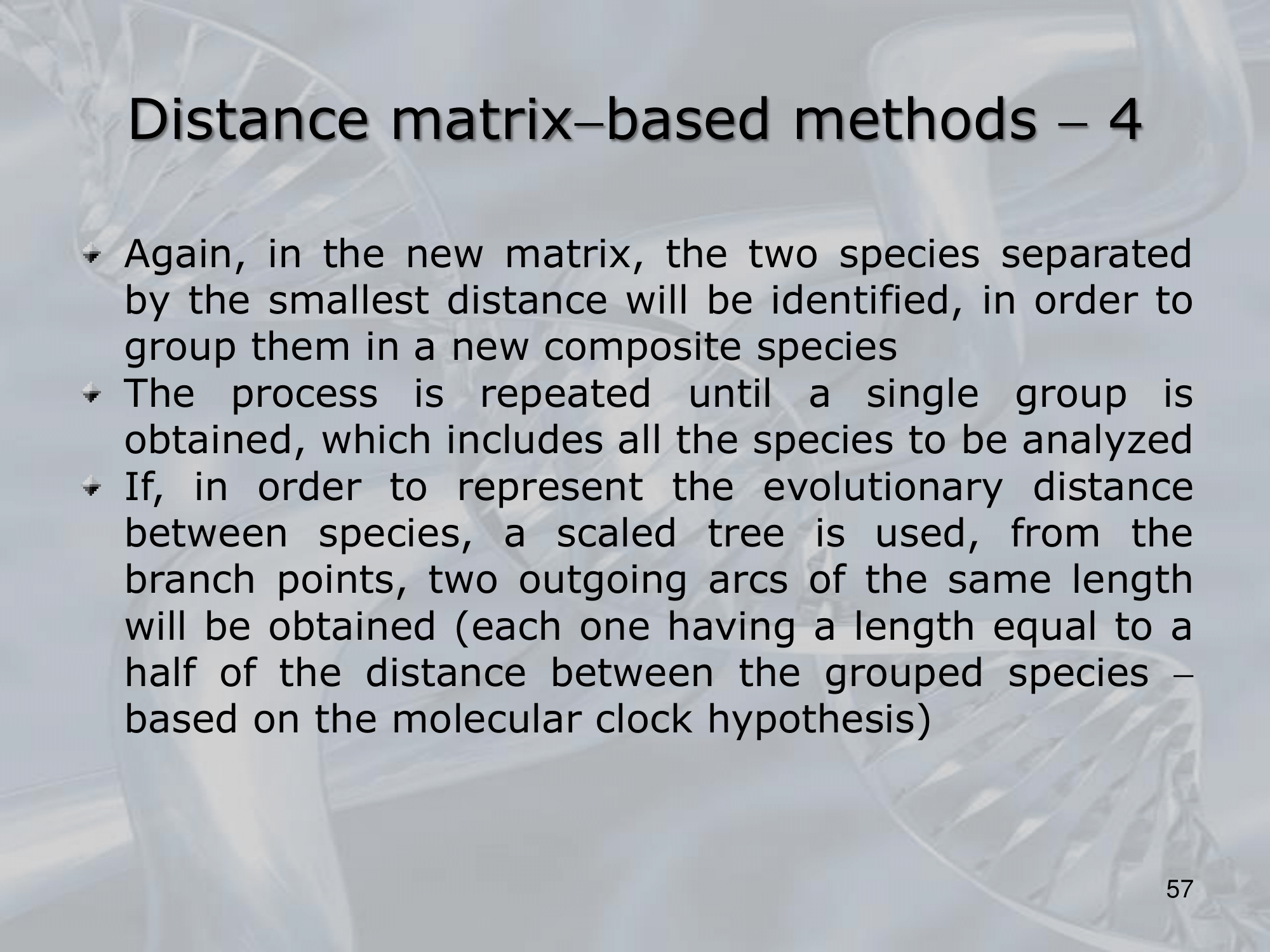
UPGMA assumes that the rate of evolution is constant throughout the entire tree and that the distance between two sequences is proportional to the time since they diverged from a common ancestor. - The UPGMA method starts by considering each sequence as an individual cluster and gradually merges them into larger clusters based on their pairwise distances.
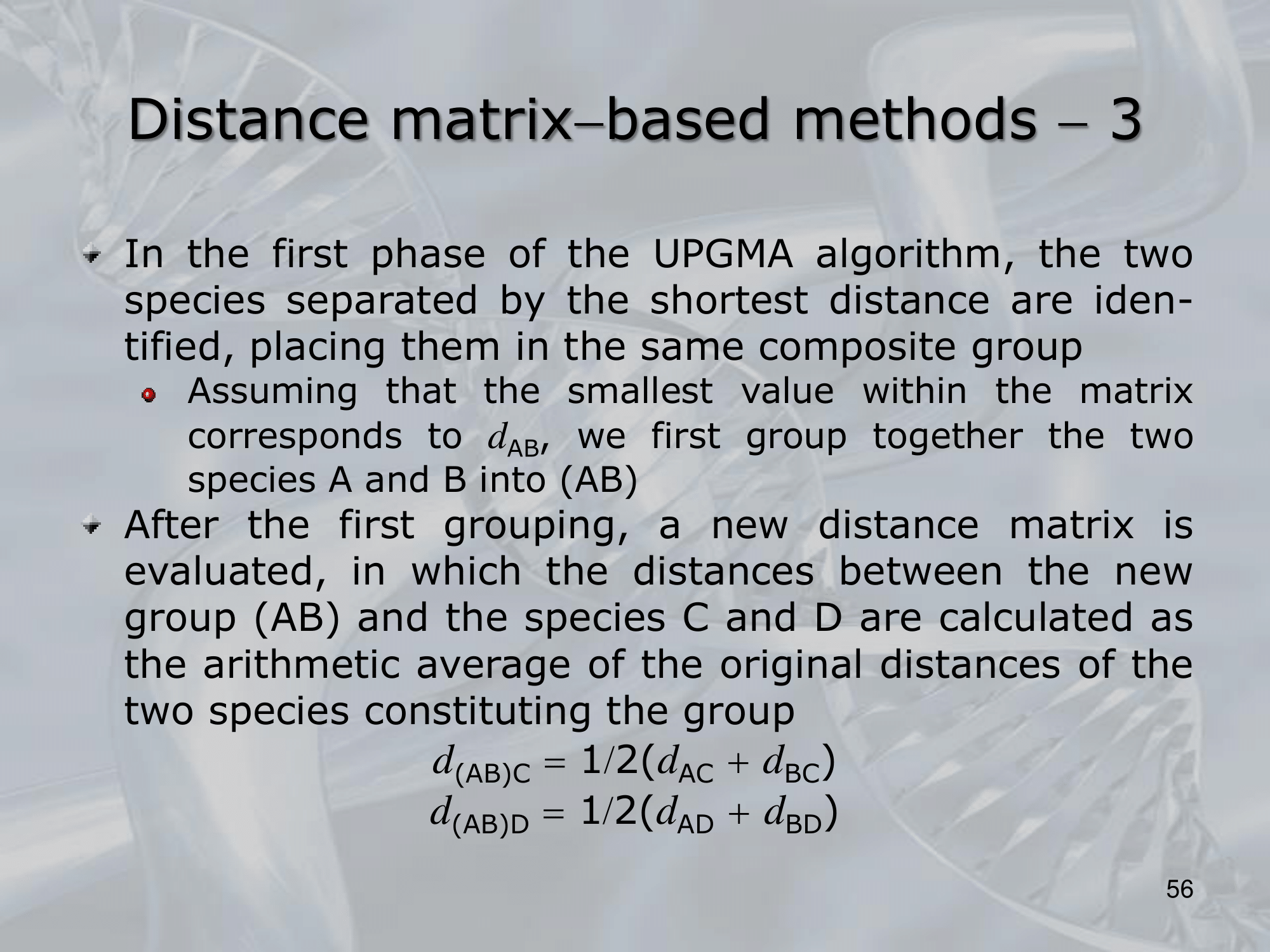
At each step, the two closest clusters are joined, and the distance between the new cluster and the other clusters is calculated as the average distance between the individual sequences in each of the merged clusters.
This process continues until all sequences are clustered into a single group, forming a rooted tree. - UPGMA is a popular method because it is simple, fast, and easy to implement.
However, it has several limitations, such as the assumption of a constant rate of evolution and the inability to handle certain types of data, such as sequences with unequal rates of evolution or sequences that have undergone convergent evolution.
- UPGMA stands for Unweighted Pair Group Method with Arithmetic Mean.
—————————————————————
IMPORTANTE
IMPORTANTE UPGMA: Unweighted-Pair-Group Method with Arithmetic Mean
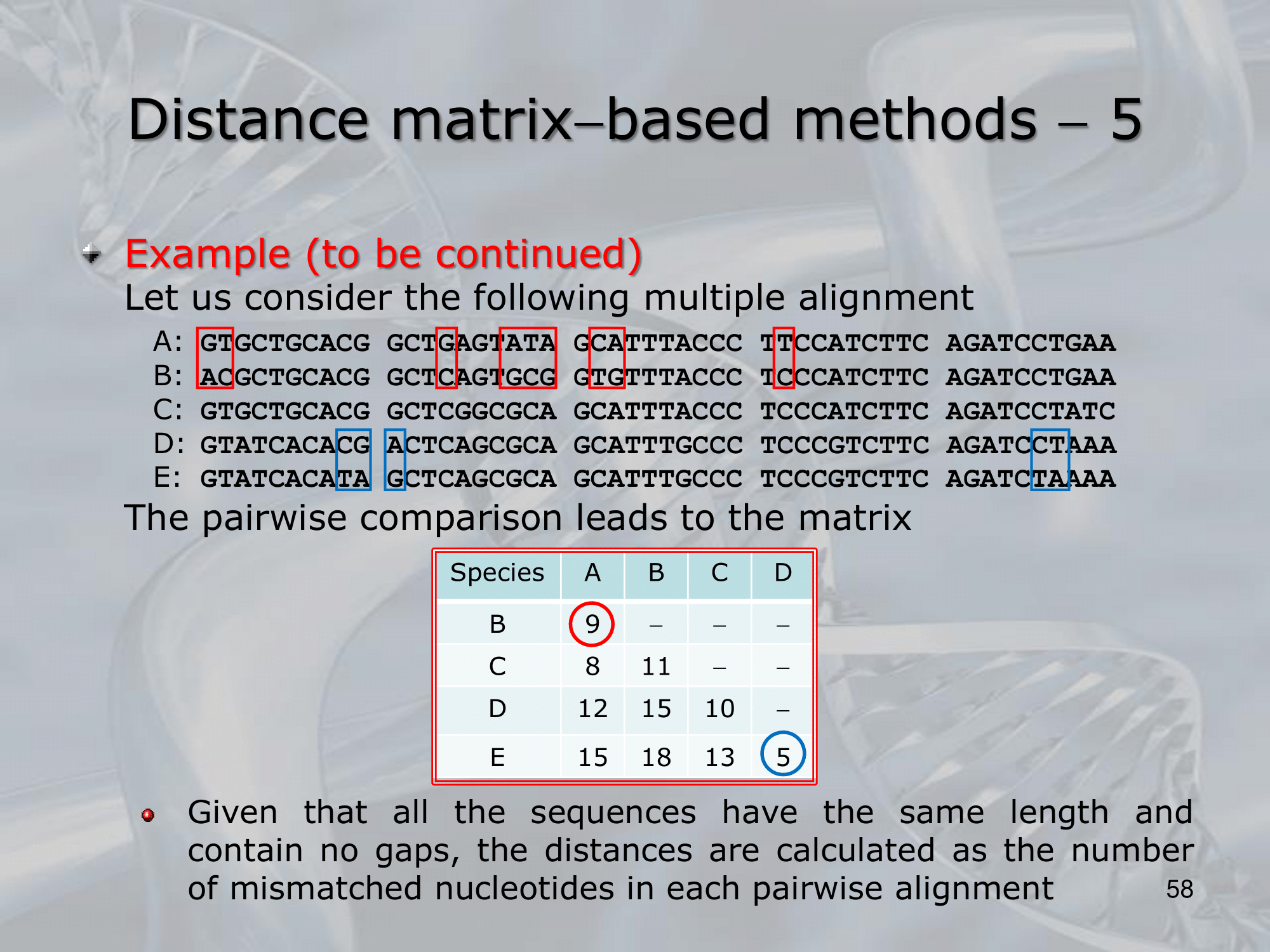
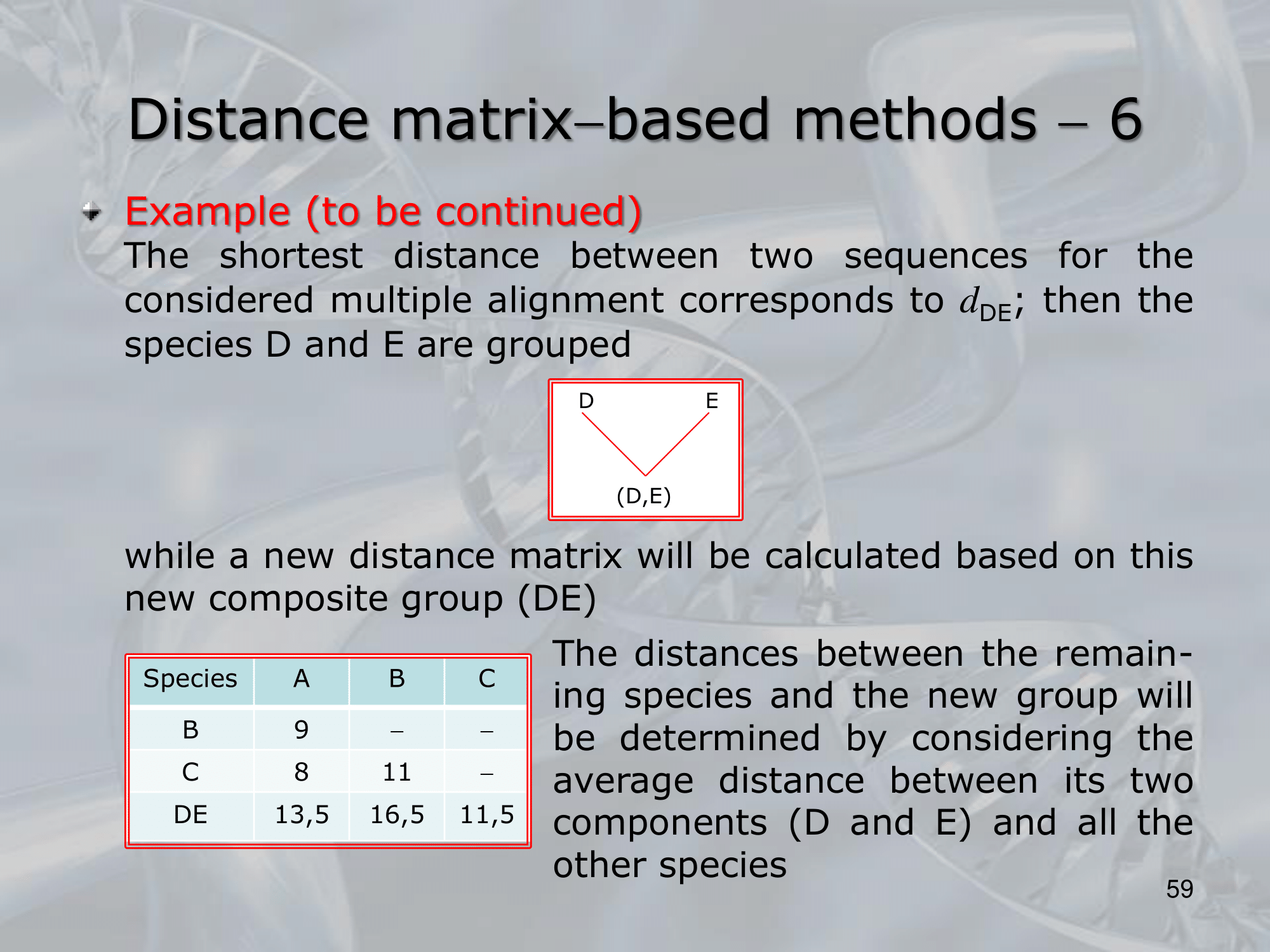
Prendiamo le due distanze minime e le sostituiamo con la loro media, che diventerà una nuova distanza, es:
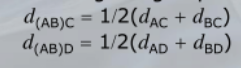
I primi archi dell’albero saranno:
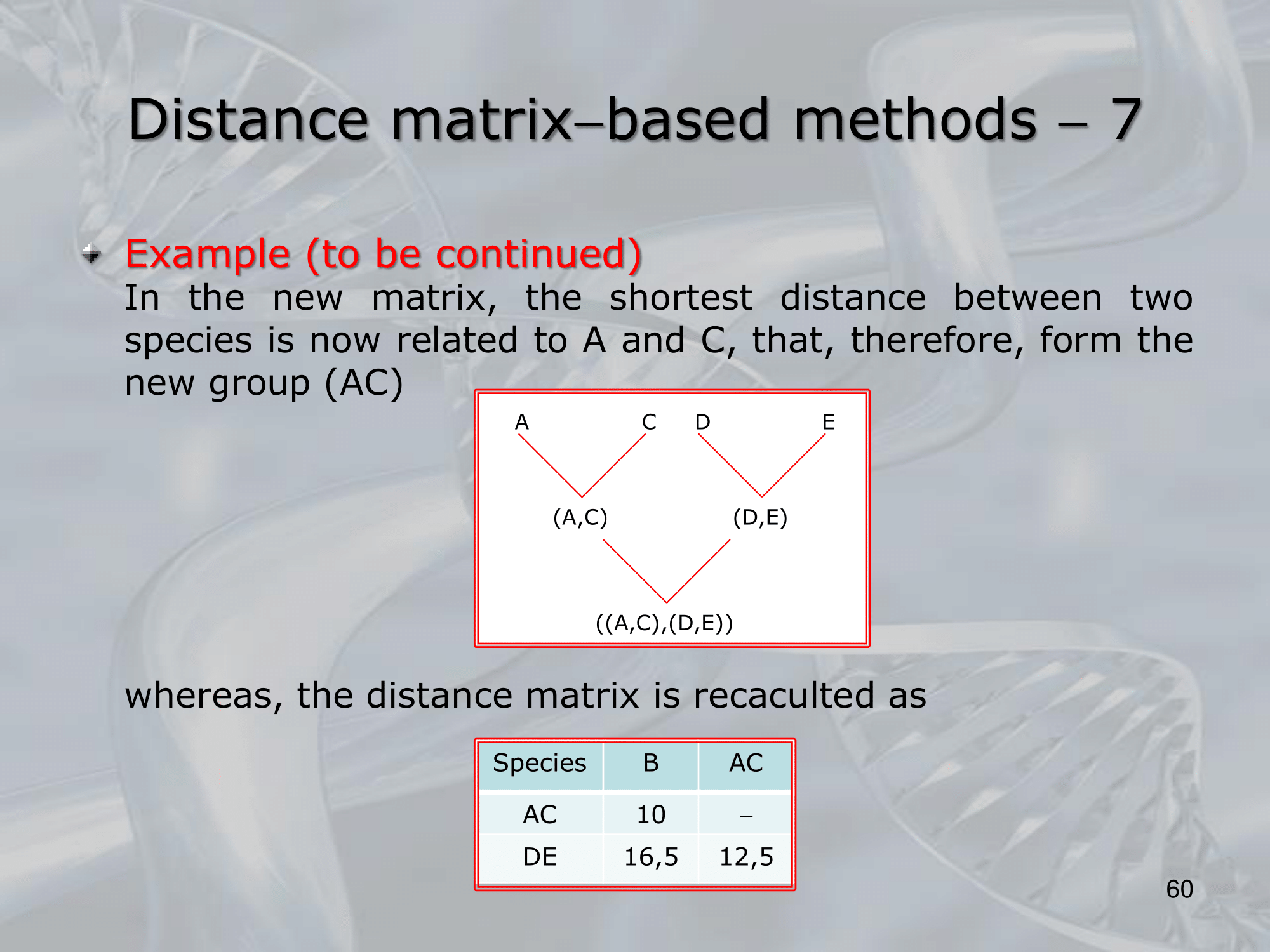
E la matrice si ridurra in:
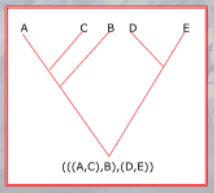
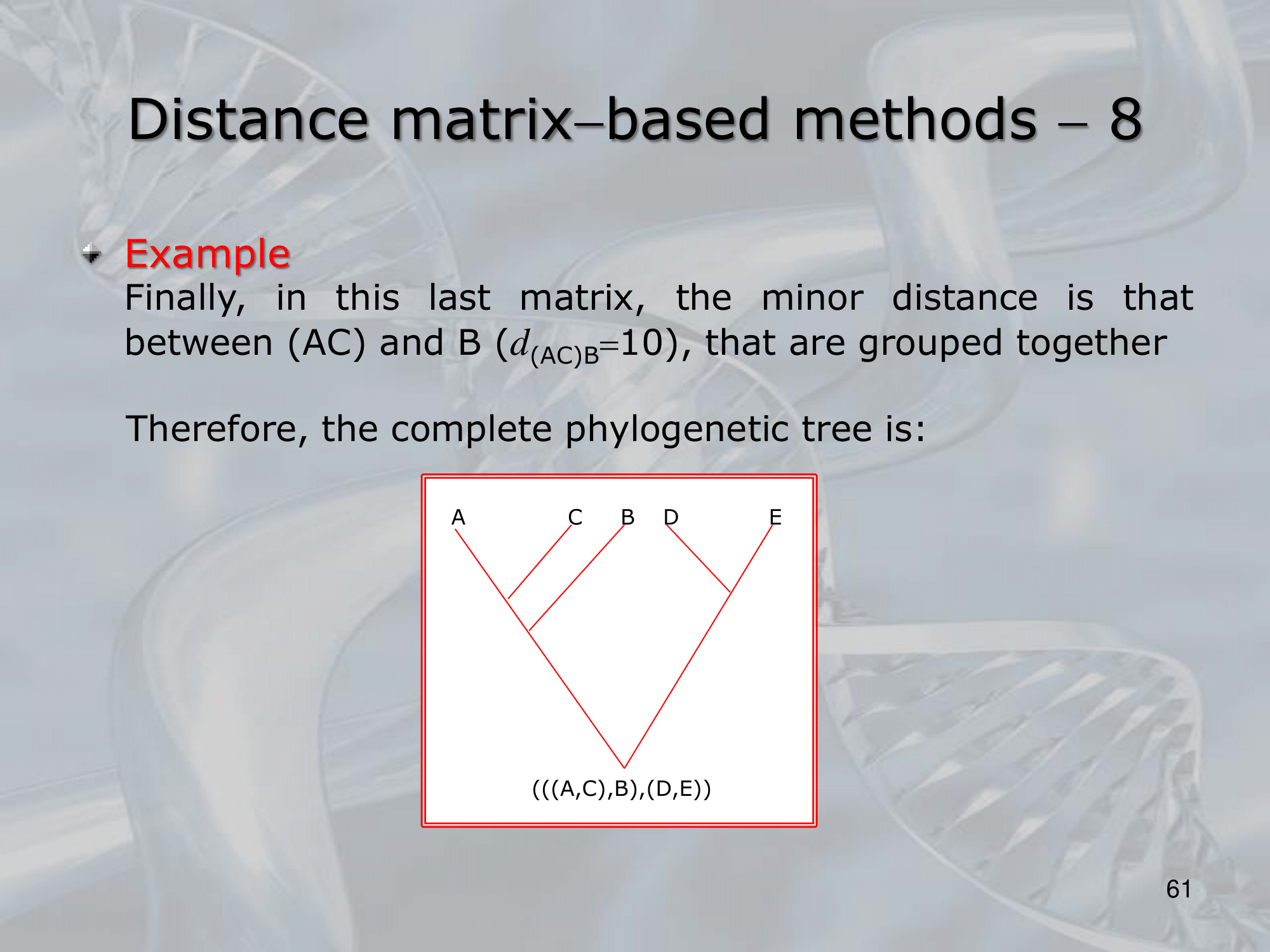
Iterando l’algoritmo otterremo:
—————————————————————
Slides with Notes
IMPORTANTE UPGMA: Unweighted-Pair-Group Method with Arithmetic Mean