Questions
- What is Phosphorylation?
- ==Phosphorylation is a biochemical process that involves the addition of a phosphate group to a molecule==.
In biological systems, phosphorylation most commonly refers to the addition of a phosphate group to a protein, which can affect the structure, function, and localization of the protein. - Phosphorylation is a key regulatory mechanism in many cellular processes, such as signal transduction, gene expression, and cell cycle regulation.
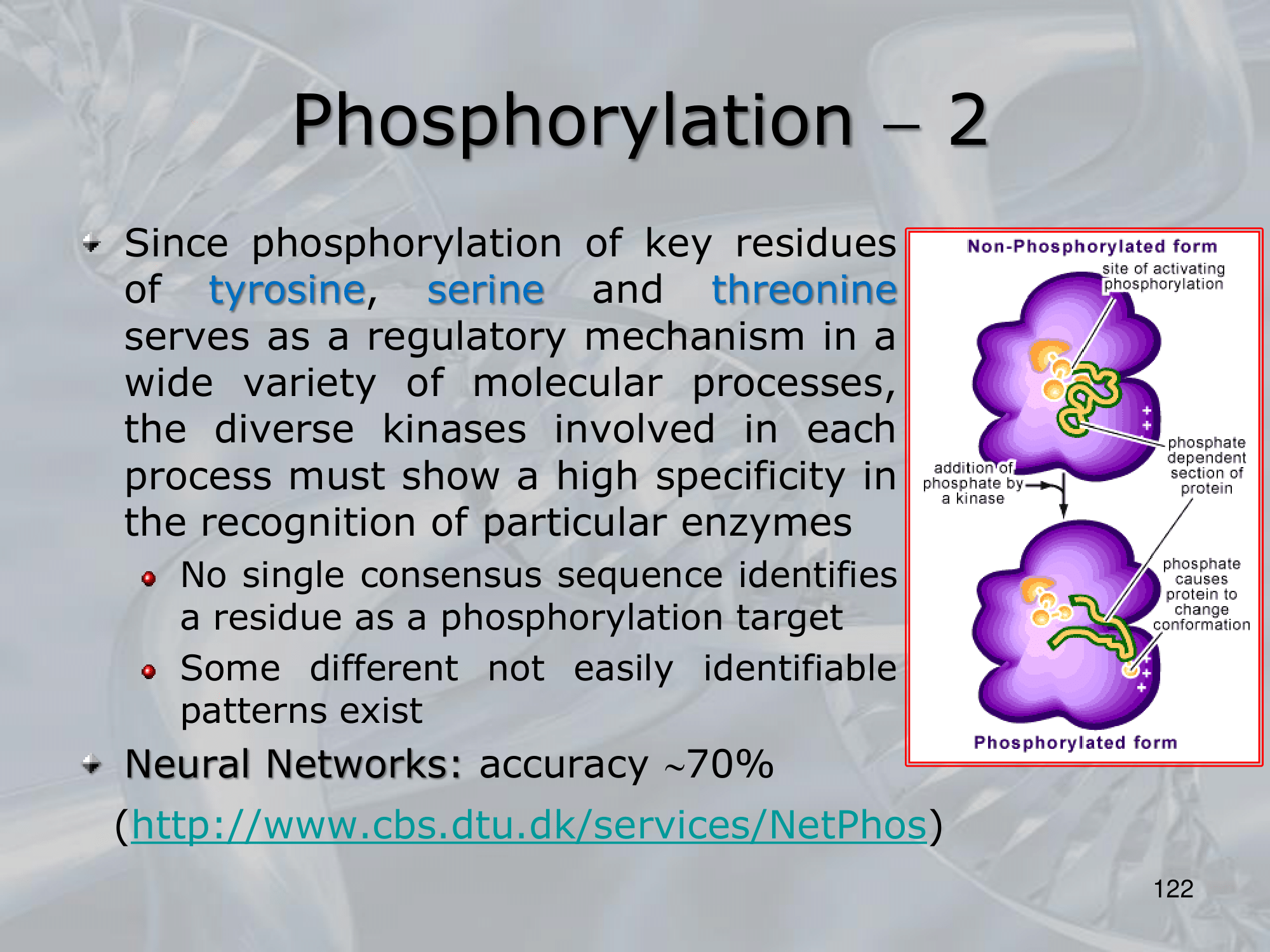
It is carried out by enzymes called kinases, which transfer phosphate groups from ATP (adenosine triphosphate) to specific amino acid residues on the protein substrate. - The most common amino acids that are phosphorylated in proteins are serine, threonine, and tyrosine, although other amino acids can also be phosphorylated in some cases.
The addition of a phosphate group to these amino acids can alter the charge, shape, and/or conformation of the protein, thereby changing its activity, stability, or interactions with other molecules. - Overall, phosphorylation is a critical process in the regulation of many biological pathways, and it plays a central role in cellular communication, metabolism, and growth.
- ==Phosphorylation is a biochemical process that involves the addition of a phosphate group to a molecule==.
—————————————————————
IMPORTANTE
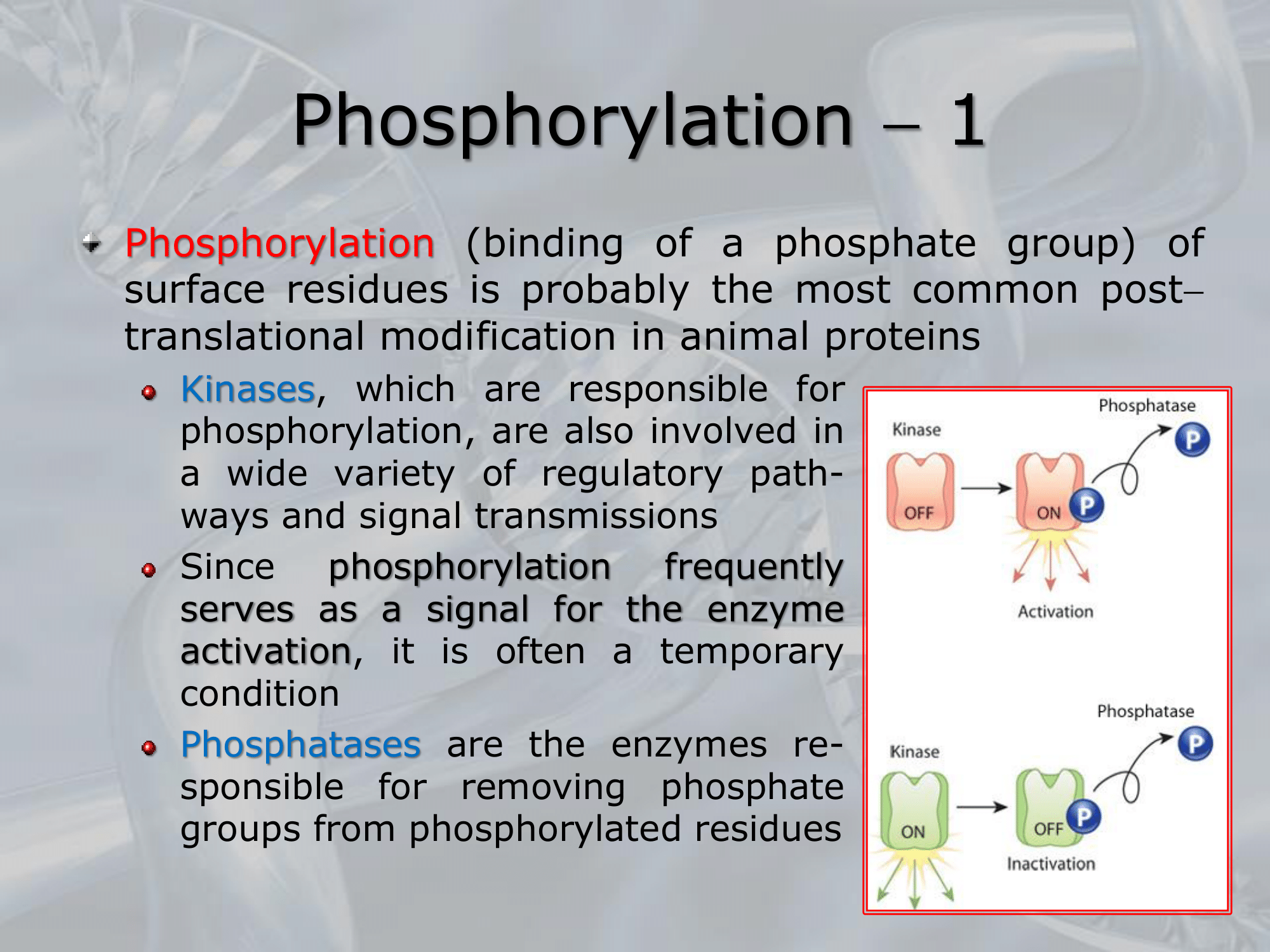
IMPORTANTE Phosphorylation Binding of a phosphate group of surface residues (Probably the most common post-translational modification in animal proteins)
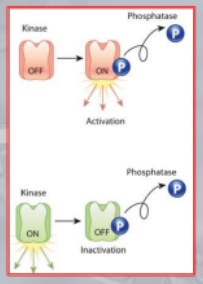
Kineases, which are responsible for phosphorylation, are also involved in a wide variaty of regulatory pathways and signal transmissions.
Since phosphorylation frequently serves as a signal for the enzyme activation, it is ofter a temporary condition
Phosphotases are the enzymes responsible for removing phosphate groups from phosphorylated residues
—————————————————————
Slides with Notes