Questions
- How can we Predict the Secondary Structure of a Protein?
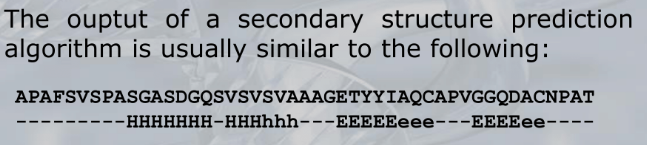
- There are several methods that can be used to predict the secondary structure of a protein from its amino acid sequence.
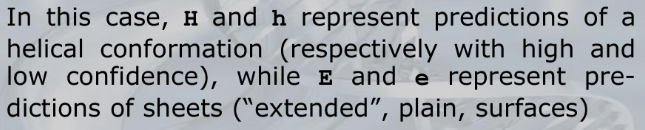
Here are a few examples:- Chou-Fasman method: This method is based on the observation that certain amino acids tend to occur more frequently in alpha helices or beta sheets.
The Chou-Fasman method assigns a score to each amino acid based on its tendency to form alpha helices or beta sheets, and then uses a sliding window algorithm to predict the probability of each secondary structure element at each position along the protein sequence. - Neural network-based methods: These methods use machine learning algorithms to learn patterns in protein sequences and their associated secondary structures.
The algorithm is trained on a dataset of known protein structures, and then used to predict the secondary structure of new proteins. - Hidden Markov models (HMMs): HMMs are statistical models that can be used to predict the probability of a particular secondary structure element based on the surrounding amino acid sequence.
HMMs are trained on a database of known protein structures, and can be used to predict the secondary structure of new proteins. - Deep learning methods: These methods use deep neural networks to predict the secondary structure of a protein from its amino acid sequence.
Deep learning methods can capture more complex relationships between amino acid sequences and their associated secondary structures, and have shown promising results in recent years.
- Chou-Fasman method: This method is based on the observation that certain amino acids tend to occur more frequently in alpha helices or beta sheets.
- It’s important to note that secondary structure prediction methods are not always accurate, and should be used in conjunction with other experimental methods such as X-ray crystallography or nuclear magnetic resonance (NMR) spectroscopy to confirm the structure of a protein.
- There are several methods that can be used to predict the secondary structure of a protein from its amino acid sequence.
—————————————————————
IMPORTANTE
IMPORTANTE Prediction Accuracy for Protein Secondary Structure:
IMPORTANTE Abbiamo visto 4 algoritmi per la predizione di strutture secondarie:
- Chou-Fasman (ACCURACY: ): approccio statistico semplice, osserviamo in molte strutture secondarie i 20 amminoacidi e definiamo per ogniuno di loro delle percentuali di formare ogni struttura secondaria.
- GOR (ACCURACY: ): anch’esso statistico, ma basato su una finestra di 17 amminoacidi.
- Stereochemical Lim: Sfrutta le conoscenze delle propietà idrofobiche, idrofiliche ed elettrostatiche degli amminoacidi, ed il loro ruolo nel protein folding, per aumentare l’accuratezza ma ad un enorme costo computazionale.
- Neural Networks (ACCURACY: )
—————————————————————
Slides with Notes
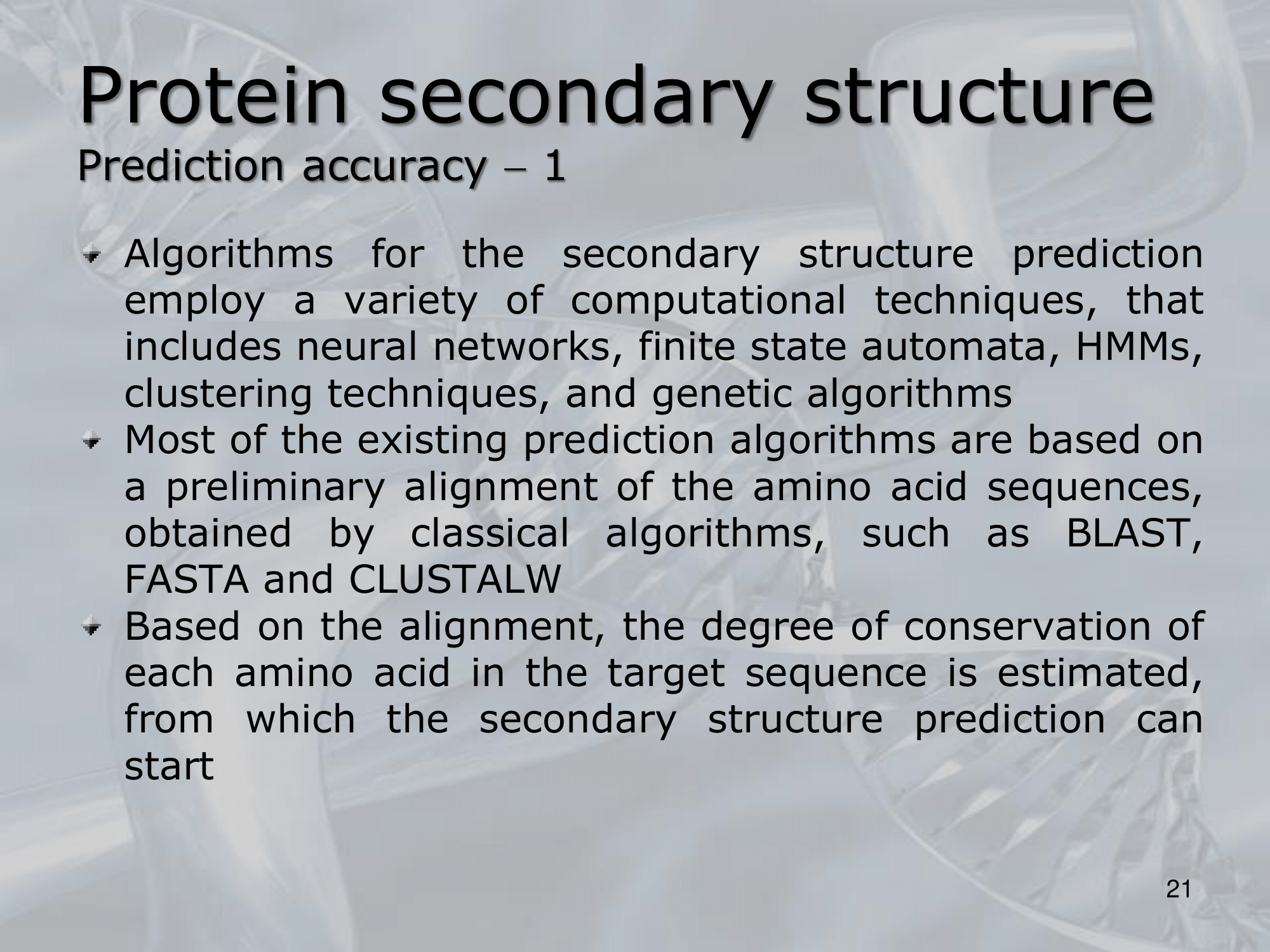
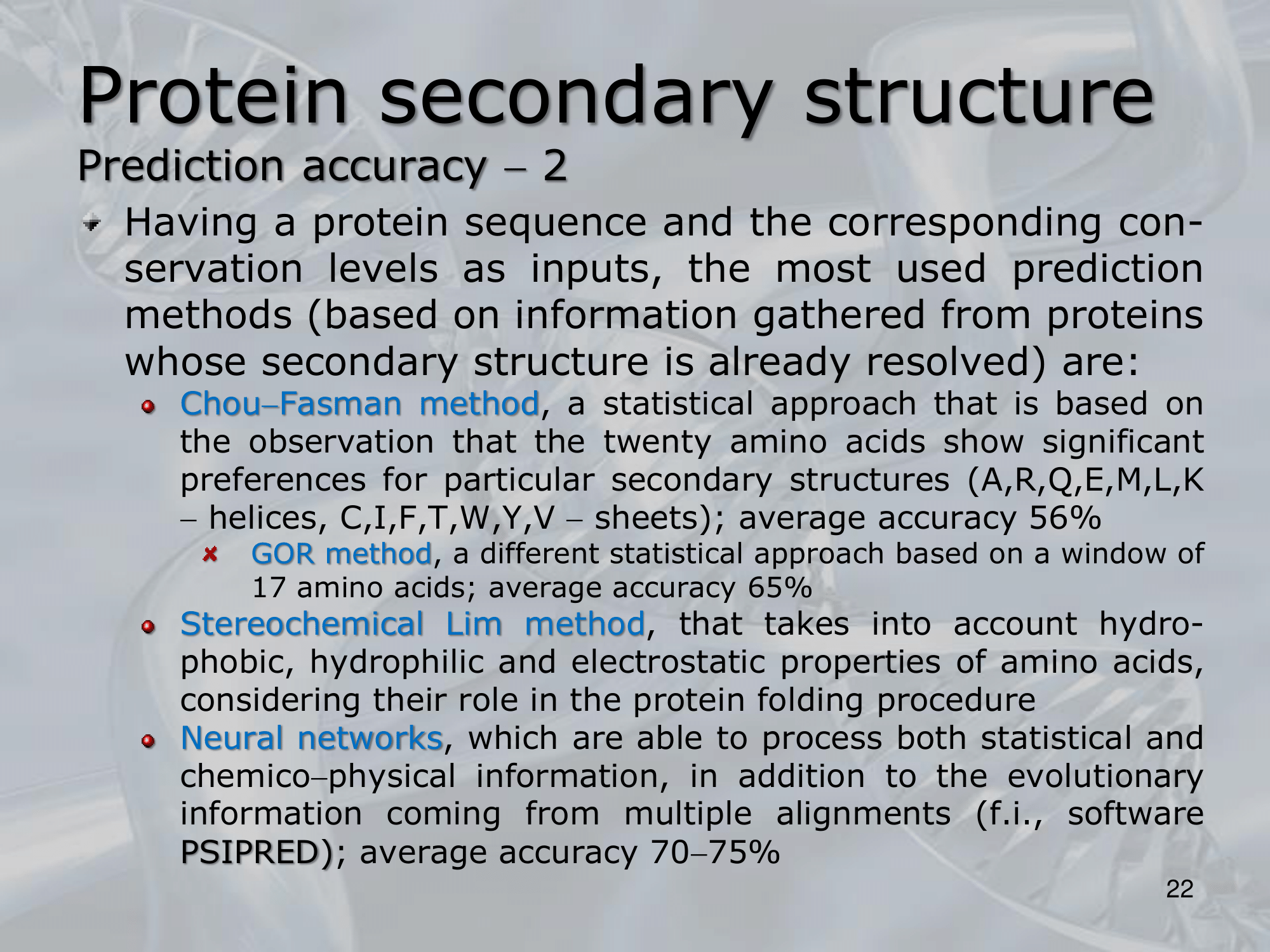
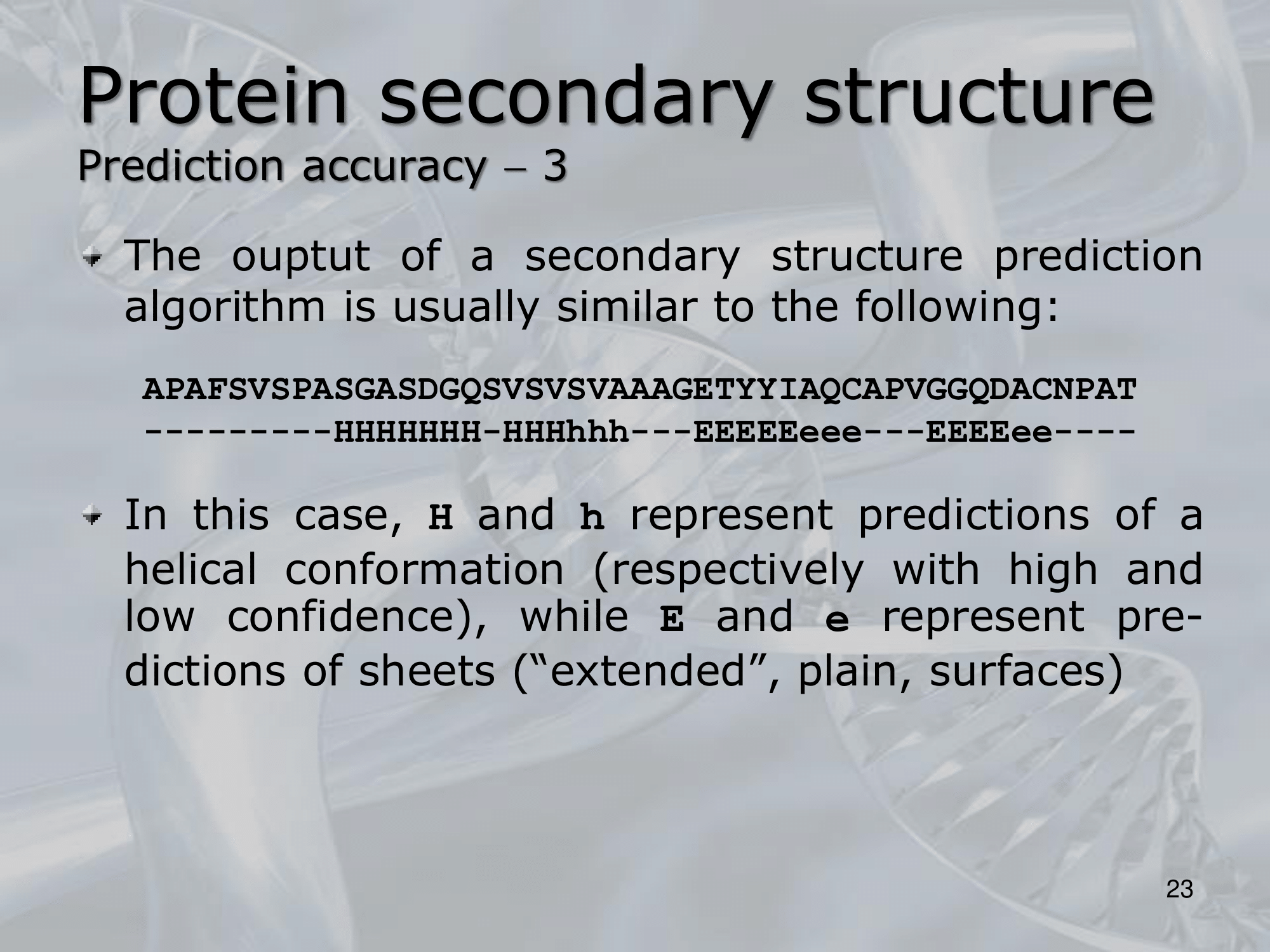
IMPORTANTE Prediction Accuracy for Protein Secondary Structure:
IMPORTANTE Abbiamo visto 4 algoritmi per la predizione di strutture secondarie:
- Chou-Fasman (ACCURACY: ): approccio statistico semplice, osserviamo in molte strutture secondarie i 20 amminoacidi e definiamo per ogniuno di loro delle percentuali di formare ogni struttura secondaria.
- GOR (ACCURACY: ): anch’esso statistico, ma basato su una finestra di 17 amminoacidi.
- Stereochemical Lim: Sfrutta le conoscenze delle propietà idrofobiche, idrofiliche ed elettrostatiche degli amminoacidi, ed il loro ruolo nel protein folding, per aumentare l’accuratezza ma ad un enorme costo computazionale.
- Neural Networks (ACCURACY: )