Questions
- What the advantages of Molecular Phylogenies?
- There are several advantages of molecular phylogenies, including:
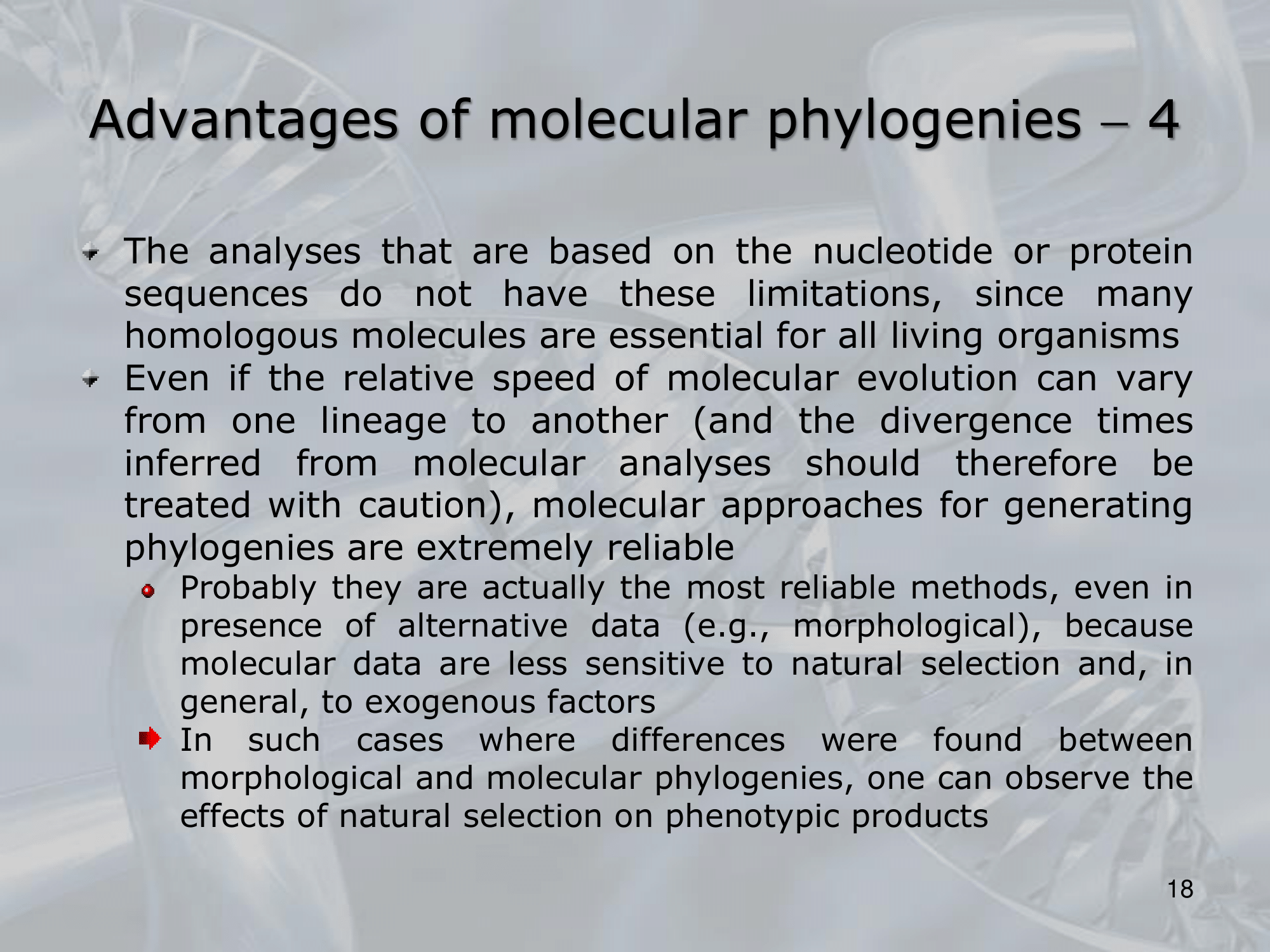
- Objectivity: Molecular phylogenies provide an objective way to study evolutionary relationships among organisms, as they are based on objective genetic data rather than subjective morphological characters.
- Precision: Molecular data can provide much higher resolution and precision in phylogenetic analyses than morphological data.
- Large datasets: With modern sequencing technologies, it is possible to obtain large datasets of molecular data from a wide range of organisms, which can be used to construct robust phylogenies.
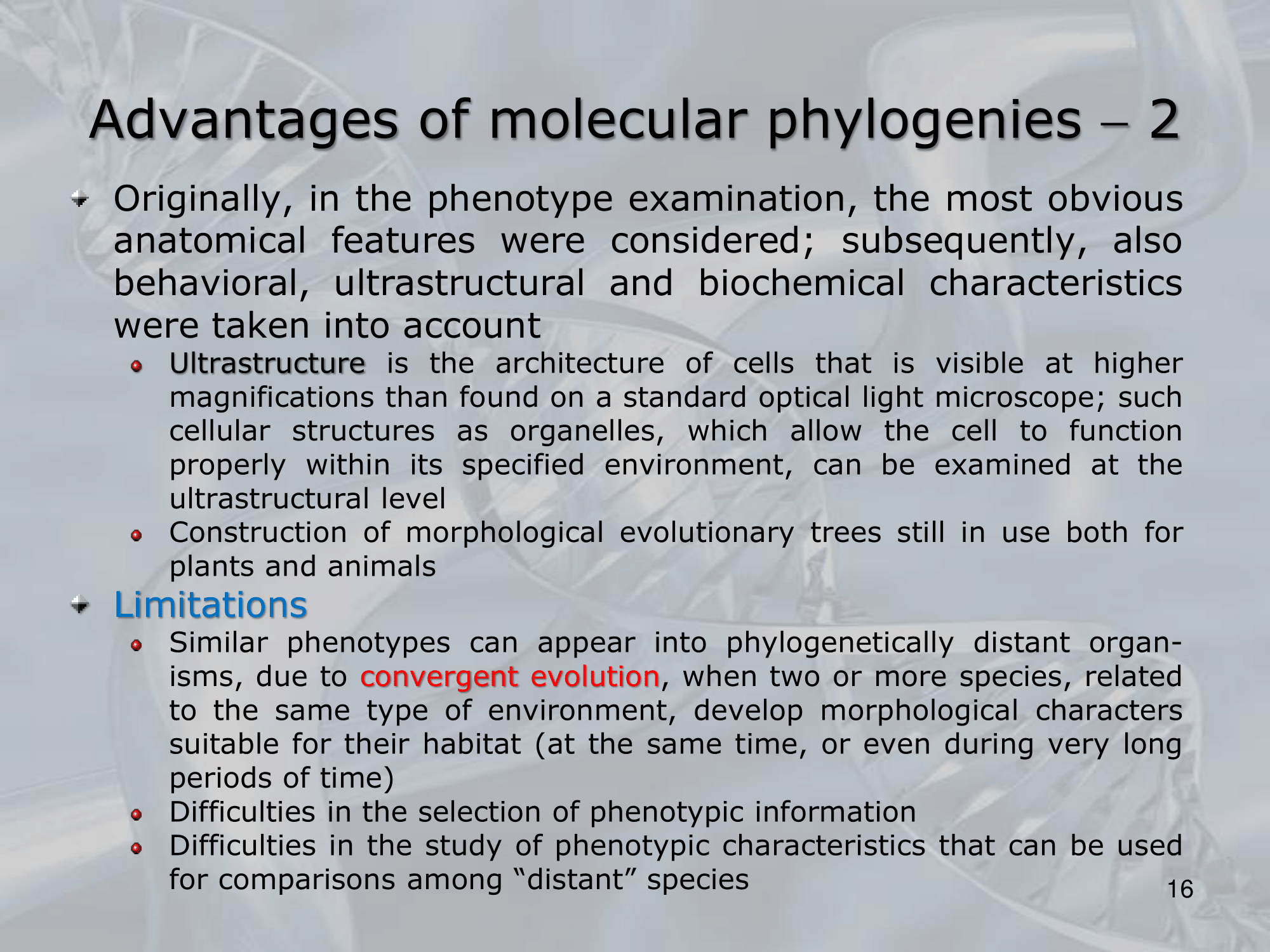
- Comparison across distant taxa: Molecular data can be used to compare evolutionary relationships among distantly related taxa, which is often not possible using morphological data.
- Evolutionary history: Molecular phylogenies can provide insights into the evolutionary history of organisms, including their origins, diversification, and patterns of adaptation.
- Applied fields: Molecular phylogenies have many applications, including in fields such as medicine, conservation biology, and agriculture, where understanding evolutionary relationships can be important for practical purposes.
- There are several advantages of molecular phylogenies, including:
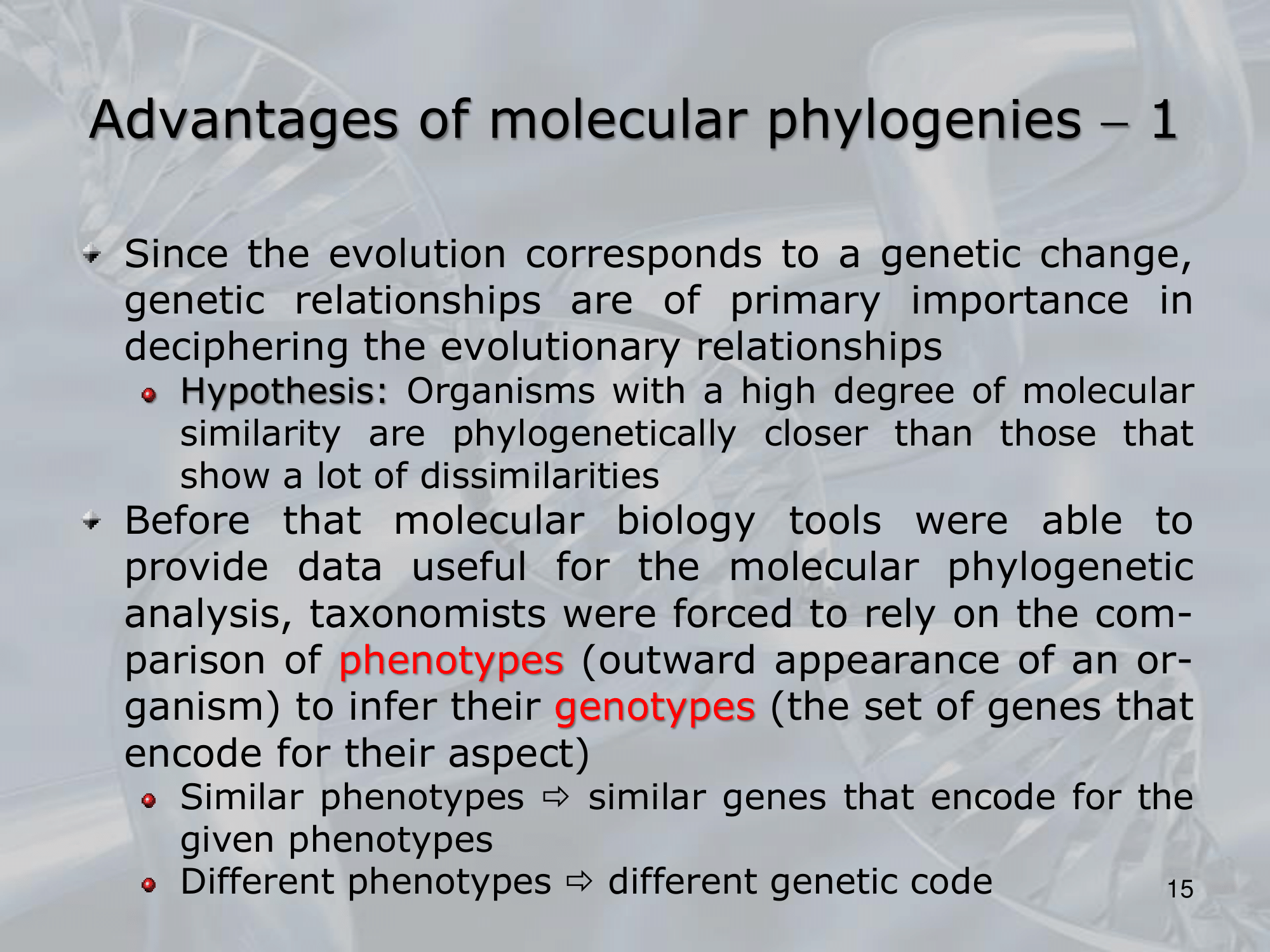
- What are Phenotypes?
- ==Phenotypes are the observable physical, biochemical, and physiological characteristics of an organism== that are determined by the interaction of its genetic makeup (genotype) and its environment.
In other words, phenotypes are the traits that we can see and measure in an organism, such as its appearance, behavior, metabolism, and susceptibility to disease.
Phenotypes can be influenced by both genetic and environmental factors, and they can vary widely within and between species.
Studying phenotypes is an important part of biology and genetics, as it can help us understand the genetic basis of traits, the evolutionary history of organisms, and the interactions between genes and the environment.
- ==Phenotypes are the observable physical, biochemical, and physiological characteristics of an organism== that are determined by the interaction of its genetic makeup (genotype) and its environment.
- What are Genotypes?
- Genotype refers to the genetic makeup of an organism, which determines its physical and functional characteristics, such as its traits, behavior, and susceptibility to diseases.
The genotype of an organism is defined by its DNA sequence, which contains information that determines the structure and function of proteins and other biomolecules.
The genotype can influence the phenotype of an organism, but it is not the only factor that determines the phenotype, as environmental factors also play a role in shaping the phenotype.
- Genotype refers to the genetic makeup of an organism, which determines its physical and functional characteristics, such as its traits, behavior, and susceptibility to diseases.
- What are the differences between Phenotypes and Genotypes?
- Phenotypes refer to the observable traits or characteristics of an organism, such as its physical appearance, behavior, or physiology.
Genotypes, on the other hand, refer to the genetic makeup of an organism, including its DNA sequence and all of its inherited genes. - The differences between phenotypes and genotypes are as follows:
- Nature: Phenotypes are the result of the expression of the genes that an organism possesses, whereas genotypes are the actual genes that an organism possesses.
- Observable vs. non-observable: Phenotypes are observable and can be seen, measured, or described, while genotypes are not directly observable.
- Influence of environment: Phenotypes can be influenced by both genetic and environmental factors, while genotypes are solely determined by an organism’s DNA sequence.
- Heritability: Phenotypes may or may not be heritable, while genotypes are always heritable.
- Overall, phenotypes and genotypes are interrelated, as phenotypes are the manifestation of the underlying genotypes, and changes in the genotypes can result in changes in the phenotypes.
- Phenotypes refer to the observable traits or characteristics of an organism, such as its physical appearance, behavior, or physiology.
—————————————————————
IMPORTANTE
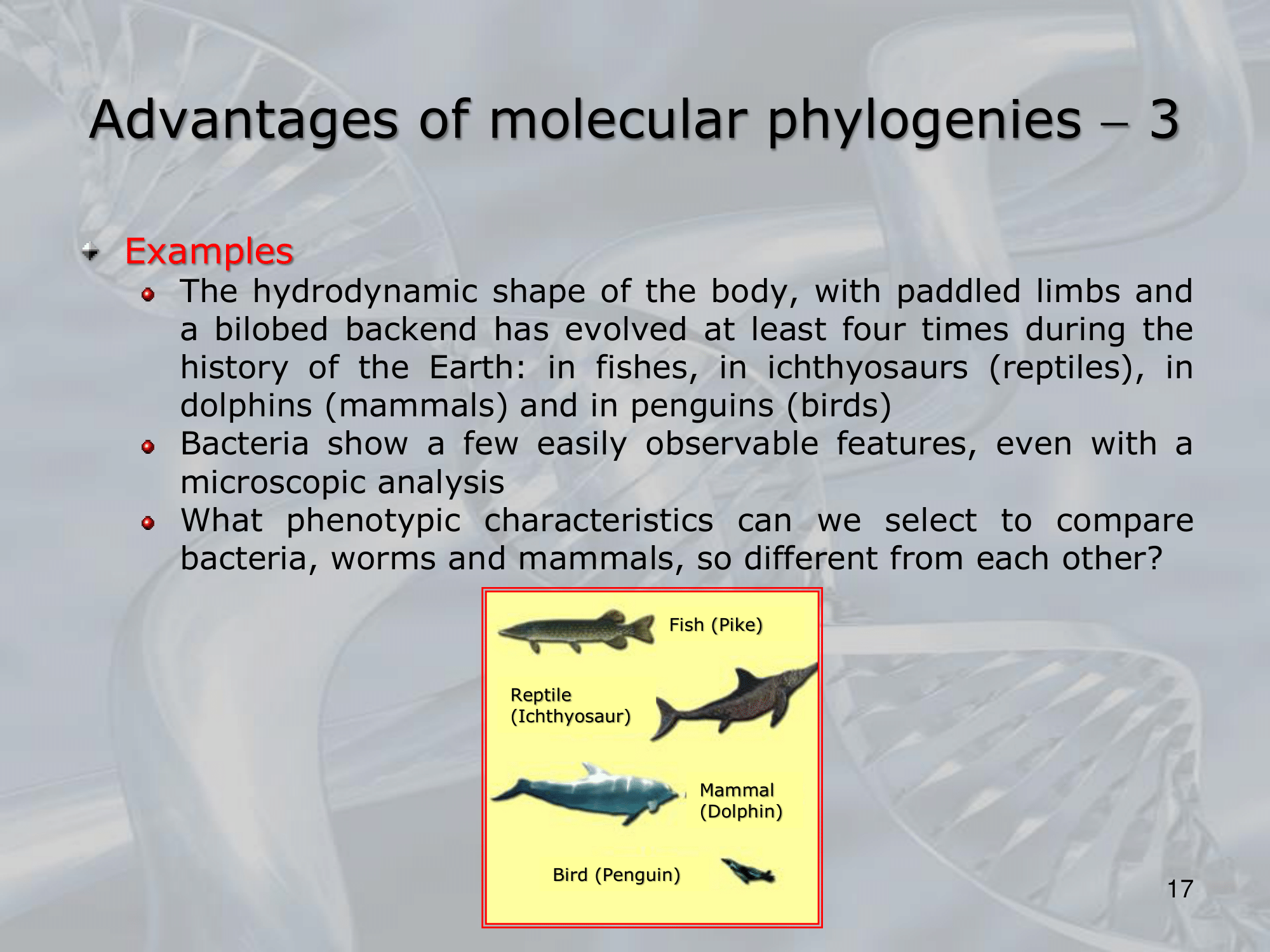
IMPORTANTE La filogenia molecolare si basa sullo studio del codice genetico di un organismo, invece che delle sue caratteristiche fisiche, questo ci garantisce uno strumento molto più preciso rispetto allo studio taxiomico. Basti pensare a due organismi che hanno DNA molto diverso (filogeneticamente lontani), ma hanno stessi fenotipi (caratteristiche fisiche) simili (taxionomicamente vicini) dovute alla convergent evolution, come ad esempio uccelli e pipistrelli,
—————————————————————
Slides with Notes
IMPORTANTE La filogenia molecolare si basa sullo studio del codice genetico di un organismo, invece che delle sue caratteristiche fisiche, questo ci garantisce uno strumento molto più preciso rispetto allo studio taxiomico. Basti pensare a due organismi che hanno DNA molto diverso (filogeneticamente lontani), ma hanno stessi fenotipi (caratteristiche fisiche) simili (taxionomicamente vicini) dovute alla convergent evolution, come ad esempio uccelli e pipistrelli,