Questions
- What are Enzymes?
- Enzymes are biological molecules that catalyze, or speed up, chemical reactions in living organisms.
==They are typically proteins, although some enzymes are made of RNA (known as ribozymes) or protein-RNA complexes==. - Enzymes work by lowering the activation energy required for a chemical reaction to occur, which allows the reaction to proceed at a faster rate than it would in the absence of the enzyme.
Enzymes are highly specific, meaning they only catalyze particular reactions and are not consumed in the process. - Enzymes are involved in a wide range of biological processes, including metabolism, DNA replication and repair, and signal transduction.
Some examples of common enzymes and their functions include:- Proteases: enzymes that break down proteins into smaller peptides and amino acids.
- Lipases: enzymes that break down lipids into fatty acids and glycerol.
- DNA polymerases: enzymes that catalyze the synthesis of new DNA strands during DNA replication.
- Kinases: enzymes that add phosphate groups to proteins, thereby regulating their activity.
- Hydrolases: enzymes that catalyze the hydrolysis of chemical bonds, such as the cleavage of peptide bonds by proteases.
- Enzymes are essential for life, and their malfunction can lead to diseases and disorders.
For example, mutations in genes that encode enzymes involved in metabolism can lead to metabolic disorders, such as phenylketonuria and galactosemia.
Enzyme inhibitors are also used as drugs to treat a variety of conditions, including infections, cancer, and cardiovascular disease.
- Enzymes are biological molecules that catalyze, or speed up, chemical reactions in living organisms.
—————————————————————
IMPORTANTE
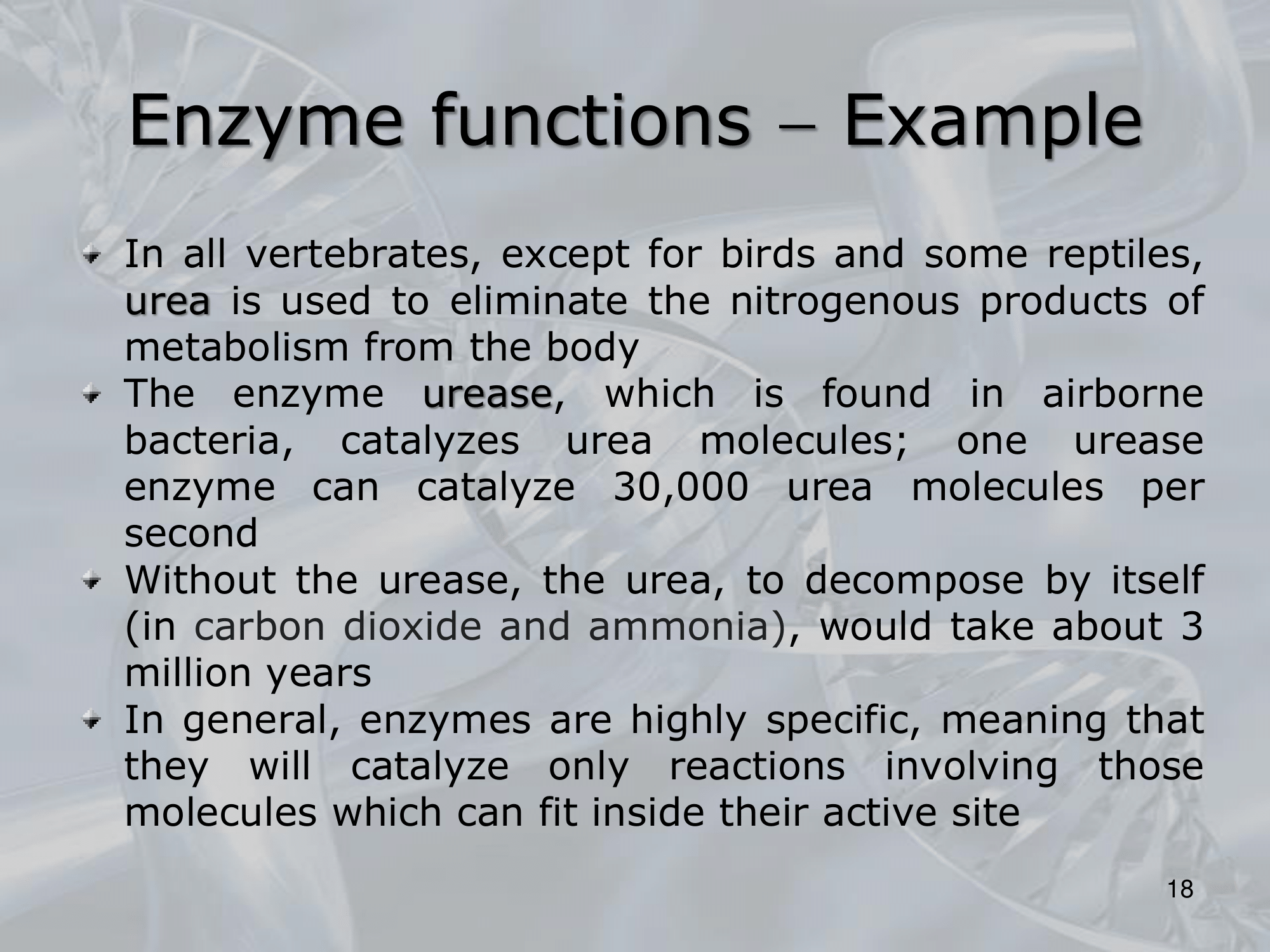
IMPORTANTE Enzymes: Enzymes are manly proteins with a round shape. They act as catalysts, they speed up biologial reactions They are highly specialized, they can only act on one specific type of substance Our body is a complex industry in which many aspcect must be regulated, and enzymes are responsible for such regulation. ~Ex.: enzyme controll the manifacture of complex tissues (like skin), and blood. ~Ex.: Enzymes help breaking down chemicals to provide energy to the body. ~Ex.: In most vertebrates, urea is a proteine used to eliminate the nitrogenous products of metabolism from the body, the enzyme urease catalyze this reaction, to make it into prospective, usrease catalyzes urea molecules per second, while without it, it would urea would take MILLION years to decompose itself in carbon dioxide and ammonia.
—————————————————————
Slides with Notes
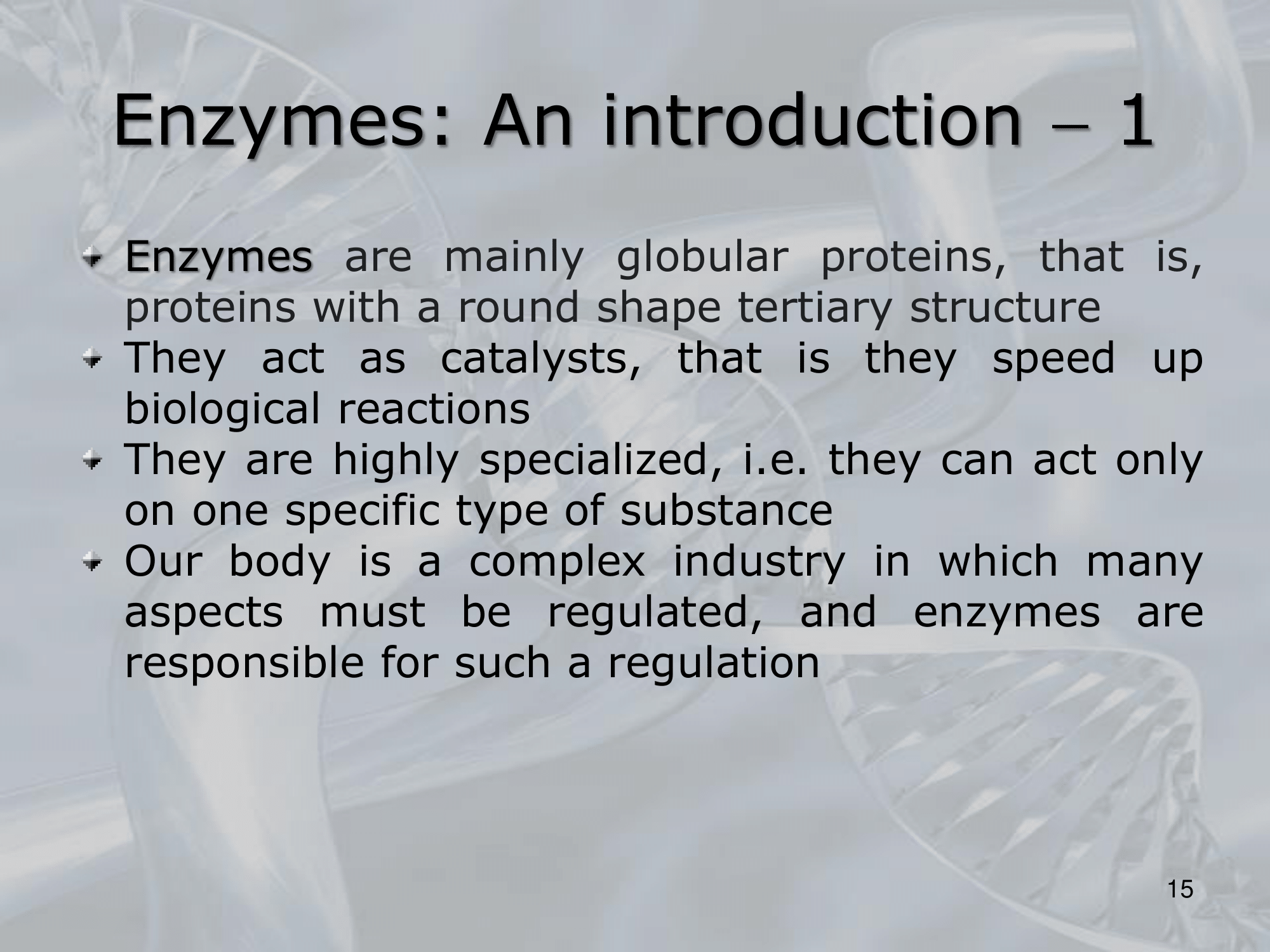
IMPORTANTE Enzymes: Enzymes are manly proteins with a round shape. They act as catalysts, they speed up biologial reactions They are highly specialized, they can only act on one specific type of substance Our body is a complex industry in which many aspcect must be regulated, and enzymes are responsible for such regulation. ~Ex.: enzyme controll the manifacture of complex tissues (like skin), and blood. ~Ex.: Enzymes help breaking down chemicals to provide energy to the body. ~Ex.: In most vertebrates, urea is a proteine used to eliminate the nitrogenous products of metabolism from the body, the enzyme urease catalyze this reaction, to make it into prospective, usrease catalyzes urea molecules per second, while without it, it would urea would take MILLION years to decompose itself in carbon dioxide and ammonia.
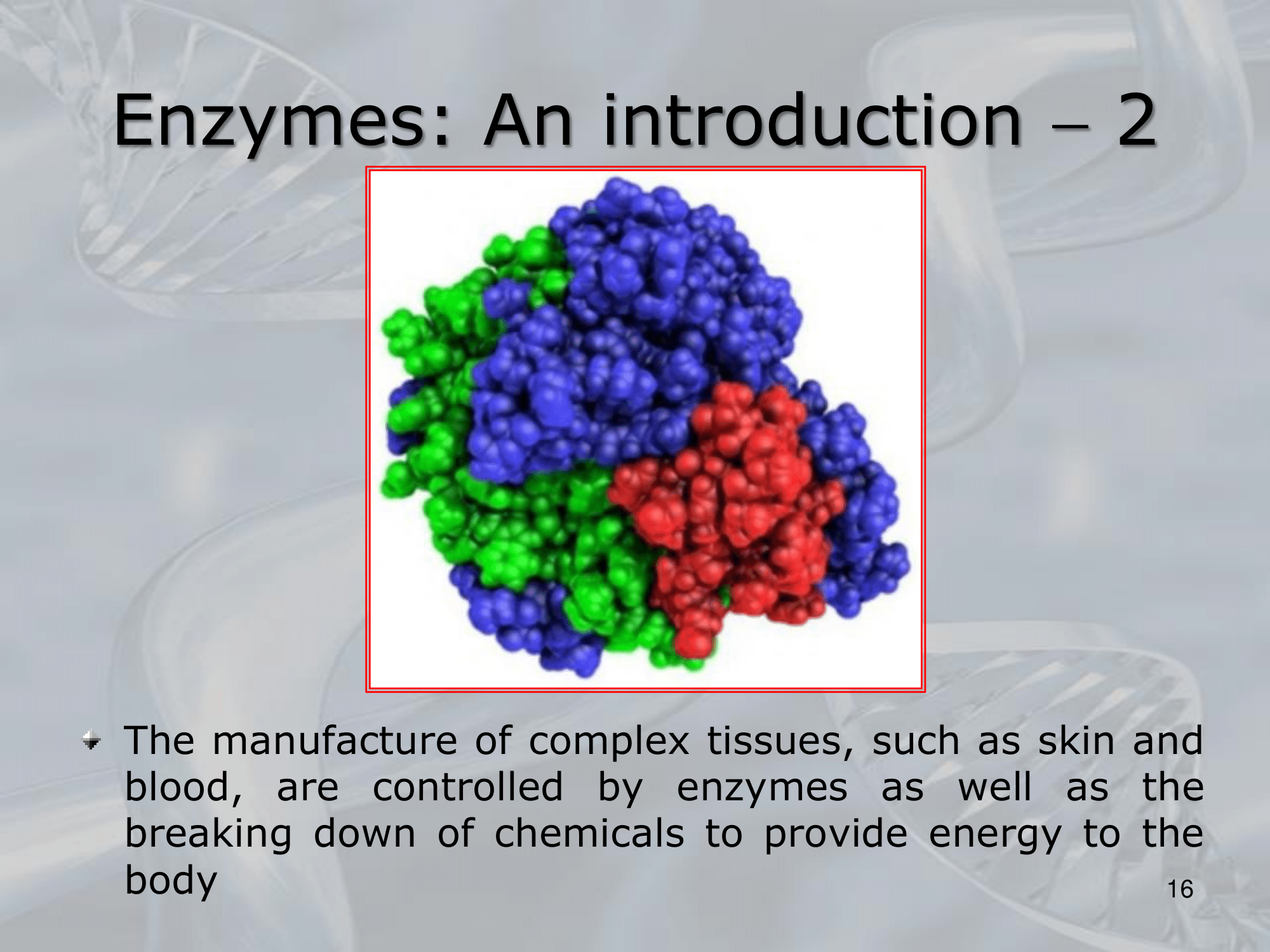
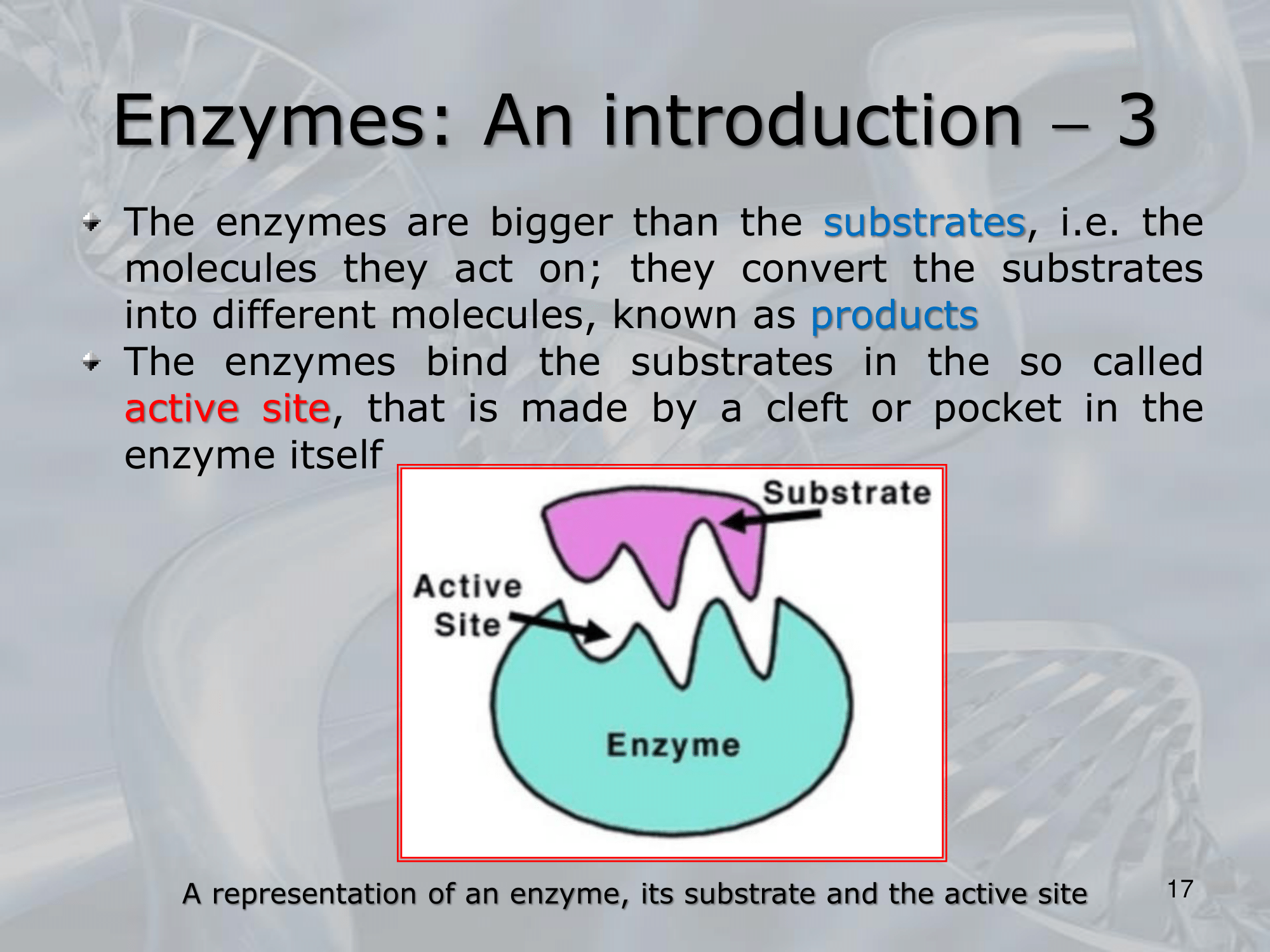
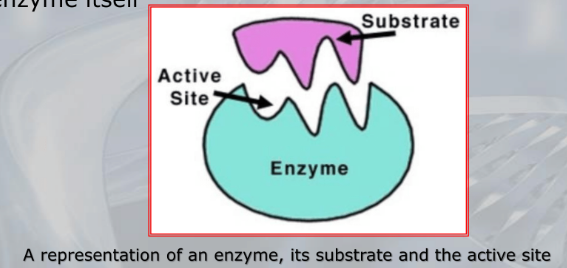
IMPORTANTE Normal Usage of an Enzyme: A SUBSTRATE binds to the ACTIVE SITE of an Enzyme, that breaks it down to one or more PRODUCTS useful to the body