Questions
- What is Protein Sorting?
- Protein sorting is the process by which newly synthesized proteins are directed to their appropriate destinations within a cell.
==In eukaryotic cells, proteins are synthesized on ribosomes in the cytoplasm and then targeted to various organelles such as the nucleus, mitochondria, endoplasmic reticulum, Golgi apparatus, lysosomes, or plasma membrane==. - Protein sorting occurs through a combination of specific targeting signals on the protein and specific sorting mechanisms within the cell.
Targeting signals can be either amino acid sequences or protein domains that are recognized by sorting receptors or translocation channels in the membranes of various organelles.
Some examples of targeting signals include the signal peptide, which directs proteins to the endoplasmic reticulum, and the nuclear localization signal, which targets proteins to the nucleus. - Sorting mechanisms include vesicular transport, in which proteins are packaged into vesicles that bud off from one membrane and fuse with another, as well as protein translocation across membranes, in which proteins are directly inserted into or across a membrane by translocation channels or pores.
Protein sorting also involves quality control mechanisms that ensure that only properly folded and functional proteins are targeted to their appropriate destinations. - Protein sorting is essential for the proper function of cells and tissues, and defects in protein sorting can lead to a variety of diseases, including lysosomal storage diseases, mitochondrial disorders, and some forms of cancer.
- Protein sorting is the process by which newly synthesized proteins are directed to their appropriate destinations within a cell.
—————————————————————
IMPORTANTE
IMPORTANTE Protein Sorting (Protein Transportation Inside the Body): Protein Sorting is the biological mechanism by which proteins are transported to their appropiate destination in the cell. Eukaryotic cell are different than Prokaryiotic ones, given the presence of membrane-enclosed organelles within their cytoplasm.
We can think of eukaryotic cells as divided into compartments surrounded by membrane, in this compartments both the chemical envirnment and protein population may differ greatly. ==It is imperative, for energetic and functional reasons that each protein need to be transported into their appropiate compartment== ~Ex.: histones (proteins that bind to DNA) are only useful inside the nucleus where chromosomes reside. ~Ex.: protease, normally located inside peroxisomes, would be dangerous for the cell if they were found in any other place inside the cell. Transporting proteins, is a considerable task, due to the complexity of the interal organization of the cell.
It seems that eukaryotic cells regard proteins as belonging to 2 distinct classes, according to their location:
- Proteins not associated with the membranes.
- Proteins attached to the membranes.
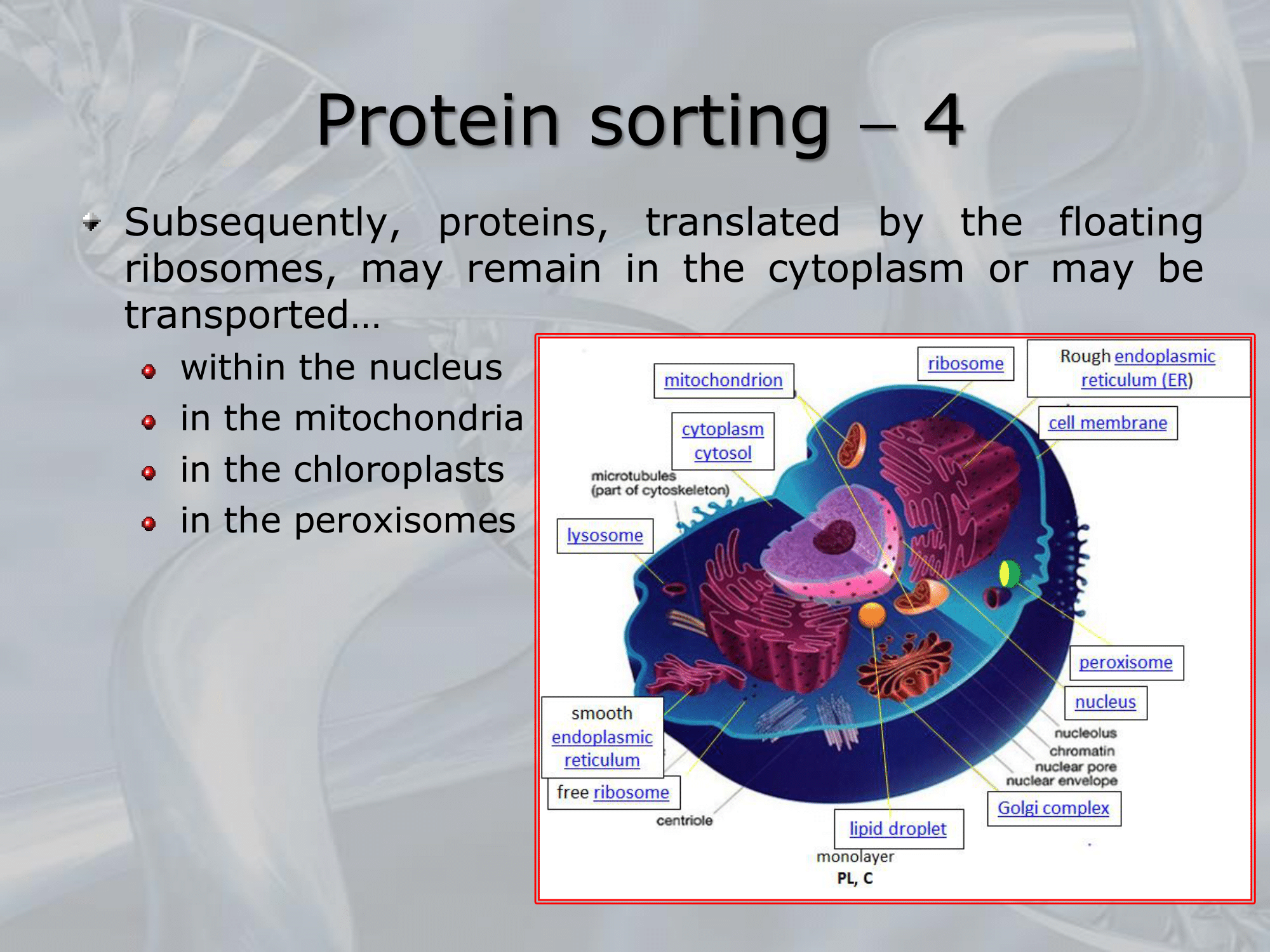
IMPORTANTE Proteins not associated with the membranes: The first type of proteins, are all translated by “floating” ribosomes, inside the cytoplasm, then the proteins may be moved inside:
- Cythoplasm (not moved)
- The nucleus
- Mithocondria
- Cloroplasts
- Peroxisomes
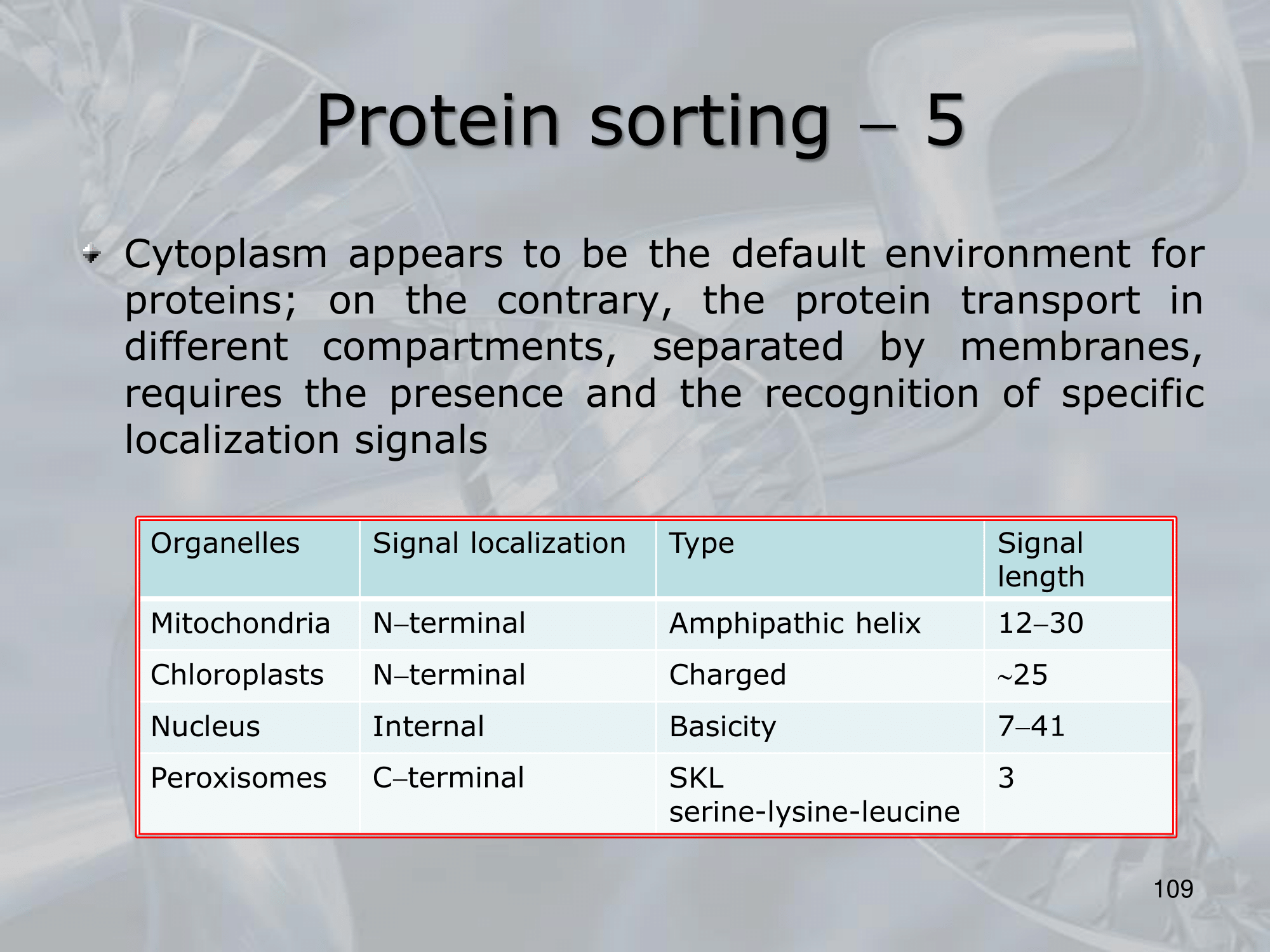
We can think of cytoplasm as the default envirnment of proteins. While the other different comparments, separated by membranes, require the presence and recognition of specific localization signals:
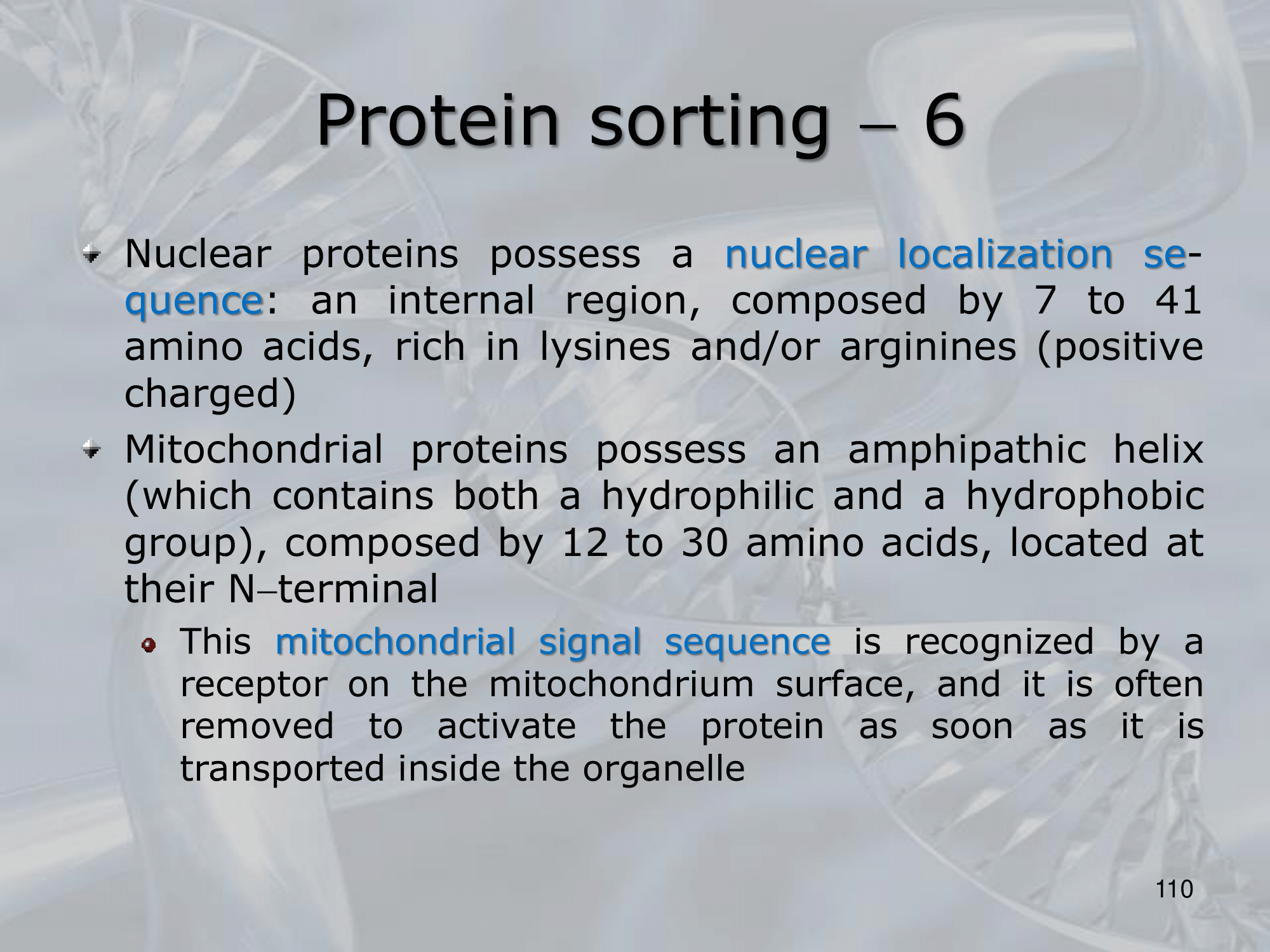
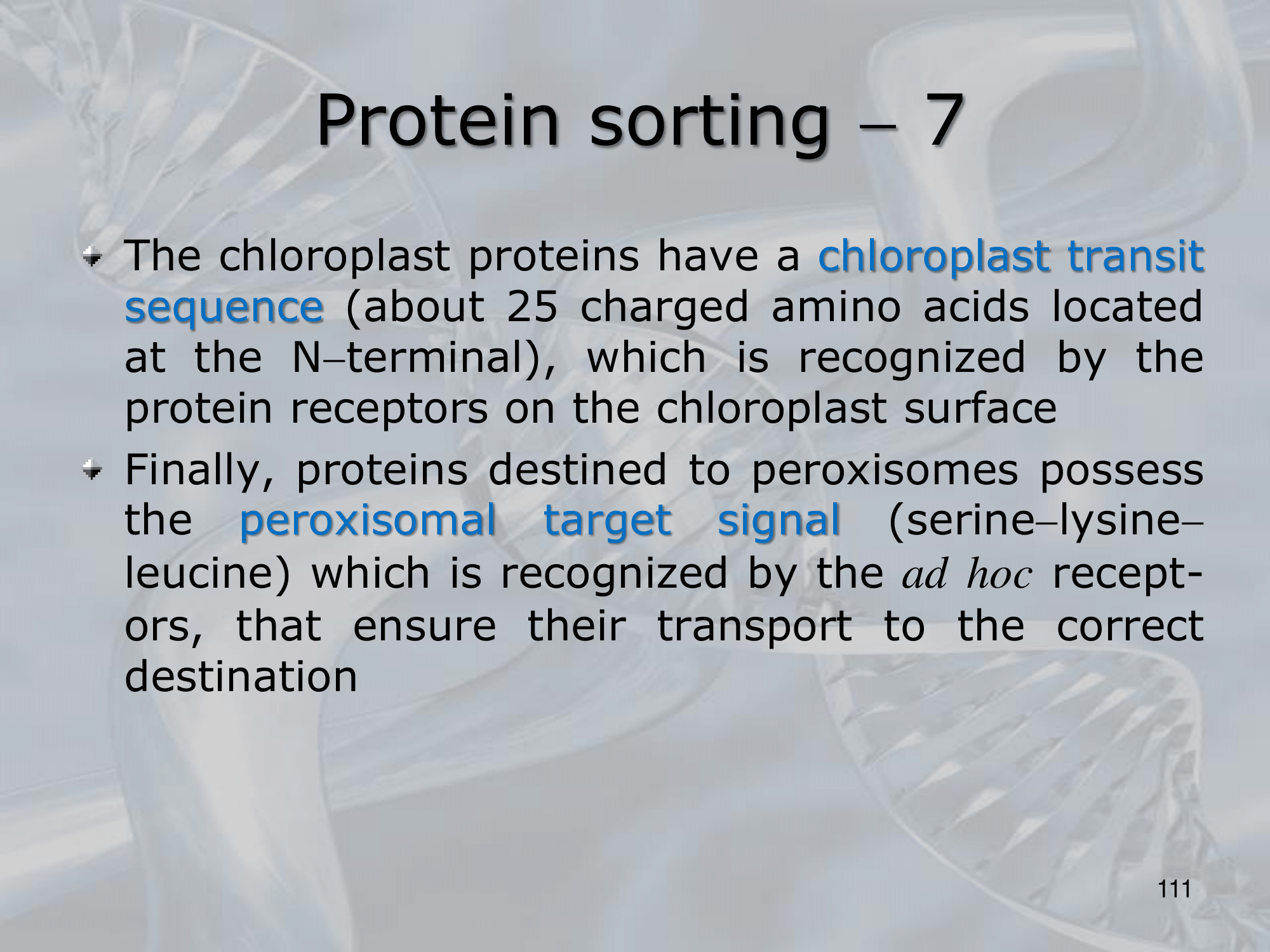
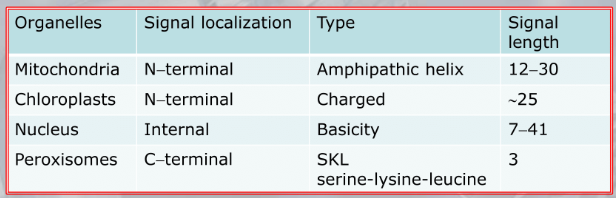
~Ex.: The mitochondrial signal sequence is recognized by a receptor on the mitochondrium suface, and it’s often removed to activate the protein as soon as it is transported inside the organelle.
~Ex.: The cloroplast transit sequence is recognied by the protein receptors on the chloroplast surface. ~Ex.: The peroxisomal target signal (serine-lysine-leucine) is recognized by ad hoc receptors, to ensure the transport of this proteins to the correct destination.
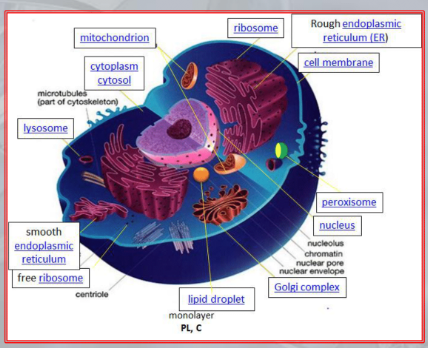
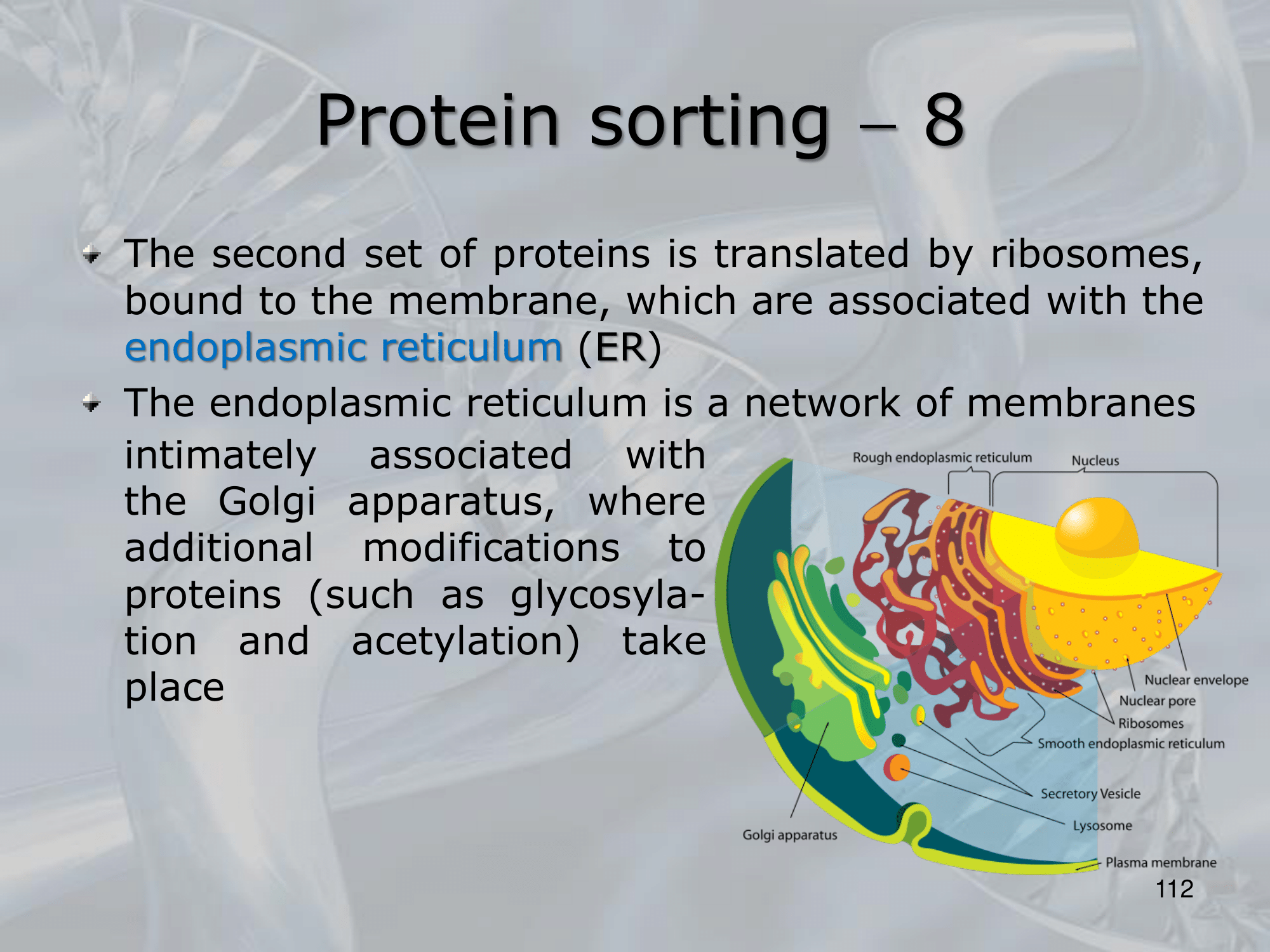
IMPORTANTE Proteins attached to the membranes The second set of proteins is translated by ribosomes, bound to the membrane, which are associate with the endoplasmic reticulum (ER). The ER is a network of memebrane intimately associated with the Golgi apparatus, where additional modification to proteins (such as glycosylation and acetylation) take place
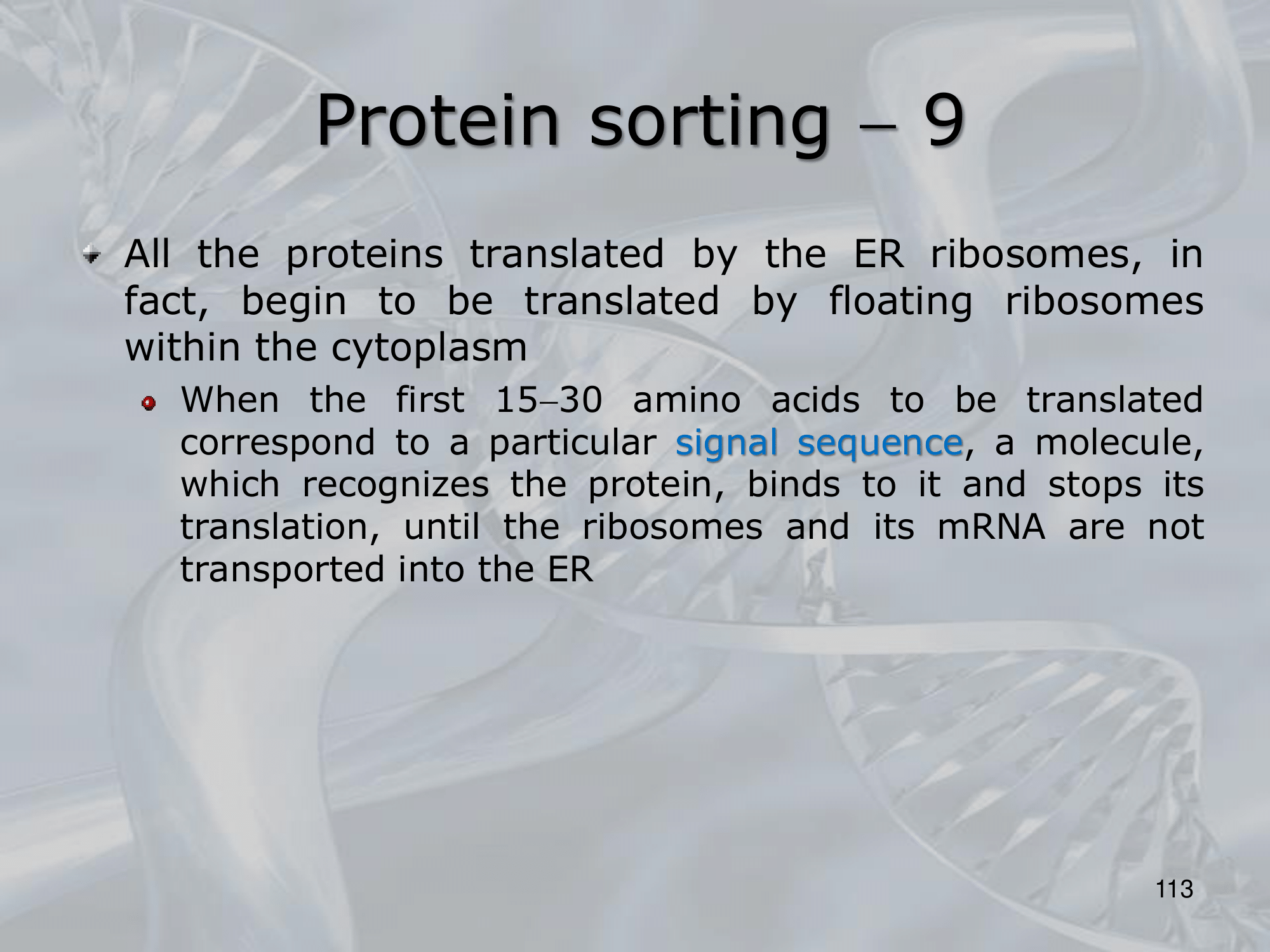
All proteins start to be translated by the “floating” ribosomes (both type 1. and 2.)but the second type is finally translated by the ER ribosomes. The first 15-30 amino acids to be translated correspond to a particular signal sequence, a molecule, which recognize the protein, binds it and stops its translation, until the ribosomes and its mRNA are not transported into the ER
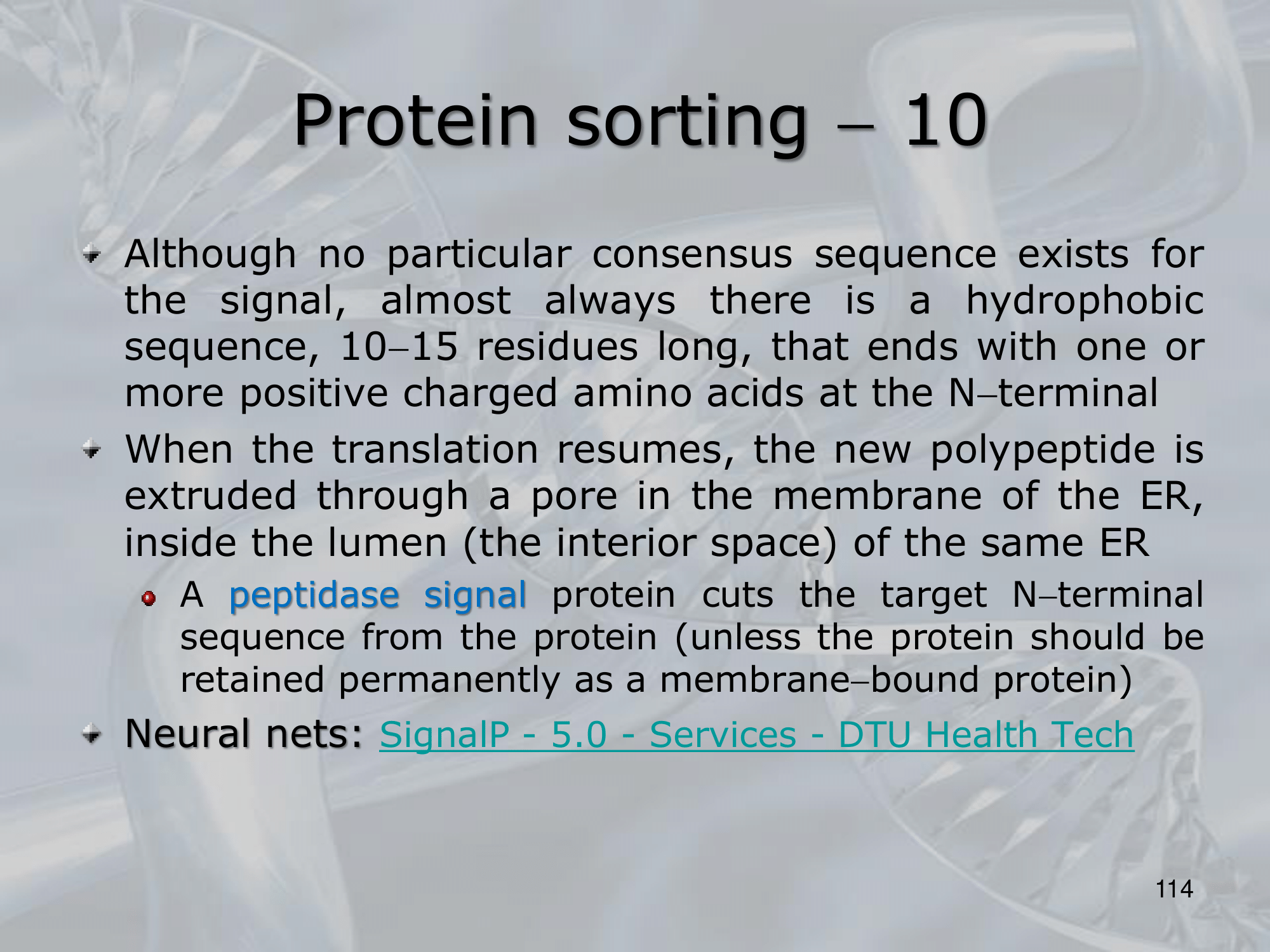
Although no particular consensus sequence exists for the signal, almost always there is a hydrophobic sequence, 10-15 residues long, that end with one or more positive charged amino acids at N-terminal. This signal sequnce (after all the protein is translated in the ER) is then:
- Either left intact if the protein should be retained permanently as a membrane-bound protein.
- Or cut, if there is a peptidase signal, if it is cut, it will be extruded through a pore in membrane of the ER.
—————————————————————
Slides with Notes