Questions
- What is the C Value Paradox?
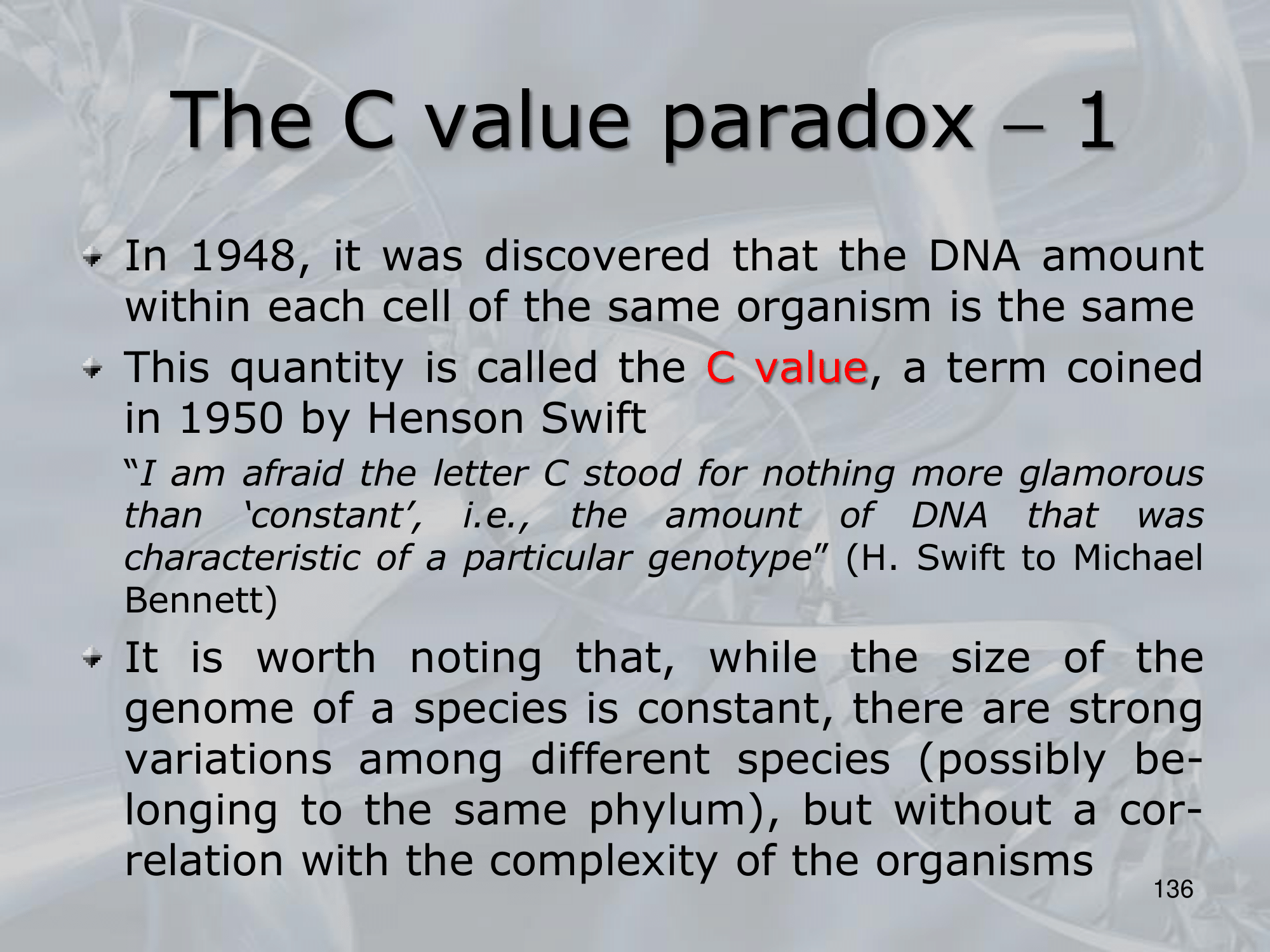
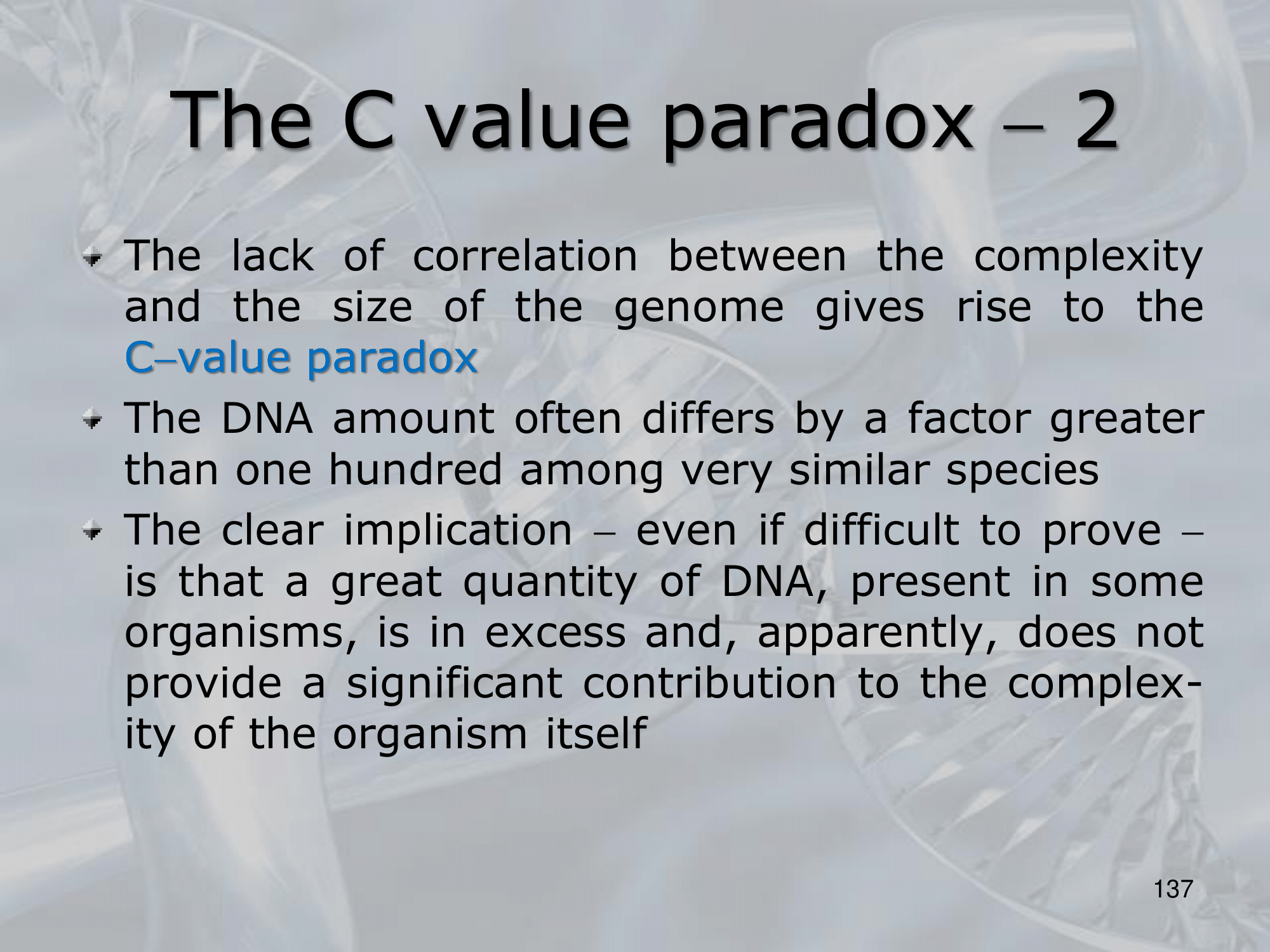
- The C-value paradox is a phenomenon in molecular biology and genetics that refers to the observation that there is no correlation between the size of an organism's genome (its DNA content, measured in base pairs) and its complexity or organismal complexity.
The paradox arises because many organisms with relatively simple morphological and ecological features have much larger genomes than organisms with more complex structures and behaviors. - For example, the genome of the single-celled amoeba Polychaos dubium contains over 200 times as much DNA as the human genome, despite the fact that humans are vastly more complex in terms of anatomy, physiology, and behavior.
- The paradox was first identified in the 1950s by the geneticist T.R. Gregory and has been the subject of much research and debate in the years since.
One proposed explanation for the paradox is that much of the "extra" DNA in large genomes consists of non-coding sequences, such as repetitive DNA elements and transposons, that do not encode functional genes.
Another possibility is that different organisms have evolved different mechanisms for regulating gene expression and developmental processes, such that the number of genes and the size of the genome are not tightly correlated. - The C-value paradox remains an active area of research in molecular biology and evolutionary biology, and new insights into the causes and consequences of genome size variation are continually being discovered.
- The C-value paradox is a phenomenon in molecular biology and genetics that refers to the observation that there is no correlation between the size of an organism's genome (its DNA content, measured in base pairs) and its complexity or organismal complexity.
IMPORTANTE
IMPORTANTE The C Value Paradox
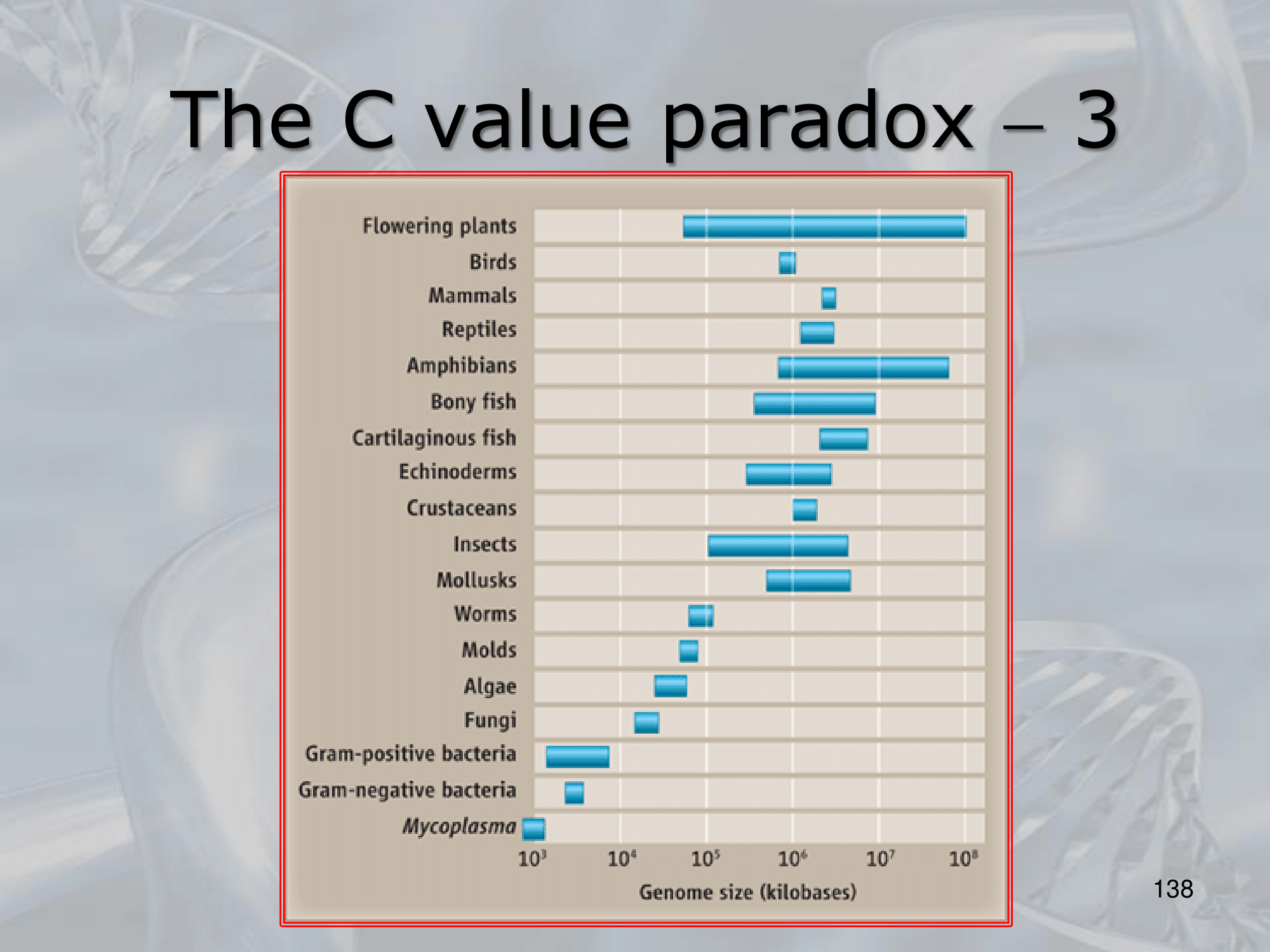
There is no correlation between the size of an organism's genome (its DNA content, measured in base pairs) and its complexity or organismal complexity.
The paradox arises because many organisms with relatively simple morphological and ecological features have much larger genomes than organisms with more complex structures and behaviors.For example, the genome of the single-celled amoeba Polychaos dubium contains over 200 times as much DNA as the human genome, despite the fact that humans are vastly more complex in terms of anatomy, physiology, and behavior.
One proposed explanation for the paradox is that much of the "extra" DNA in large genomes consists of non-coding sequences, such as repetitive DNA elements and transposons, that do not encode functional genes
Slides with Notes
IMPORTANTE The C Value Paradox
The paradox arises because many organisms with relatively simple morphological and ecological features have much larger genomes than organisms with more complex structures and behaviors.For example, the genome of the single-celled amoeba Polychaos dubium contains over 200 times as much DNA as the human genome, despite the fact that humans are vastly more complex in terms of anatomy, physiology, and behavior.
One proposed explanation for the paradox is that much of the "extra" DNA in large genomes consists of non-coding sequences, such as repetitive DNA elements and transposons, that do not encode functional genes