Questions
- What is Molecular Evolution?
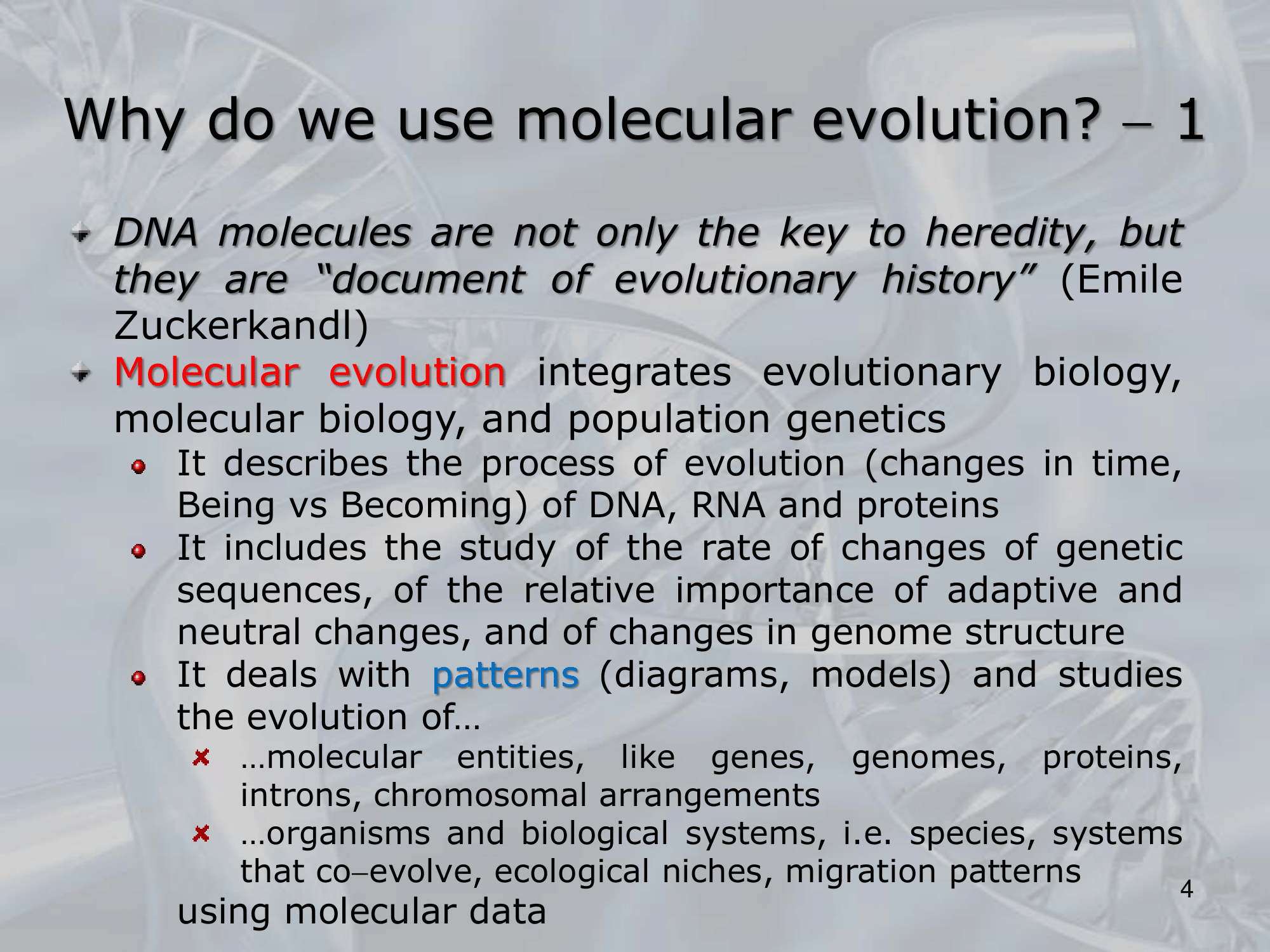
- Molecular evolution is the study of how genes and proteins have evolved over time, using molecular biology, genetics, and computational biology to understand the mechanisms of evolutionary change at the molecular level.
It seeks to understand the patterns and processes of molecular change that have occurred in the genomes of different organisms, and how these changes have contributed to the diversity of life on Earth. - Molecular evolution involves comparing the molecular sequences of genes and proteins from different organisms, and inferring the evolutionary relationships between them.
=By analyzing the similarities and differences in these sequences, researchers can reconstruct the evolutionary history of different species and identify the molecular changes that have driven their evolution=. - Molecular evolution has important applications in many fields, including medicine, biotechnology, and conservation biology.
It can help us understand the genetic basis of diseases, identify genetic variation within and between populations, and study the structure and function of entire genomes.
Overall, molecular evolution provides a powerful tool for understanding the fundamental processes of life and the evolutionary history of different organisms.
- Molecular evolution is the study of how genes and proteins have evolved over time, using molecular biology, genetics, and computational biology to understand the mechanisms of evolutionary change at the molecular level.
- Why do we use Molecular Evolution?
- Molecular evolution is used to understand the evolutionary history and relationships between different organisms, as well as the mechanisms that drive evolutionary change at the molecular level.
There are several reasons why we use molecular evolution:- To reconstruct evolutionary relationships: Molecular evolution allows us to reconstruct the evolutionary relationships between different organisms based on the similarities and differences in their molecular sequences.
This can help us understand the evolutionary history of life on Earth and the processes that have led to the diversity of species we see today. - To study molecular adaptation: Molecular evolution can help us understand how natural selection has shaped the evolution of genes and proteins, and how they have adapted to different environments and ecological niches.
This can have important implications for fields such as medicine, biotechnology, and conservation biology. - To identify genetic variation: Molecular evolution can help us identify genetic variation within and between populations, which can have important implications for fields such as medicine, agriculture, and forensics.
- To study genome structure and function: Comparative genomics, a subfield of molecular evolution, can help us study the structure and function of entire genomes and identify the genetic basis of traits and diseases.
- To reconstruct evolutionary relationships: Molecular evolution allows us to reconstruct the evolutionary relationships between different organisms based on the similarities and differences in their molecular sequences.
- Overall, molecular evolution provides a powerful tool for understanding the evolutionary history and relationships between different organisms, as well as the processes that have driven evolutionary change at the molecular level.
It has important applications in many fields, and has contributed to our understanding of the fundamental processes of life.
- Molecular evolution is used to understand the evolutionary history and relationships between different organisms, as well as the mechanisms that drive evolutionary change at the molecular level.
- What are Sobstitution Patterns?
- Substitution patterns refer to the types of nucleotide substitutions that have occurred during the evolution of a particular gene or genomic region.
Nucleotide substitutions can be classified into several different types, based on the specific change that has occurred:- Synonymous substitutions: These are substitutions that do not result in an amino acid change, because the substituted codon codes for the same amino acid as the original codon.
- Non-synonymous substitutions: These are substitutions that result in an amino acid change, because the substituted codon codes for a different amino acid than the original codon.
- Nonsense substitutions: These are substitutions that introduce a stop codon into the coding sequence, resulting in premature termination of protein synthesis.
- Frameshift substitutions: These are substitutions that result in the addition or deletion of one or more nucleotides, causing a shift in the reading frame of the coding sequence and altering the resulting protein sequence.
- Substitution patterns can provide important insights into the evolutionary history of a gene or genomic region, including the selective pressures that have driven its evolution and the functional constraints that have limited its variation.
By comparing the substitution patterns of different genes or genomic regions, researchers can also identify candidate regions that have evolved under positive selection, and may be associated with important functional adaptations or disease susceptibility.
- Substitution patterns refer to the types of nucleotide substitutions that have occurred during the evolution of a particular gene or genomic region.
—————————————————————
IMPORTANTE
IMPORTANTE Molecular Evolution: study and analysis of both the number and the type of sobstitution, that have occurred during time. We use molecular evolution to:
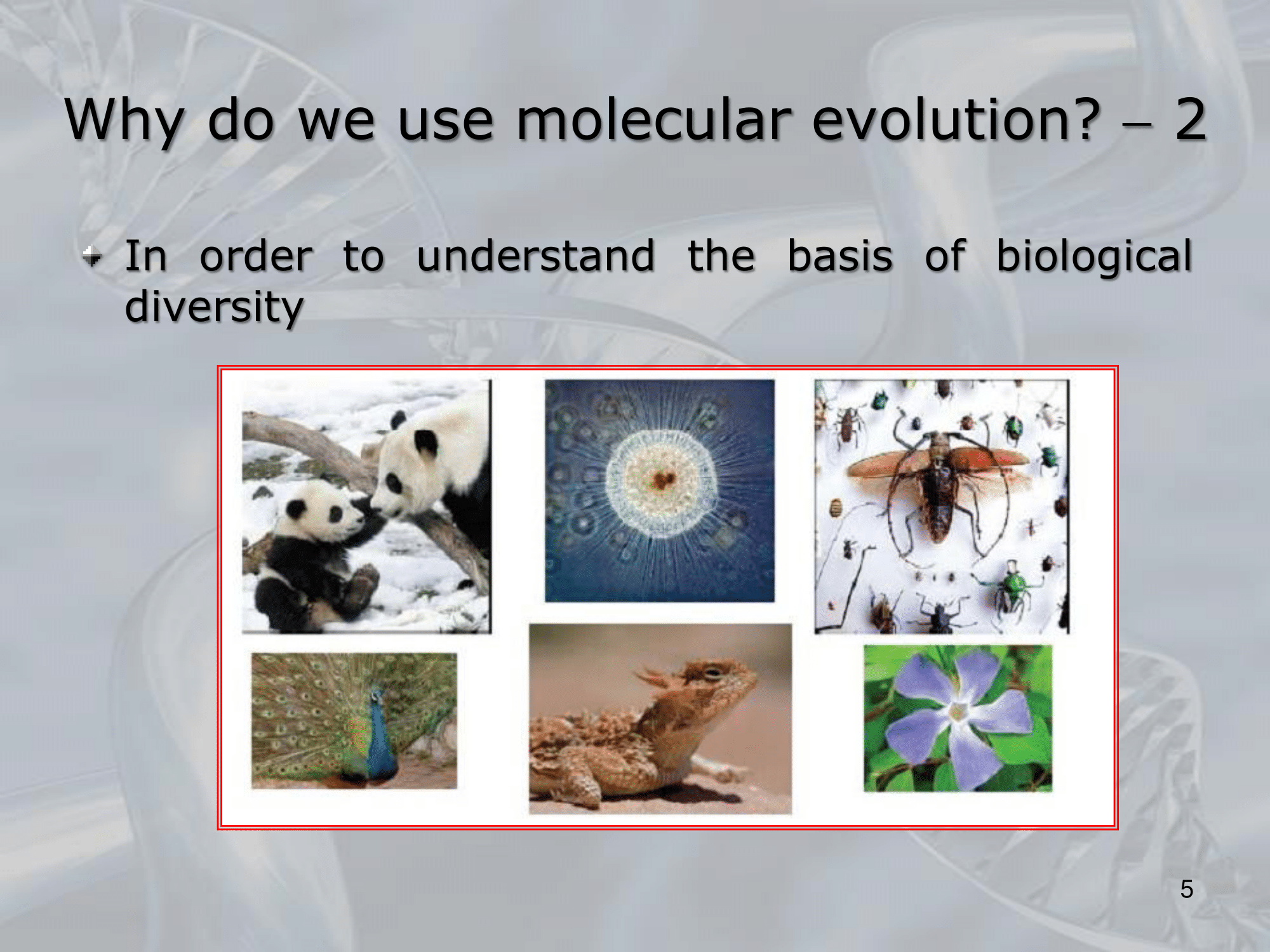
- Understand the basis of biological diversity.
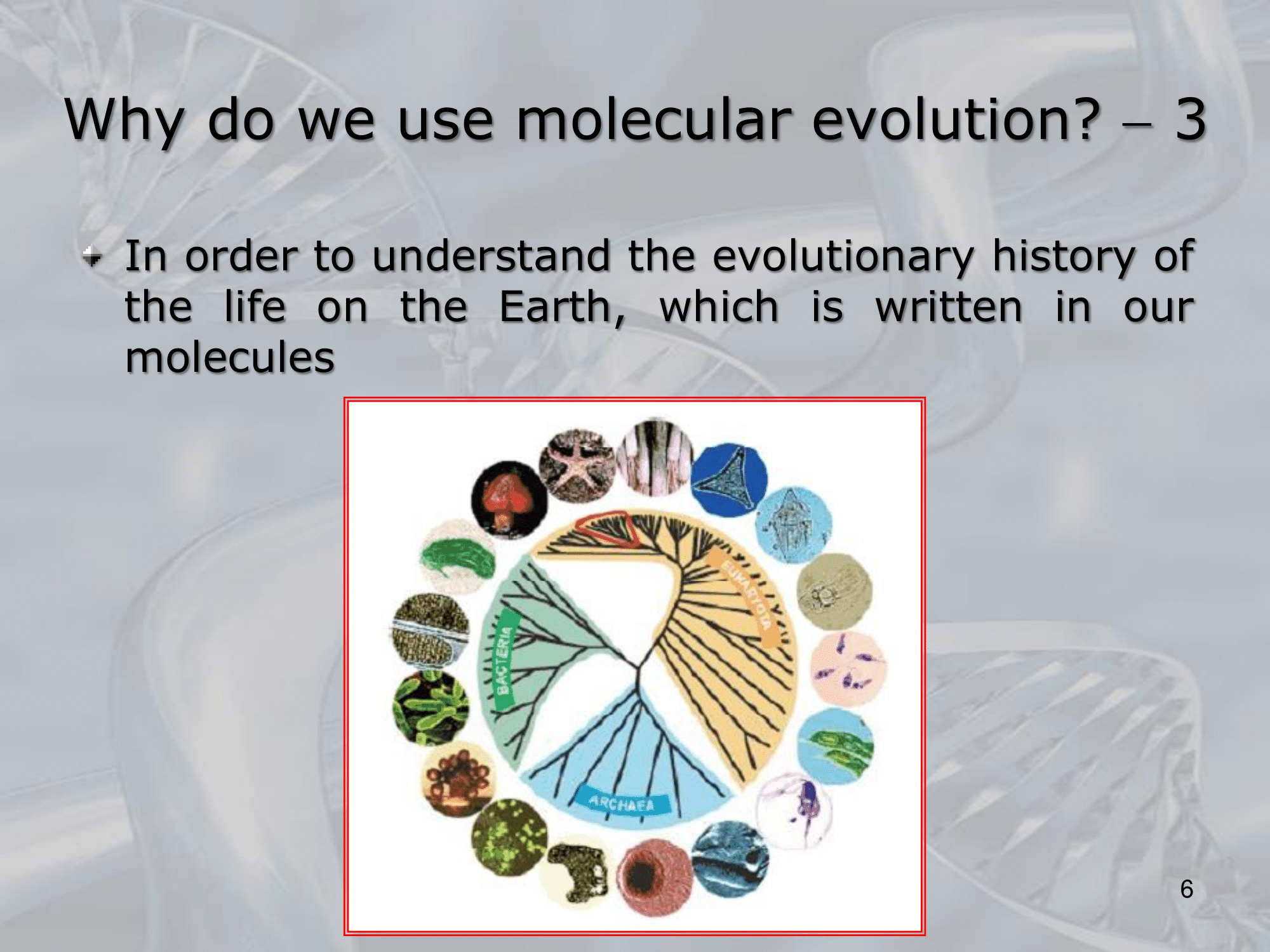
- Understand the evolutionary history of life on Earth.
- Detect how the frequency of nucleotide replacements is different in different areas of the same gene, for different genes, and across species, using this frequency to measure the functional significance of a particular sequence.
Grazie alla selezione naturale che elimina i geni dannosi, possiamo studiare l’Evoluzione Molecolare di diverse specie, e vedere quali sono i geni che sono maggiormente inalterati, e in che frequenza e posizione avvengono i mutamenti, dando così uno score di gene più importante a quei geni che rimangono per lo più inalterati.
—————————————————————
Slides with Notes
IMPORTANTE Molecular Evolution: study and analysis of both the number and the type of sobstitution, that have occurred during time. We use molecular evolution to:
- Understand the basis of biological diversity.
- Understand the evolutionary history of life on Earth.
- Detect how the frequency of nucleotide replacements is different in different areas of the same gene, for different genes, and across species, using this frequency to measure the functional significance of a particular sequence.
Grazie alla selezione naturale che elimina i geni dannosi, possiamo studiare l’Evoluzione Molecolare di diverse specie, e vedere quali sono i geni che sono maggiormente inalterati, e in che frequenza e posizione avvengono i mutamenti, dando così uno score di gene più importante a quei geni che rimangono per lo più inalterati.