Questions
- How are Enzymes Nomenclated?
- Enzymes are named according to a systematic nomenclature developed by the International Union of Biochemistry and Molecular Biology (IUBMB).
The names are based on the reaction catalyzed by the enzyme, and they typically consist of two parts:- ==The first part of the name indicates the substrate or substrates on which the enzyme acts==.
For example, lactase is an enzyme that catalyzes the hydrolysis of lactose, and alcohol dehydrogenase catalyzes the oxidation of alcohols. - ==The second part of the name indicates the type of reaction catalyzed by the enzyme==.
For example, hydrolases catalyze hydrolysis reactions, while dehydrogenases catalyze oxidation-reduction reactions involving the removal or addition of hydrogen atoms
- ==The first part of the name indicates the substrate or substrates on which the enzyme acts==.
- ==The naming system also includes a numerical classification system called the Enzyme Commission (EC) number==.
The EC number consists of four numbers separated by periods, and it provides a unique identifier for each enzyme based on the type of reaction catalyzed.
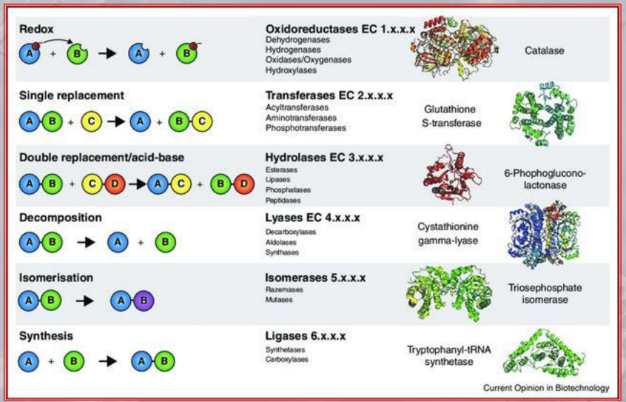
The first number in the EC number indicates the general class of the enzyme, while subsequent numbers provide more specific information about the enzyme’s function. - For example, lactase has an EC number of 3.2.1.108, indicating that it belongs to the class of hydrolases (3), and specifically catalyzes the hydrolysis of a beta-D-galactosyl-(1→4)-beta-D-glucose bond (2), and that it acts on lactose (1).
Similarly, alcohol dehydrogenase has an EC number of 1.1.1.1, indicating that it belongs to the class of oxidoreductases (1), and specifically catalyzes the oxidation of primary alcohols to aldehydes or ketones (1), and that it acts on a broad range of alcohols (no additional number). - The systematic naming and classification of enzymes allows for clear communication and understanding of their functions and roles in biological systems, as well as facilitating their identification and characterization in experimental settings.
- Enzymes are named according to a systematic nomenclature developed by the International Union of Biochemistry and Molecular Biology (IUBMB).
—————————————————————
IMPORTANTE
IMPORTANTE Each enzyme is assigned a numerical code, where: The st number refers to the main class (on the basis of the general type of reactions the enzyme catalyzes) The nd and rd number correspond to the specific subclasses. The th number is the serial number of the enzyme in its subclass.
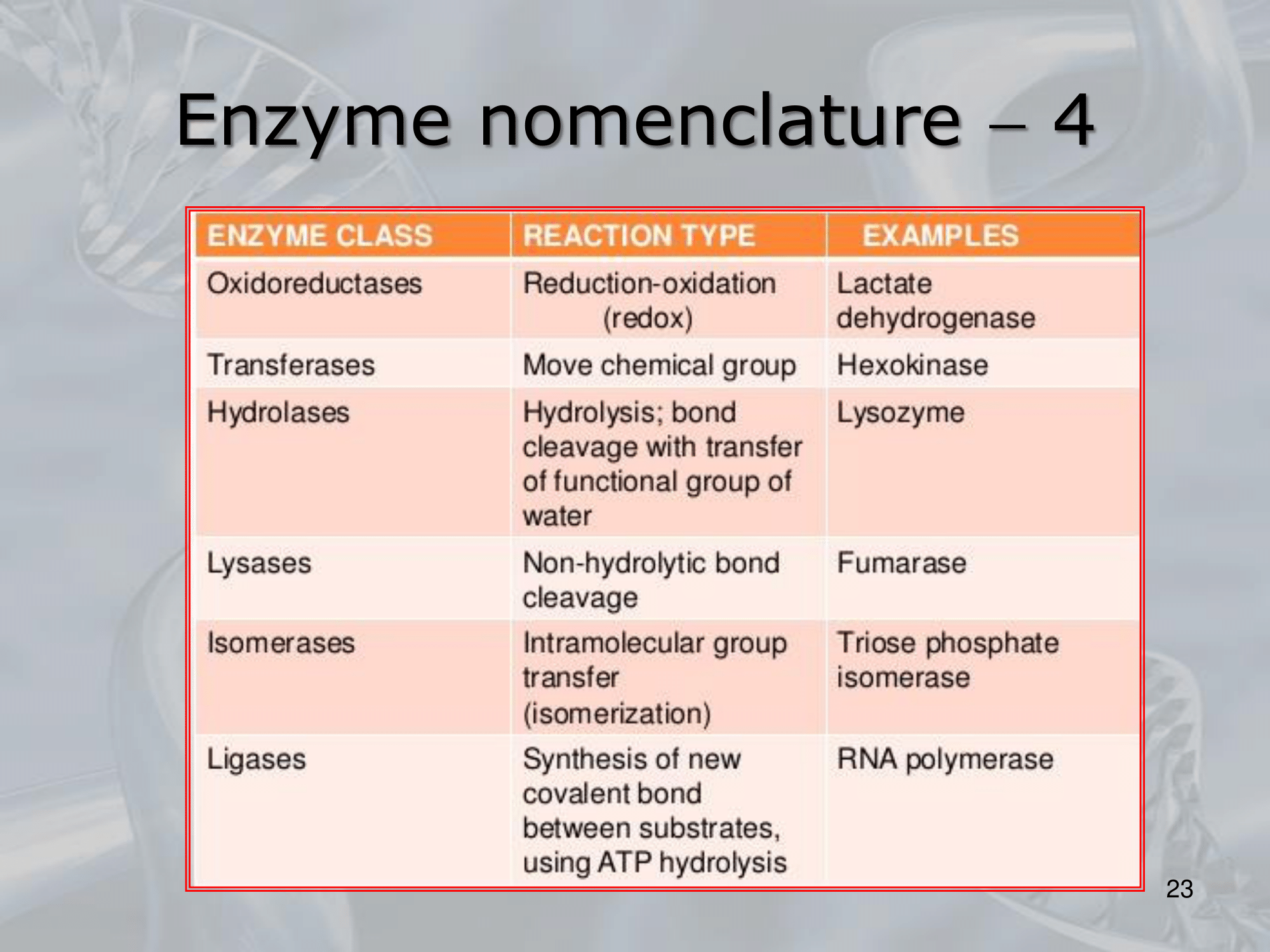
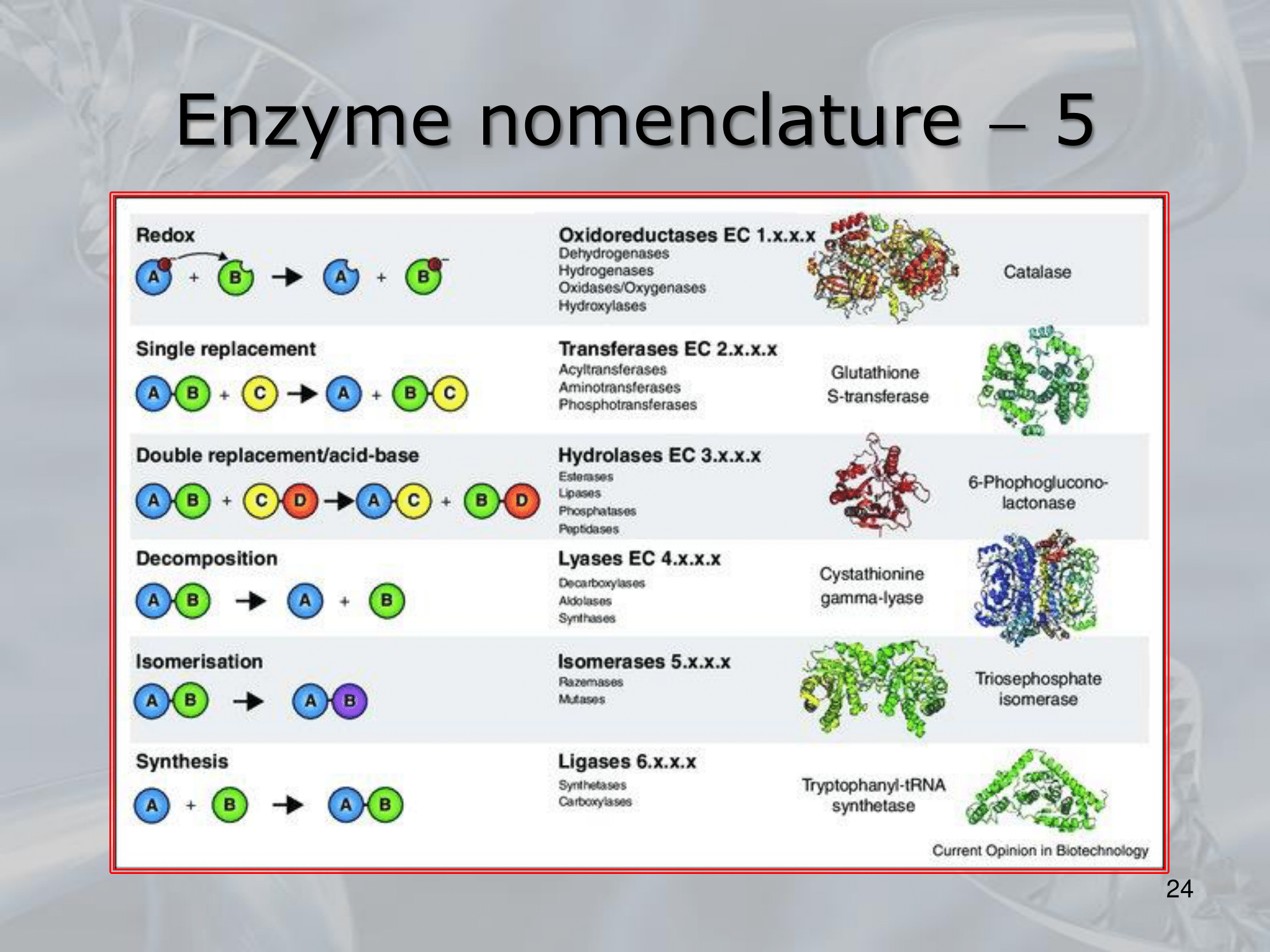
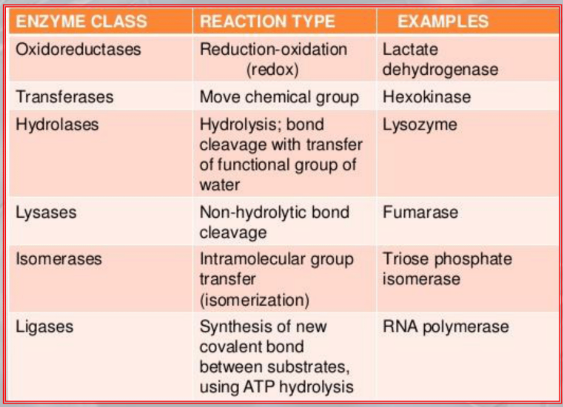
~Ex.: of Enzyme Classes:
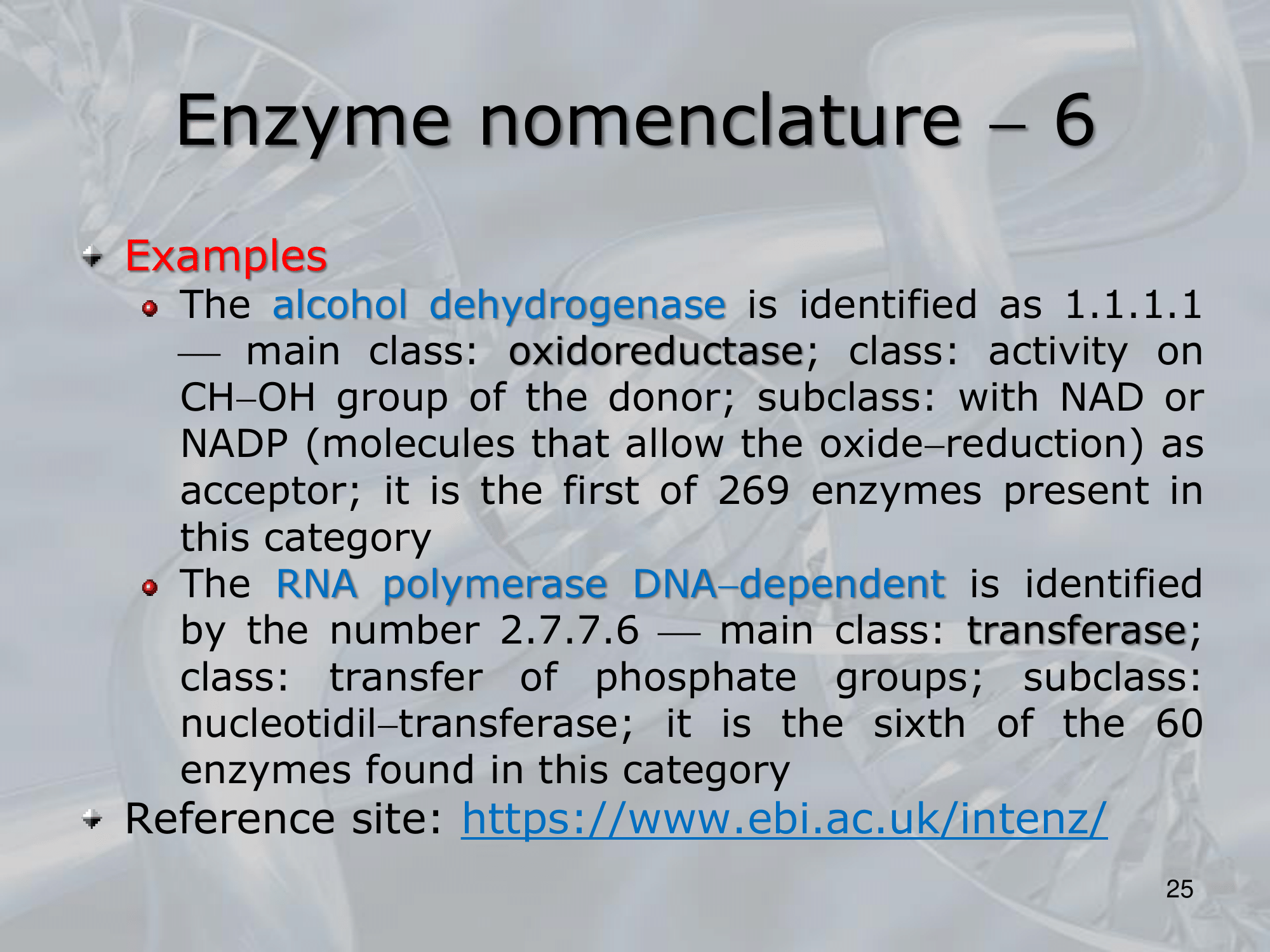
~Ex.: of Enzyme Nomenclature:
IMPORTANTE Enzyme Nomenclature: most enzyme names end in “-ase” The exceptions are: pepsin, rennin, trypsin.
—————————————————————
Slides with Notes
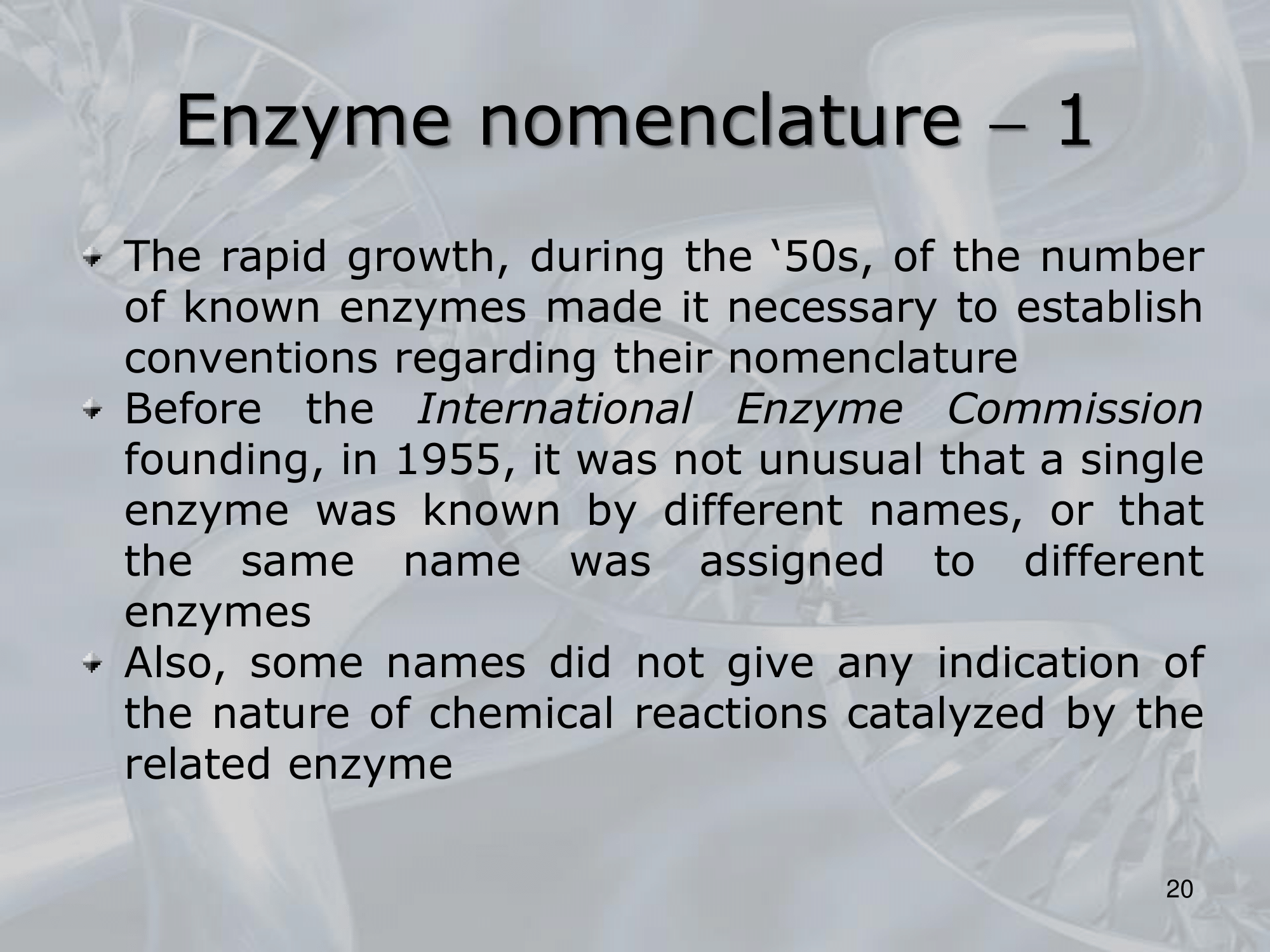
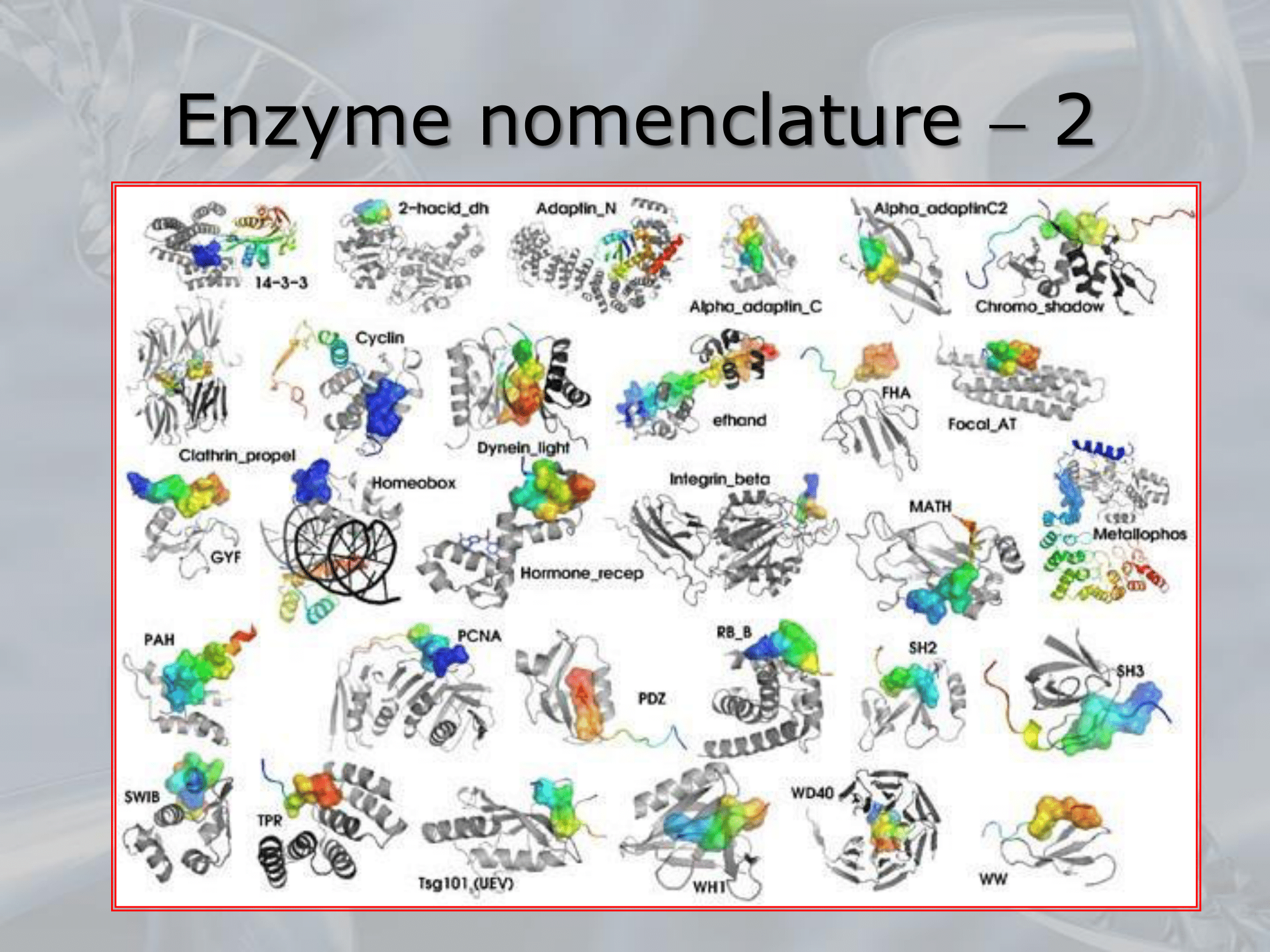
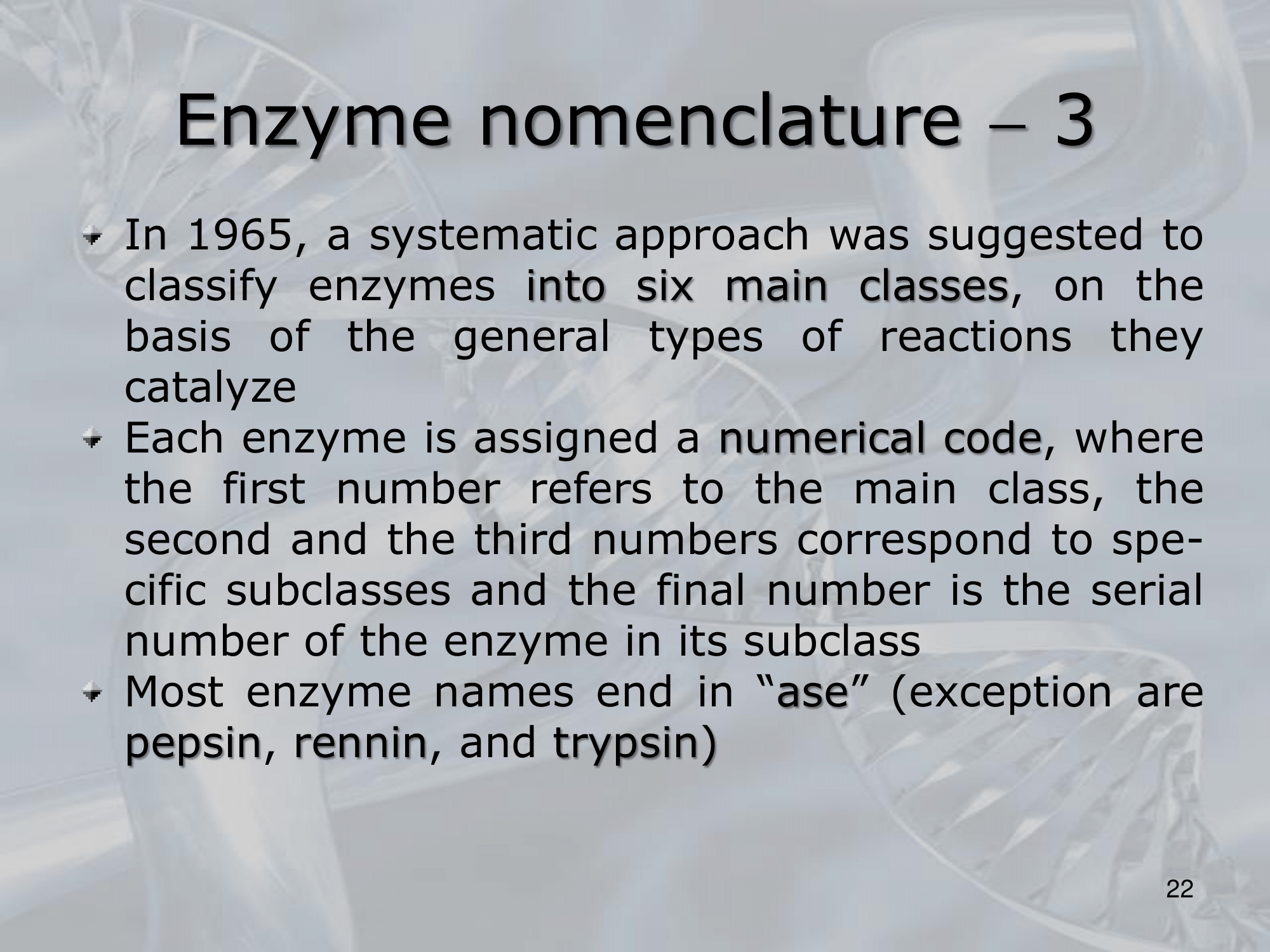
IMPORTANTE Each enzyme is assigned a numerical code, where: The nd number refers to the main class (on the basis of the general type of reactions the enzyme catalyzes) The nd and rd number correspond to the specific subclasses. The th number is the serial number of the enzyme in its subclass.
~Ex.: of Enzyme Classes:
~Ex.: of Enzyme Nomenclature:
IMPORTANTE Enzyme Nomenclature: most enzyme names end in “-ase” The exceptions are: pepsin, rennin, trypsin.