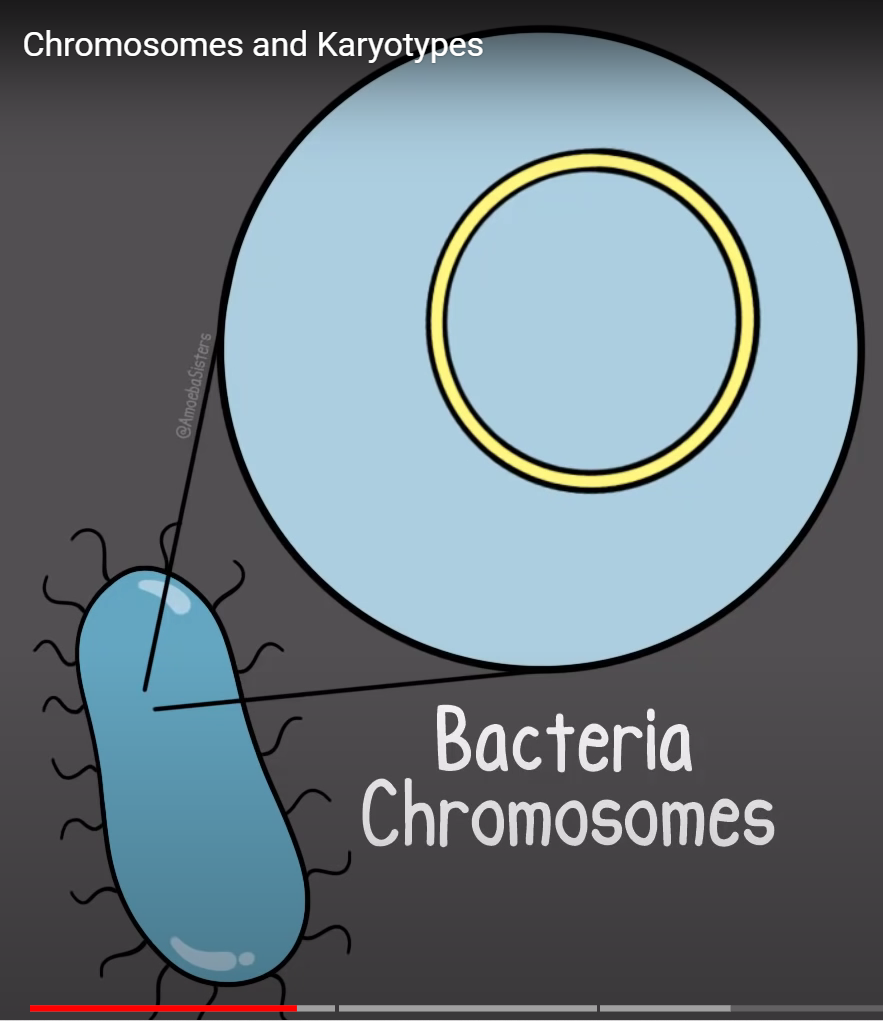
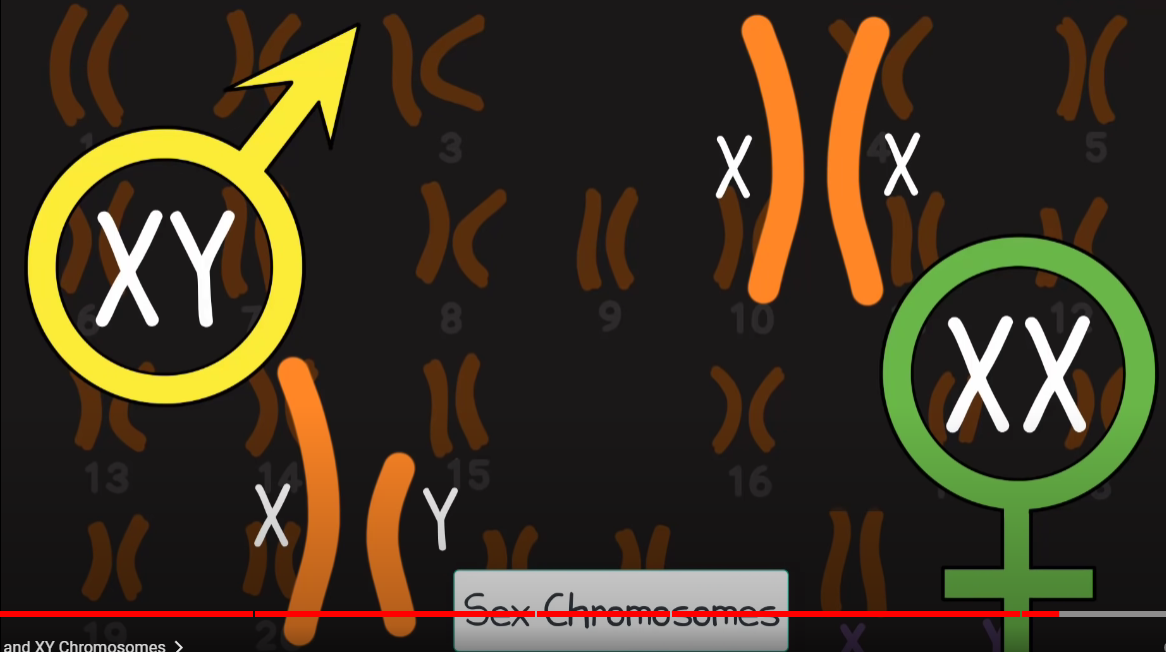
- In Bacteria Chromosomes tend to have a circular shape, while in Eukaryotes they have different shapes, the more famous one are the “sex chromosomes” where female have a pair of XX chromosomes while male have an XY pair.
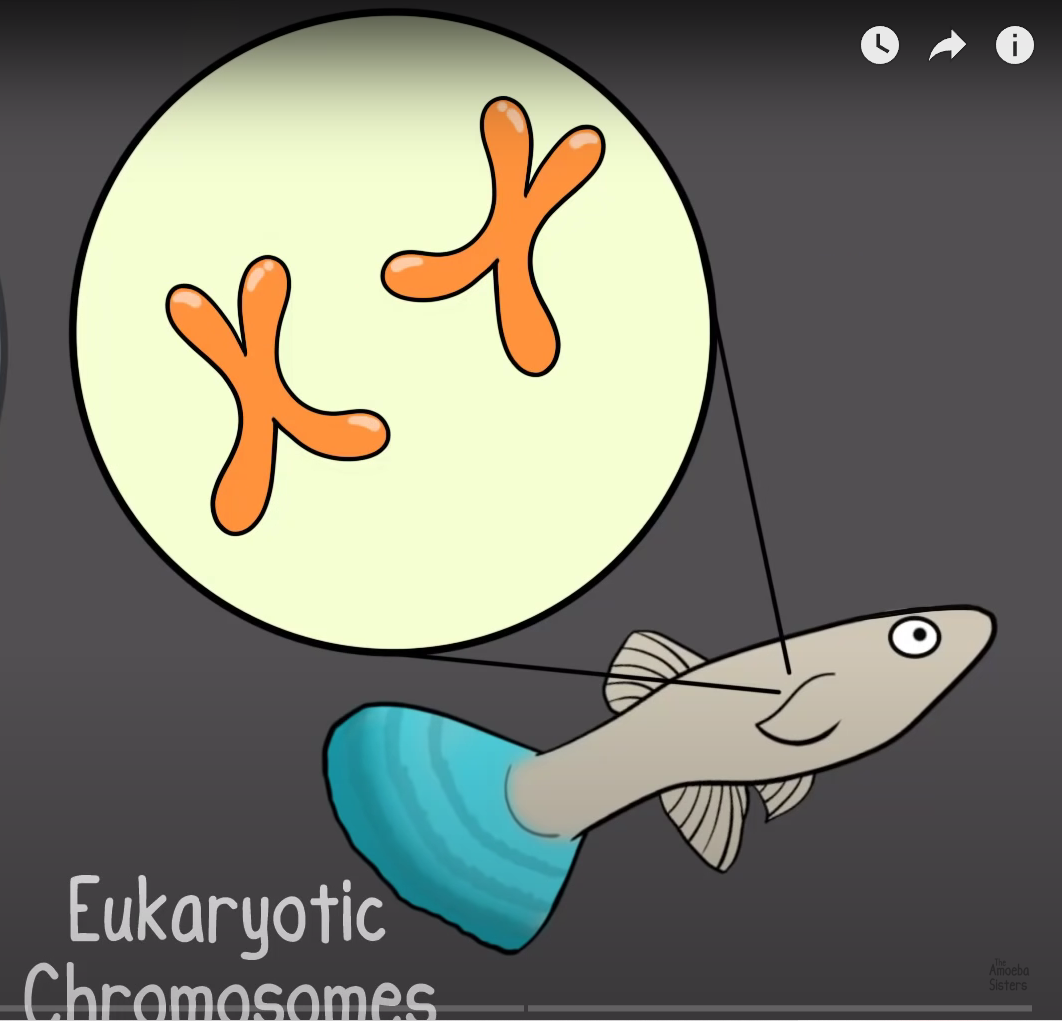
NOTE: The shape of the sex chromosomes DOES NOT resemble an X and an Y, differently from what we hear.
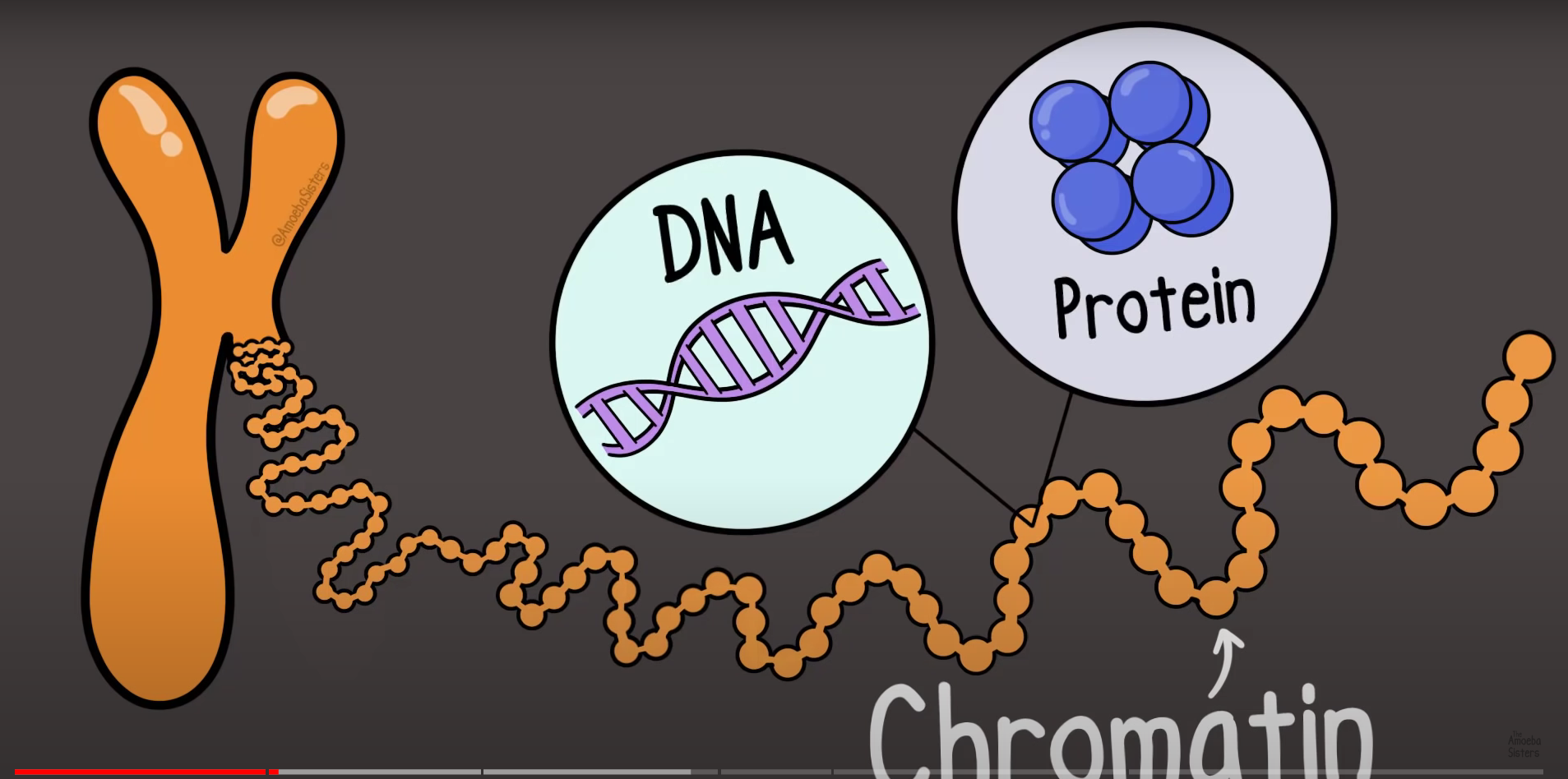
- Chromosomes are composed of Chromatin, which is a composition of DNA and Proteins, specifically DNA is wound around Proteins called Histones.
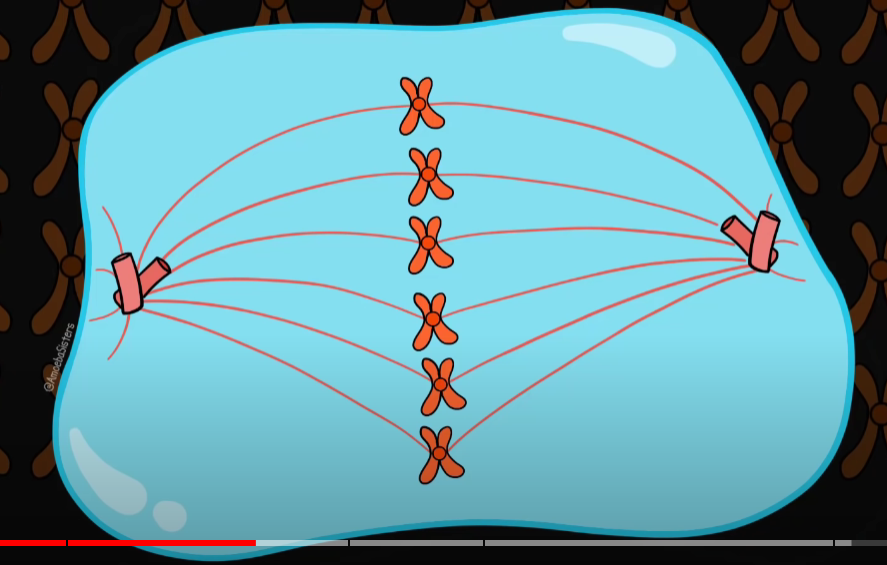
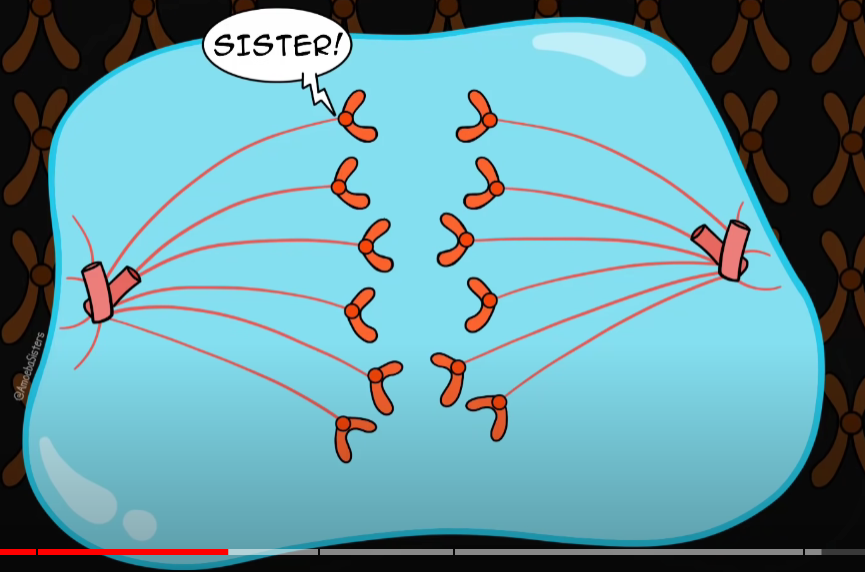
- In the human body each cell has 46 Chromosomes, during mitosis (the duplication of the cell) the Chromosomes double their shape, and then divided to create a daughter cell (even during replication we say that there are 46 chromosomes)
- It’s important to note that certain gene in a specific chromosome can be turned on or off by a variety of factors, for example we wouldn’t want our eyes to use a gene for producing stomach acid.
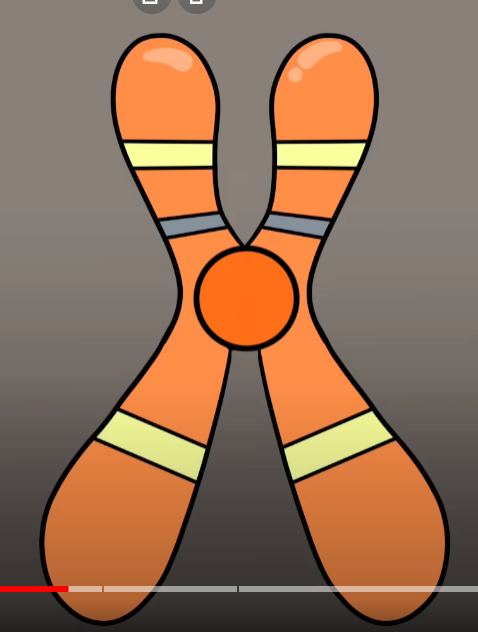
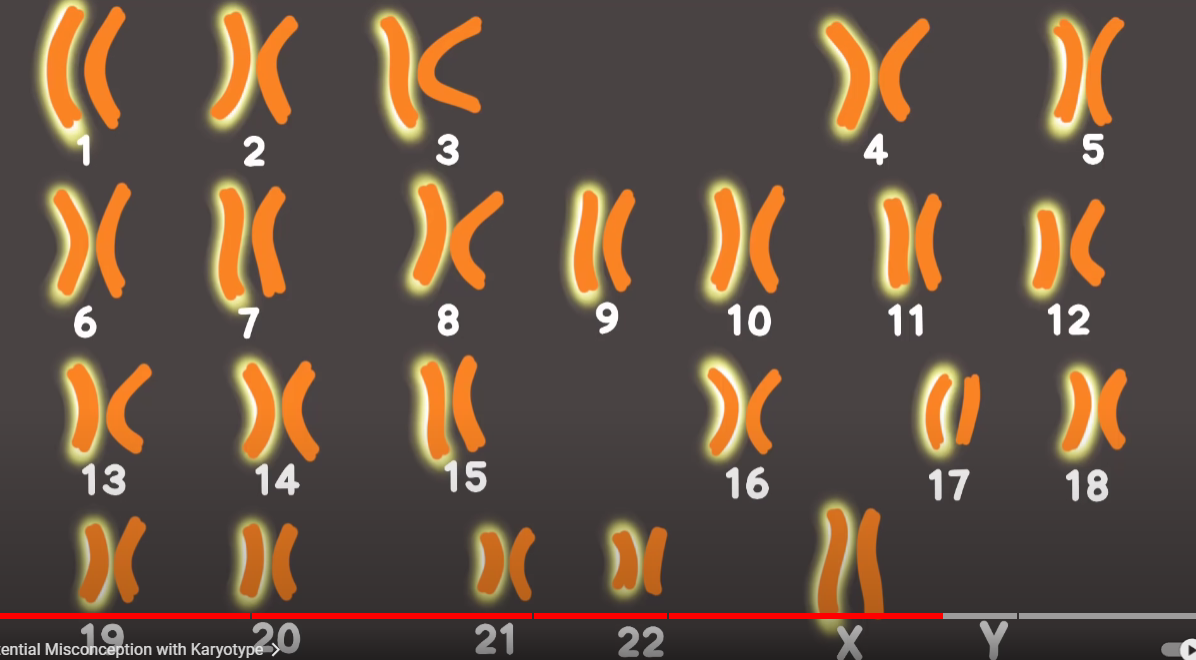
- A Diagram of our chromosomes can be something like this:
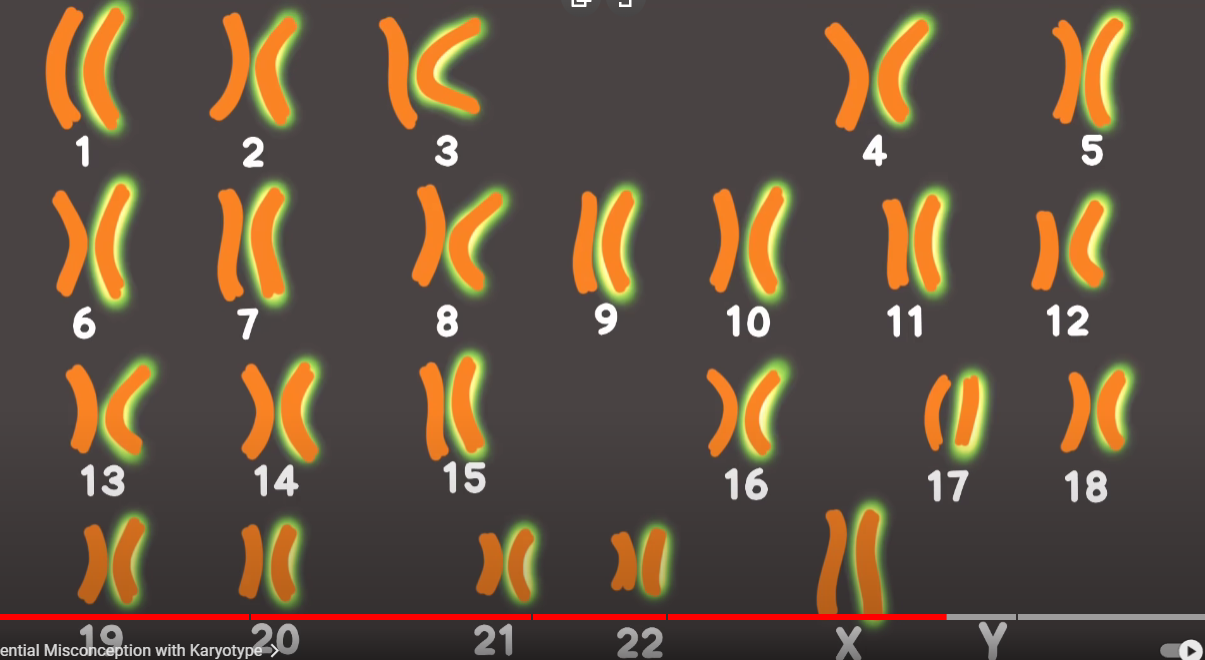
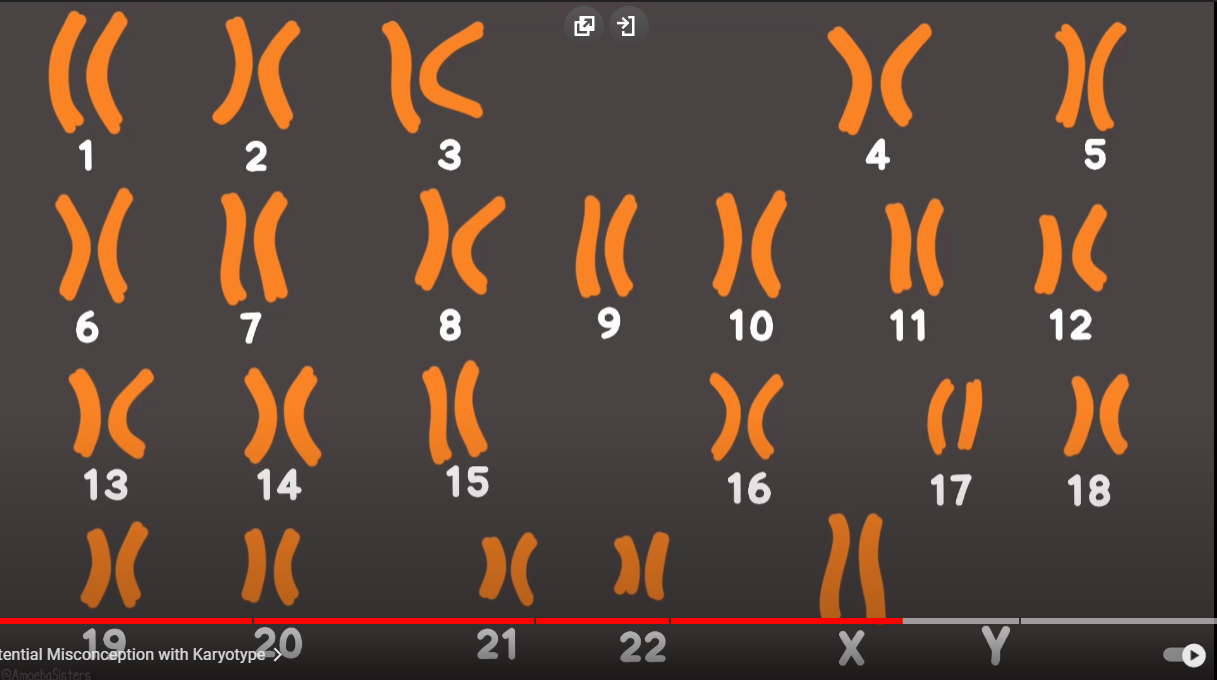 note that usually every “photo” of our chromosomes is taken before they divide, so if we look closer we can see that each chromosome in the picture has actually double chromatides: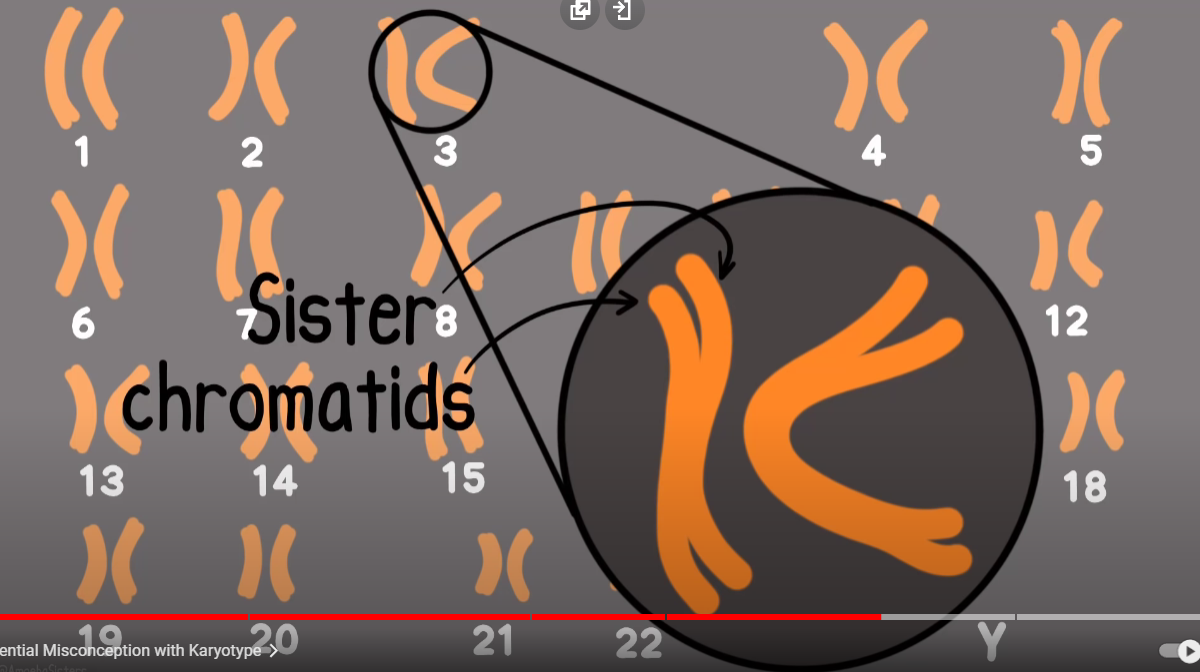
- Chromosomes are distributed in Homologous Pairs, which are chromosomes that have the same size and contain the same type of genes and in each homologous pair we receive one chromosome from one parent and the other from the other parent, for a total of 23 pairs (46 chromosomes)