Questions
- What is there to say about the Structure of Prokaryotic Genes?
- Prokaryotic genes are typically smaller and simpler in structure than eukaryotic genes.
==They are typically organized into operons==, which are clusters of genes that are transcribed together as a single mRNA molecule.
Each operon contains one or more structural genes, which code for a specific protein, as well as regulatory regions that control the expression of the operon. - The structure of a typical prokaryotic gene includes the following elements:
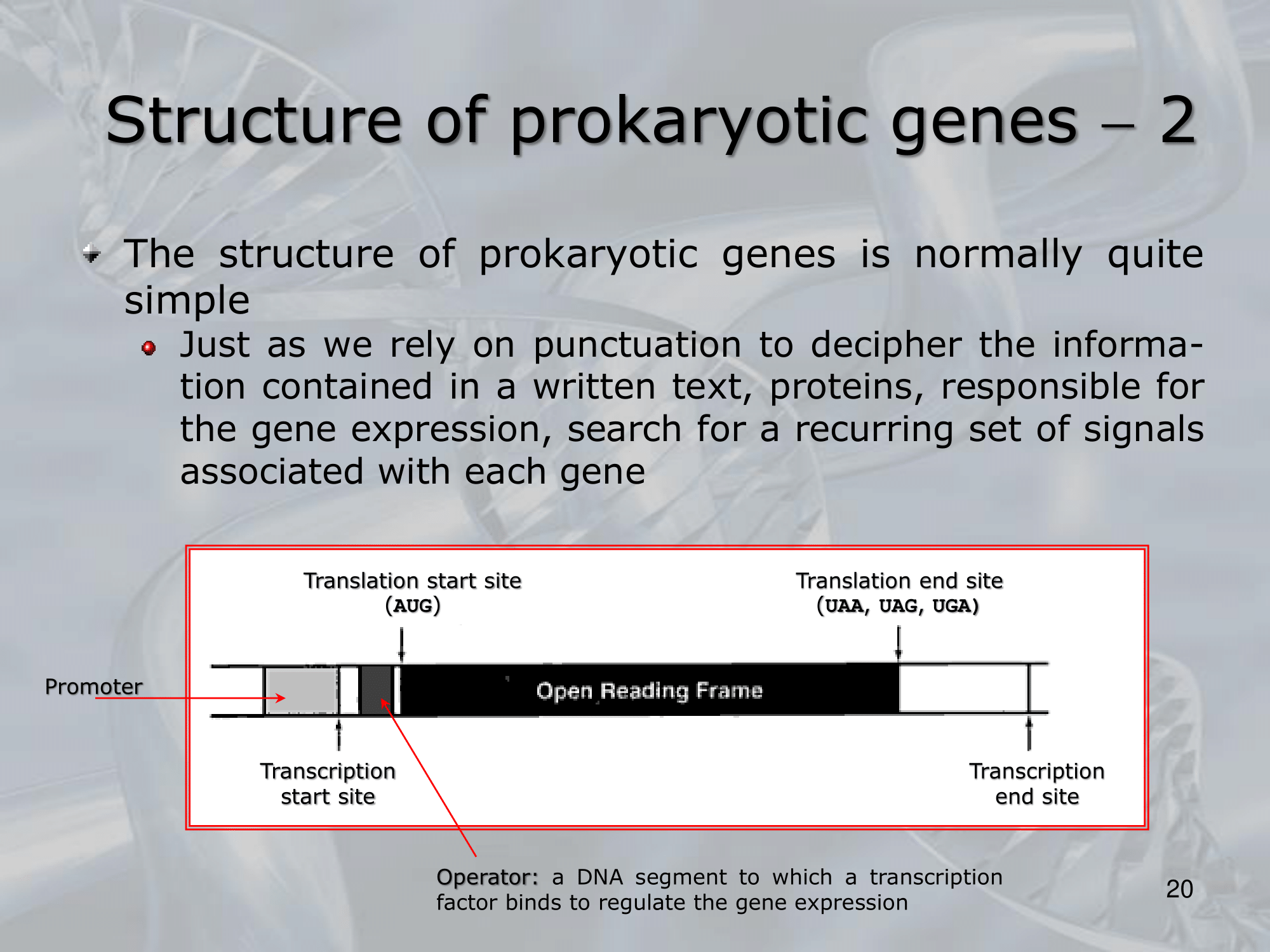
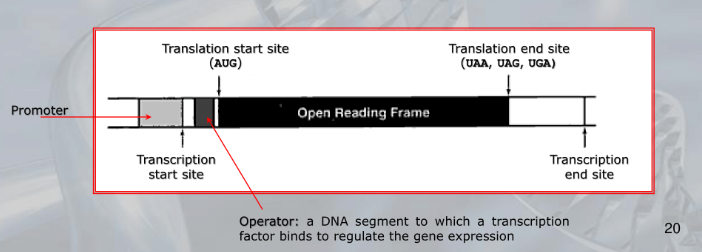
- Promoter: A specific region of DNA that initiates transcription of the gene by binding to RNA polymerase.
- Coding region: A sequence of nucleotides that codes for the amino acid sequence of the protein.
- Start codon: A specific sequence of nucleotides (usually AUG) that signals the start of the coding region.
- Stop codon: A specific sequence of nucleotides (such as UAA, UAG, or UGA) that signals the end of the coding region.
- Terminator: A specific region of DNA that signals the end of transcription.
- Regulatory regions: Specific sequences of DNA that control the expression of the gene by interacting with regulatory proteins, such as transcription factors.
- Prokaryotic genes are typically transcribed as a single polycistronic mRNA molecule, which contains the coding regions of multiple genes. This allows for coordinated expression of related genes in response to environmental cues.
- Overall, the structure of prokaryotic genes reflects their ability to respond quickly and adapt to changing environmental conditions, as well as their efficient use of genetic information to direct the synthesis of proteins.
- Prokaryotic genes are typically smaller and simpler in structure than eukaryotic genes.
- What are Operons?
- Operons are functional units of prokaryotic DNA that consist of a cluster of genes that are transcribed together as a single polycistronic mRNA molecule.
The genes within an operon are typically functionally related and are involved in a common metabolic pathway or regulatory process. - The structure of an operon typically includes the following elements:
- Promoter: A specific region of DNA that initiates transcription of the operon by binding to RNA polymerase.
- Operator: A specific sequence of DNA that controls the expression of the operon by binding to regulatory proteins, such as repressors or activators.
- Structural genes: A sequence of nucleotides that codes for the amino acid sequence of one or more proteins involved in a common pathway or process.
- Terminator: A specific region of DNA that signals the end of transcription.
- Operons provide a mechanism for coordinating the expression of multiple genes involved in a common pathway or process.
For example, the lac operon in E. coli contains three genes involved in lactose metabolism, as well as regulatory regions that control the expression of the operon in response to the presence or absence of lactose in the environment. - Regulation of operon expression can occur through different mechanisms.
Repressor proteins can bind to the operator region and prevent transcription of the operon, while activator proteins can bind to regulatory regions and enhance the transcription of the operon.
Other regulatory mechanisms can involve RNA interference, feedback inhibition, or post-transcriptional regulation. - Overall, operons are an important feature of prokaryotic genomes that allow for coordinated expression of genes involved in common metabolic pathways or regulatory processes, and enable prokaryotes to efficiently respond to changes in their environment.
- Operons are functional units of prokaryotic DNA that consist of a cluster of genes that are transcribed together as a single polycistronic mRNA molecule.
—————————————————————
IMPORTANTE
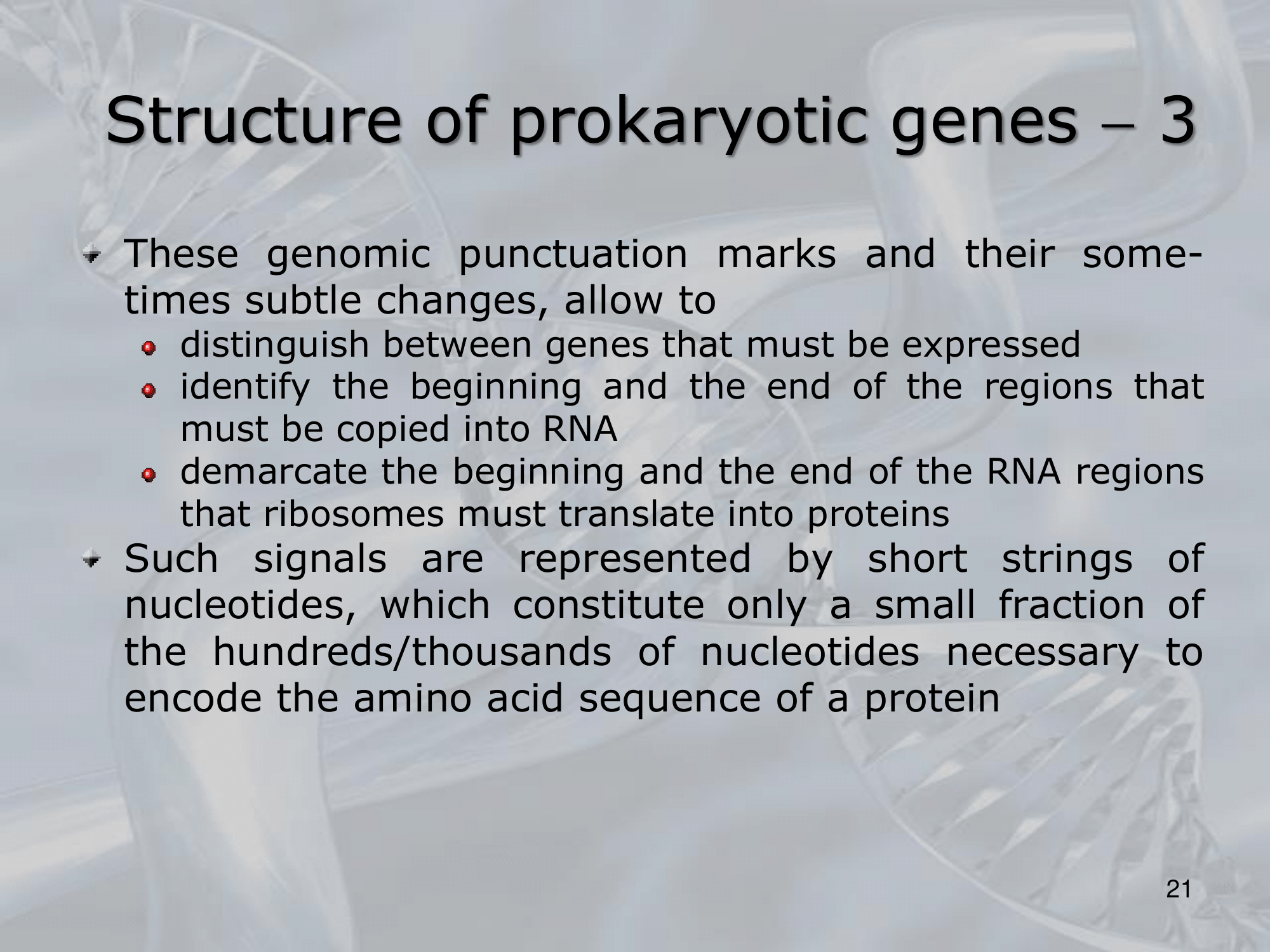
IMPORTANTE Prokaryotic DNA has HIGH gene density, the protein-coding genes occupy 85~88% of the genome. #IMPORTANTE Prokaryotic genes are not interrupted by introns. #IMPORTANTE Prokaryotic genes are sometimes orginized in trascriptional polycistronic units called operonsTODO What are operons? #IMPORTANTE Structure of a prokaryotic gene:
—————————————————————
Slides with Notes
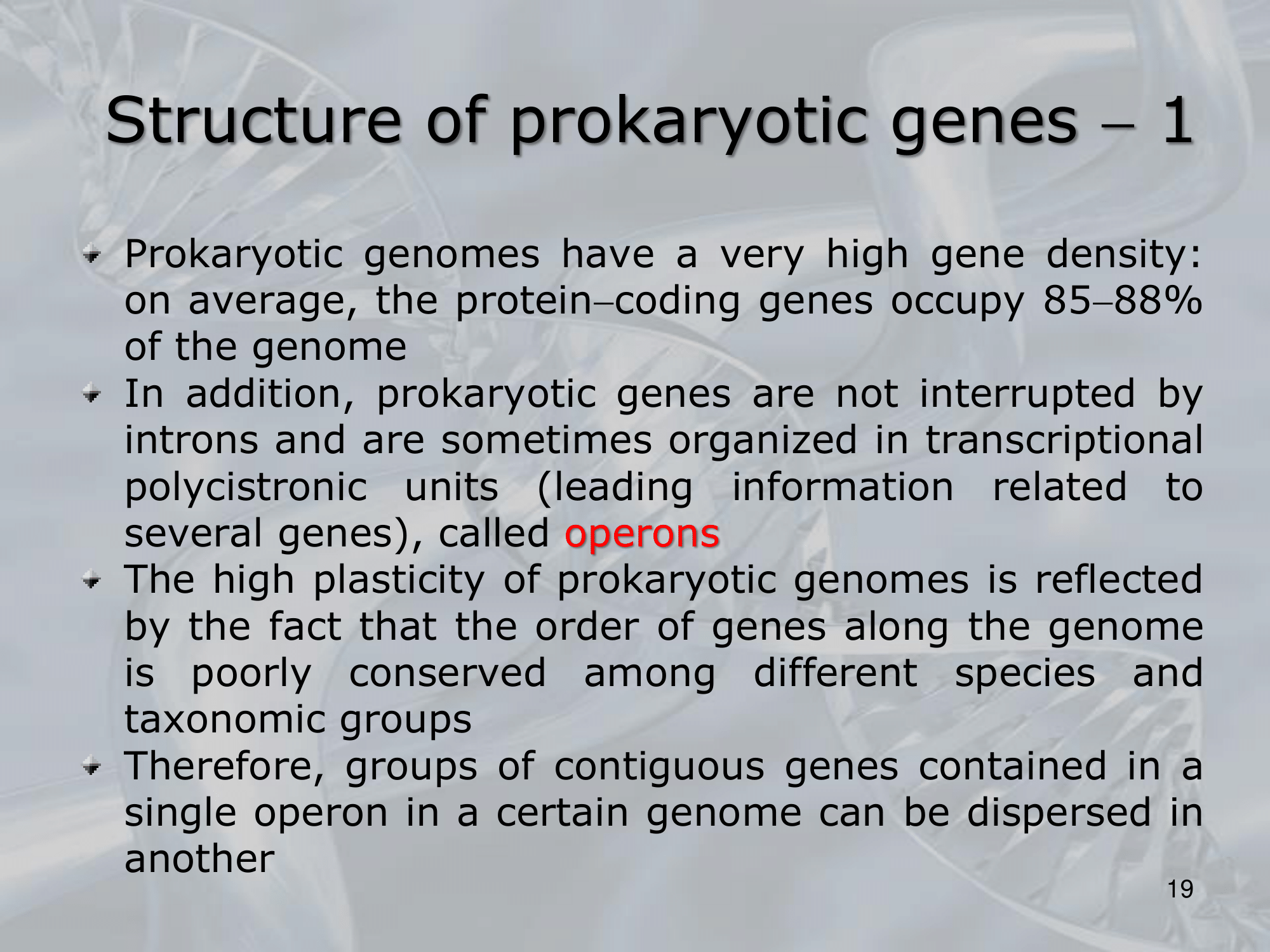
IMPORTANTE Prokaryotic DNA has HIGH gene density, the protein-coding genes occupy 85~88% of the genome. #IMPORTANTE Prokaryotic genes are not interrupted by introns. #IMPORTANTE Prokaryotic genes are sometimes orginized in trascriptional polycistronic units called operonsTODO What are operons? #IMPORTANTE Structure of a prokaryotic gene: