Questions
- What is Momentum in Stochastic Gradient Descent?
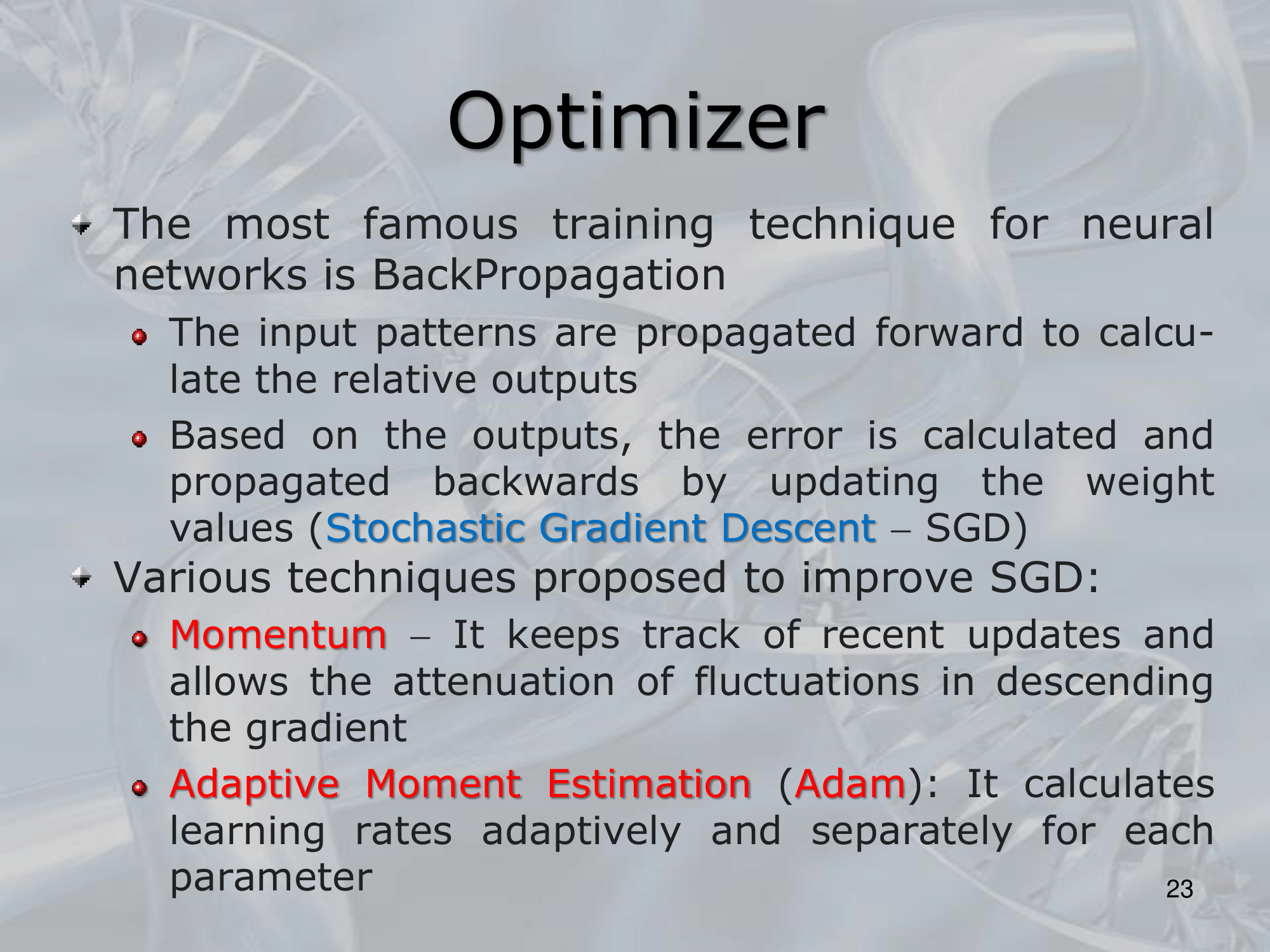
- Momentum is a technique used in stochastic gradient descent (SGD) optimization to speed up the convergence of the algorithm by adding a "momentum" term to the gradient descent update equation.
==The momentum term introduces a memory into the optimization process, which helps the algorithm to move more quickly through shallow minima and to converge more slowly towards deeper minima==. - In momentum-based SGD, the update rule for the parameters is modified as follows: \begin{align}&v = \text{momentum} * v - \text{learning\_rate} * \text{gradient} \\ & \text{parameters} = \text{parameters} + v\end{align}Where:
- "" is the momentum term
- “momentum” is a hyperparameter between and that determines the contribution of the previous update to the current update
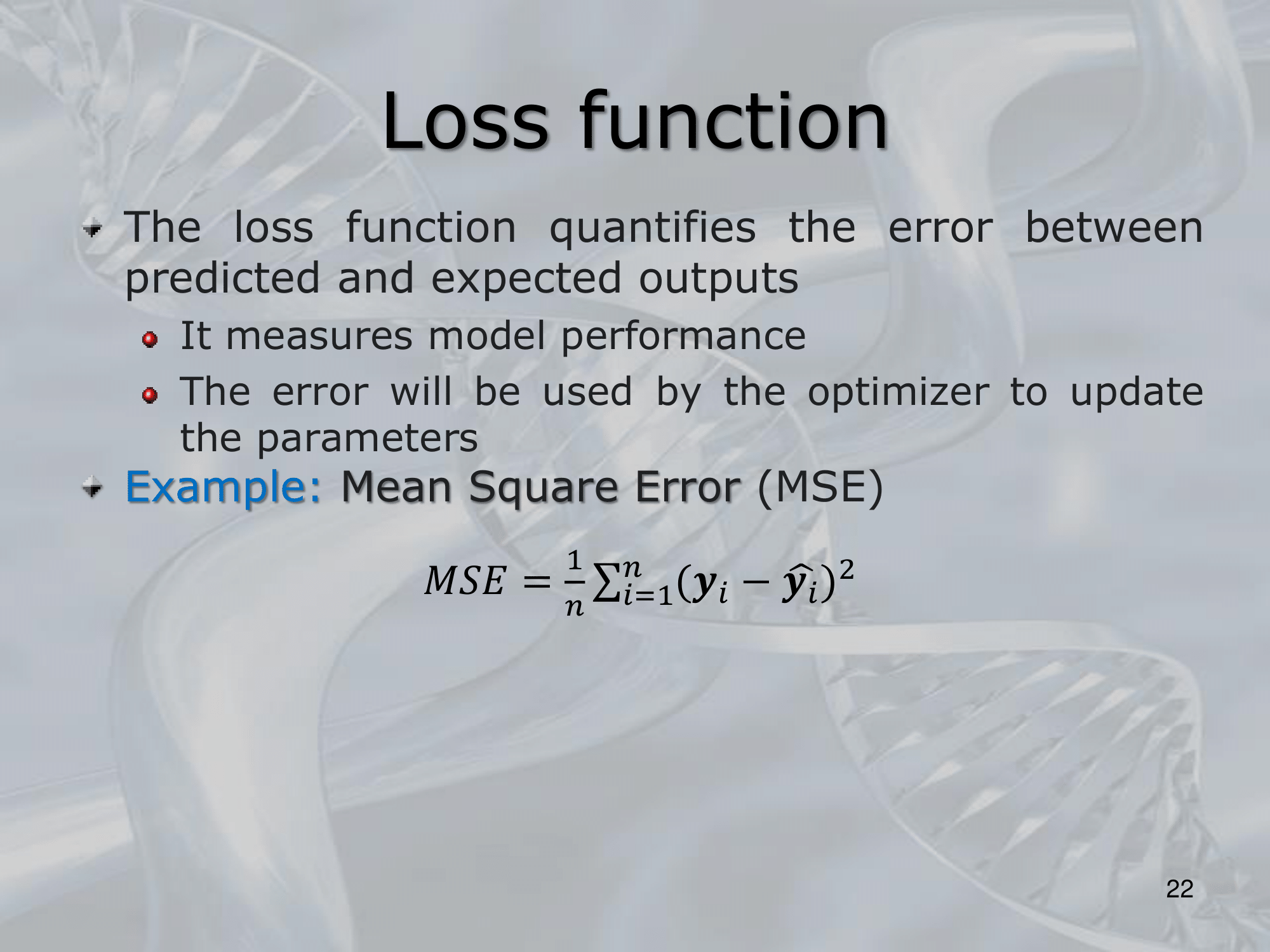
- “learning_rate” is the step size of the update, and “gradient” is the gradient of the loss function with respect to the parameters.
- The momentum term accumulates the gradients of the previous updates, which allows the algorithm to continue moving in the same direction, even if the current gradient direction changes.
This helps to smooth out the updates and reduce oscillations in the optimization process, which can improve convergence and reduce the number of iterations required to reach a minimum. - The momentum hyperparameter controls the contribution of the previous update to the current update, with a higher momentum value resulting in a stronger influence of the previous updates.
A typical value for momentum is , but it can be tuned depending on the problem and dataset. - Overall, momentum is a useful technique for improving the convergence of stochastic gradient descent, particularly in cases where the loss function has shallow and flat regions or narrow valleys.
- Momentum is a technique used in stochastic gradient descent (SGD) optimization to speed up the convergence of the algorithm by adding a "momentum" term to the gradient descent update equation.
- What is the Adaptive Momentum Estimation (ADAM)?
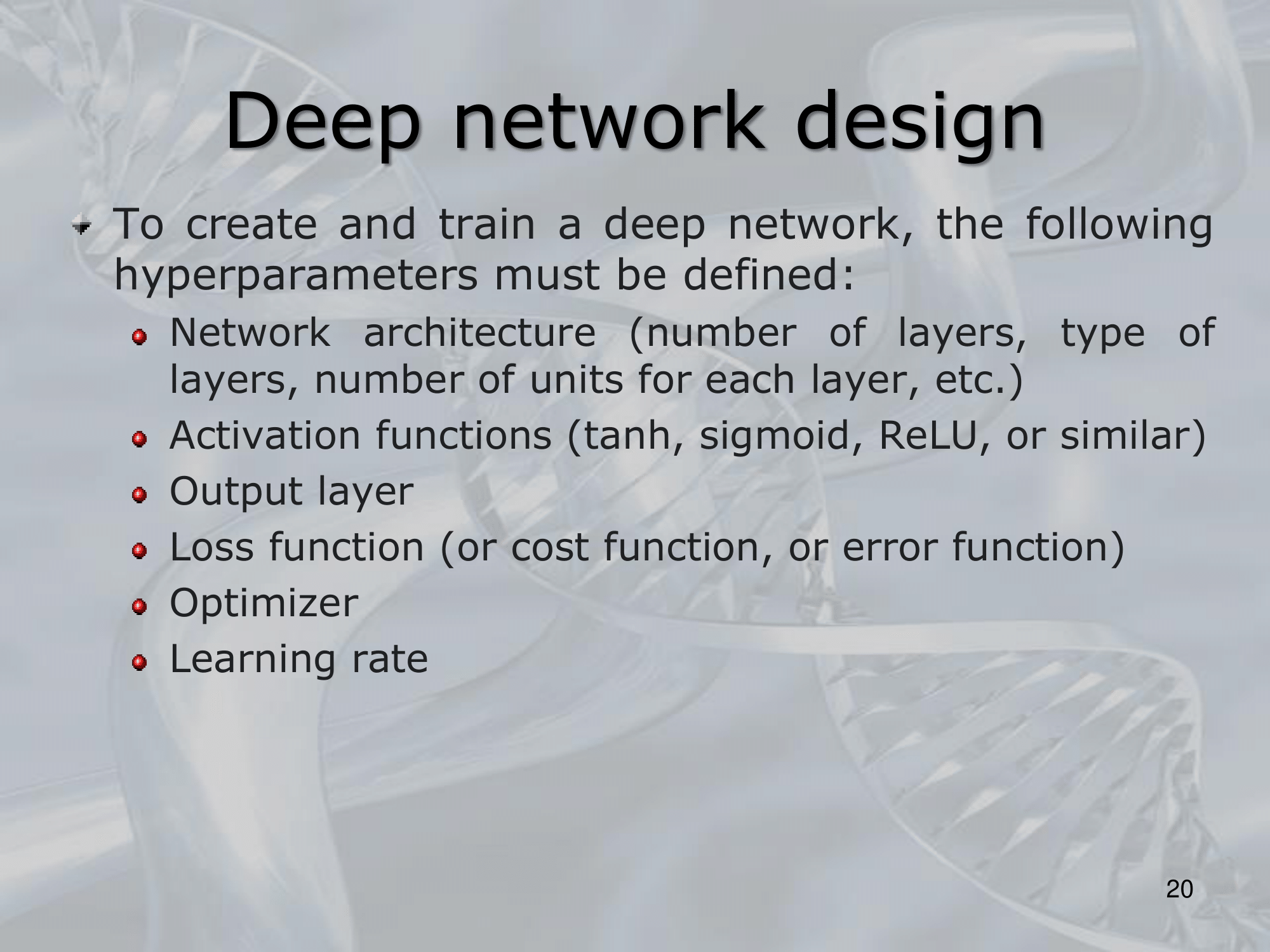
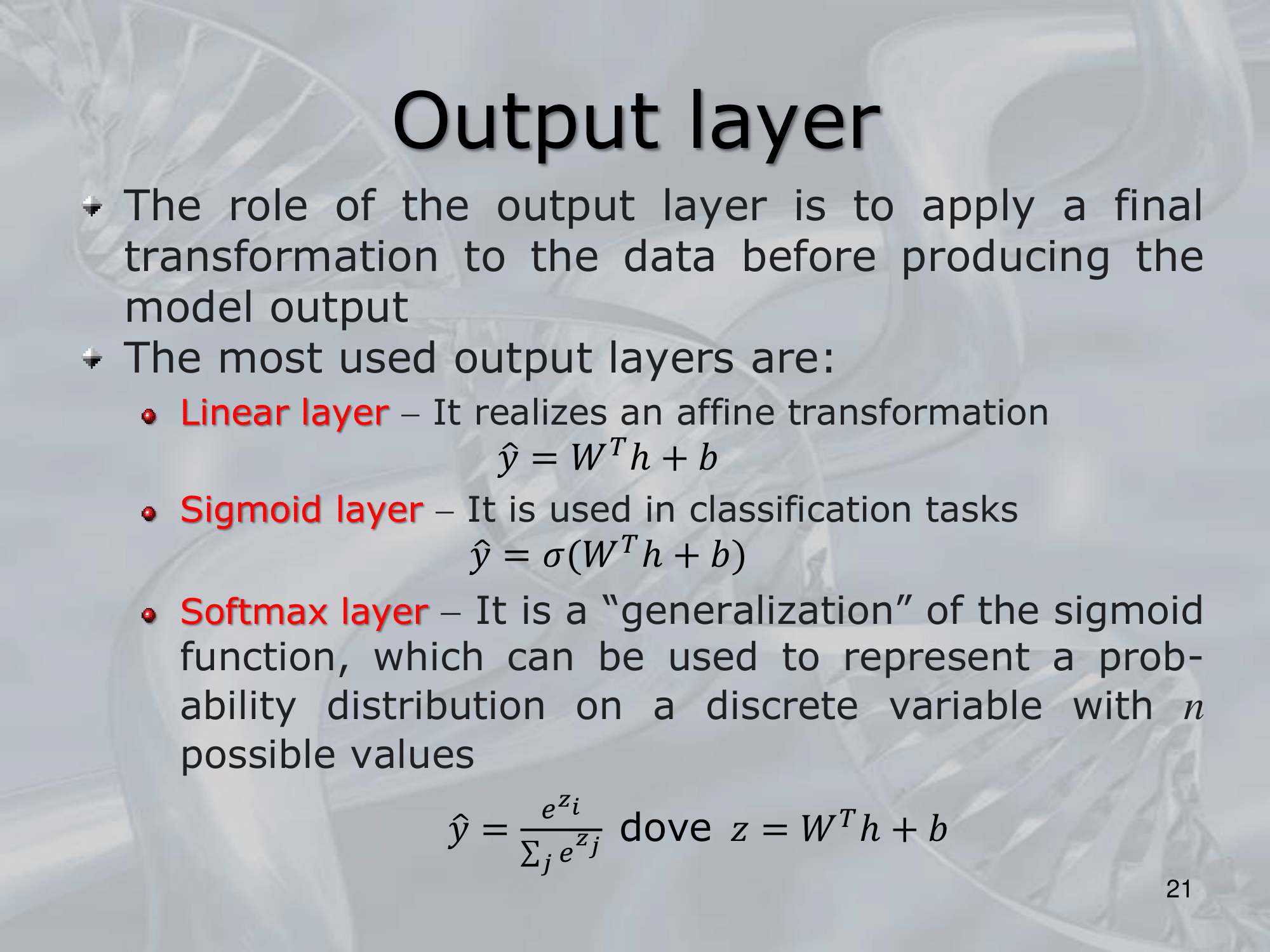
- Adaptive Moment Estimation (ADAM) is an optimization algorithm used to update the weights of a neural network during training.
It is a variant of stochastic gradient descent (SGD) that combines ideas from both momentum and adaptive learning rate methods. - The ADAM algorithm maintains two moving averages of the gradient: the first moment (mean) and the second moment (variance).
These moving averages are used to estimate the adaptive learning rate and momentum terms for each weight.- The update rule for ADAM is given by:\begin{align}& m = \beta_1 \cdot m + (1 - \beta_1) \cdot \text{gradient} \\& v = \beta_2 \cdot v + (1 - \beta_2) \cdot (\text{gradient}^2) \\& \hat{m} = \frac{m}{(1 - \beta_1^t)} \\& \hat{v} = \frac{v}{(1 - \beta_2^t)} \\& \text{weight} = \text{weight} - \lambda \cdot \frac{\hat{m}}{\sqrt{\hat{v}} + \epsilon}\end{align}
- Adaptive Moment Estimation (ADAM) is an optimization algorithm used to update the weights of a neural network during training.
—————————————————————
Slides with Notes