Questions
- What are Homoplasy and Homology, what are their Differences?
- ==Homoplasy and homology are two terms used in evolutionary biology to describe similarities between species==, but they have different meanings.
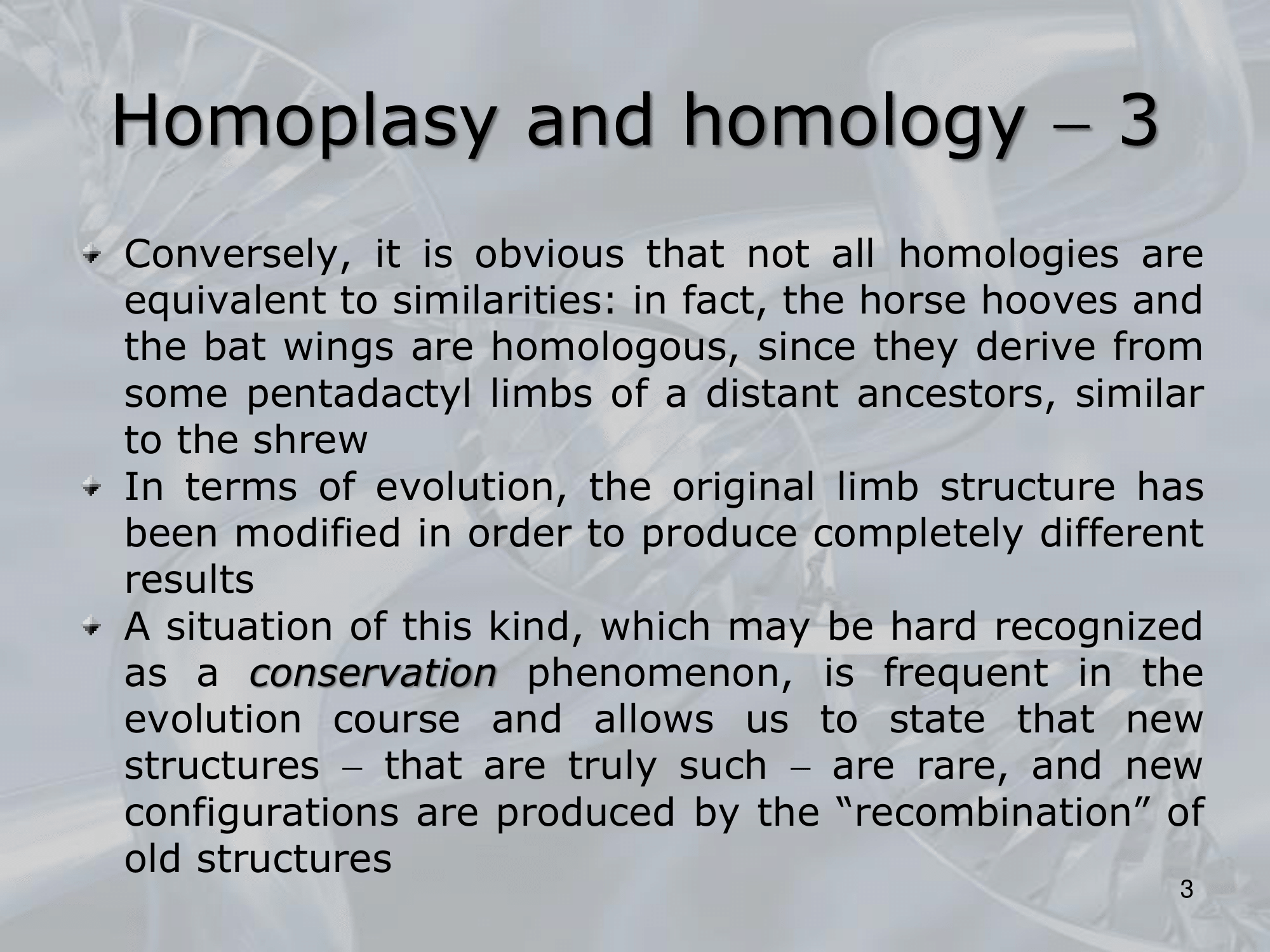
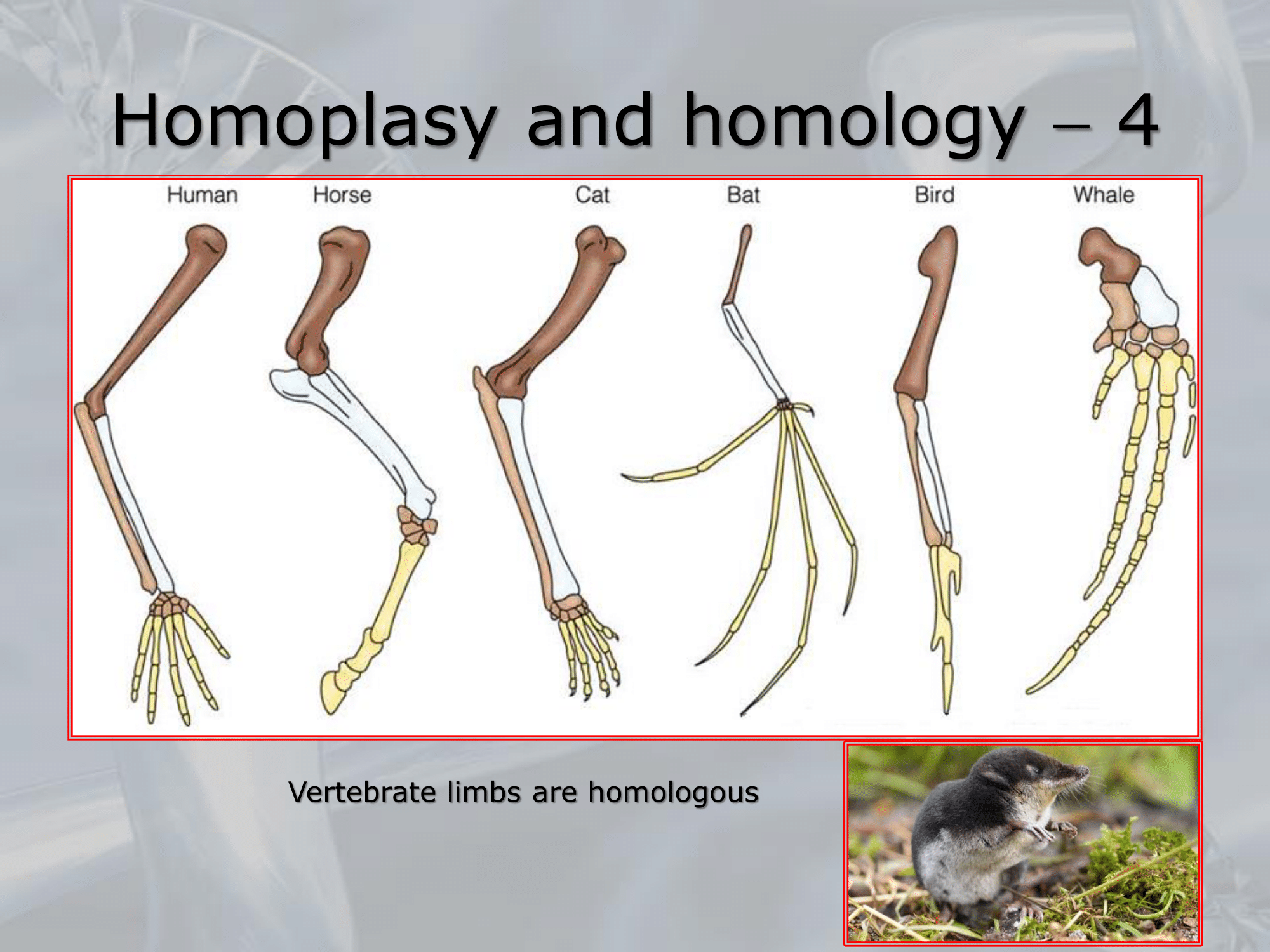
- Homology refers to similarities that are the result of common ancestry.
In other words, homologous structures are those that are inherited from a common ancestor and have similar structures, functions, or both.
For example, the wings of birds and the arms of humans are homologous structures because they are inherited from a common ancestor and have similar skeletal structures. - ==Homoplasy, on the other hand, refers to similarities that are not the result of common ancestry, but rather are the result of convergent evolution, parallel evolution, or evolutionary reversal==.
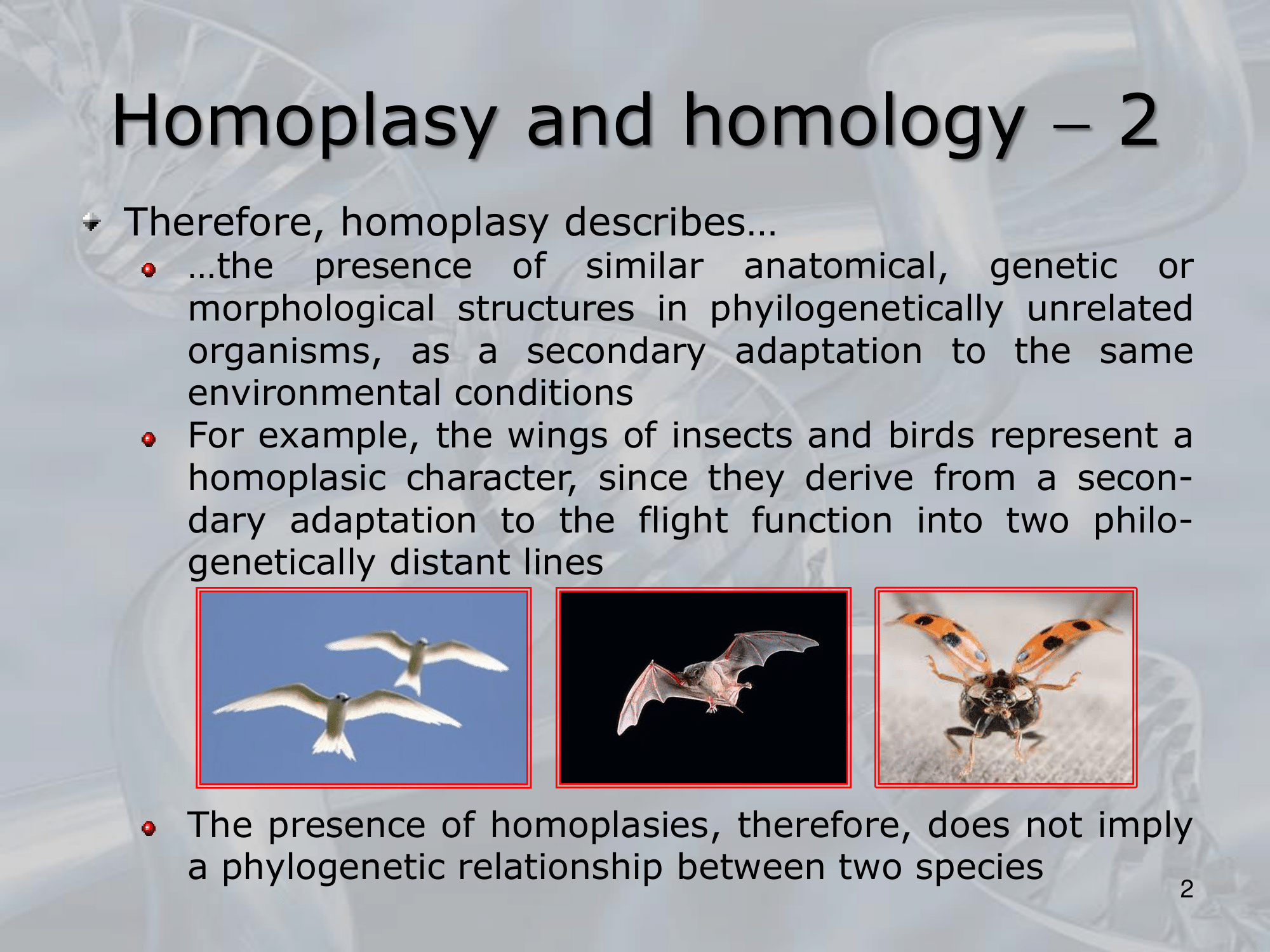
In other words, homoplastic structures are those that have similar functions or structures, but are not inherited from a common ancestor.
For example, the wings of birds and the wings of insects are homoplastic structures because they have similar functions (flight), but they are not inherited from a common ancestor and have different structures.
- Homology refers to similarities that are the result of common ancestry.
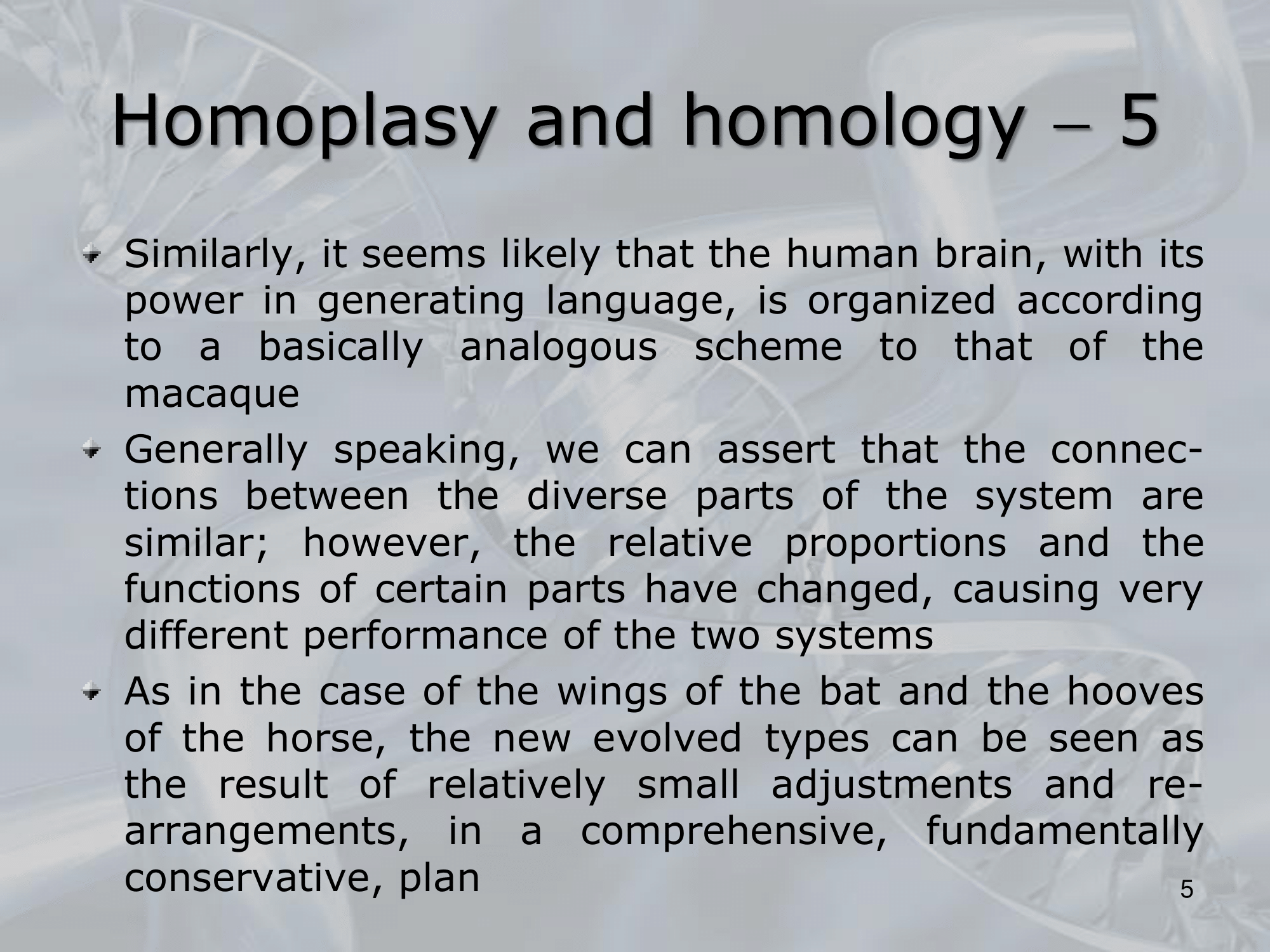
- In general, homology is used to infer evolutionary relationships between species, while homoplasy is a challenge for inferring such relationships.
- ==Homoplasy and homology are two terms used in evolutionary biology to describe similarities between species==, but they have different meanings.
- What is Convergent Evolution?
- Convergent evolution refers to the process by which unrelated organisms independently evolve similar traits or characteristics due to similar selection pressures in their environment.
These traits or characteristics are analogous, meaning they are similar in function but do not share a common ancestor or evolutionary origin. - For example, the wings of birds and the wings of bats are analogous structures that both evolved for flight, but they have different evolutionary origins (birds are descendants of theropod dinosaurs, while bats are mammals).
Another example is the streamlined body shape of dolphins and sharks, which both evolved for efficient movement through water, but again, they are not closely related in evolutionary terms.
- Convergent evolution refers to the process by which unrelated organisms independently evolve similar traits or characteristics due to similar selection pressures in their environment.
—————————————————————
IMPORTANTE
IMPORTANTE Omoplasia o Analogia: caratteri simili che non derivano da un antenato comune. #IMPORTANTE Omologia: caratteri simili derivante da un antenato comune.
—————————————————————
Slides with Notes
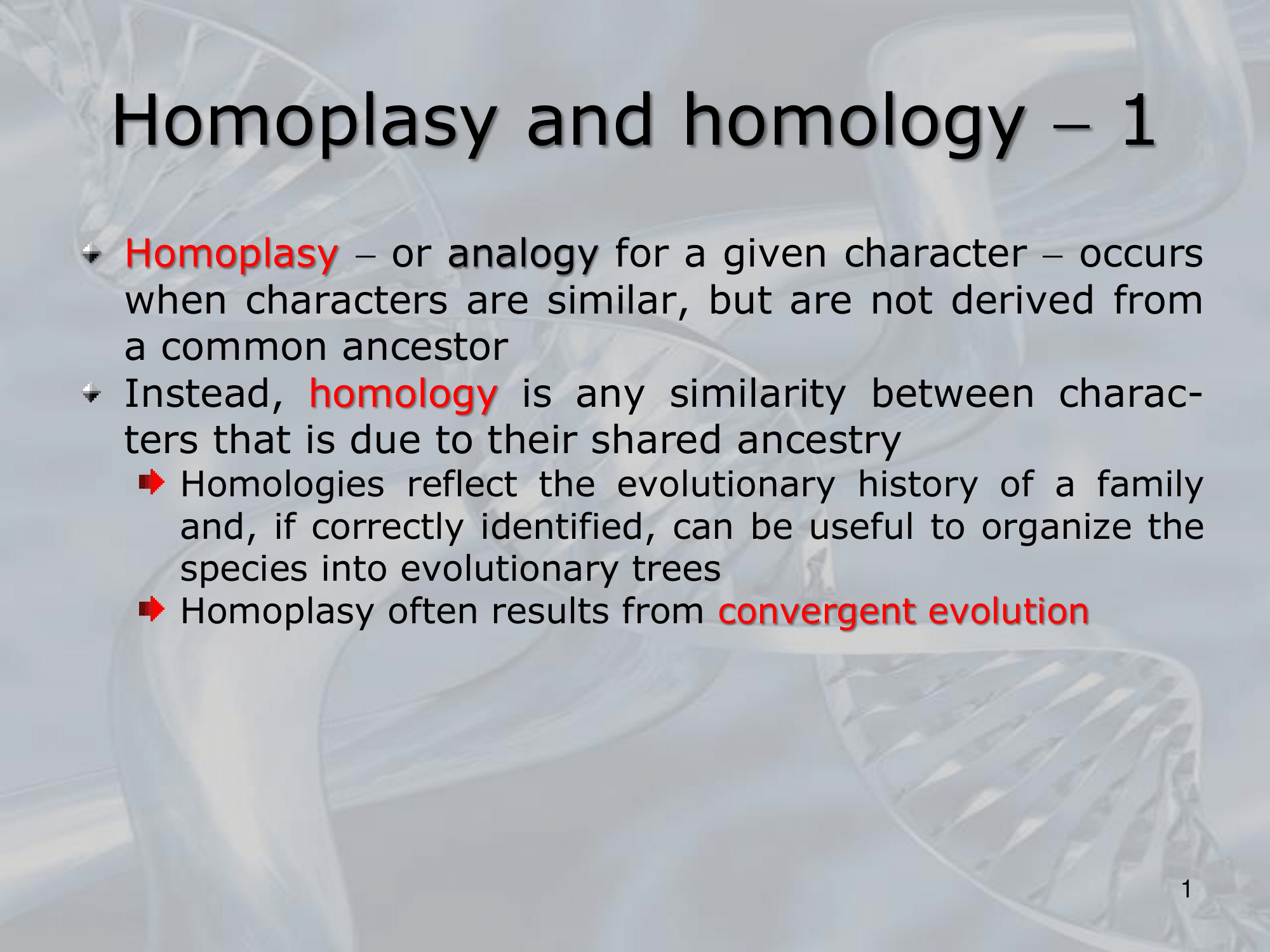
IMPORTANTE Omoplasia o Analogia: caratteri simili che non derivano da un antenato comune. #IMPORTANTE Omologia: caratteri simili derivante da un antenato comune.