Questions
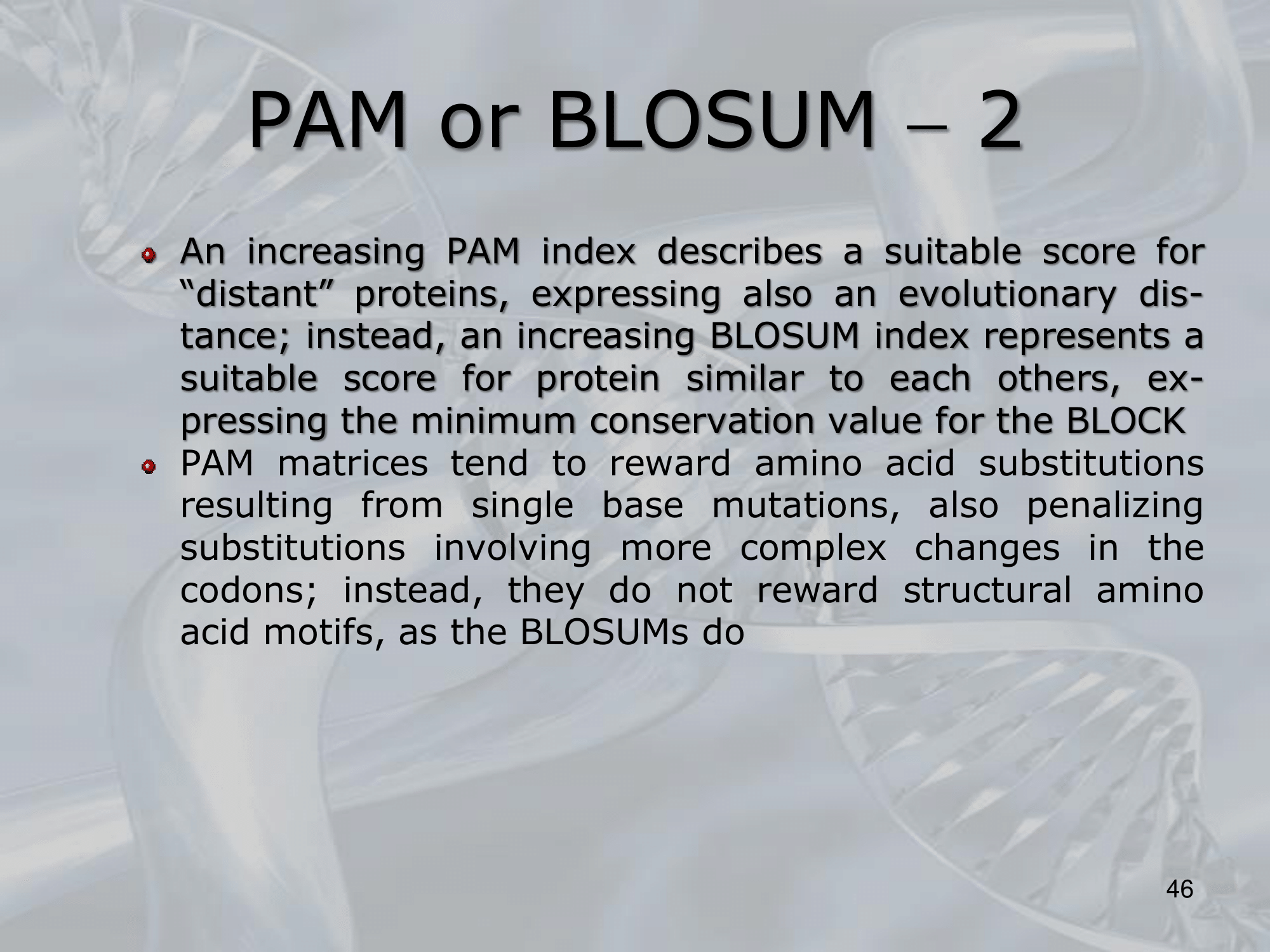
- What are the Differences between PAM and BLOSUM Matricies?
- PAM (Point Accepted Mutation) and BLOSUM (BLOcks SUbstitution Matrix) matrices are both commonly used for sequence alignment, but they differ in several ways:
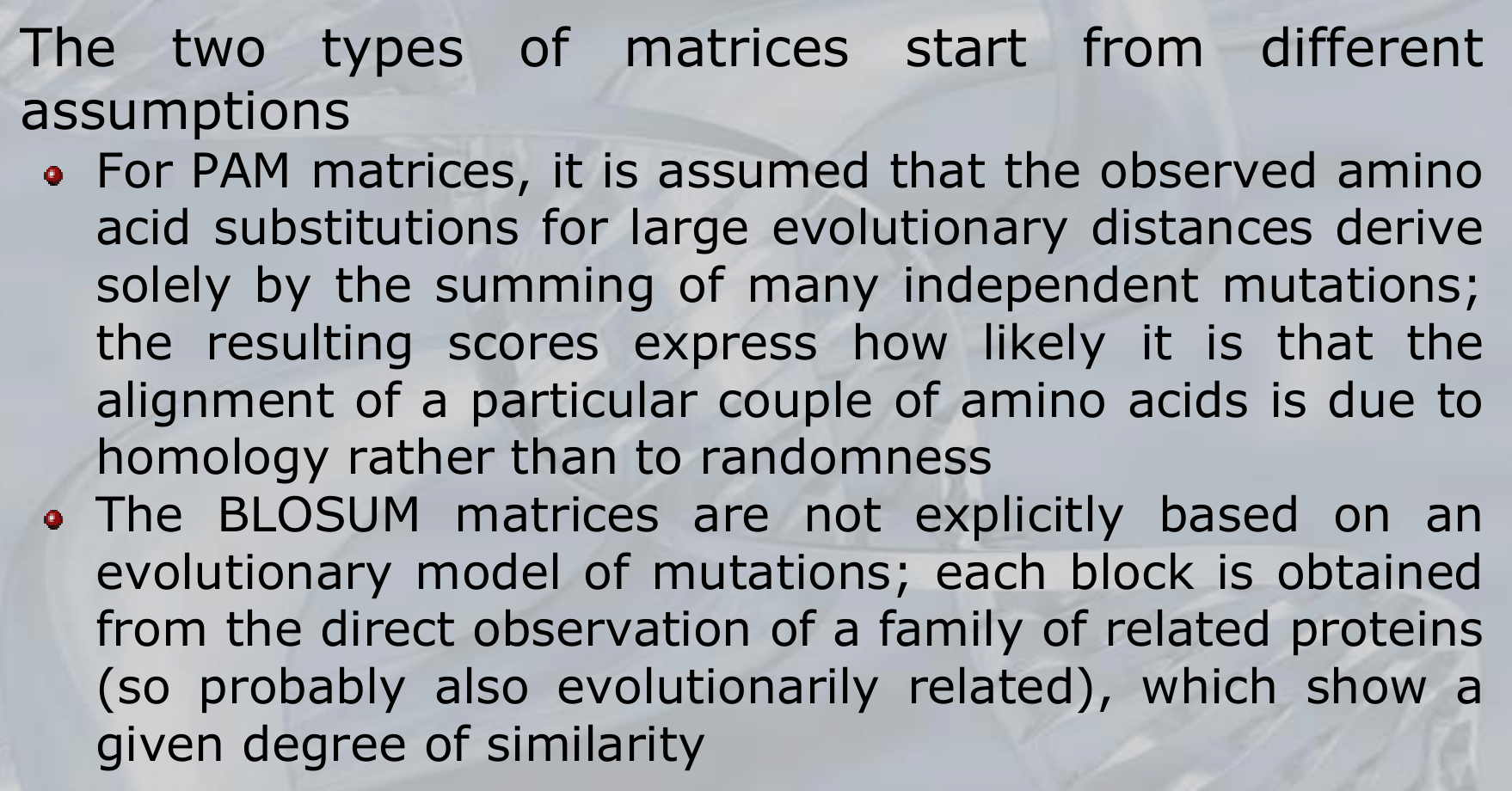
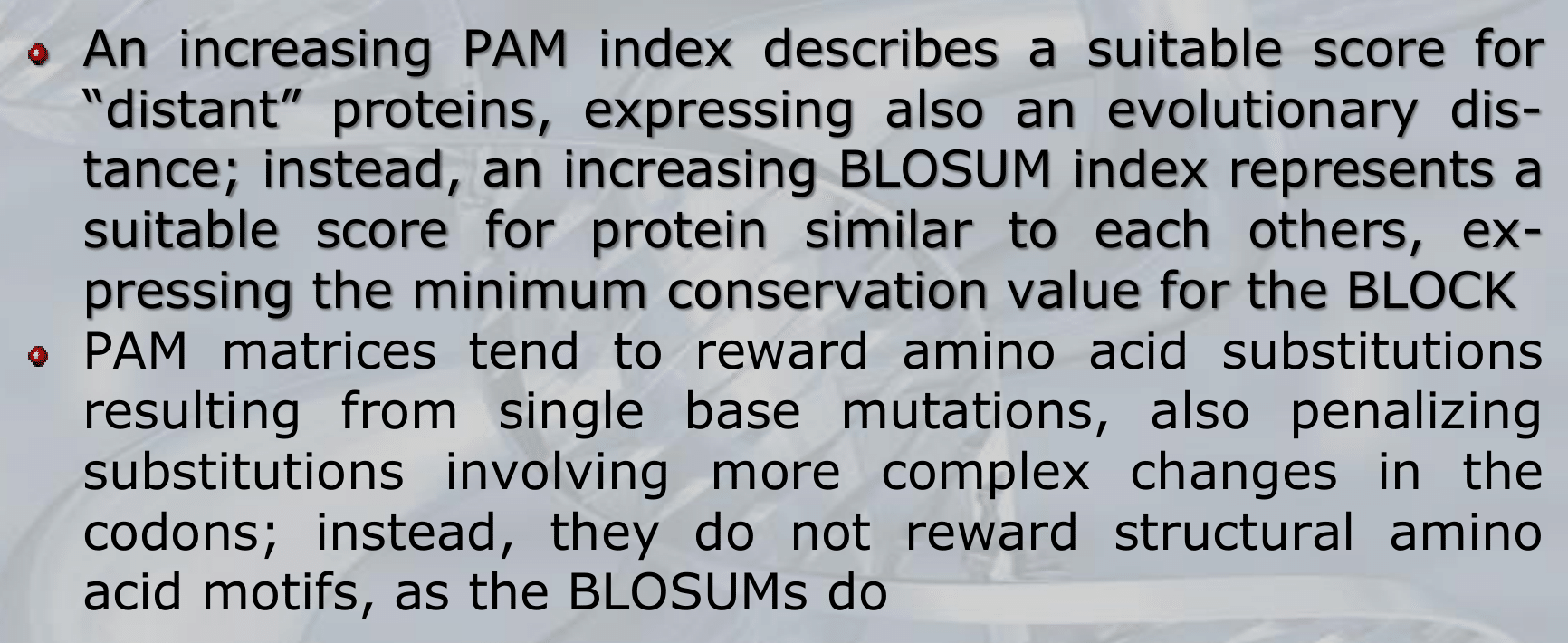
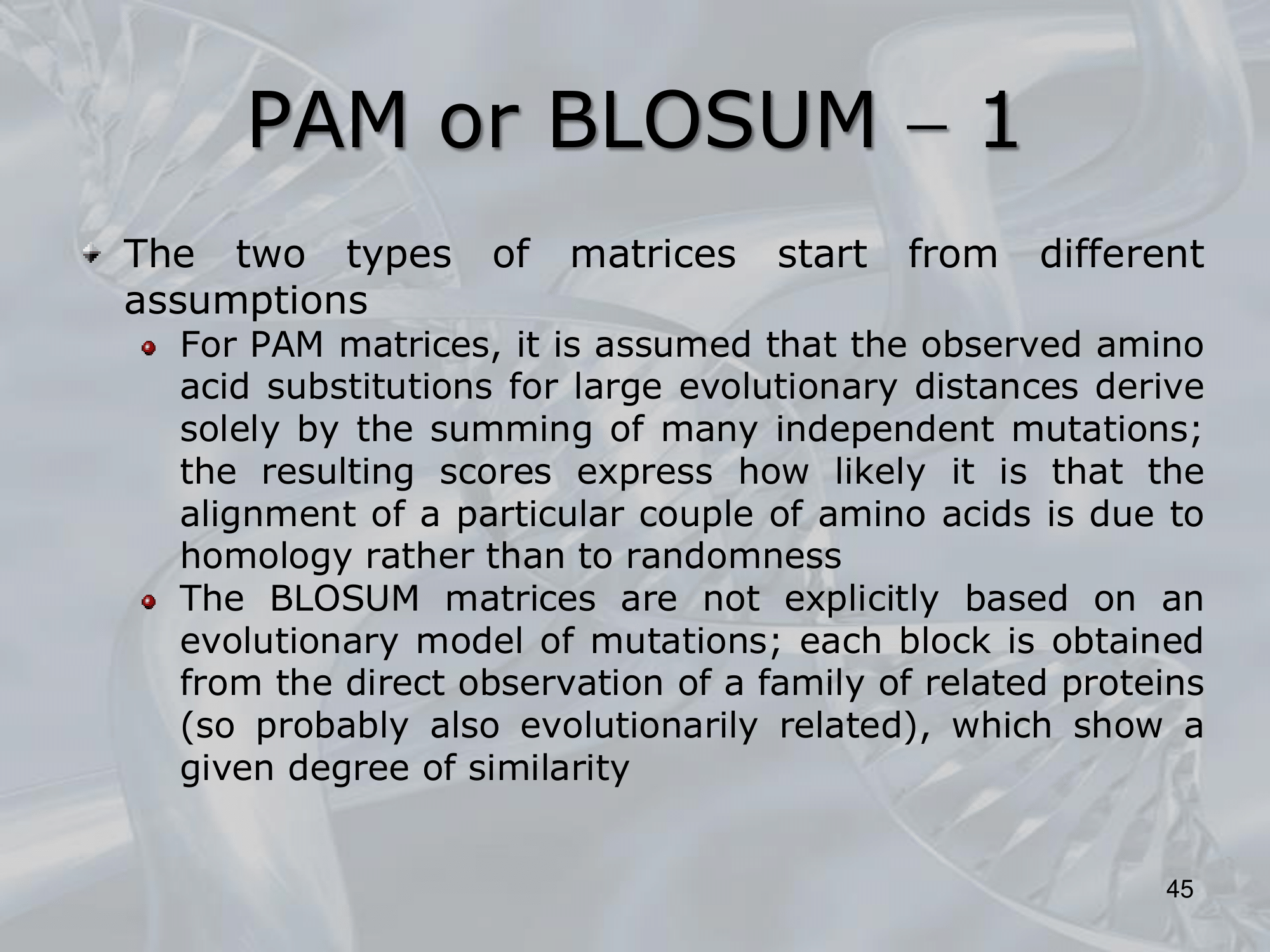
- Calculation: PAM matrices are based on evolutionary distances between sequences, while BLOSUM matrices are based on blocks of conserved sequences.
- Scale: PAM matrices are scaled in units of evolutionary time, while BLOSUM matrices are scaled in terms of sequence similarity.
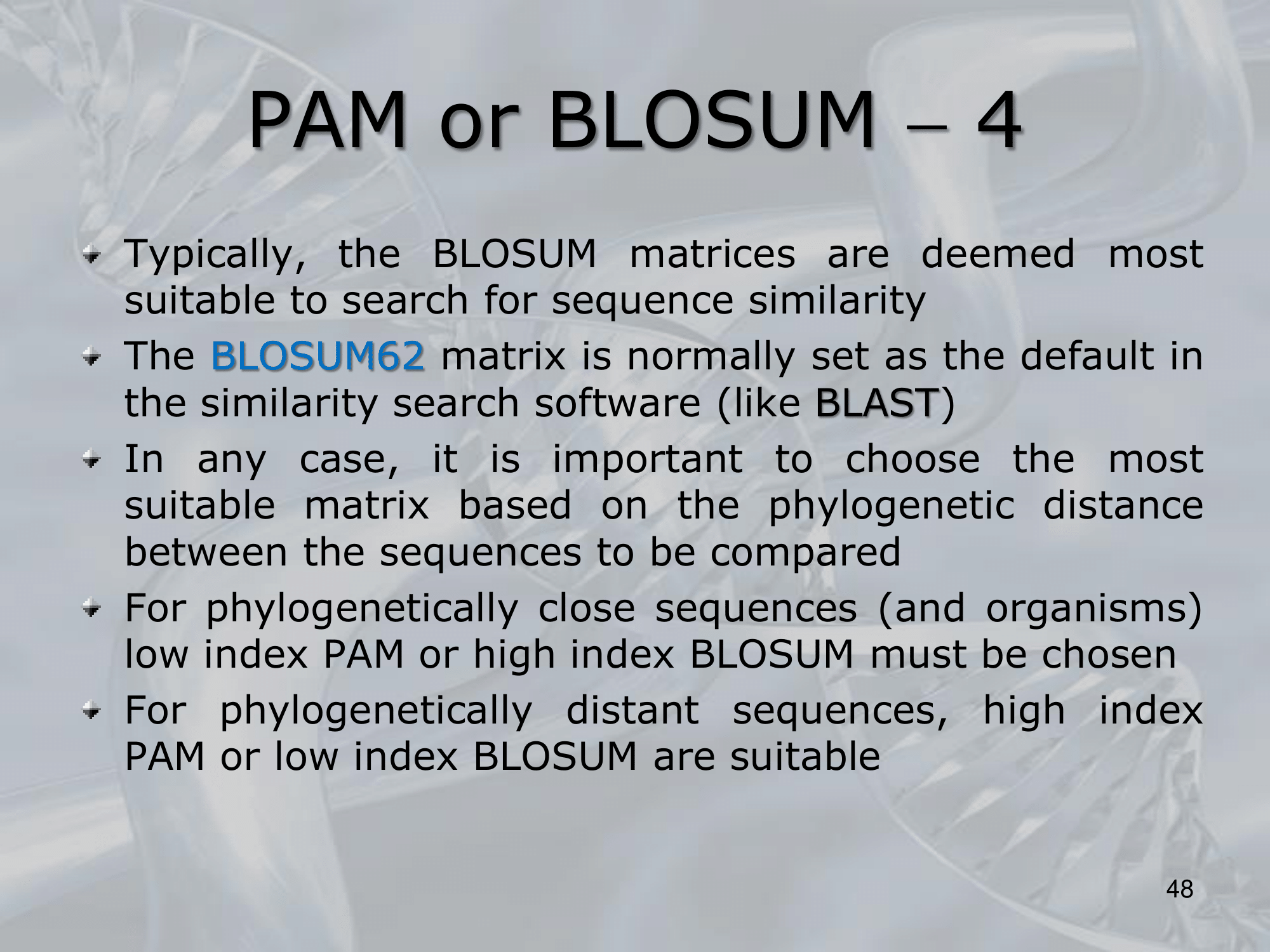
- Usage: PAM matrices are generally used for aligning very closely related sequences, while BLOSUM matrices are used for more distantly related sequences.
- Matrix size: PAM matrices are typically larger than BLOSUM matrices, as they require more information to accurately model evolutionary distances.
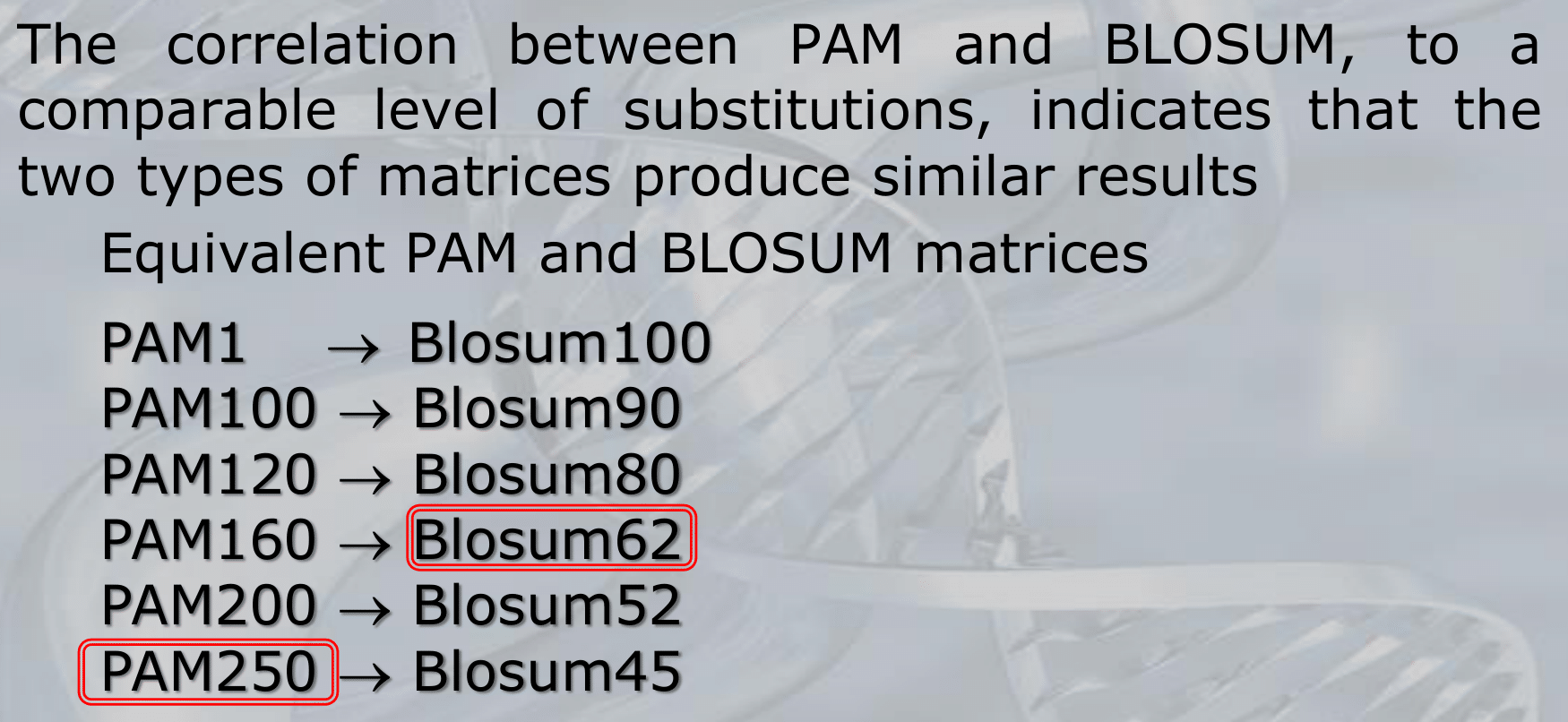
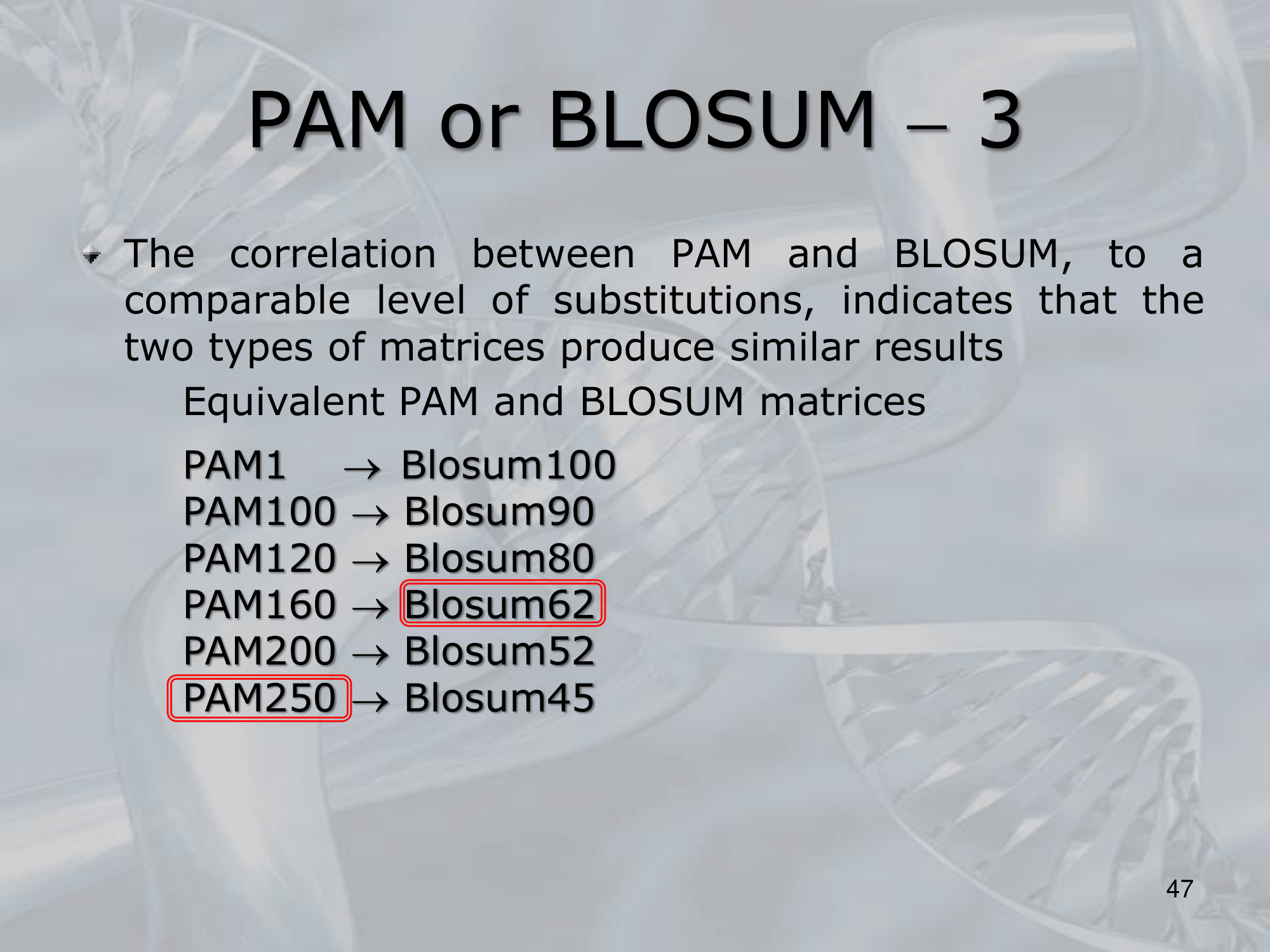
- Matrix version: PAM matrices have several different versions (PAM1, PAM250, PAM350, etc.), while BLOSUM matrices have different versions based on the level of sequence similarity (BLOSUM30, BLOSUM45, BLOSUM50, etc.).
- Performance: The performance of PAM and BLOSUM matrices can vary depending on the specific alignment problem and the type of sequences being compared.
In general, PAM matrices may perform better for aligning very closely related sequences, while BLOSUM matrices may perform better for more distantly related sequences.
- Overall, the choice between PAM and BLOSUM matrices will depend on the specific alignment problem and the characteristics of the sequences being compared.
- PAM (Point Accepted Mutation) and BLOSUM (BLOcks SUbstitution Matrix) matrices are both commonly used for sequence alignment, but they differ in several ways:
IMPORTANTE
IMPORTANTE Differences between PAM and BLOSUM Matricies
IMPORTANTE Similarities between PAM and BLOSUM Matricies
Slides with Notes
IMPORTANTE Differences between PAM and BLOSUM Matricies
IMPORTANTE Similarities between PAM and BLOSUM Matricies