Questions
- What are Molecular Clocks?
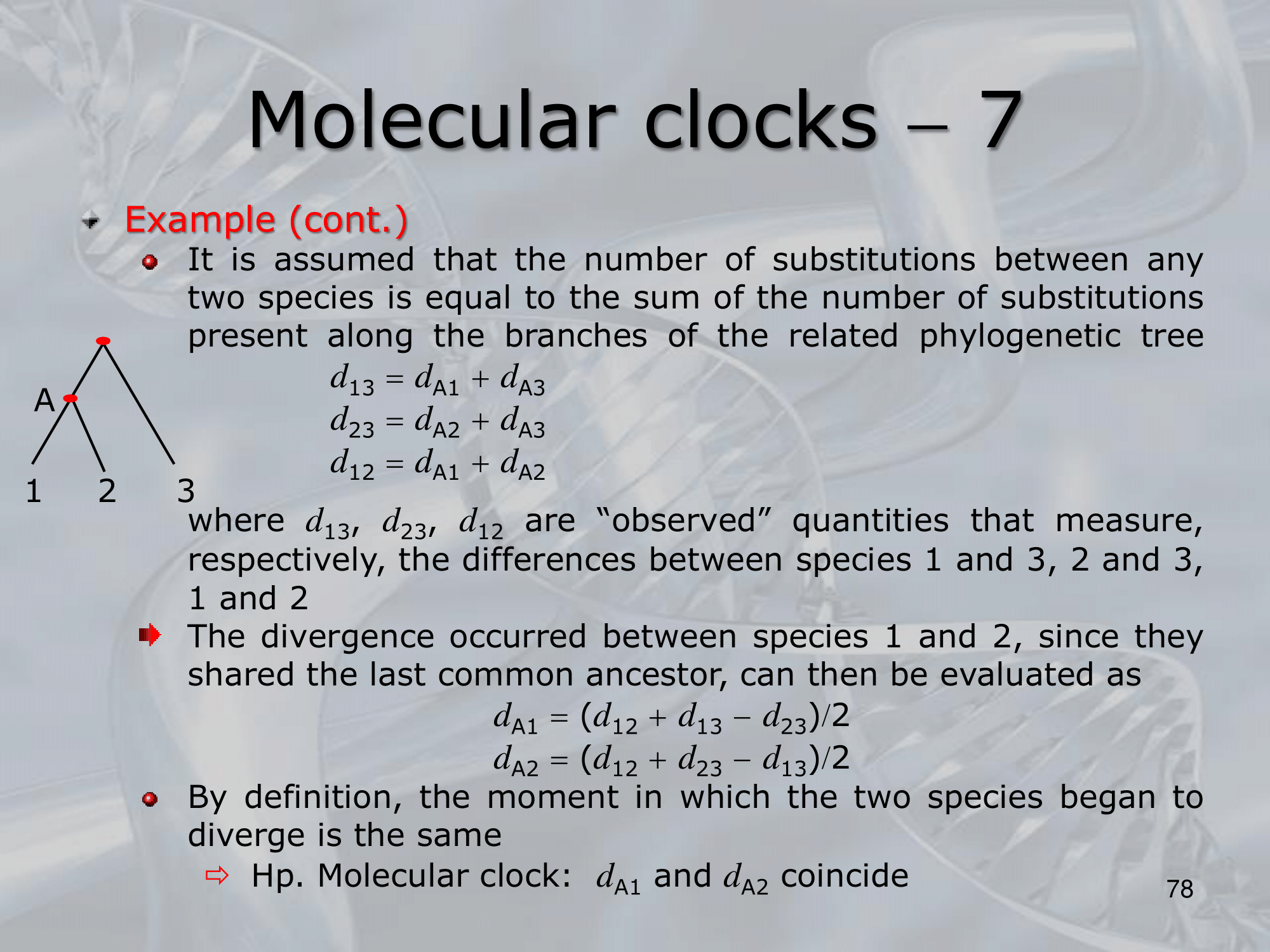
- ==Molecular clocks are a concept in molecular evolution that use information from molecular sequences to estimate the time at which species diverged from a common ancestor==.
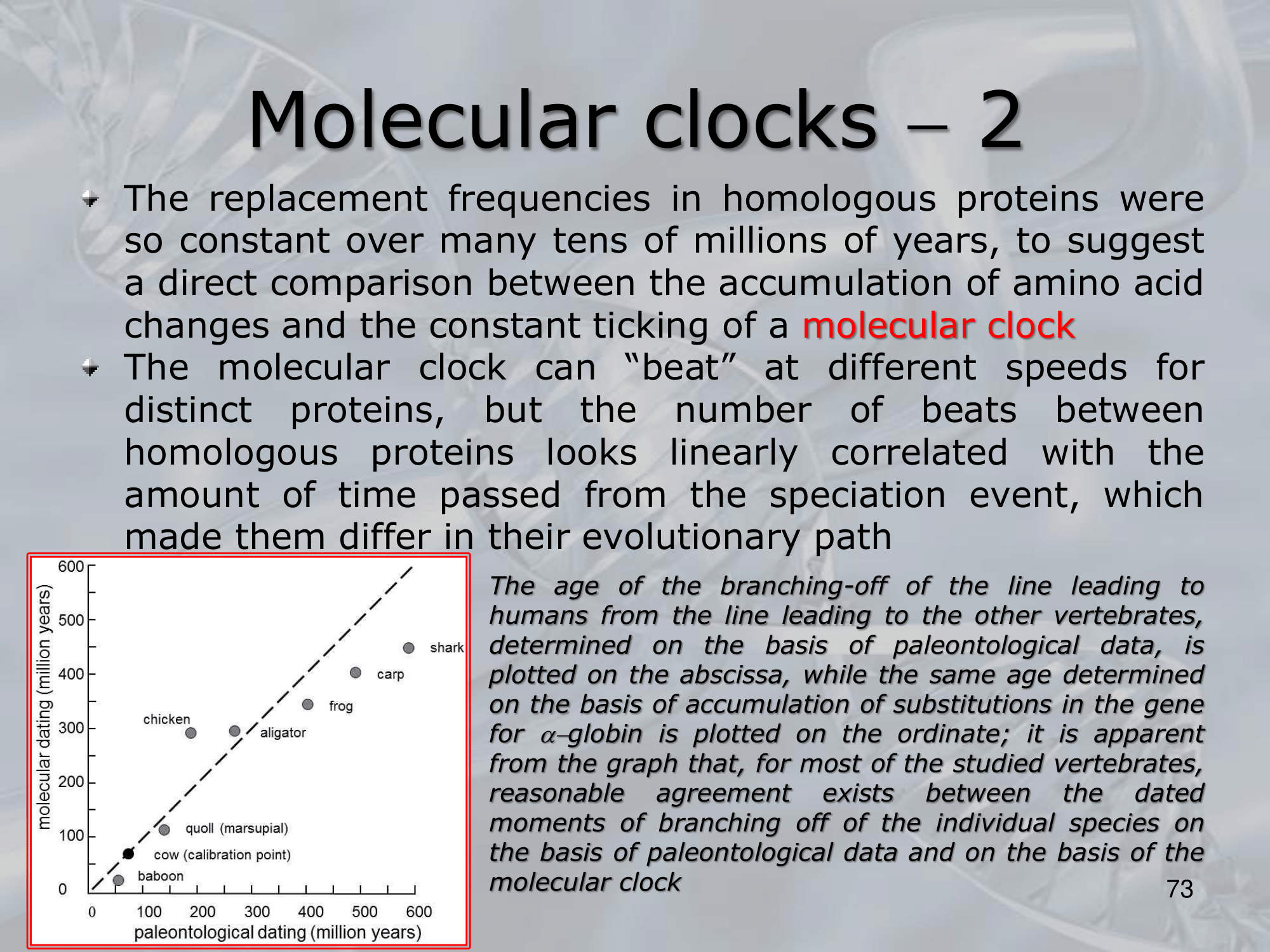
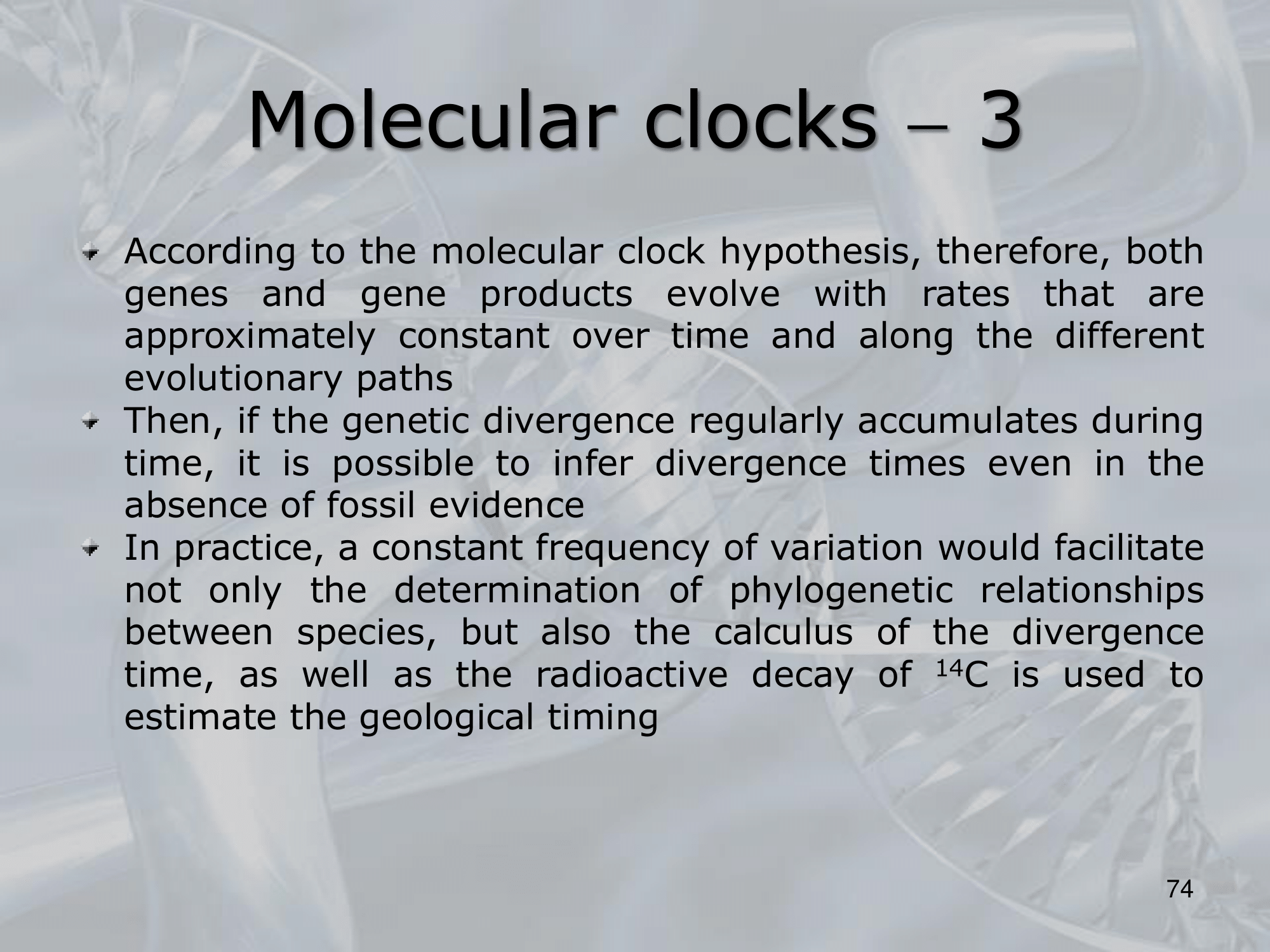
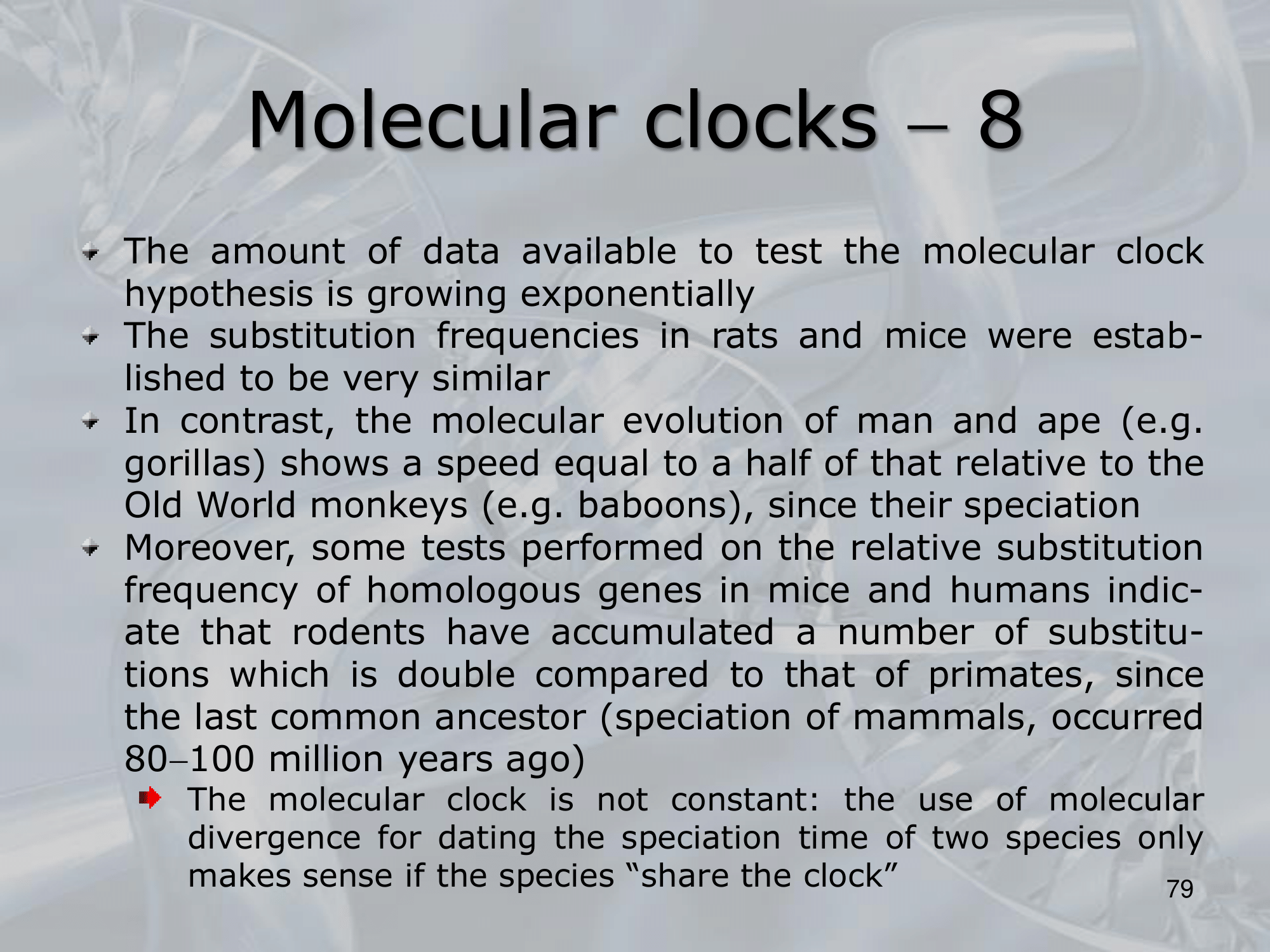
The idea is that the rate of molecular evolution (e.g., the rate of nucleotide substitutions) can be relatively constant over long periods of time, allowing researchers to use the number of molecular differences between two sequences as a proxy for the time since the sequences diverged.
By calibrating the rate of molecular evolution with known divergence times (e.g., from the fossil record or biogeographic events), researchers can estimate the divergence times of species for which there is no direct fossil or historical evidence.
Molecular clocks have been used to study the evolution of a wide range of organisms, from bacteria to mammals, and to address questions about the timing of key events in the history of life on Earth.
- ==Molecular clocks are a concept in molecular evolution that use information from molecular sequences to estimate the time at which species diverged from a common ancestor==.
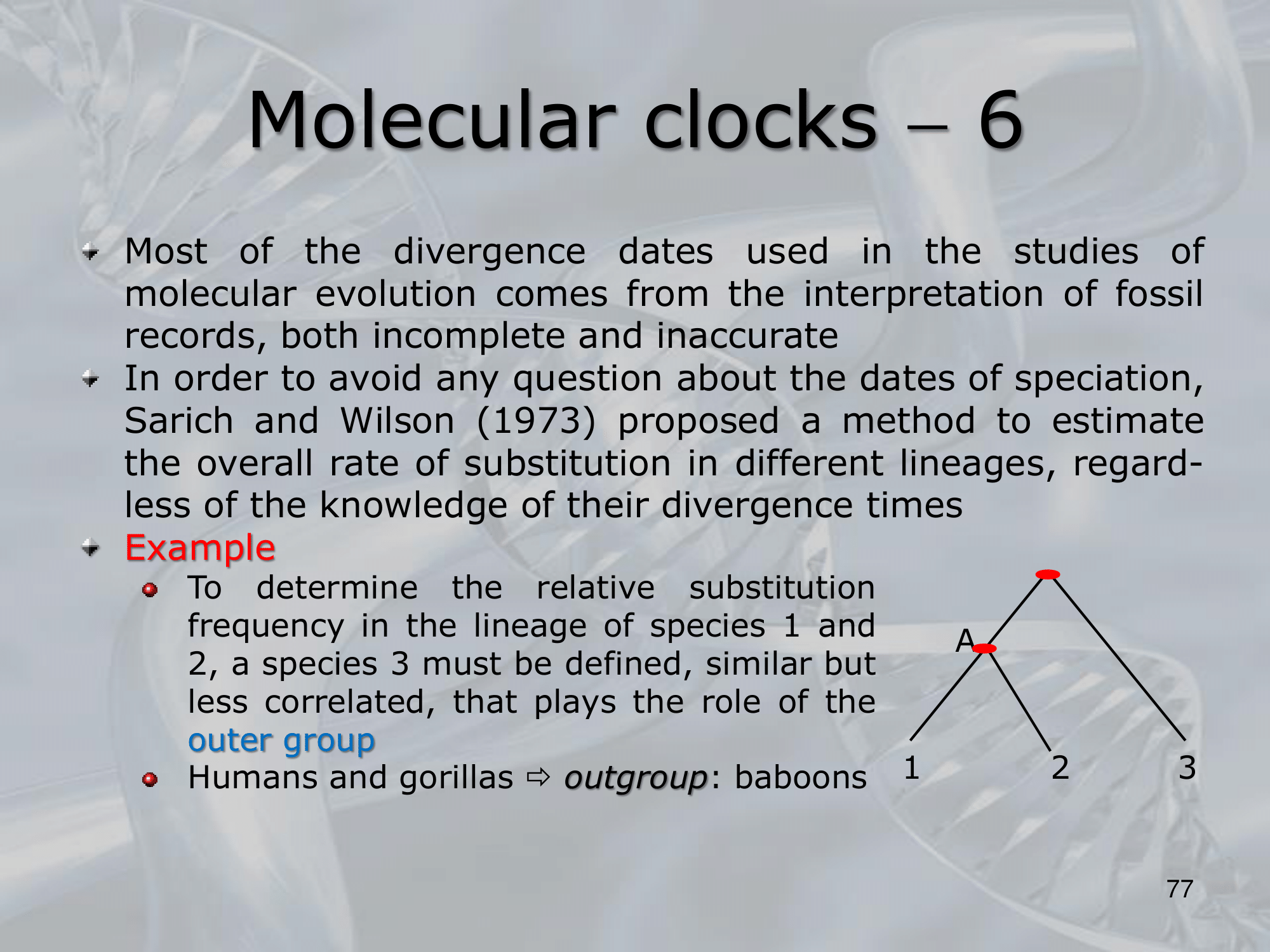
- What is an Outer Group?
- An outgroup is a group of organisms that is closely related to but not part of the group being studied.
The purpose of using an outgroup is to provide a point of reference for determining the ancestral characteristics of the group being studied.
By comparing the traits of the outgroup to those of the group being studied, researchers can determine which traits are ancestral and which have evolved within the group being studied.
This information can then be used to construct phylogenetic trees or molecular clocks to study the evolutionary history of the group being studied.
- An outgroup is a group of organisms that is closely related to but not part of the group being studied.
- What are Organelles?
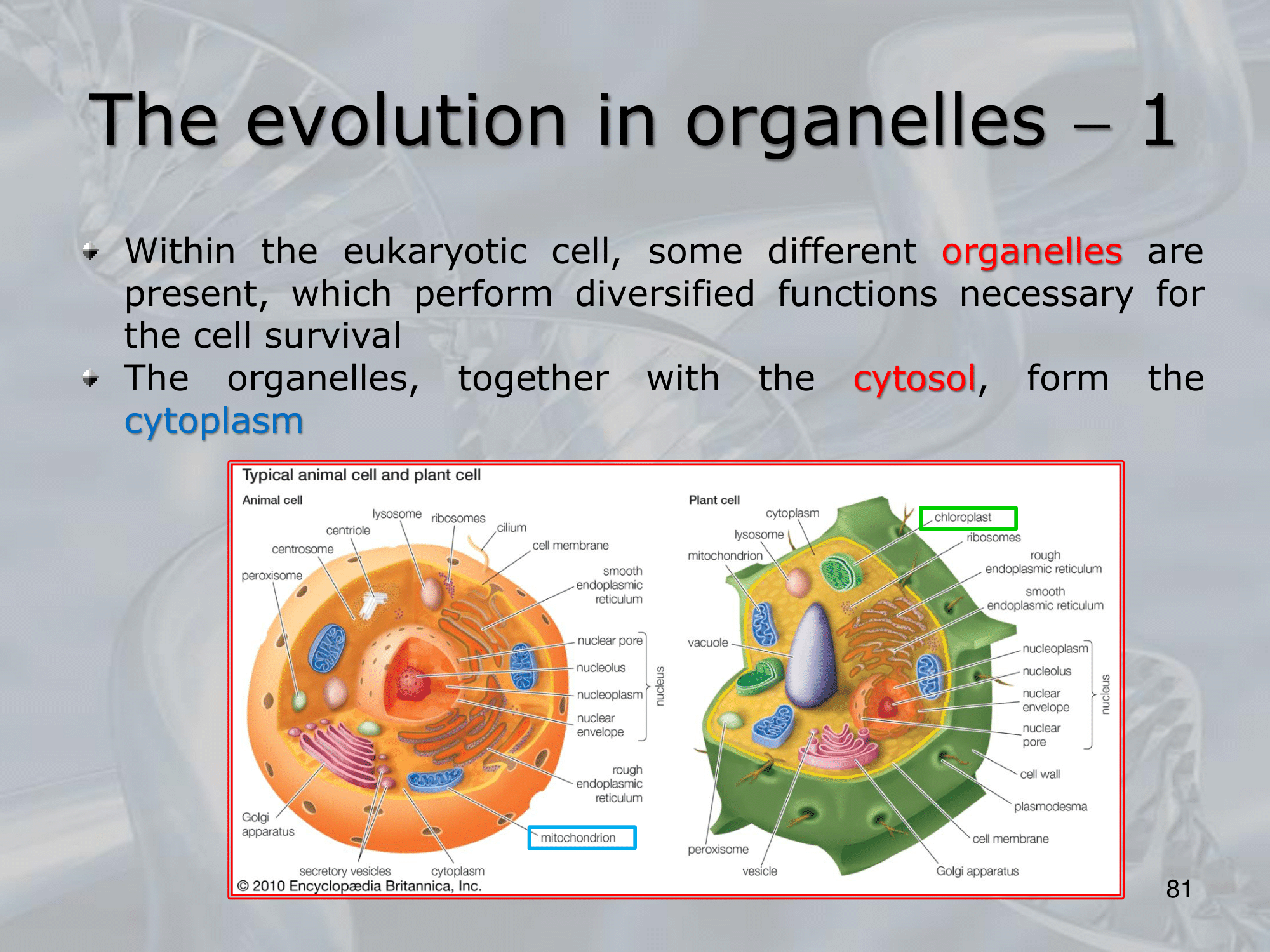
- ==Organelles are specialized structures that perform specific functions within eukaryotic cells==.
These structures are typically membrane-bound and are found within the cytoplasm of cells.
Some examples of organelles include the mitochondria, which are responsible for producing energy through cellular respiration, and the chloroplasts, which are involved in photosynthesis in plant cells.
Other organelles include the endoplasmic reticulum, Golgi apparatus, lysosomes, and peroxisomes, among others.
Each organelle has a specific function and plays an important role in the overall functioning of the cell.
- ==Organelles are specialized structures that perform specific functions within eukaryotic cells==.
- What is the Cytoplasm?
- The cytoplasm is the gel-like substance that fills the inside of cells, surrounding the organelles.
It is a complex mixture of water, salts, and various types of biomolecules such as proteins, nucleic acids, lipids, and carbohydrates.
Many important cellular processes, such as protein synthesis and metabolism, occur within the cytoplasm.
The cytoplasm is also involved in various cellular movements and transport processes, such as the movement of vesicles and other organelles within the cell.
- The cytoplasm is the gel-like substance that fills the inside of cells, surrounding the organelles.
- What is the Mirochondria, and what is mtDNA, why is it useful for Molecular Clocks?
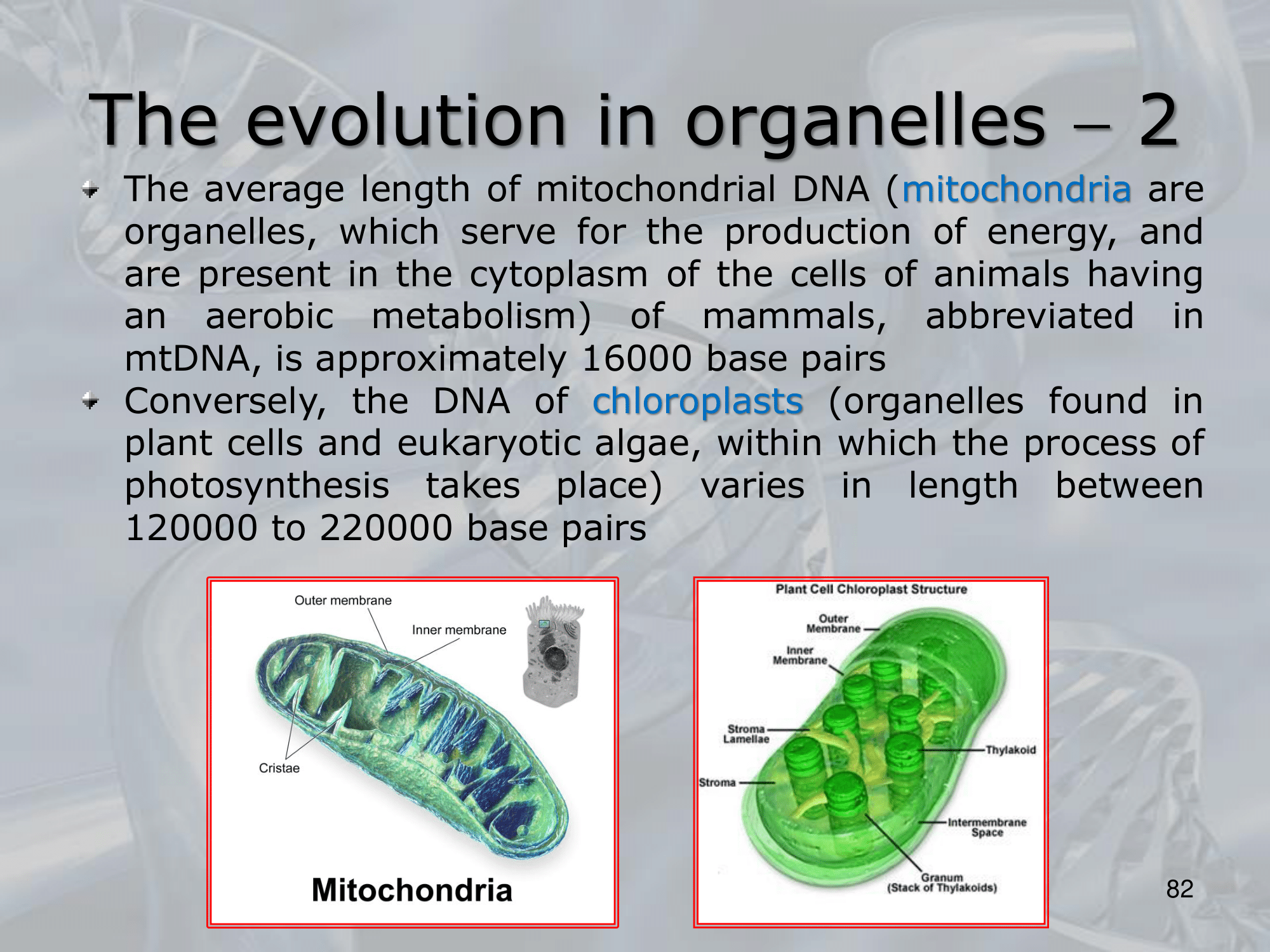
- Mitochondria are organelles found in eukaryotic cells that are responsible for producing energy in the form of ATP.
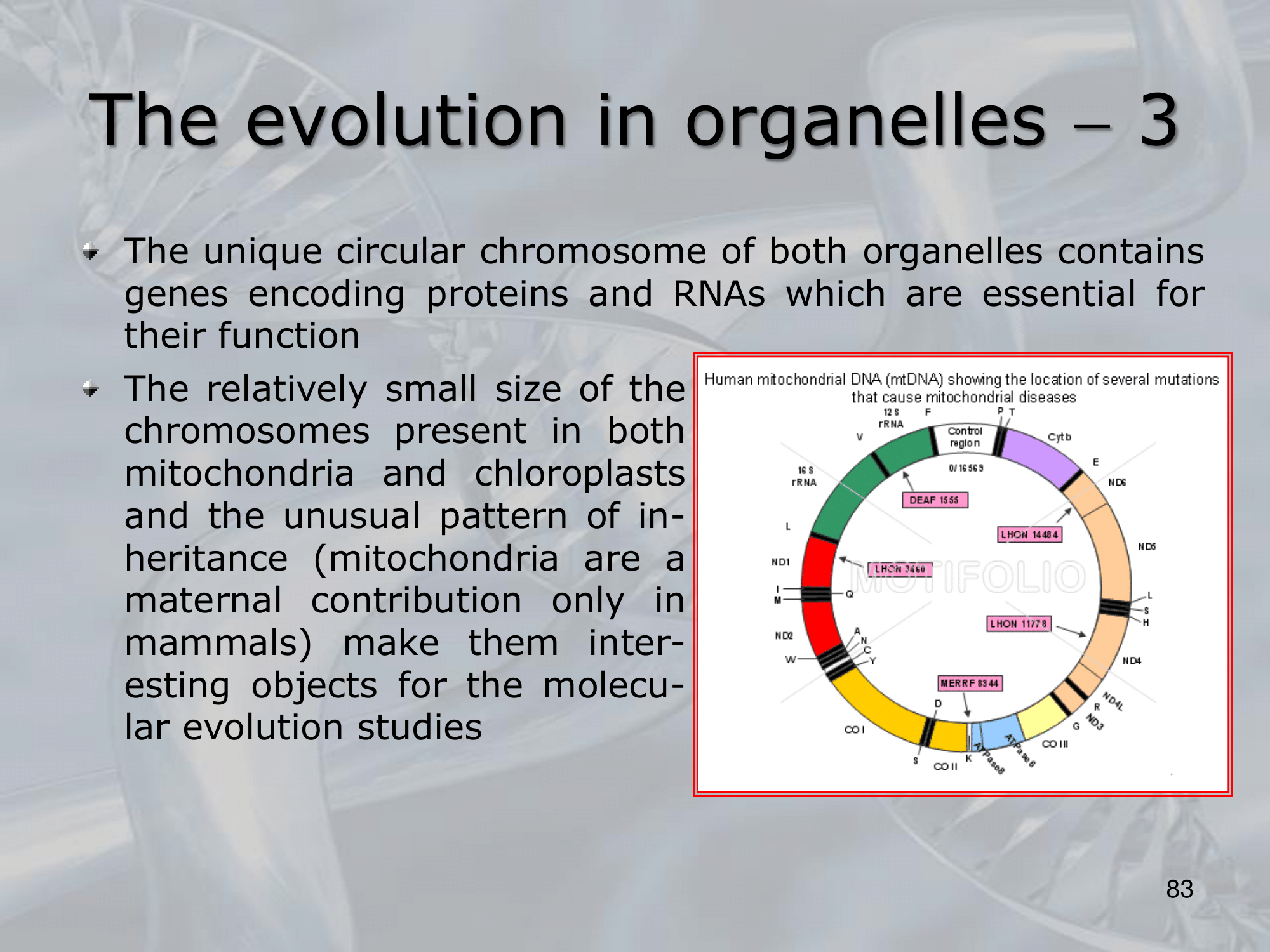
==They have their own circular genome, called mitochondrial DNA (mtDNA), which is separate from the nuclear genome of the cell==. - mtDNA is often used for molecular clocks because it has several features that make it useful for inferring evolutionary relationships and estimating divergence times.
First, mtDNA evolves relatively rapidly compared to nuclear DNA, allowing for changes to accumulate quickly over evolutionary time.
Second, mtDNA is maternally inherited, meaning that it is passed down from mothers to their offspring without any contribution from the father’s mtDNA.
This means that mtDNA can be used to trace maternal lineages and infer the evolutionary history of populations over time.
Finally, mtDNA is relatively easy to sequence and analyze compared to nuclear DNA, making it a popular choice for molecular clock studies.
- Mitochondria are organelles found in eukaryotic cells that are responsible for producing energy in the form of ATP.
- What is the Chloroplasts, and what is cpDNA, why is it useful for Molecular Clocks?
- Chloroplasts are organelles found in plants and algae that are responsible for photosynthesis.
They contain their own DNA, known as chloroplast DNA or cpDNA, which is separate from the nuclear DNA. - ==Like mtDNA, cpDNA is often used in molecular clock studies because it is maternally inherited==, meaning it is passed down from the mother to her offspring without recombination.
This allows for a relatively straightforward estimation of divergence times between species.
Additionally, cpDNA is more conserved than nuclear DNA, which makes it particularly useful for studies of closely related organisms.
- Chloroplasts are organelles found in plants and algae that are responsible for photosynthesis.
—————————————————————
IMPORTANTE
IMPORTANTE Mitochondrial DNA: the circular chromosome found inside the cellular organelles called mitochondria. Viene abbreviato con mtDNA (mitochondrial DNA) e è approssimativamente lungo coppie di basi, e si trova nelle cellule animali. La matiocondria è l’organello che serve per la produzione di energia (via aerobica) Mentre per le piante abbiamo il cloroplasma, per la produzione di energia via fotosintesi, e la sua lunghezza varia tra coppie di basi #IMPORTANTE Il DNA circolare contenuto nella mitocondria (mtDNA) contiene gene encoding proteins ed RNAs che sono essenziali all’organello (mitocondria), lo stesso vale per il DNA contenuto nel cloroplasma. Inoltre da notare che l’mtDNA viene passato solo dalla madre.
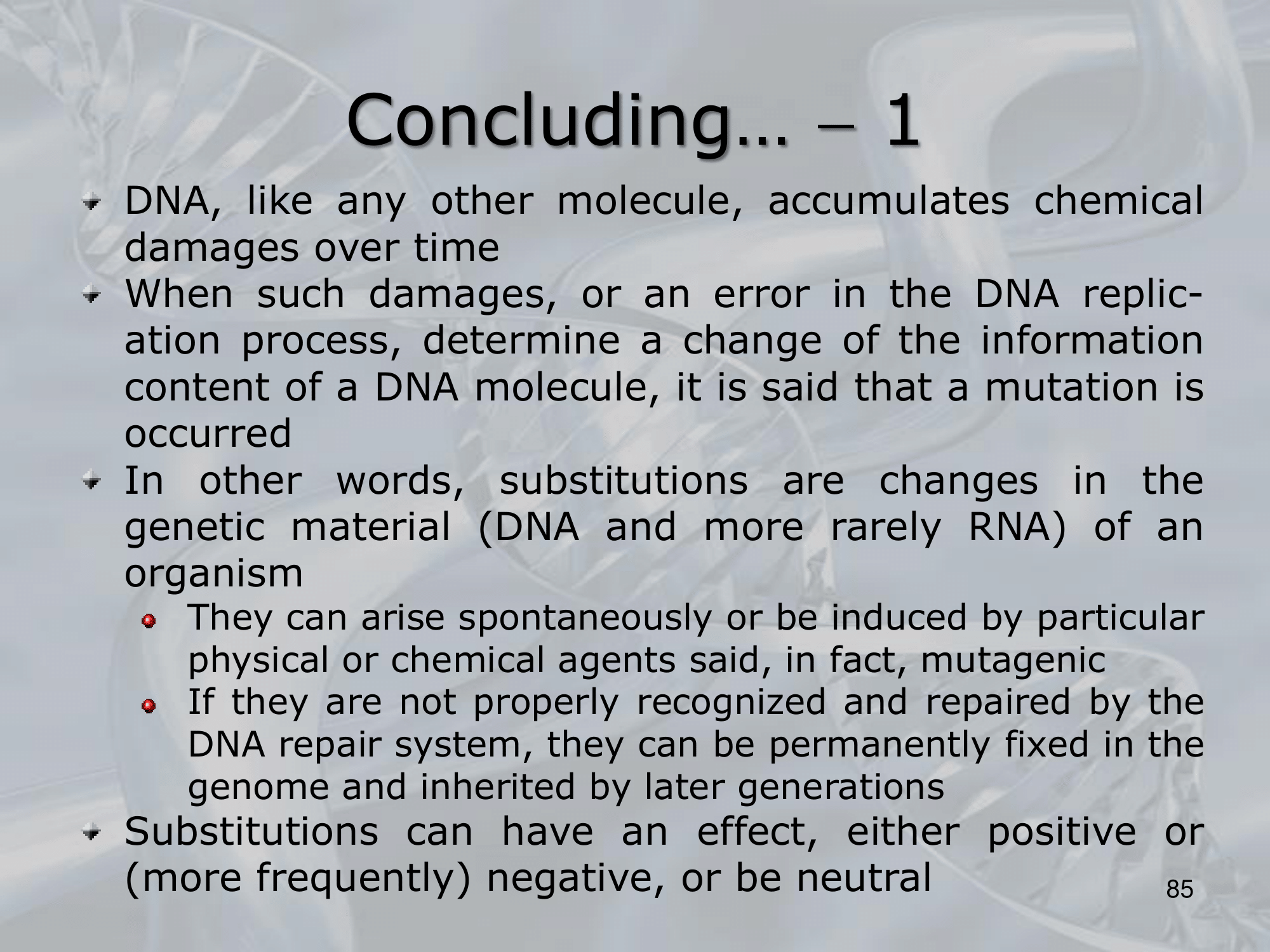
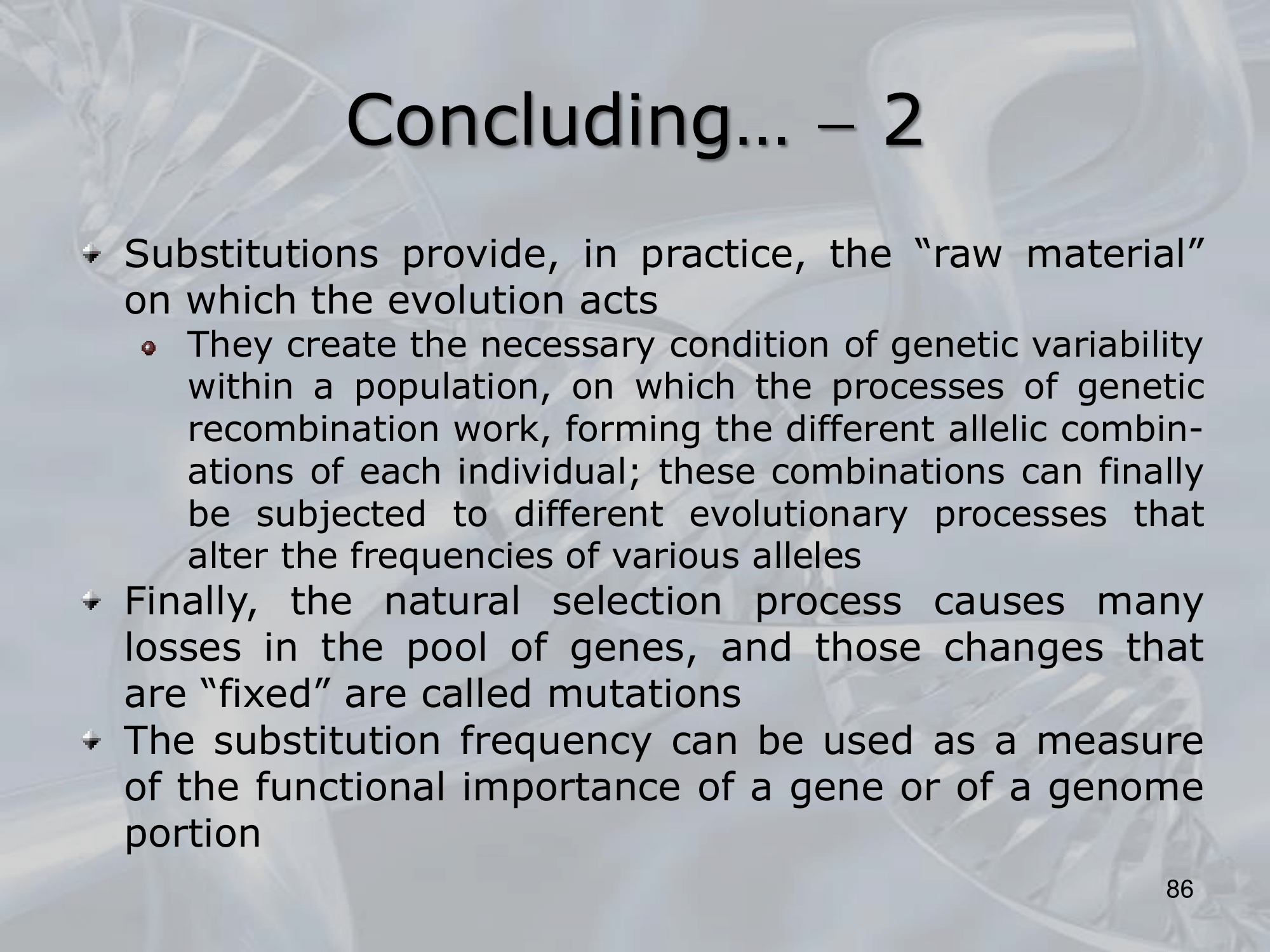
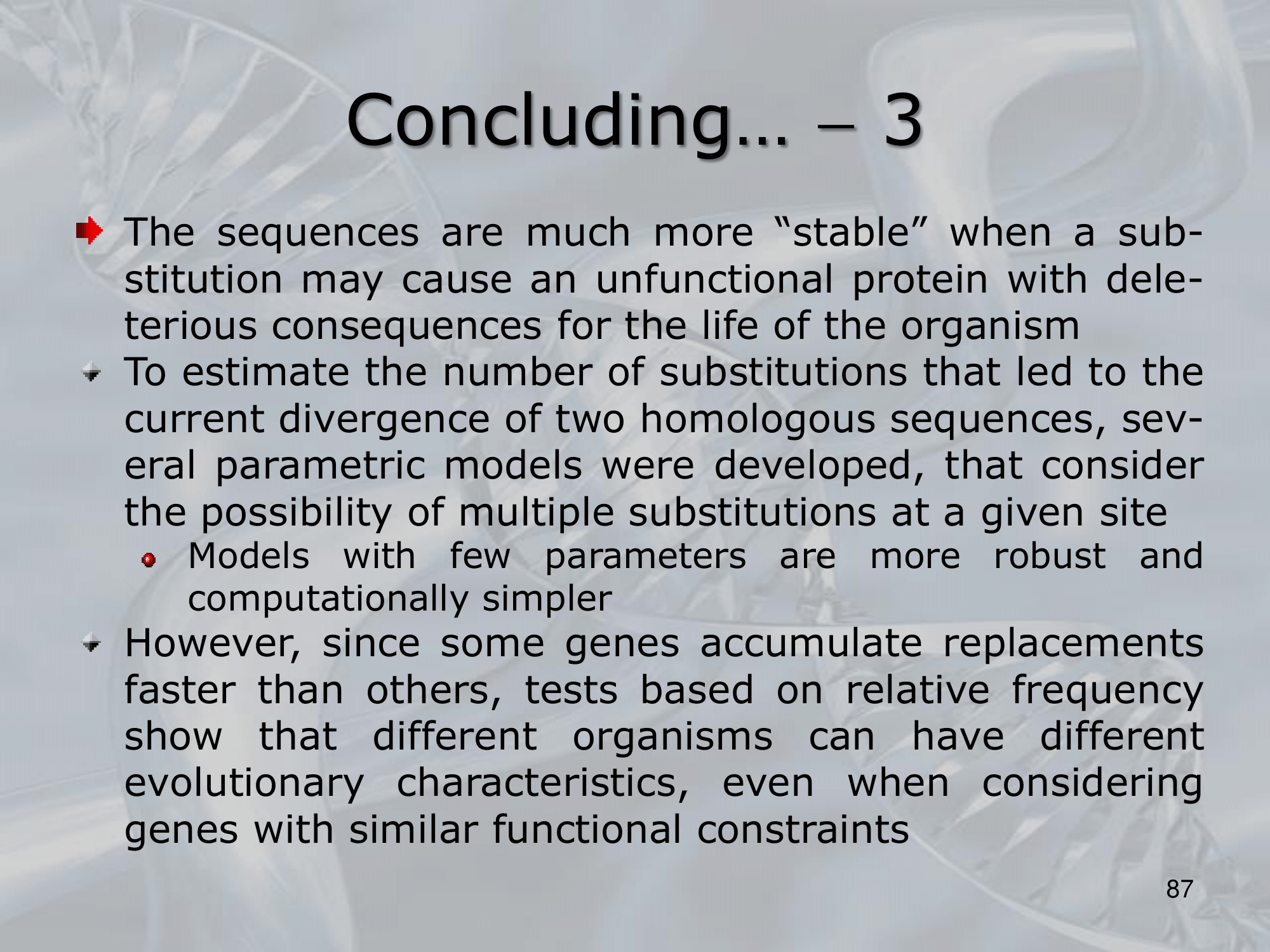
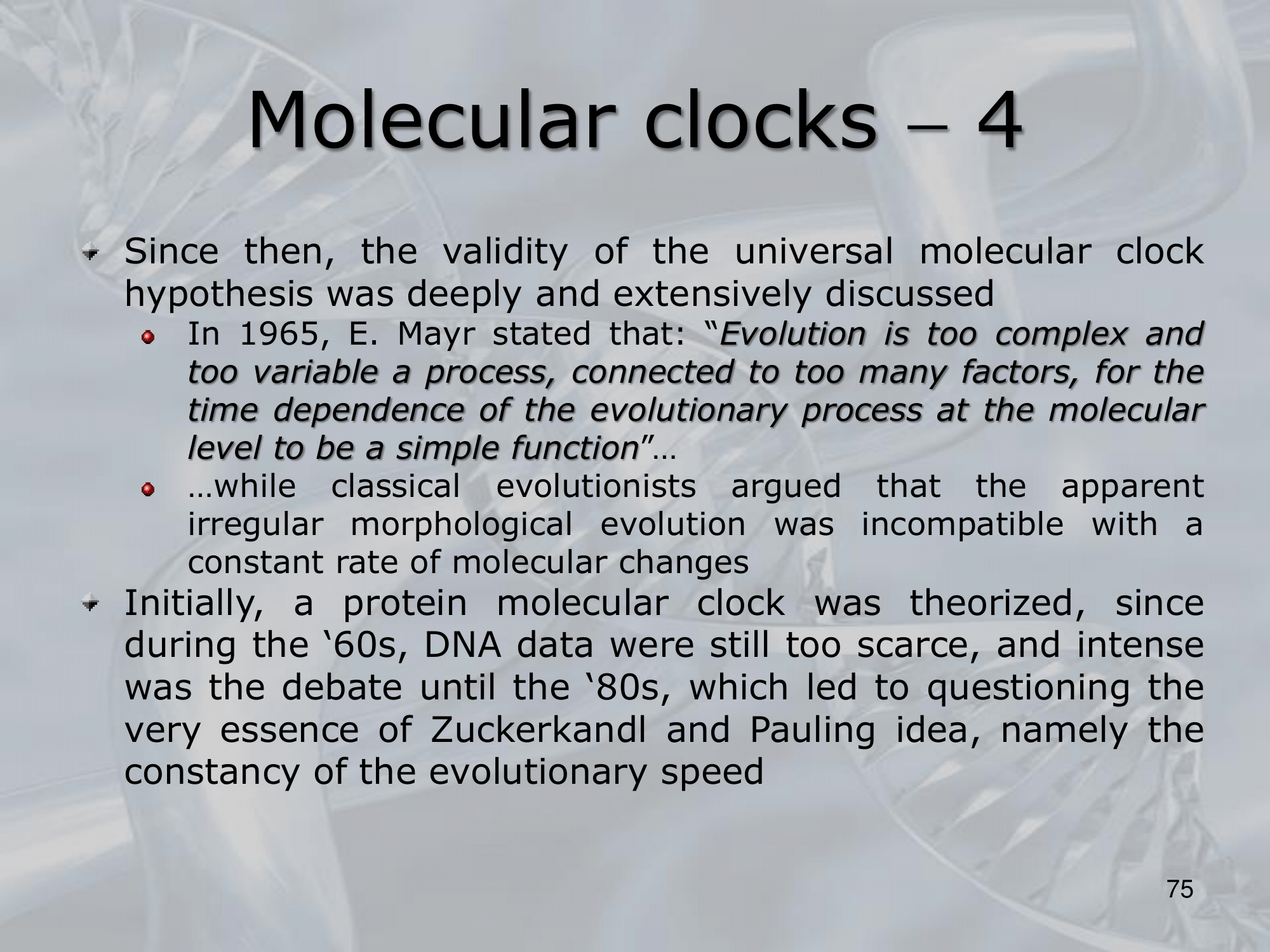
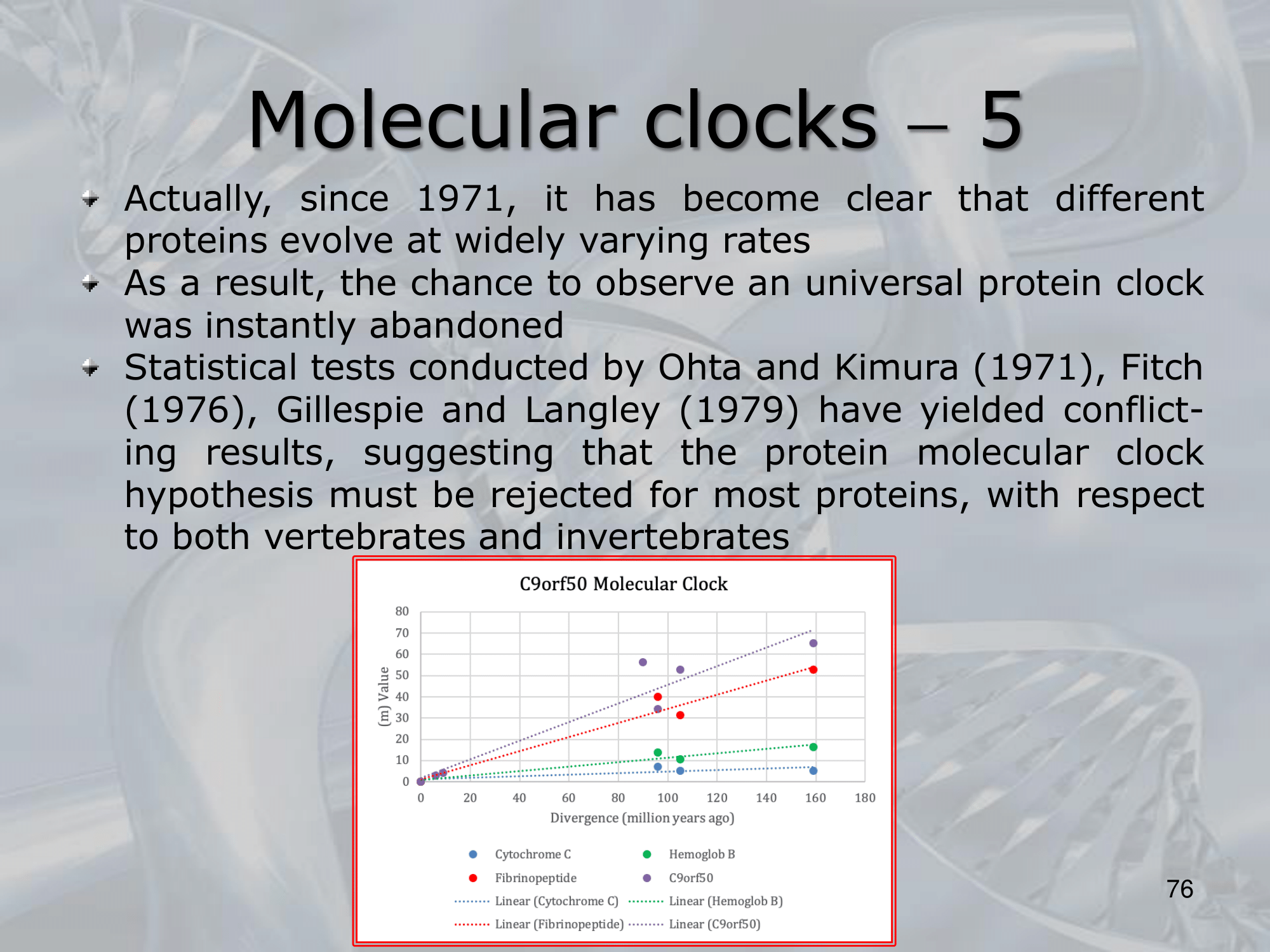
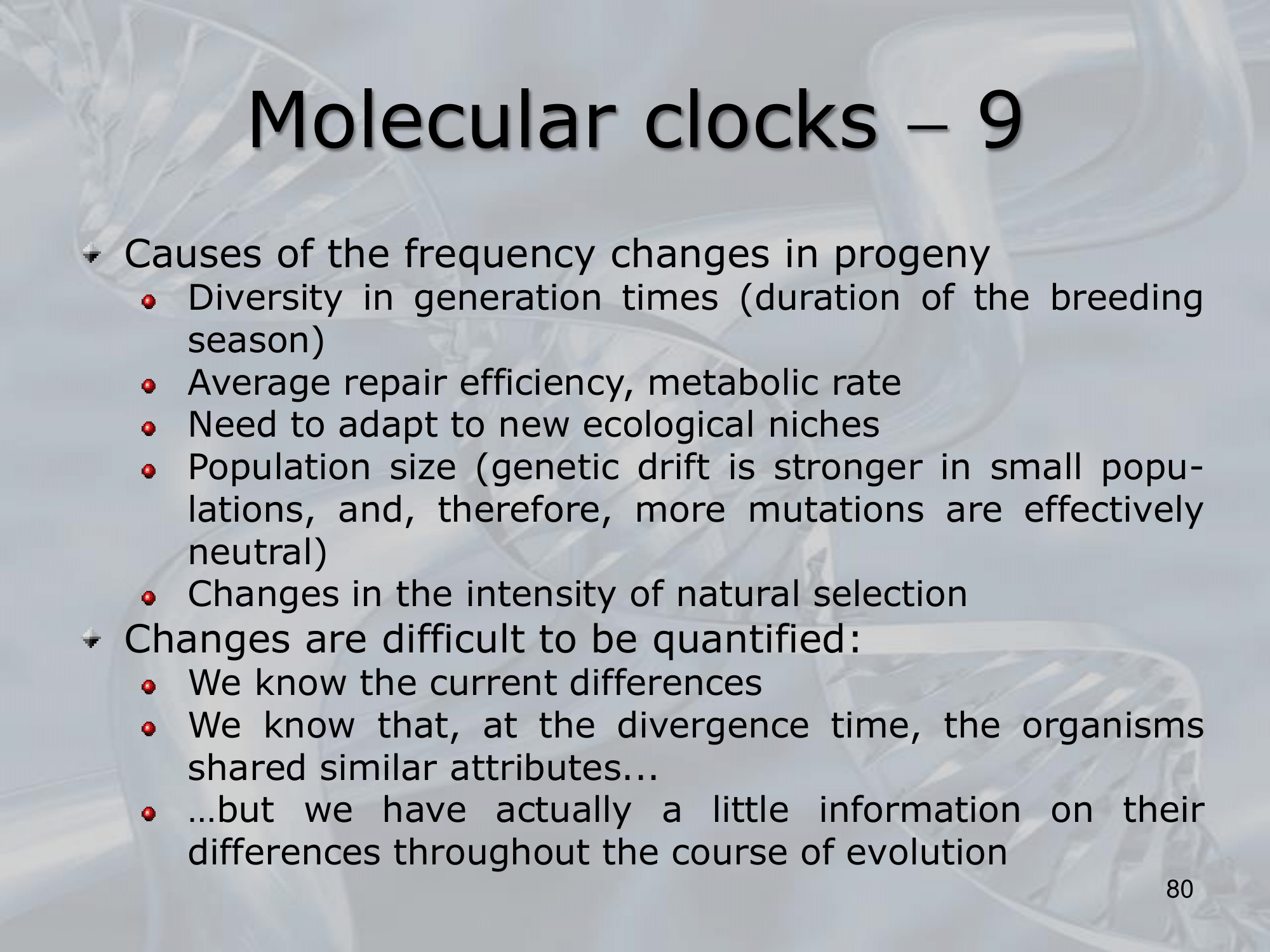
IMPORTANTE Molecular Clock: a technique used in evolutionary biology that estimates the age divergenze of organisms from a common ancestor by looking at differences in their DNA. Il molecular clock è una tecnica imprecisa per misurare quando due specie si sono “speciate” usando geni il cui rate di sostituzione è ben conosciuto, ad esempio nel DNA della mitocondria, il cui rate di sostituzione è volte superiore rispetto al “nuclear DNA” (il normale DNA nelle cellule), però questa rapida mutazione ci permette di studiare fino ad un massimo di MILIONI di anni indietro, per trovare un “common ancestor” Per le piante invecie usiamo il cpDNA (cloroplasmal DNA), in quanto le piante hanno cloroplasmi e non mitocondrie, e a differenza del mtDNA (mitochondrial DNA) il cpDNA muta molto meno rapidamente ( del normale rate di mutazione delle DNA delle piante della stessa specie) Questa tecnica non è precisa ma ci può fornire cmq nuovi dati utili, non è precisa in quanto il rate of mutation è influenzato da molti fattori, come la dimensione della popolazione, cambiamenti climatici, o più in generale i cambiamenti dell’habitat, etc. Online resource: Youtube (Dice cose simili, ma i numeri non sono discretamente diversi)
—————————————————————
Slides with Notes
IMPORTANTE Mitochondrial DNA: the circular chromosome found inside the cellular organelles called mitochondria. Viene abbreviato con mtDNA (mitochondrial DNA) e è approssimativamente lungo coppie di basi, e si trova nelle cellule animali. La matiocondria è l’organello che serve per la produzione di energia (via aerobica) Mentre per le piante abbiamo il cloroplasma, per la produzione di energia via fotosintesi, e la sua lunghezza varia tra coppie di basi #IMPORTANTE Il DNA circolare contenuto nella mitocondria (mtDNA) contiene gene encoding proteins ed RNAs che sono essenziali all’organello (mitocondria), lo stesso vale per il DNA contenuto nel cloroplasma. Inoltre da notare che l’mtDNA viene passato solo dalla madre.
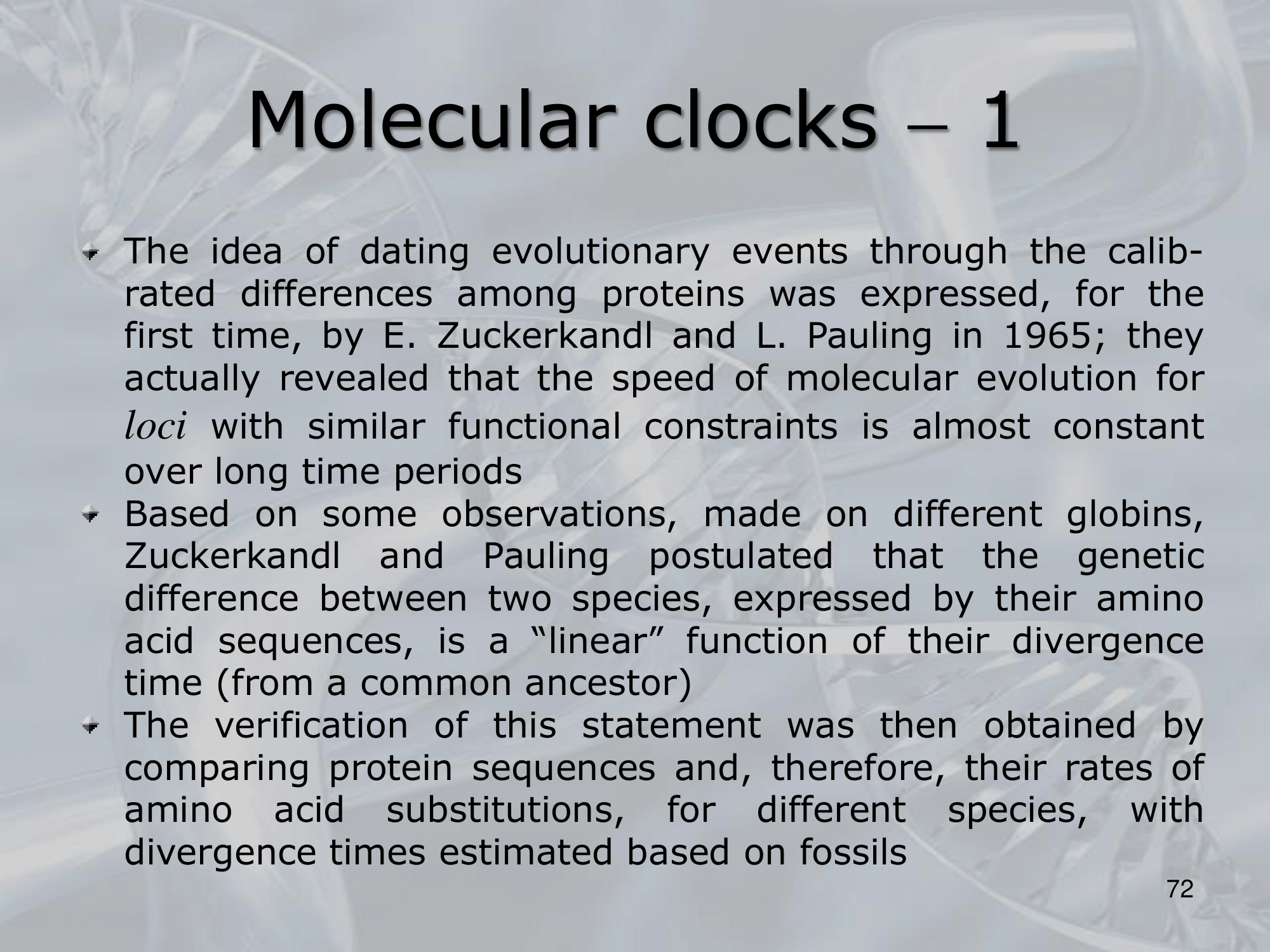
IMPORTANTE Molecular Clock: a technique used in evolutionary biology that estimates the age divergenze of organisms from a common ancestor by looking at differences in their DNA. Il molecular clock è una tecnica imprecisa per misurare quando due specie si sono “speciate” usando geni il cui rate di sostituzione è ben conosciuto, ad esempio nel DNA della mitocondria, il cui rate di sostituzione è volte superiore rispetto al “nuclear DNA” (il normale DNA nelle cellule), però questa rapida mutazione ci permette di studiare fino ad un massimo di MILIONI di anni indietro, per trovare un “common ancestor” Per le piante invecie usiamo il cpDNA (cloroplasmal DNA), in quanto le piante hanno cloroplasmi e non mitocondrie, e a differenza del mtDNA (mitochondrial DNA) il cpDNA muta molto meno rapidamente ( del normale rate di mutazione delle DNA delle piante della stessa specie) Questa tecnica non è precisa ma ci può fornire cmq nuovi dati utili, non è precisa in quanto il rate of mutation è influenzato da molti fattori, come la dimensione della popolazione, cambiamenti climatici, o più in generale i cambiamenti dell’habitat, etc. Online resource: Youtube (Dice cose simili, ma i numeri non sono discretamente diversi)