Questions
- What is Horizontal Gene Transfer?
- Horizontal gene transfer (HGT) refers to the transfer of genetic material between different organisms, regardless of their evolutionary relationship.
This process is different from the traditional mechanism of gene transfer, which occurs vertically from parent to offspring. - Horizontal gene transfer can occur through several mechanisms, including conjugation, transformation, and transduction.
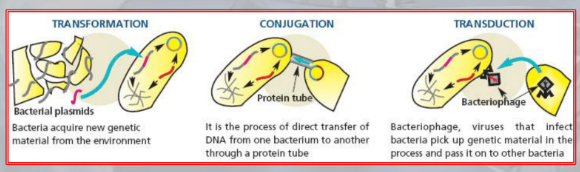
- In conjugation, two bacteria exchange genetic material through direct physical contact via a conjugation bridge.
- In transformation, bacteria take up DNA from their environment, which can be released by the lysis of other bacteria.
- In transduction, genetic material is transferred from one bacterium to another via a bacteriophage (virus that infects bacteria).
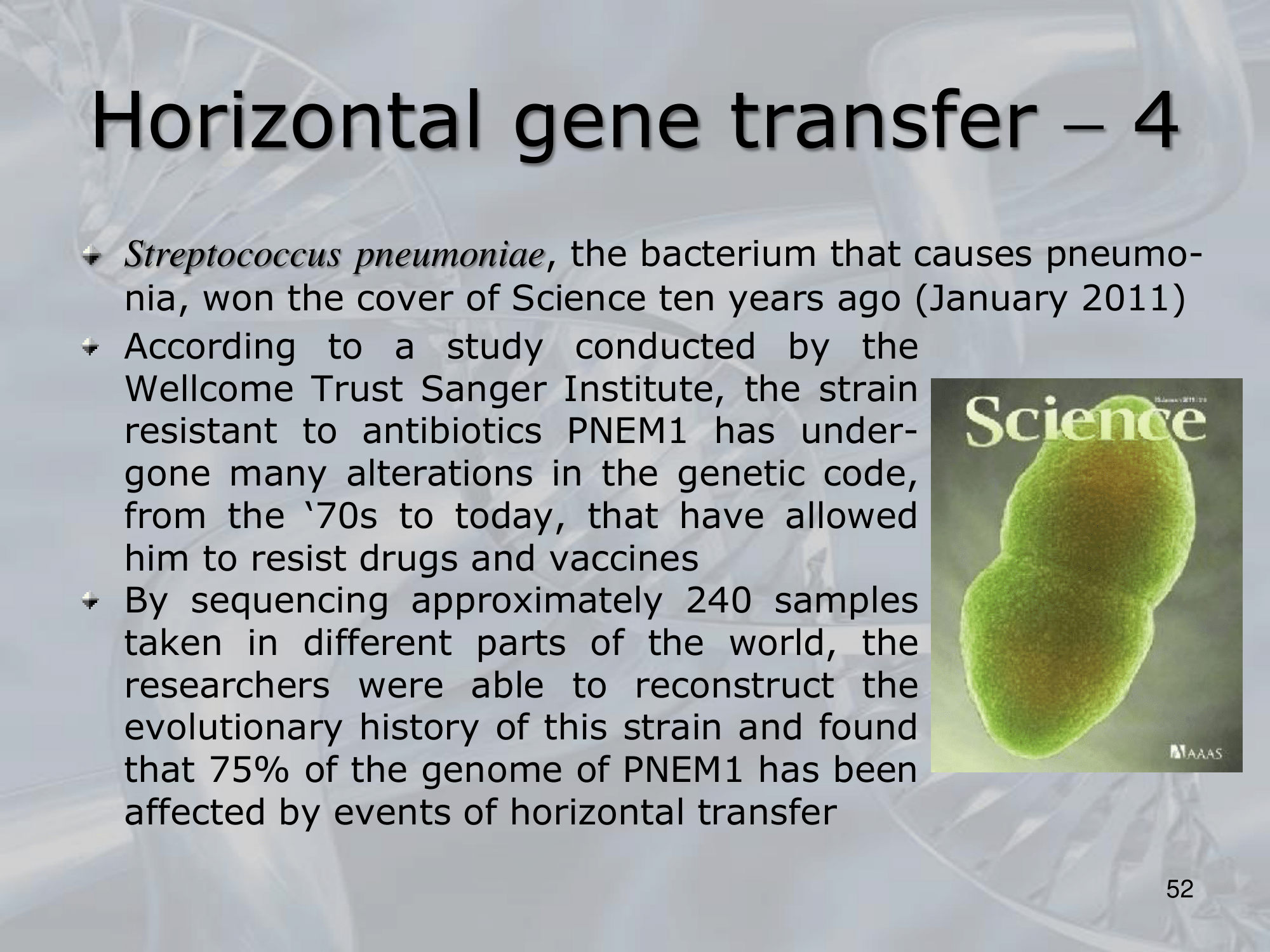
- Horizontal gene transfer can lead to the acquisition of new traits and capabilities by an organism, such as antibiotic resistance or the ability to degrade new types of compounds.
This process is especially important for bacteria, which can rapidly adapt to new environments and changing conditions. - Horizontal gene transfer has important implications for fields such as medicine, agriculture, and biotechnology.
It can contribute to the spread of antibiotic resistance and the emergence of new infectious diseases, but can also be harnessed to engineer new strains of bacteria with desirable traits.
Understanding the mechanisms and consequences of horizontal gene transfer is therefore an important area of research in genetics and microbiology.
- Horizontal gene transfer (HGT) refers to the transfer of genetic material between different organisms, regardless of their evolutionary relationship.
—————————————————————
IMPORTANTE
IMPORTANTE Horizontal gene transfer: Entire genes, a set of genes, or even whole chromosomes can be transfered from one organism to another, really useful for bacterial evolution since they do not reproduce sexually.
IMPORTANTE Horizontal Gene Transfer There are 3 ways to tranfer a gene:
- Transformation: prokaryotes take up free fragments of DNA found in the enviroment, ofter plasmidis
- Conjugation: two cells unite temporarely and genetic material, like plasmids or transposons (“jumping genes”) are exanched
- Transduction: DNA is transmtted from one cell to anather via bacteriophages
—————————————————————
Slides with Notes
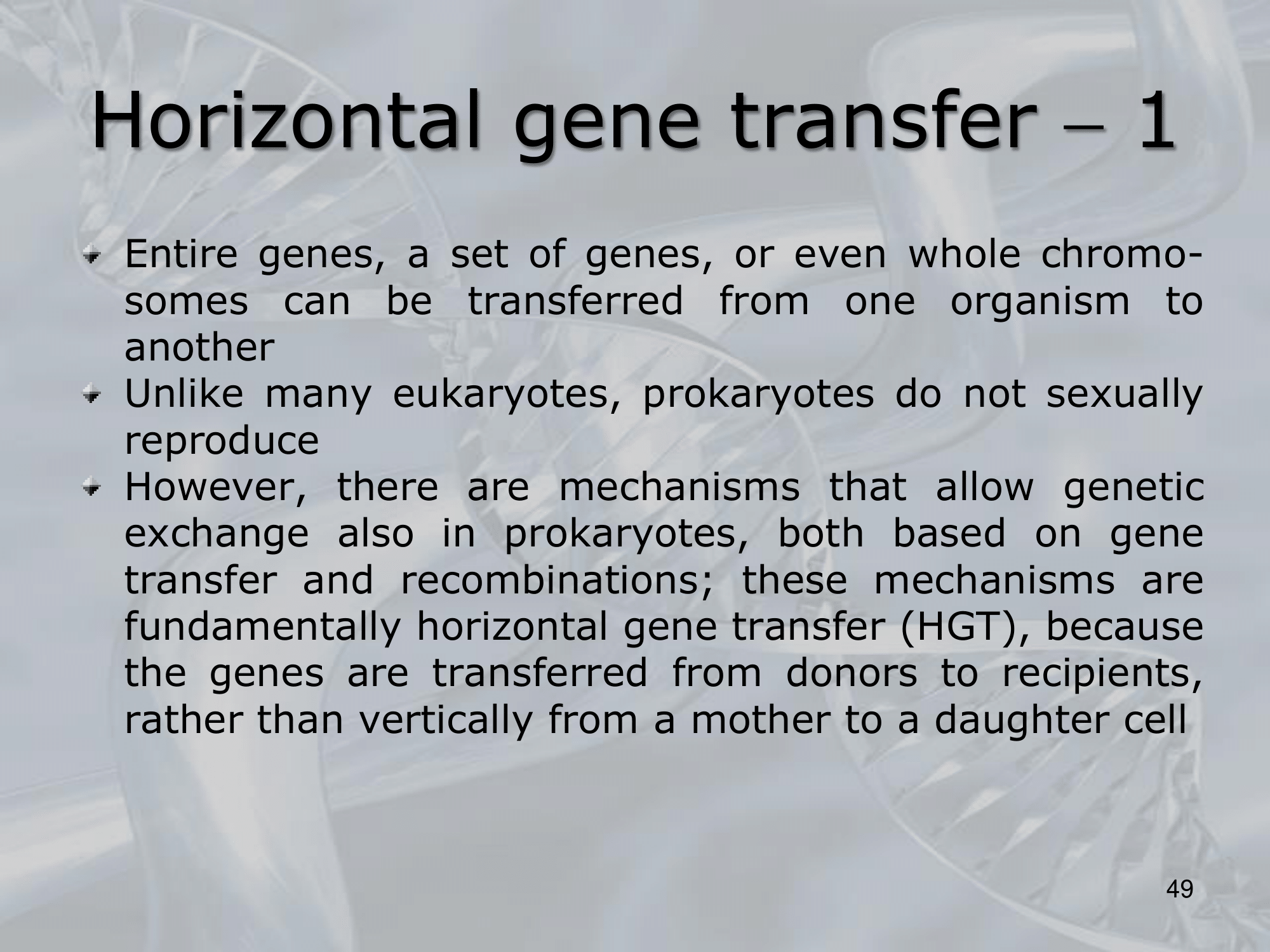
IMPORTANTE Horizontal gene transfer: Entire genes, a set of genes, or even whole chromosomes can be transfered from one organism to another, really useful for bacterial evolution since they do not reproduce sexually.
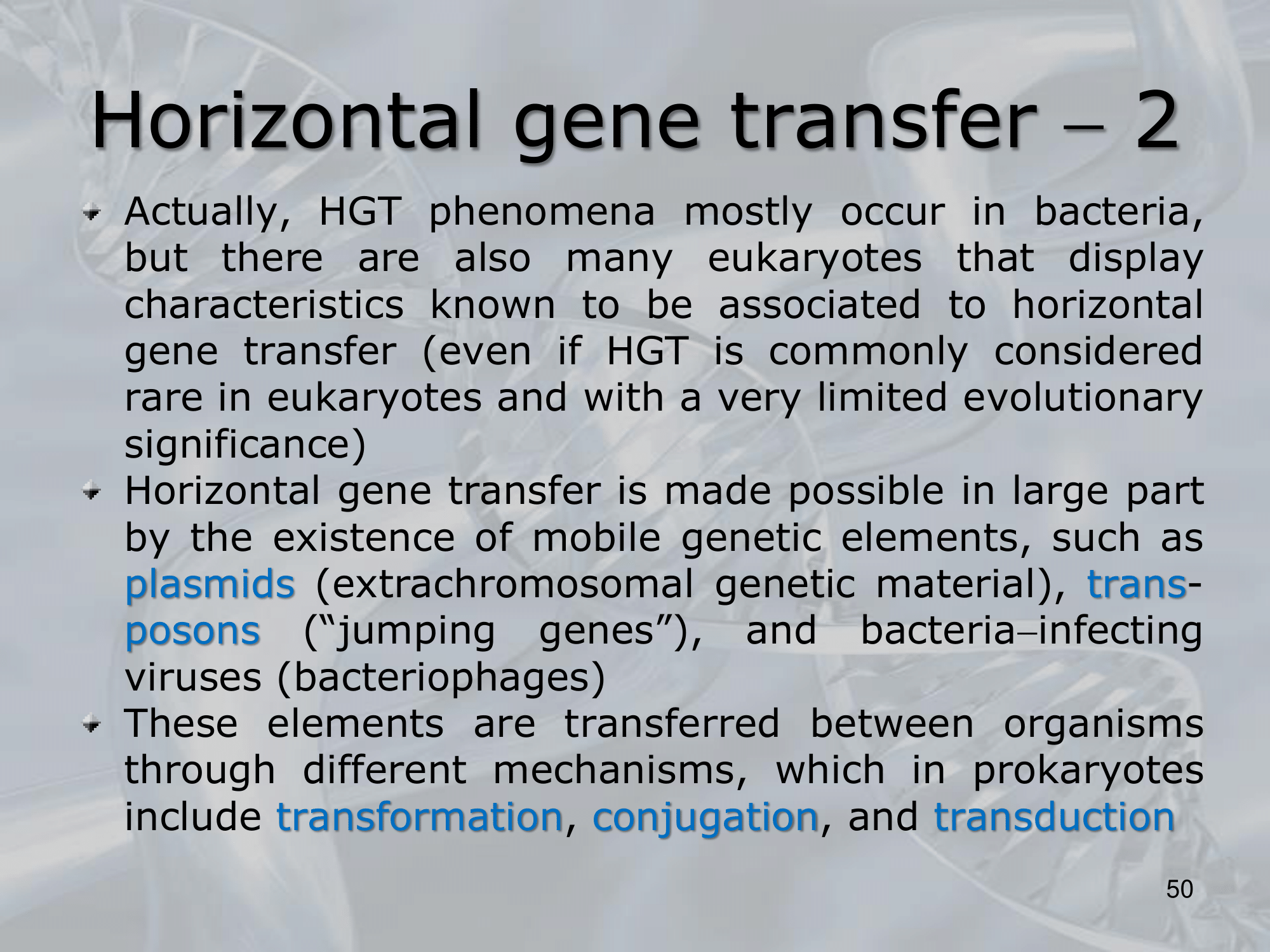
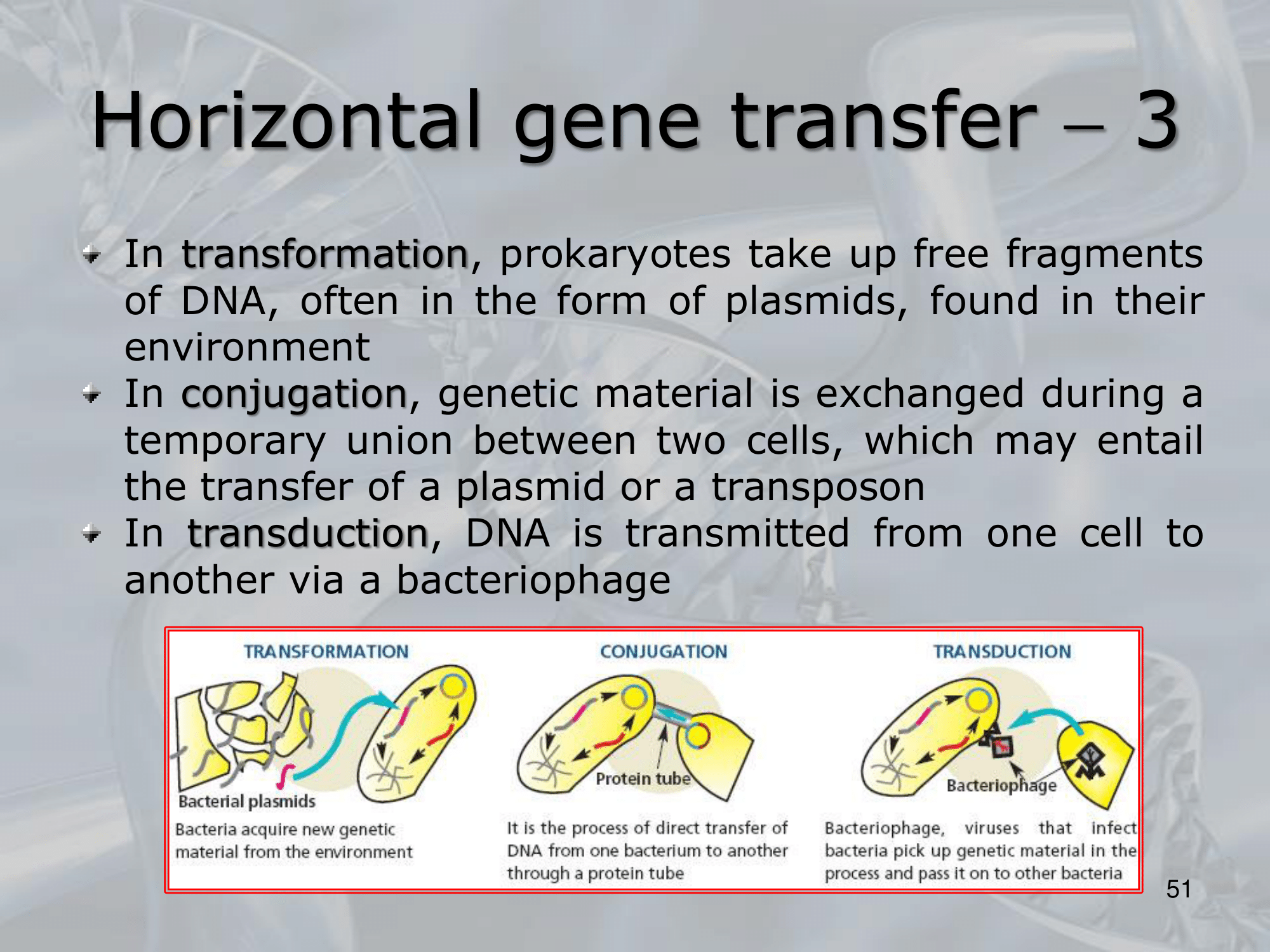
IMPORTANTE Horizontal Gene Transfer There are 3 ways to tranfer a gene:
- Transformation: prokaryotes take up free fragments of DNA found in the enviroment, ofter plasmidis
- Conjugation: two cells unite temporarely and genetic material, like plasmids or transposons (“jumping genes”) are exanched
- Transduction: DNA is transmtted from one cell to anather via bacteriophages