Questions
- What is there to say about Eukaryotic Gene Density?
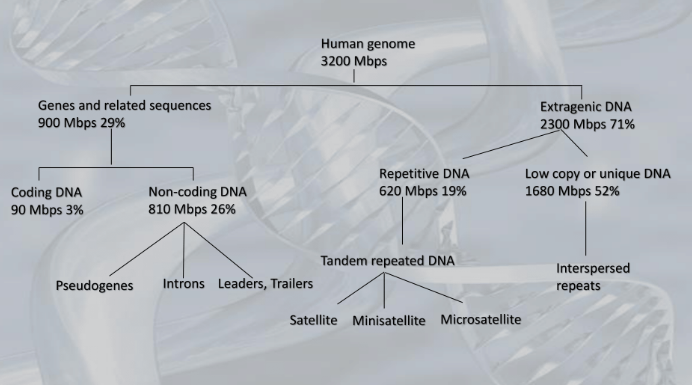
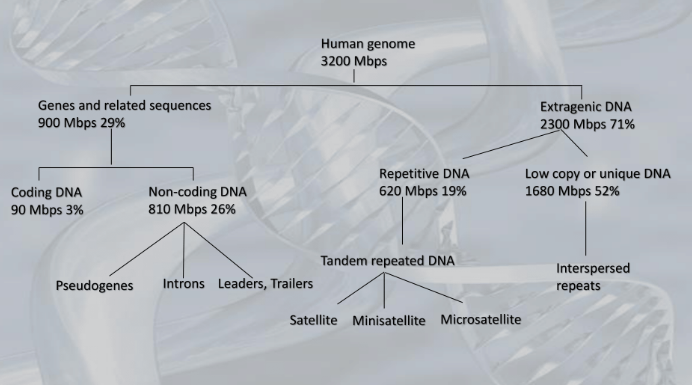
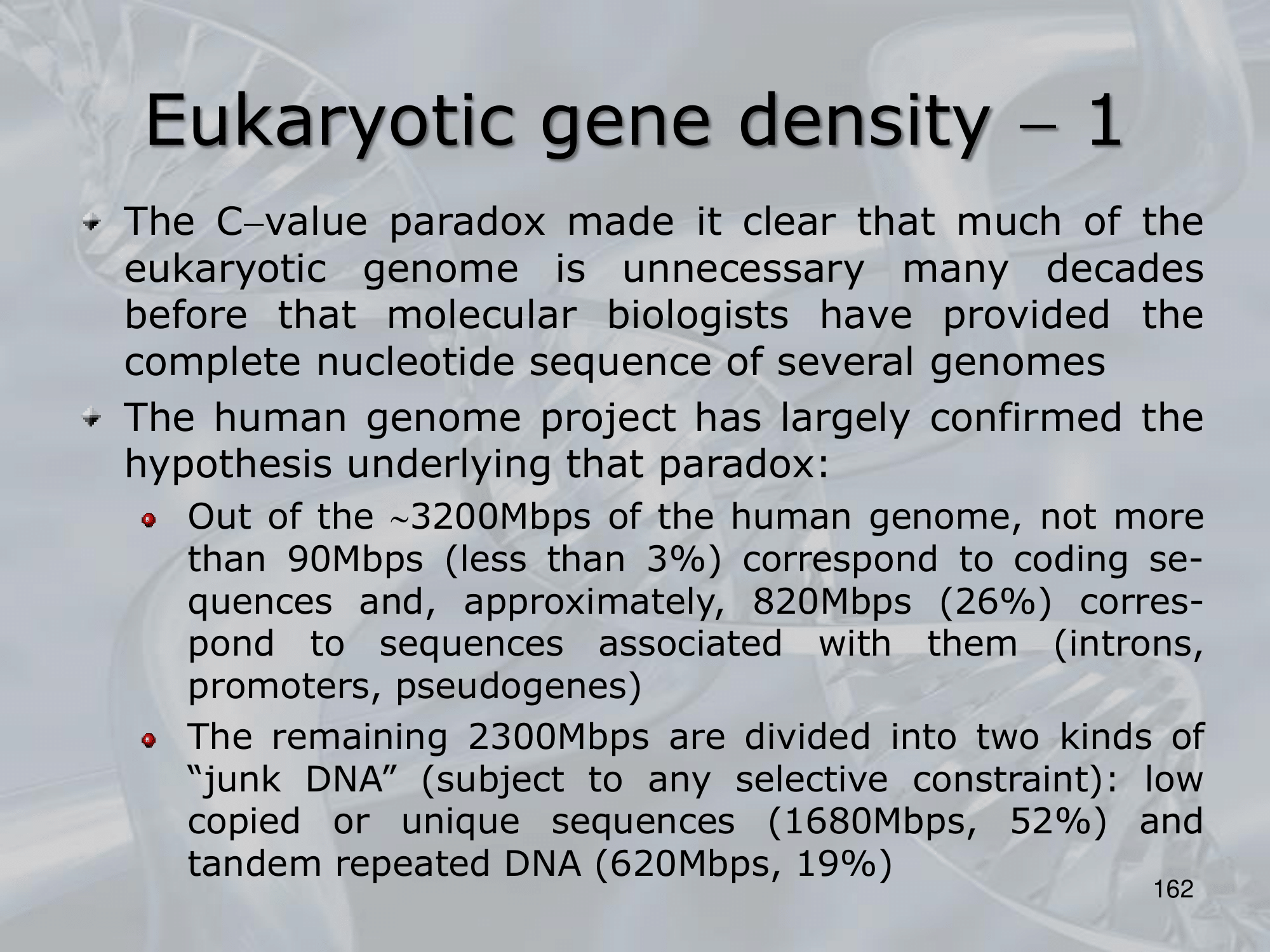
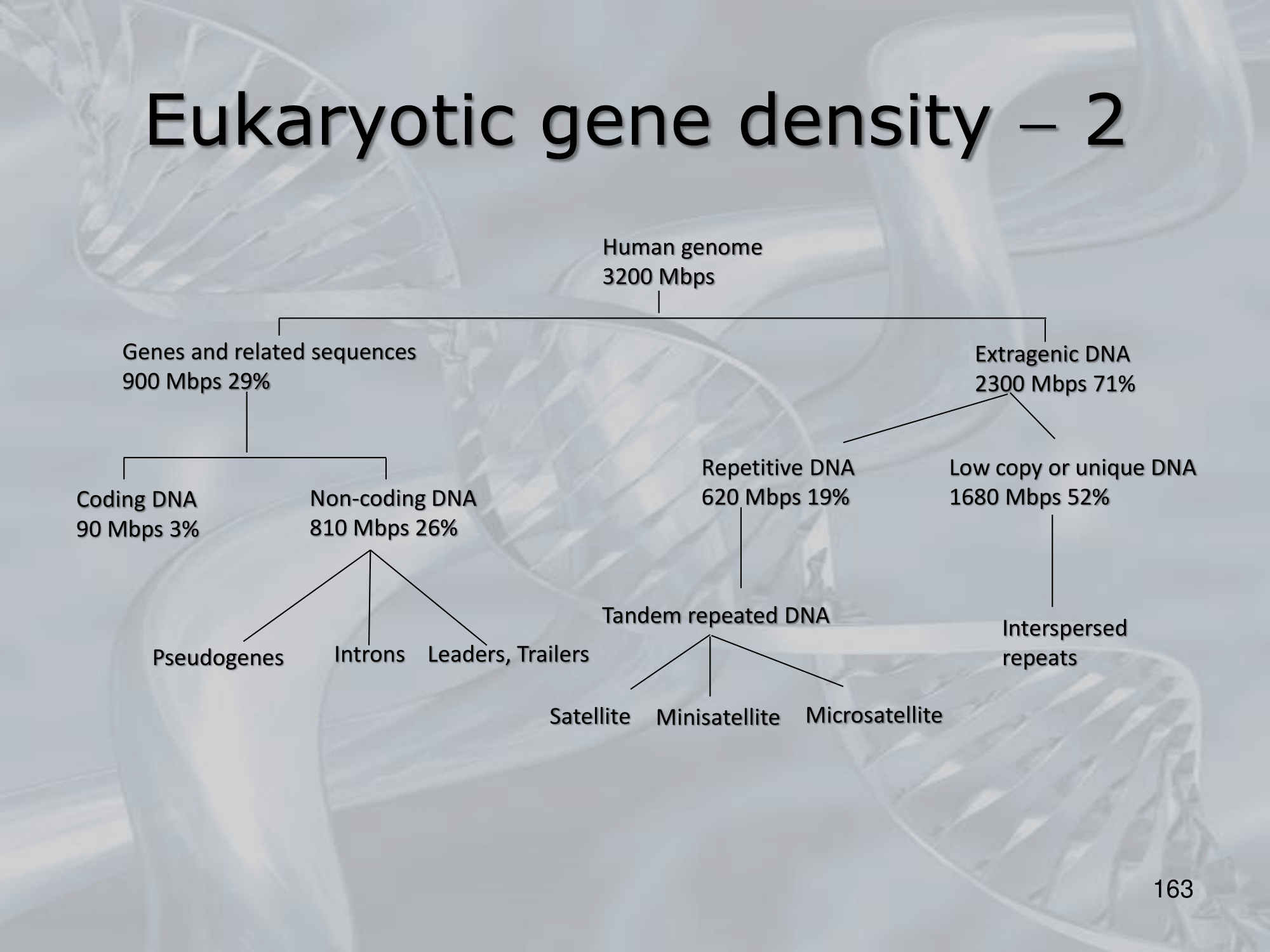
- Eukaryotic gene density refers to the number of genes that are present in a given region of the genome.
==Gene density can vary widely among different eukaryotic organisms, ranging from very high in some plants to very low in some animals==. - In general, eukaryotic gene density tends to be lower than prokaryotic gene density, due to the presence of non-coding regions in eukaryotic genomes such as introns, regulatory regions, and repetitive DNA sequences.
However, there are also significant variations in gene density within eukaryotic genomes.
For example, some regions of the genome, such as the gene-rich regions of human chromosome 19, can have very high gene density, while other regions, such as centromeres and telomeres, are typically gene-poor. - The factors that determine eukaryotic gene density are complex and not fully understood.
Some studies have suggested that gene density is influenced by a variety of factors, including selective pressure, chromosome structure, and epigenetic modifications.
Additionally, some eukaryotic genomes have undergone genome duplication events, which can result in a higher gene density due to the presence of duplicated genes. - Overall, eukaryotic gene density varies widely among different organisms and regions of the genome, and is influenced by a variety of factors.
The study of gene density is an active area of research in genomics, as it can provide insights into the evolution and function of eukaryotic genomes.
- Eukaryotic gene density refers to the number of genes that are present in a given region of the genome.
—————————————————————
IMPORTANTE
IMPORTANTE Eukaryotic Gene Density
Eukaryots are much more complex organisms than prokaryotes, but have far less gene density, instead they have pecularity that may be the cause of their complexity:
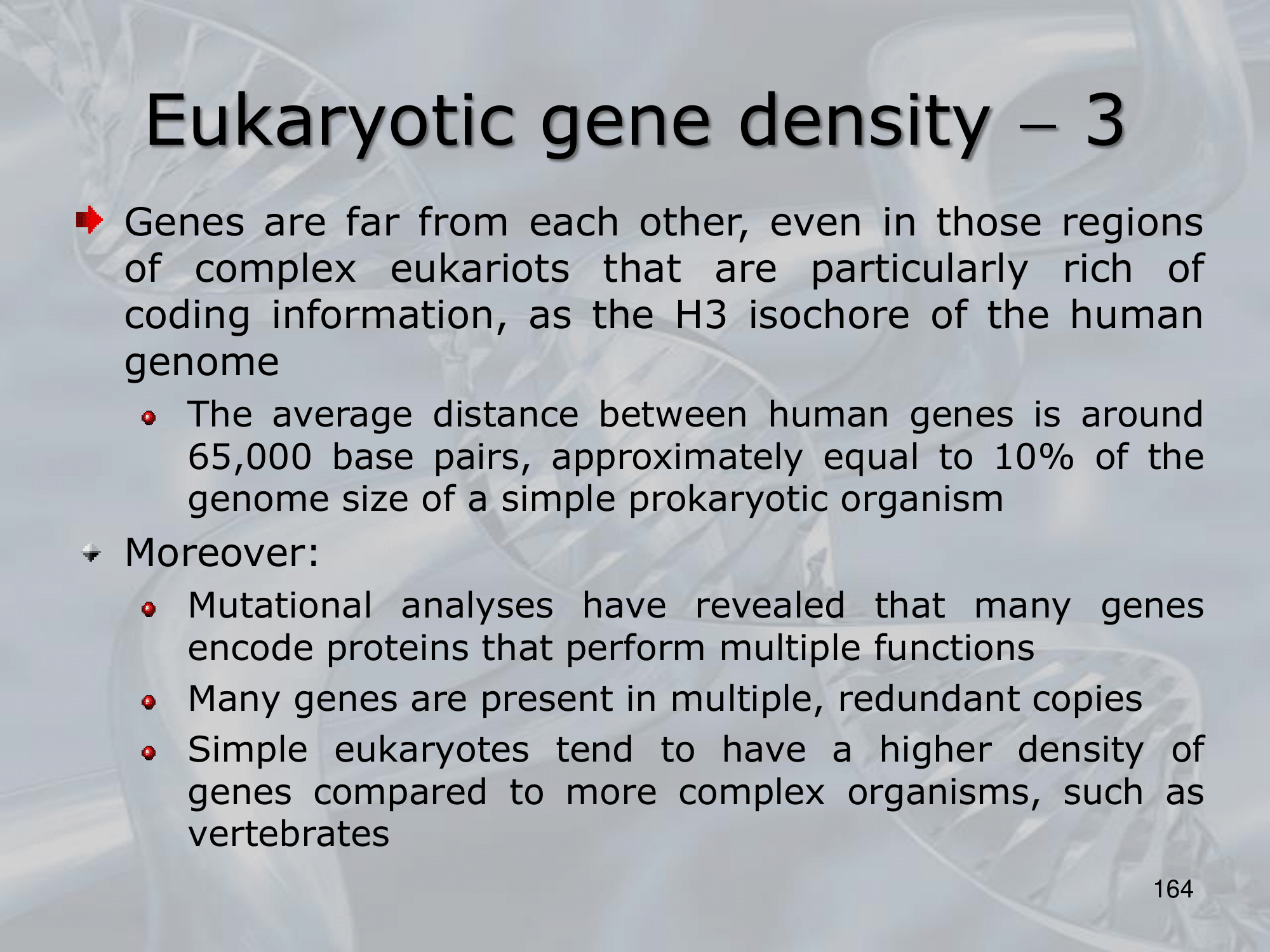
- Many eukaryotic genes encode proteins that perform multiple functions.
- Many eukaryotic genes are present in multiple, redundant copies.
- Eukaryotes have a cell structure far more complex than prokaryotes.
Also simple eukaryotes tend to have a higher gene density than more complex eukaryotes (like vertebrates)
—————————————————————
Slides with Notes
IMPORTANTE Eukaryotic Gene Density
Eukaryots are much more complex organisms than prokaryotes, but have far less gene density, instead they have pecularity that may be the cause of their complexity:
- Many eukaryotic genes encode proteins that perform multiple functions.
- Many eukaryotic genes are present in multiple, redundant copies.
- Eukaryotes have a cell structure far more complex than prokaryotes.
Also simple eukaryotes tend to have a higher gene density than more complex eukaryotes (like vertebrates)