Questions
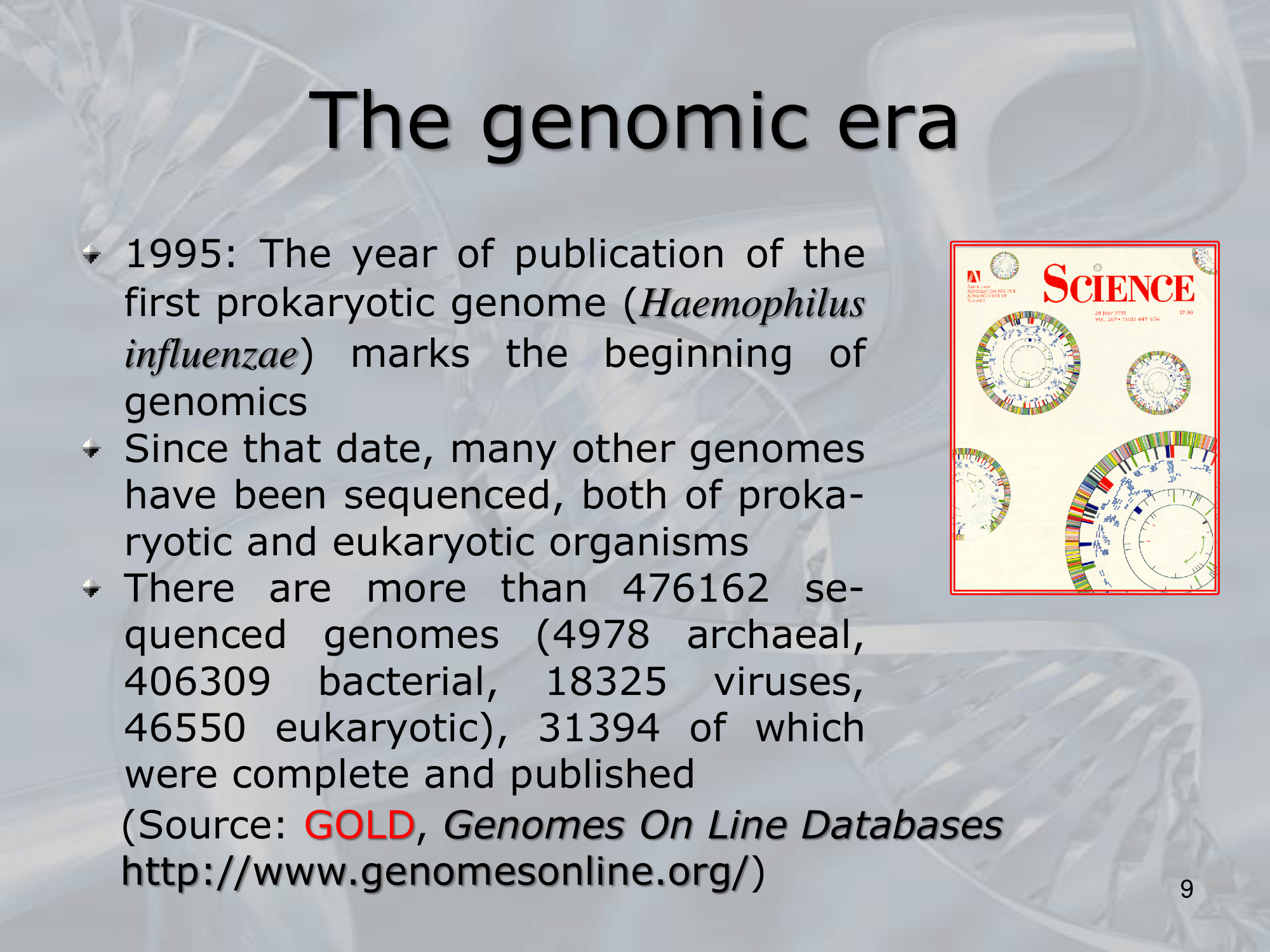
- What is Structural Genomics?
- Structural genomics is a field of genomics that focuses on determining the three-dimensional structures of proteins and other biological macromolecules on a large scale.
The goal of structural genomics is to systematically identify and characterize the structure and function of all proteins within an organism or group of organisms. - Unlike traditional methods for determining protein structures, such as X-ray crystallography and nuclear magnetic resonance (NMR) spectroscopy, structural genomics relies heavily on high-throughput techniques and automation to generate large amounts of structural data quickly and efficiently.
- The information gained from structural genomics can be used to understand the function of proteins and their interactions with other molecules, such as drugs or other proteins.
It can also help in the development of new drugs and therapies by identifying potential drug targets and providing insights into the mechanisms of action of existing drugs. - Overall, structural genomics has the potential to significantly advance our understanding of the molecular basis of life and to accelerate the discovery of new drugs and therapies for a wide range of diseases.
- Structural genomics is a field of genomics that focuses on determining the three-dimensional structures of proteins and other biological macromolecules on a large scale.
- What is Functional Genomics?
- Functional genomics is a field of genomics that focuses on understanding the functions and interactions of all the genes and their products (proteins, RNA molecules, and other functional products) within a genome.
It aims to identify and characterize the biological functions of genes and how they interact with other genes and their environment. - Functional genomics uses high-throughput techniques and computational approaches to generate and analyze large amounts of genomic data, such as gene expression patterns, protein-protein interactions, and metabolic pathways.
This data can be used to identify the functions of genes and how they are regulated, as well as to understand the complex networks of interactions between genes and other biological molecules. - Functional genomics is essential for many areas of research, including the study of complex diseases, the development of new drugs and therapies, and the optimization of agricultural crops and livestock.
It provides a comprehensive approach for understanding the function and regulation of genes in a genome-wide context, and it has the potential to greatly improve our understanding of biological systems at a fundamental level.
- Functional genomics is a field of genomics that focuses on understanding the functions and interactions of all the genes and their products (proteins, RNA molecules, and other functional products) within a genome.
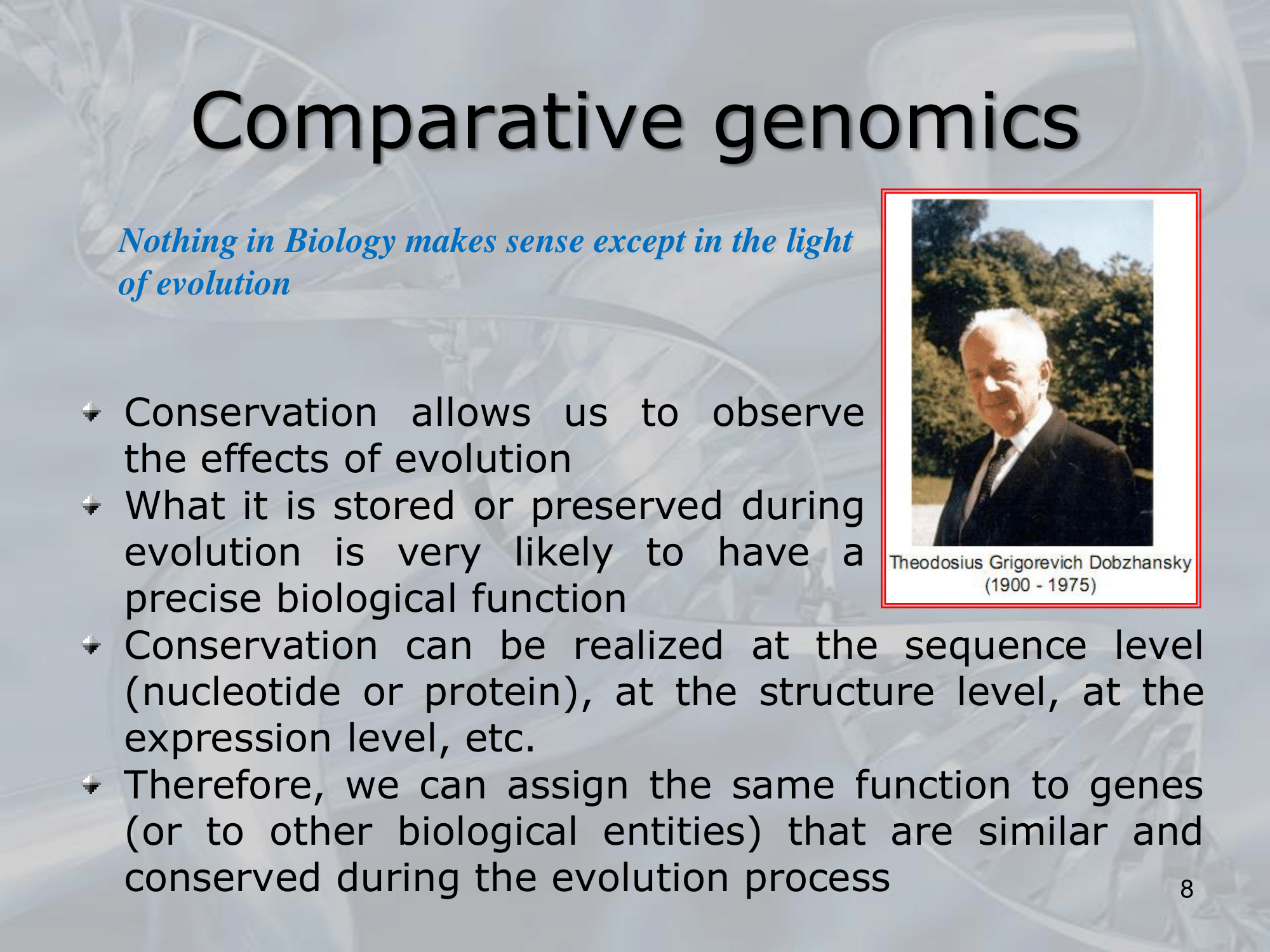
- What is Comparative Genomics?
- ==Comparative genomics is a field of genomics that compares the genomes of different species or populations to understand the evolutionary relationships between them and to identify genomic features that are conserved or unique to particular groups of organisms==.
- Comparative genomics can be used to study a wide range of biological questions, including the evolution of species and populations, the identification of genes and regulatory regions that are important for specific traits or functions, and the understanding of genetic variation within and between populations.
- One of the key methods used in comparative genomics is sequence alignment, which involves comparing the nucleotide or amino acid sequences of homologous genes or regions of the genome across different species.
Other techniques used in comparative genomics include gene expression profiling, phylogenetic analysis, and functional annotation of genes. - Applications of comparative genomics include the identification of disease-causing mutations, the discovery of novel genes and gene functions, and the development of new approaches for crop improvement and genetic engineering. Overall, comparative genomics provides a powerful tool for understanding the genetic basis of biological diversity and for exploring the relationships between different species and populations.
—————————————————————
IMPORTANTE
IMPORTANTE Structural Genomics: study of expressions relatad to the DNA structure Functional Genomics: study of functional (like genes) expressions.
—————————————————————
Slides with Notes
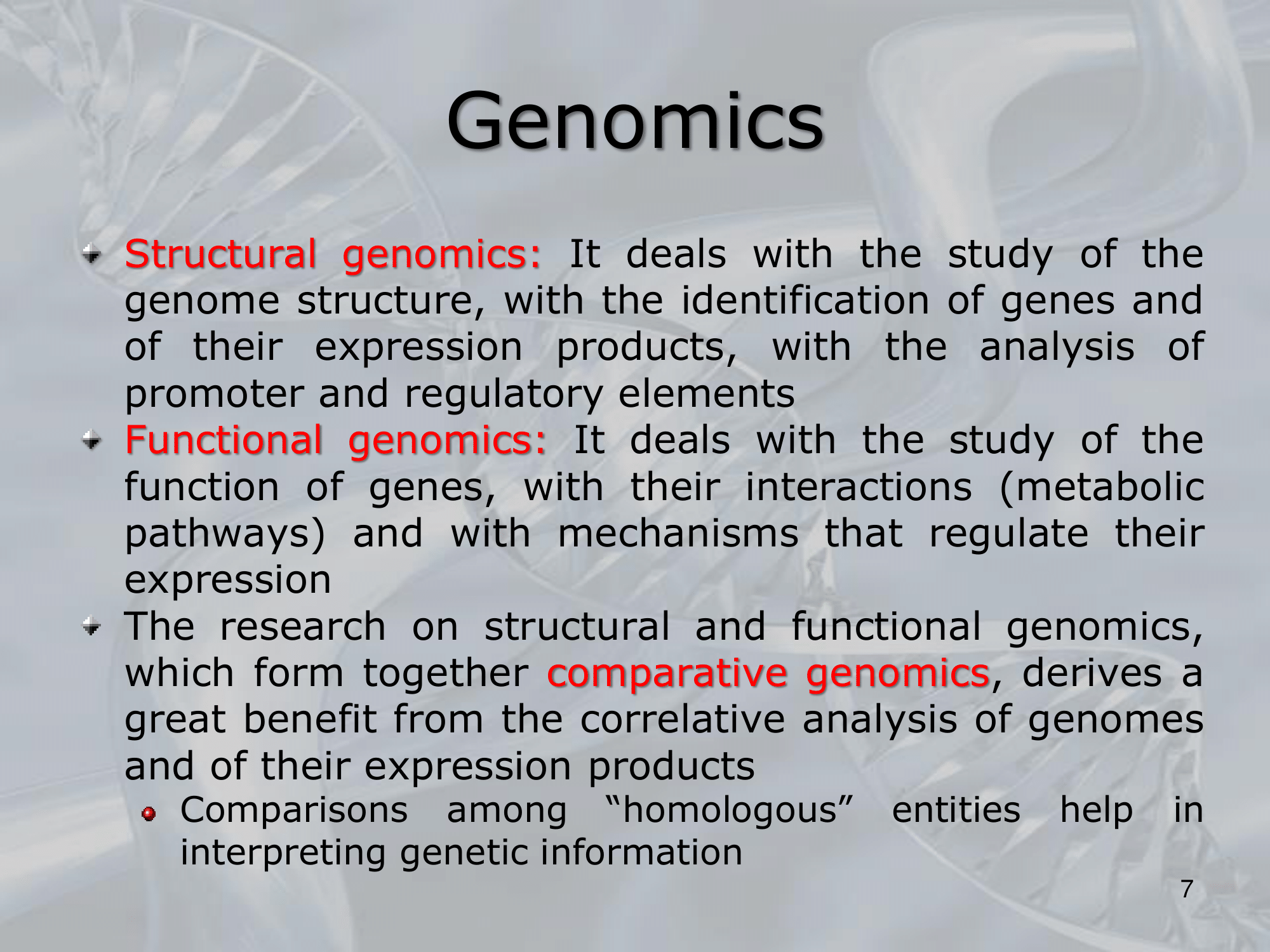
IMPORTANTE Structural Genomics: study of expressions relatad to the DNA structure Functional Genomics: study of functional (like genes) expressions.