Questions
- What are Evolutionary Speed Variations?
- ==Evolutionary speed variations refer to the differences in the rate of evolution among different lineages or regions of a genome.
Some regions or lineages may evolve more rapidly than others, resulting in variations in the rates of molecular evolution==.
These variations can be due to differences in selective pressures, mutation rates, or other factors that influence the evolutionary process.
For example, genes that are involved in immune response or response to environmental stresses may evolve more rapidly than other genes due to strong selection pressures.
Conversely, genes that are involved in basic cellular functions may evolve more slowly due to functional constraints.
The study of evolutionary speed variations can provide insights into the evolutionary history of organisms and the functional importance of different genes and genomic regions.
- ==Evolutionary speed variations refer to the differences in the rate of evolution among different lineages or regions of a genome.
- What are Histones and Apolipoproteins?
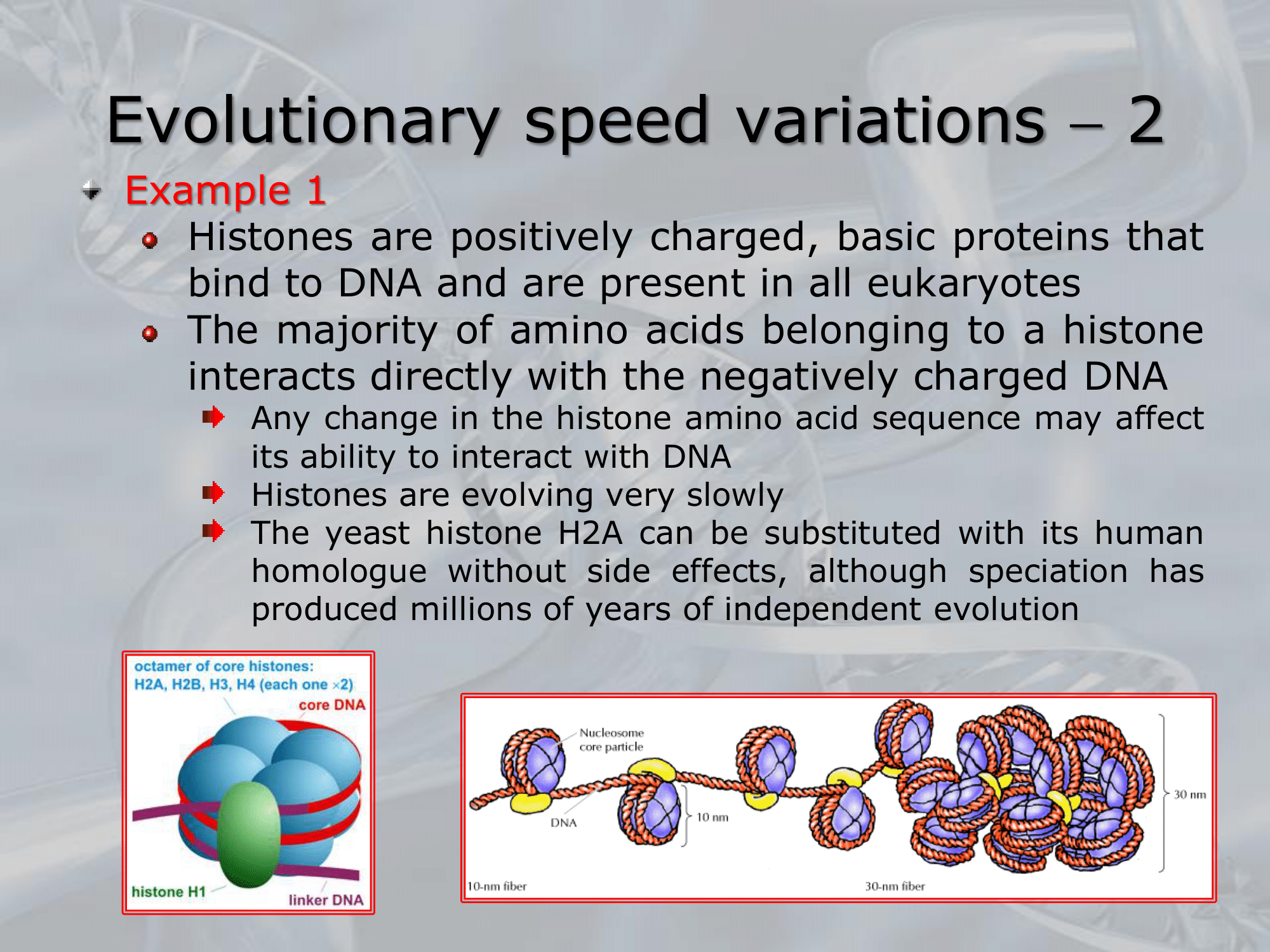
- Histones are a family of basic proteins found in the nuclei of eukaryotic cells, where they package DNA into structural units called nucleosomes.
The nucleosomes are formed by the wrapping of DNA around the histone octamer composed of two copies of four different histone proteins (H2A, H2B, H3, and H4).
Histones play a critical role in the regulation of gene expression, DNA replication, and repair, as well as in chromosome condensation during mitosis and meiosis. - Apolipoproteins are a group of proteins that bind to lipids to form lipoprotein particles.
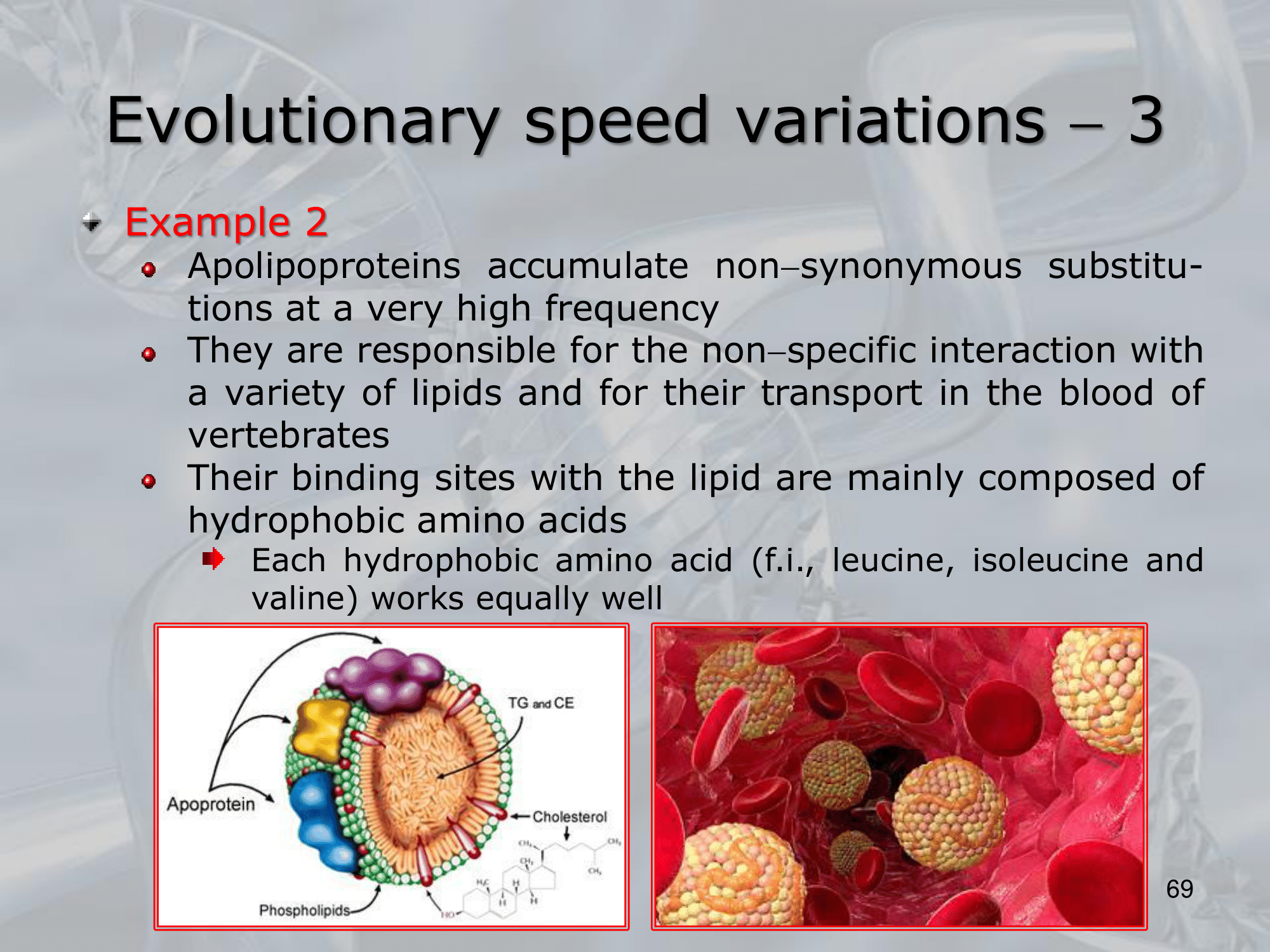
These particles are essential for the transport of lipids, such as cholesterol and triglycerides, in the blood and lymphatic system.
Apolipoproteins are involved in the regulation of lipid metabolism, the immune system, and the development of atherosclerosis.
Some well-known apolipoproteins include ApoA1, ApoB, ApoC, and ApoE.
Mutations in apolipoprotein genes can lead to various diseases, such as familial hypercholesterolemia and Alzheimer’s disease.
- Histones are a family of basic proteins found in the nuclei of eukaryotic cells, where they package DNA into structural units called nucleosomes.
—————————————————————
IMPORTANTE
IMPORTANTE Il DNA è caricato negativamente
IMPORTANTE Gli Istoni, sono proteine caricate positivamente, che si legano al dna, che evolvono molto lentamente e sono presenti in ogni eucariote.
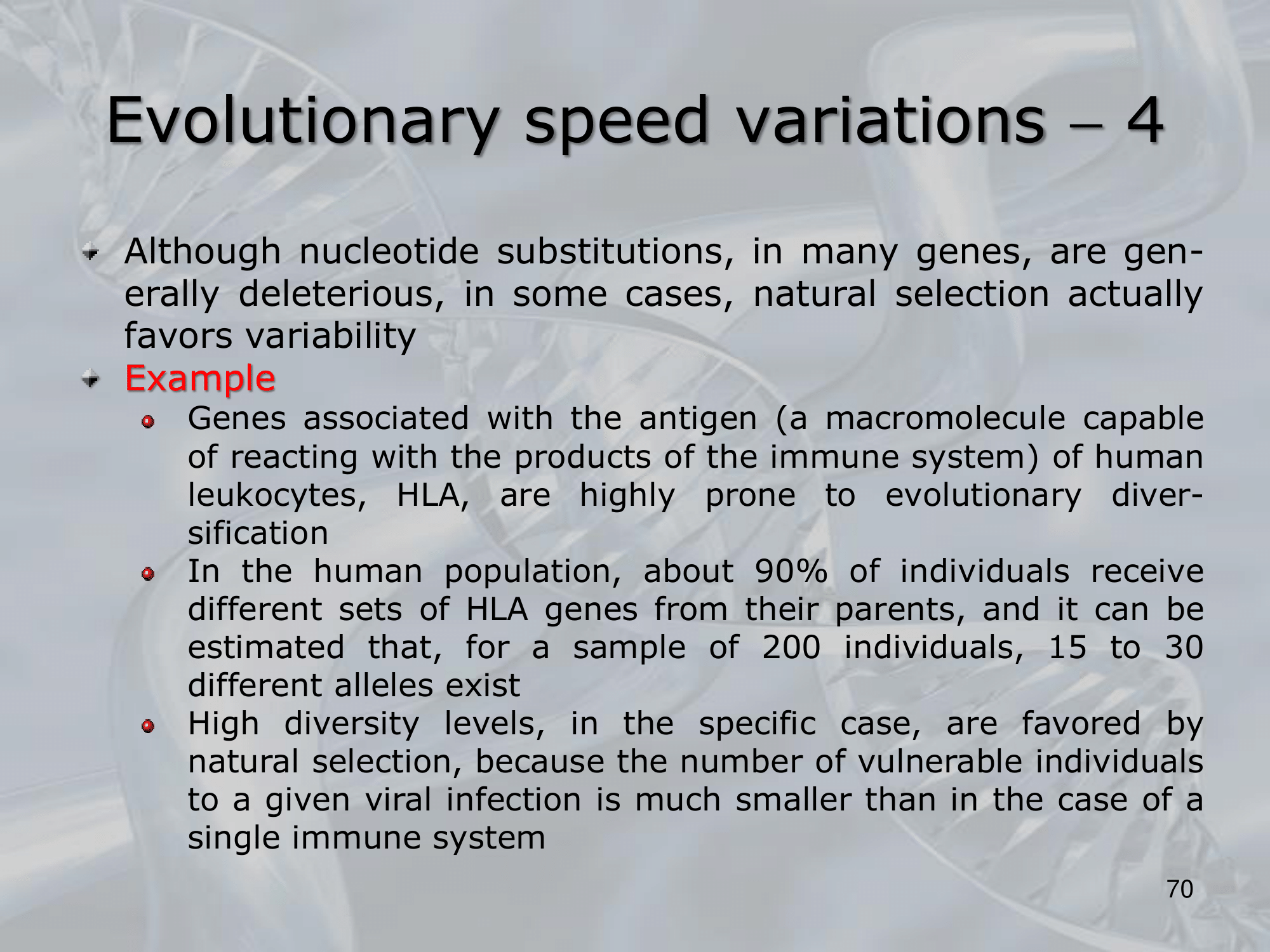
#IMPORTANTE Le Apolipoproteine invece accumulano sostituzioni non-synonymous, molto rapidamente, sono proteine responabili per le interazioni non specifiche di lipidi, il loro compito principale è il trasporto dei lipidi nel sangue dei vertebrati.
—————————————————————
Slides with Notes
IMPORTANTE Il DNA è caricato negativamente
IMPORTANTE Gli Istoni, sono proteine caricate positivamente, che si legano al dna, che evolvono molto lentamente e sono presenti in ogni eucariote.