Questions
- What is Genetic Drift and Fixation?
- Genetic drift and fixation are two concepts related to the changes in the frequency of alleles within a population over time.
- ==Genetic drift is the random fluctuation of allele frequencies due to chance events, particularly in small populations==.
In other words, it refers to the random changes in the genetic makeup of a population over time that are not due to natural selection.
Genetic drift can lead to the loss of genetic diversity within a population or to the fixation of an allele, meaning that it becomes the only allele present in the population. - ==Fixation occurs when an allele becomes the only allele present in a population==.
This means that all individuals in the population carry the same allele for that particular gene.
==Fixation can occur as a result of genetic drift or natural selection==.
In small populations, genetic drift can lead to the fixation of an allele, while in large populations, natural selection is more likely to cause the fixation of an advantageous allele. - Both genetic drift and fixation can have significant effects on the genetic diversity and evolution of a population over time.
- Can you make an Example on Genetic Drift and Fixation?
- Imagine a small population of birds living on an isolated island. In this population, there are two different alleles for a gene that controls beak size: “A” and “a.” Initially, the frequency of the “A” allele is 0.6 and the frequency of the “a” allele is 0.4.
- Due to a natural disaster, a large portion of the bird population dies off, leaving only a few individuals behind. This is an example of a genetic bottleneck, where the surviving population is a smaller sample of the original population and has reduced genetic diversity.
- By chance, the individuals that survived the disaster happen to have a higher frequency of the “A” allele - say, 0.8. This is an example of genetic drift, where chance events cause certain alleles to become more or less common in a population.
- Over time, the population begins to recover and grow, but the high frequency of the “A” allele persists. Eventually, the “A” allele becomes fixed in the population - that is, it reaches a frequency of 1.0 and the “a” allele disappears completely. This is an example of fixation, where one allele becomes the only allele present in a population.
- In this example, genetic drift caused the frequency of the “A” allele to increase, and eventually fixation occurred, resulting in a population with only one allele for the beak size gene.
- What is the Rate of Occurracance of a new Gene in a given Population?
- The rate of occurrence of a new gene in a given population can vary depending on several factors such as mutation rate, selection pressures, genetic drift, and gene flow.
Mutation rate refers to the rate at which new genetic variations arise through mutations in DNA, which can be influenced by factors such as exposure to mutagens and DNA replication errors. - Selection pressures can affect the rate of occurrence of new genes by favoring certain genetic variations over others.
For example, beneficial mutations that confer a selective advantage to an organism may increase in frequency over time, while deleterious mutations may decrease in frequency or be eliminated from the population. - Genetic drift is a random process that can cause changes in allele frequencies in a population due to chance events such as population bottlenecks or founder effects.
This can result in the loss of rare genetic variations or the fixation of new alleles in the population. - Finally, gene flow refers to the movement of genetic variations between populations through migration and interbreeding.
Gene flow can introduce new genetic variations into a population and can also contribute to the spread of beneficial alleles. - Therefore, the rate of occurrence of a new gene in a given population is a complex phenomenon that is influenced by various biological and environmental factors.
- The rate of occurrence of a new gene in a given population can vary depending on several factors such as mutation rate, selection pressures, genetic drift, and gene flow.
—————————————————————
IMPORTANTE
IMPORTANTE Tra due umani (nello stesso tempo) la differenza di basi nel DNA è solo di di paia di basi (un umano ha MILIARDI di paia di basi nel suo DNA). #IMPORTANTE Diverse versioni di uno stesso gene (~ex.: la globina) all’interno di un organismo sono chiamati alleli. Le differenze tra allei possono essere innoque o avere effetti disastrosi (produzione di una proteina malfunzionante) #IMPORTANTE In una popolazione di coppie che possono attivamente riprodursi, la frequenza con cui la nascita di un nuovo gene possa occorrere è: Un allele naturale ha un possibilità pari a di essere “fissato” (superare la selazione naturale ed essere passato alla prossima generazione), mentre c’è un altissima possibilità pari a di essere eliminato. #IMPORTANTE La creazione e mutazioni di nuovi alleli sono la base dell’evoluzione.
IMPORTANTE La saturazione mutagenica è il processo in cui tutti i cambiamenti di nucleotidi vengono testati per vedere quali sono dannosi/innocui/beneficiali alla specie, non serve farla perchè ci pensa già la natura. La maggior parte di mutazioni che osserviamo in una specie sono variazioni che corrisponodo a mutazioni che non alterano la funzione dei geni.
IMPORTANTE Genetic Drift: Un altro meccanismo dell’evoluzione, oltre alla selezione naturale, è il genetic drift, dove in pochi casi che non hanno nulla a che fare con la sopravvivenza della migliore specie, ma PER PURO CASO, l’allele di un gene scopare. ~Ex.: Vediamo come l’allele b scompare e l’unico allele che rimane nella specie di questi conigli è l’allele B: NOTA: Nell’esempio l’allele B è dominante in un senso mandeliano (tutti i conigli con almeno un allele B sono marroni, solo quelli con solo allele bb sono bianchi), questo supponiamo per l’esempio del genetic drift che NON influisca nella selezione naturale, i conigli bianchi sopravvivono quanto quelli marroni, hanno stesso rate di riproduzione, etc… NOTA: Per pur caso, solo alcuni conigli si riproducono e per puro caso sono solo quelli marroni, abbiamo quindi un evento di genetic drift dove l’allele b scompare.
Online Source: Khan Academy
—————————————————————
Slides with Notes
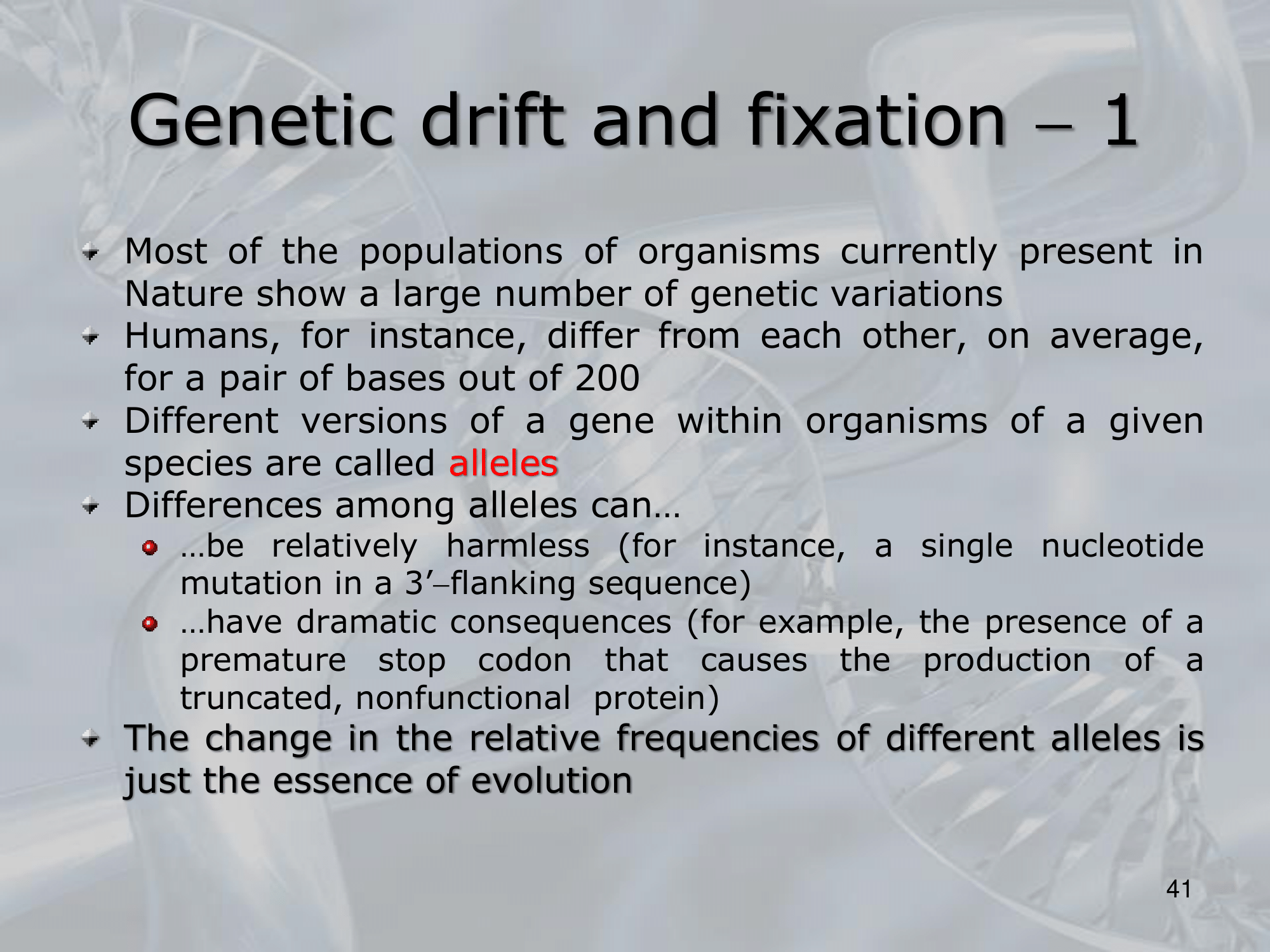
IMPORTANTE Tra due umani (nello stesso tempo) la differenza di basi nel DNA è solo di di paia di basi (un umano ha MILIARDI di paia di basi nel suo DNA). #IMPORTANTE Diverse versioni di uno stesso gene (~ex.: la globina) all’interno di un organismo sono chiamati alleli. Le differenze tra allei possono essere innoque o avere effetti disastrosi (produzione di una proteina malfunzionante) #IMPORTANTE In una popolazione di coppie che possono attivamente riprodursi, la frequenza con cui la nascita di un nuovo gene possa occorrere è: Un allele naturale ha un possibilità pari a di essere “fissato” (superare la selazione naturale ed essere passato alla prossima generazione), mentre c’è un altissima possibilità pari a di essere eliminato. #IMPORTANTE La creazione e mutazioni di nuovi alleli sono la base dell’evoluzione.
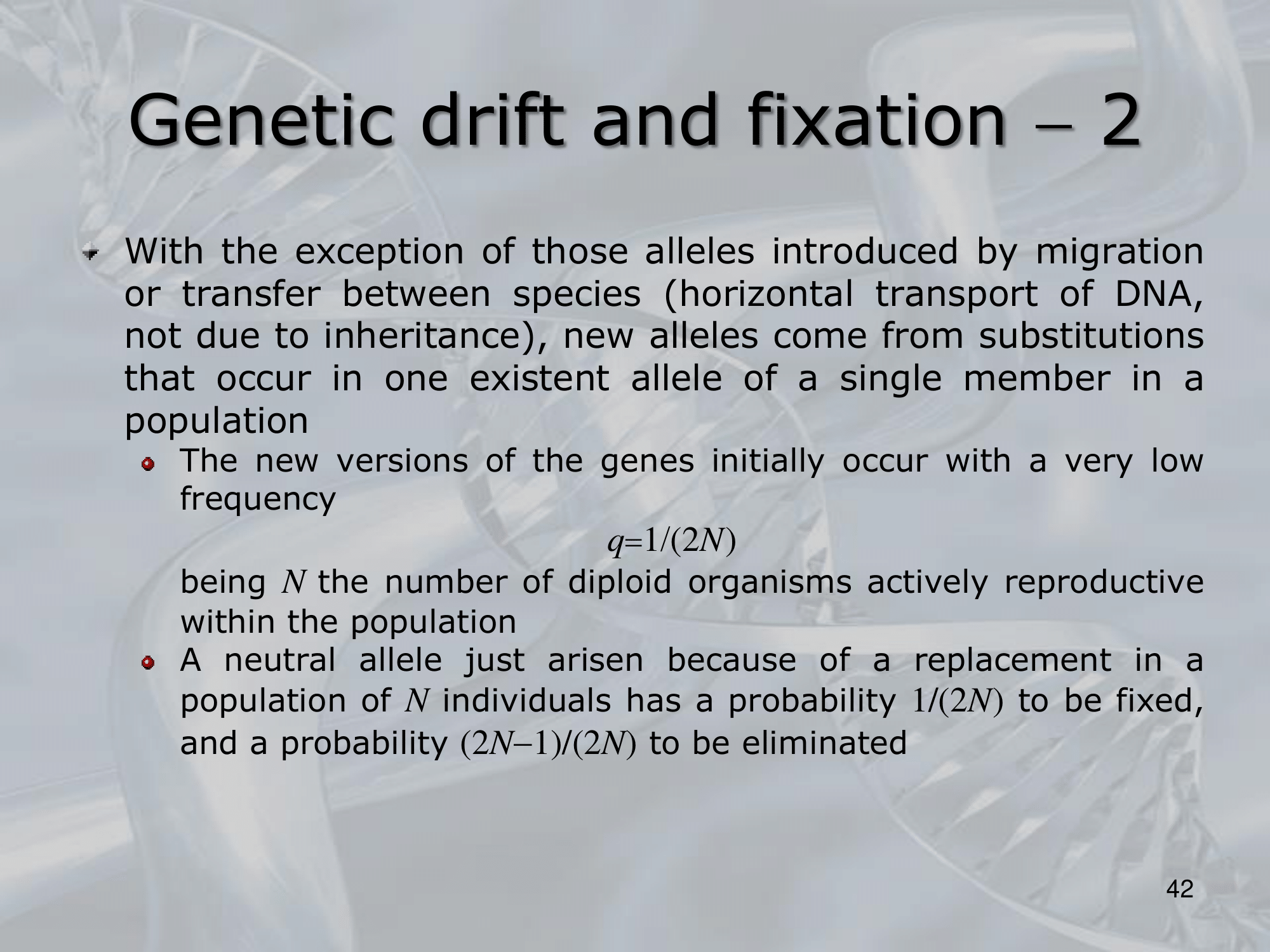
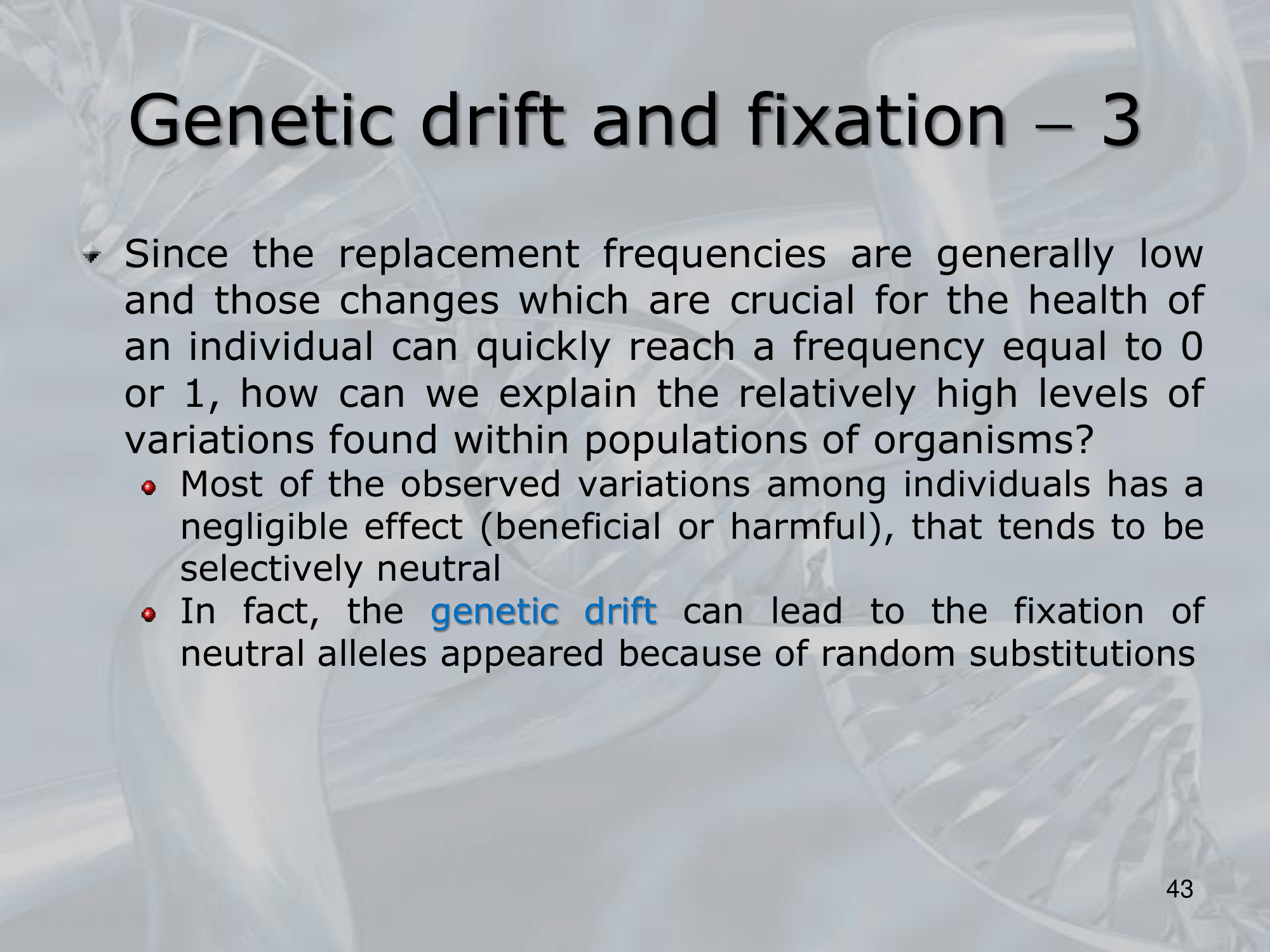
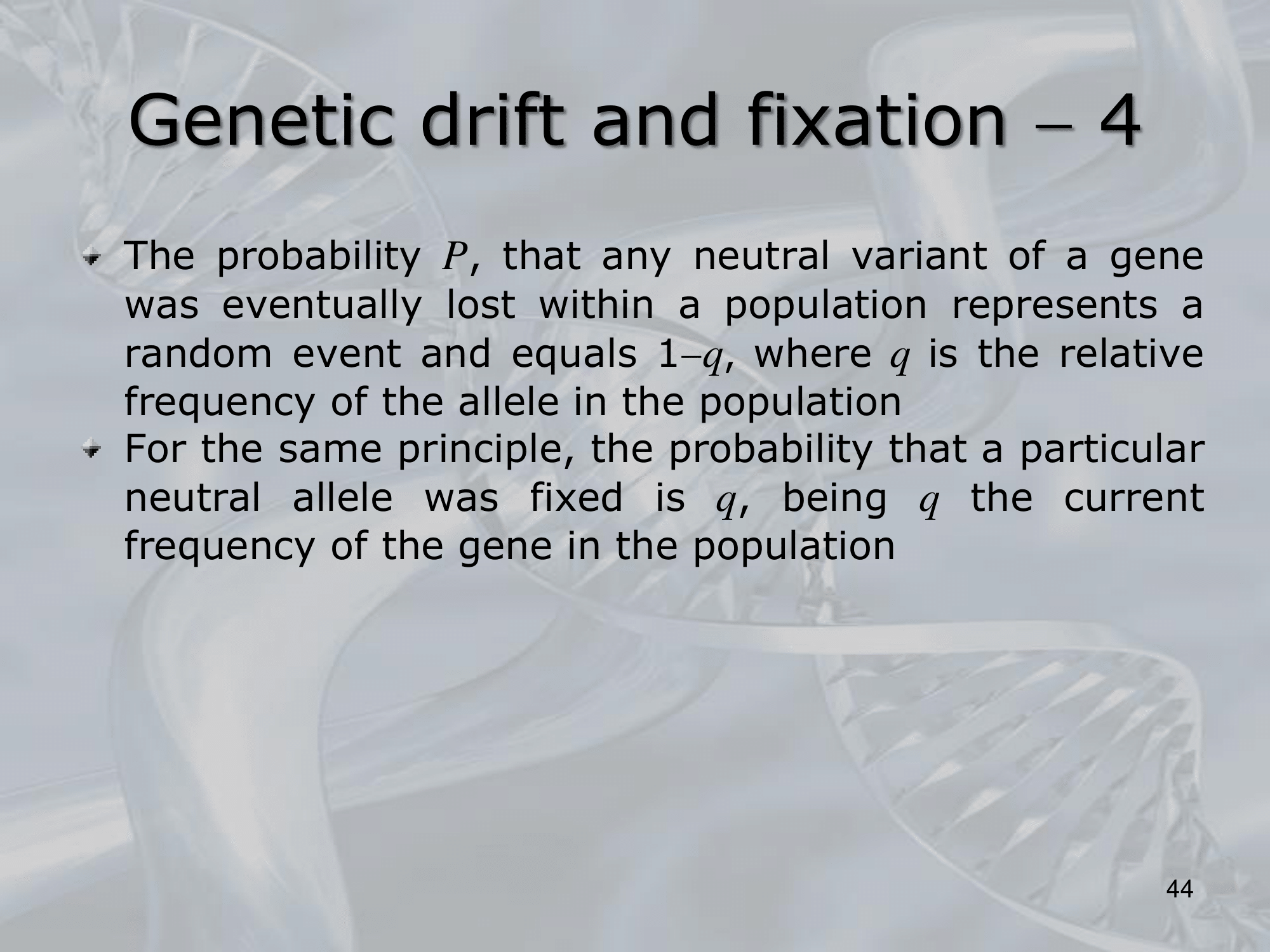
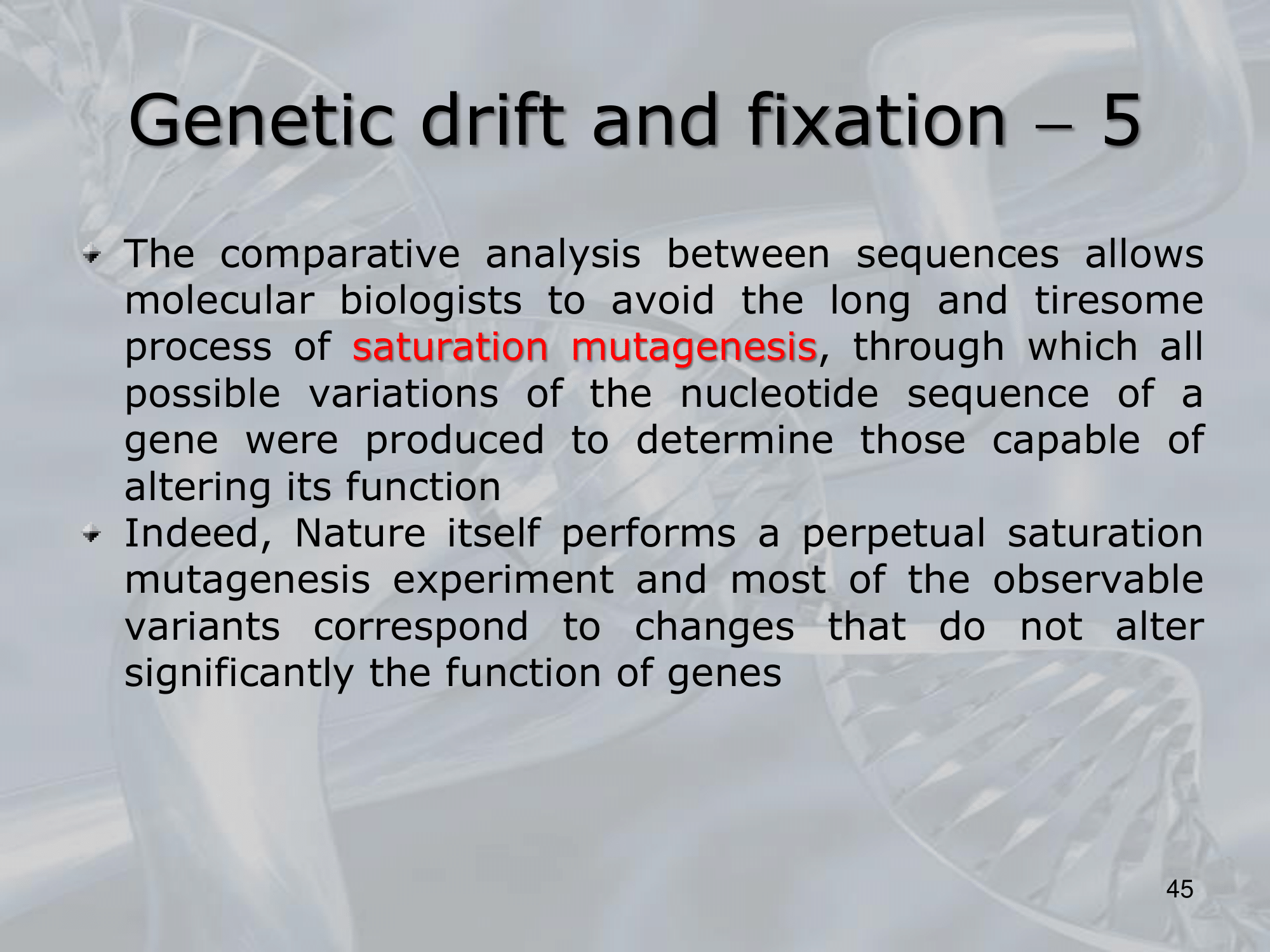
IMPORTANTE La saturazione mutagenica è il processo in cui tutti i cambiamenti di nucleotidi vengono testati per vedere quali sono dannosi/innocui/beneficiali alla specie, non serve farla perchè ci pensa già la natura. La maggior parte di mutazioni che osserviamo in una specie sono variazioni che corrisponodo a mutazioni che non alterano la funzione dei geni.
IMPORTANTE Genetic Drift: Un altro meccanismo dell’evoluzione, oltre alla selezione naturale, è il genetic drift, dove in pochi casi che non hanno nulla a che fare con la sopravvivenza della migliore specie, ma PER PURO CASO, l’allele di un gene scopare. ~Ex.: Vediamo come l’allele b scompare e l’unico allele che rimane nella specie di questi conigli è l’allele B: NOTA: Nell’esempio l’allele B è dominante in un senso mandeliano (tutti i conigli con almeno un allele B sono marroni, solo quelli con solo allele bb sono bianchi), questo supponiamo per l’esempio del genetic drift che NON influisca nella selezione naturale, i conigli bianchi sopravvivono quanto quelli marroni, hanno stesso rate di riproduzione, etc… NOTA: Per pur caso, solo alcuni conigli si riproducono e per puro caso sono solo quelli marroni, abbiamo quindi un evento di genetic drift dove l’allele b scompare.