Questions
- What about GC Content in Prokaryotic Genomes?
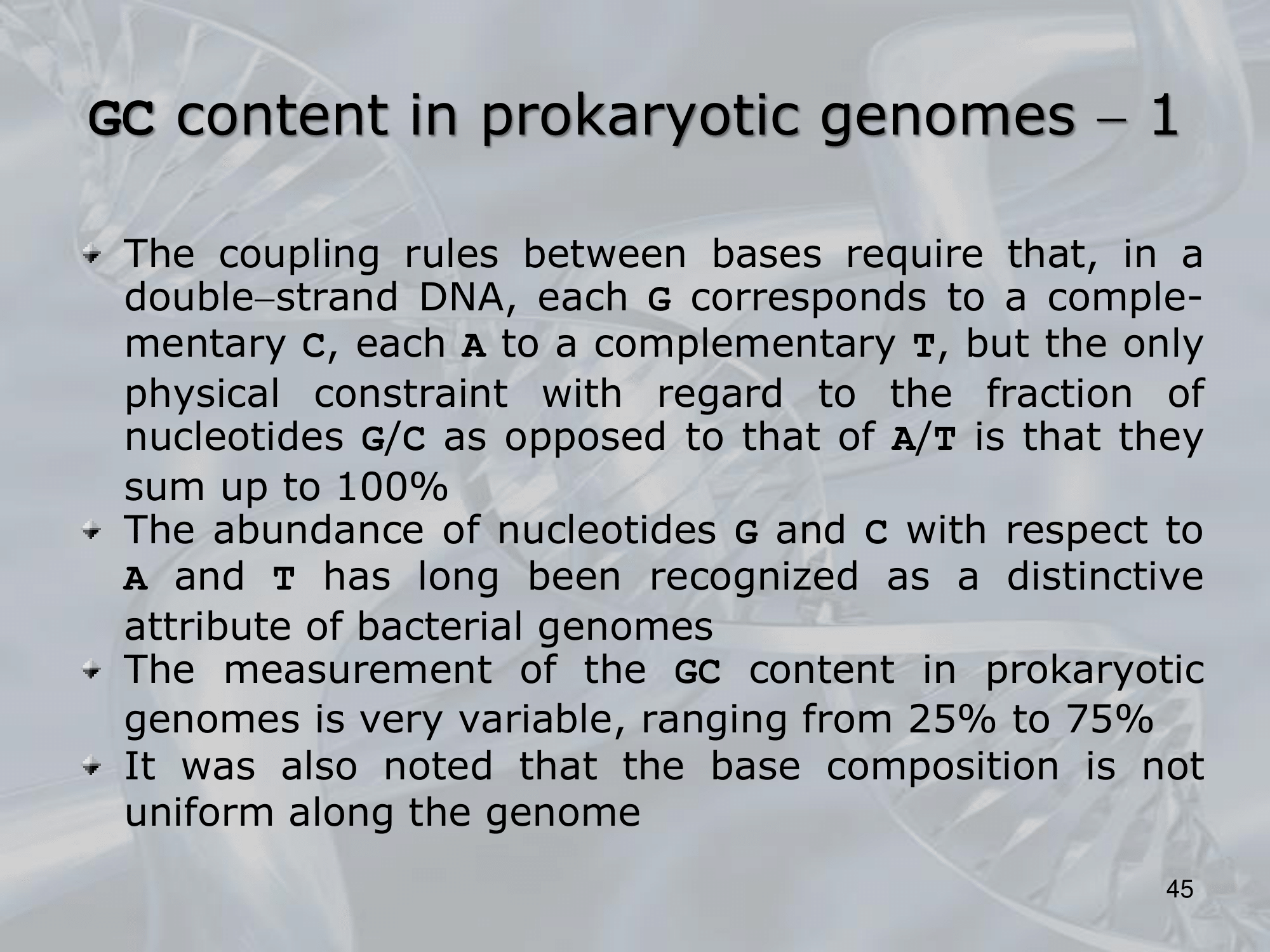
- GC content refers to the percentage of nucleotides in a DNA or RNA molecule that are either guanine (G) or cytosine (C).
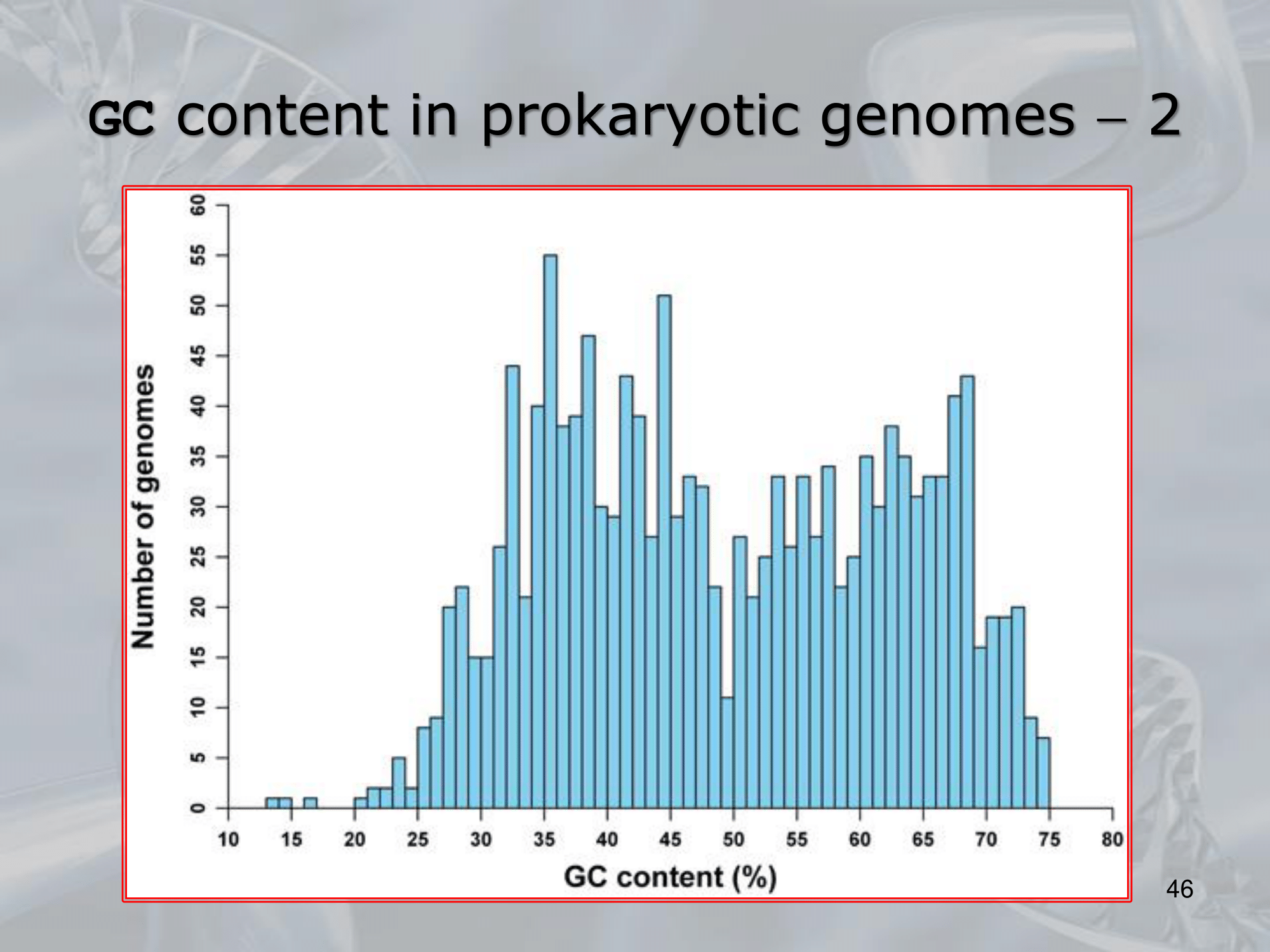
In prokaryotic genomes, GC content can vary widely between different species, ranging from less than 20% to more than 70%. - One of the main factors that affects GC content is the environment in which the organism lives.
Prokaryotes that live in extreme environments, such as hot springs or salt flats, tend to have higher GC content.
This is because the higher melting temperature of GC base pairs makes them more stable in high-temperature or high-salt conditions. - Another factor that can influence GC content is the selective pressures that act on the genome.
==For example, genes that are involved in DNA replication, transcription, and translation tend to have a higher GC content than non-coding regions, as GC-rich sequences are more stable and less prone to errors during replication or transcription==. - Overall, GC content can provide useful information about the biology and ecology of prokaryotic organisms, and can be used as a tool for genome analysis and comparison.
However, it is important to note that GC content is just one of many factors that contribute to genome structure and function, and should be interpreted in the context of other genomic features and environmental factors.
- GC content refers to the percentage of nucleotides in a DNA or RNA molecule that are either guanine (G) or cytosine (C).
—————————————————————
IMPORTANTE
IMPORTANTE GC Content in Prokaryotic Genomes: The measurement of the GC content in prokaryotic genomes (the number of nucleobasis G and C on the whole genome) is very variable, ranging from to
It was also noted that the base composition is not uniform along the genome.
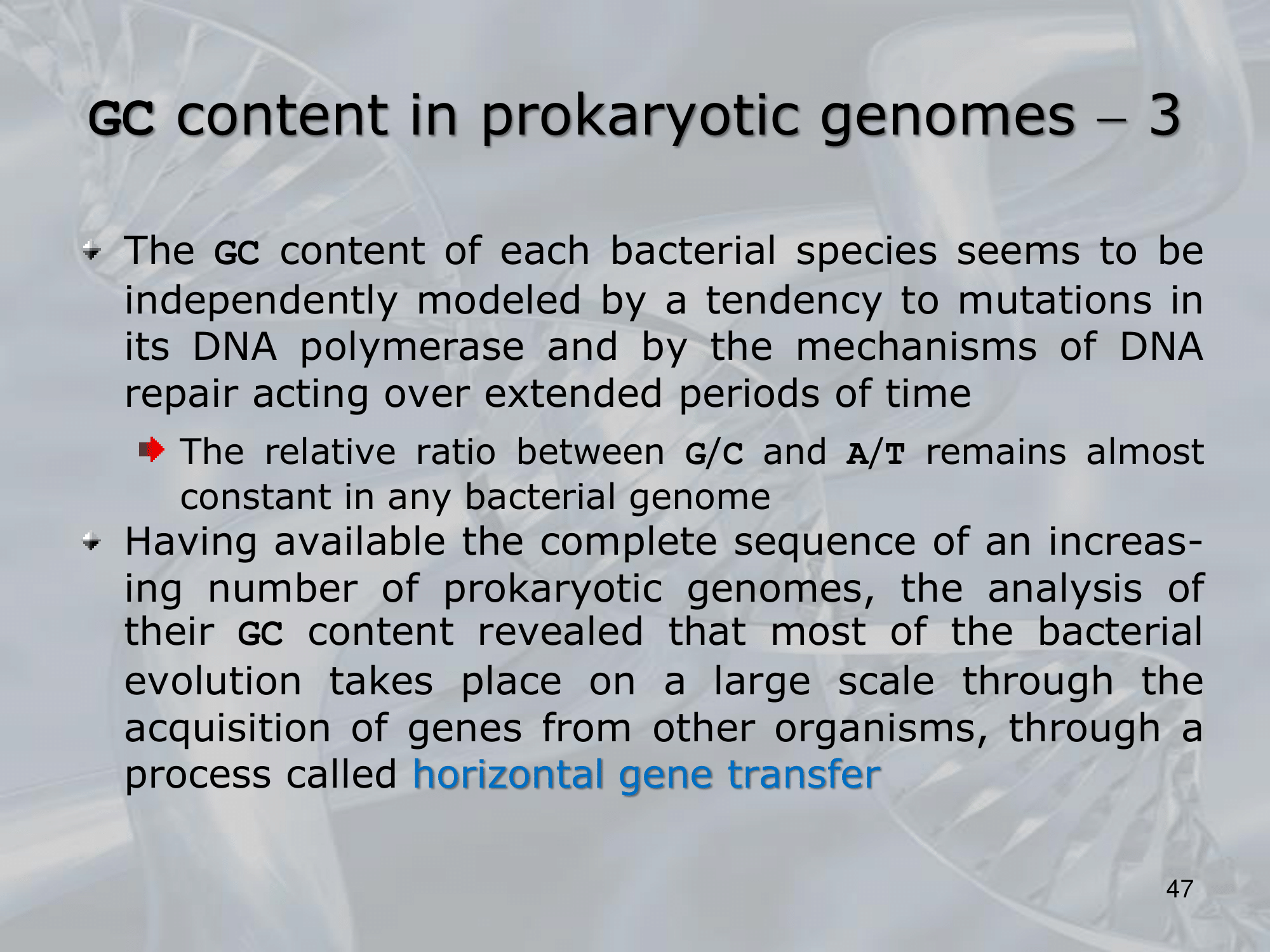
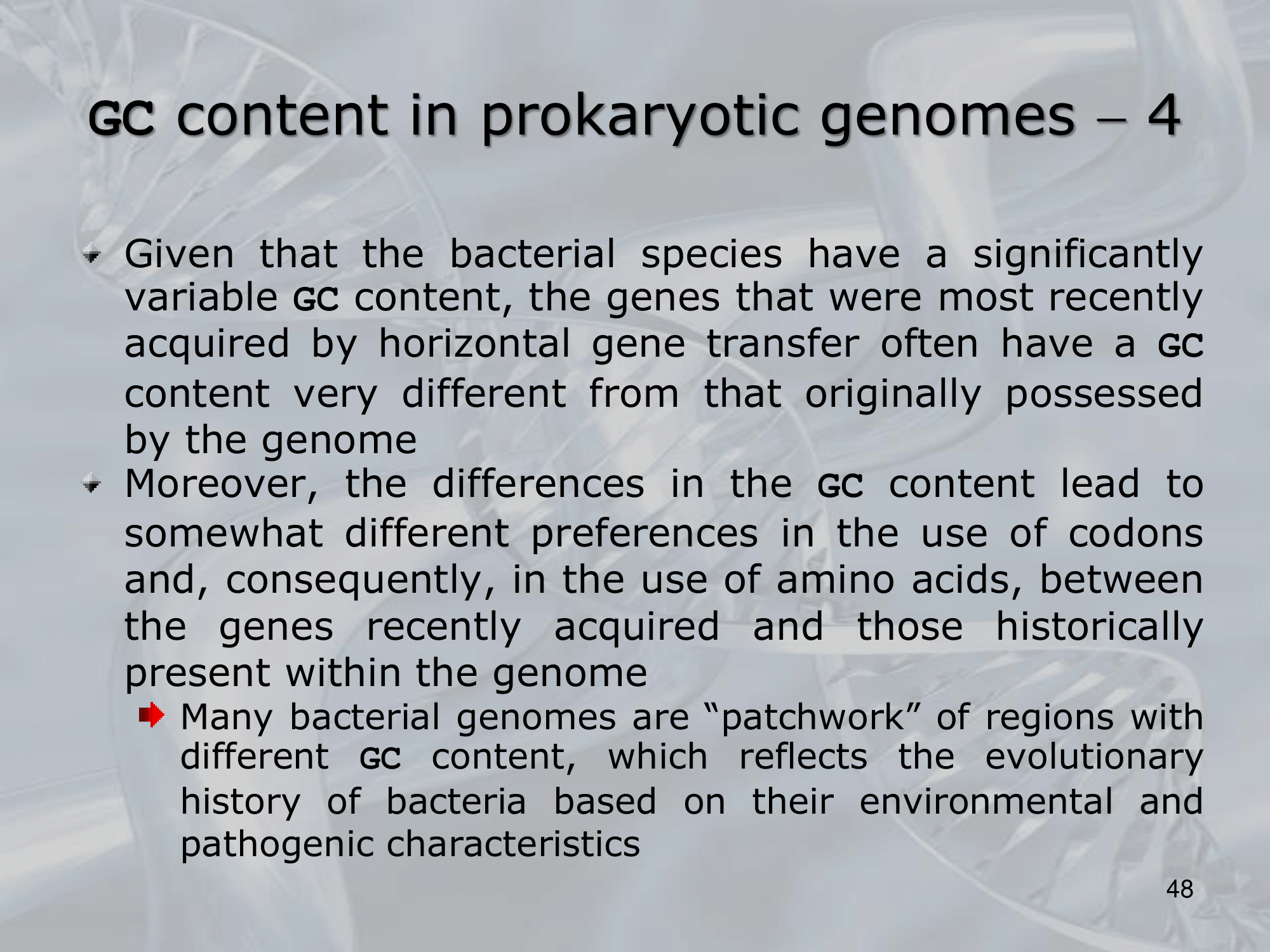
IMPORTANTE GC Content and Horizontal Gene Transfer: Given that the bacterial species have a significantly variable GC content, the genes that were most recently acquired by horizontal gene transfer often have a GC content very different from that orignially possessed by the genome.
Many bacterial genomes are “patchwork” of regions with different GC content, which reflect the evolutionary history of bacteria based on their environmental and pathogenic characteristics.
—————————————————————
Slides with Notes