Questions
- What are Fold Category of Proteins?
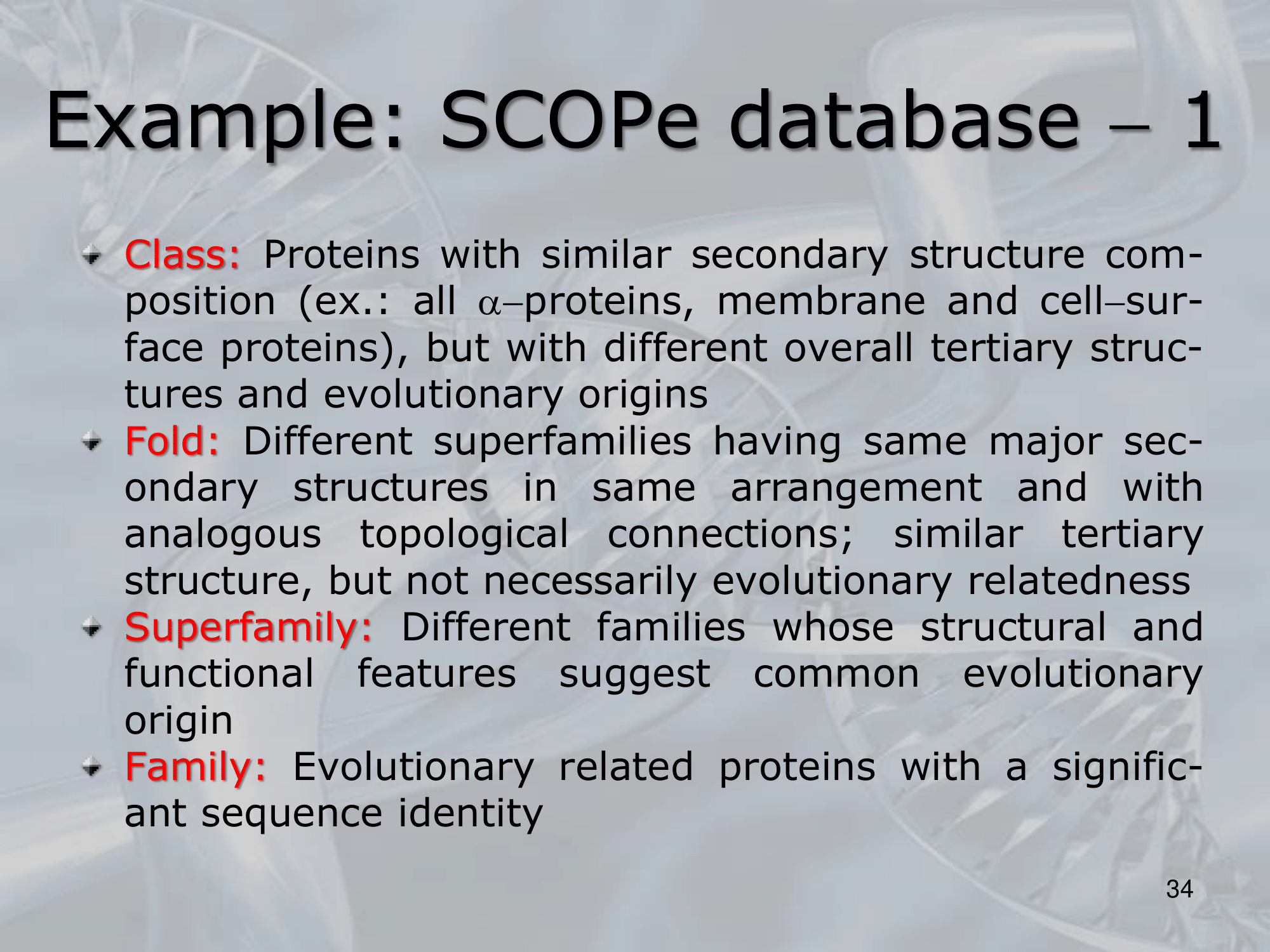
- The fold category of proteins refers to the different structural classes or categories that proteins can be classified into based on their three-dimensional structure.
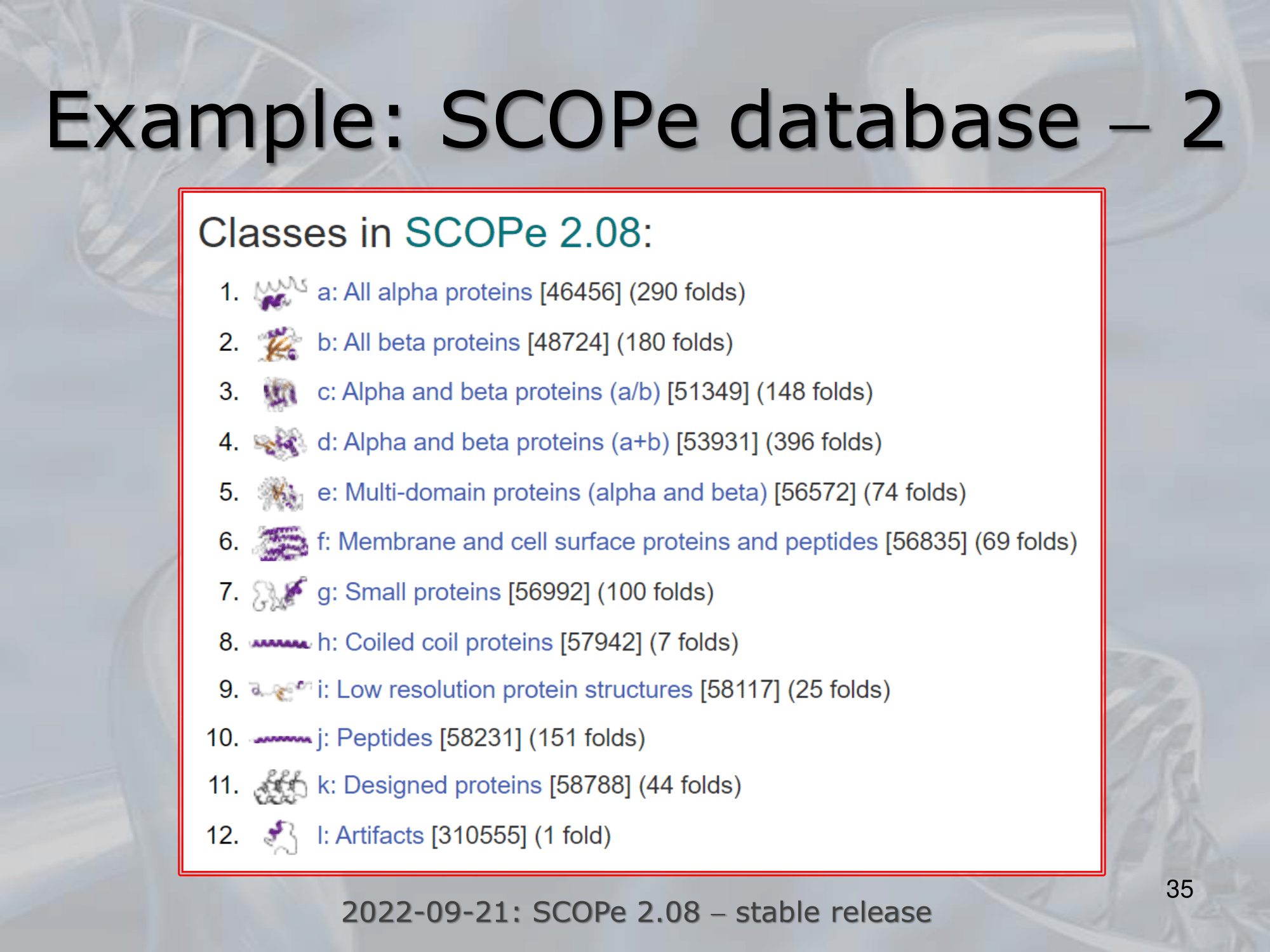
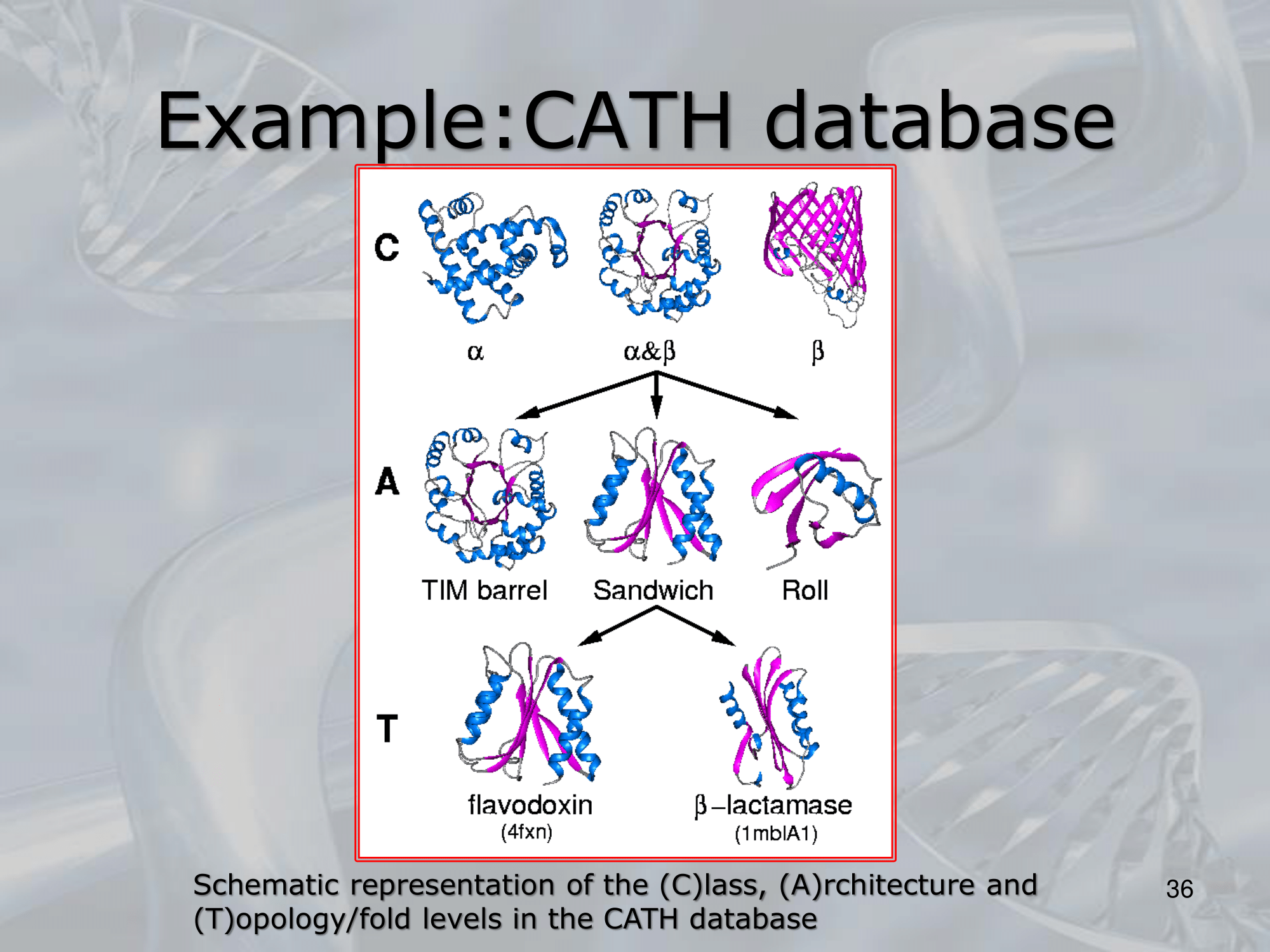
Here are some common fold categories of proteins:- Alpha/Beta: Proteins in this category contain both alpha helices and beta sheets in their structure, with the two types of secondary structures often arranged in alternating layers.
- Alpha+Beta: Proteins in this category also contain both alpha helices and beta sheets, but the two types of secondary structures are not as distinctly separated as in alpha/beta proteins.
- All-alpha: Proteins in this category are dominated by alpha helices, with relatively few beta strands.
- All-beta: Proteins in this category are dominated by beta sheets, with relatively few alpha helices.
- Alpha-helical bundles: These proteins contain multiple alpha helices that are arranged in a bundle-like structure.
- Beta-barrels: These proteins have a cylindrical shape and are made up of multiple beta strands that form a closed barrel-like structure.
- Coiled-coils: Proteins in this category are formed by two or more alpha helices that are coiled together like a rope.
- Intrinsically disordered proteins: These proteins do not adopt a fixed three-dimensional structure and instead exist as a flexible ensemble of conformations.
- Fold category classification schemes are useful for understanding the relationship between the structure and function of proteins, as proteins with similar folds often share similar functions.
They can also provide insights into the evolution of protein structure and the development of novel protein functions.
- The fold category of proteins refers to the different structural classes or categories that proteins can be classified into based on their three-dimensional structure.
—————————————————————
IMPORTANTE
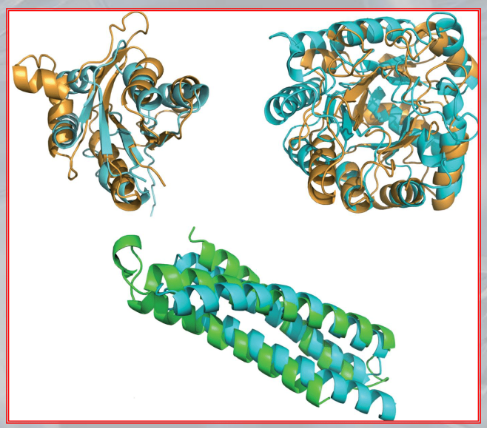
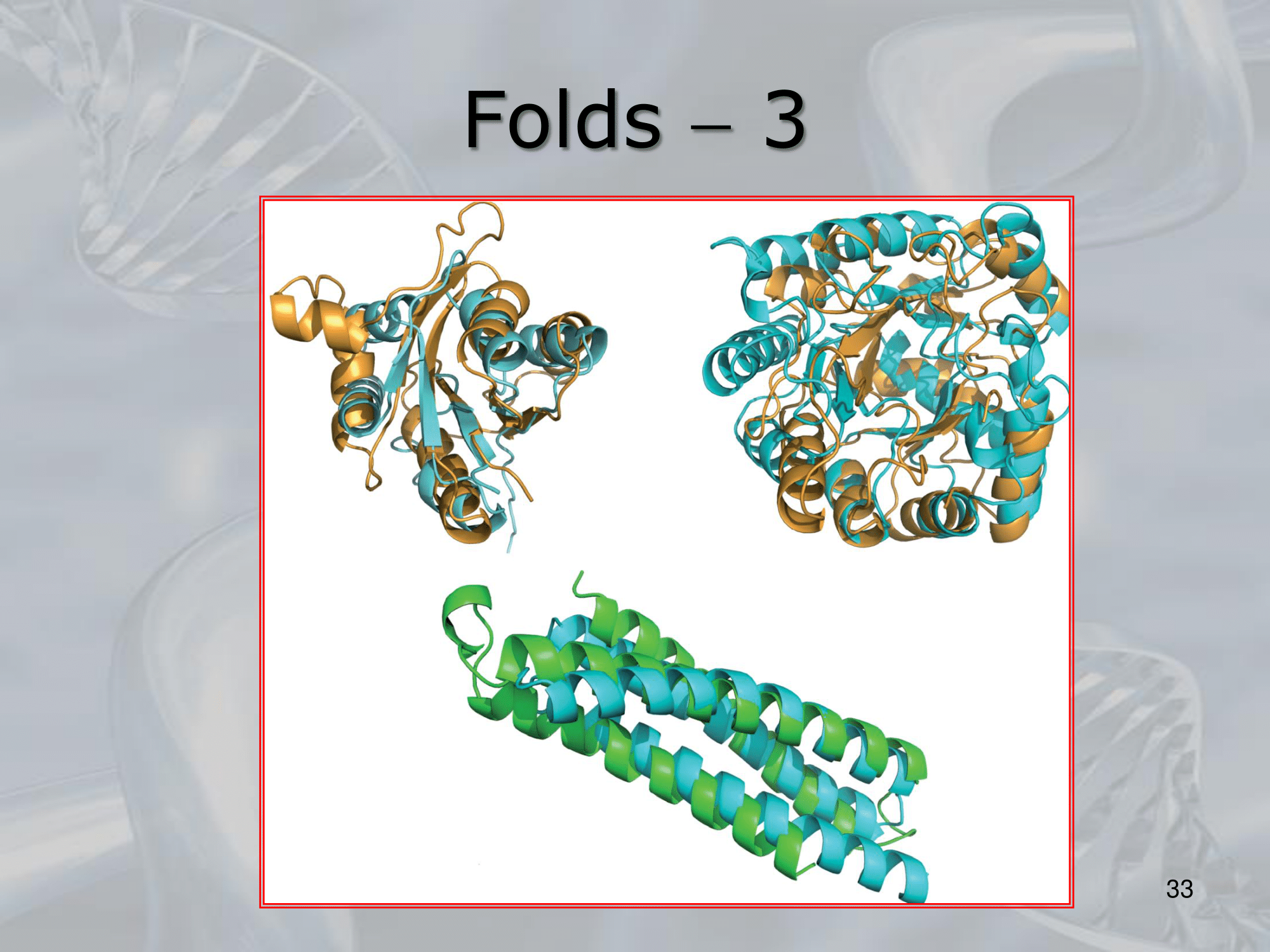
IMPORTANTE Fold Category of Proteins: Proteins are said to share a common fold if they have the same kind of 3D arrangment and with the same topological connection. A fold is (at most) a half of the total protein structure. Fold category are not evolutionary related, differently from family and superfamily, since the number of folds is limited, and different proteins (with different functions) may have the same fold due to the mixing and matchin of exons during their evolution. ~Ex.: Protein fold categories:
IMPORTANTE What are Introns and Exons? A gene is composed of introns and exons:
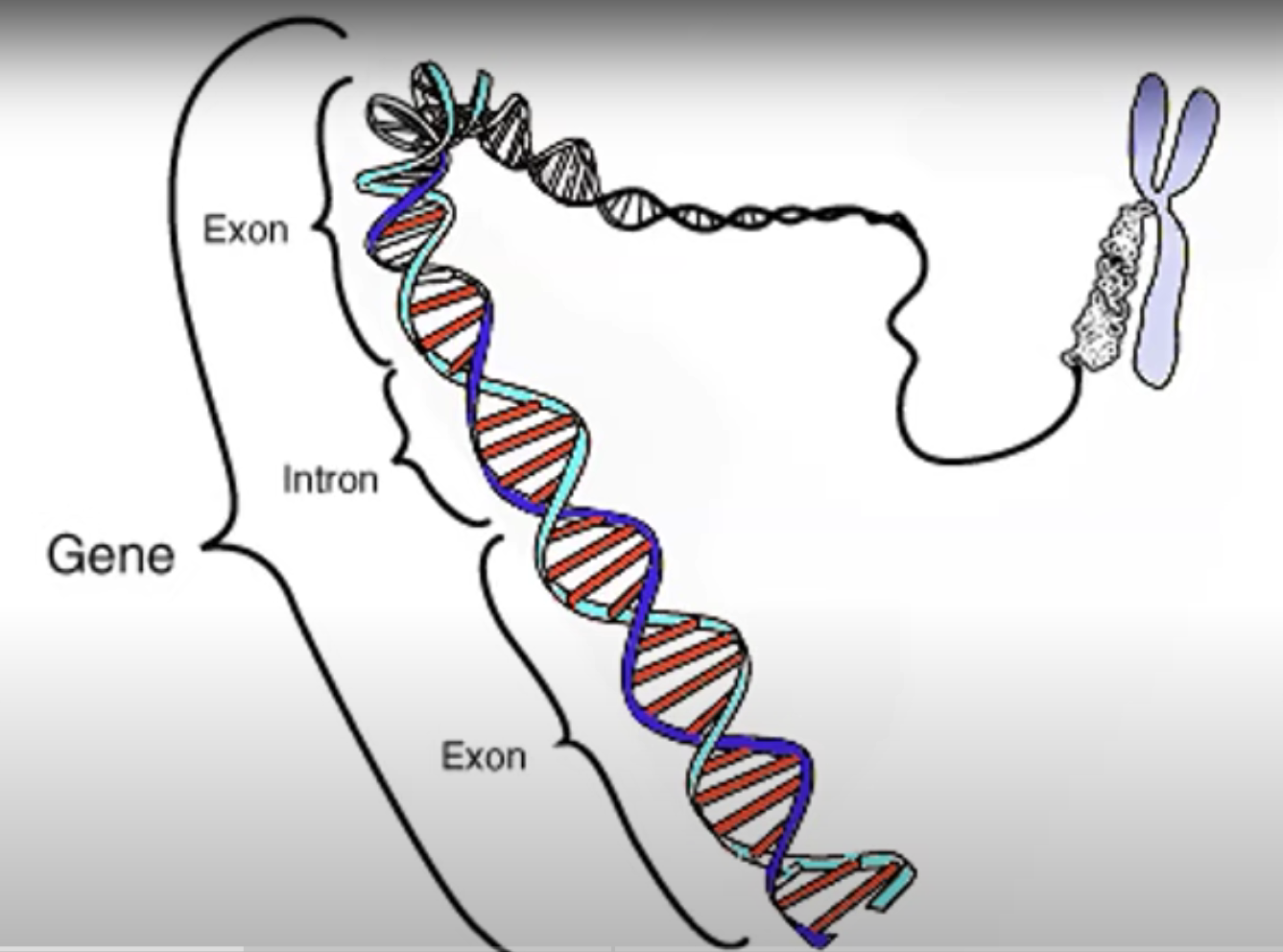

#IMPORTANTE From DNA to Protein: Starting DNA double Helix, in blue Exons, in red Introns:
Using the RNA Polymerise (a protein) the corresponding mRNA is created:
This is also called pre-mRNA This pre-mRNA need to be processed, introns needs to be removed: The “mature-mRNA” is defined by only exons:
Now using a ribosome the process of translation will begun and the mRNA will be transcribed into a series of amminoacids:
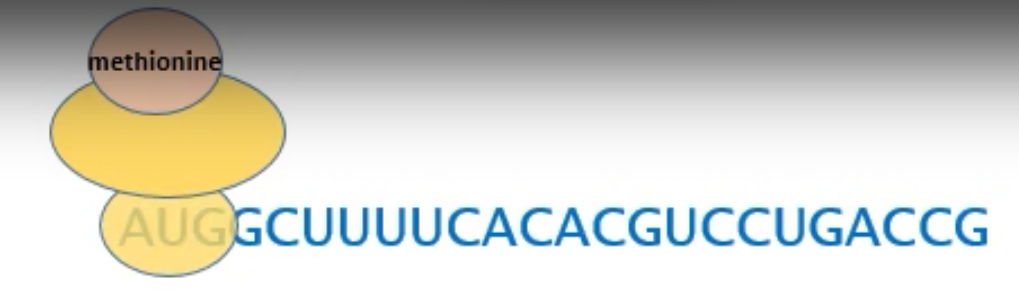
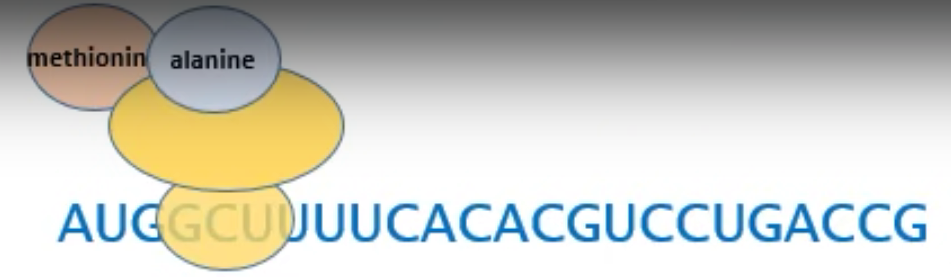
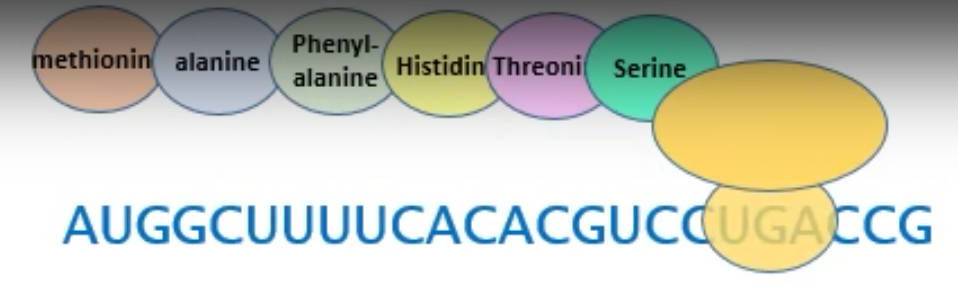
So the amminacid (or residue) chain (or polypeptide chain) is cretead, and the mature-mRNA will be discarded and recicled. Now the polypeptide chain will fold into a protein, the protein can be united with other protein, or not.
Online source: Youtube
—————————————————————
Slides with Notes
IMPORTANTE What are Introns and Exons? A gene is composed of introns and exons:
Online source: Youtube