==Elman networks, also known as Simple Recurrent Networks (SRNs), are a type of recurrent neural network (RNN)== that were proposed by Jeffrey Elman in 1990. They are designed to process sequential data by maintaining a memory of previous inputs using a set of recurrent connections.
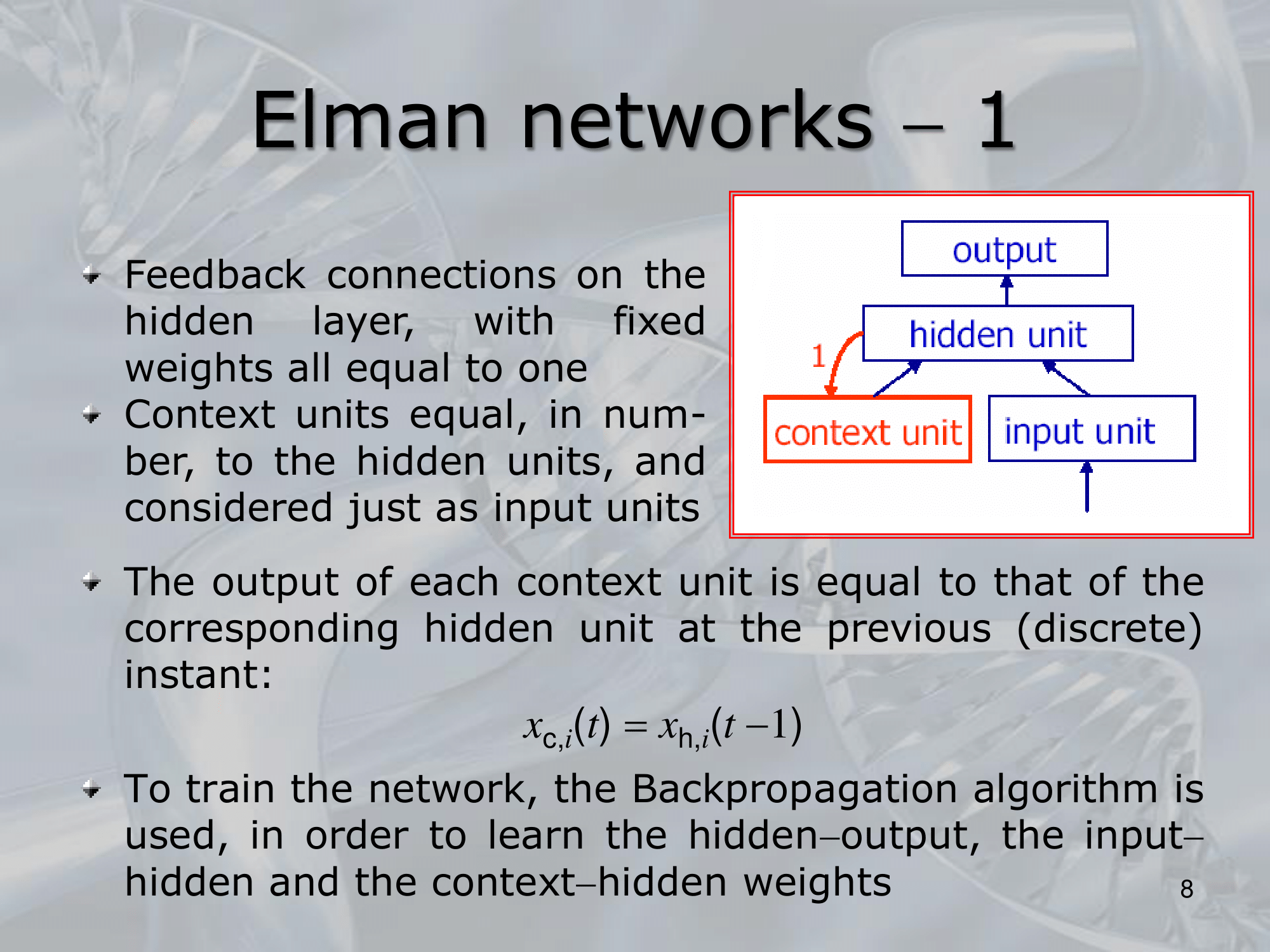
Elman networks consist of three main layers: an input layer, a hidden layer, and an output layer.
The input layer receives sequential data, with each input being processed one at a time.
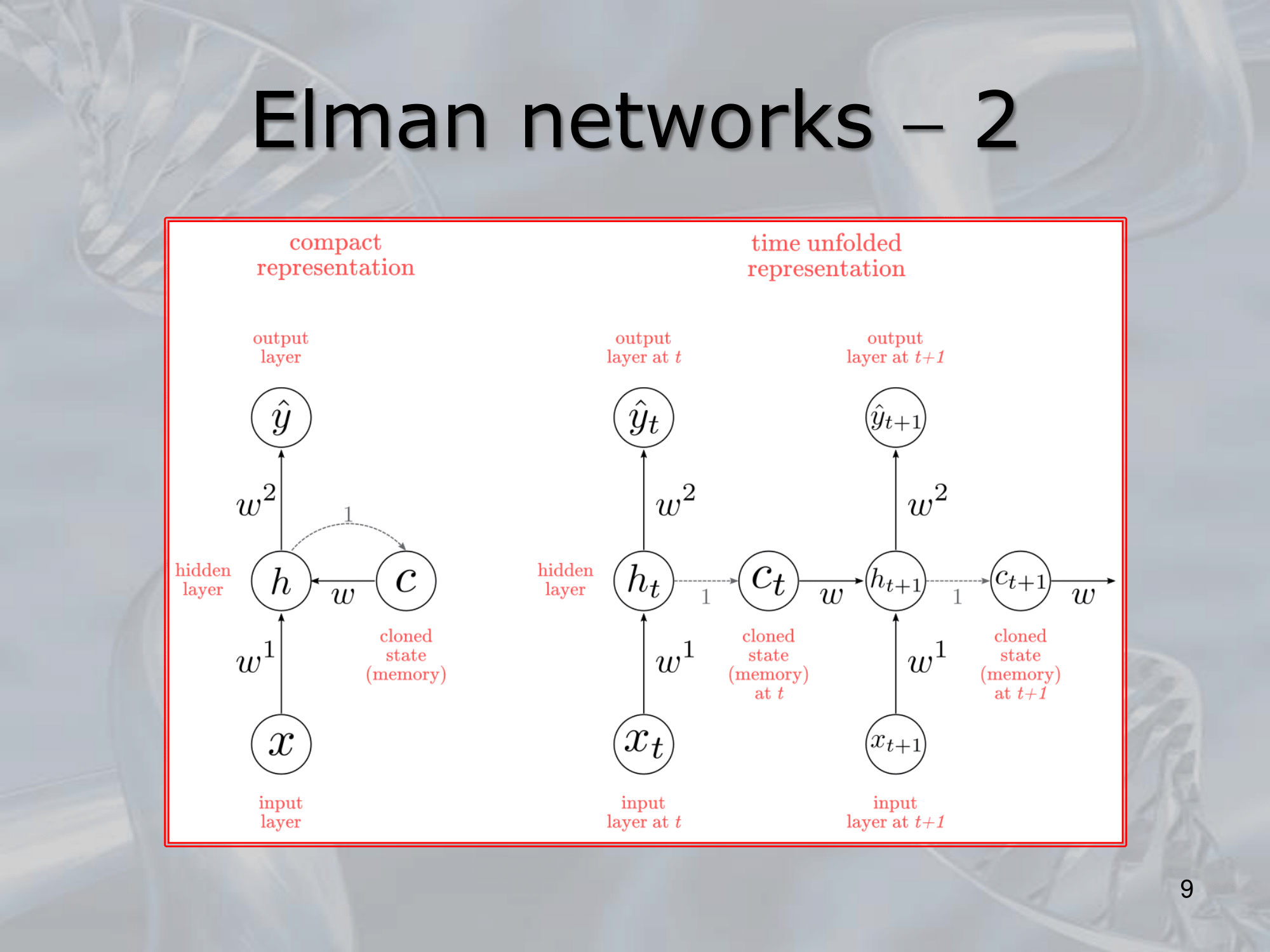
==The hidden layer contains a set of recurrent connections that allow the network to maintain a memory of previous inputs==.
The output layer produces a prediction or classification based on the input and the current state of the hidden layer.
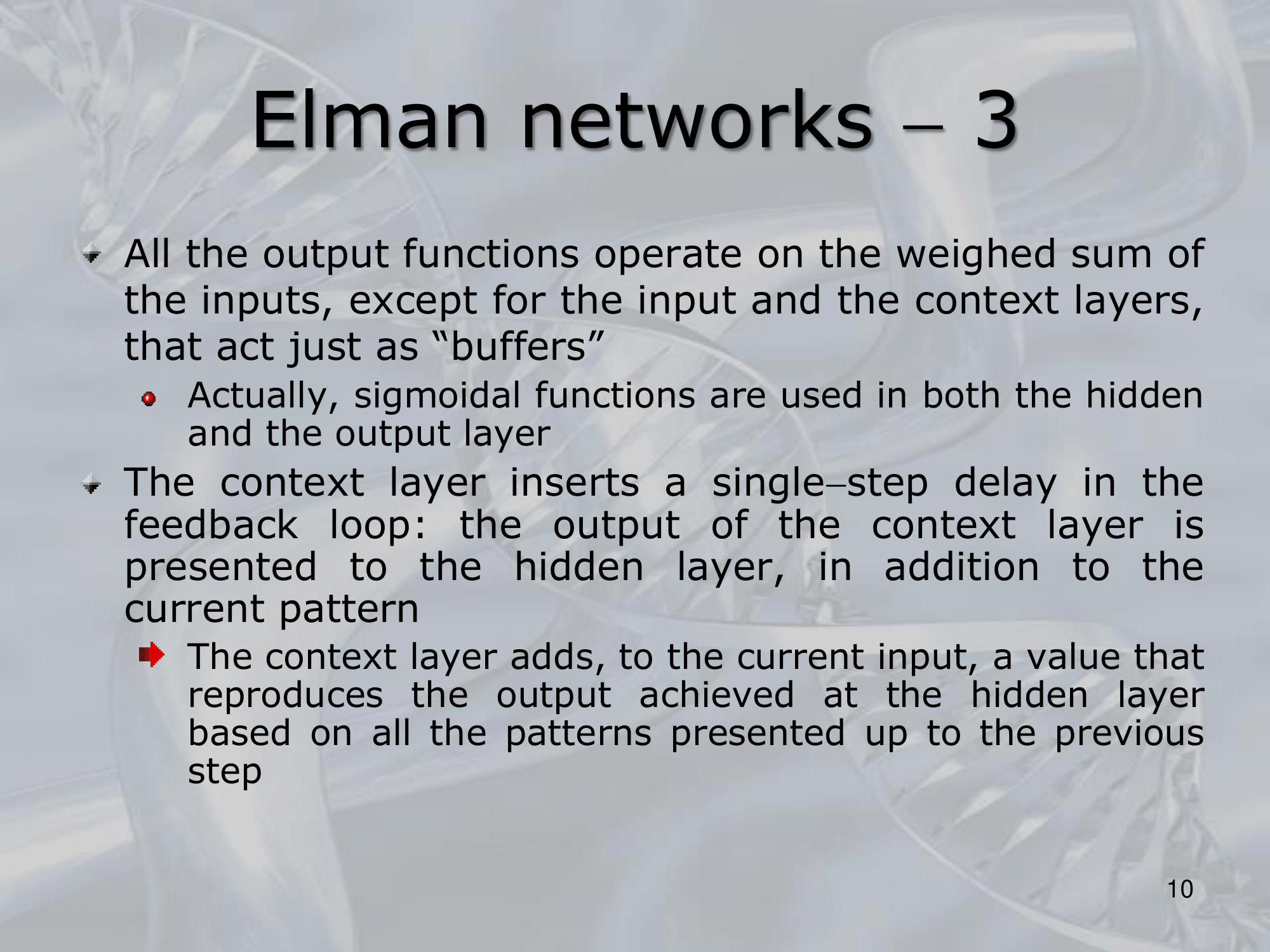
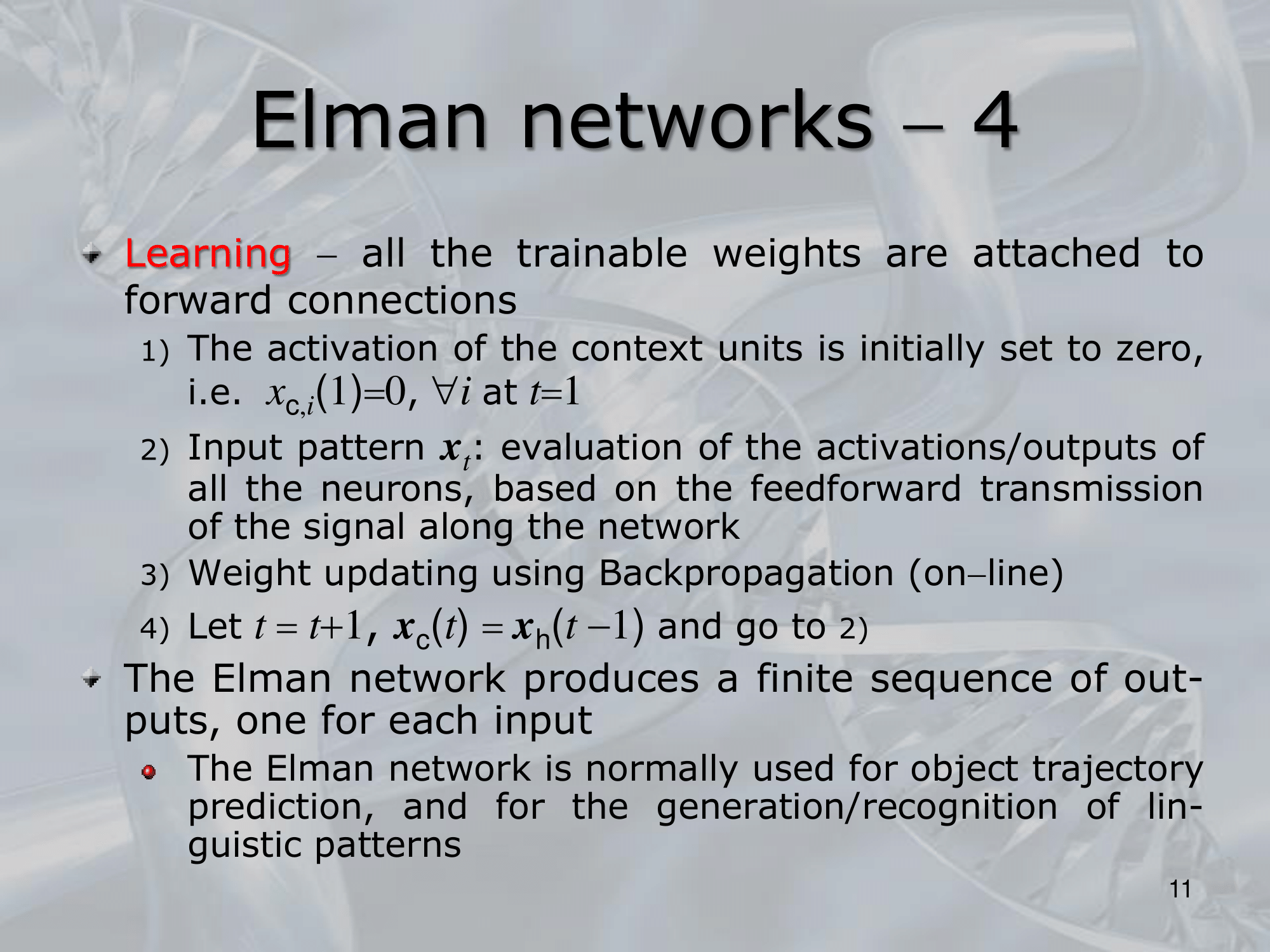
==In an Elman network, the recurrent connections between the hidden layer and itself serve as a memory mechanism==. The hidden layer computes a weighted sum of the current input and the previous state of the hidden layer, and applies a nonlinear activation function to produce the current state of the hidden layer. This current state is then used as the input to the next processing step.
One advantage of Elman networks is their relatively simple architecture, which makes them easier to train and interpret than more complex RNN architectures like Long Short-Term Memory (LSTM) or Gated Recurrent Units (GRU). However, they may struggle with tasks that require long-term dependencies, as their memory mechanism is not as sophisticated as that of more advanced RNN architectures.
Elman networks have been used successfully in a variety of applications, including speech recognition, natural language processing, and time series prediction. They remain a popular choice for researchers and practitioners working with sequential data.