Questions
- What are Genes and Proteins?
- Genes and proteins are two fundamental components of the molecular machinery that governs the function and behavior of living organisms.
- Genes are stretches of DNA that encode the instructions for building specific proteins.
These instructions are encoded in the form of a linear sequence of nucleotides (A, T, C, and G), with each sequence of three nucleotides (called a codon) specifying a particular amino acid building block that will be incorporated into the protein.
The specific sequence of nucleotides in a gene determines the sequence of amino acids in the corresponding protein, and thus its structure and function. - Proteins are complex molecules made up of chains of amino acids that fold into specific three-dimensional shapes, which determine their biological activity and function.
Proteins perform a wide range of essential functions within cells, including catalyzing chemical reactions, transporting molecules across cell membranes, and serving as structural components of the cell. - The process of gene expression involves the conversion of the genetic information encoded in a gene into a functional protein.
This process involves several steps, including:- ==Transcription (the synthesis of an RNA copy of the gene)==.
- ==Translation (the synthesis of a protein from the RNA)==.
- ==And Post-Translational Modifications (modifications of the protein that affect its activity or stability==).
- Together, genes and proteins form the basis of the molecular machinery that underlies the behavior and function of living organisms.
Understanding the structure and function of genes and proteins is essential for understanding the processes of life at the molecular level.
- What is Gene Duplication and Gene Amplification?
- Gene duplication and gene amplification are two related but distinct processes that can lead to the creation of new genes with novel functions.
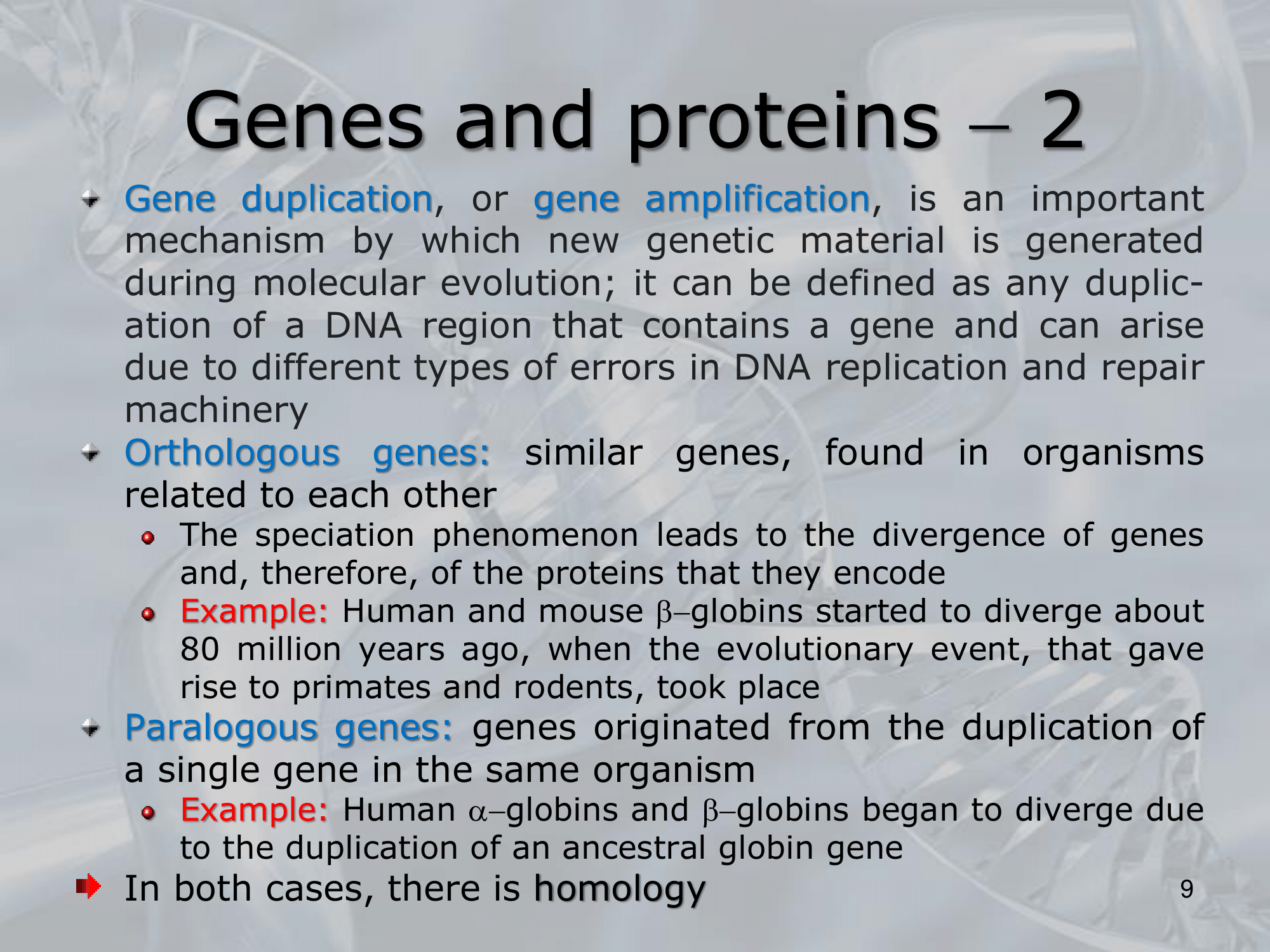
- ==Gene duplication refers to the process by which a single gene is duplicated, resulting in two or more copies of the gene in the genome==.
Gene duplication can occur through several mechanisms, including unequal crossing over during meiosis, retrotransposition of mRNA back into the genome, or whole-genome duplications.
Once a gene is duplicated, one copy is typically retained in the original location in the genome, while the other copy can evolve independently and acquire new functions.
Over time, the duplicated copy may undergo mutations that alter its sequence and expression patterns, leading to the evolution of a new gene with a distinct function. - ==Gene amplification, on the other hand, refers to the process by which the expression of a particular gene is increased within the genome==.
Gene amplification can occur through several mechanisms, including DNA replication errors, chromosomal rearrangements, or selective pressure to increase the expression of a particular gene.
Gene amplification can lead to an increase in the expression of a particular gene, which can confer a selective advantage in certain contexts, such as in cancer cells that require high levels of a particular protein to survive and proliferate.
- ==Gene duplication refers to the process by which a single gene is duplicated, resulting in two or more copies of the gene in the genome==.
- In summary, gene duplication and gene amplification are two related processes that can lead to the creation of new genes or increased expression of existing genes, and they play important roles in the evolution and adaptation of organisms, as well as in the development and progression of diseases such as cancer.
- Gene duplication and gene amplification are two related but distinct processes that can lead to the creation of new genes with novel functions.
- What are the Differences between Gene Duplication and Gene Amplification?
- Gene duplication and gene amplification are two related but distinct processes that can lead to an increase in the number of copies of a particular gene within the genome.
However, there are some important differences between these two processes:- Mechanisms: Gene duplication can occur through several mechanisms, including unequal crossing over during meiosis, retrotransposition of mRNA back into the genome, or whole-genome duplications.
In contrast, gene amplification can occur through DNA replication errors, chromosomal rearrangements, or selective pressure to increase the expression of a particular gene. - Location: ==When a gene is duplicated, one copy is typically retained in the original location in the genome, while the other copy can evolve independently and acquire new functions.
In contrast, gene amplification results in an increase in the number of copies of a particular gene in the same location within the genome==. - Evolutionary implications: ==Gene duplication is thought to be a major driver of evolutionary innovation, as it can lead to the creation of new genes with novel functions.
Gene amplification, on the other hand, is often associated with pathological conditions, such as cancer, where an increase in the expression of a particular gene can confer a selective advantage to the cancer cells==.
- Mechanisms: Gene duplication can occur through several mechanisms, including unequal crossing over during meiosis, retrotransposition of mRNA back into the genome, or whole-genome duplications.
- In summary, gene duplication and gene amplification are two distinct processes that can increase the number of copies of a particular gene within the genome, but they differ in their mechanisms, the number and location of copies, and their evolutionary implications.
- Gene duplication and gene amplification are two related but distinct processes that can lead to an increase in the number of copies of a particular gene within the genome.
- How can Protein Change?
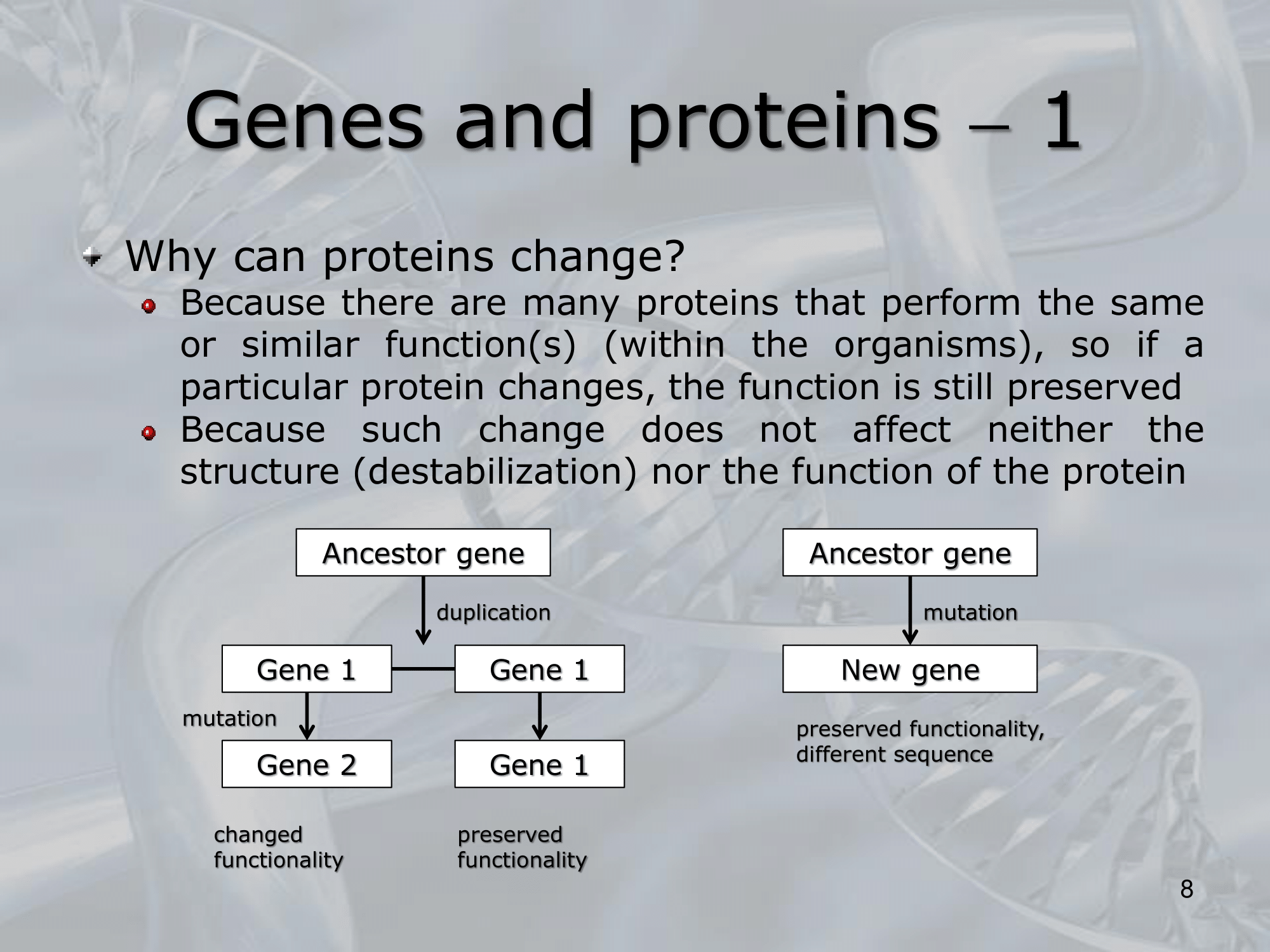
- Proteins can change due to several factors, including genetic mutations, post-translational modifications, and changes in the cellular environment.
- Genetic mutations can alter the sequence of amino acids in a protein, either by changing a single nucleotide in the DNA sequence or through gene duplication and subsequent evolution of the duplicated copy.
These mutations can lead to changes in the structure and function of the protein, which may be beneficial or detrimental depending on the context. - Post-translational modifications (PTMs) are chemical modifications that occur to a protein after it has been synthesized.
PTMs can include phosphorylation, acetylation, methylation, ubiquitination, and many others, and they can alter the activity, stability, and localization of the protein.
PTMs are regulated by a complex network of enzymes and signaling pathways, and they play crucial roles in many biological processes. - Changes in the cellular environment can also affect protein structure and function.
For example, changes in temperature, pH, salt concentration, or the presence of other molecules can alter the stability and activity of a protein.
Cells have evolved mechanisms to regulate protein folding, trafficking, and degradation in response to changes in the environment, which allows them to adapt to changing conditions and maintain cellular homeostasis.
- Genetic mutations can alter the sequence of amino acids in a protein, either by changing a single nucleotide in the DNA sequence or through gene duplication and subsequent evolution of the duplicated copy.
- In summary, proteins can change due to genetic mutations, post-translational modifications, and changes in the cellular environment, and these changes can have important implications for protein function and cellular behavior. Understanding how and why proteins change is a key area of research in molecular biology and biochemistry.
- Proteins can change due to several factors, including genetic mutations, post-translational modifications, and changes in the cellular environment.
- What are Orthologous Genes and Paralogous Genes, what are their Differences?
- Orthologous genes and paralogous genes are two types of homologous genes, meaning that they share a common ancestry.
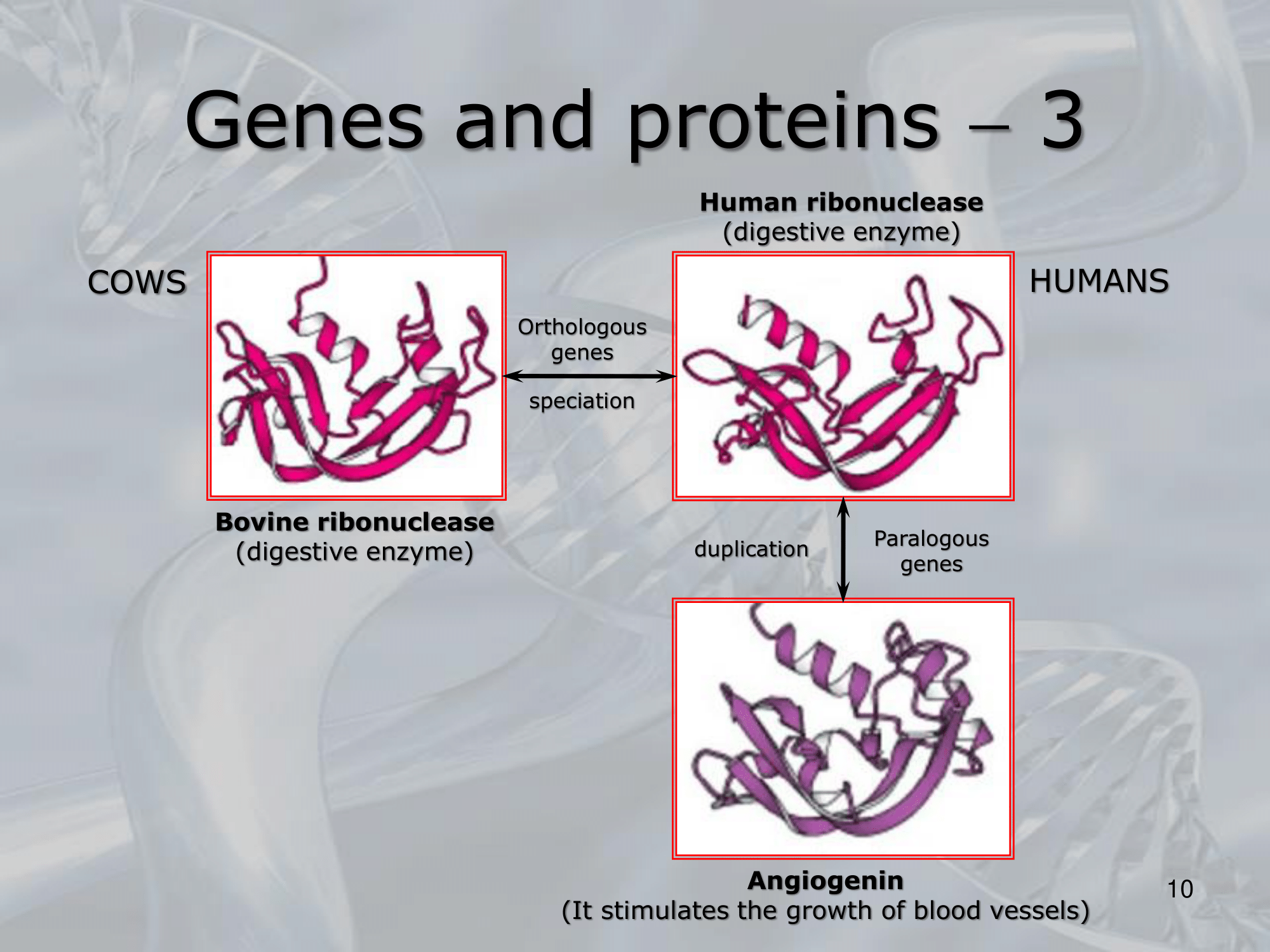
However, there are some important differences between these two types of genes:- Definition: ==Orthologous genes are genes in different species that evolved from a common ancestral gene by speciation, meaning that they diverged when the two species separated.
In contrast, paralogous genes are genes that arise by gene duplication within a genome, meaning that they are derived from a single ancestral gene that was duplicated and then evolved independently==. - Function: ==Orthologous genes usually have similar or identical functions in different species, as they evolved from the same ancestral gene and were subject to similar selective pressures in the different lineages.
In contrast, paralogous genes may have diverged in function from the ancestral gene, and they may have acquired new functions or specialized roles in the genome==. - Evolutionary history: Orthologous genes can be used to infer the evolutionary relationships between different species, as they represent shared ancestry and provide evidence of common descent.
In contrast, paralogous genes can provide insights into the evolutionary history of gene duplication events within a single genome, and can be used to study the functional diversification of genes over time. - Sequence similarity: Orthologous genes are expected to have a higher degree of sequence similarity between different species than paralogous genes within a single genome.
This is because orthologs share a more recent common ancestor and have had less time to accumulate differences in their sequences.
- Definition: ==Orthologous genes are genes in different species that evolved from a common ancestral gene by speciation, meaning that they diverged when the two species separated.
- In summary, orthologous genes and paralogous genes are two types of homologous genes that differ in their definition, function, evolutionary history, and sequence similarity. Understanding the differences between these two types of genes is important for studying the evolution and function of genes in different species and genomes.
- Orthologous genes and paralogous genes are two types of homologous genes, meaning that they share a common ancestry.
—————————————————————
IMPORTANTE
IMPORTANTE Duplicazione di Geni: una regione di DNA che contiene un gene viene duplicata, può essere dovuta a diversi tipi di errore durante la duplicazione del DNA
IMPORTANTE Geni Ortologi e Parologi: Geni Ortologi: geni simili trovati in organismi differenti ma che hanno una relazione/“parentela” tra di loro. Geni Parologi: Geni originati dalla duplicazione di un gene in uno stesso organismo.
—————————————————————
Slides with Notes
IMPORTANTE Duplicazione di Geni: una regione di DNA che contiene un gene viene duplicata, può essere dovuta a diversi tipi di errore durante la duplicazione del DNA
IMPORTANTE Geni Ortologi e Parologi: Geni Ortologi: geni simili trovati in organismi differenti ma che hanno una relazione/“parentela” tra di loro. Geni Parologi: Geni originati dalla duplicazione di un gene in uno stesso organismo.