Questions
- What is the Protein Microarray Technique?
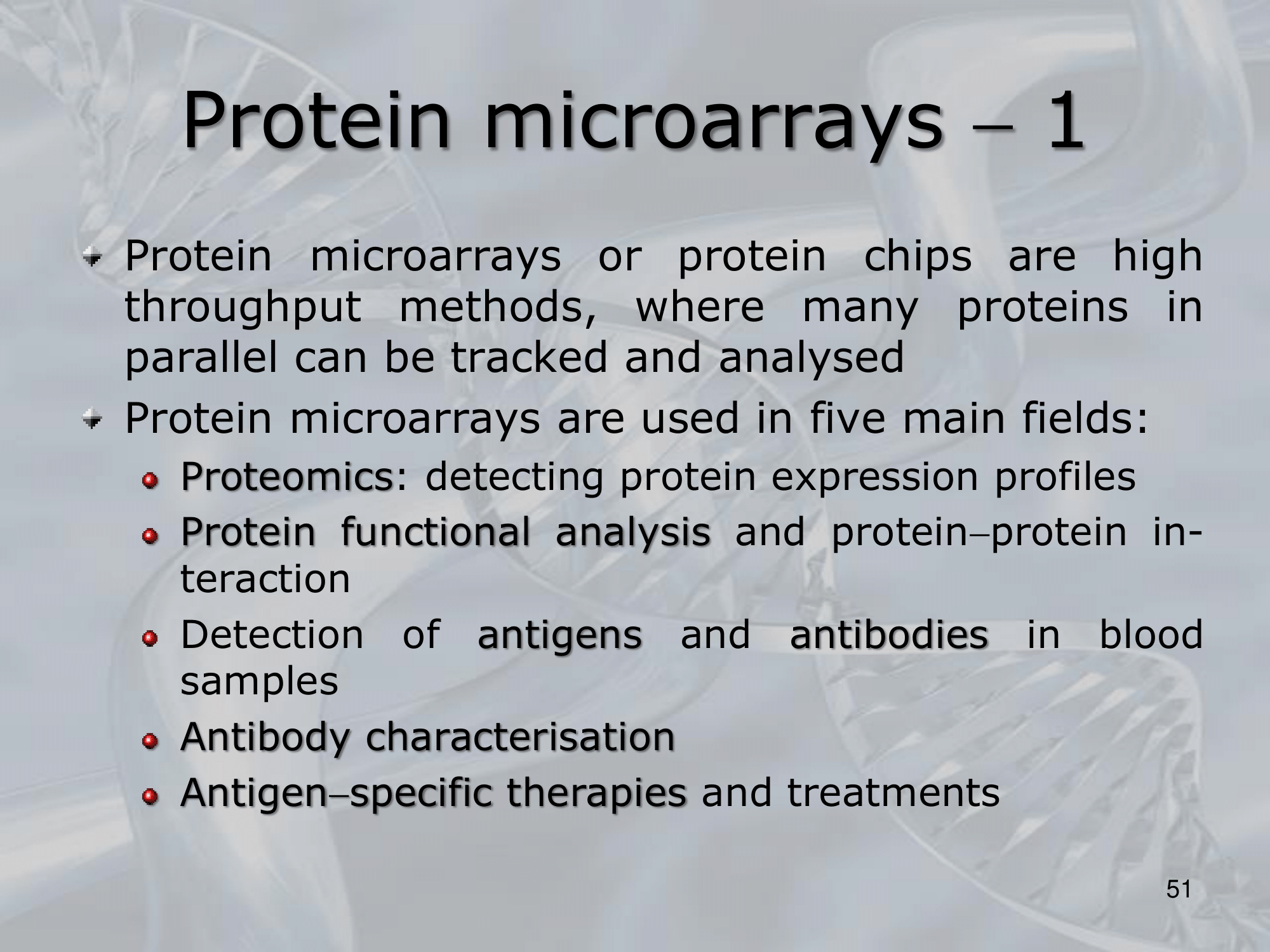
- A protein microarray is a high-throughput technology that allows for the simultaneous detection and quantification of multiple proteins in a single experiment.
==The technique involves spotting hundreds or thousands of purified proteins, protein fragments, or antibodies onto a solid surface, such as a glass slide or a membrane, in a grid-like pattern==. - The samples are then incubated with a biological sample, such as a cell lysate or a serum sample, and the bound proteins are detected using a variety of techniques, including fluorescence, chemiluminescence, or mass spectrometry.
- Protein microarrays can be used for a variety of applications, including:
- Protein-protein interaction studies: The microarray can be used to identify novel protein-protein interactions by spotting bait proteins onto the array and detecting the binding of prey proteins.
- Antibody profiling: The microarray can be used to detect the presence of antibodies in a biological sample, such as serum, and to determine their specificity and binding affinity.
- Biomarker discovery: The microarray can be used to identify proteins that are differentially expressed in disease states, providing potential biomarkers for disease diagnosis or prognosis.
- Drug target discovery: The microarray can be used to identify potential drug targets by identifying proteins that are overexpressed or dysregulated in disease states.
- Protein microarrays have the advantage of being able to analyze large numbers of proteins simultaneously, providing a more comprehensive analysis of protein function and interaction.
However, there are also limitations, such as the requirement for purified proteins and the need for high-quality antibodies for detection.
- A protein microarray is a high-throughput technology that allows for the simultaneous detection and quantification of multiple proteins in a single experiment.
—————————————————————
IMPORTANTE
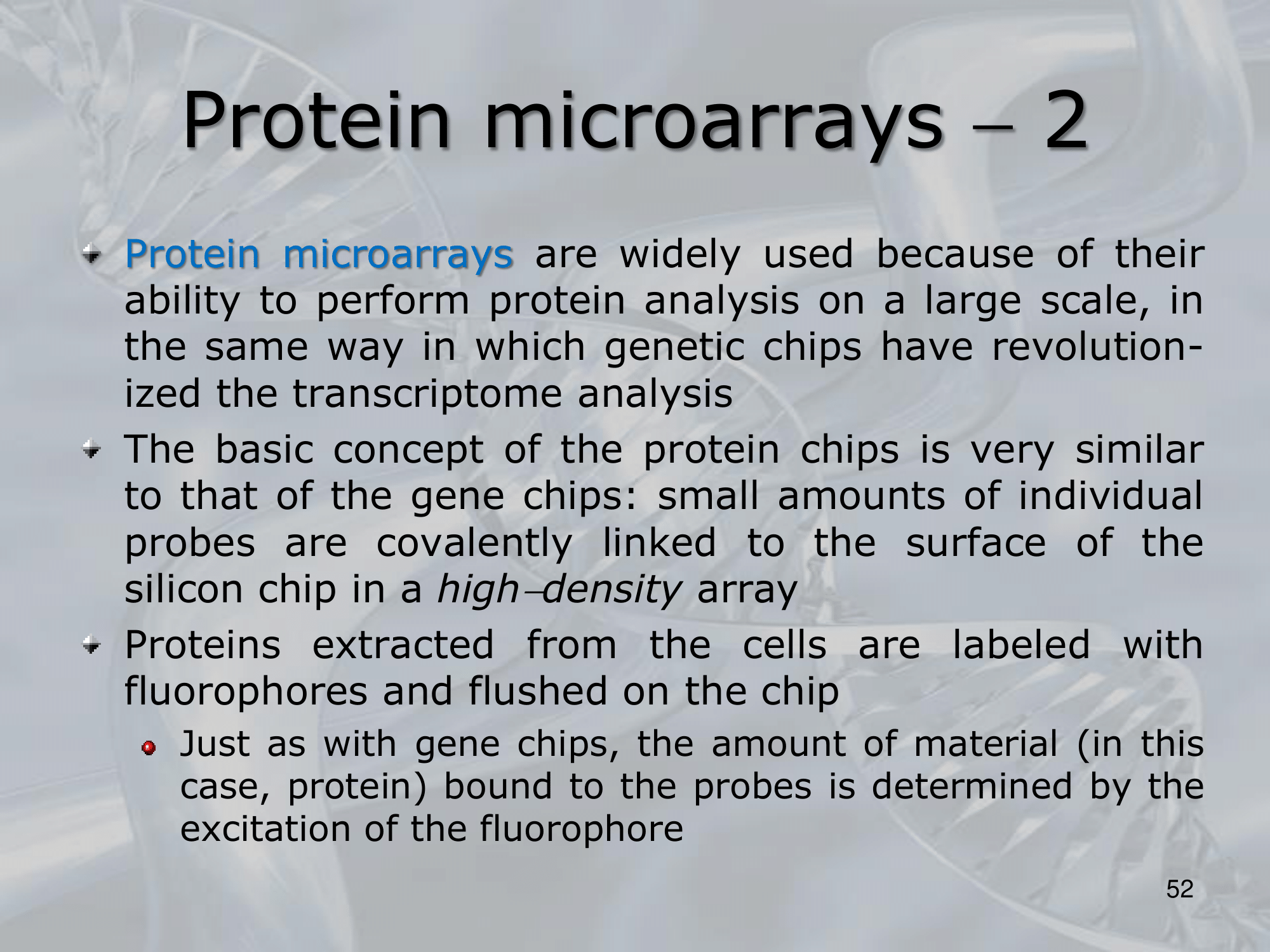
IMPORTANTE Protein Microarrays: Also called “protein chips”, they are the counter part to microarrays (or “gene chips”) for the study of the DNA.
Basic Concept:
- Small amount of individual probes are covalently linked to the surface of the silicon chip in a high-density array.
- Protein extracted from the cells are labeld with fluorophores and flushed on the chip
- Just as with gene chips, the amount of material (in this case, proteins) bound to the probes is determined by the excitation of the fluorophore
Pros: many proteins can be tracked and analyzed in parrallel. Pros: the protein microarrays are utilized in many fields of study:
- Proteomics, to detect protein expression profiles.
- Protein Functional Analysis and Protein-Protein Interaction
- Detection of antigens and antibodies in blood samples
- Antibody Characterization
- Antigen-Specific Therapies and Treatments
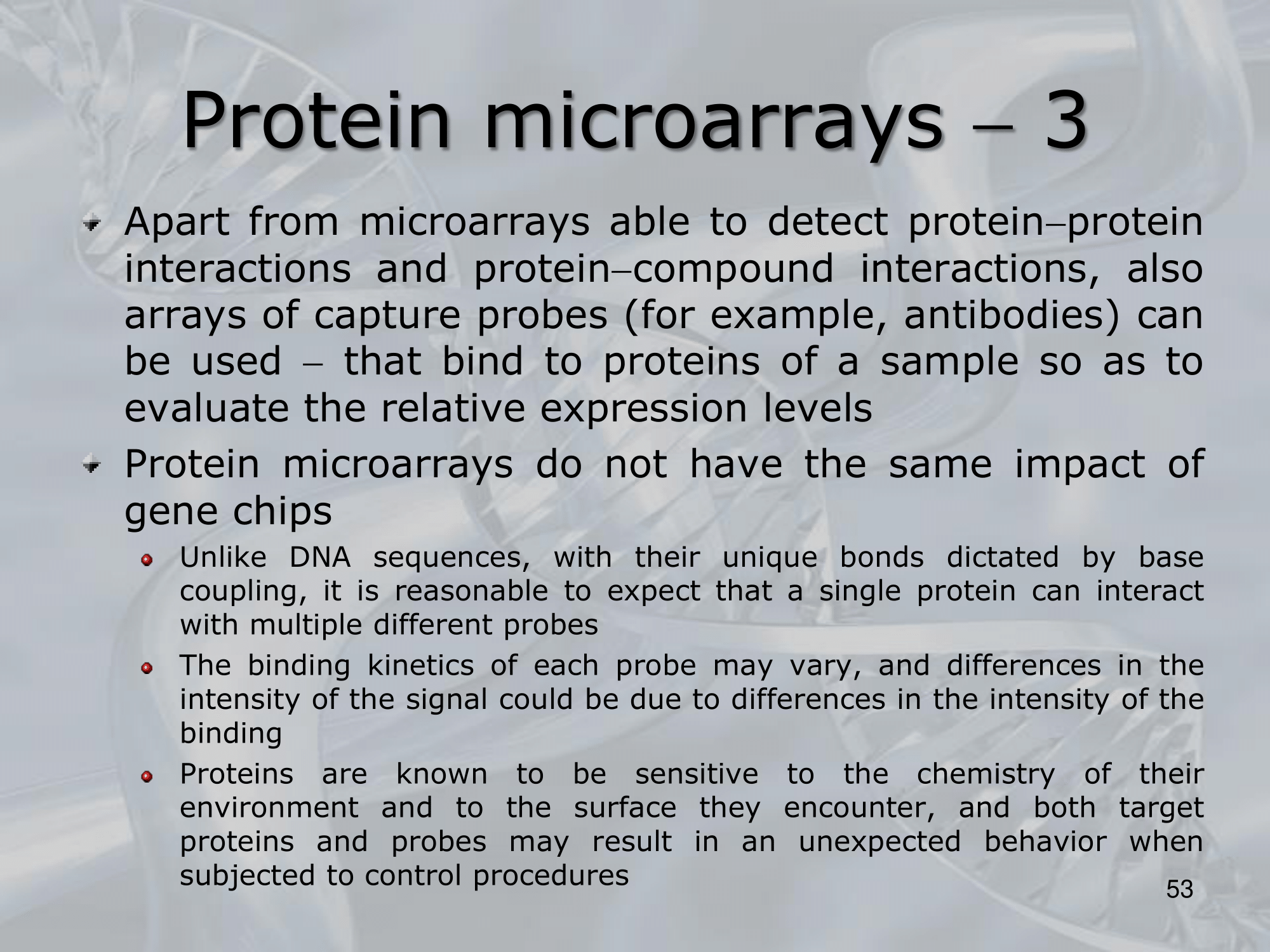
Cons: Unlike DNA sequences, which have unique bonds (dictated by base coupling), a single protein can interact wiht multiple different probes. Cons: Proteins are known to be sensitive to the chemistry of their envirnment and to surface they encounter.
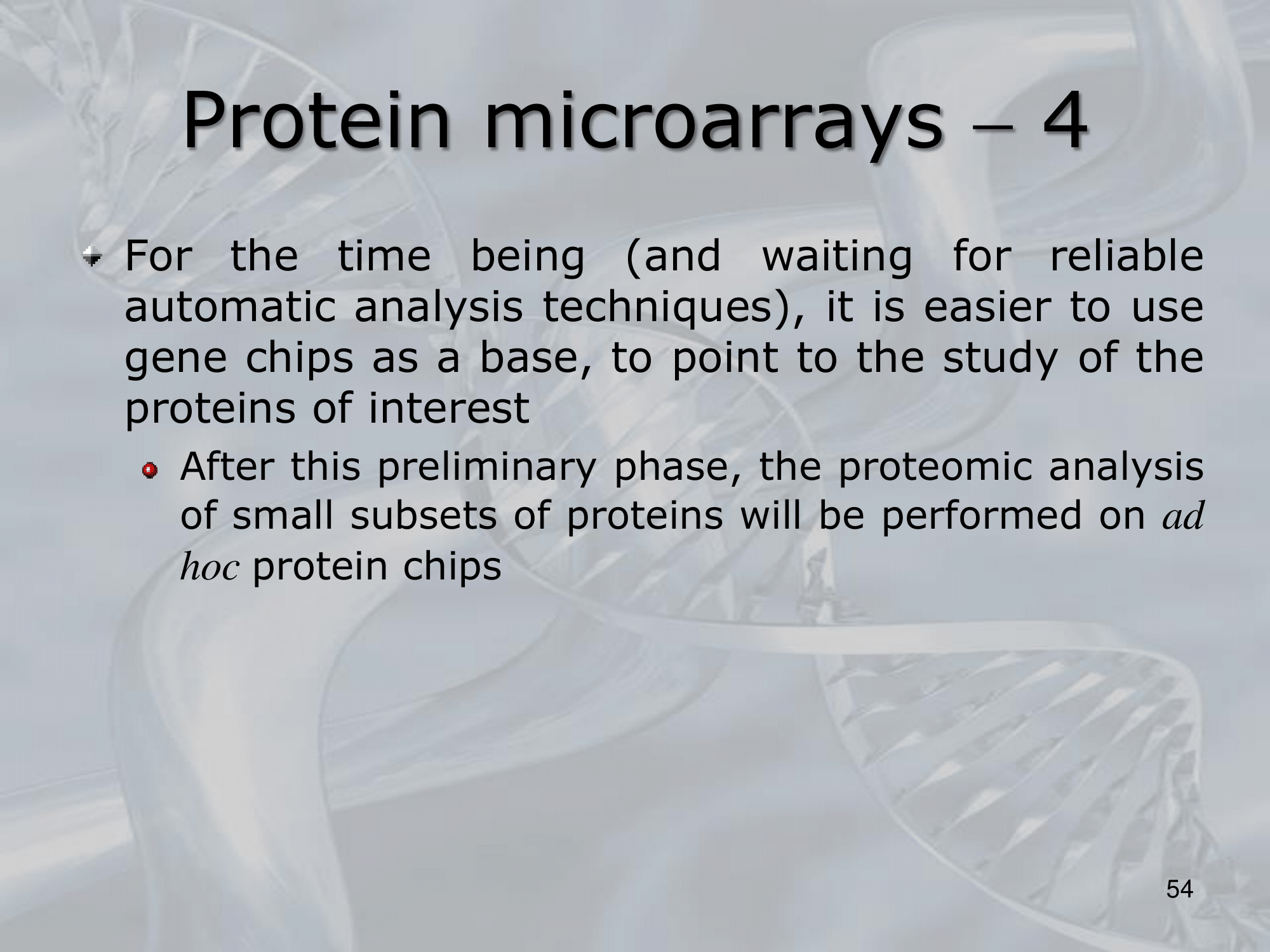
For the time being, it’s easier to use gene chips (gene microarrays) as a base, which can help us point to the study of proteins of interest (restricting the search to a fewer number of proteins), and then perform the analysis on protein microarrays.
—————————————————————
Slides with Notes