Questions
- How many nucleotides does a human DNA strand have?
- The human DNA is a double-stranded helix, which means that it consists of two complementary strands of nucleotides.
The length of each strand can vary depending on the individual, but on average, ==a single human DNA strand contains approximately 3 billion nucleotides==.
This means that the complete human genome, which is made up of two copies of the DNA (one from each parent), contains around 6 billion nucleotides.
It is worth noting that there can be variations in the number of nucleotides between individuals due to genetic variation and mutations.
- The human DNA is a double-stranded helix, which means that it consists of two complementary strands of nucleotides.
- How is the DNA of humans structured?
- The DNA of humans is structured as a double-stranded helix, which consists of two complementary strands of nucleotides that are held together by hydrogen bonds.
Each nucleotide is composed of a sugar molecule (deoxyribose), a phosphate group, and a nitrogenous base.
There are four types of nitrogenous bases in DNA: adenine (A), guanine (G), cytosine (C), and thymine (T). - The two strands of the DNA molecule are oriented in opposite directions, with the end of one strand aligned with the end of the other strand.
The nitrogenous bases in each strand pair up according to the base-pairing rules, where A pairs with T and C pairs with G, forming a double helix structure.
The base pairs are held together by hydrogen bonds, with two bonds between A and T and three bonds between C and G. - The DNA molecule is organized into structures called chromosomes, which are located in the nucleus of the cell.
Humans have 23 pairs of chromosomes, for a total of 46 chromosomes.
The DNA sequence of each chromosome contains thousands of genes, which encode the information necessary for the synthesis of proteins and other biological molecules.
The genes are organized into functional units called operons, which are regulated by a complex network of transcription factors and other regulatory elements.
- The DNA of humans is structured as a double-stranded helix, which consists of two complementary strands of nucleotides that are held together by hydrogen bonds.
- What are Chromosomes?
- Chromosomes are long, thread-like structures made up of DNA molecules that carry genetic information in the form of genes.
Chromosomes are found in the nucleus of every cell in an organism, and they play a crucial role in the transmission of genetic information from one generation to the next. - ==Each chromosome is composed of a single, continuous strand of DNA that is tightly coiled and packaged with proteins called histones==.
This compact packaging allows the DNA molecule to fit inside the cell nucleus and ensures that it is protected from damage. - In humans, there are 23 pairs of chromosomes, for a total of 46 chromosomes.
==One member of each chromosome pair is inherited from the mother, and the other member is inherited from the father==.
The chromosomes in each pair are similar in size and shape and contain the same genes in the same locations.
However, the genes may have different versions or alleles, which can contribute to individual variation. - Chromosomes play a crucial role in cell division, as they are responsible for ensuring that each daughter cell receives a complete set of chromosomes during cell division.
During cell division, the chromosomes condense and become visible under a microscope as distinct structures that can be analyzed to detect chromosomal abnormalities and genetic disorders.
- Chromosomes are long, thread-like structures made up of DNA molecules that carry genetic information in the form of genes.
- What is the Ultimate Goal of Bioinformatics?
- The ultimate goal of bioinformatics is to improve our understanding of biological systems by integrating and analyzing vast amounts of biological data.
This includes data from genomics, transcriptomics, proteomics, and other ‘omics’ technologies, as well as data from clinical and epidemiological studies. - Through the use of computational tools and algorithms, bioinformatics aims to extract meaningful information from large datasets, identify patterns and relationships between different biological entities, and generate testable hypotheses about biological systems.
By combining experimental data with computational analyses, bioinformatics can help to uncover new biological insights and facilitate the development of new therapies and diagnostic tools. - In addition to advancing our understanding of biology, the ultimate goal of bioinformatics is to contribute to human health and well-being.
This can involve developing new treatments and therapies for diseases, identifying biomarkers for early disease detection, and providing personalized medical care based on an individual’s genetic and clinical data.
Ultimately, bioinformatics has the potential to revolutionize the way we approach medicine and improve health outcomes for individuals and populations around the world.
- The ultimate goal of bioinformatics is to improve our understanding of biological systems by integrating and analyzing vast amounts of biological data.
—————————————————————
IMPORTANTE:
IMPORTANTE Un singolo filamento di DNA è composto da MILIARDI di basi.
IMPORTANTE Il DNA nelle cellule umane è “chiuso” in 46 cromosomi, che si trovano nel nucleo della cellula, il nostro DNA per poter occupare meno spazio possibile si ripiega su se stesso in un’elica di eliche di eliche di eliche (per ricordare: ‘eliche‘).
IMPORTANTE Obbiettivi della Bioinformatica:
- Scoprire la strada evolutiva di tutte le specie, e trovare l’“antenato comune”, se esiste.
- Capire come avvengono e perché avvengono tutti i processi biologici, con enfasi sulle mutazioni che possono portare a malattie, e come possiamo prevenirle/curarle.
—————————————————————
Slides with Notes
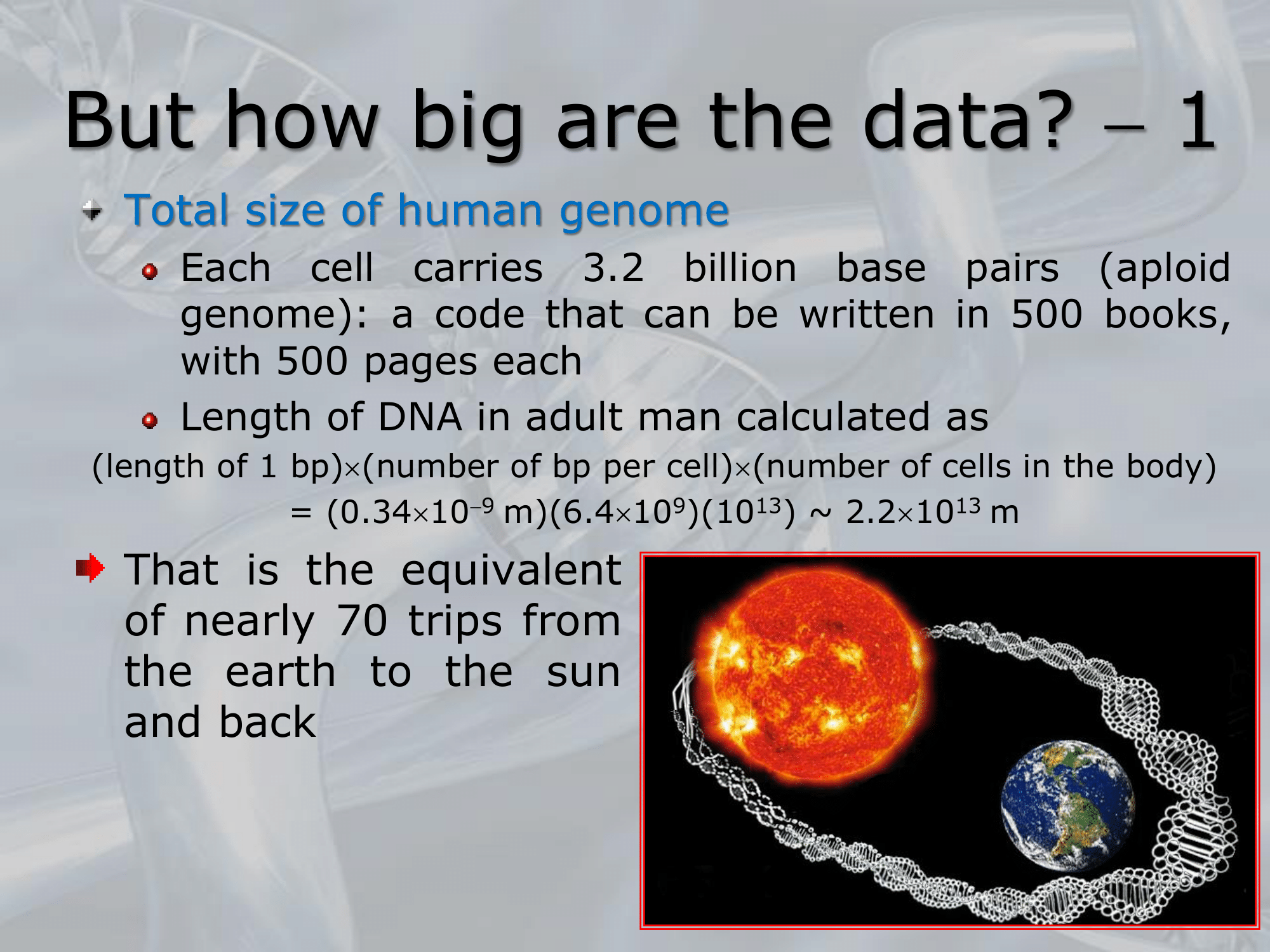
IMPORTANTE Un singolo filamento di DNA è composto da MILIARDI di basi.
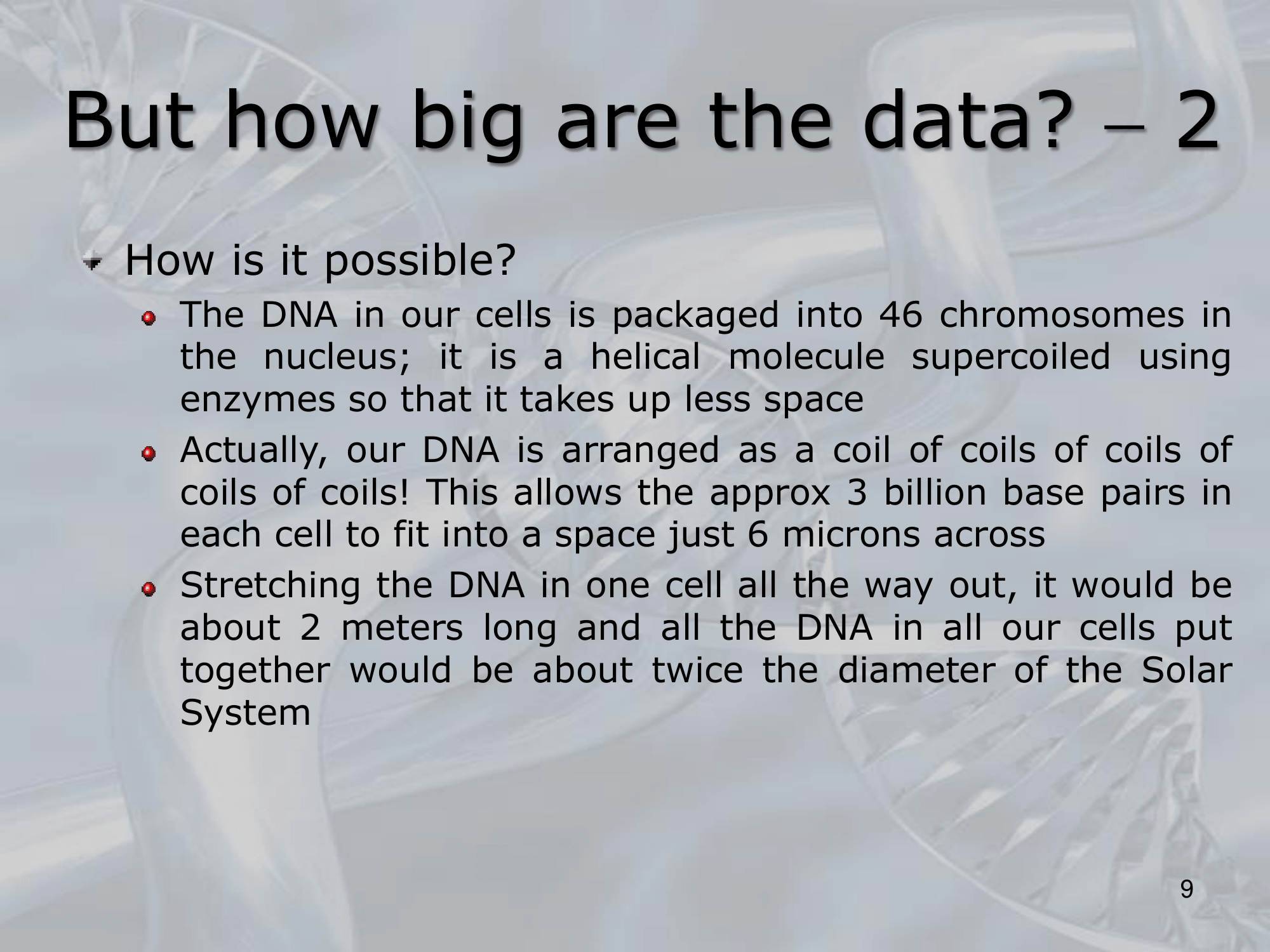
IMPORTANTE Il DNA nelle cellule umane è “chiuso” in 46 cromosomi, che si trovano nel nucleo della cellula, il nostro DNA per poter occupare meno spazio possibile si ripiega su se stesso in un’elica di eliche di eliche di eliche (per ricordare: ‘eliche‘).
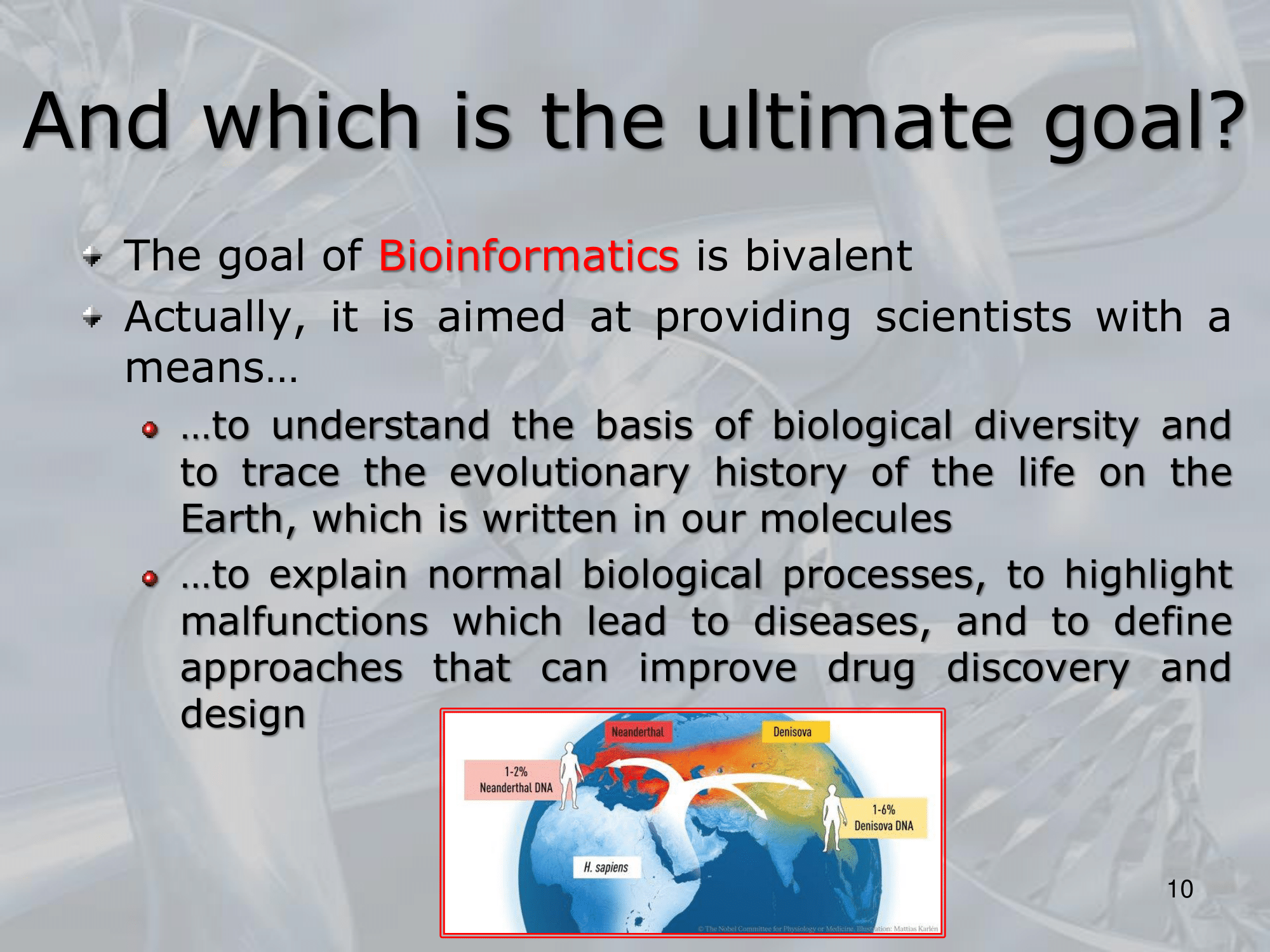
IMPORTANTE Obbiettivi della Bioinformatica:
- Scoprire la strada evolutiva di tutte le specie, e trovare l’“antenato comune”, se esiste.
- Capire come avvengono e perché avvengono tutti i processi biologici, con enfasi sulle mutazioni che possono portare a malattie, e come possiamo prevenirle/curarle.