Questions
- What are the Binding Sites of Regulatory Proteins?
- The binding sites of regulatory proteins are specific DNA sequences that are recognized and bound by these proteins.
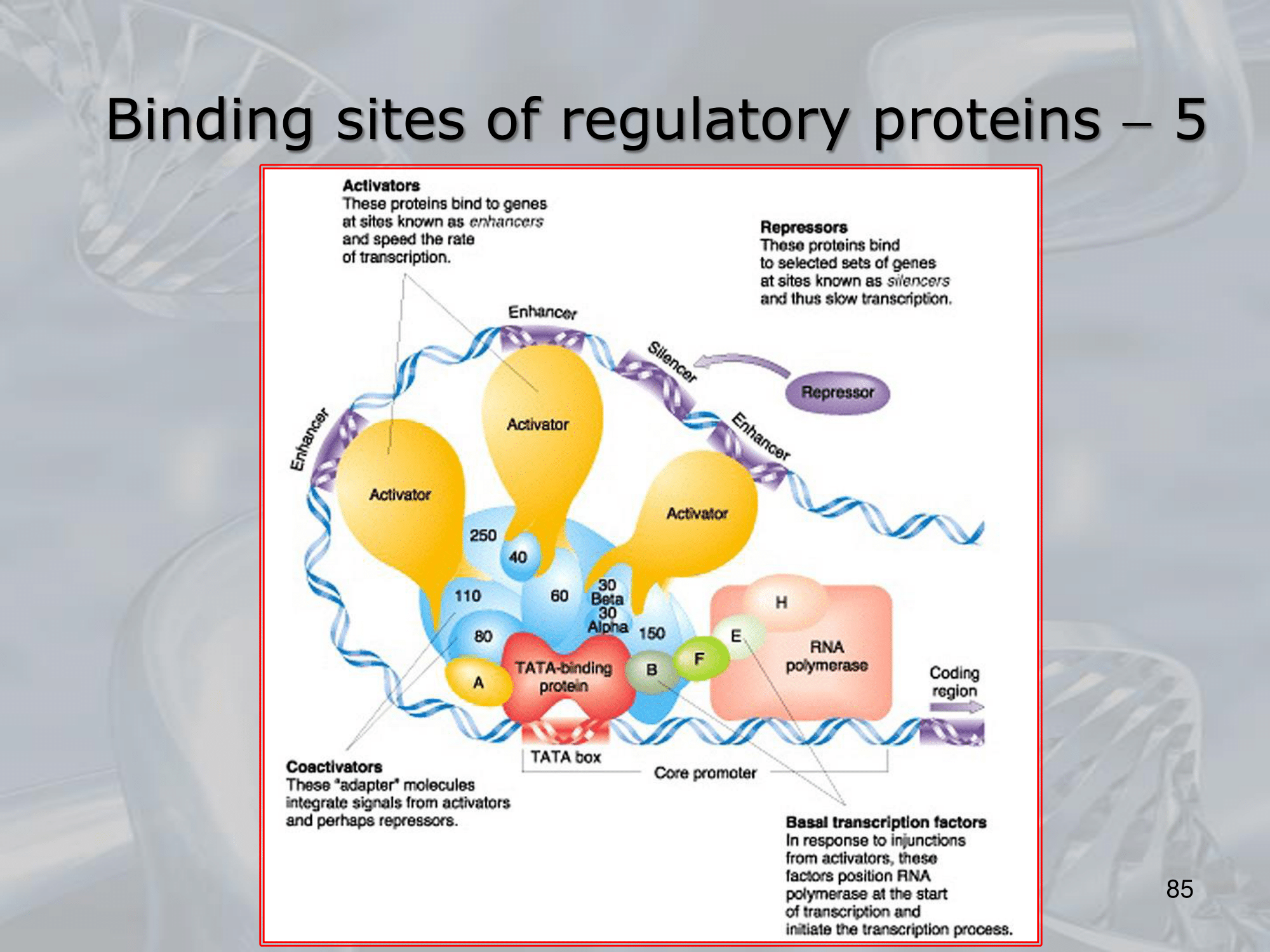
Regulatory proteins are typically transcription factors that play a critical role in the regulation of gene expression by binding to regulatory elements in the promoter or enhancer regions of target genes. - The specific DNA sequences recognized by regulatory proteins can vary widely between proteins, and different transcription factors often have distinct binding preferences.
In general, transcription factors recognize short DNA sequences of 5-10 base pairs in length, and binding specificity is determined by the amino acid sequence of the protein’s DNA-binding domain. - There are several types of binding sites that can be recognized by regulatory proteins.
For example, the consensus sequence recognized by the basic helix-loop-helix (bHLH) family of transcription factors is typically CANNTG, where N represents any nucleotide.
The homeodomain family of transcription factors recognizes a consensus sequence that typically contains the sequence TAAT, while the zinc finger family of transcription factors recognizes sequences containing zinc finger motifs that are composed of a series of cysteine and histidine residues. - The binding of regulatory proteins to their specific DNA binding sites is crucial for the regulation of gene expression, as it allows the protein to interact with other transcriptional machinery and influence the activity of the core promoter.
The precise arrangement and organization of regulatory elements and their associated binding sites can vary widely between genes, contributing to the complexity and diversity of gene expression in eukaryotic organisms.
- The binding sites of regulatory proteins are specific DNA sequences that are recognized and bound by these proteins.
—————————————————————
IMPORTANTE
IMPORTANTE Utility of Positive Regulators in EUKARYTIC genes: Differently from prokaryotic DNA Polymerase, the eukaryotic DNA Polymerase II and III* does NOT bind as well to the promoters, which is why the presence of addtional proteins that act as positive regulators (in eukaryotes) is fundamental.
The Positive Regulators Proteins in eukaryots are divided in:
- The ones that do NOT respond to external signals
- The ones that do, called transciption factors
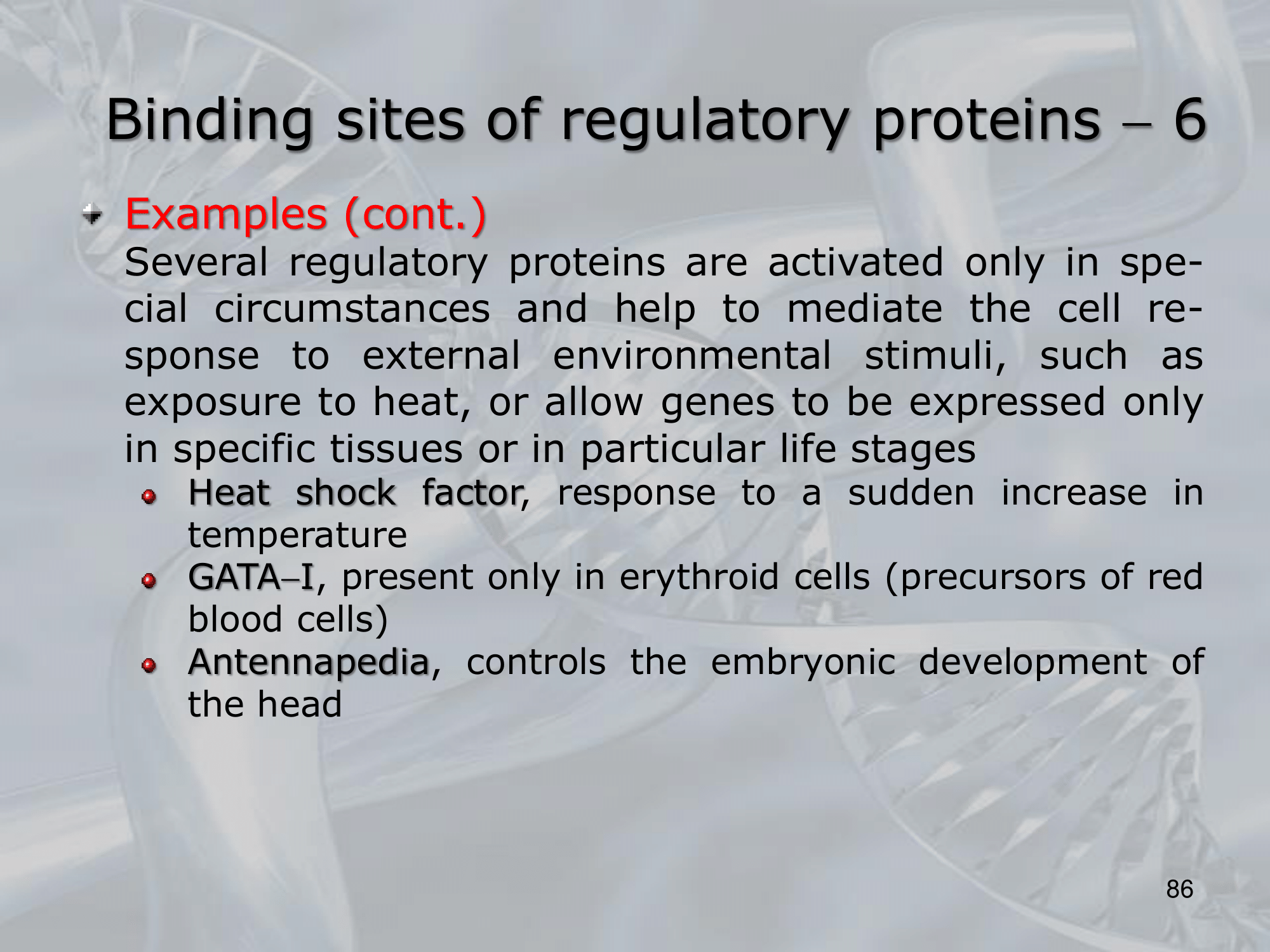
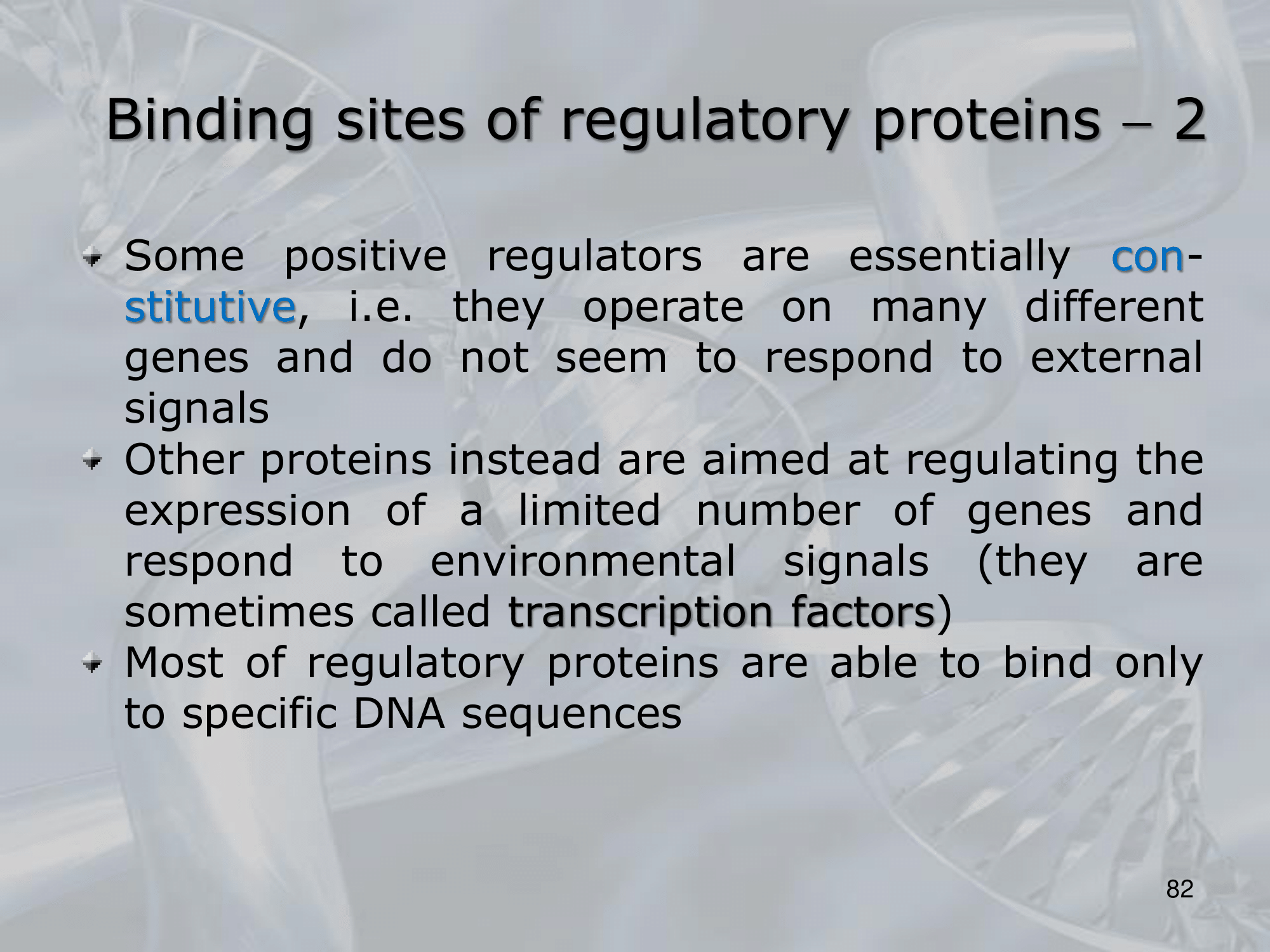
Most of regulatory proteins are able to bind to specific DNA sequences.
IMPORTANTE Enhanceosoms: Some eukaryotic enhancers work also at several tens of thousands nucleotides upstream of the start site (of transcription), and perform their function by bending the DNA into a specific shape, forming structures called enhanceosoms
(This shape is useful to model the Basal Transcription Factors, that then bring the RNA Polymerase where the start site is.)
—————————————————————
Slides with Notes
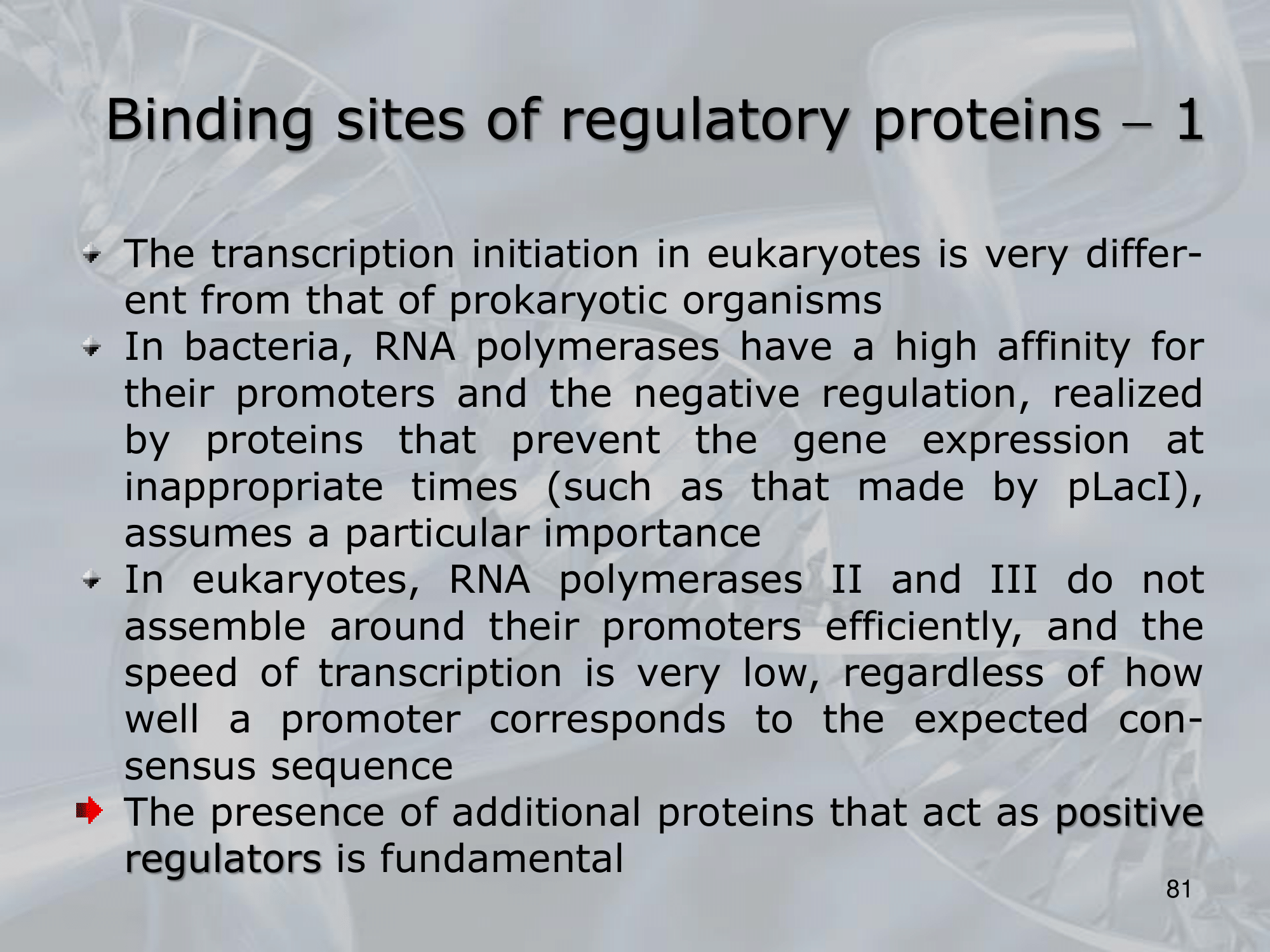
IMPORTANTE Utility of Positive Regulators in EUKARYTIC genes: Differently from prokaryotic DNA Polymerase, the eukaryotic DNA Polymerase II and III* does NOT bind as well to the promoters, which is why the presence of addtional proteins that act as positive regulators (in eukaryotes) is fundamental.
The Positive Regulators Proteins in eukaryots are divided in:
- The ones that do NOT respond to external signals
- The ones that do, called transciption factors
Most of regulatory proteins are able to bind to specific DNA sequences.
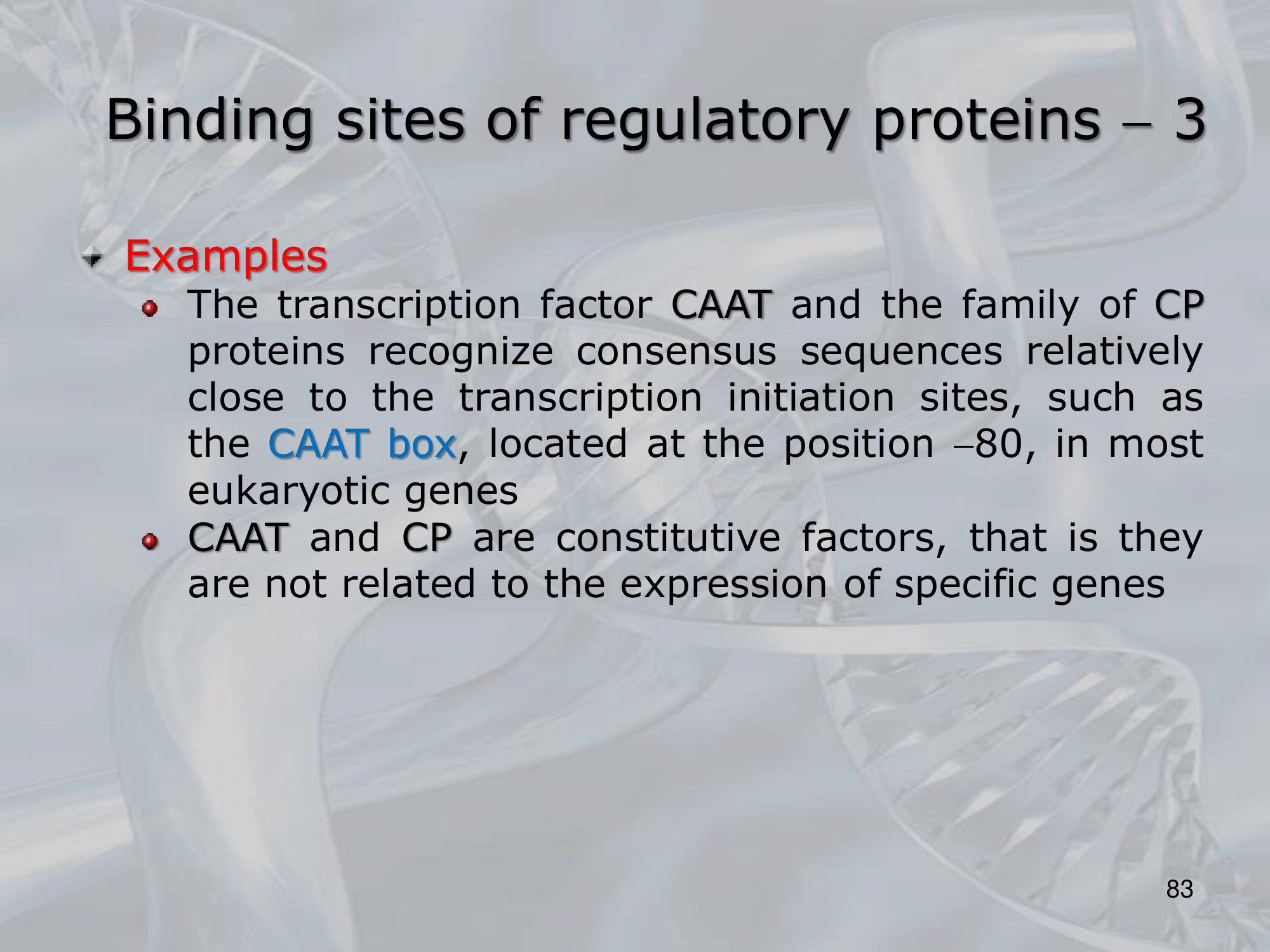
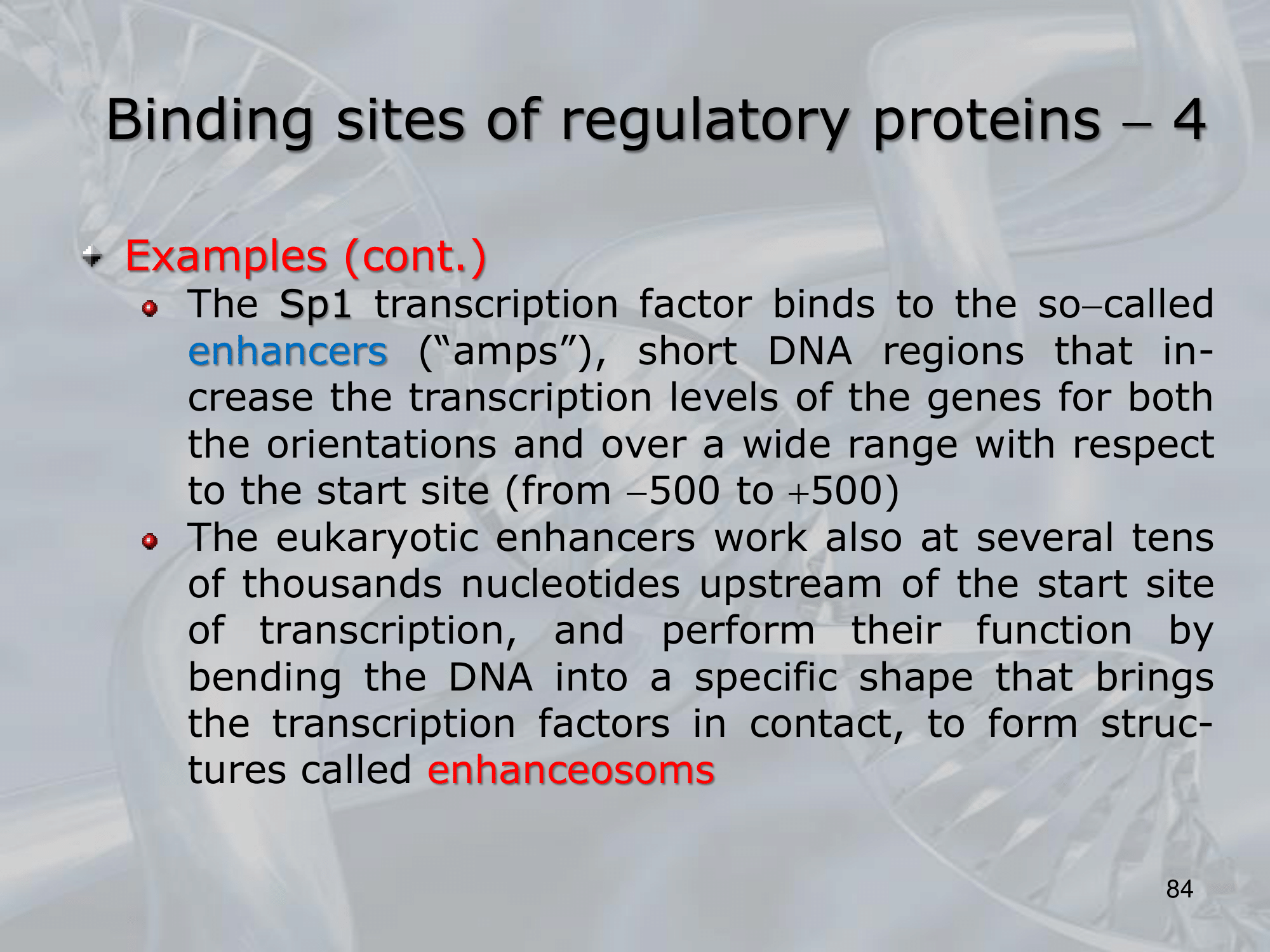
IMPORTANTE Enhanceosoms: Some eukaryotic enhancers work also at several tens of thousands nucleotides upstream of the start site (of transcription), and perform their function by bending the DNA into a specific shape, forming structures called enhanceosoms