Questions
- What is Electronegativity?
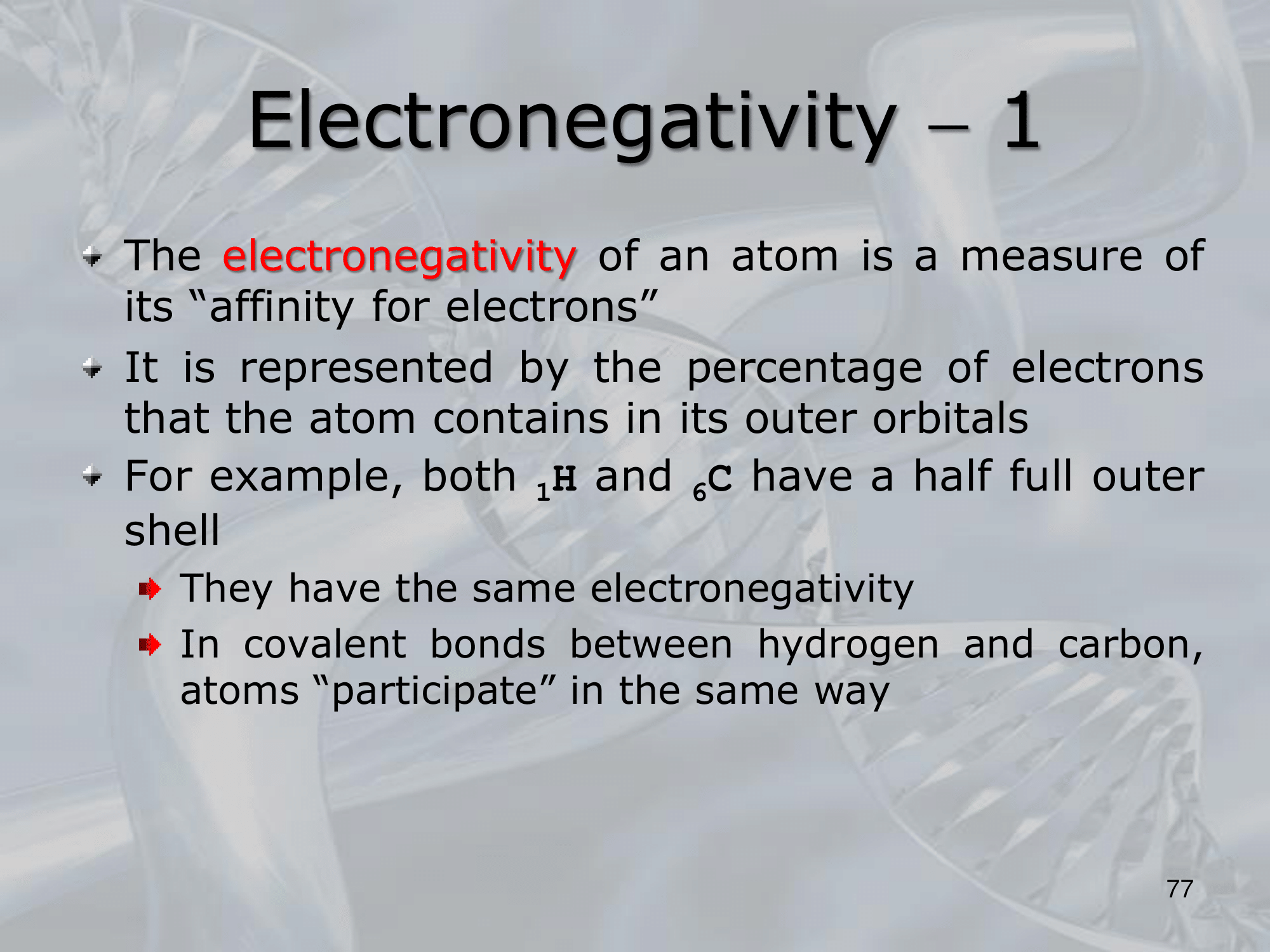
- Electronegativity is a measure of the ability of an atom to attract electrons towards itself in a chemical bond. It is a relative property, meaning that it describes the difference in electronegativity between two atoms in a bond, rather than an absolute value.
- The electronegativity of an atom depends on several factors, including its nuclear charge, atomic radius, and electron configuration. Atoms with a higher nuclear charge, smaller atomic radius, and greater tendency to gain electrons have higher electronegativity.
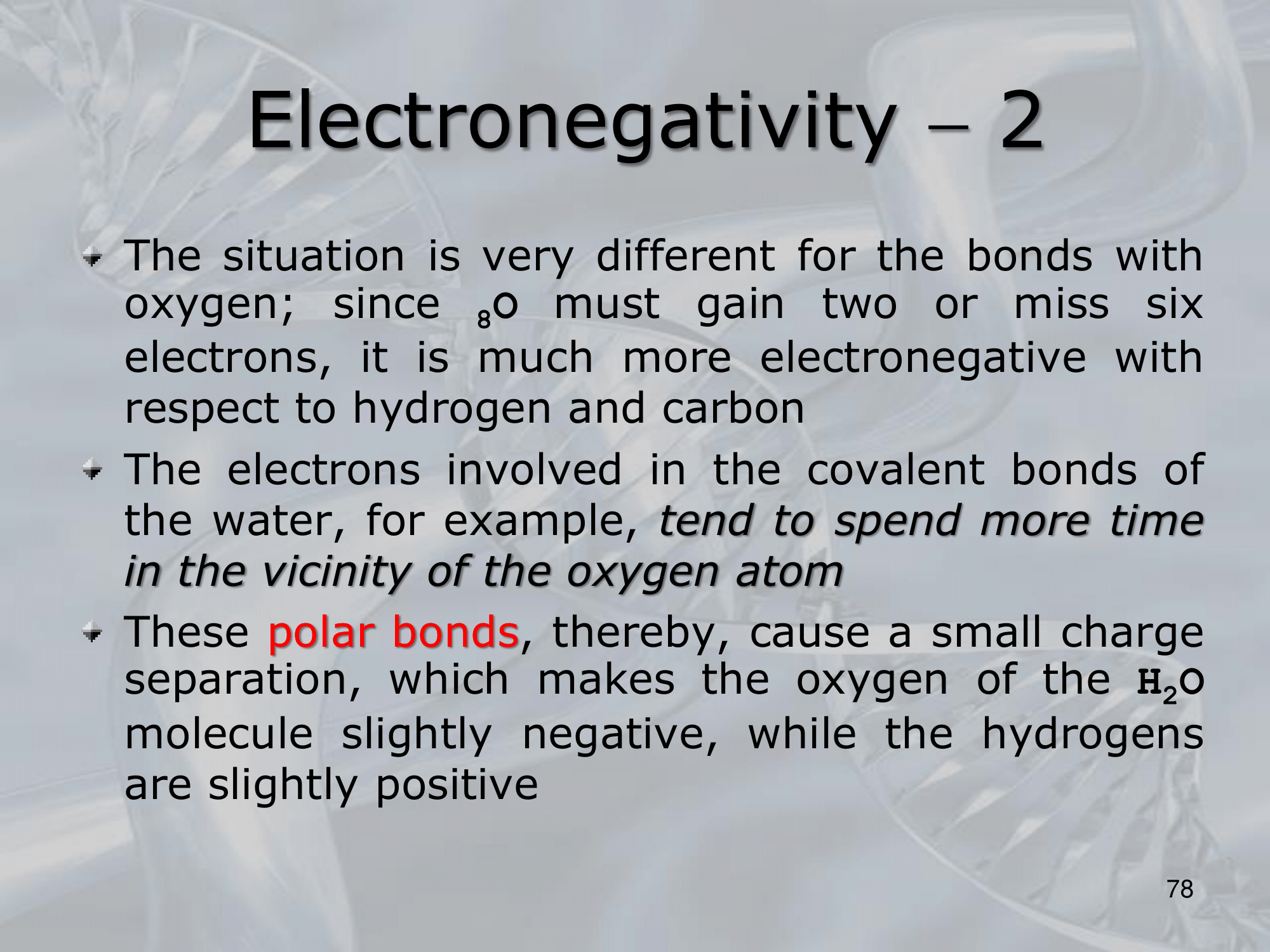
- The concept of electronegativity is useful in predicting the types of chemical bonds that will form between different atoms. When two atoms with different electronegativities form a bond, the more electronegative atom will attract electrons towards itself and develop a partial negative charge, while the less electronegative atom will have a partial positive charge. This results in a polar covalent bond, in which the electrons are shared unequally between the two atoms.
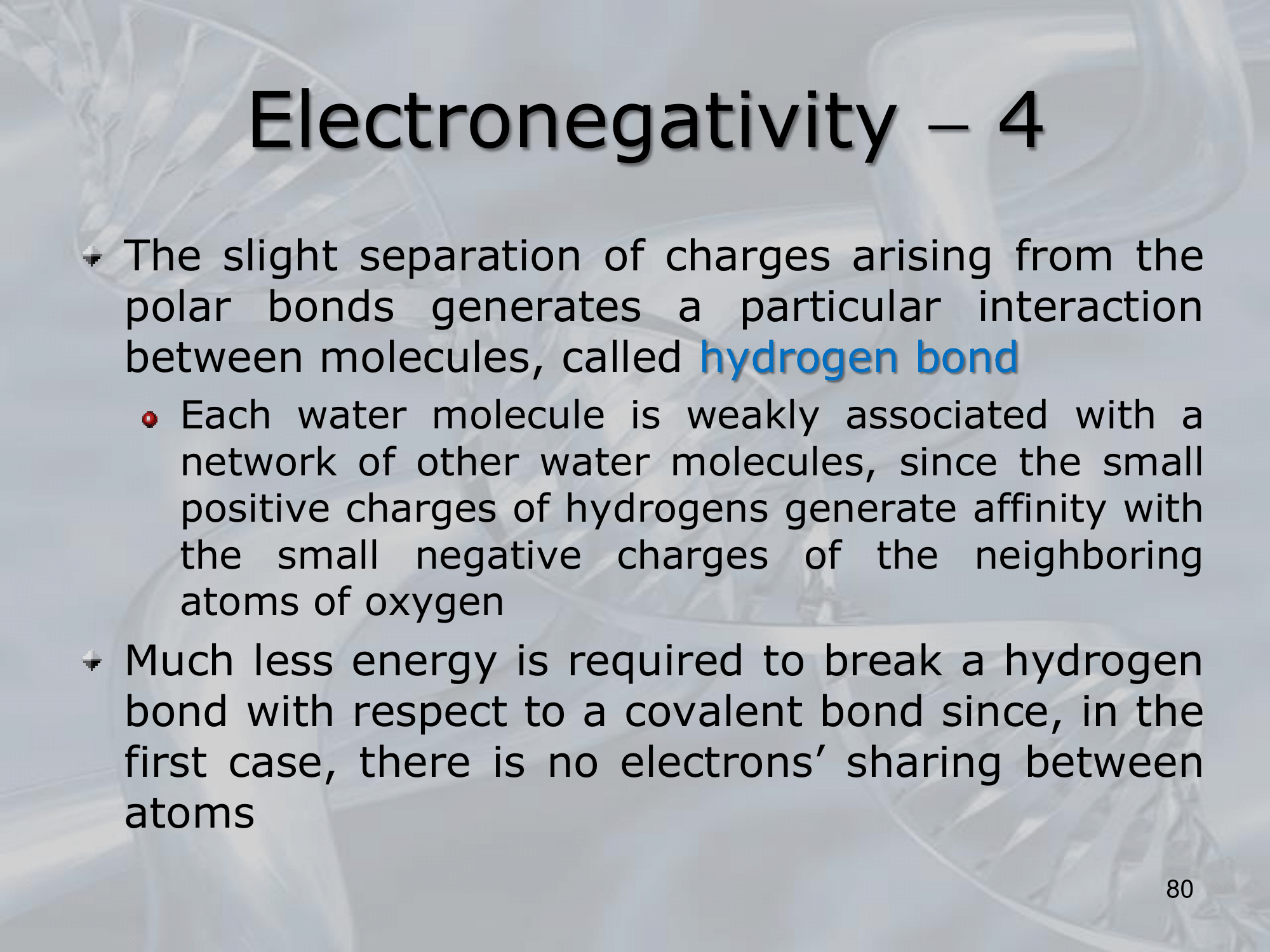
- The electronegativity of an atom can also affect its chemical reactivity and the types of chemical reactions it can undergo. For example, highly electronegative atoms such as oxygen and nitrogen are often involved in hydrogen bonding and other types of noncovalent interactions, which are important in many biological processes.
IMPORTANTE
IMPORTANTE Electronegativity The elctronegativity of an atom is a measure of its “affinity for electrons” It is represented by the percentage of electrons that the atom contains in its outer orbitals For example, both H and C have an half full outer orbigal, so they have the same electronegativy The difference of electronegativity between two atoms, varies their type of bond:

Slides with Notes