Questions
- What is there to say about Prokaryotic Gene Density?
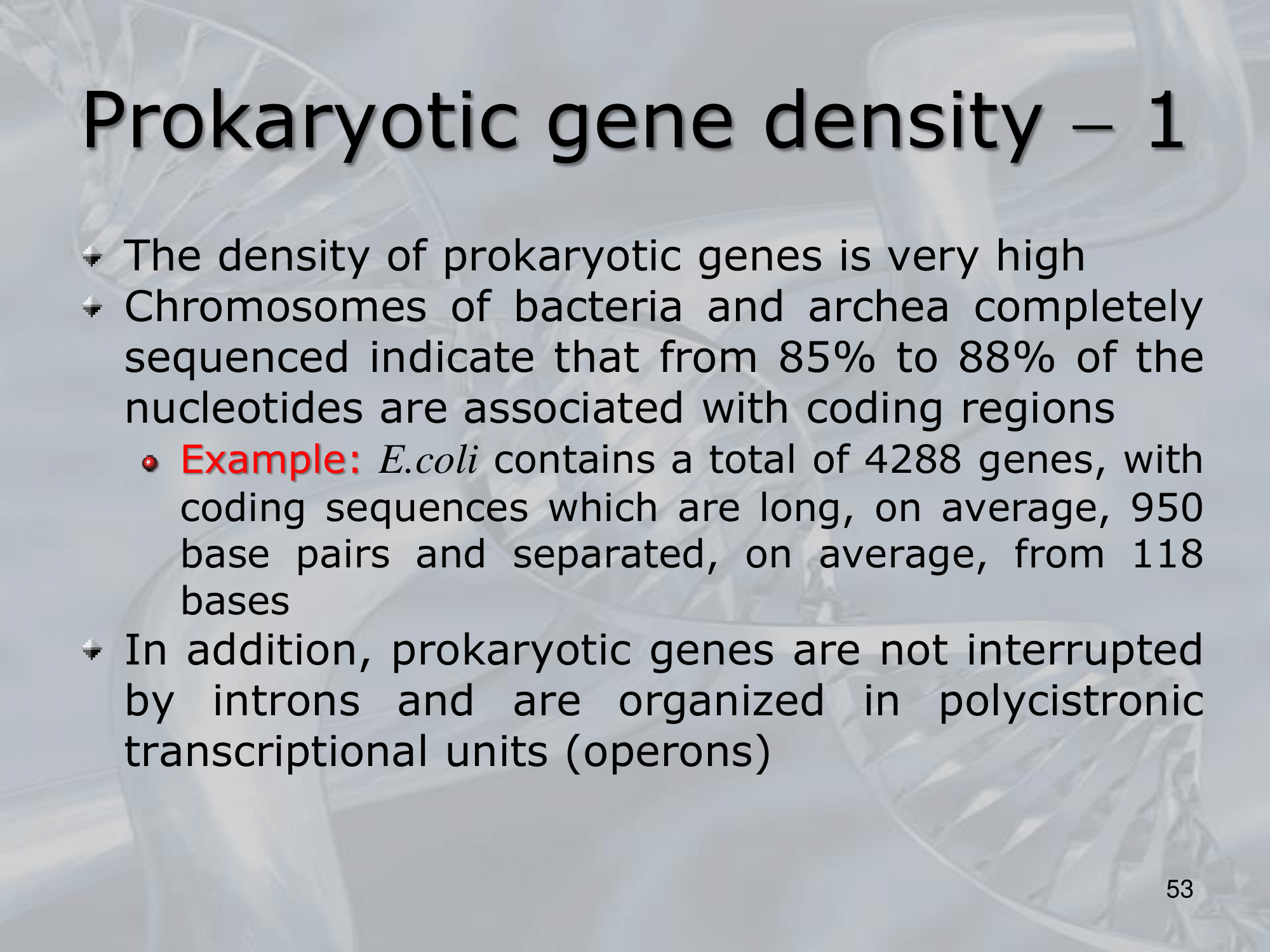
- Prokaryotic gene density refers to the number of genes present in a given length of DNA in prokaryotic organisms. Compared to eukaryotic genomes, prokaryotic genomes are generally smaller and more compact, with a higher gene density.
- Prokaryotic genomes are organized into operons, which are clusters of genes that are transcribed together under the control of a single promoter. This arrangement allows prokaryotic organisms to efficiently coordinate the expression of related genes, and to respond rapidly to changes in their environment.
- In addition to operons, prokaryotic genomes may contain a high proportion of coding DNA, meaning that a large proportion of the genome consists of genes rather than non-coding regions. This is in contrast to eukaryotic genomes, which typically contain a higher proportion of non-coding DNA.
- The high gene density in prokaryotic genomes is thought to be the result of evolutionary selection for efficient use of genetic material. Prokaryotic organisms typically have small genomes, and must maximize the number of functional genes in a limited amount of DNA. This is achieved through a combination of compact gene organization, high coding density, and efficient regulation of gene expression.
- Overall, prokaryotic gene density is an important aspect of prokaryotic genome structure and function, and reflects the unique evolutionary pressures that have shaped prokaryotic organisms.
- What are the Differences between Gene Density in Prokarytes and Eukaryotes?
- Gene density refers to the number of genes present in a given length of DNA. Prokaryotic and eukaryotic organisms have distinct differences in their gene density.
- Prokaryotic genomes generally have a higher gene density than eukaryotic genomes. This is due to several factors. First, prokaryotic genomes are typically smaller than eukaryotic genomes, and so they must pack more genes into a smaller amount of DNA. Second, prokaryotic genes are often organized into operons, which are clusters of genes that are transcribed together under the control of a single promoter. This organization allows for efficient coordination of gene expression and maximization of functional genes in a limited amount of DNA.
- In contrast, eukaryotic genomes generally have a lower gene density than prokaryotic genomes. Eukaryotic genes are often interrupted by non-coding regions called introns, which must be spliced out during mRNA processing. Additionally, eukaryotic genomes often contain repetitive sequences and transposable elements, which do not code for proteins and can decrease gene density.
- Overall, the differences in gene density between prokaryotic and eukaryotic genomes reflect the distinct evolutionary pressures and mechanisms that have shaped the genomes of these two types of organisms.
—————————————————————
IMPORTANTE
IMPORTANTE The number of genes and the genome size in case of PROKARYOTES are linearly correlated, the more genes a prokaryote has, the bigger will be his DNA, also the more genes a prokaryote has the more complex it will be.
—————————————————————
Slides with Notes
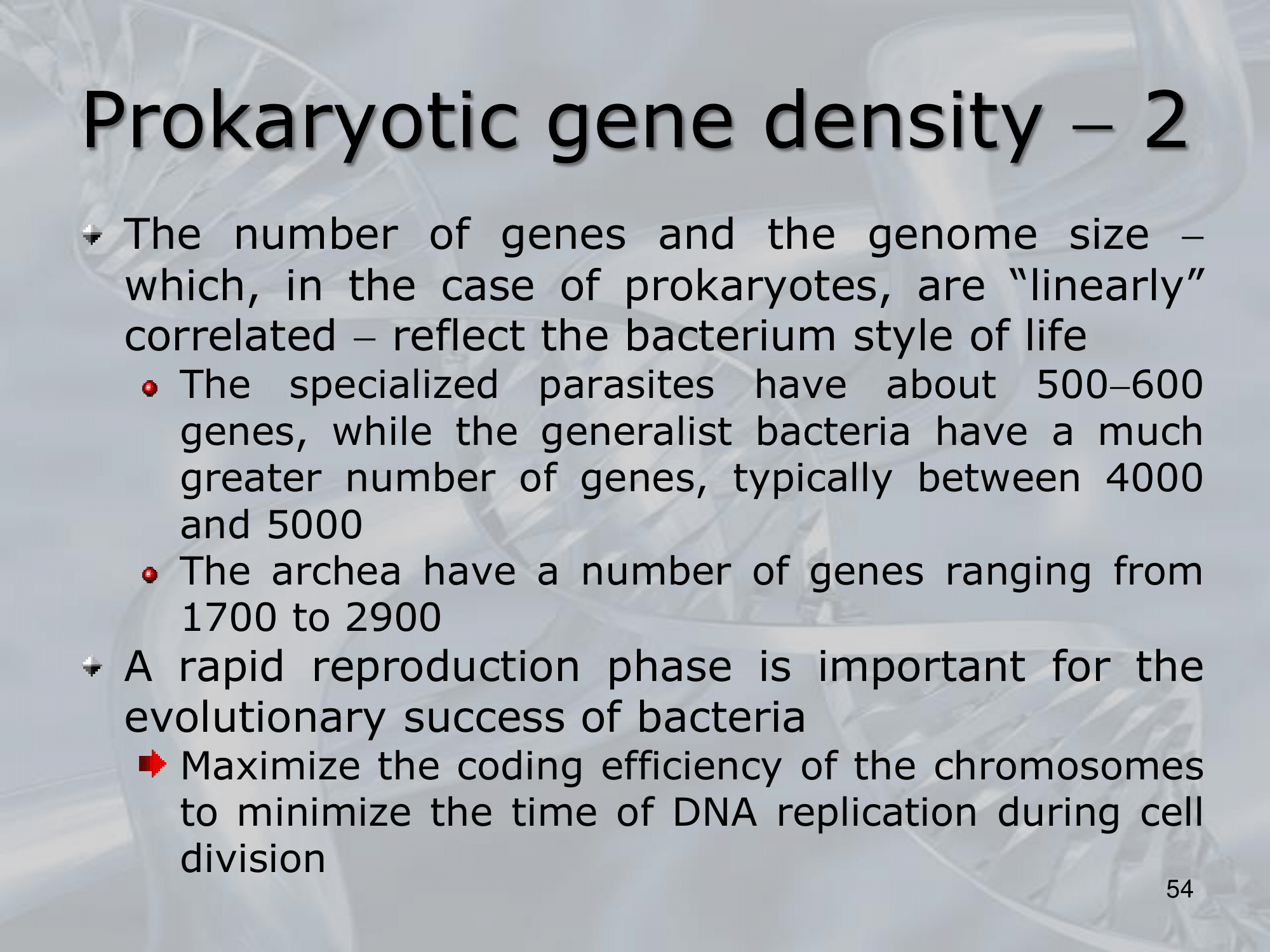
IMPORTANTE The number of genes and the genome size in case of PROKARYOTES are linearly correlated, the more genes a prokaryote has, the bigger will be his DNA, also the more genes a prokaryote has the more complex it will be.